
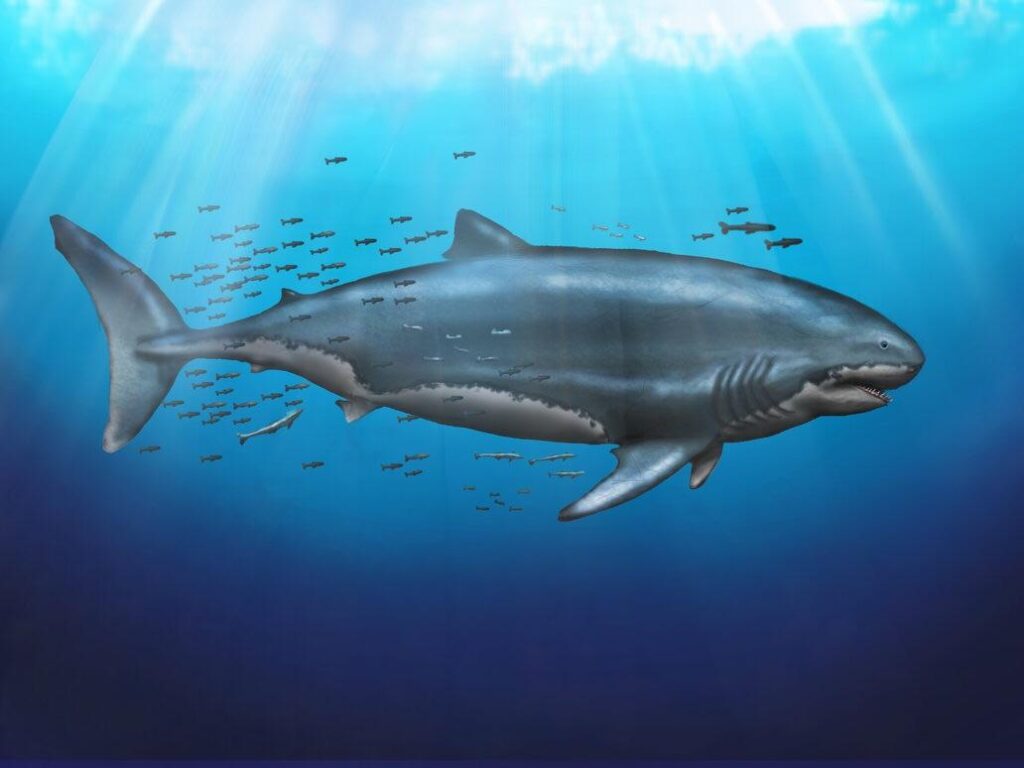
Few creatures in the history of life on Earth have captured human imagination quite like the megalodon. You’ve probably seen it dramatized in movies, sensationalized in documentaries, or whispered about in conspiracy theories claiming it still haunts the deep ocean. Honestly, reality is far more extraordinary than any Hollywood version could ever capture.
This was a predator so colossal, so perfectly engineered for dominance, that scientists are still piecing together just how enormous it truly was. New research keeps rewriting the record books, and every answer seems to open three more jaw-dropping questions. Let’s dive in.
Just How Big Was Megalodon, Really?
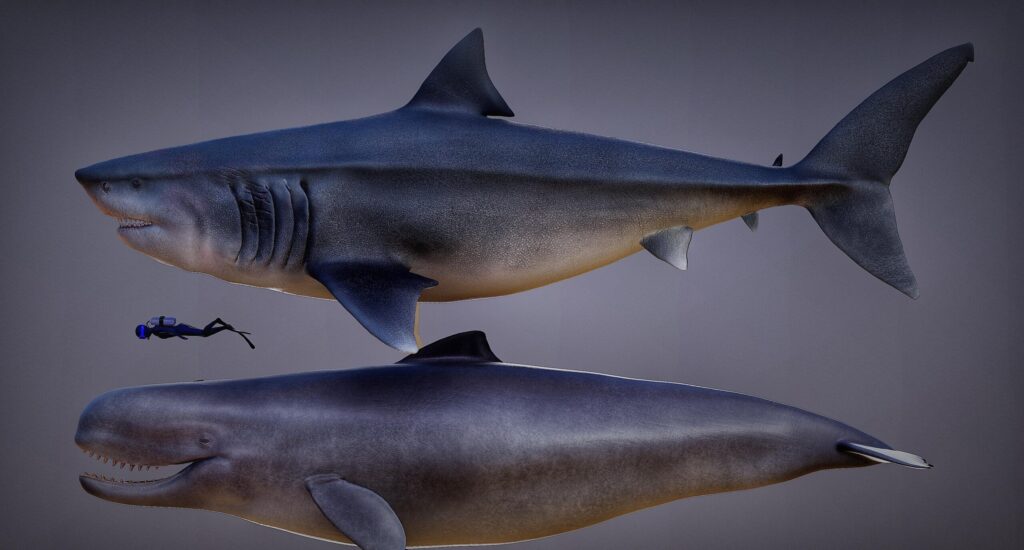
Here’s a number that should stop you mid-scroll: a 2025 study, written by 29 fossil shark experts, found that megalodon may have grown up to 24.3 metres long. That’s roughly the length of two school buses parked end to end. Think about that the next time you wade into the ocean.
You might ask how scientists arrive at such a figure without a complete skeleton. To calculate a 24.3 metre megalodon, scientists used a new method, studying nearly complete and partial megalodon vertebral columns found in Belgium and Denmark, which were then compared to 170 species of living and extinct sharks to help work out head and tail fin sizes. It’s forensic science applied to deep prehistory, and the results are staggering.
The largest vertebra of the Belgian specimen measures 15.5 centimetres in diameter, but megalodon vertebrae measuring as much as 23 centimetres in diameter are reported from Denmark. If the Danish vertebrae represent the largest vertebrae in the body, that individual could have measured about 24.3 metres long. For context, adult human vertebrae are roughly the width of your thumb. This creature’s backbone alone was the size of a dinner plate.
Scientists have reexamined the total body length of the megalodon, finding it to be as much as 30 feet longer than previously thought. That kind of upward revision doesn’t happen often in paleontology. When it does, you sit up and pay attention.
The Fossil Record: Teeth, Bones, and Tantalizing Clues
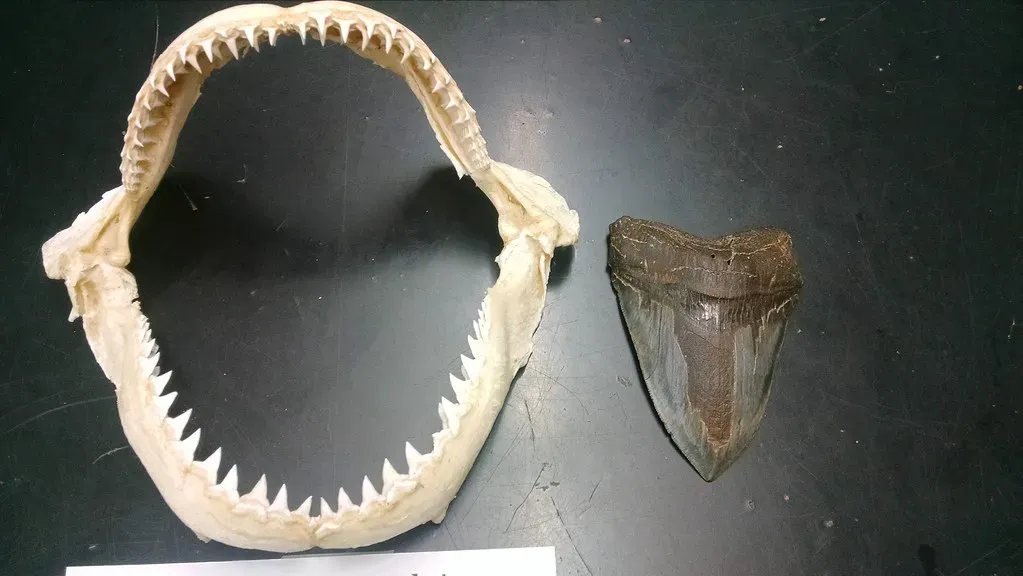
One of the key issues in estimating megalodon’s true size is that the skeletons of sharks are made of cartilage, which does not easily fossilize. This leaves teeth as the only common fossils from which scientists can compute the size of this massive shark. It’s a bit like trying to reconstruct a jumbo jet from a single turbine blade. Frustrating, impressive, and ultimately incomplete.
The largest megalodon tooth ever found is almost 18 centimetres long. By comparison, great white shark teeth are usually about five centimetres long. You could hold a megalodon tooth in your hand and it would extend past your wrist. The sheer size of these fossils is what first clued early scientists in to the monster they were dealing with.
We have other evidence of megalodon’s feeding habits in the form of fossilised whale bones. Some of these have been found with the cut marks of megalodon teeth etched in the surface. Others even include the tips of teeth broken off in the bone during a feeding frenzy that occurred millions of years ago. When you find a shark tooth snapped off inside a whale rib, you know lunch didn’t go quietly.
Formally called Otodus megalodon, it is primarily known only from its serrated teeth, vertebrae, and scales in the fossil record, with no known complete skeletons. Yet from these fragments alone, researchers have built a remarkably detailed picture of one of history’s ultimate predators.
A Body Shape That Defied Everything You Thought You Knew
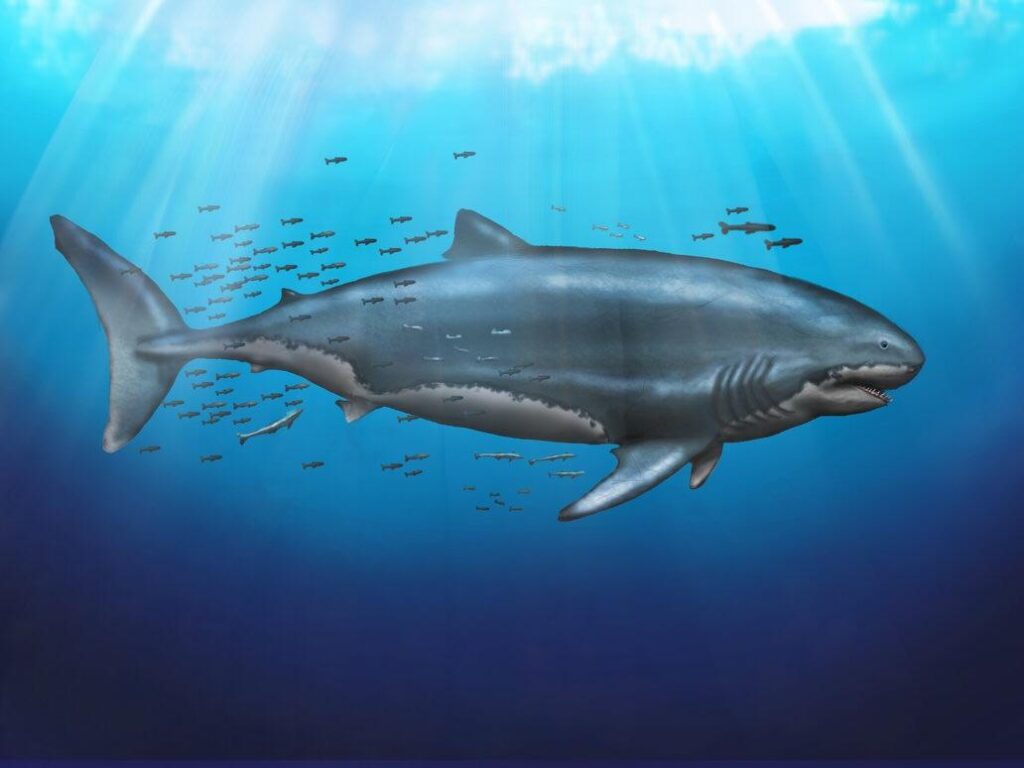
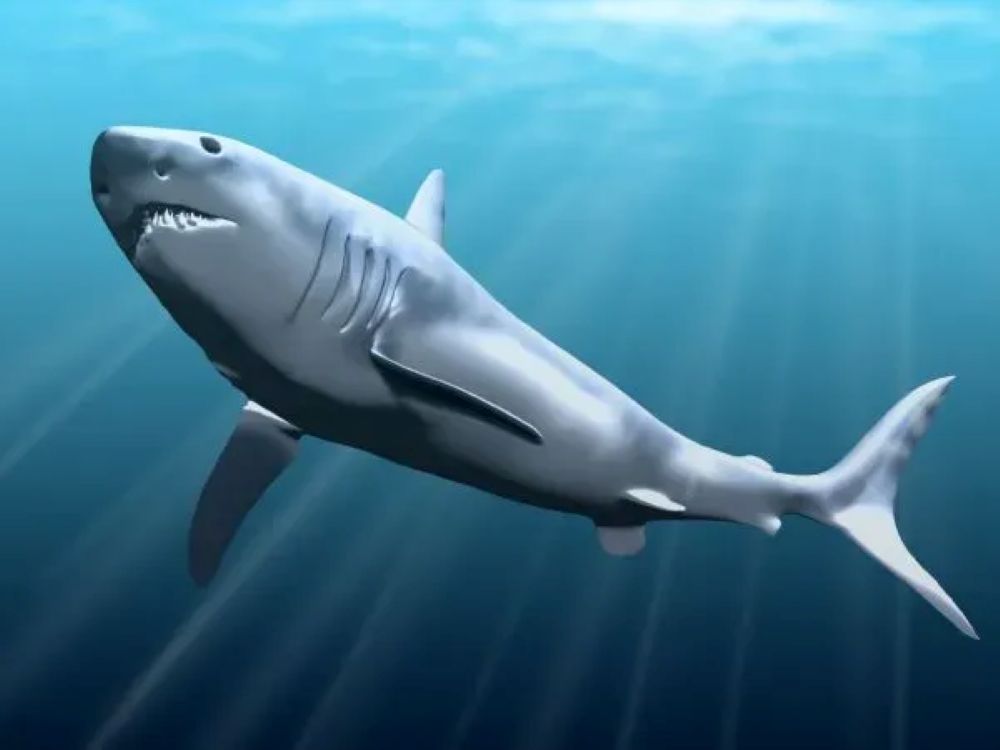
If you’ve ever pictured megalodon as basically a sumo-wrestler version of a great white shark, science has some news for you. Most reconstructions show megalodon looking like an enormous great white shark, but this is now believed to be incorrect. Scientists have found that if you scaled a great white up to megalodon’s size, this animal would likely have trouble swimming. Instead, they suggest that megalodon may have had a much slenderer body, possibly with proportions like a lemon shark, making it more efficient in the water.
Modern-day gigantic sharks, such as the whale shark and basking shark, as well as many other gigantic aquatic vertebrates like whales, have slender bodies because large stocky bodies are hydrodynamically inefficient for swimming. In contrast, the great white shark with a stocky body can be large but cannot be gigantic, no more than about 7 metres, because of hydrodynamic constraints. Think of it like this: a sports car frame doesn’t scale up into an eighteen-wheeler. You need a completely different engineering approach.
A key breakthrough of recent study was identifying the lemon shark as the best living analog for megalodon’s proportions. Unlike the great white, lemon sharks have a more elongated body. When researchers scaled up the proportions of a lemon shark to megalodon’s estimated length, it was a near-perfect match. Nature, it turns out, found the same blueprint twice.
Megalodon also likely had a much shorter nose, or rostrum, when compared with the great white, with a flatter, almost squashed jaw. The Hollywood version with its pointed snout? Probably wrong. The real megalodon was arguably even more alien-looking than the movies suggest.
The Jaw, the Bite, and the Sheer Terror of Feeding Time
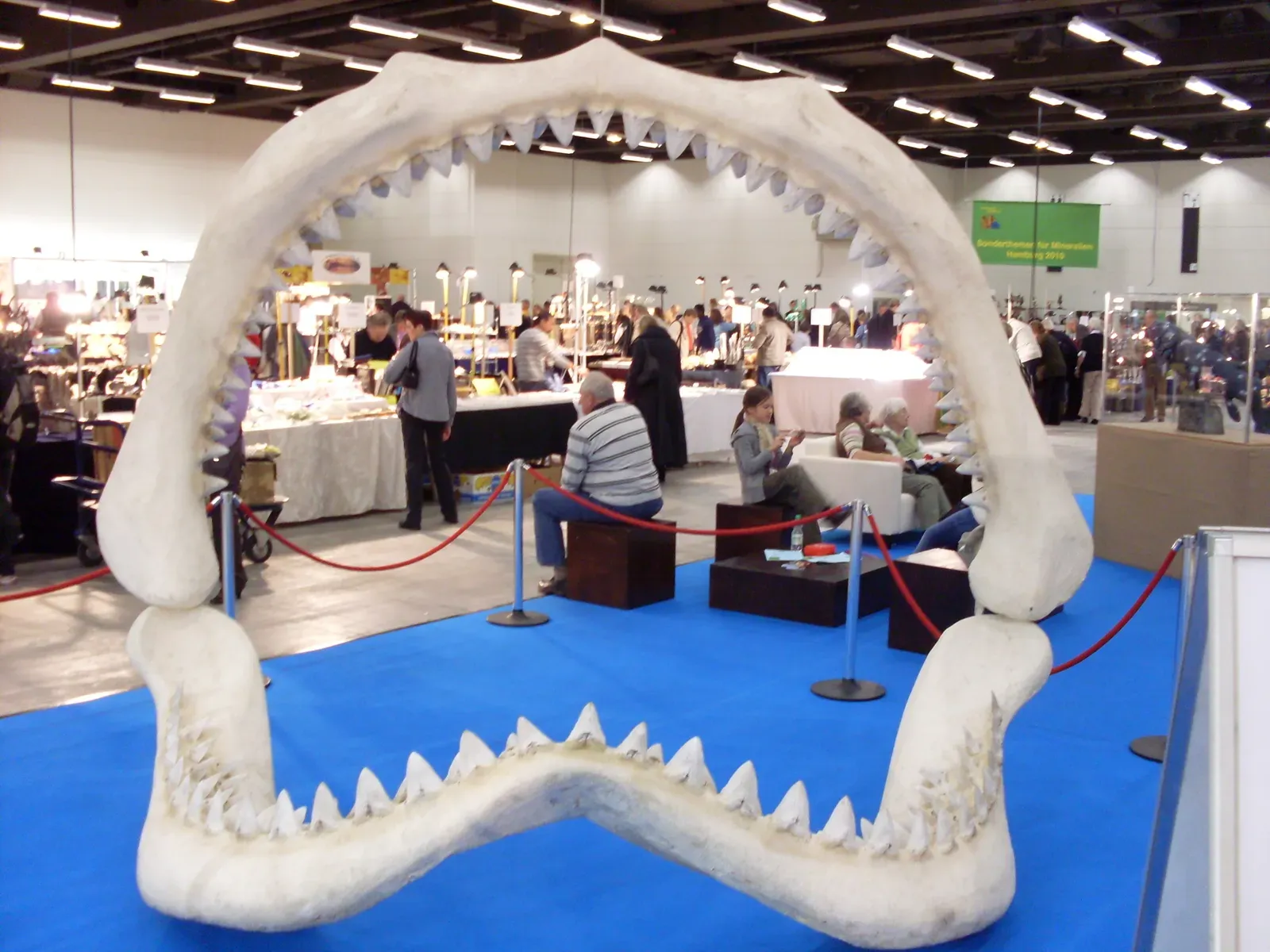
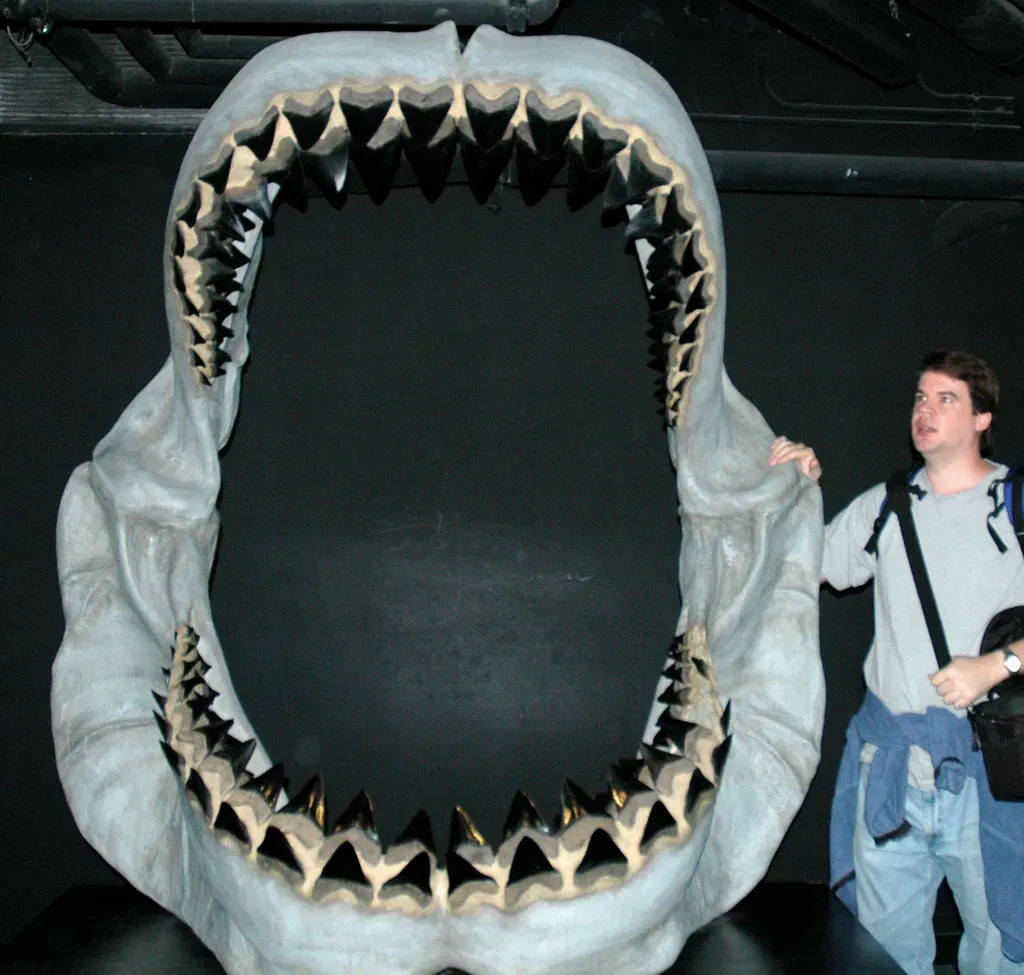
In order to tackle prey as large as whales, megalodon had to be able to open its mouth wide. It’s estimated that its jaw would span 2.7 by 3.4 metres wide, easily big enough to swallow two adult people side-by-side, or a London taxi cab. The next time you feel small in the ocean, remember: you’d have fit inside that jaw with room to spare.
These jaws were lined with 276 teeth, and studies reconstructing the shark’s bite force suggest that it may have been one of the most powerful predators ever to have existed. Humans have been measured with a bite force of around 1,317 Newtons, while great white sharks have been predicted to bite with a force of 18,216 Newtons. Researchers have estimated that megalodon had a bite of between 108,514 and 182,201 Newtons. That’s not a bite force. That’s a geological event.
With its large serrated teeth, megalodon would have eaten meat, most likely whales and large fish, and probably other sharks. If you are that big, you need to eat a lot of food, so large prey is required. This would have included animals as small as dolphins and as large as humpback whales. In other words, everything in the ocean was essentially on the menu.
An optimal foraging model of potential megalodon prey encounters found that eating a single 8-metre-long whale may have allowed the shark to swim thousands of miles across oceans without eating again for two months. One meal. Thousands of miles. Two months. The efficiency of that is almost incomprehensible.
A Warm-Blooded Monster: The Biology That Made It Unstoppable
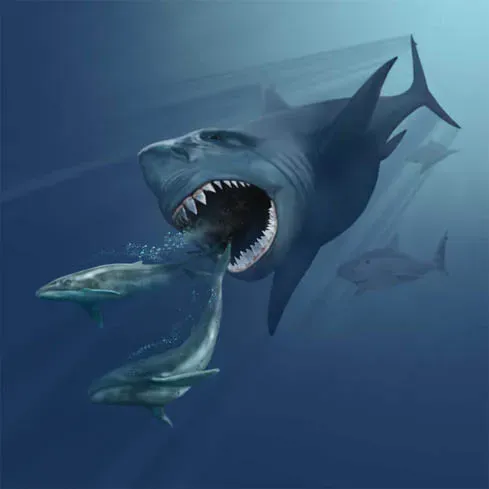
Here’s one of the most fascinating, and frankly underreported, facts about megalodon. A recent study provides the first empirical evidence of warm-bloodedness in the extinct shark. For years this was suspected but never proven. Scientists finally nailed it down through chemistry hidden inside fossil teeth.
After analyzing isotopes in the tooth enamel of the ancient shark, scientists concluded that megalodon could maintain a body temperature about 13 degrees Fahrenheit warmer than the surrounding water. That temperature difference is greater than those determined for other sharks that lived alongside megalodon and is large enough to categorize megalodons as warm-blooded. Being warmer than your environment, in a cold ocean, is a serious competitive advantage.
The giant shark’s heightened body heat allowed it to swim faster and travel farther than other predators, pursuing whales and other blubber-rich prey into cool waters where cold-blooded hunters couldn’t venture. The ability to feed on fat-rich mammals opened a path for megalodon to grow so big. Warm blood wasn’t just a trait. It was the key that unlocked its gigantism.
The quantitative relationship of the distance between each keel on its scales and the reported maximum cruising speeds of modern sharks were consistent with the hypothesis that megalodon was regionally endothermic but generally not a fast swimmer, though it may have been capable of occasional burst swimming to capture prey. So you’d get a slow, patient cruise and then a sudden, terrifying surge. Like a freight train that occasionally becomes a missile.
The Extinction of a Legend and What It Meant for the Ocean
Why such a long-lived hunter suddenly disappeared 3.6 million years ago has confounded paleontologists, but new research suggests that running hot and living large ultimately doomed the megatooth shark. I think there’s a profound irony there. The very adaptations that made megalodon the most powerful predator in ocean history may have been its undoing.
The high metabolic needs associated with maintaining warm-bloodedness may have contributed to the species’ extinction. Megalodon went extinct around the time of extreme changes in climate and sea level, which impacted the distribution of and the type of prey available. Picture a creature that needs an almost unimaginable caloric intake every single day, suddenly finding its food sources shrinking and shifting. The math stops working fast.
The appearance of the white shark approximately five million years ago might have played a role in the extinction of megalodon around 3.5 million years ago. As more experienced predators, adult white sharks may have outcompeted young megalodons for food, contributing to the eventual decline of the species. A new competitor on the block, targeting the vulnerable young, slowly tipping the balance. It’s a pattern we see play out in nature again and again.
Shortly after megalodon went extinct, whales were free from the pressure of their giant predator and began to get larger and larger. It’s a staggering ripple effect. One extinction reshaping the entire evolutionary trajectory of the ocean. The megalodon was so impactful in the oceans that its extinction reshaped ecosystems throughout the world’s seas.
Conclusion
Megalodon wasn’t just a big shark. It was a force of nature that held entire ocean ecosystems in its grip for nearly 20 million years. From its newly revised length of up to 24.3 metres, to its warm-blooded physiology, to its jaw that could swallow a taxi whole, every new discovery about this creature redefines what we thought was possible in the natural world.
What makes the megalodon story so endlessly compelling is that you are essentially watching science rewrite history in real time. Each fossilized tooth, each vertebra pulled from ancient rock, gives us another pixel in a picture that is only now coming into focus. The ocean gave birth to the greatest predator that ever lived, and then, slowly, quietly, took it back.
If megalodon were somehow alive in today’s oceans, would you ever set foot in the sea again? Think about that the next time the water looks a little too dark beneath you.