
Gujarat – Seven perennial rivers weave through the expansive dry deciduous forests of Gir National Park, providing essential water that supports its renowned biodiversity.
Far More Than Lions: Rivers as the Park’s True Backbone
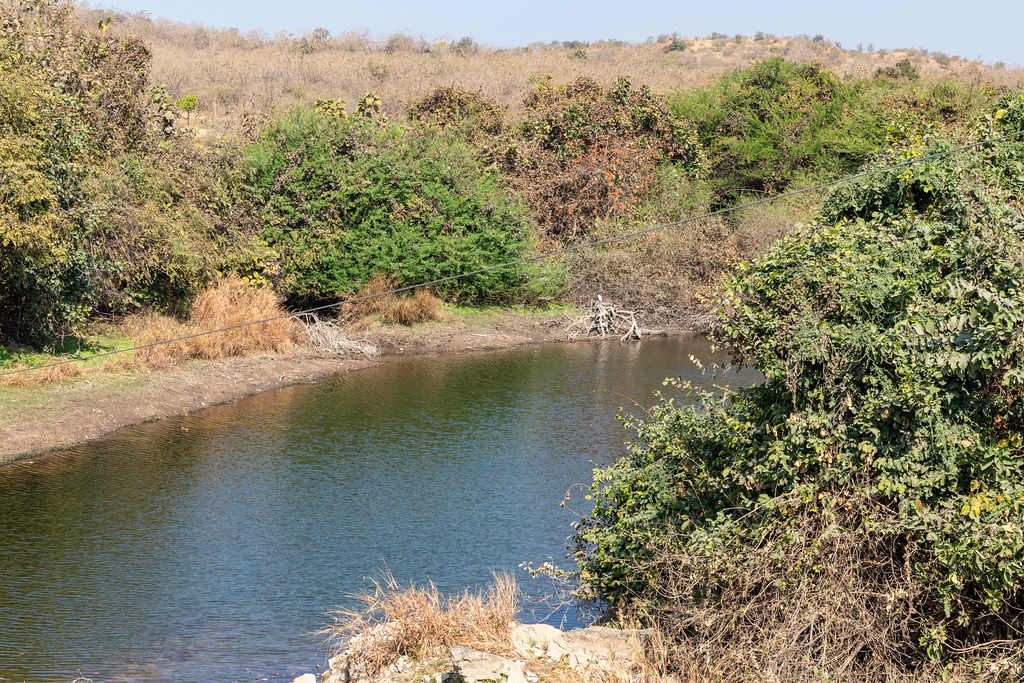
Far More Than Lions: Rivers as the Park’s True Backbone (Image Credits: Flickr)
Gir National Park draws global attention for its Asiatic lion population, yet these predators depend heavily on the park’s water network. The seven rivers ensure survival during prolonged dry spells in this arid region. Wildlife authorities highlight how these streams create lush corridors amid the teak-dominated forests.
Perennial by nature, the rivers maintain flow year-round, even in summer droughts. Animals congregate at their banks and reservoirs, offering prime safari viewing opportunities. This water abundance underpins the entire food chain, from insects to apex predators.
Mapping the Seven Key Rivers
Each river contributes uniquely to Gir’s hydrology. Officials identify the following as the primary lifelines:
- Hiran River: Often called the park’s main lifeline, it hosts the Kamleshwar Dam, the largest reservoir.
- Shetrunji River: Originates in the northern ridges and supports downstream areas beyond the park.
- Dhatarvadi (Datardi): Flows steadily, aiding forest regeneration along its course.
- Shingoda River: Features a dam that forms a critical water body for wildlife.
- Machhundri River: Another dammed river, enhancing water storage capacity.
- Raval River: Bolsters the southern sections with reliable perennial flow.
- Ambajal River: Completes the network, ensuring broad coverage across the sanctuary.
These rivers crisscross the 1,412 square kilometers of protected area, forming a vital catchment system.
Dams and Reservoirs: Engineered Support for Nature
Four rivers – Hiran, Machhundri, Raval, and Shingoda – feature dams that create expansive reservoirs. The Kamleshwar Dam on the Hiran stands out as the biggest, often dubbed the “lifeline of Gir.” These structures store monsoon runoff, guaranteeing water availability through the dry season.
Reservoirs attract herds of deer, sambar, and nilgai, which in turn draw lions. Forest officials note that such water bodies cover significant catchment areas, totaling around 820 square kilometers in some estimates. Maintenance of these dams remains crucial for long-term conservation.
| River | Dam Present | Notable Feature |
|---|---|---|
| Hiran | Yes (Kamleshwar) | Largest reservoir |
| Machhundri | Yes | Key wildlife waterhole |
| Raval | Yes | Southern support |
| Shingoda | Yes | Perennial flow enhancer |
Sustaining Biodiversity and Human Needs
The rivers foster diverse habitats, from riparian zones teeming with birds to grasslands for herbivores. Asiatic lions, leopards, and crocodiles rely on these waters, especially as temperatures climb above 39 degrees Celsius in summer. The park records over 2,300 species, many tied to these aquatic lifelines.
Beyond wildlife, the rivers supply drinking water to nearby towns like Palitana and Bhavnagar via external dams. This dual role underscores Gir’s importance in regional ecology and human sustenance. Conservation efforts focus on protecting these streams from encroachment and pollution.
Key Takeaways:
- Gir hosts seven perennial rivers critical for year-round water.
- Four dams create reservoirs vital for wildlife during droughts.
- Hiran River and Kamleshwar Dam anchor the park’s water security.
Gir National Park exemplifies how water shapes wilderness resilience. These seven rivers not only quench the thirst of lions but also preserve a delicate balance for future generations. What role do you think such natural lifelines play in global conservation? Share your thoughts in the comments.