
There is something deeply unsettling, in the most wonderful way, about standing on ground that has been shaped by forces far older than the human mind can truly grasp. You look at a canyon wall or a glittering dune field and think you understand what you’re seeing. You don’t. Not even close.
The truth is, America’s national parks are not simply scenic backdrops for Instagram photos or weekend hiking trips. Beneath those sweeping vistas and ancient rock layers lies some of the most jaw-dropping geological and paleontological storytelling on the planet. Stories that span billions of years, written in stone, sand, bone, and ice. So let’s dive in, because what you’re about to discover will genuinely change the way you look at these places forever.
Grand Canyon National Park: A Library Written in Rock
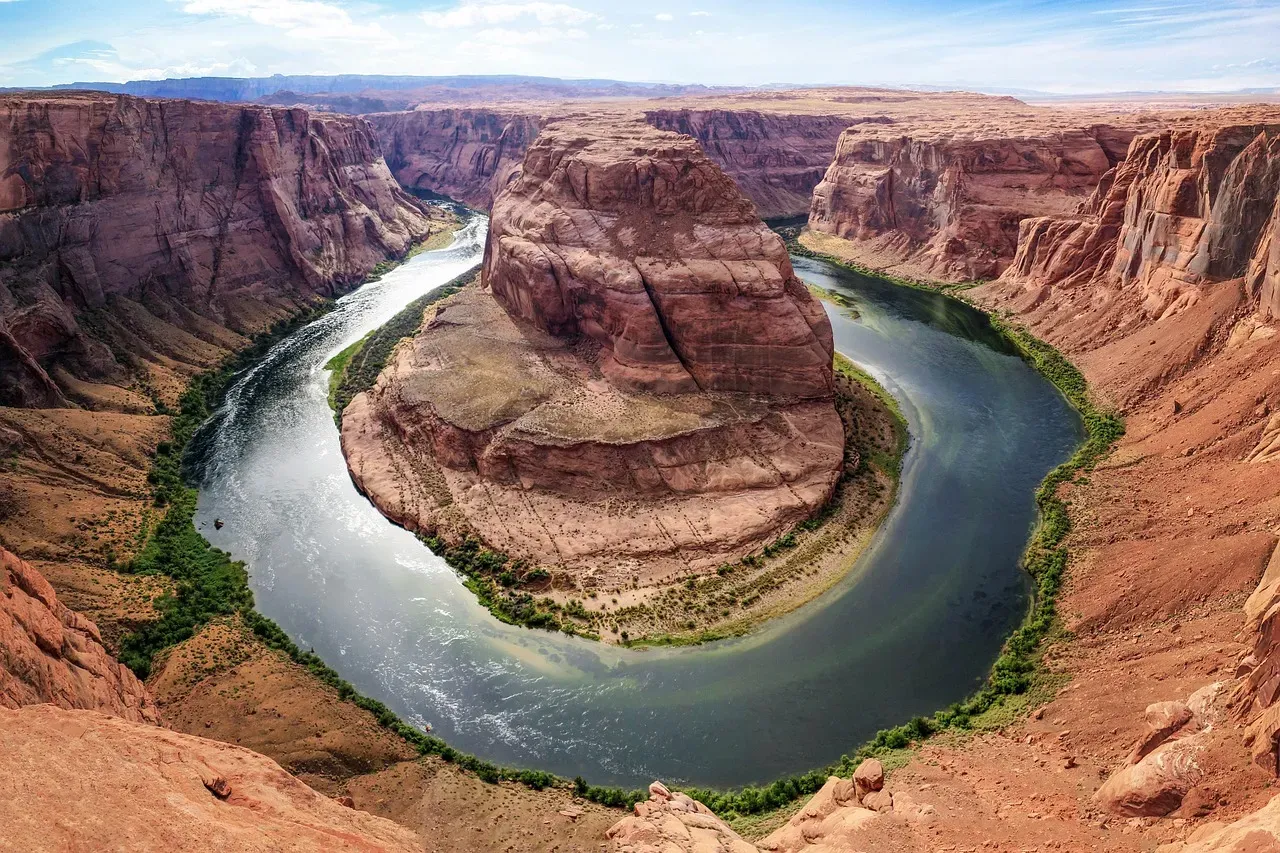
Honestly, most people who visit the Grand Canyon stand at the rim, say “wow,” take a photo, and call it a day. They have absolutely no idea they are staring at one of the most profound records of Earth’s geological biography ever assembled in one place. It is one of the most visited national parks in the world, yet its layered bands of red rock still contain many geological mysteries. That is both humbling and thrilling.
Colorful sandstone, shale, limestone, and clay settled here from roughly 250 million to 550 million years ago, during an era when what is now central Arizona was intermittently the shoreline of an ancient sea. Eventually, sediment from that sea piled up over 5,000 feet deep, providing plenty of material for spectacular erosion in the ages to come. Starting about 6 million years ago, newly uplifted mountains to the north sent a snow-fed river crashing downhill, and snaking like a garden hose turned on full blast, it dug through the soft earth to create a canyon 18 miles wide, 277 miles long, and one mile deep.
At the canyon’s bottom, the Colorado flows past crystal-rich granites and schists 1.8 billion years old. Here’s the thing that gets me every time: those rocks at the bottom formed before complex life even existed on Earth. You are not just looking at a canyon. You are looking at nearly half of Earth’s entire history, stacked in front of you like the world’s most extreme layered cake. There are three periods of uplift in the last 70 million years that geologists are still trying to understand, and one of the most exciting recent discoveries is that the upwelling of hot mantle material in the western Grand Canyon is what helped carve and deepen that entire western section.
Yellowstone National Park: The Sleeping Giant Beneath Your Feet
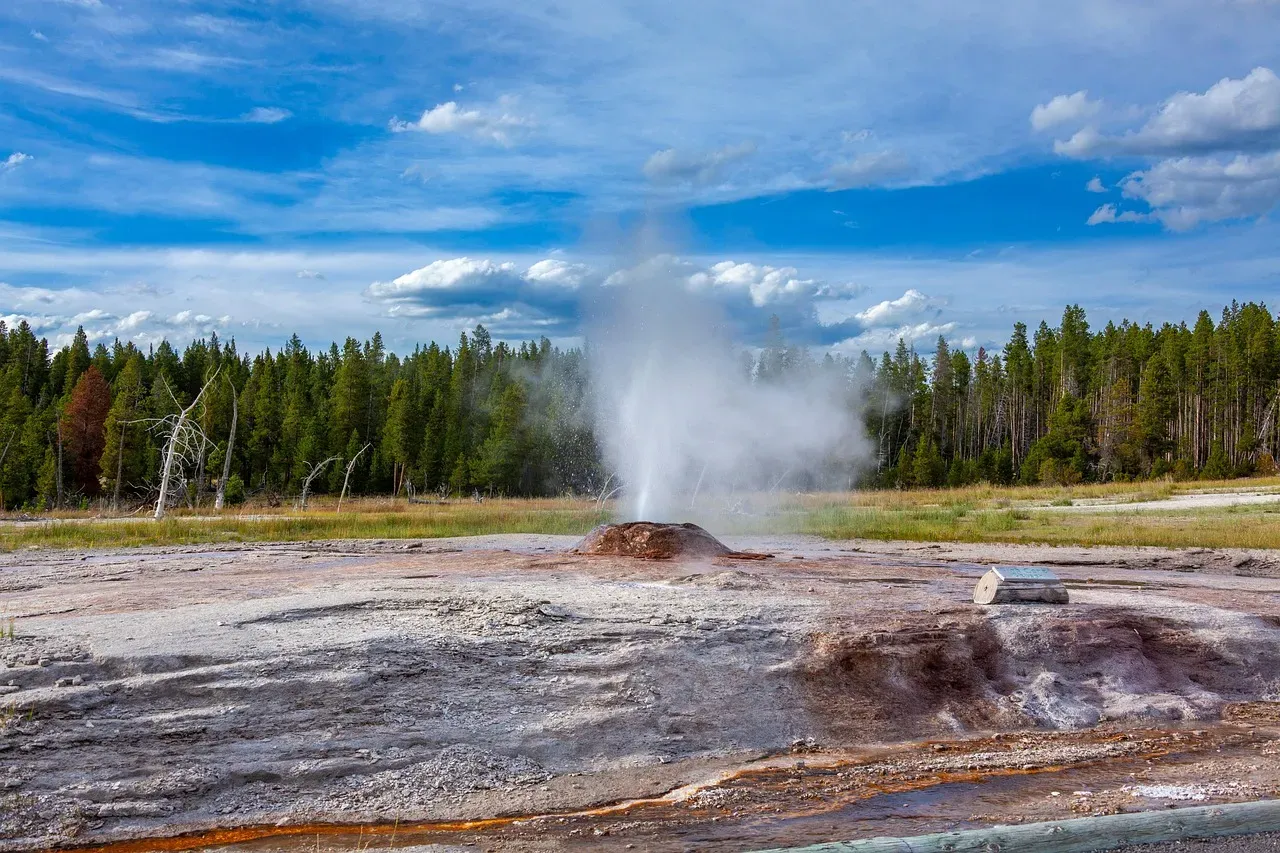
You walk around Yellowstone watching geysers erupt and colorful hot springs bubble, and it all feels a little magical, like something from another world. But the real story happening beneath you is almost incomprehensibly violent. Yellowstone doesn’t just have a volcano. Yellowstone is a volcano. And it’s active. A plume of molten rock rising beneath the park creates one of the world’s largest active volcanoes, and you can see the evidence everywhere in the form of geysers, hot springs, mud pots, and other otherworldly thermal features.
The first major eruption of the Yellowstone volcano, which occurred 2.1 million years ago, is among the largest volcanic eruptions ever known, covering over 5,790 square miles with ash. The most recent major eruption, 640,000 years ago, caused the ground to collapse into the magma reservoir, leaving a giant caldera. Subsequent lava flows filled in much of the caldera, and it is now measured at 30 by 45 miles. Let that sink in. The entire park you are walking through is essentially the scar tissue of a catastrophic ancient explosion. There are two separate magma chambers beneath the surface. The first sits only 5 miles beneath you and is roughly 25 by 50 miles wide. In 2015, a second, deeper chamber was discovered that begins 12 miles deep and stretches as far as 30 miles down. That second chamber alone is so large it could fill the Grand Canyon eleven times.
White Sands National Park: Footprints That Rewrote Human History
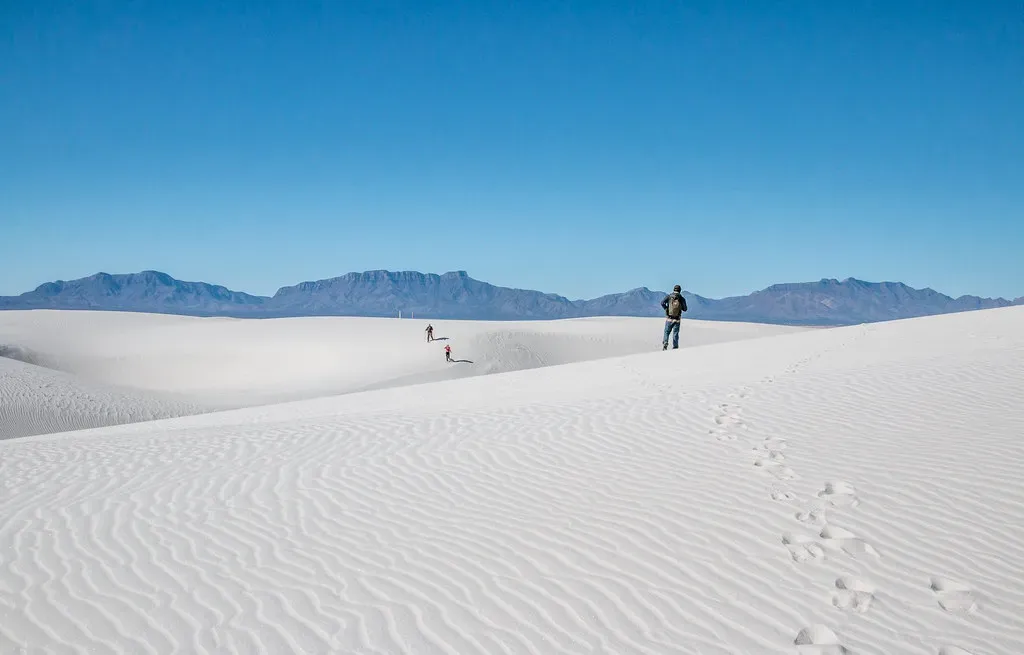
White Sands looks like a snow globe someone forgot to shake. Pure white gypsum dunes stretch as far as the eye can see, shimmering in the New Mexico sun. It is visually stunning, yes. But underneath those dunes is something that sent shockwaves through the entire scientific world. The shimmering dunes of White Sands National Park harbor an extraordinary secret: fossilized human footprints that suggest human presence in the Americas as much as 10,000 years earlier than previously believed.
These fossilized prints were made between 23,000 and 21,000 years ago along the shores of an ice age lake that once filled the Tularosa Basin in south-central New Mexico. This finding fundamentally changes the timeline on North American human habitation, turning back the clock of human arrival in the Americas by nearly 10,000 years. What makes this even more moving is the detail embedded in the prints themselves. Other tracks found alongside the human ones include those of extinct megafauna such as Columbian mammoths, ground sloths, and predators such as the American lion and dire wolves. One set of prints appears to show human hunters actually tracking a giant sloth, and variations in the sloth’s tracks suggest it stood on its hind legs and spun around, possibly in fear. That moment of prehistoric tension, frozen in gypsum sand, is one of the most haunting things science has ever uncovered.
Petrified Forest National Park: When Arizona Was a Jungle
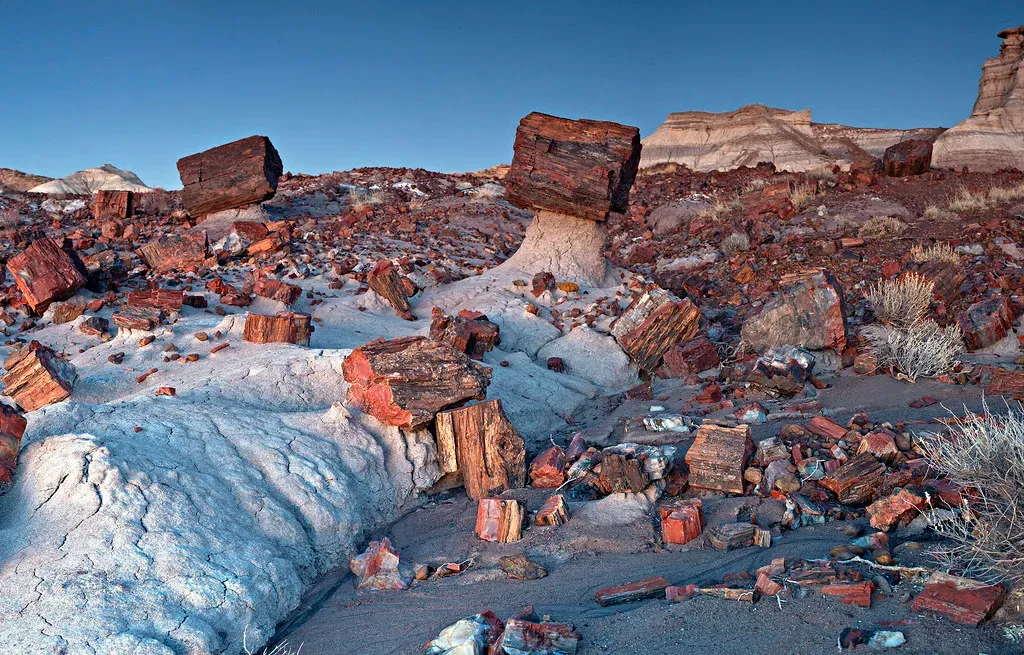
Here’s something I think very few people ever truly process when they visit Petrified Forest National Park in Arizona. The landscape around you, all desert scrub and cracked earth baking under a relentless sun, was once a lush, tropical jungle crawling with enormous prehistoric creatures. It sounds insane. It’s completely true. The park is named after logs that were washed into an ancient river system, buried, and slowly converted into colorful, almost solid quartz. In addition to its famous fossil wood, Petrified Forest also contains plant and animal fossils dating back to the Triassic Period.
Fossils found in the park date back to the Triassic Period and include creatures like a long-snouted Triassic fish, prehistoric sharks, small dinosaurs, and many other species. Think about that the next time you hike through what looks like a barren desert. The park’s rich paleontology also encompasses a wealth of fossilized reptiles. One of the main groups is the Archosaurs, which includes the ancestors of ancient pterosaurs and dinosaurs, but also of modern-day crocodiles, lizards, and birds. There are also many invertebrate fossils, including mussels, corals, and snails, along with prehistoric sharks. In other words, you are hiking through what was once an ancient seafloor and a dinosaur-era forest, layered on top of each other. It’s genuinely mind-bending.
Guadalupe Mountains National Park: Secrets of an Ancient Ocean Reef
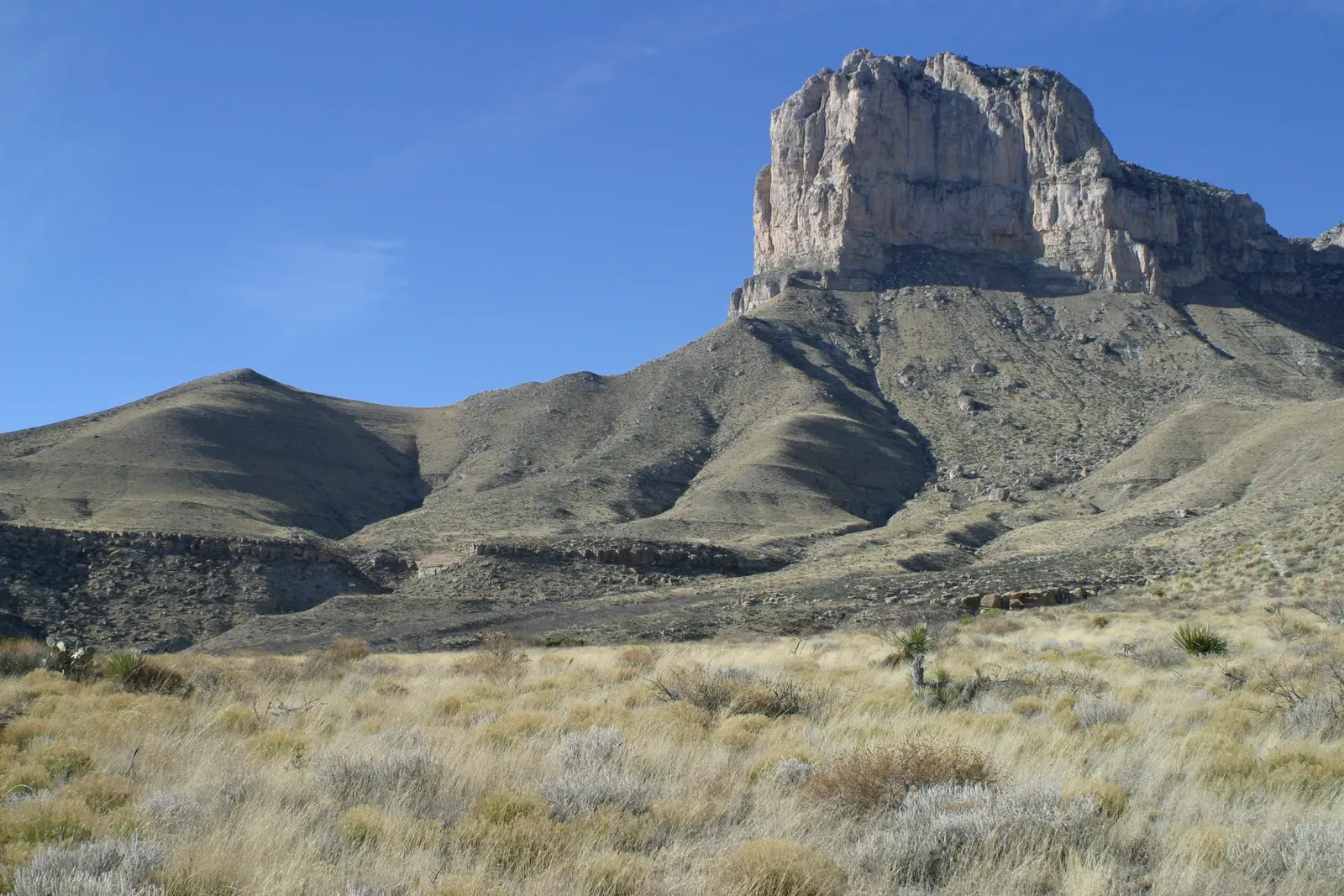
Most visitors to Guadalupe Mountains National Park in Texas come for the dramatic desert scenery and the challenging hike to Guadalupe Peak, the highest point in the state. The Guadalupe Mountains are an impressive range, rising abruptly over 3,000 feet from the desert floor, with challenging trails leading up to park highpoints like El Capitan. What almost nobody realizes is that those dramatic limestone peaks are not mountains in any conventional geological sense. They are something far stranger and more ancient.
Two hundred and sixty-five million years ago, the mountains of Guadalupe Mountains National Park were part of a massive prehistoric reef called the Capitan Reef. Let’s be real. You are standing on what used to be an enormous tropical coral reef at the edge of a shallow inland sea, in the middle of the desert. Today, you can find a variety of fossils in the park, including swirls of algae, ancient cephalopods, nautiloids, and sea creatures related to present-day oysters and clams. These paleontological remains are so important and complete that the park serves as the Global Boundary Stratotype Section and Point for the Middle Permian Age, meaning the fossils here literally mark the beginning of a defined stage of geological time on a global scale. That designation is reserved for only the most scientifically significant sites on Earth.
Bryce Canyon National Park: Time Sculpted in Stone Columns
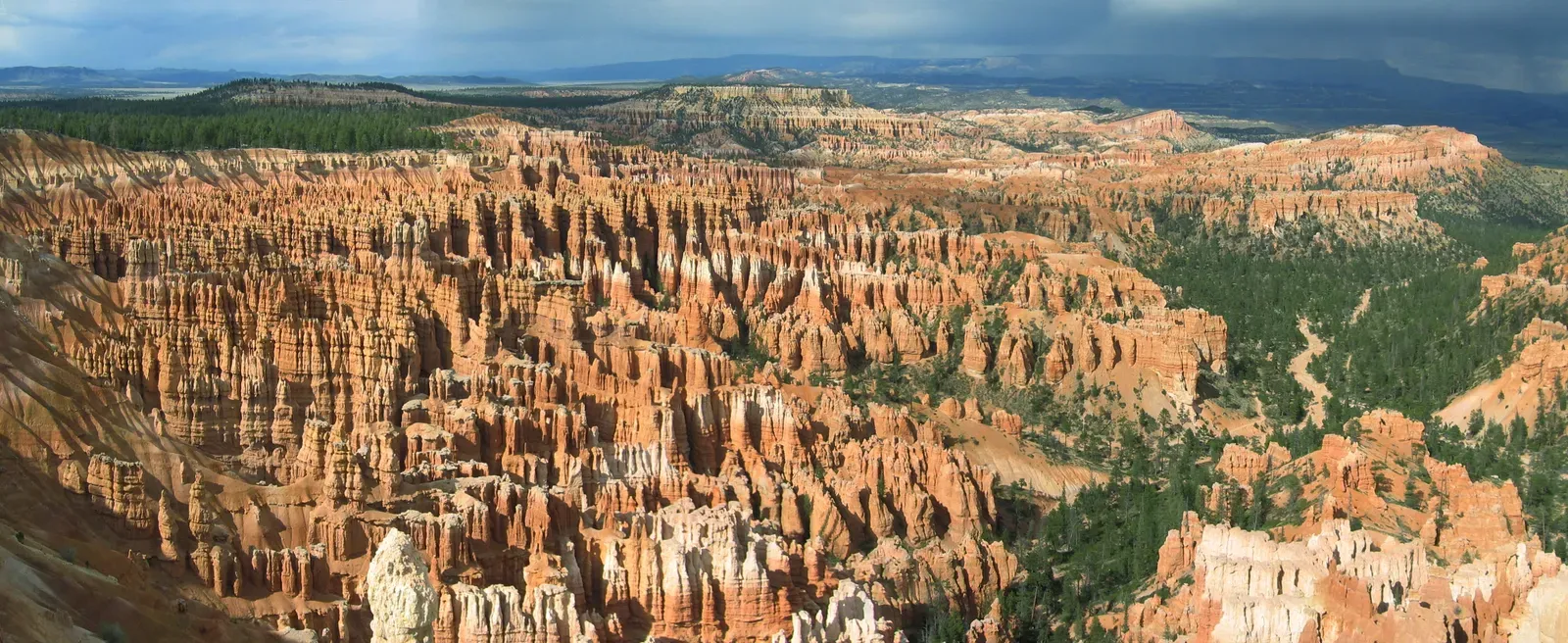
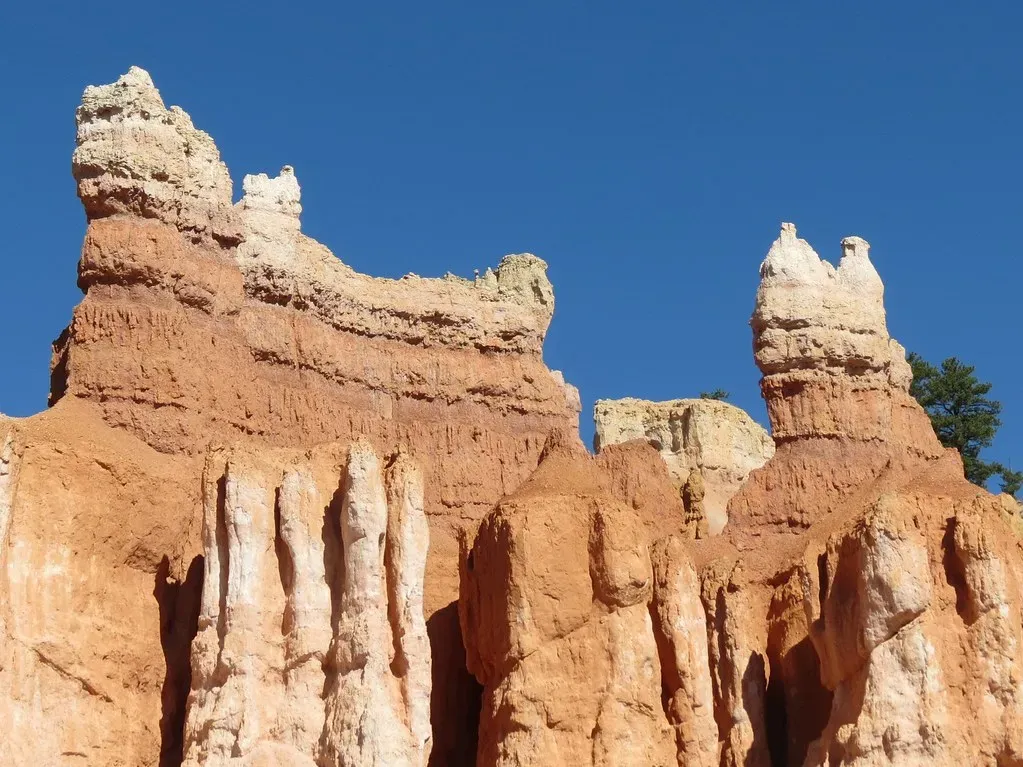
Bryce Canyon is one of those places that makes you feel as if you’ve accidentally wandered onto a different planet. The spires, the colors, the sheer alien geometry of the place. It shouldn’t look like it does, and yet here you are. Bryce Canyon National Park offers stunning views and 60 million years of geologic history. The retreat of an ancient seaway carved landforms that are still being shaped by today’s erosion into the otherworldly hoodoos you see today.
The uplift of the Colorado Plateau took Bryce Canyon to 9,000 feet in elevation, rerouting water and rewriting the park’s entire geological story. At this height, a single raindrop still plays a powerful role. Bryce is at the ideal elevation for hoodoo formation, reaching freezing temperatures some 200 nights a year, with its vistas still being carved by rain, snow, and ice. Every 50 years, the rim loses a foot. It’s hard to say for sure exactly what Bryce will look like in another million years, but it’s safe to say it won’t be what you see today. The landscape is literally disappearing in slow motion, one frozen raindrop at a time. That’s deep time working in real time, right in front of you.
Dinosaur National Monument: Where the Jurassic Is Still Embedded in the Wall
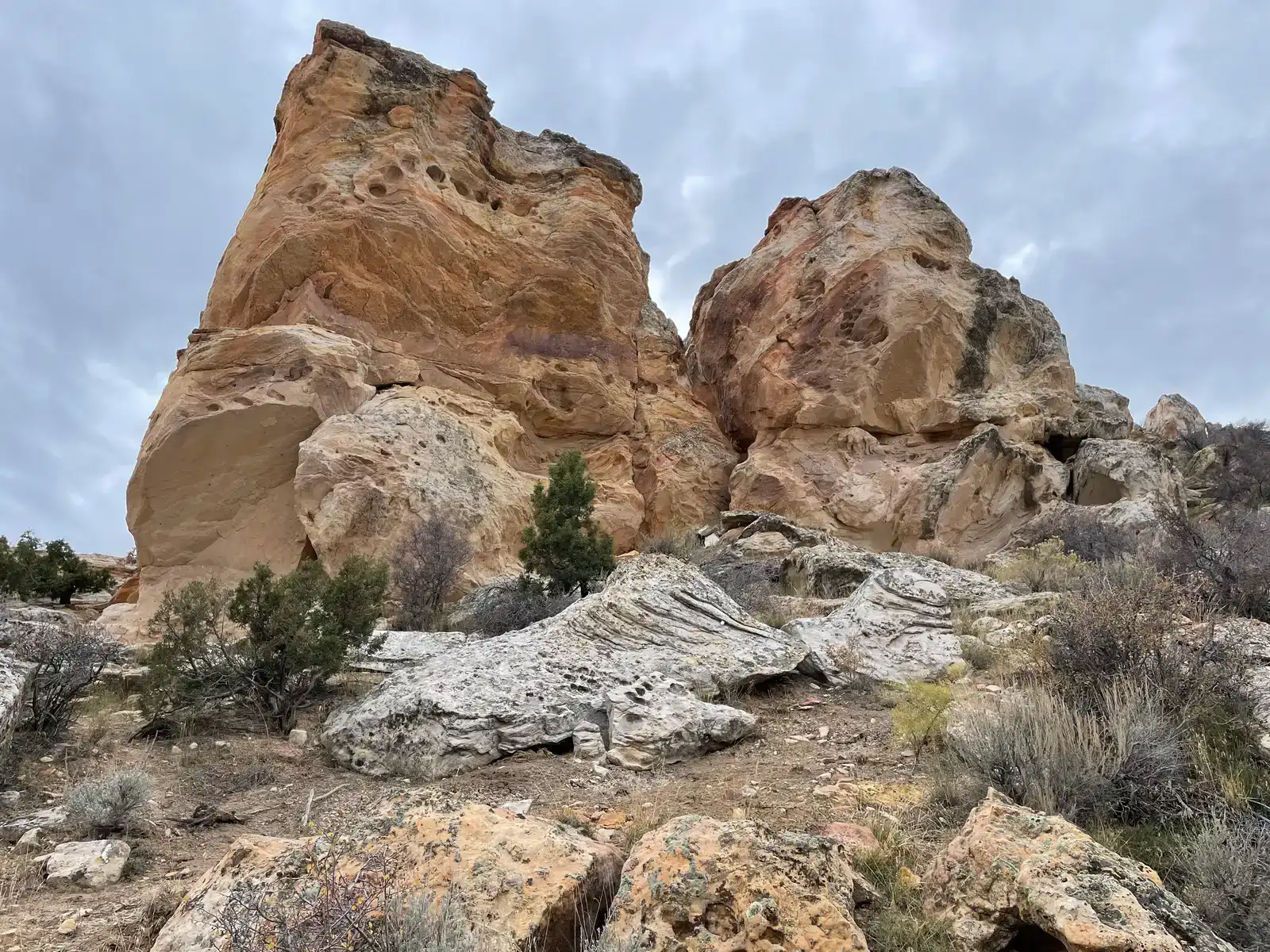
Some places just deliver on their name. Dinosaur National Monument, sitting at the confluence of the Green and Yampa Rivers on the Colorado and Utah border, is exactly what it sounds like. Only more. Way more. This site at the confluence of the Green and Yampa Rivers is, in every meaningful sense, a real Jurassic park. If you love dinosaurs, the monument’s exceptional quarry features a dense concentration of bones from a variety of prehistoric species. Visitors can see more than 1,500 fossils at the Quarry Exhibit Hall, most of them still partially embedded in the rock. You can even touch dinosaur remains from 149 million years ago.
Think about that for a moment. You can physically touch something that was alive 149 million years ago. Nothing in a museum gets you that close to deep time. The most common species found here are sauropods, dinosaurs with long necks, including the Diplodocus, one of the longest known dinosaurs in terms of sheer size. The sheer density of fossils in this quarry tells a story of a mass death event, likely a catastrophic flood that swept dozens of enormous animals into a single sandbar where they were buried and preserved. It is, in the most literal and stunning sense, a graveyard from the age of giants.
Mesa Verde National Park: Ancient People, Geological Mystery
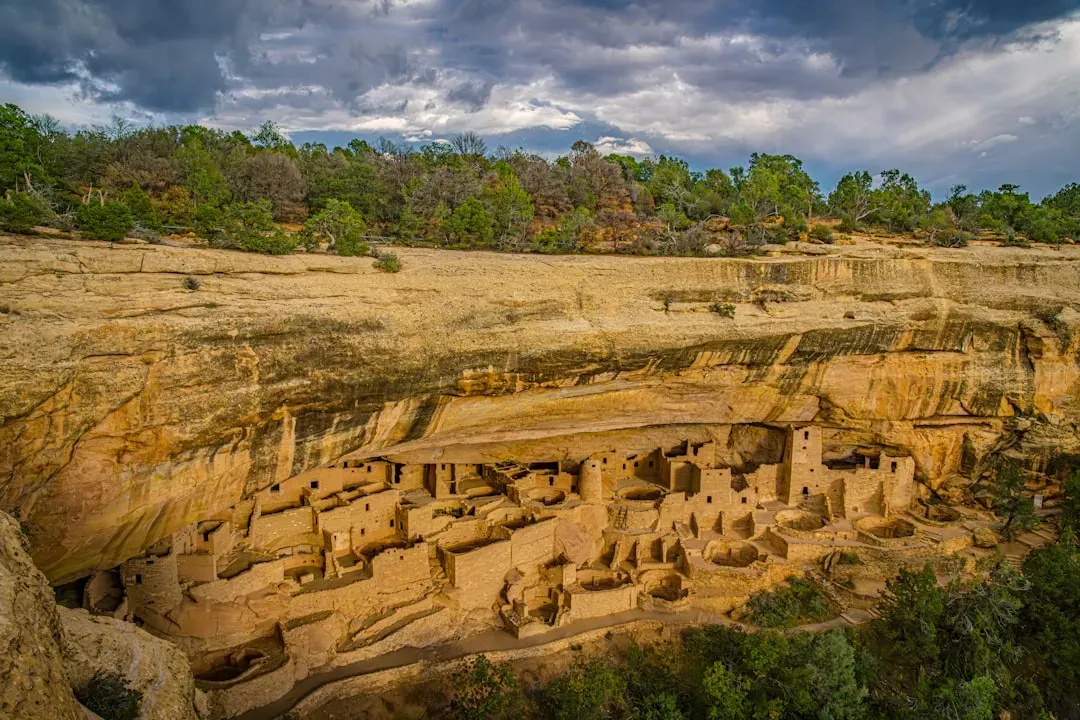
Mesa Verde occupies a unique position among the parks in this list. Its secrets are not purely geological. They are human. Deeply, hauntingly human. Mesa Verde National Park, in the heart of southwestern Colorado, is a stunning reminder of the captivating Pueblo civilization. With its awe-inspiring cliff dwellings and archaeological sites, it gives a unique view into the history of the Ancestral Puebloans. These weren’t simple people building simple shelters. They were sophisticated architects working in some of the most challenging terrain imaginable.
Legends were told of the Anasazi, the “old ones,” who had mysteriously vanished from the cliff palaces without a trace. However, this was essentially an invented story, marketing copy used to sell guided tours and stolen relics. In reality, the cliff dwellers were Ancestral Puebloans who migrated south to the modern pueblos in New Mexico and Arizona. The real mystery isn’t disappearance. It’s why they left. Paleoclimatic data suggests a 13th-century shift from a warmer and wetter period to numerous decades of increasingly drier and colder conditions, which likely forced a massive cultural migration. Mesa Verde also contains more than 5,000 archaeological sites, most of which remain unexcavated, which means the full story of this ancient civilization is still waiting to be told. That, to me, is the most exciting thing of all.
Conclusion: The Past Is Never as Far Away as You Think
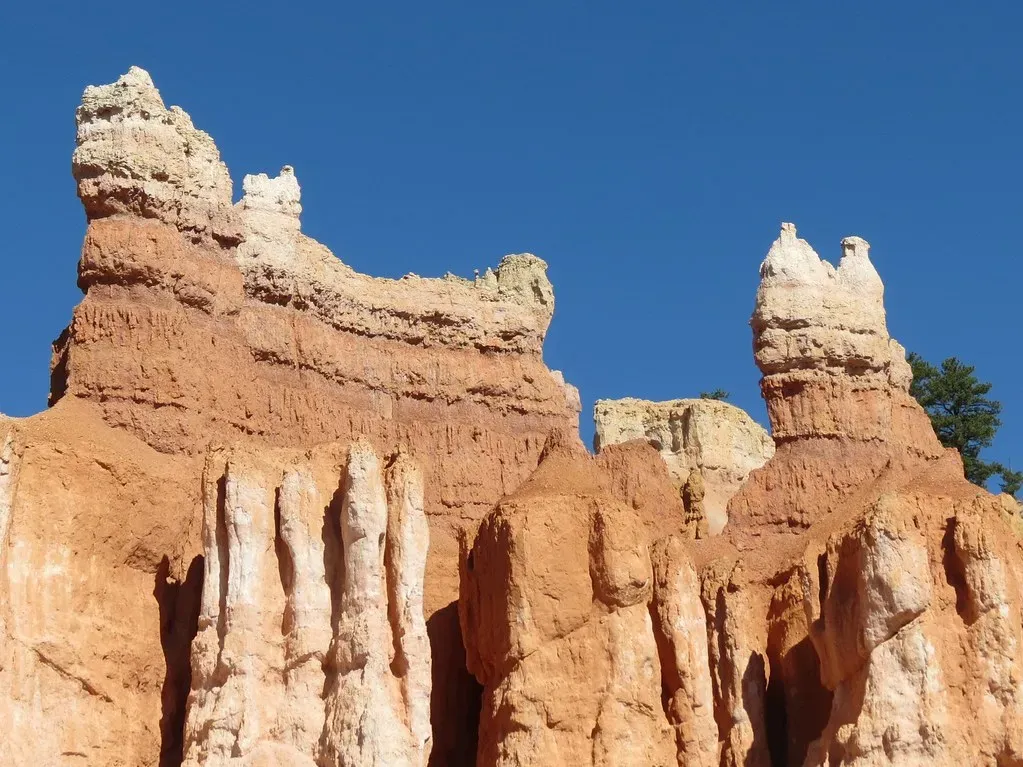
You don’t need a time machine to travel billions of years into Earth’s past. You just need to visit the right national park and look a little closer. Every hoodoo in Bryce Canyon is a clock counting down. Every fossil embedded in Dinosaur National Monument’s quarry wall is a message from a world we can barely imagine. Every footprint pressed into the gypsum sand of White Sands is a reminder that human history stretches far deeper than our textbooks once dared to suggest.
Collectively, the fossil record of the National Park Service spans over two billion years of Earth’s history and tells an incredible story of how life changed, adapted, and in many cases went extinct over geologic time. That story belongs to all of us. These parks are not just beautiful places. They are portals. And the most extraordinary thing about them is that the deeper you look, the more secrets they reveal.
So the next time you stand at the rim of a canyon or walk across a field of ancient dunes, ask yourself this: how many layers of time are you standing on right now? What do you think about it? Share your thoughts in the comments.