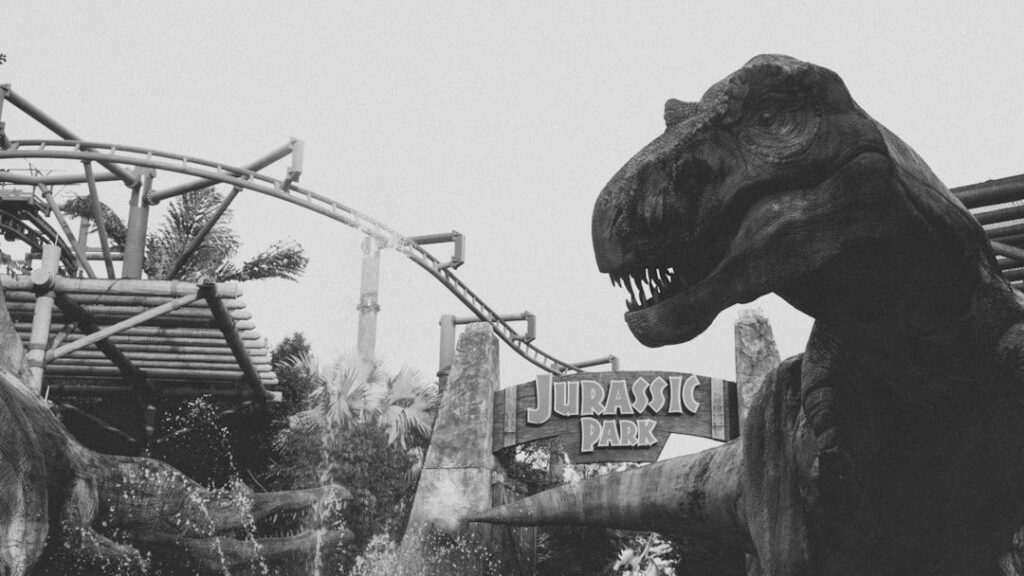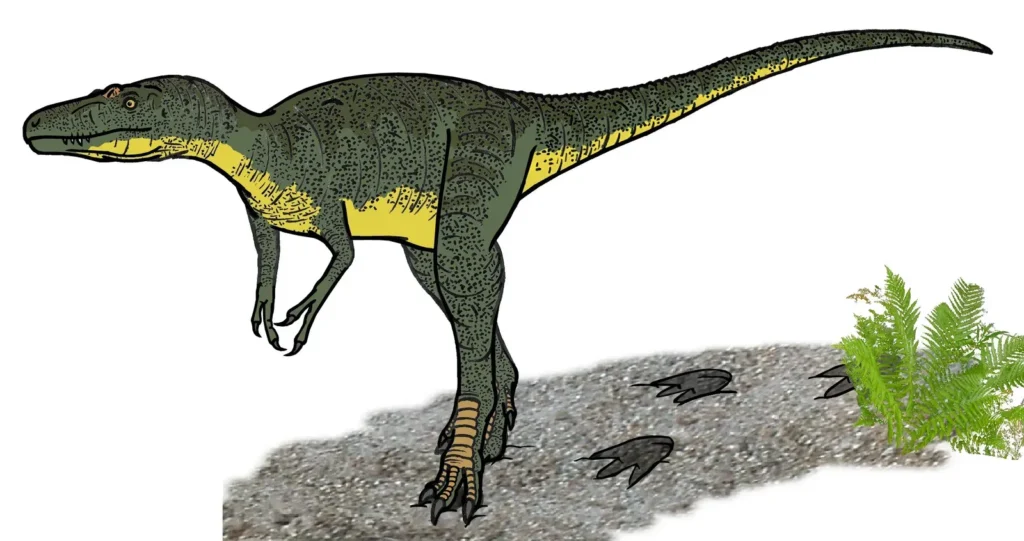
Everything you think you know about dinosaurs is probably at least a little bit wrong. For most of us, the image is seared into memory: towering, scaly green monsters with permanently exposed teeth, dragging their tails, roaring across some foggy prehistoric landscape. That picture, honestly, couldn’t be further from reality.
In the past few decades, with the advance of imaging technology and the ability to share research across the globe, paleontologists have made extraordinary leaps in their knowledge of prehistoric animals, and it’s fundamentally changing the popular images we hold about what dinosaurs looked like and how they lived. The science of reconstructing dinosaur appearance has exploded into something almost cinematic in its revelations. What scientists and artists are now able to show us is breathtaking. Let’s dive in.
1. The Feathered Tyrannosaurus Rex – Not the Monster You Imagined
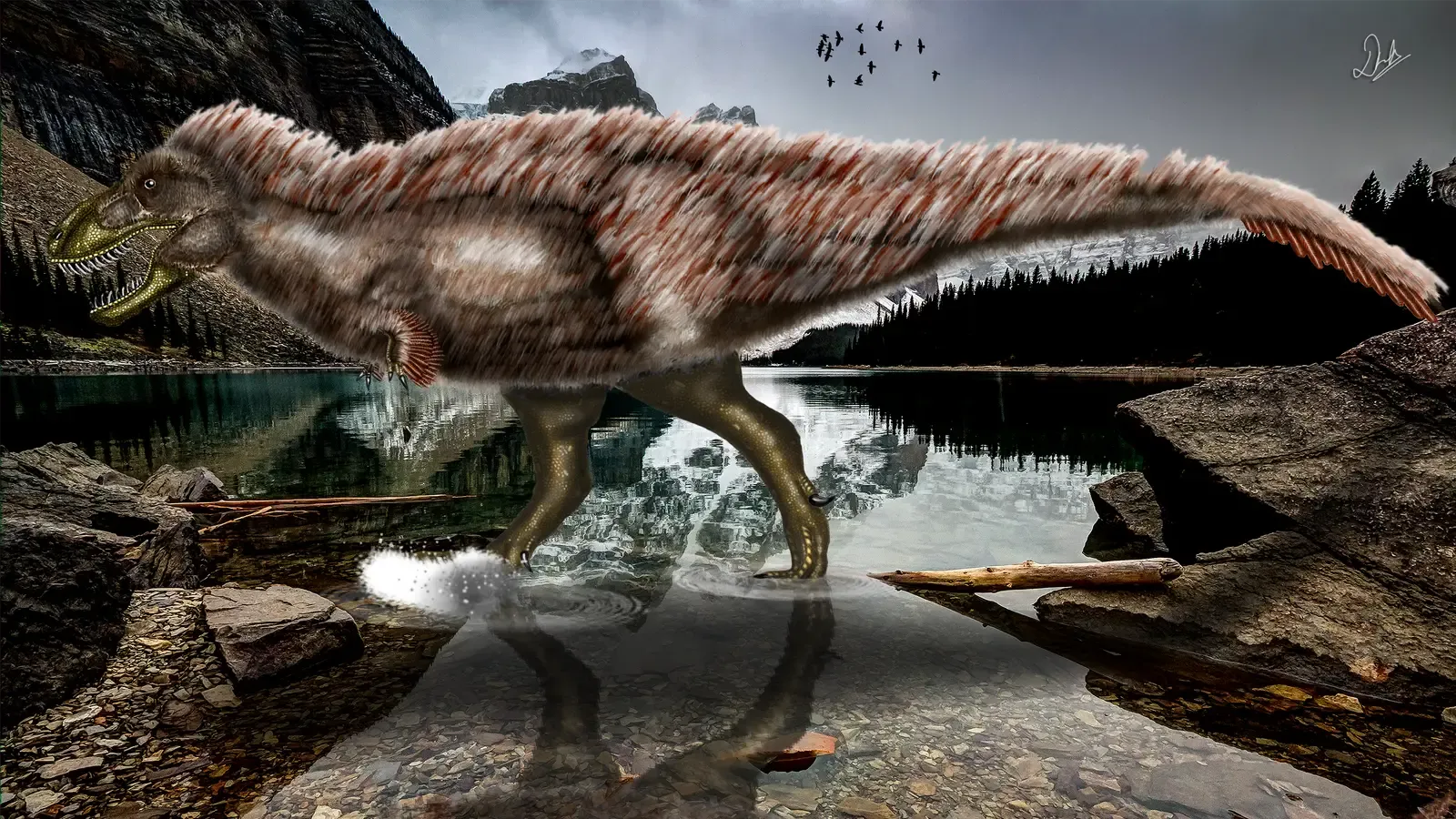
Few images in popular science are as culturally locked-in as the Tyrannosaurus rex from Jurassic Park. Rows of glistening exposed teeth, scaly green skin, pure terror. Here’s the thing, though: that image is, by modern scientific standards, significantly outdated. In some paleoartistic reconstructions, you will see a furry T. rex, and researchers now believe it’s likely that at least at one point in their lives, they probably had bodies that were partially or completely covered in feathers.
Visualizations today show a creature that looks far more like an enormous, intimidating bird than a reptilian monster. Contrary to classic depictions, T. rex most likely had more prominent lips that would have covered up its giant teeth. The more that scientists learn about T. rex, the more the image softens and begins to resemble an actual animal that could have lived on Earth. Somehow, that feels even more unsettling.
2. Velociraptor – The Feathered Turkey-Sized Predator
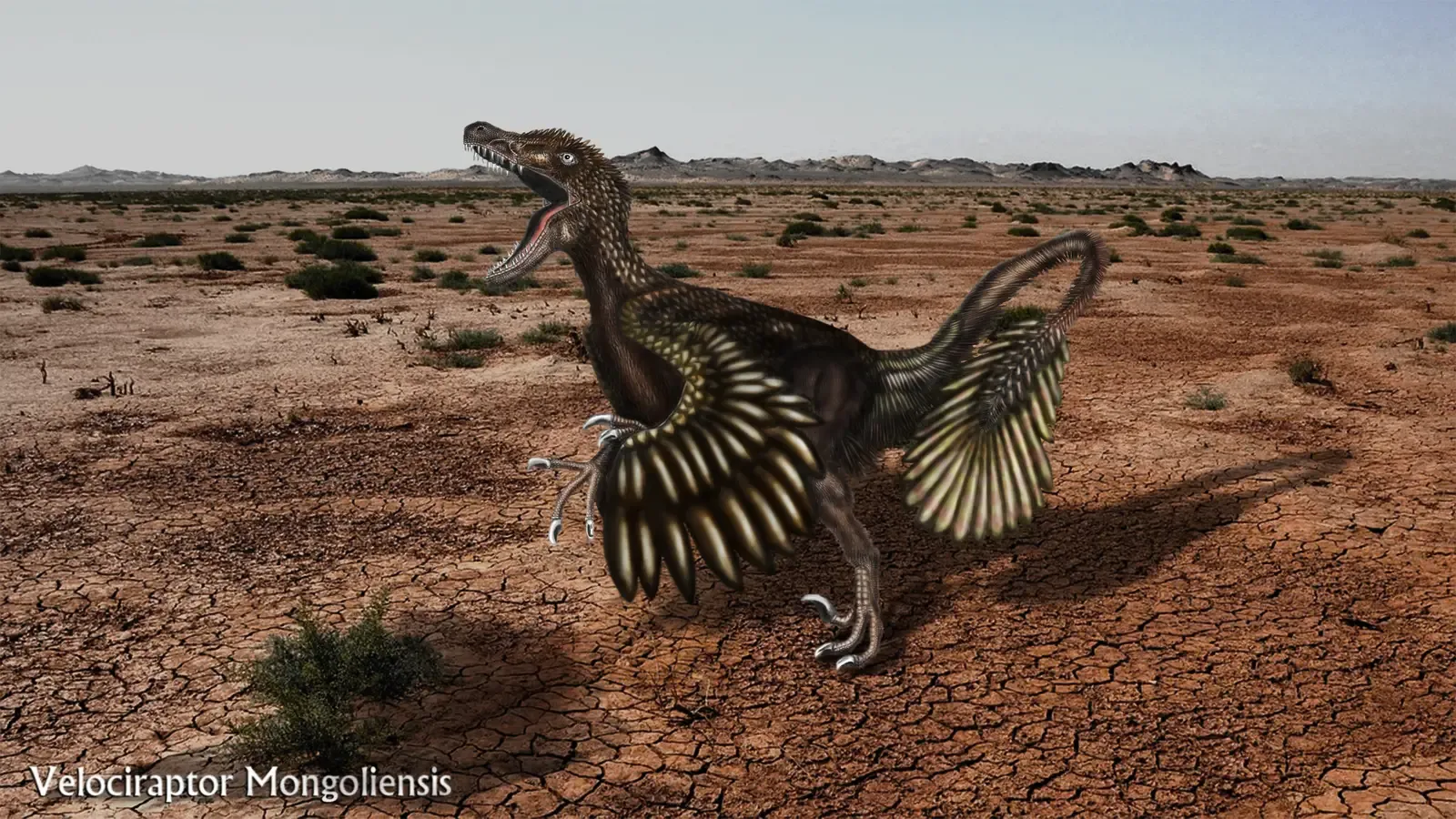
If there is one dinosaur that Hollywood got spectacularly wrong, it might be the Velociraptor. The version in Jurassic Park was a terrifying, human-sized, scaly predator. The reality? Quite different. The Velociraptor in the movie is much bigger than the actual animal would have been, and Velociraptor was really completely covered in feathers, about the size of a turkey.
Accurate visualizations of Velociraptor show a compact, bird-like creature bristling with pennaceous feathers along its arms and body. Dromaeosaurids like Velociraptor had something that looked more like fuzz on their bodies, while their hands and wings had pennaceous feathers, like today’s birds. It is still a terrifying predator, just one that looks far more like an enraged, clawed eagle than a reptile.
3. Anchiornis – The First Dinosaur to Be Fully Colored by Science
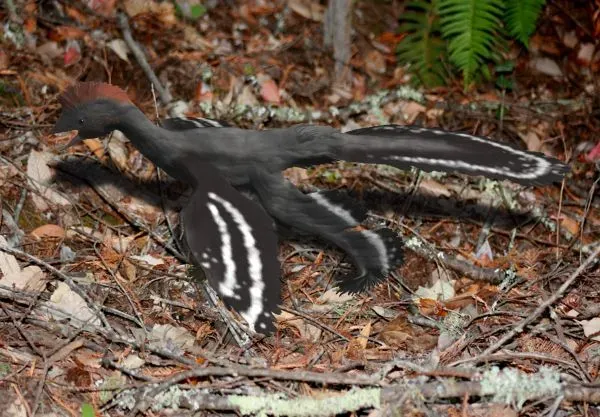
Imagine being the first scientist to literally see what a dinosaur looked like in color. That moment actually happened. The 155-million-year-old Anchiornis huxleyi turns out to have looked something like a woodpecker the size of a chicken, with black-and-white spangled wings and a rusty red crown. It is one of those facts that makes you stop and stare at the ceiling for a moment.
The chicken-size dinosaur species’ color patterns were decoded after researchers used a scanning electron microscope to study pigment samples taken from fossil feathers all over a specimen and then compared the samples to pigment from modern birds. Most surprisingly, the feathers on the crown of the head contained impressions of round melanosomes that would have given Anchiornis a ruddy crest, and all told, this combination of colors made for a spectacularly flamboyant creature. Flamboyant. A 155-million-year-old dinosaur. Who could have guessed?
4. Microraptor – The Crow-Colored, Four-Winged Glider
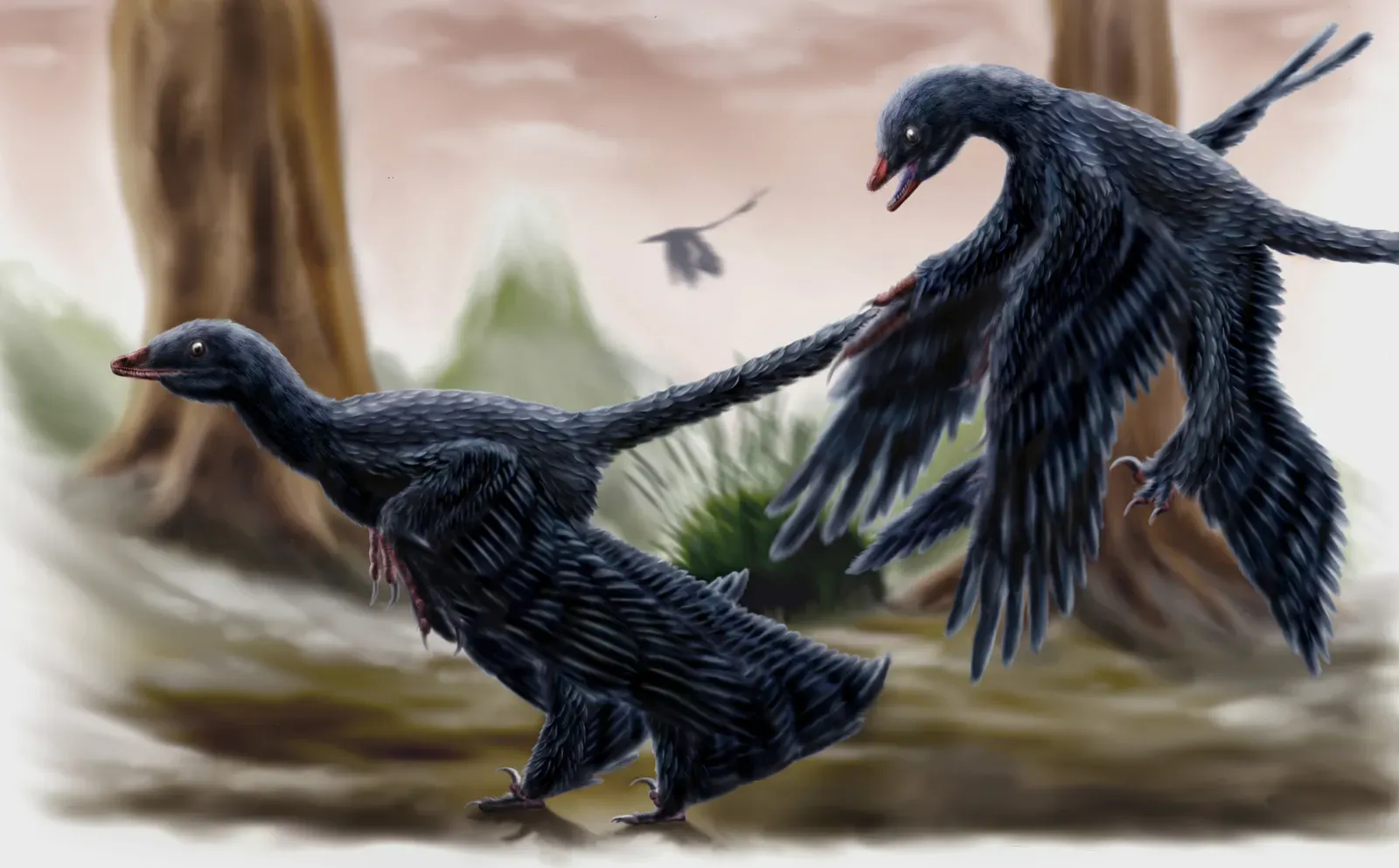
Microraptor is one of those dinosaurs that sounds like it was designed by a committee of scientists who wanted to break every expectation at once. It had four wings, razor-sharp claws, and teeth. In Microraptor, the preserved feathers contain long, sausage-shaped melanosomes arranged to bend light in eye-catching ways. Its plumage would have been black, with the same shiny sheen as a crow’s.
Experts had presumed that Microraptor was nocturnal, based on the large size of its eye sockets. But the discovery that it possessed iridescent plumage suggests otherwise, because in modern birds such coloration is typically found in species active in the daytime. So a single stunning visualization, built from microscopic fossil evidence, completely rewrote our understanding of how this animal behaved. That is extraordinary science.
5. Sinosauropteryx – The World’s First Ginger Dinosaur
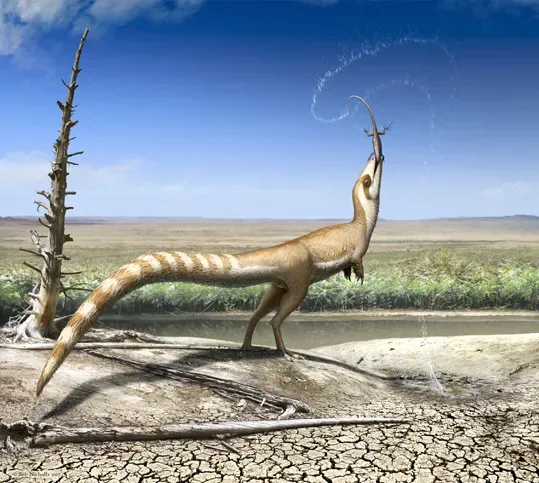
Let’s be real, nobody expected the first dinosaur to be confirmed with real, scientifically verified coloration to be a ginger. Yet here we are. The pattern of meatball melanosomes in the fuzz-covered dinosaur Sinosauropteryx implied that it had sported a reddish coat and a tiger-striped tail, making it the first known ginger dinosaur. It was a small, feathered creature from Early Cretaceous China, and it looked absolutely nothing like a lizard.
Starting with Sinosauropteryx in 1996, paleontologists have now found dozens of species sporting everything from simple fuzz to elaborate flight feathers. The visualization of Sinosauropteryx as a reddish-brown, striped little creature completely dismantled the old stereotype of drab, gray prehistoric life. It is one of those moments in science where a single fossil changes everything.
6. Borealopelta – The Armored Beast That Still Needed to Hide
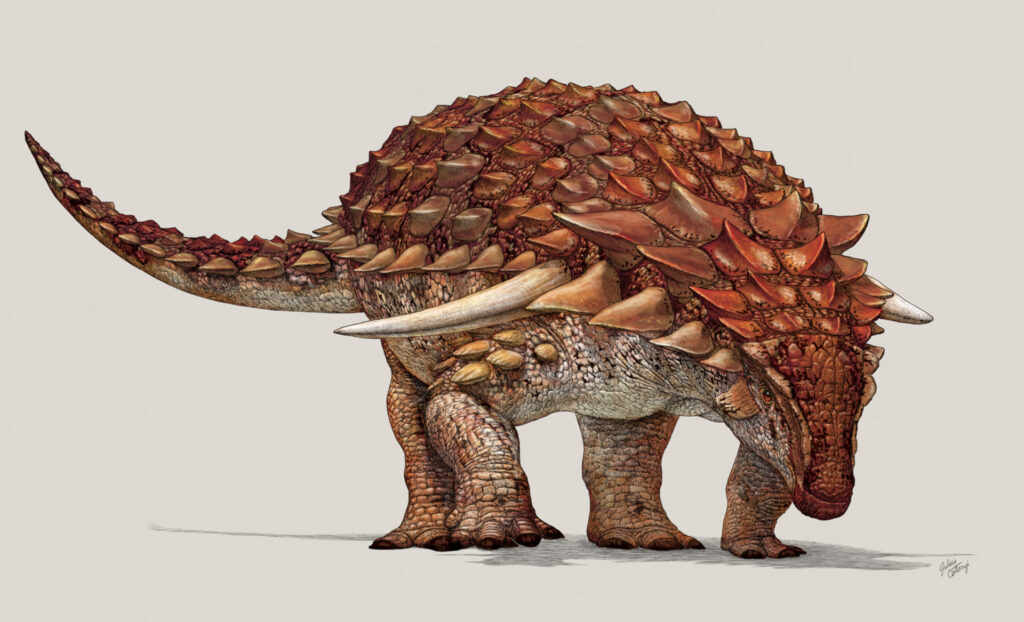
You would think that an enormous, tank-like dinosaur covered head to toe in armor would have nothing to worry about. Borealopelta markmitchelli, however, tells a very different story. The remarkable preservation of Borealopelta, an armored nodosaurid dinosaur discovered in Canada, has provided unprecedented insights into the coloration of larger dinosaurs. This tank-like herbivore, measuring approximately 18 feet long, possessed a reddish-brown pigmentation, confirmed through chemical analysis of organic compounds in its fossilized skin.
Researchers discovered that Borealopelta exhibited countershading, darker on top and lighter underneath, despite its massive size and formidable armor. This coloration pattern, typically associated with camouflage in smaller animals vulnerable to predation, suggests that even heavily armored dinosaurs faced significant predatory threats. In other words, even the most fortified creature in the Cretaceous still felt the need to blend in. That is humbling, honestly.
7. Diplodocus – Far From the Dull Gray Giant We Assumed
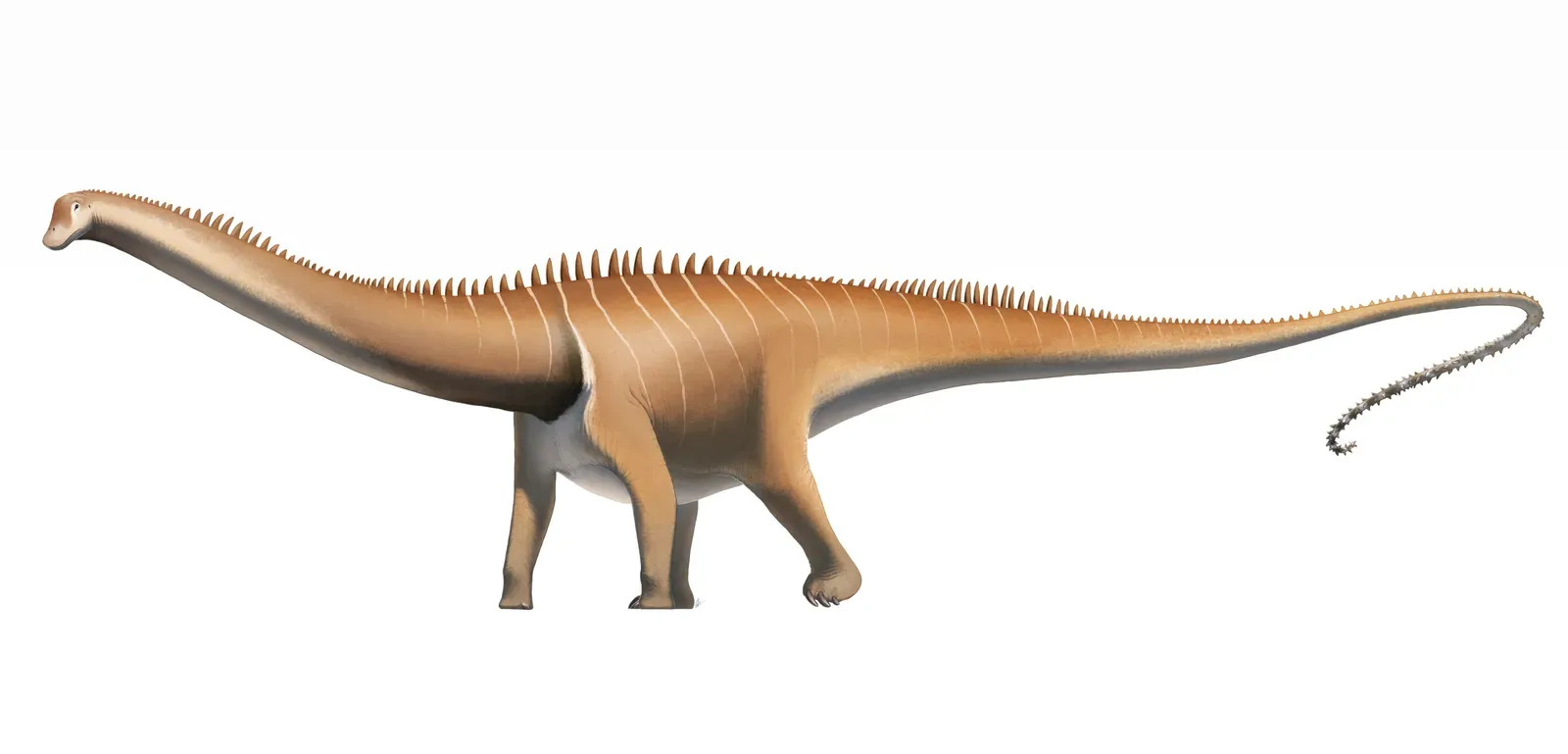
For more than a century, sauropods like Diplodocus and Apatosaurus have been imagined as gray, uniform giants with wrinkly, elephant-like skin and no bold markings, long assumed to be relatively plain animals. A 2025 study published in Royal Society Open Science shattered that assumption in spectacular fashion. Science, as it tends to do, surprised everyone.
Scientists identified the first fossilized melanosomes ever found in sauropod skin. The discovery came from juvenile Diplodocus specimens at the Mother’s Day Quarry within Montana’s Morrison Formation. Microscopic pigment-bearing structures reveal that juveniles may have had speckled or patchy coloration, not uniform gray skin. This study sheds another ray of light into the distant past, challenging the view of sauropods as the drab, gray animals they are often presented as. The biggest animals to ever walk the Earth may have been spotted. Think about that.
8. Psittacosaurus – A Master of Camouflage With a Complex Pattern
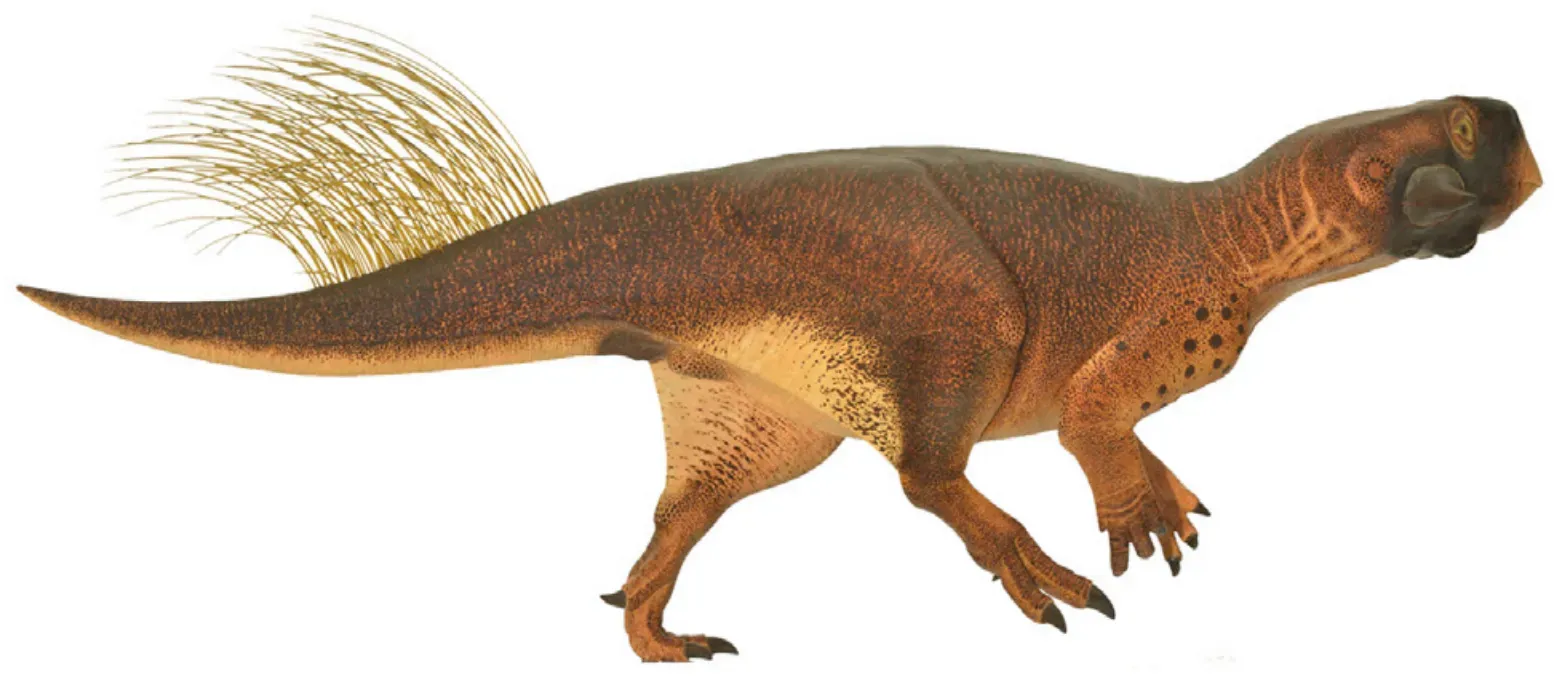
Psittacosaurus, a dog-sized relative of Triceratops, revealed one of the most sophisticated color patterns yet discovered in any dinosaur. A remarkably preserved specimen allowed scientists to reconstruct its coloration with unprecedented detail, showing a reddish-brown upper body contrasting with a lighter underbelly, a pattern called countershading that helps conceal animals in natural light conditions.
Computer modeling demonstrated that this particular countershading pattern would have provided optimal camouflage in a forested environment with dappled light rather than in open plains. The dinosaur’s skin also featured larger pigment patches and subtle color variations, with additional analysis revealing darker coloration around the cloacal region and lighter pigmentation on the inside of the thighs. This is not just a dinosaur color study. It is a full reconstruction of a real animal’s entire lifestyle, told through the language of pigment.
9. Yutyrannus Huali – The Feathered Giant That Changed Everything About T. Rex
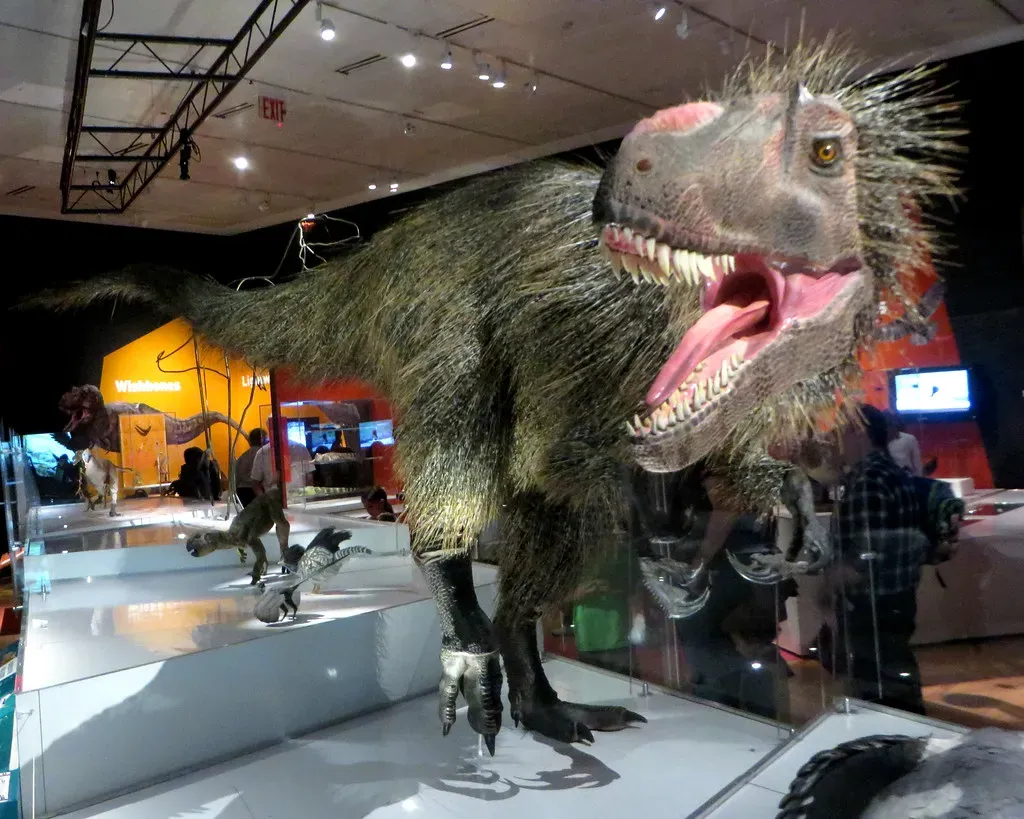
If you ever wanted a single fossil discovery that upends a pop-culture institution, Yutyrannus huali is your dinosaur. The largest known feathered dinosaur, a 23-foot-long tyrannosaur that lived 125 million years ago known as Yutyrannus huali, changes the popular image of its most iconic relative, because from it we can infer that Tyrannosaurus rex must also have had feathers.
While these larger dinosaurs couldn’t fly, they likely used their primitive plumage for insulation or visual displays, the same way modern peacocks attract mates. Visualizations of Yutyrannus show a creature almost lion-like in its presence, covered in long, flowing proto-feathers across a massive, predatory frame. It is terrifying in the best possible way, and it is far more real than anything Jurassic Park ever dared to show.
10. Nanotyrannus – The Sleek Speed Hunter Finally Confirmed
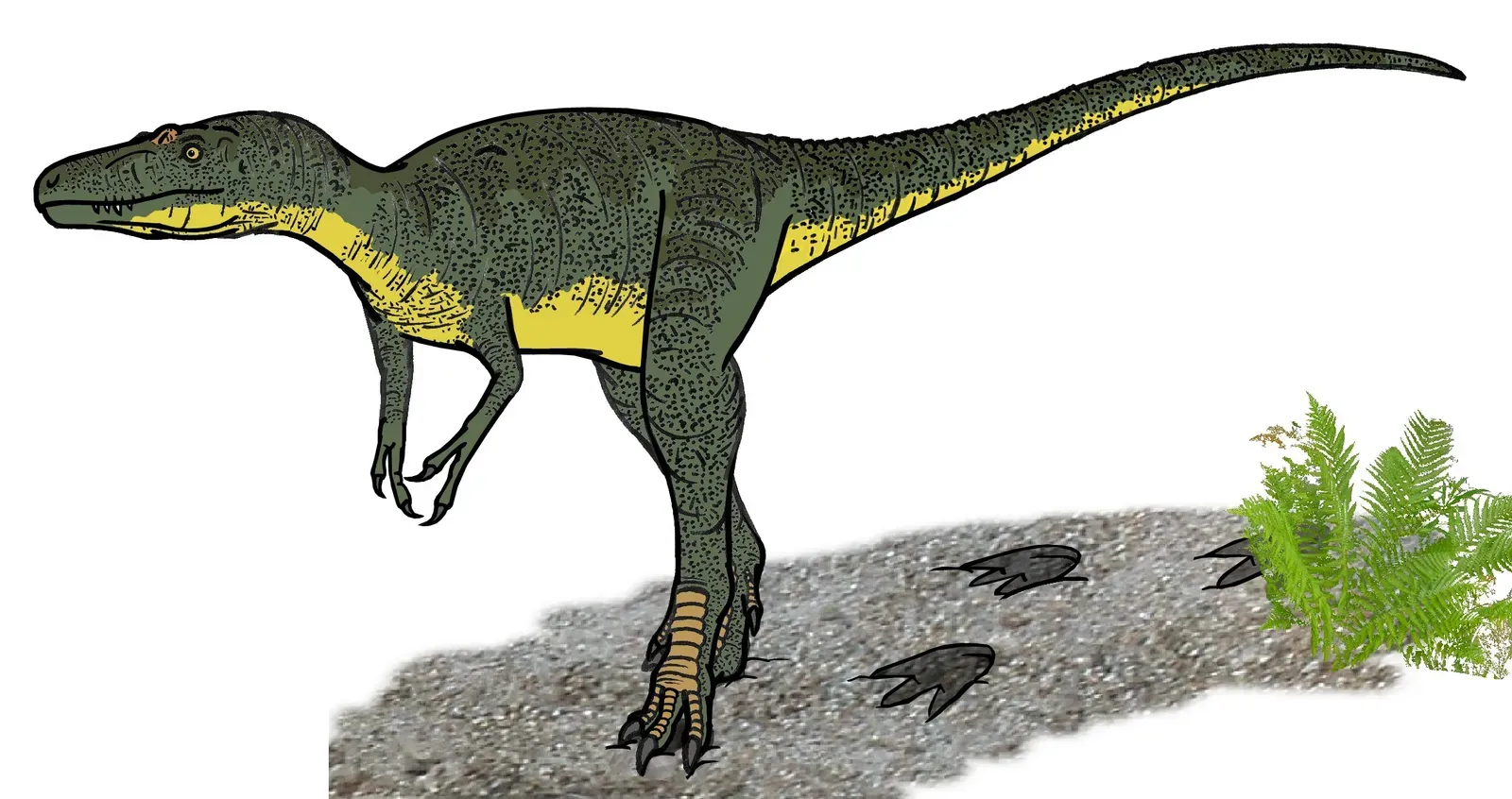
For decades, the paleontological world argued over whether Nanotyrannus was its own creature or simply a juvenile T. rex. The debate was fierce. One of the fiercest debates in dinosaur paleontology concerned Nanotyrannus, a 66-million-year-old predator from Montana. Nanotyrannus was first named in 1988 and suggested to be a small tyrannosaurid around 5 meters long that lived alongside the giant T. rex, but many paleontologists disagreed, suggesting it was just a young T. rex.
In 2025, paleontologists Lindsay Zanno and James Napoli published a description of a new Nanotyrannus fossil specimen and showed it was nearly an adult, but also different from T. rex in ways that cannot be explained by growth, including a longer hand. Together with a subsequent study, these results end a 35-year-long controversy and reveal Nanotyrannus as a slender, agile pursuit predator, built for speed. Visualizations of this animal are nothing short of electric, a lean, fast-moving hunter that shared its world with one of the most famous predators in history.
11. Spicomellus – The Strangest Looking Dinosaur You’ve Never Heard Of
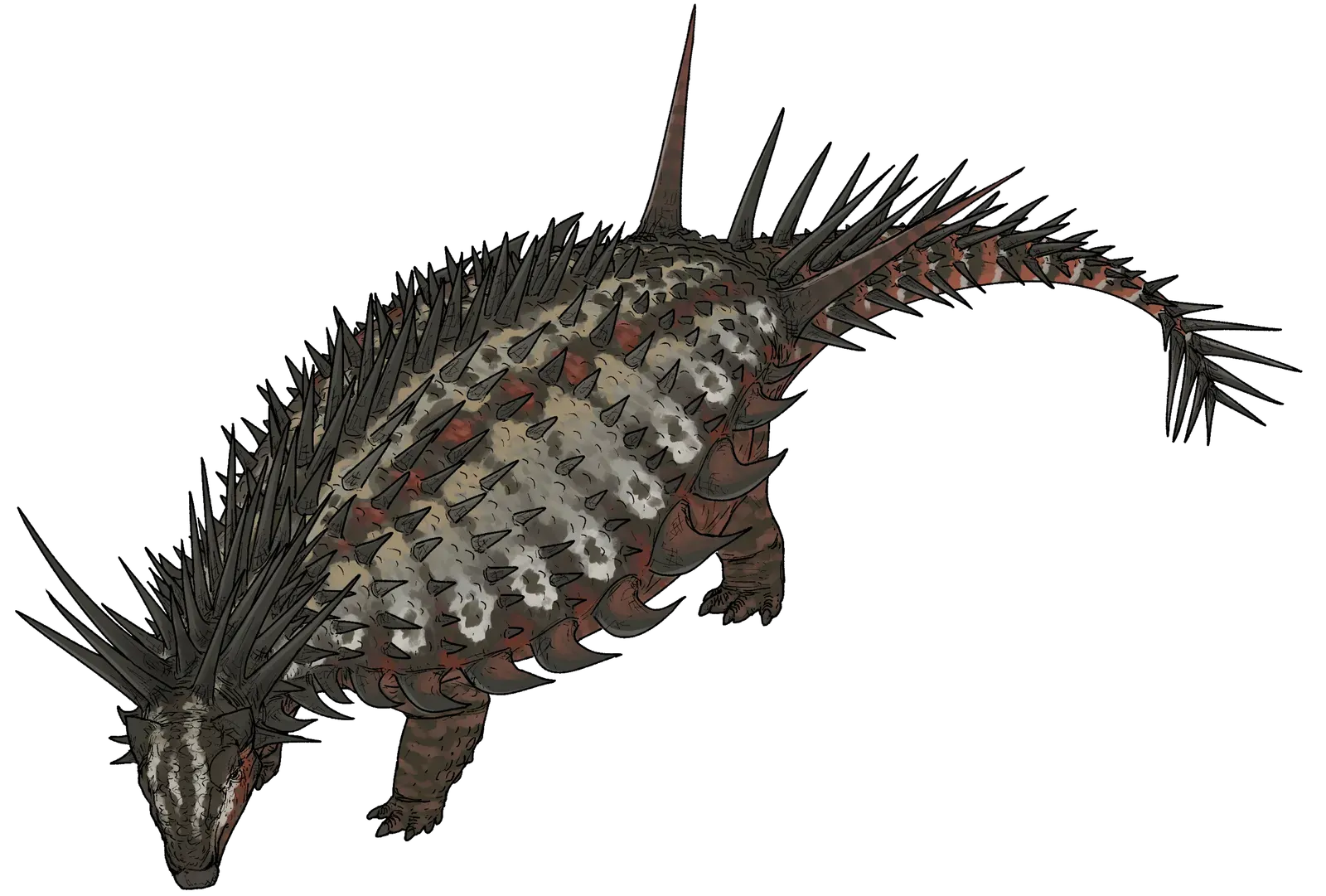
I think it’s safe to say that Spicomellus is the kind of dinosaur that makes you genuinely question what nature was thinking. New fossils reveal that Spicomellus is the oldest known member of the ankylosaurs, heavily armored, low and squat plant-eaters, and is characterized by its bizarre armor, bristling with long spines all over the body, including a bony collar around the neck with spines the length of golf clubs sticking out.
Istiorachis, another recent ornithopod find, is a herbivore with a striking sail-like structure running along its back. This sail may have been a display structure used to attract mates and to deter predators by making this 128-million-year-old animal look bigger. When you see accurate visualizations of these heavily adorned creatures side by side, the Mesozoic starts to look less like a history lesson and more like the most extreme wildlife documentary ever filmed.
12. Zavacephale – The Dome-Headed Mystery From the Gobi Desert
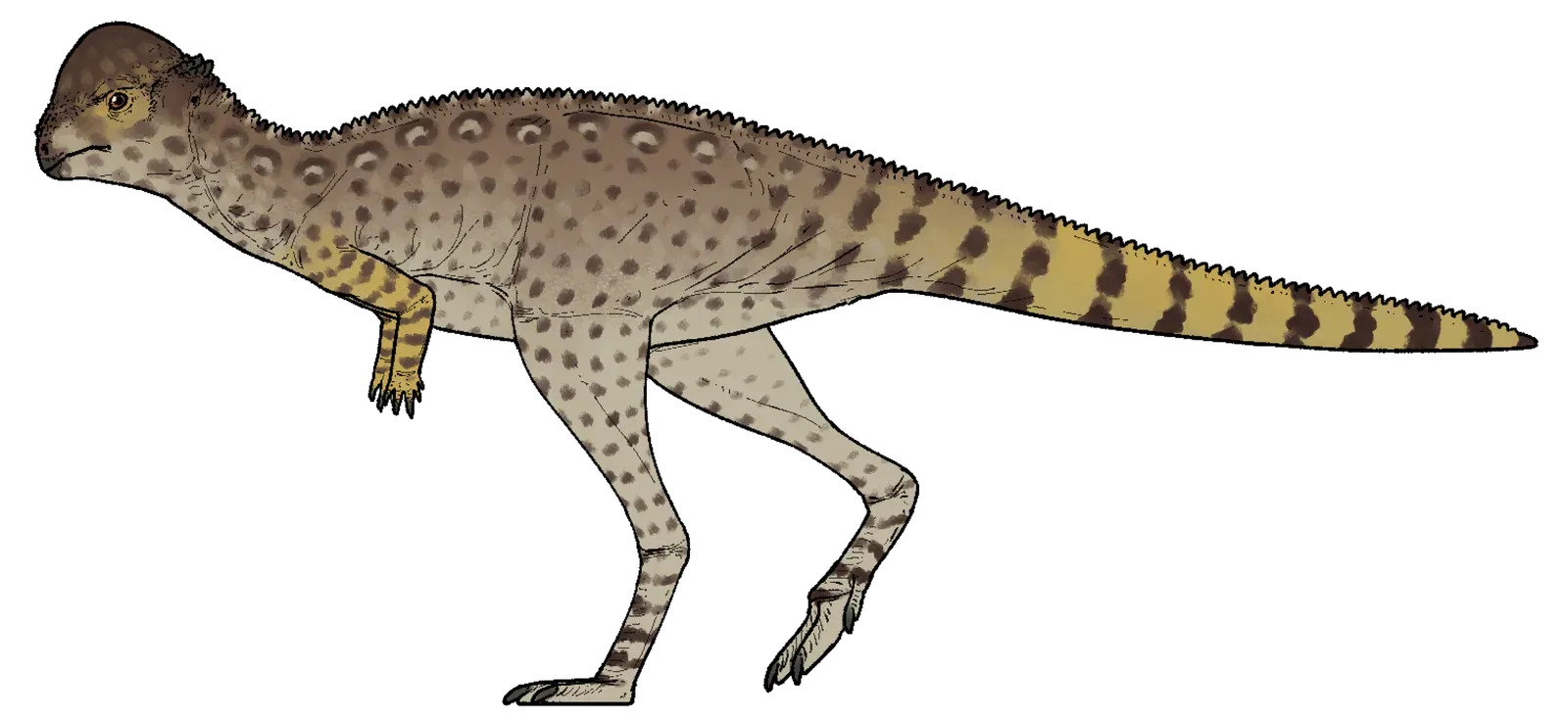
Some fossils are so exciting that when first shown at academic conferences, they draw audible gasps even from experienced paleontologists. Zavacephale is one of these. The stunning skeleton of this one-meter-long plant-eating dinosaur was discovered in 110-million-year-old rocks in the Gobi Desert of Mongolia.
Zavacephale is the oldest known member of the pachycephalosaurs, a group of dinosaurs famed for their domed skulls, probably used to butt heads like today’s bighorn sheep. The skull of Zavacephale suggests that the domes of pachycephalosaurs grow more quickly than the rest of their body. Visualizations of this small but remarkable dinosaur place it firmly in the category of creatures that look almost too alien to be real, yet were completely, verifiably alive.
13. The Art and Science of Paleoart – How These Visualizations Actually Get Made
![13. The Art and Science of Paleoart - How These Visualizations Actually Get Made (did it myself based on [1],[2],[3],[4],[5],and [6], Public domain)](https://nvmwebsites-budwg5g9avh3epea.z03.azurefd.net/dinoworld/168570092481f9b1d9f0db35997b42f2.webp)
Behind every stunning dinosaur visualization is a process that is equal parts detective work and artistic craft. Paleoartists are artists who create representations of animals that have gone extinct, illustrating everything from extinct marine reptiles and insects to mammals, pterosaurs, and dinosaurs. Their work helps scientists better understand and visualize the species they study. It is a discipline that lives right at the intersection of science and imagination.
Old paleoart suffered from shrink-wrapping everything, skin-wrapping everything, with no room for muscles or fat tissue. If you look at animals alive today, you see that most of the skeletal structure is hidden by muscles, skin, and fat, so you don’t see much of the actual shape of the bone. Increasingly, paleontologists can offer more detailed answers thanks to evidence of dinosaur soft tissues discovered in the last 30 years, and translating those discoveries into works that satisfy the public’s imagination is the purview of paleoartists, the scientific illustrators who reconstruct prehistory in paintings, drawings, and sculptures. Every new fossil find adds a brushstroke to a portrait that has been centuries in the making.
Conclusion
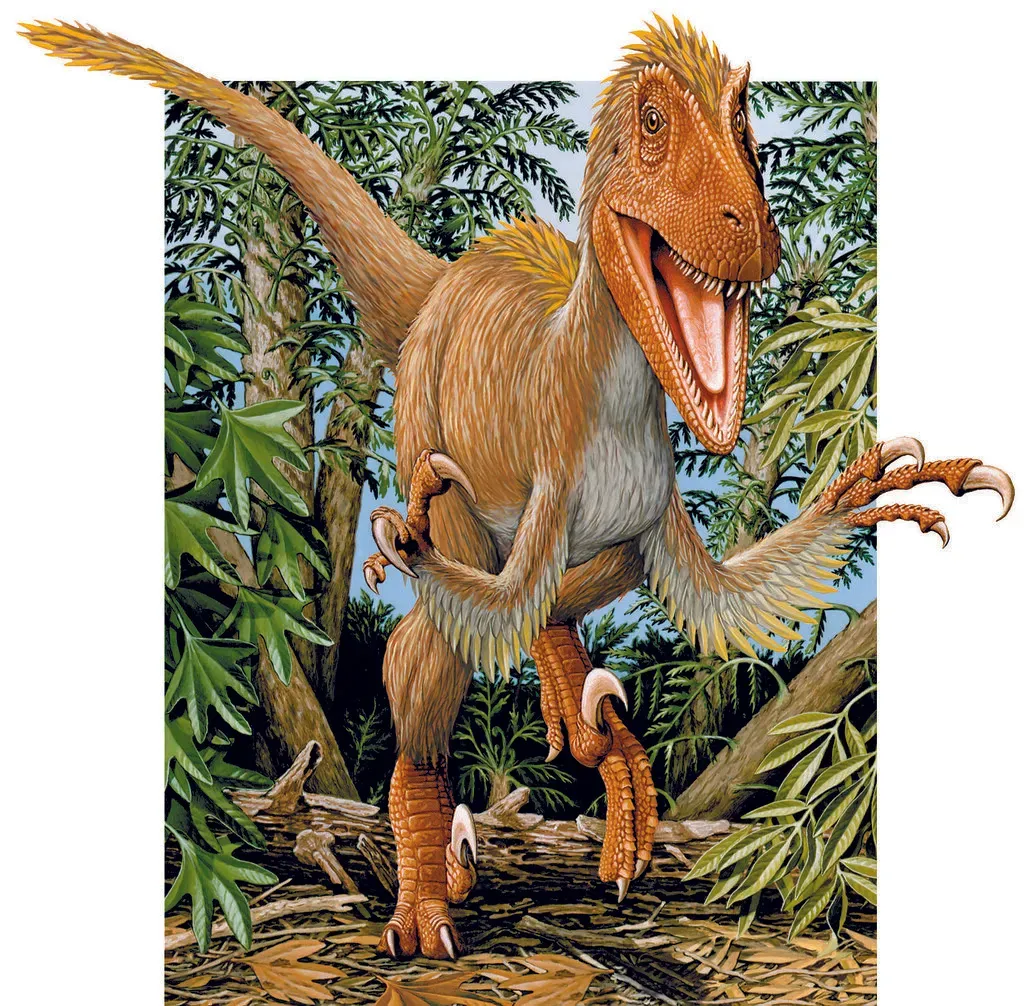
What these 13 visualizations collectively reveal is something profound. Dinosaurs were not the dull, lumbering, gray-green monsters of our childhood textbooks. They were colorful, feathered, armored, speckled, iridescent, and staggeringly complex animals that dominated this planet for over 160 million years. A golden era in dinosaur science is driving a global fascination, and around 1,400 dinosaur species are now known from more than 90 countries, with the rate of discovery accelerating in the last two decades.
The best part? We are nowhere near done discovering them. Every new fossil, every new scanning technique, every new melanosome study pulls back the curtain a little further on a world that was stranger and more spectacular than anything we had dared to imagine. As dinosaurs evolved, their feathery coverings and scaly skin began to look wildly different. Some were camouflaged to blend in with their surroundings, while others may have been as brightly colored as the most ostentatious bird species. So the next time you walk past a museum display with a dusty, gray-green model gathering cobwebs, just know the truth is far more wonderful. What would you have guessed a Diplodocus looked like before reading this?