
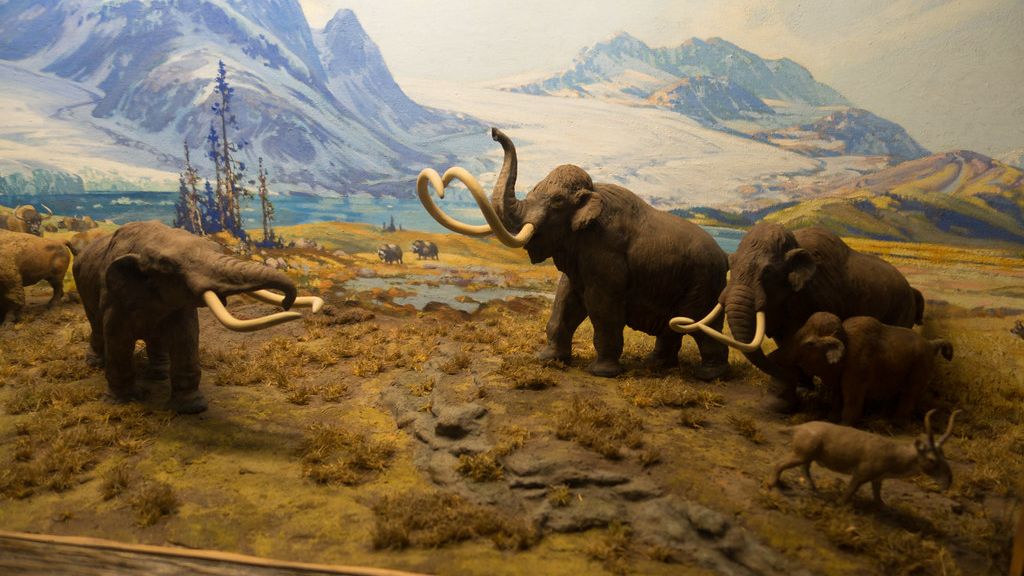
Picture a world where the ground shakes beneath the footsteps of creatures bigger than anything alive today in North America. Not fiction, not folklore. Just Earth, roughly ten thousand to fifty thousand years ago, teeming with behemoths that would make a modern elephant seem almost modest by comparison. These were the megafauna of the Ice Age, and their story is as dramatic, puzzling, and heartbreaking as any tale ever told.
The Americas were home to an astonishing cast of giants. Woolly mammoths. Columbian mammoths. American mastodons. Giant ground sloths the height of a giraffe. Saber-toothed cats the weight of a lion. What happened to them, how they lived, and what their disappearance means for the world today is a story that science is still actively unraveling. Buckle up, because what you’re about to discover might genuinely surprise you. Let’s dive in.
The Stage Is Set: Welcome to the Pleistocene
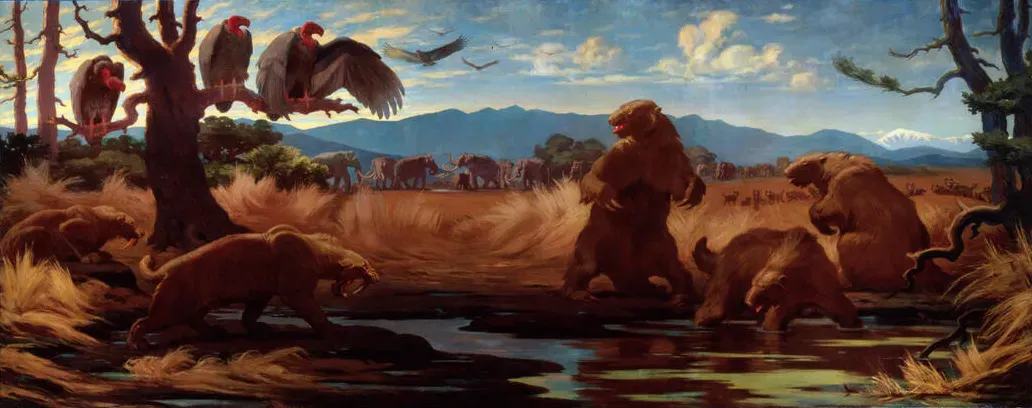
The late Pleistocene epoch set the scene for a variety of intimidating animals, and though they lived roughly fifty thousand years ago, these larger-than-life creatures continue to capture imaginations even today. Think of it as Earth’s version of a wildlife documentary – one shot on a frozen, sweeping canvas where danger and grandeur coexisted at every turn.
During an ice age, much of the Earth’s water is frozen in giant ice sheets. There have been five ice ages in Earth’s history. Within each ice age are glacial periods of extra cold. The last glacial period started about one hundred and twenty-six thousand years ago and ended roughly eleven thousand years ago. That final glacial stretch is what most people mean when they say “the Ice Age,” and it was during this time that America’s most spectacular land animals walked the earth.
Meet the Woolly Mammoth: America’s Shaggy Icon
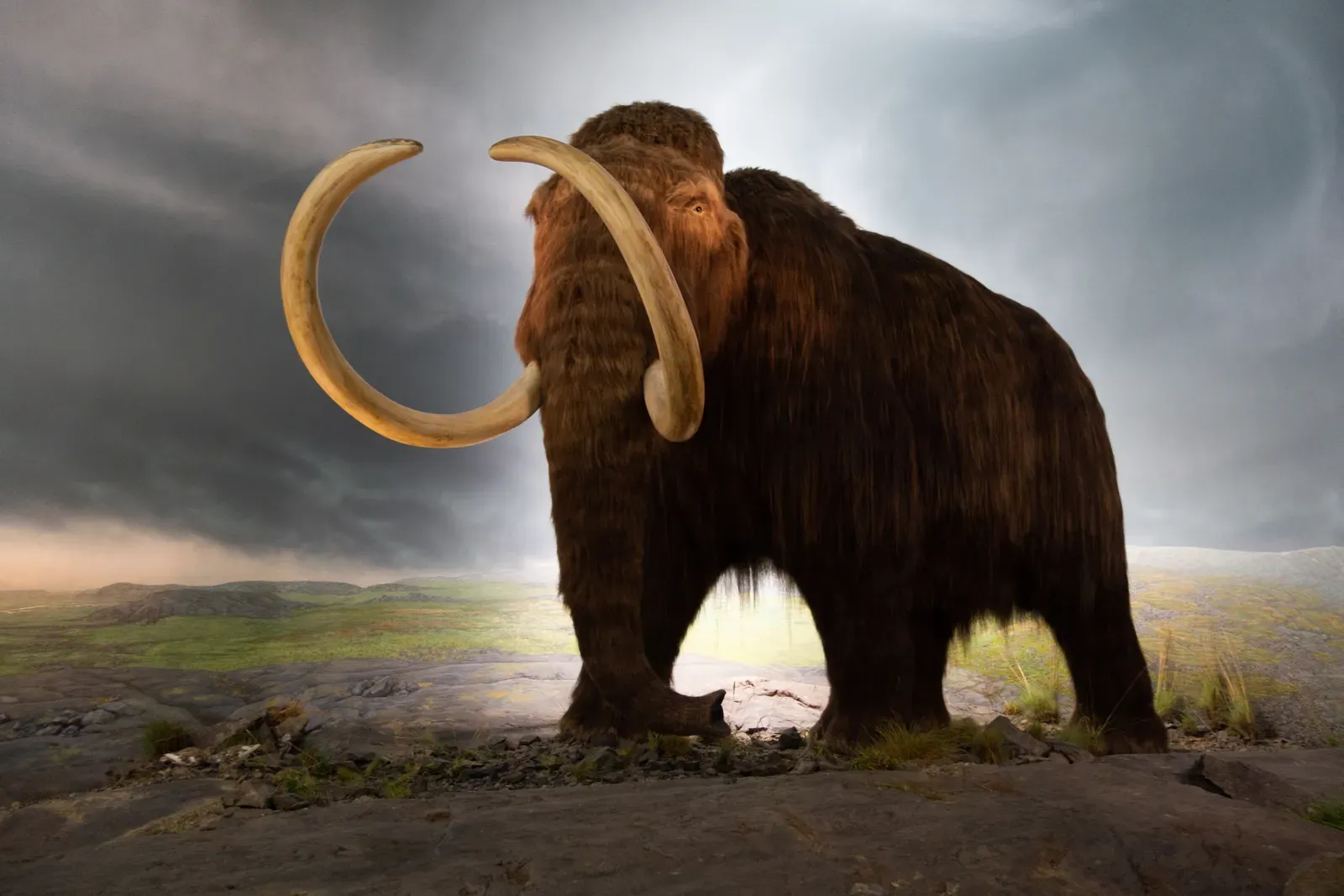
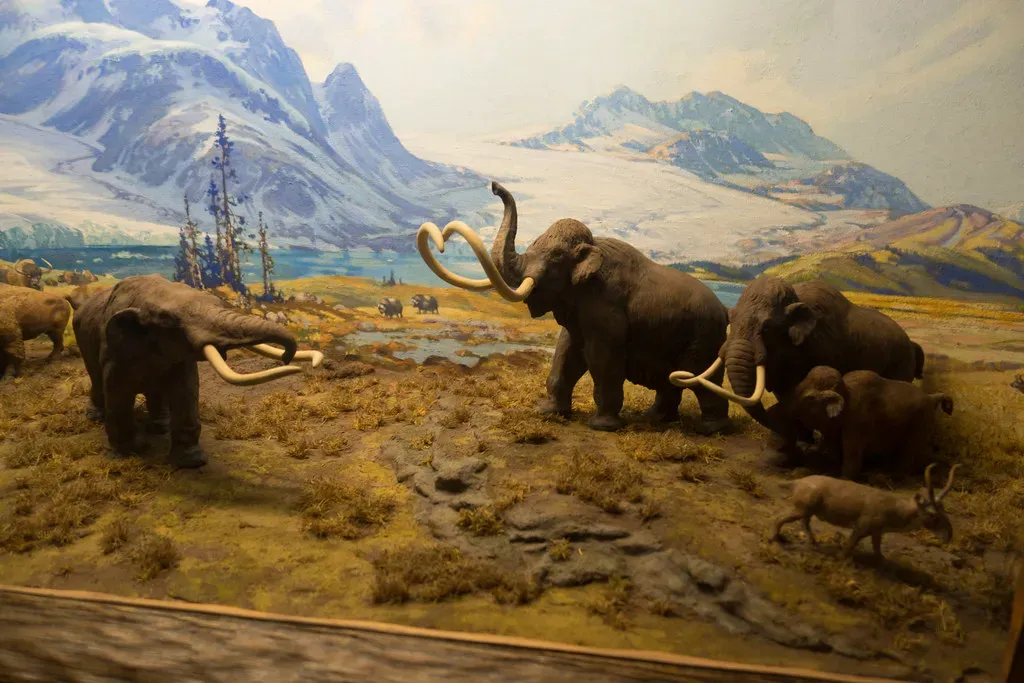
You’ve seen it on posters, in movies, even in logo designs. The woolly mammoth is without question the most iconic mammoth associated with the Ice Ages. Known for its long shaggy coat, it stood between nine and eleven feet tall and weighed up to six tons, roughly the size of a modern African elephant. Honestly, it’s hard not to be awed by that.
Perfectly adapted to its cold environment, the woolly mammoth had small ears, a short goat-like tail, and a coat of dense, short hair overlain by longer bristly hair. It had a humplike reserve of fat on its back, and under its extremely thick skin was another layer of insulating fat. Its tusks were about sixteen feet long, and their marked curvature suggests they may have been used like shovels to scrape snow and ice from food buried beneath the frozen surface. That’s not just impressive. That’s extraordinary engineering by nature itself.
The Columbian Mammoth: The Bigger, Bolder Southern Cousin
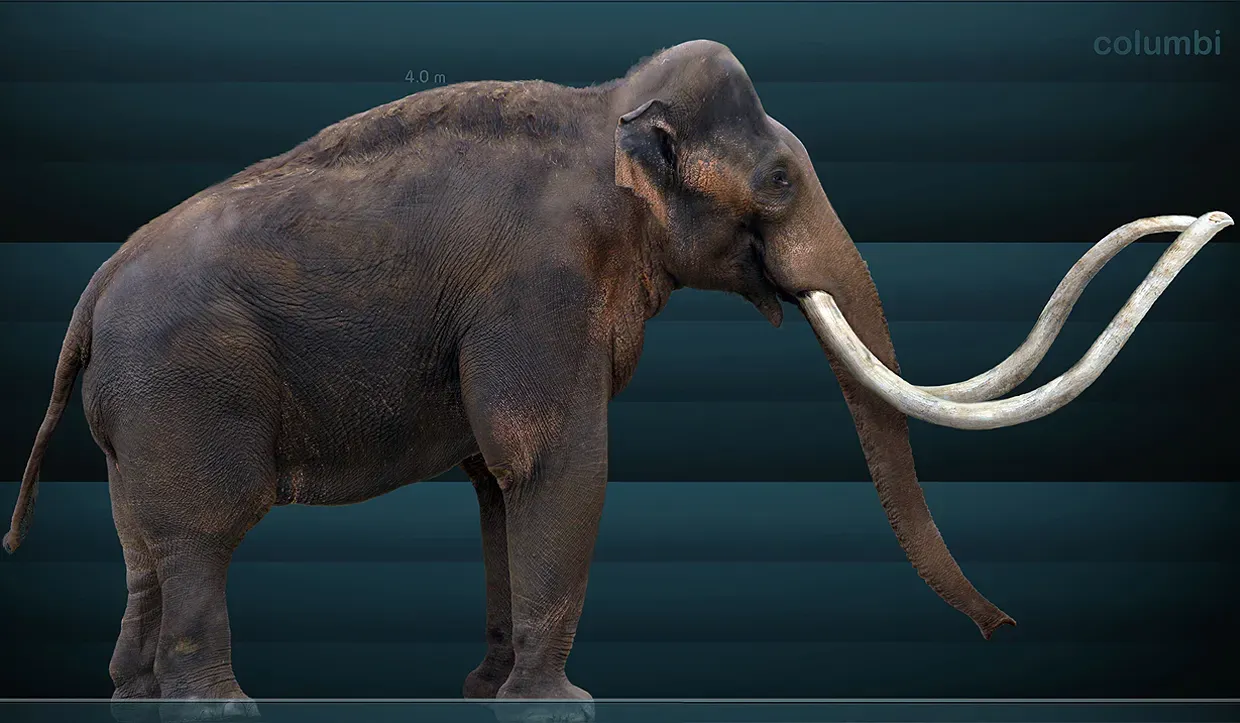
Here’s the thing many people don’t realize – the woolly mammoth wasn’t the only mammoth species calling America home. The Columbian mammoths were bigger and much less hairy than their northern relatives. They were adapted to warmer climates and have been found as far south as Mexico. So while the woolly mammoth ruled the frozen north, the Columbian mammoth was essentially the warmer-climate heavyweight of the American interior.
Fully grown male Columbian mammoths weighed nearly ten tons and stood about thirteen feet tall, while male American mastodons reached heights of ten feet and weighed in around six tons. The Columbian mammoth’s twisted tusks were a defining visual feature, and fossils place it firmly in late Pleistocene North America. The sheer scale of these animals is genuinely difficult to wrap your head around – we’re talking about something the size of a small house, but made entirely of muscle, tusk, and ancient instinct.
The American Mastodon: An Older, Stranger Relative
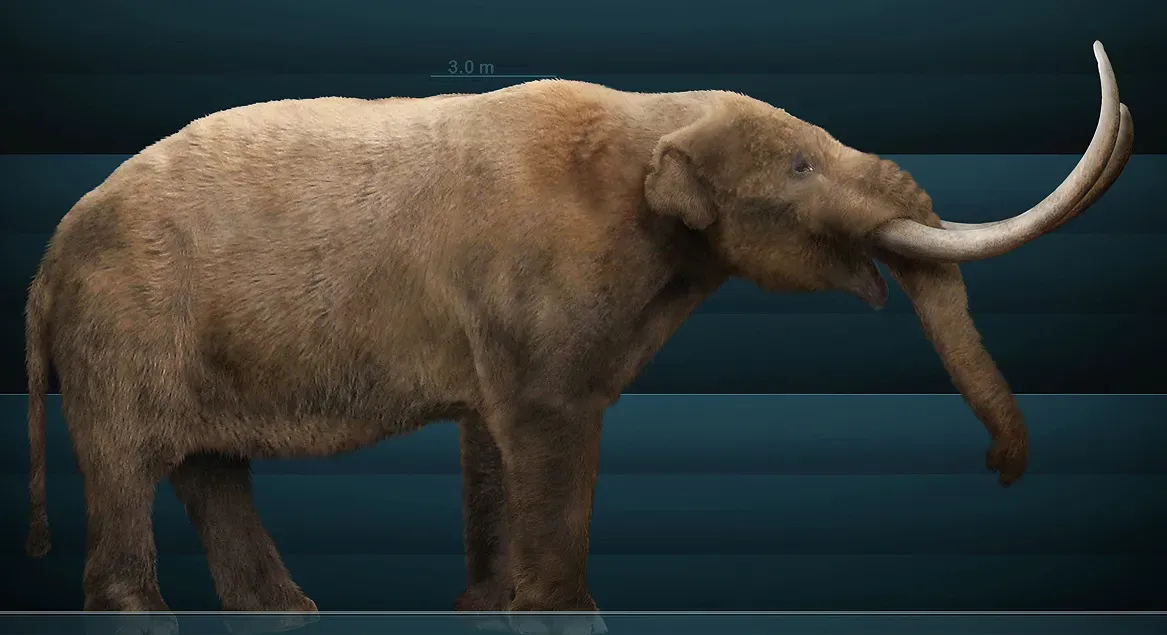
People love to mix up mammoths and mastodons, and I get it – they both look like oversized, tusked elephants with attitude. Mammoths are more closely related to modern elephants, separated by only about five million years of evolution, while mastodons are much more distantly related, separated by about twenty-five million years. That’s a gap so wide it’s almost staggering.
The American mastodon evolved in North America some three and a half million years ago. Even though it never made a return journey to Asia, it had an incredibly wide geographic range during the Ice Age, stretching from Arctic Alaska to the tropics of Honduras. Mastodons are considered to have had a predominantly browsing-based diet, feasting on leaves, fruits, and the woody parts of plants. While mammoths grazed open grasslands like enormous lawnmowers, mastodons were forest wanderers, content to browse quietly in the trees. Two very different personalities, sharing the same continent.
A Tale of Two Teeth: The Key Difference Nobody Talks About
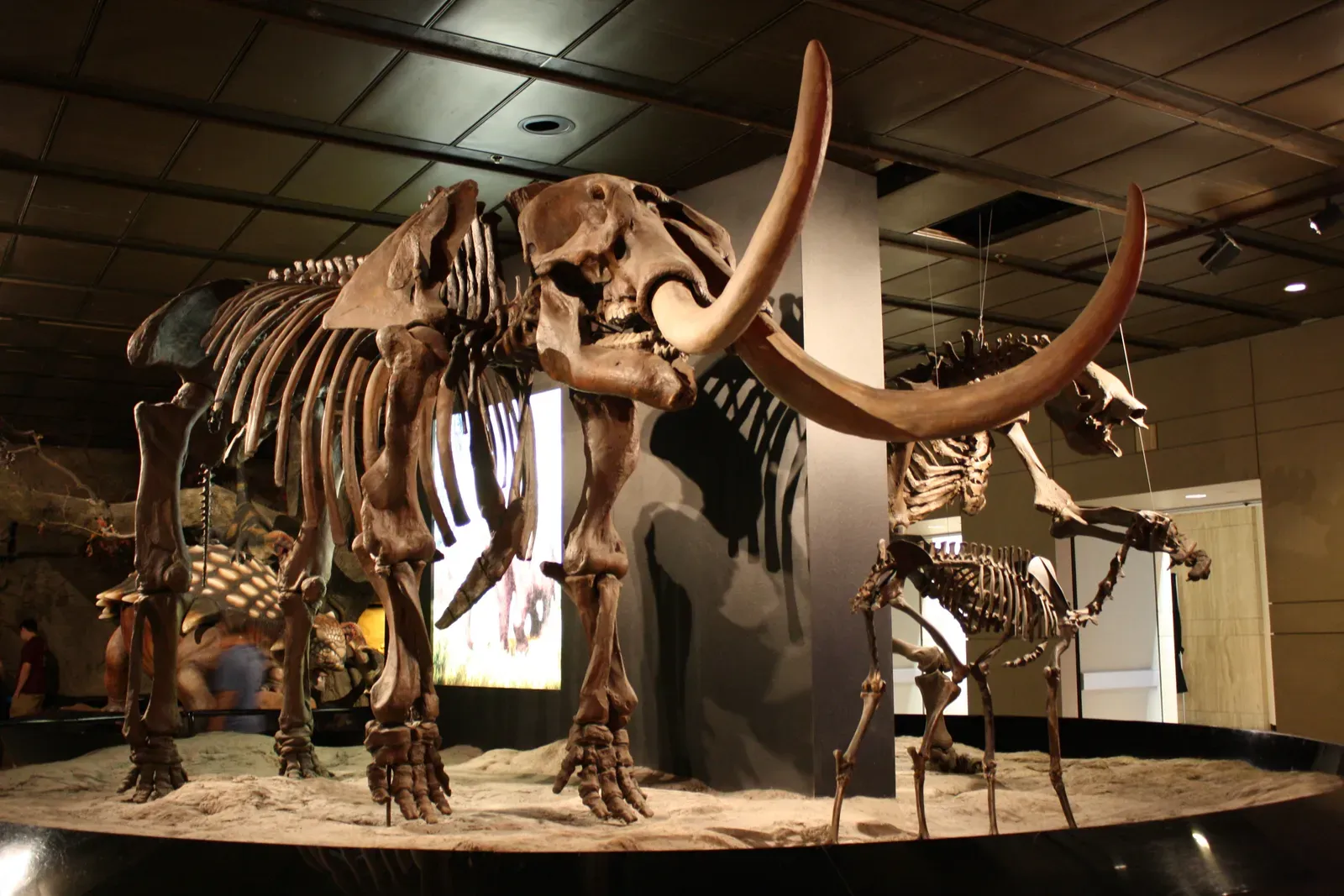
Let’s be real – teeth are not the most glamorous topic. Yet when it comes to telling mammoths and mastodons apart, the teeth tell the whole story. Mastodons had cone-shaped teeth for crunching foods like twigs, shrubs, and pine needles. Woolly mammoths, by comparison, had flatter teeth used for grinding by sliding food back and forth across the top. Think of it like the difference between a steak knife and a flat-bottomed mortar. Same purpose, completely different design.
Mastodon teeth had cone-shaped cusps to aid in chewing leaves, twigs, and bark. French anatomist Georges Cuvier thought the cones on the teeth looked like breasts and ultimately gave the mastodons their name – “masto” meaning breast in Greek, and “odon” meaning teeth. So the next time someone asks you where the name mastodon comes from, you have a surprisingly anatomical answer ready to go. Mastodon molars look surprisingly similar to some human molars – just giant versions. In fact, early collections of mastodon molars sent to scientists in France in the eighteenth century were described as the teeth of giant people. Imagine opening a crate of fossils and concluding you’ve found a race of enormous humans. Science in the 1700s was a wild ride.
The Rest of the Crew: Ice Age Giants Beyond the Elephants
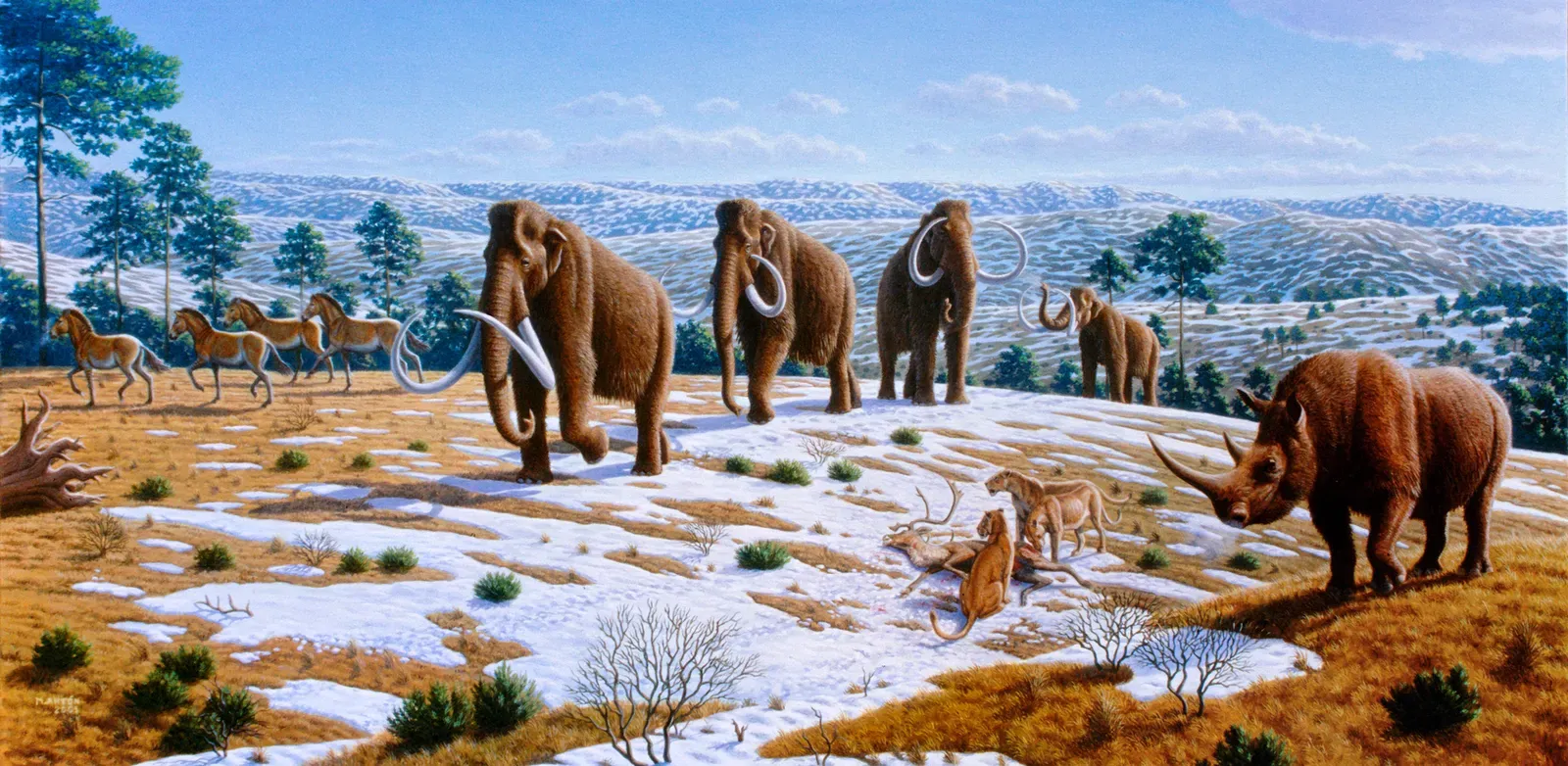
Mammoths and mastodons tend to steal all the attention, but honestly, the rest of the Ice Age roster is just as jaw-dropping. Mammoths and mastodons roamed the landscape alongside three-thousand-pound giant ground sloths, bear-sized beavers, two-toed camels, armadillo-like glyptodons, stag-moose, and multiple large horse species, including the American zebra. America’s Ice Age wasn’t just impressive – it was overwhelming in its biodiversity.
Standing at roughly three and a half meters when up on their hind legs and weighing up to four tonnes, giant ground sloths were truly colossal. With their ability to walk on their hind legs, the giant ground sloth was in fact the largest bipedal mammal of all time. The saber-toothed cat Smilodon fatalis lived from about four hundred thousand to eleven thousand years ago. It was a big feline, weighing around three hundred and fifty to six hundred and twenty pounds, measuring an average of about five and a half feet from rump to snout. Its blade-like, serrated canine teeth were impressively big, at nearly seven inches long. A forest full of those, combined with everything else that roamed this continent? Ancient North America was not a place for the faint-hearted.
The Great Dying: What Wiped Out the Ice Age Giants?
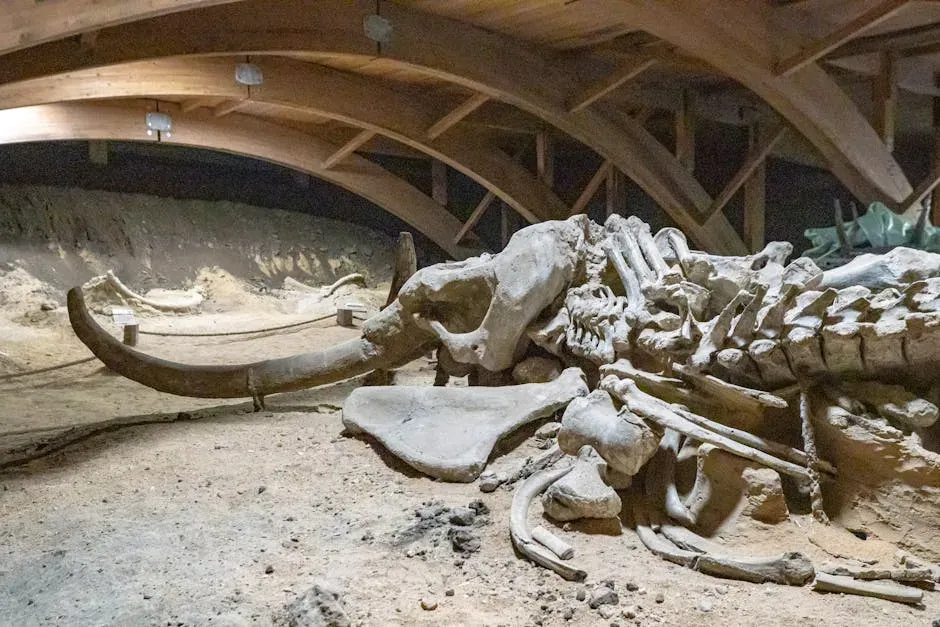
This is where things get genuinely controversial, and I think it’s one of the most fascinating unsolved mysteries in science. Around twelve thousand seven hundred years ago, North America lost roughly seventy percent of its large mammals in a megafaunal extinction event that paleontologists and archaeologists have been arguing over for more than half a century. That’s an almost incomprehensible collapse happening in what is, geologically speaking, the blink of an eye.
Rapid warming periods called interstadials and, to a lesser degree, Ice Age people who hunted animals are responsible for the disappearance of the continent’s megafauna, according to one influential study. Other studies have placed more blame on humans, while some researchers say many factors are to blame. Adding yet another layer to this mystery, scientists are continuing to strengthen the case that a fragmented comet exploded in Earth’s atmosphere nearly thirteen thousand years ago, and this event may have played a role in the sudden disappearance of mammoths, mastodons, and many other large Ice Age animals. At major Clovis-era sites, researchers found shocked quartz, evidence of intense heat and pressure consistent with a comet airburst. The event could have sparked massive fires, blocked sunlight, and triggered a rapid return to ice-age conditions. Climate change, human hunters, and possibly a comet all collide in one of history’s most complex whodunits.
Could the Mammoth Walk Again? The De-Extinction Debate
Now here’s where the story leaps from ancient history straight into the future – and into some genuinely heated scientific and ethical territory. The plans for mammoth de-extinction involve inserting genes for iconic woolly mammoth traits, like shaggy coats and curly tusks, into the genome of an elephant, and growing the creature in an elephant surrogate. It sounds like science fiction, but it’s happening right now in real laboratories.
Colossal Biosciences now aims to produce its first mammoth-like calves by 2028, acknowledging that the timeline is ambitious, particularly given the elephant’s two-year gestation period. Comparative genomics shows that the mammoth genome matches ninety-nine percent of the elephant genome, and researchers aim to engineer an elephant with the mammoth genes that code for external appearance and traits. The outcome would be an elephant-mammoth hybrid with no more than one percent mammoth genes. Some scientists are excited. Others raise fair ethical concerns about what happens when you introduce a partially reconstructed Ice Age animal into a modern ecosystem. Without mammoths and other now-extinct megaherbivores, the so-called “mammoth steppe” has given way to a waterlogged landscape of mossy tundra, shrubs, and forest. Research suggests this landscape stores less carbon than grasslands did. Some scientists have proposed that reintroducing megaherbivores to the Arctic could help restore the ecosystem and mitigate climate change. It’s a hopeful idea, but the word “could” is doing a lot of heavy lifting there.
Conclusion: Giants Lost, Lessons Gained
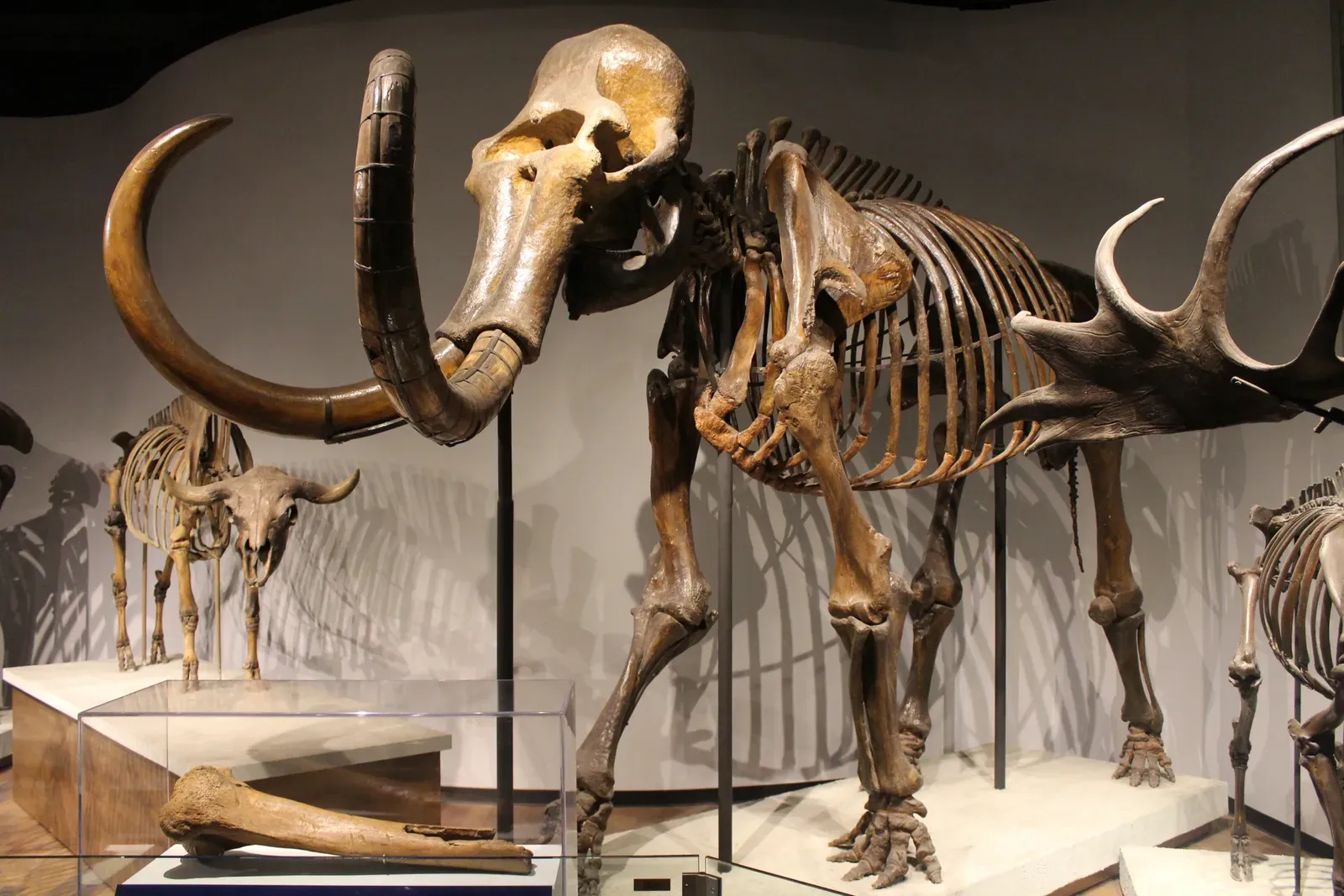
There’s something quietly sobering about standing in a natural history museum, looking up at the reconstructed skeleton of a woolly mammoth, and realizing that these creatures weren’t mythological. They were real. They breathed, they moved in herds, they shaped the very landscapes we now call home. Within the last couple of years, researchers have discovered that these ancient animals played an important role in protecting the land from wildfires, a trend that grew when mammoths, mastodons, and the other Ice Age megafauna went extinct.
Their loss wasn’t just a biological event. It was an ecological reshaping of an entire continent. During the Late Pleistocene, roughly seventy-two percent of megafaunal species in North America became extinct. That number still hits hard when you sit with it. The same curiosity about the past that drives paleontologic study is now inspiring DNA and de-extinction efforts across the world, helping deepen our knowledge of Ice Age ecosystems and mass extinction events.
These giants walked here. They shaped here. And whether science eventually brings a pale echo of them back, or whether they remain locked in museum glass and fossil beds, the story of the Ice Age megafauna is ultimately a mirror – one that reflects what the natural world once was, and perhaps what we owe it still. What do you think: should we bring them back, or let the past remain the past? Drop your thoughts in the comments below.