
Picture this: you are standing before the skeleton of a massive Tyrannosaurus rex, jaw literally dropped, trying to wrap your head around the sheer power of the creature that once roamed the earth. Now imagine tracing its family tree all the way back, hundreds of millions of years, to a small, soft-bodied fish barely larger than your thumb, drifting silently through a shallow ancient sea. Sounds impossible, right? Honestly, it kind of is – and that is exactly what makes this story one of the most jaw-dropping chapters in the entire history of life on Earth.
The journey from primitive fish to towering dinosaurs is not a single leap but a breathtaking relay race across time. It involves fins turning into limbs, gills giving way to lungs, aquatic eggs transforming into hard-shelled land-ready ones, and slow cold-blooded wanderers evolving into some of the most dominant, agile creatures the planet has ever seen. Every step is wilder and more astonishing than the last. So let’s dive in.
The Ancient Ocean: Where It All Began
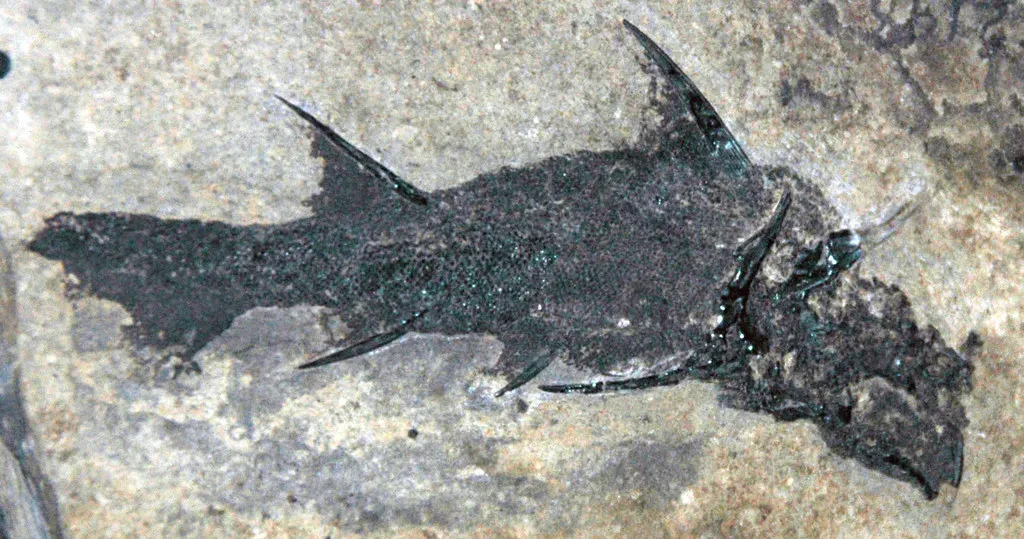
You might find it hard to believe, but your own evolutionary history begins in the water. The evolution of tetrapods began about 400 million years ago in the Devonian Period, with the earliest tetrapods evolving from lobe-finned fishes. These weren’t the colorful darting fish you’d find at a pet store. They were muscular, armored creatures navigating warm, shallow freshwater environments rich with dense vegetation and low oxygen levels.
The shallow, warm, oxygen-depleted waters of Devonian inland lakes, surrounded by primitive plants, provided the environment necessary for certain early fish to develop essential characteristics such as well-developed lungs and the ability to crawl out of the water and onto the land for short periods of time. Think of it as nature’s pressure cooker. Survival wasn’t guaranteed, and the fish that could push past their limits were the ones that kept the story going.
Fins Becoming Limbs: The Incredible Transition Begins
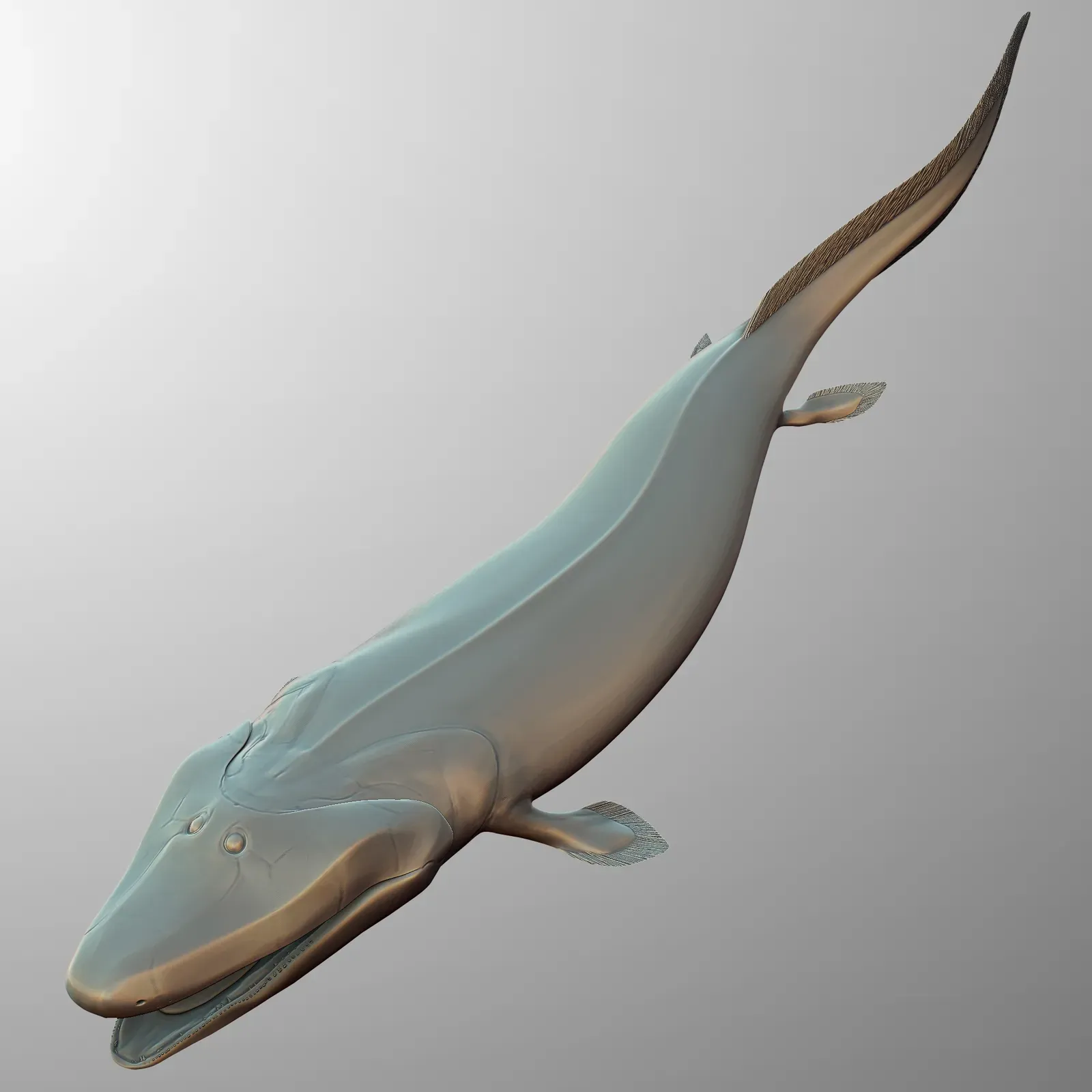
Here’s the thing that really blows people’s minds. The bones in your arm, right now, are strikingly similar to the bones hidden inside a lobe-fin. It was from the lobe-finned fish that the tetrapods evolved – the four-limbed vertebrates, represented today by amphibians, reptiles, mammals, and birds. These fleshy, muscle-packed fins were more than just paddles for swimming. They were proto-limbs waiting to happen.
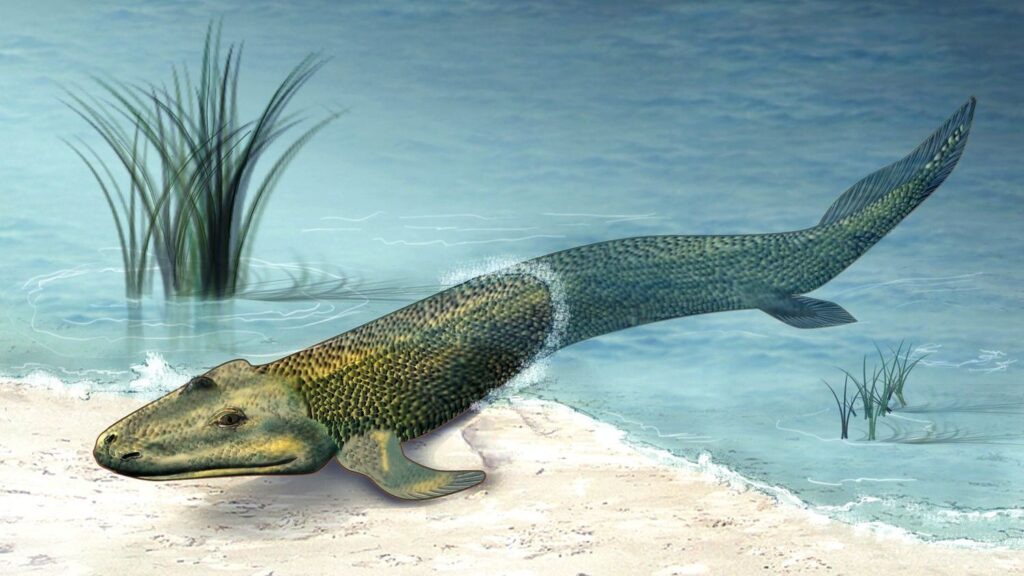
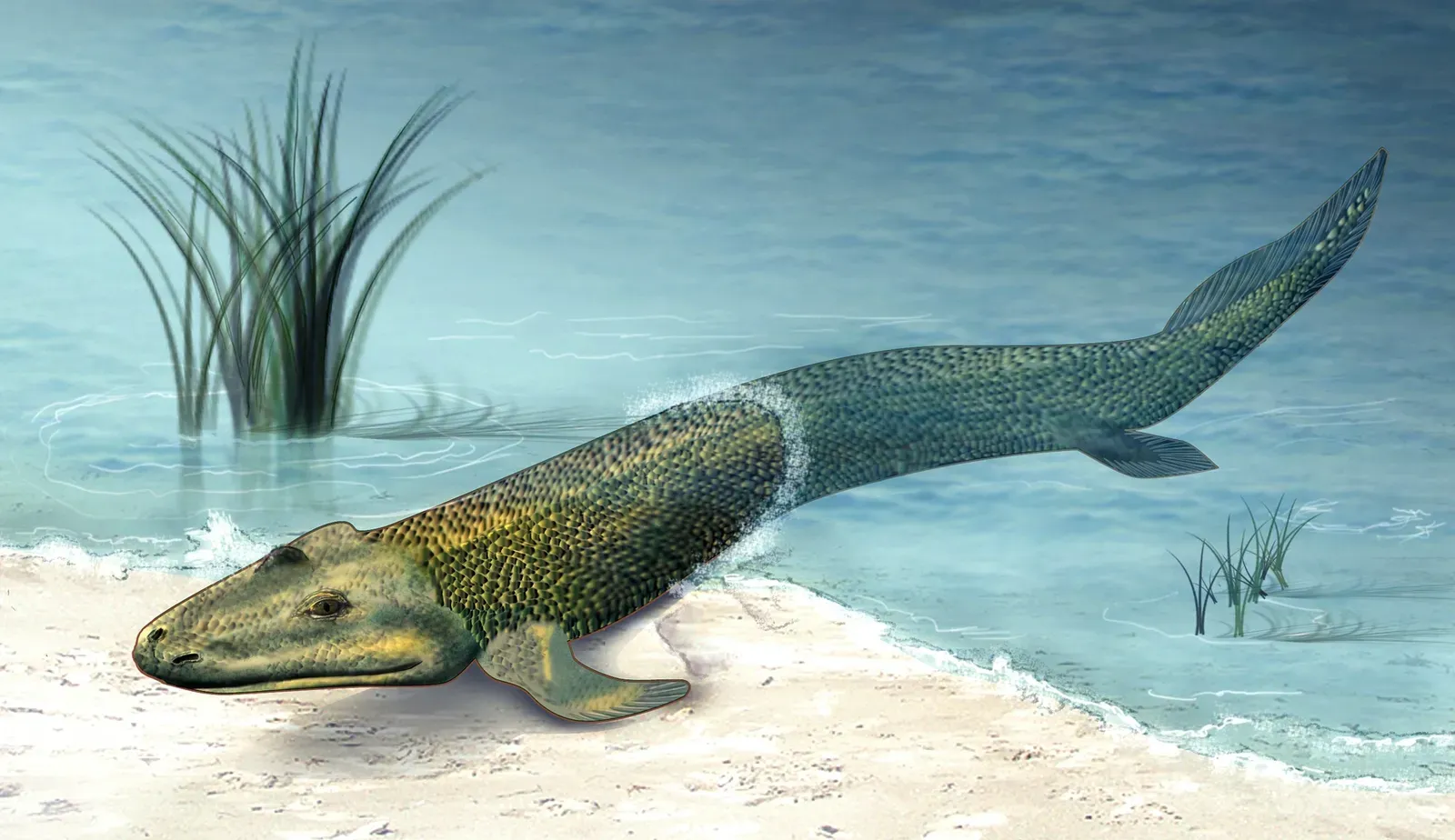
Researchers have suggested that evolutionary changes in the shape of the humerus bone, from short and squat in fish to more elongate and featured in tetrapods, had important functional implications related to the transition to land locomotion. One famous transitional fossil that you’d want to know about is Tiktaalik roseae. Notable among the transitional fossils is Tiktaalik roseae, a unique organism exhibiting both fish and tetrapod characteristics, such as robust pectoral fins and a flattened head, indicating an intermediary phase in this evolutionary shift. It is, essentially, the missing link between swimming and walking.
Stepping Onto Land: The First Awkward Walk in History
http://nsf.gov/news/mmg/mmg_disp.cfm?med_id=58310
http://nsf.gov/news/news_summ.jsp?cntn_id=106807
https://flickr.com/photos/nsf_beta/3705198718, Public domain)
I know it sounds crazy, but the first land-walkers weren’t exactly graceful. The first tetrapods retained many aquatic features, like gills and a tail fin, and limbs may have evolved in the water before tetrapods adapted to life on land. That’s a pretty wild concept. Legs were not invented for land. They may have first been useful for navigating weedy, shallow underwater bottoms before they were ever used to haul a creature onto dry ground.
As the fleshy-finned organisms began to venture onto land, they evolved a series of interlocking articulations on each vertebra, which helped them overcome sag and hold the backbone straight with minimal muscular effort. You also need to understand something else that changed radically. Fishes have no necks. Their heads are simply connected to their shoulders. Mobile necks allow land animals to look down to see the things on the ground that they might want to eat. That simple anatomical shift opened up a completely new world of feeding possibilities.
From Tetrapods to Reptiles: The Amniotic Egg Changes Everything
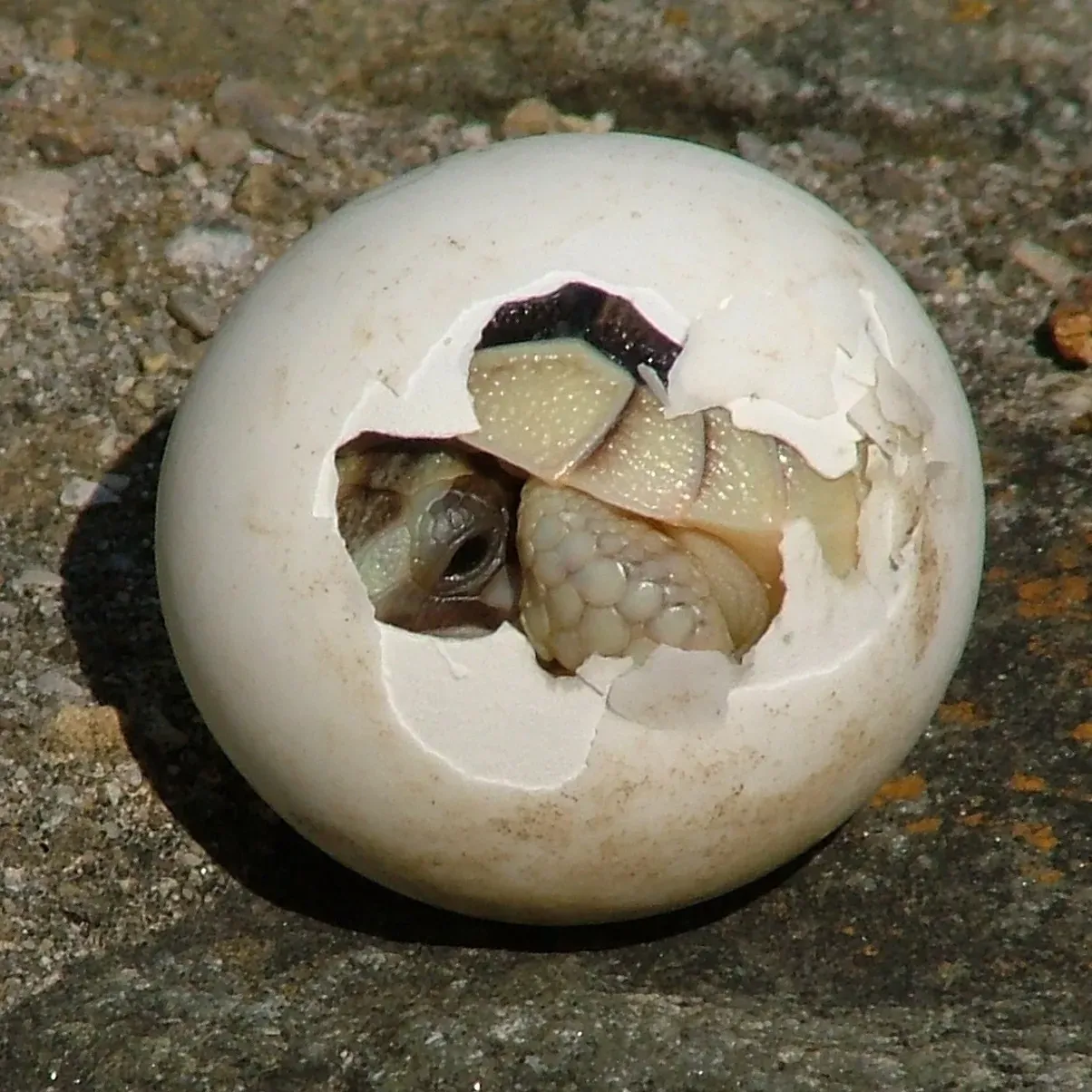
Once your early four-limbed ancestors made it onto land, evolution wasn’t done pushing. The biggest single game-changer in the entire story might surprise you. It wasn’t teeth, or size, or speed. It was an egg. The transition from amphibians to reptiles marked a significant leap forward, as reptiles developed the self-contained amniote egg, allowing them to thrive completely on land without dependence on water for reproduction. This was genuinely revolutionary, like inventing waterproof packaging for life itself.
Because the amnion and the fluid it secretes shield the embryo from environmental fluctuations, amniotes can reproduce on dry land by either laying shelled eggs, retaining shelled eggs in the mother’s body until they hatch, or nurturing fertilized eggs within the mother. The origin of the reptiles lies about 320 to 310 million years ago, in the swamps of the late Carboniferous period, when the first reptiles evolved from advanced labyrinthodonts. With that shelled egg in their arsenal, reptiles could finally cut ties with ponds and rivers entirely and colonize the entire land surface of the planet.
The Rise of the Archosaurs: Dinosaurs’ Direct Ancestors Take the Stage
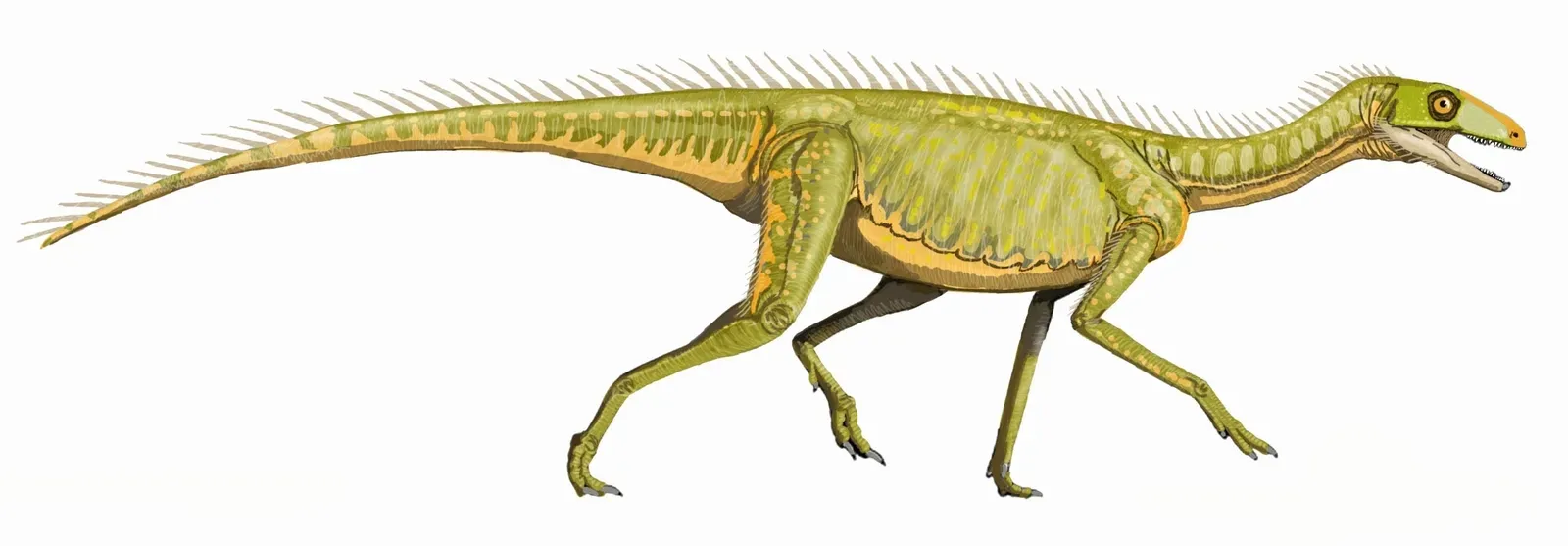
Fast forward now to just after one of the most catastrophic events Earth has ever endured. Dinosaurs diverged from their archosaur ancestors during the Middle to Late Triassic epochs, roughly 20 million years after the devastating Permian–Triassic extinction event wiped out an estimated 96% of all marine species and 70% of terrestrial vertebrate species approximately 252 million years ago. Out of that destruction, a new lineage stepped up.
Archosaurs, the “ruling reptiles,” are members of a subclass that also includes the dinosaurs, the pterosaurs, and several groups of extinct forms, mostly from the Triassic Period. The evolutionary history of archosaurs is marked by rapid diversification, especially following the Permian-Triassic extinction event, which created ecological opportunities for their expansion. Honestly, this is the point in the story where evolution stops being cautious and starts being bold. These animals were building toward something genuinely spectacular.
Dinosaurs Emerge and Dominate: The Pinnacle of a 400-Million-Year Journey
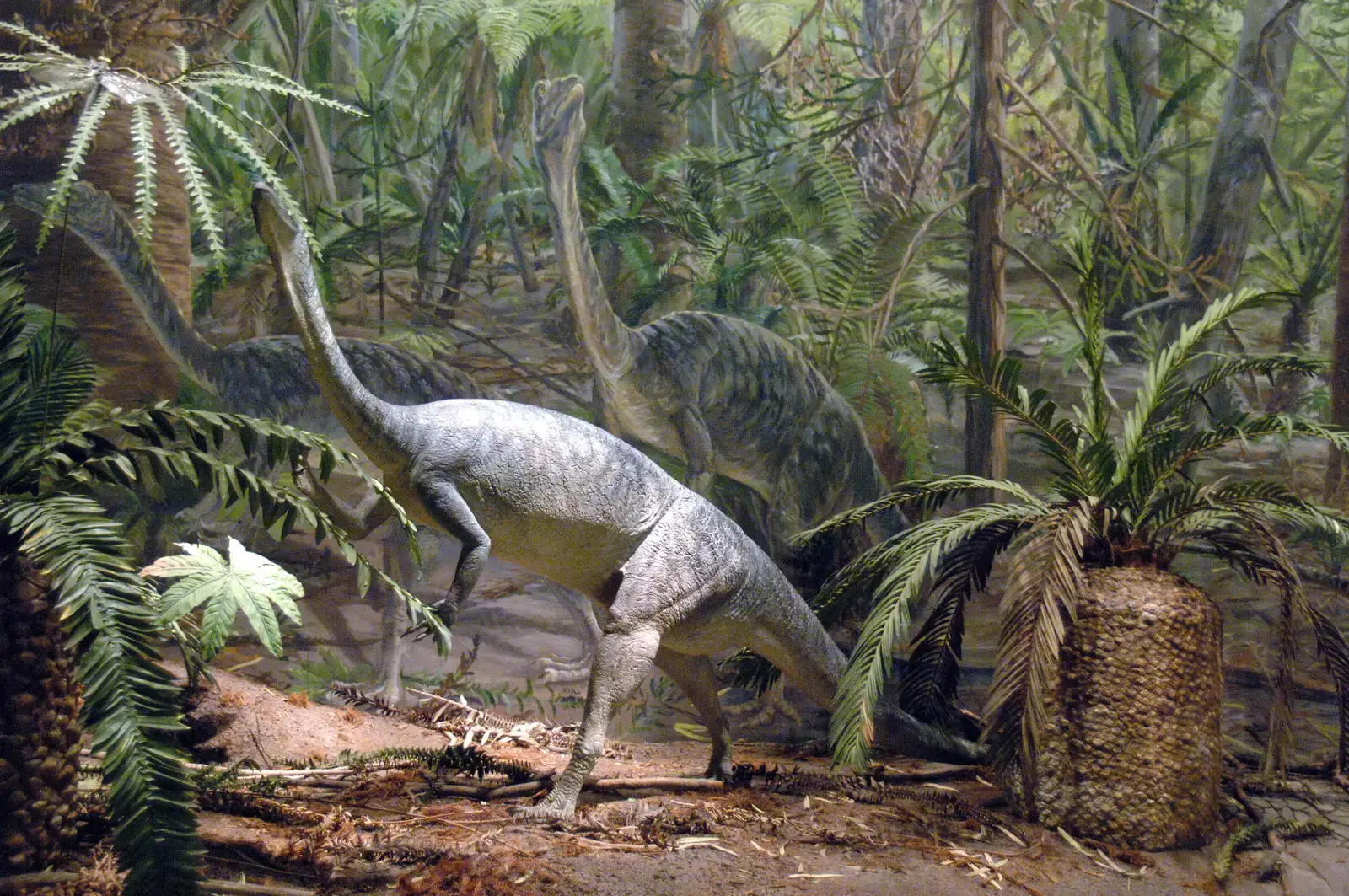
When you finally arrive at the dinosaurs, you are looking at the climax of one of evolution’s most epic stories. It would not be until the end-Triassic extinction event that occurred 201 million years ago that dinosaurs would finally get their chance. The mass extinction wiped out almost all the other competing archosaurs, meaning that the environment was left wide open for the dinosaurs to fill. During the Jurassic and the Cretaceous, the dinosaurs took full advantage of this, evolving into an incredible array of creatures.
Compared with most of their contemporaries, dinosaurs had an improved stance and posture with a resulting improved gait and, in several independent lineages, an overall increase in size. They also were more efficient at gathering food and processing it and apparently had higher metabolic rates and cardiovascular nourishment. All these trends, individually or in concert, probably contributed to the collective success of dinosaurs, which resulted in their dominance among the terrestrial animals of the Mesozoic. In other words, after hundreds of millions of years of refinement that began in murky ancient waters, dinosaurs were the ultimate land animal. Perfected, in their time, in almost every way.
Conclusion: A Journey Worth Every Million Years
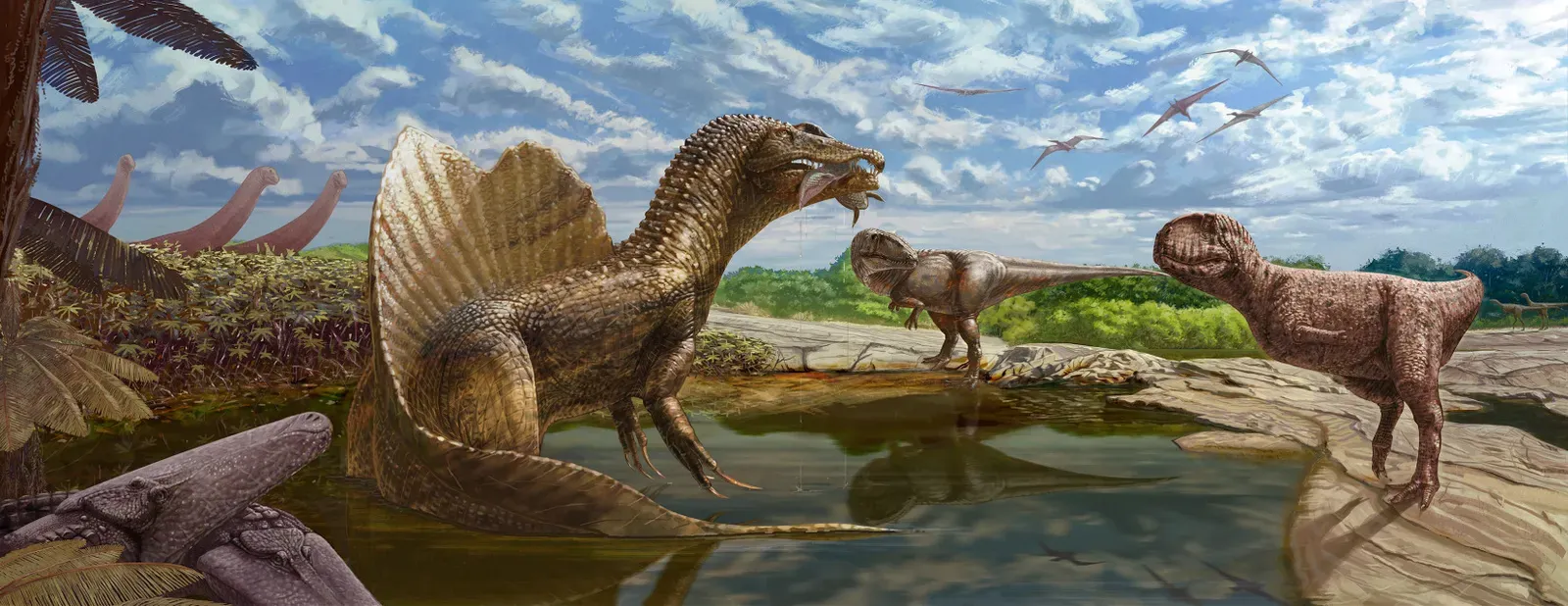
The next time you stare at a dinosaur fossil in a museum, or even watch a documentary about the natural world, take a moment to appreciate the impossible chain of events that brought those creatures into existence. From a soft-bodied fish in a warm Devonian sea, to a fin-wiggling pioneer testing the shores of a strange land, to a small lizard-like creature carrying the world’s first land egg, to a towering archosaur ruling the Triassic – the road to the dinosaur was paved with hundreds of millions of years of quiet, relentless transformation.
Every bone in your arm carries a whisper of that ancient fish. Every reptile you’ve ever seen is a living chapter of that same story. Evolution doesn’t care about timelines or expectations. It just keeps writing, one small change at a time, until one day a fish becomes a dinosaur. And honestly, that might be the most extraordinary fact about life on this planet. What part of this ancient journey surprised you the most? Tell us in the comments below.