

You probably learned in school that human evolution was a neat, orderly progression – something like a straight march from knuckle-dragging ape to upright, tool-wielding Homo sapiens. Turns out, that picture could not be further from the truth. The story of where you came from is messy, tangled, and far more extraordinary than any tidy diagram could ever suggest.
In recent years, fossil discoveries from Ethiopia, China, Morocco, and Greece have been forcing scientists to tear up old textbooks and start again. Some of these finds are challenging everything we thought we knew about when our earliest ancestors walked upright, who they lived alongside, and how many branches our family tree actually had. Get ready, because what you are about to read is genuinely mind-bending. Let’s dive in.
The Ethiopian Bombshell: Two Hominins Living Side by Side 2.8 Million Years Ago

Here is something that might stop you in your tracks. Imagine two completely different human-like species occupying the same landscape at the same time – not separated by thousands of miles, but literally sharing the same ancient riverbanks. That is exactly what a major discovery at Ethiopia’s Ledi-Geraru site has confirmed. In the deserts of Ethiopia, scientists uncovered fossils showing that early members of our genus Homo lived side by side with a newly identified species of Australopithecus nearly three million years ago.
In Ethiopia’s Afar region, researchers from Arizona State University uncovered 13 fossilized teeth belonging to a previously unknown species of Australopithecus that lived alongside the earliest members of genus Homo between 2.6 and 2.8 million years ago. The implications are staggering. The teeth represent a new species distinct from Australopithecus afarensis – the famous species represented by Lucy – confirming that multiple hominin species occupied the same landscape simultaneously. So when you picture your ancient relatives, think less “single ancestor” and more “crowded neighborhood.”
The DAN5 Cranium: A 1.5-Million-Year-Old Face That Rewrites Homo Erectus
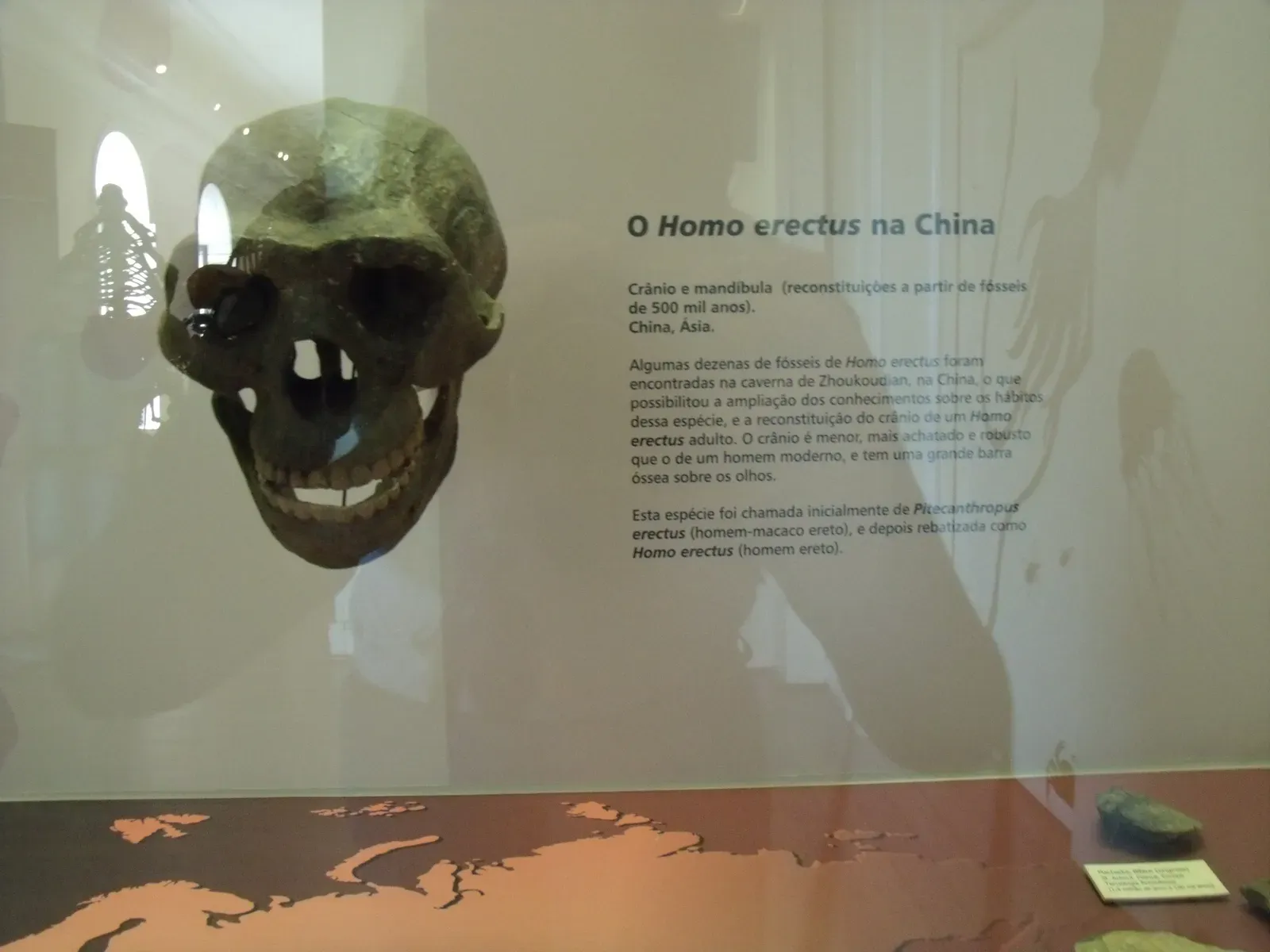
When researchers digitally reassembled fragments of an ancient skull from Ethiopia, what stared back at them was not quite what they expected. By digitally fitting together teeth and fossilized bone fragments, researchers reconstructed a strikingly well preserved face of a human ancestor that lived 1.5 million years ago. The find represents the first complete Early Pleistocene hominin cranium from the Horn of Africa and, discovered at Gona in Ethiopia, suggests that some of the earliest humans to leave Africa retained unexpectedly archaic facial features.
Scientists have digitally reconstructed the face of a 1.5-million-year-old Homo erectus fossil from Ethiopia, uncovering an unexpectedly primitive appearance. While its braincase fits with classic Homo erectus, the face and teeth resemble much earlier, more primitive ancestors. Honestly, this is one of those discoveries that raises more questions than it answers. There is also potential to test alternative evolutionary scenarios, such as genetic admixture between two species, as seen in later human evolution among Neanderthals, modern humans, and “Denisovans.” The idea that even Homo erectus had hidden complexity in its origins is a powerful reminder that your family tree has secrets it has not finished telling you.
Toumaï and the 7-Million-Year Question: Did Your Oldest Known Ancestor Walk Upright?
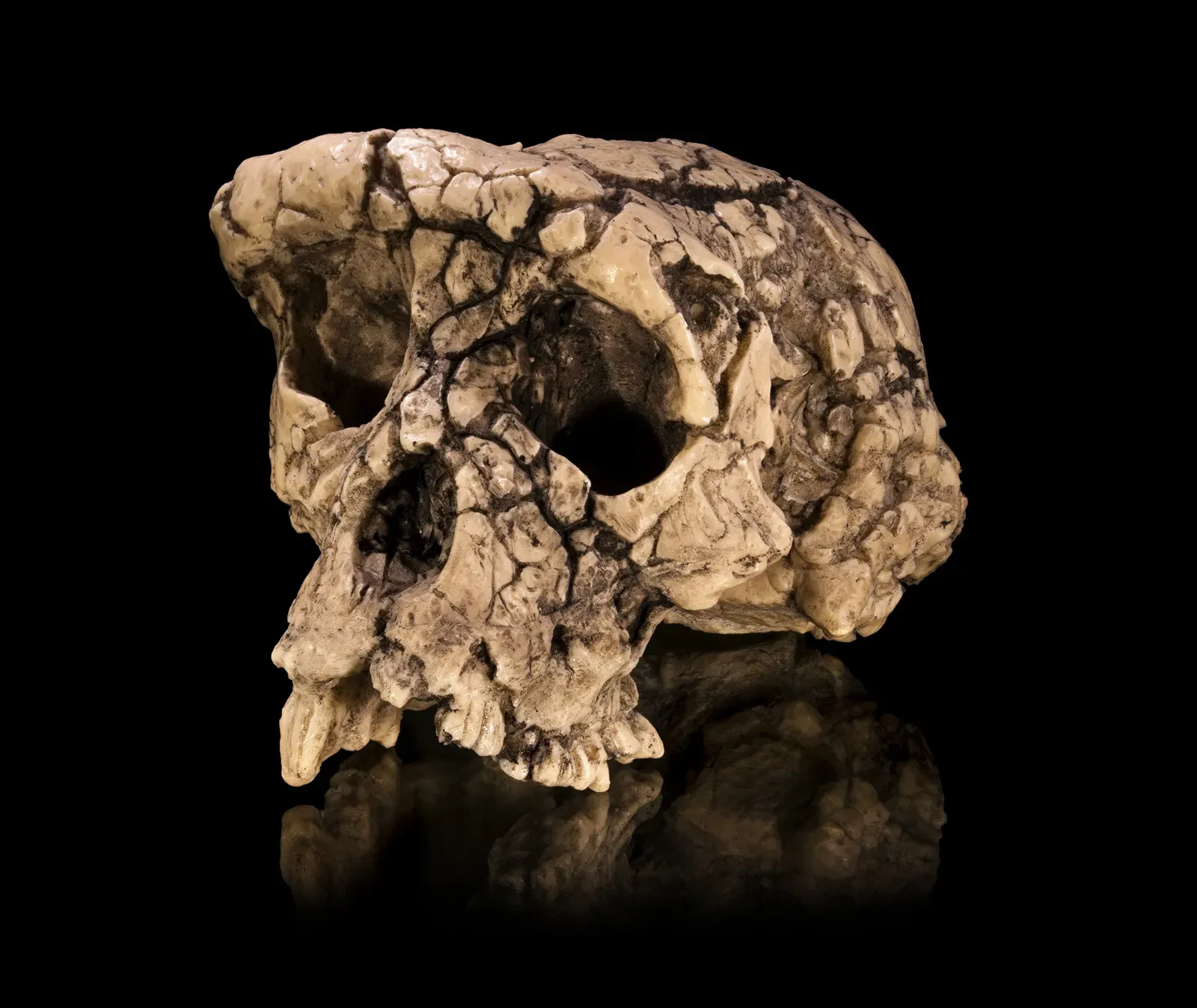
This one is a genuine jaw-dropper. For decades, researchers have argued over whether a fossil that is about seven million years old could walk on two legs. If true, that ability would make it the earliest known human ancestor. A new study by anthropologists now presents strong evidence that Sahelanthropus tchadensis, a species first identified in the early 2000s, was capable of upright walking. Think about that – seven million years. That is almost incomprehensible on a human timescale.
Using advanced 3D imaging along with other analytical techniques, the research team identified a femoral tubercle in Sahelanthropus. This small but important structure serves as the attachment point for the iliofemoral ligament, the strongest ligament in the human body and a critical component for standing and walking upright. Along with this discovery, the analysis confirmed several other anatomical traits associated with bipedal movement. Sahelanthropus tchadensis was essentially a bipedal ape that possessed a chimpanzee-sized brain and likely spent a significant portion of its time in trees, foraging and seeking safety. It is hard to say for sure whether this settles the debate entirely, but the evidence is compelling enough to make even skeptics sit up.
The Petralona Skull: Europe’s Most Controversial Cranium Finally Gets a Real Age
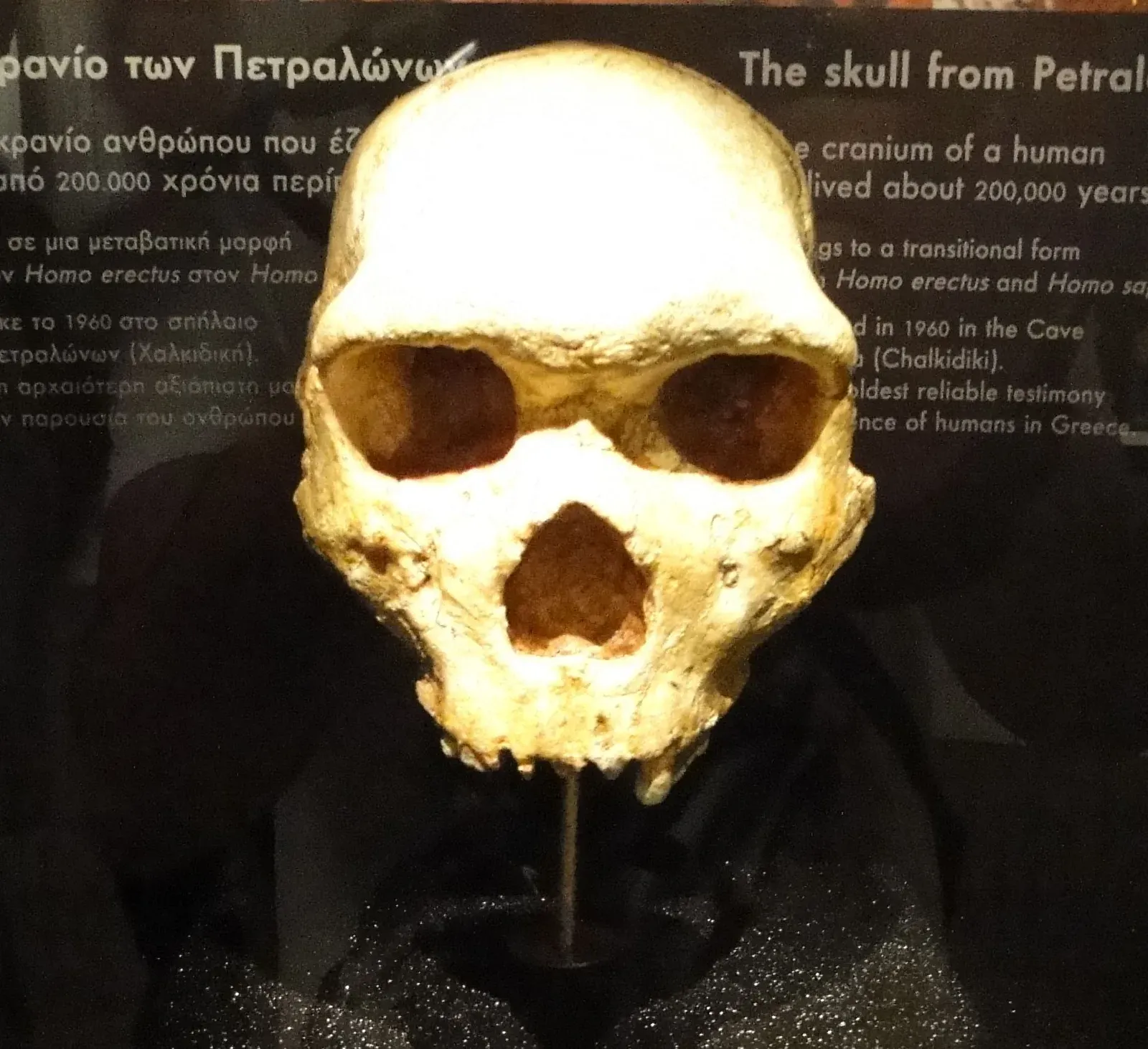
Discovered in a Greek cave back in 1960, the Petralona skull has been causing arguments in paleoanthropology for over six decades. Nobody could agree on how old it was or what species it belonged to. Their findings, published in the Journal of Human Evolution, reveal that the Petralona cranium is at least 286,000 years old, placing it firmly in the Middle Pleistocene era. Earlier attempts at dating had produced wildly conflicting results, ranging from 170,000 to nearly 700,000 years.
Many anthropologists group it with Homo heidelbergensis, a species thought to represent the last common ancestor of Neanderthals and modern humans. What makes this so significant is what it tells you about prehistoric Europe. The team behind the research argues that the Petralona skull likely belonged to an individual who coexisted with early Neanderthals in Europe, possibly representing a distinct, more primitive lineage that persisted longer than previously thought. This echoes recent fossil discoveries suggesting that multiple hominin lineages coexisted in Europe during the Middle Pleistocene in a complex evolutionary mosaic rather than a neat, linear succession. Europe was not a quiet, empty stage waiting for modern humans – it was already crowded.
Dragon Man: The Harbin Cranium and a Possible New Human Species From China
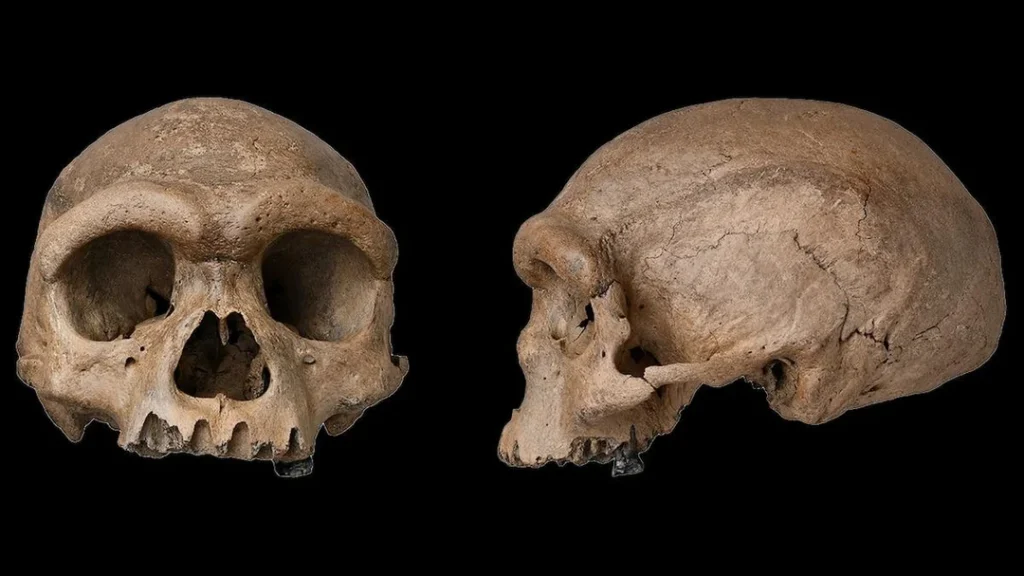
Let’s be real – “Dragon Man” is one of the most exciting nicknames ever given to a fossil. The Harbin cranium is a nearly complete skull of an archaic human thought to originate from sediments of the Songhua River near Harbin on the Northeast China Plain. It dates to the late Middle Pleistocene, probably no older than 309,000 and no younger than 146,000 years ago. The story behind its discovery is almost cinematic – a Chinese laborer reportedly found it in 1933 and hid it in an abandoned well for decades to protect it from Japanese-aligned authorities.
After geochemical detective work to locate where the fossil was likely found, and painstaking comparison of its distinctive features with those of other early humans, some of the scientists investigating the find believe the cranium from Harbin could represent an entirely new human species – Homo longi or “Dragon Man.” They further suggest it might even be the human lineage most closely related to ourselves. “The discovery of the Harbin cranium and our analyses suggest that there is a third lineage of archaic human that once lived in Asia, and this lineage has a closer relationship with H. sapiens than the Neanderthals,” says Xijun Ni, a paleoanthropologist at the Chinese Academy of Sciences and Hebei GEO University. In June 2025, researchers announced that the mitochondrial DNA and endogenous proteins of the Harbin cranium cluster with those of early Denisovans from southern Siberia. So Dragon Man may actually be a Denisovan – your genetic cousin in disguise.
The Hualongdong Site: China’s 300,000-Year-Old Window Into Transitional Humans
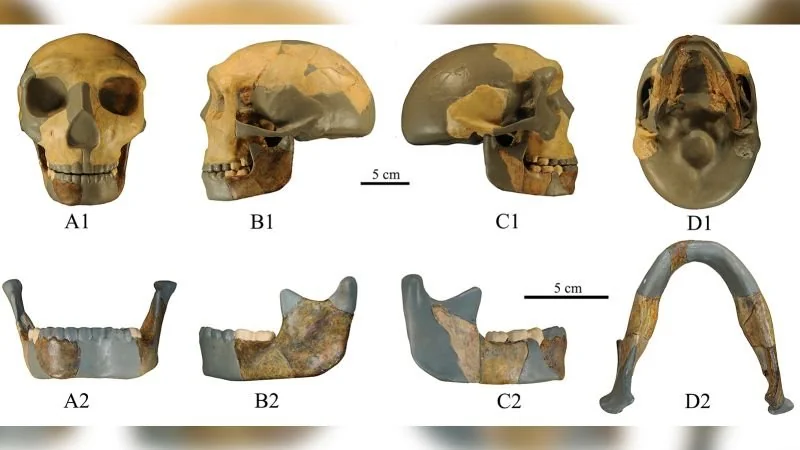
On the other side of Asia, another extraordinary discovery has been quietly rewriting the story of how modern humans emerged in East Asia. Chinese scientists have discovered dozens of human fossils dating back 300,000 years, which are the earliest ones found in East Asia in terms of the evolution process towards Homo sapiens, the species to which all modern human beings belong. The human fossils, along with a large number of fossilized animal bones and stone tools, have been unearthed at the Hualongdong site in Dongzhi County, east China’s Anhui Province.
A skull fossil unearthed in 2015 is one of the most important discoveries made at Hualongdong to date. Researchers inferred that the skull belonged to a girl of 13 or 14 years old. What makes the Hualongdong find so remarkable is the biological in-between-ness of it all. The human fossils at Hualongdong belong to ancient humans with physical characteristics between the Homo erectus and modern humans. You are looking at a real-life transitional form – not a hypothetical textbook figure, but actual bone and teeth showing evolution caught mid-step. In addition, the finely crafted stone tools found at Hualongdong show the relatively high technical level of the Hualongdong cave people 300,000 years ago.
The Moroccan Time Capsule: 773,000-Year-Old Fossils Near the Root of Your Family Tree
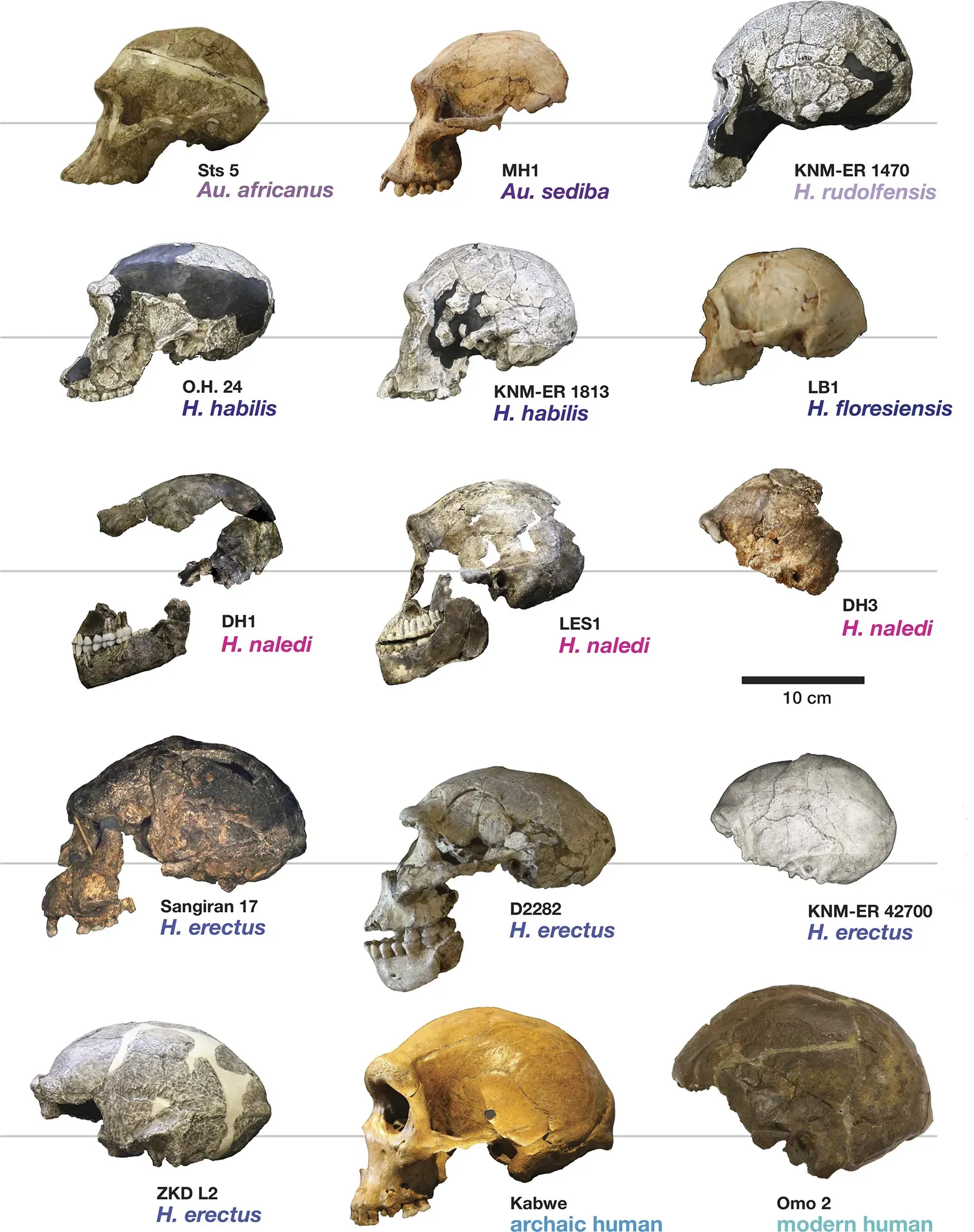
If you want to trace your ancestry back to its deepest shared root – the last common ancestor of all modern humans, Neanderthals, and Denisovans – then a cave in Morocco may hold your most important clues. Fossils from a Moroccan cave have been dated with remarkable accuracy to about 773,000 years ago, thanks to a magnetic signature locked into the surrounding sediments. The hominin remains show a blend of ancient and more modern features, placing them near a pivotal branching point in human evolution. These individuals likely represent an African population close to the last common ancestor of Homo sapiens, Neanderthals, and Denisovans.
Their combination of ancient African traits and features that foreshadow later Eurasian and African populations offers rare insight into the last common ancestor of Homo sapiens, Neanderthals, and Denisovans – estimated from genetic evidence to have lived between 765,000 and 550,000 years ago. The precision of this dating is what really sets this discovery apart. The findings reinforce the idea that Northwest Africa was a major center of early human evolution during periods when shifting climates opened migration routes across what is now the Sahara. So the vast, scorching desert you know today was once a corridor of life – a pathway your ancestors may have walked on their way to becoming you.
Conclusion: The Family Tree Just Keeps Getting Bushier
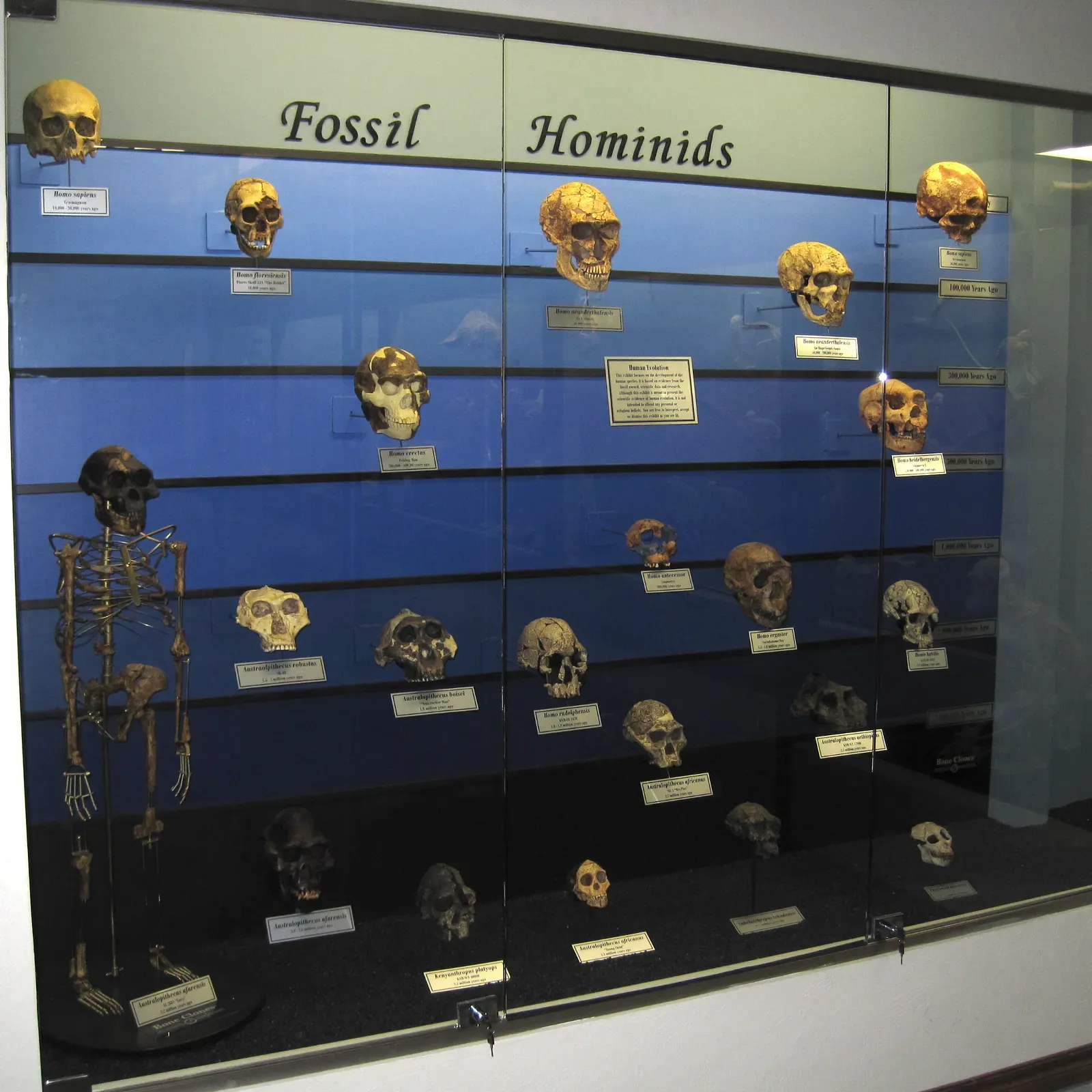
What all seven of these discoveries share is a single, powerful message: the story of your origins is not a straight line. Fossils unearthed in Ethiopia are reshaping our view of human evolution. Instead of a straight march from ape-like ancestors to modern humans, researchers now see a tangled, branching tree with multiple species coexisting. Every single year, new fossils add more branches, more mystery, and more wonder to a story that is already extraordinary.
There is something deeply humbling about standing in a museum and looking at a 2.8-million-year-old tooth that belonged to a creature who may have been your distant relative – a creature who was not you, not quite anything we have a tidy name for, but who was part of the long, complicated experiment that eventually produced the person reading these words. These discoveries paint a vivid picture of a “bushy tree” of evolution where multiple human species coexisted, interbred, and ultimately contributed to the rich genetic tapestry that defines us today.
The science keeps evolving, the fossils keep emerging, and the picture keeps getting richer. Which of these discoveries surprised you the most? Tell us in the comments below – we would genuinely love to know.