
Imagine hauling yourself through the blistering central Sahara, tracking a bone fragment half-buried in sand for years, and then realizing you’ve just changed the entire history of paleontology. That’s not a movie plot. That’s what happened in early 2026, when a team of scientists announced a discovery so significant, so beautifully strange, that even seasoned researchers struggled to process it. A new species of Spinosaurus, the largest group of predatory dinosaurs ever to walk the Earth, had just been confirmed for the first time in over a century.
This isn’t just a cool fossil story. This is a seismic shift in how we understand some of the most iconic creatures that ever lived. From a remote desert in Niger to the pages of one of the world’s most respected scientific journals, the evidence is undeniable. Something genuinely enormous just happened. Let’s dive in.
A Discovery a Century in the Making
Let’s be real, moments like this don’t come along often. It is the first time in over 100 years that scientists have discovered a new species of Spinosaurus dinosaurs, the large fish-eating predators that first emerged during the Jurassic period more than 140 million years ago. That alone is enough to make your jaw drop. One hundred years of paleontology and not a single new confirmed species in this group, until now.
The new species, called Spinosaurus mirabilis, was the length of a school bus and was unearthed in Niger by an international team of scientists led by paleontologists from the University of Chicago. The specific name, mirabilis, is a Latin word meaning “astonishing,” alluding to the remarkably enlarged nasal-prefrontal crest that characterizes the species. Fitting, honestly. You couldn’t have named it anything less dramatic.
The Strange and Stunning Fossil That Started It All
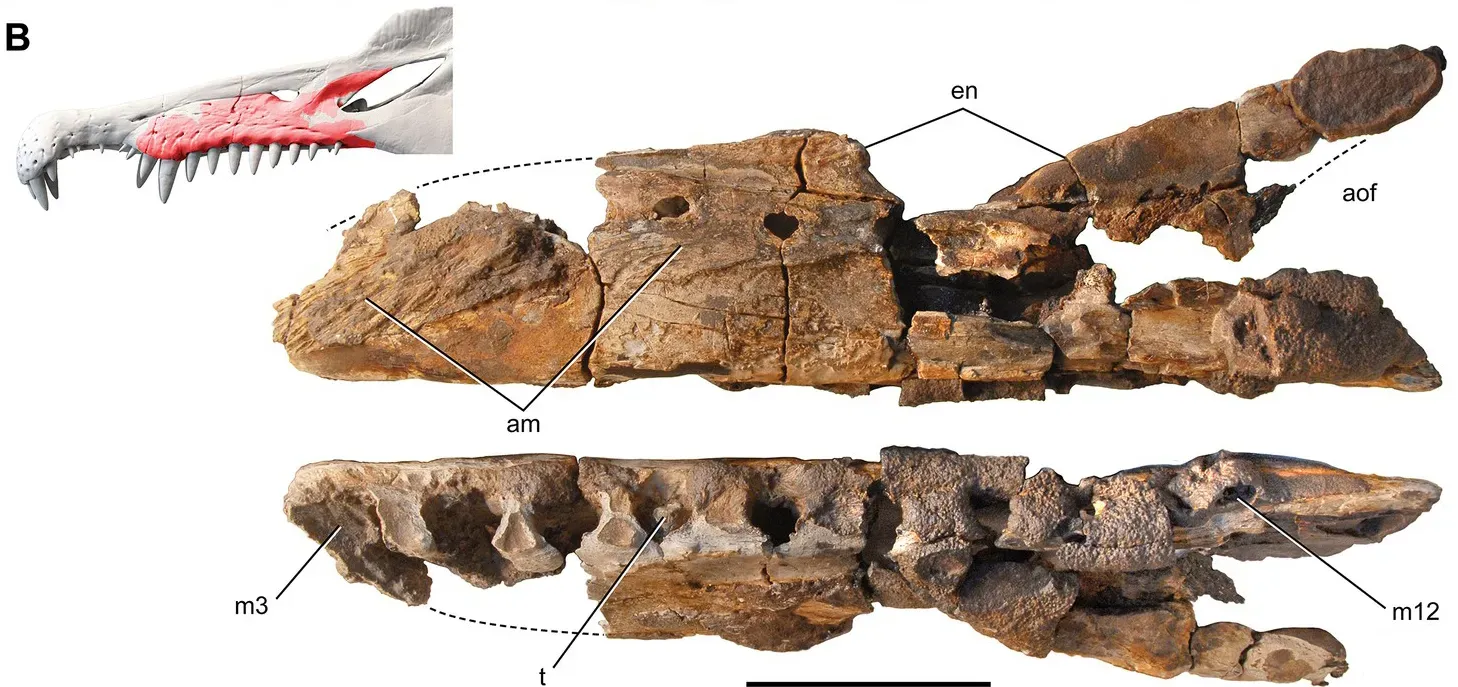
The scimitar-shaped crest of S. mirabilis was so large and unexpected that the paleontologists initially didn’t recognize it for what it was when they plucked it and some jaw fragments from the desert surface in November 2019. Think about that for a moment. They held an extraordinary piece of natural history in their hands and simply could not comprehend what they were looking at. Science can be humbling like that.
It took a return expedition, two more crests, and a 3D digital skull assembly powered by solar panels in the middle of the desert in Niger before the realization sank in. They’d unearthed the towering head crest of an entirely new species of dinosaur. Based on the crest’s surface texture and interior vascular canals, the experts believe the crest was sheathed in keratin. That means in life, this thing would have looked even more dramatic than the bare fossil suggests.
What Spinosaurus mirabilis Actually Looked Like
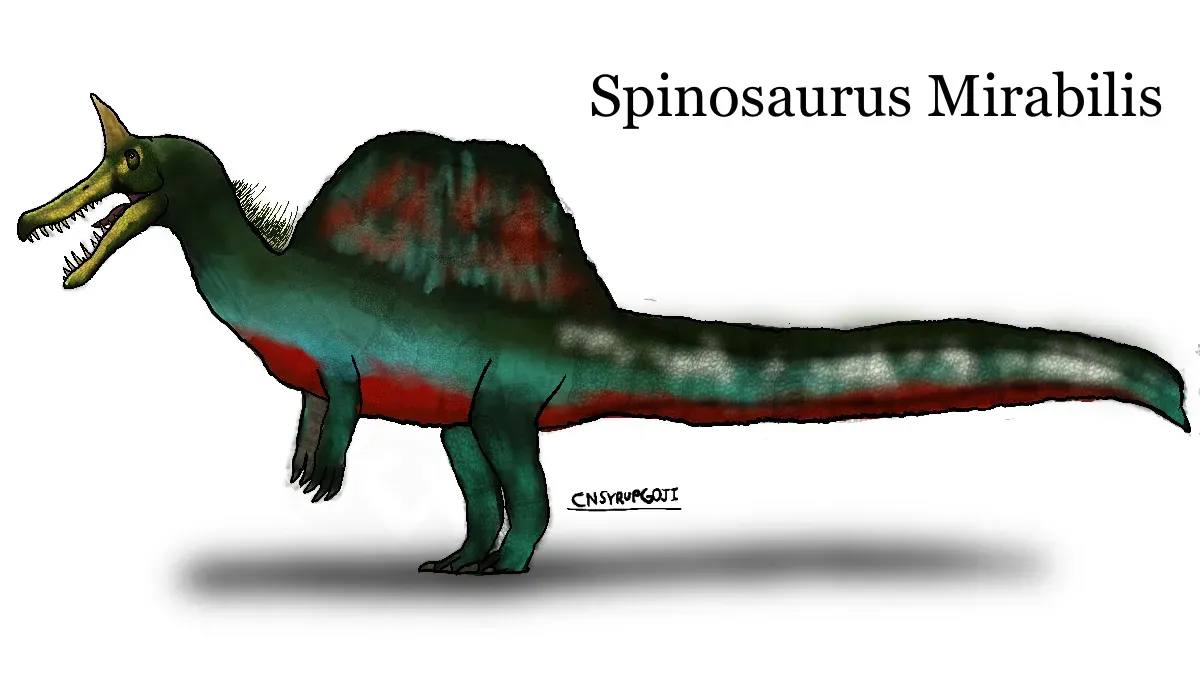
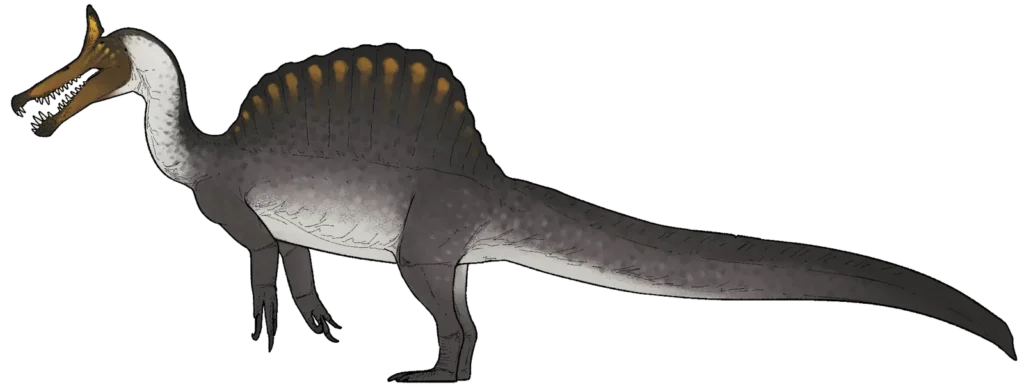
It is characterized by a long, low snout, a scimitar-shaped midline crest on the top of the skull, and a large sail over the back. Picture a crocodile’s jaw crossed with a rooster’s comb, stretched over a bus-length body with a sail running down its spine. I know it sounds crazy, but that’s essentially what you’re dealing with here.
The most obvious physical difference between the newly discovered species and its previously discovered cousins is a foot-long curved horn that protrudes from its skull. The authors speculate that the horn, or crest, may have been brightly colored, based on the texture of the fossils, and that the crest may have been used to attract or communicate with other members of the species. The skull’s interlocking upper and lower teeth form a lethal trap for slippery fish, a time-tested fish-eating adaptation seen in ichthyosaurs, crocodilians, and pterosaurs.
A Hunter in the Inland Desert, Not the Coast
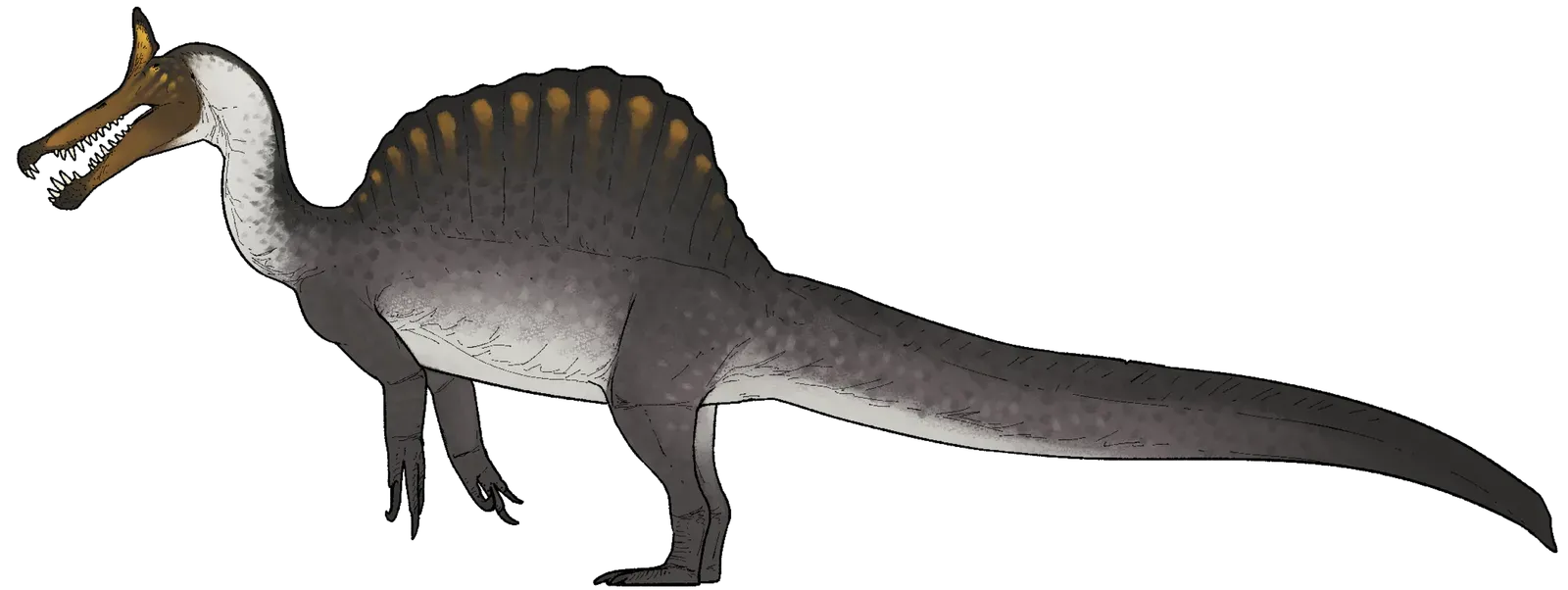
Here’s the thing that truly reshapes what scientists thought they knew. Before, spinosaurid bones and teeth had been found mainly in coastal deposits not far from the shoreline, leading some experts to hypothesize that these fish-eating theropods may have been fully aquatic, pursuing prey underwater. However, the new fossil area in Niger documents animals that were living inland, some as far as about 620 miles from the nearest marine shoreline.
The authors estimate that Spinosaurus mirabilis lived about 95 million years ago during the Cretaceous period, in a marshy inland area in what is now the central Sahara. Their proximity to intact partial skeletons of long-necked dinosaurs, all buried in river sediments, suggests they lived in a forested inland habitat dissected by rivers. The Sahara as a lush, river-crossing forest? That takes some mental rewiring, but the bones don’t lie.
Nanotyrannus and the Year That Rewrote the Rulebook
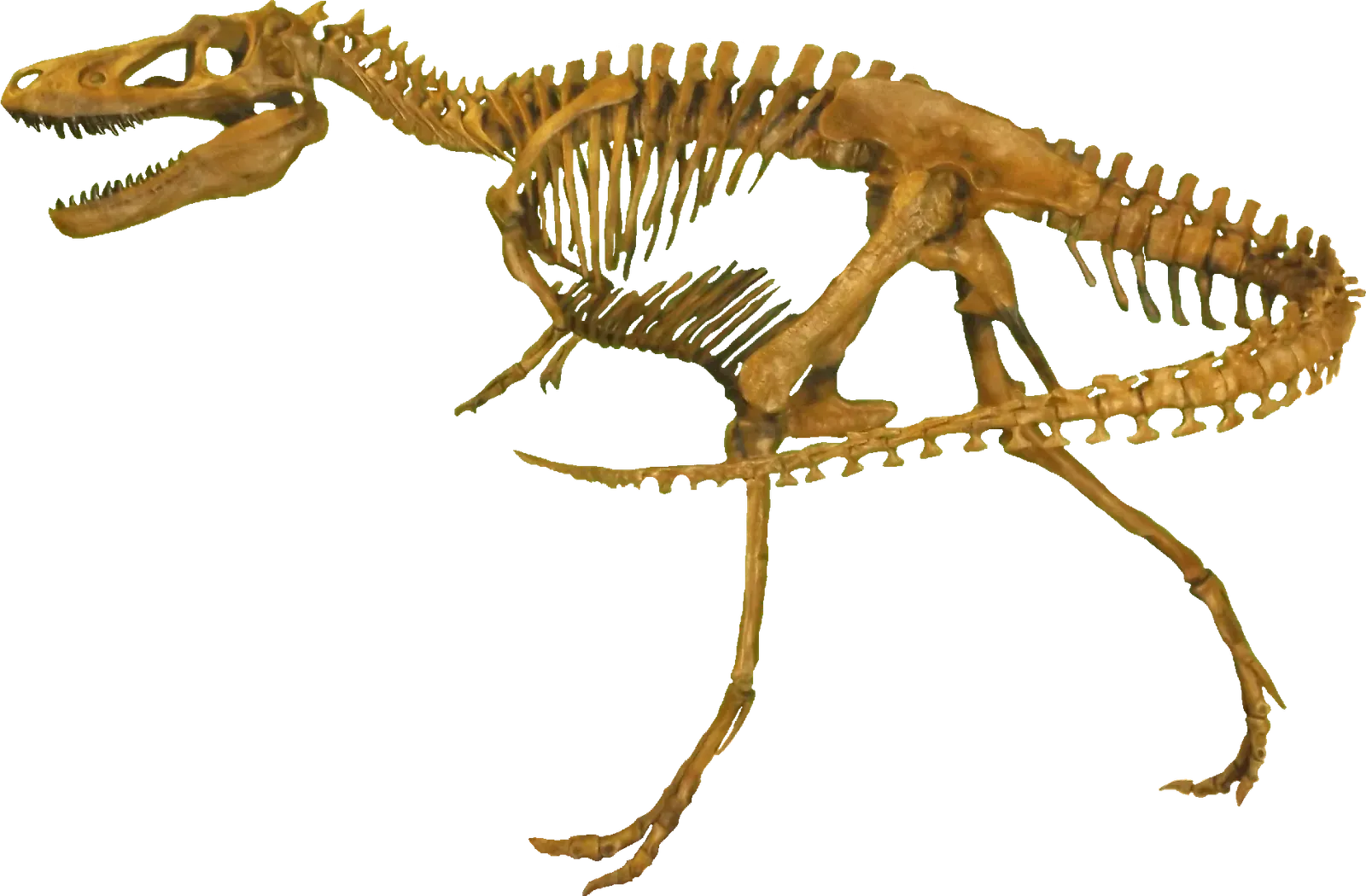
The Spinosaurus mirabilis announcement didn’t arrive in a vacuum. It came on the heels of another monumental 2025 find that had the paleontology world buzzing. Researchers at the North Carolina Museum of Natural Sciences and N.C. State University said they had settled a long-standing debate in the field of paleontology, arguing in the journal Nature that a fossil specimen in the museum’s “Dueling Dinosaurs” exhibit is a distinct dinosaur, called Nanotyrannus lancensis, rather than just a juvenile Tyrannosaurus rex.
New evidence reveals that those studies were based on two entirely different animals, and that multiple tyrannosaur species inhabited the same ecosystems in the final million years before an asteroid impact caused the mass extinction of dinosaurs. A subsequent study on the original Nanotyrannus demonstrated that this specimen was also fully grown. Together, these studies end a 35-year-long controversy and reveal Nanotyrannus as a slender, agile pursuit predator, built for speed. Decades of T. rex research, potentially resting on flawed assumptions. Sobering stuff.
A Golden Age of Discovery You’re Living Through Right Now
It’s worth stepping back to appreciate just how extraordinary the current era of paleontology actually is. A golden era in dinosaur science is driving public fascination. Around 1,400 dinosaur species are now known from more than 90 countries, with the rate of discovery accelerating in the last two decades. The year 2025 alone saw the discovery of 44 new dinosaur species, nearly one a week. Many new discoveries come from paleontological hotspots such as Argentina, China, Mongolia, and the US, but dinosaur fossils are also being found in many other places, from a Serbian village to the rainswept coast of north-west Scotland.
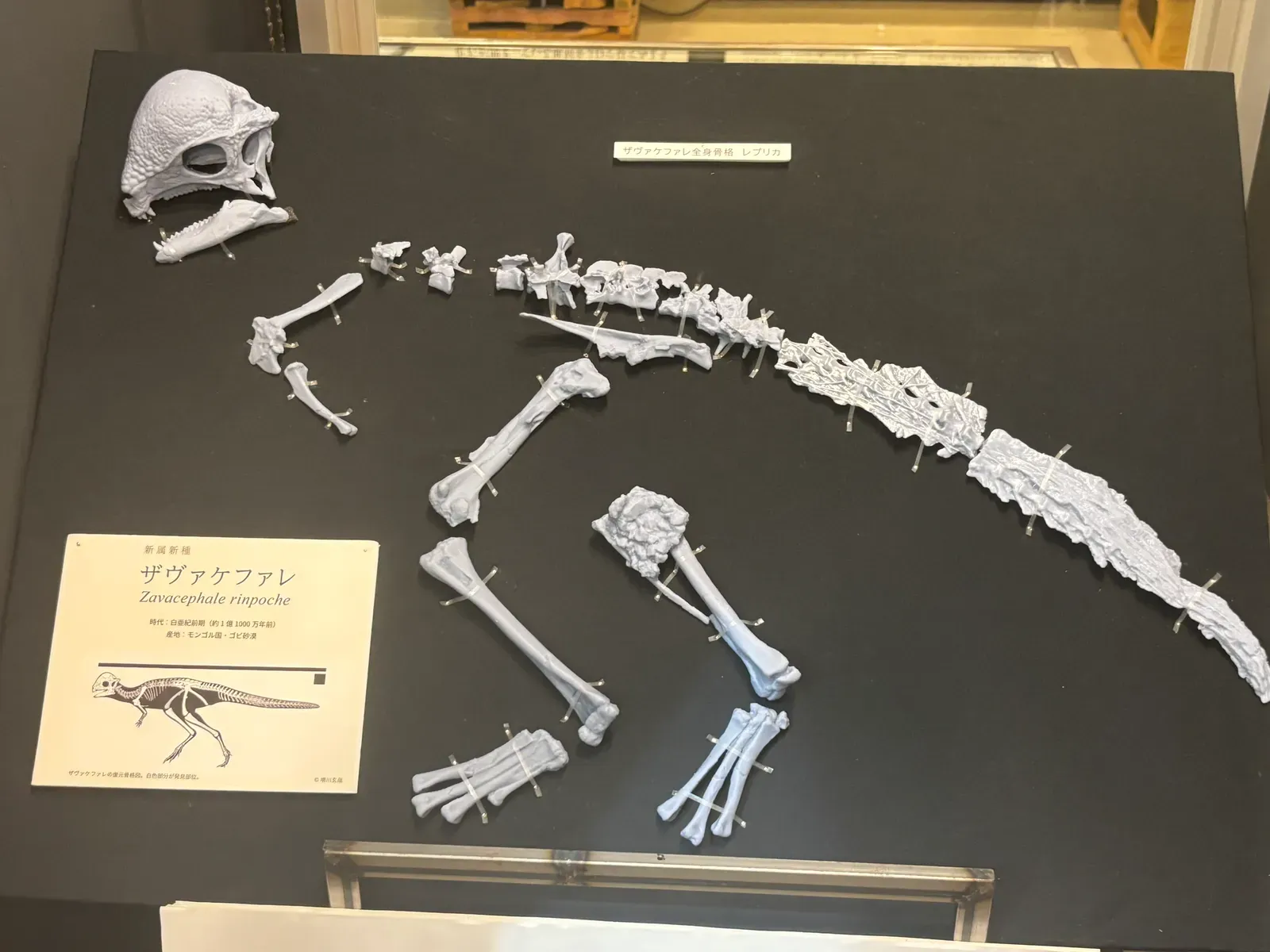
Among those standout 2025 finds was Zavacephale rinpoche, a one-meter-long plant-eater that caused actual audible gasps at conferences. Zavacephale is the oldest pachycephalosaur yet discovered, making it even more remarkable that it is also the most complete dinosaur of its family ever described. Contrary to paleontologists’ expectations, Zavacephale already had a domed skull, 14 million years before paleontologists thought these dinosaurs evolved the characteristic trait. Timelines shattered again. Over the past year, new fossils, reanalyses of famous specimens, and the use of increasingly sophisticated tools have continued to upend what we thought we knew about how these animals lived, moved, fed, and evolved. It’s hard to say for sure where the limits of this era of discovery actually are, but right now, they seem almost nonexistent.
Conclusion: The Sahara Still Has Secrets

When a team of scientists assembles a dinosaur skull on solar power in the middle of one of Earth’s most hostile deserts, and then announces it to the world as the most significant find in a century, you have to pause. This isn’t just a win for paleontology. It’s a reminder that the planet we think we know is still full of buried surprises. The story of life on Earth is longer, stranger, and more spectacular than any single generation can fully grasp.
A new paper published in Science describes the journeys in 2019 and 2022 to find Spinosaurus mirabilis, the first new spinosaurid species discovered in more than a century. A large, fish-eating predator, S. mirabilis adds important new fossil finds to the closing chapter of its genus’s evolution. The Sahara once held rivers teeming with enormous fish, forests echoing with the sounds of creatures we’re only beginning to understand. Every new fossil is a whisper from that lost world.
If a century-long gap in Spinosaurus discovery can be closed by a team following a rumor and a moped trail through the desert, what else is still out there waiting? What do you think – does this change how you see the ancient world? Tell us in the comments.