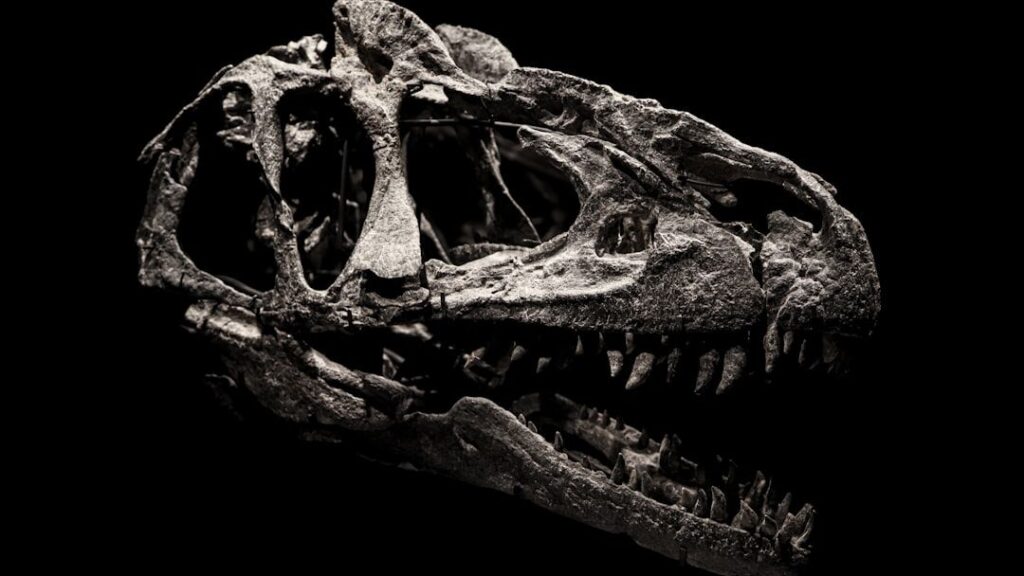
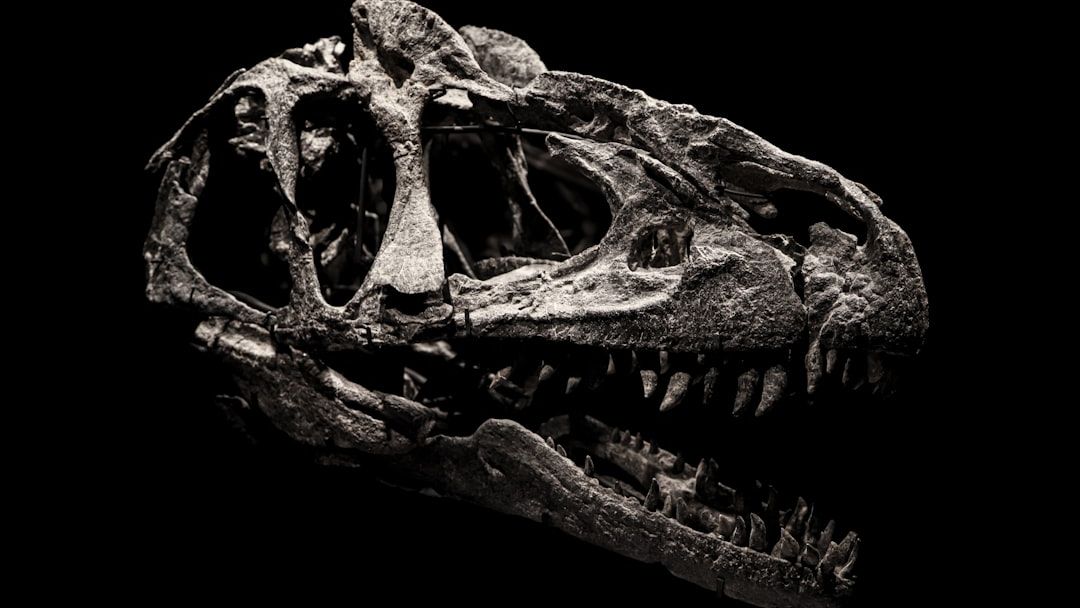
Famed Brazilian dinosaur fossil finally heads home – Image for illustrative purposes only (Image credits: Unsplash)
Stuttgart, Germany — Brazilian paleontologists celebrated a major victory this week as Germany agreed to repatriate the holotype skull of Irritator challengeri, a rare spinosaurid fossil that has been housed in a German museum for over three decades. The agreement, announced during high-level talks between the two nations, promises not only the fossil’s return but also deeper scientific collaboration. This development closes a contentious chapter in international paleontology and underscores Brazil’s push to reclaim its natural heritage.[1][2]
A Fossil’s Controversial Path from Brazil to Europe
The nearly complete skull, cataloged as SMNS 58022, originated from a chalk concretion in the Romualdo Formation of Brazil’s Araripe Basin, near Santana do Cariri in the northeast. Dating back about 113 million years to the Early Cretaceous, it surfaced through fossil dealers who trafficked it out of the country before strict export regulations took full effect.[2]
In 1991, the State Museum of Natural History Stuttgart (SMNS) purchased the specimen from a private dealer. Upon preparation, researchers discovered extensive tampering: the skull had been flattened, crushed, acid-etched, and artificially elongated with plaster and filler. This damage initially led to misidentifications as a pterosaur before its true nature as a spinosaurid emerged.[2]
Formally described in 1996 by a team led by David Martill, the genus name Irritator reflected the frustration with its altered state. The species honors a fictional professor from Arthur Conan Doyle’s works. Microfossils embedded in the matrix, including ostracods and fish scales, firmly tied it to its Brazilian home.[2]
Unlocking Secrets of a Peculiar Predator
Irritator challengeri stands out among spinosaurids for its well-preserved cranial features. The subadult skull, roughly 60 centimeters long, features a slender, shallow snout packed with straight, conical teeth suited for grasping slippery prey like fish. A thin sagittal crest runs along the midline, nostrils sit far back, and a rigid secondary palate adds structural support.[2]
Estimated at 6 to 8 meters long and weighing around one tonne, it represents one of the most informative spinosaurid specimens. Debates persist over its relation to Angaturama limai, another taxon from the same formation described that same year, though overlapping material remains elusive due to illicit collecting practices.[2]
- Narrow, elongated skull with backward-shifted nostrils.
- Conical, unserrated teeth indicating piscivorous habits.
- Prominent midline crest and reinforced palate.
- Preserved height of 16.5 cm and width of 10 cm in the main portion.
Sparks of Controversy and Calls for Justice
Brazil’s 1942 law mandates permits for fossil collection and declares all such finds national property, making the skull’s export without documentation illegal. The issue simmered until a 2023 study reignited outrage, prompting the hashtag #IrritatorBelongstoBR and a petition that amassed over 34,600 signatures by 2025.[2][3]
Brazilian paleontologists, including Aline Ghilardi, rallied with lawyers to argue that Germany lacked good title to the artifact. This followed the 2023 repatriation of Ubirajara jubatus from another Baden-Württemberg museum, setting a precedent for voluntary returns.[3]
Pressure mounted through social media and academic channels, highlighting broader concerns over “scientific colonialism” in fossil trade. German officials initially defended the 1991 purchase under private law, but public and diplomatic advocacy shifted the tide.[4]
The Diplomatic Breakthrough
On April 20, 2026, during Brazilian President Luiz Inácio Lula da Silva’s visit to Hannover, the two governments issued a joint declaration from the third German-Brazilian Intergovernmental Consultations. It welcomed the “willingness” of Baden-Württemberg and SMNS to hand over the fossil.[5][2]
A spokesperson for the Ministry of Science, Research and Arts of Baden-Württemberg stated, “We recognize the great importance of Irritator challengeri to Brazil and would thus like to return it as part of and within the framework of a comprehensive plan for enhanced scientific cooperation.”[1]
Negotiations, involving figures like Yara Nakata, culminated in this pact, though exact legal steps and timelines for the transfer remain unspecified. The deal emphasizes mutual access to expertise and collections moving forward.[1]
A New Era for Brazilian Paleontology
This repatriation bolsters Brazil’s efforts to study its own rich fossil record, long depleted by smuggling. Researchers anticipate hands-on analysis that could refine spinosaurid evolution and local biodiversity insights. For the Araripe Basin communities, it reaffirms cultural stewardship over ancient treasures.
While the physical return awaits final arrangements, the agreement signals a cooperative future, potentially paving the way for more fossils to come home and joint projects to flourish. Brazilian scientists now look toward integrating Irritator into national exhibits, ensuring its story inspires the next generation of discoverers.