
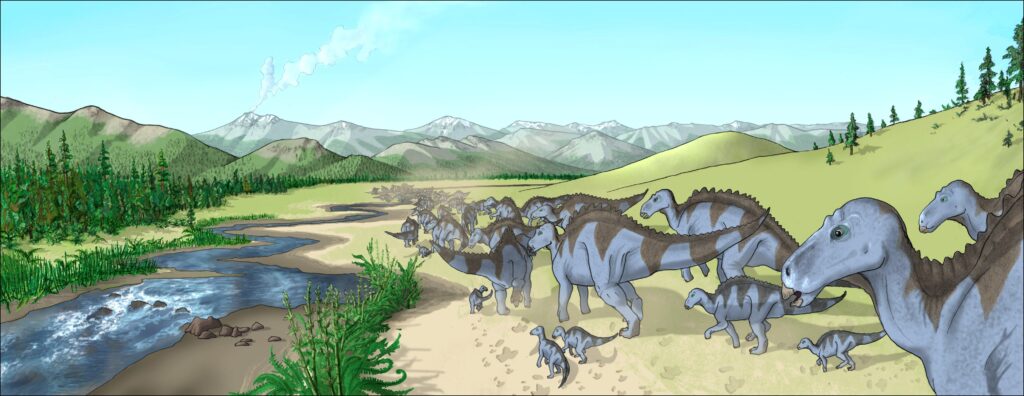
There is something almost cinematic about the idea of colossal creatures trekking across entire continents, following ancient coastlines, crossing temporary land bridges, and navigating a world that looked nothing like the one you see on any map today. Dinosaurs did not simply appear and disappear in the same spot. They moved. They spread. They colonized environments ranging from lush tropical jungles to snow-dusted polar forests, and the story of how they did it is far more intricate than most people realize.
You might picture dinosaurs as static, regional animals rooted to a single landscape for millions of years. The reality, as paleontologists keep uncovering, is the exact opposite. As the African continent drifted apart from the supercontinent Pangaea during the Mesozoic era, dinosaurs began to spread across the globe, colonizing diverse environments and adapting to a wide range of ecological niches, and the migration patterns of these prehistoric beasts have been a subject of intense study, with researchers piecing together clues left behind in the fossil record. So let’s dive into just how mind-bendingly complex that story really is.
The Pangaea Foundation: When All Paths Were Open
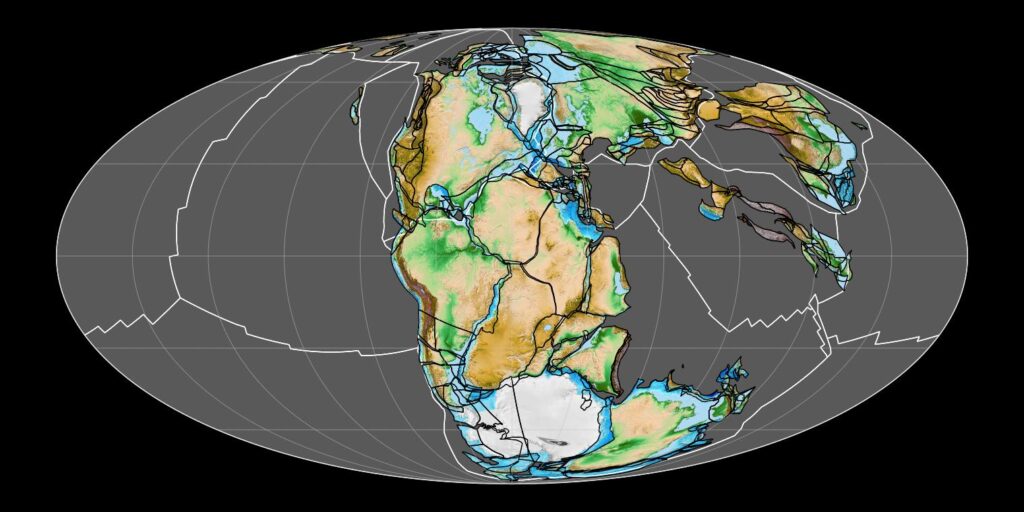
To understand dinosaur migration, you have to start at the very beginning, when the world was essentially one giant neighborhood. Pangaea was a supercontinent that existed approximately between 270 and 200 million years ago, uniting most of the world’s current continents into a single landmass. Think of it like a massive open-plan house where every creature could theoretically wander from one room to another without ever hitting a locked door.
Evidence suggests that early dinosaur species could spread relatively easily across Pangaea, explaining why we find similar early dinosaur fossils across widely separated modern continents. The unified landmass of Pangaea allowed for a relatively homogeneous dinosaur fauna during the early stages of dinosaur evolution, with species able to maintain genetic connectivity across vast distances. This is exactly why you sometimes find strikingly similar species on continents that today sit thousands of miles apart – they were simply neighbors once.
The Great Rupture: How Continental Drift Changed Everything
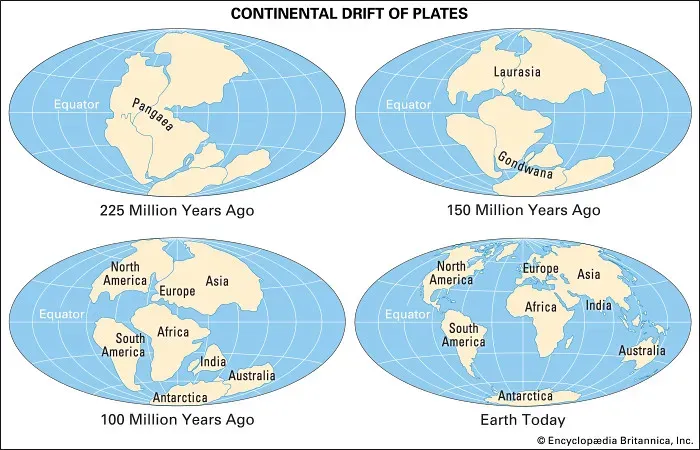
Pangaea’s fracturing began in earnest during the Early Jurassic period, approximately 180 million years ago. This initial split created two major landmasses: Laurasia in the north, consisting of what would become North America, Europe, and Asia, and Gondwana in the south, containing the future South America, Africa, Australia, Antarctica, and India. This fundamental division created the first major geographic barrier to dinosaur movement, as the widening Tethys Sea began separating northern and southern dinosaur populations.
Here’s the thing – this breakup was not a single dramatic event, like something snapping in two. It was agonizingly slow, playing out over tens of millions of years. The breakup of Pangaea wasn’t just a geological event; it was the ultimate reshaping of evolutionary destiny. As continents drifted apart and new oceans formed, dinosaur populations found themselves isolated on different landmasses. This separation triggered one of the most fascinating chapters in paleontology – the divergent evolution of dinosaur species across newly formed continents. In other words, geography became evolution’s most powerful force.
Land Bridges: The Secret Highways of the Mesozoic World
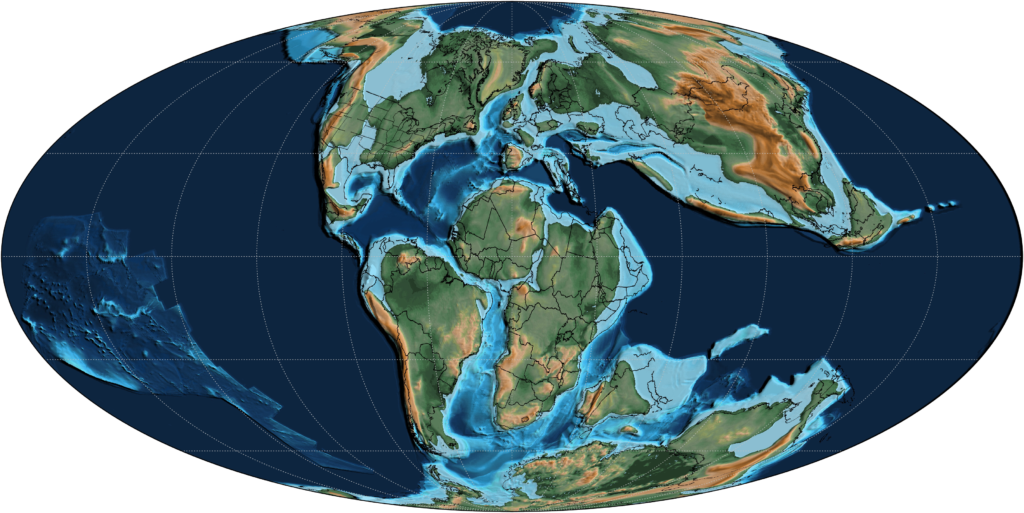
You might wonder how dinosaurs kept popping up on continents that were supposedly separated by ocean. The answer, at least in part, comes down to temporary land bridges. Research reaffirms previous studies that have found that dinosaurs continued to migrate to all parts of the world after the supercontinent Pangaea split into land masses that are separated by oceans. That finding alone should make you rethink what “isolation” even meant in the Mesozoic era.
Dinosaurs may have been able to move across continents, and between islands, by the formation of temporary land bridges, which could have formed because of fluctuating sea levels during the Cretaceous era. Such massive structures spanning, for example, from Indo-Madagascar to Australia, may be hard to imagine. Over the timescales that we are talking about, which is in the order of tens of millions of years, it is perfectly feasible that plate tectonic activity gave rise to the right conditions for such land bridges to form. It’s honestly one of the most staggering concepts in all of paleontology.
The Curious Exodus From Europe
A team of paleontologists led by University of Leeds scientist Dr. Alexander Dunhill used the so-called “Network Theory” to visually depict the movement of dinosaurs around the world during the Mesozoic era, including a curious exodus from Europe during the Early Cretaceous, spanning 146 to 100 million years ago. This is one of those discoveries that genuinely raises your eyebrows – why would dinosaurs leave an entire continent?
One striking pattern is that although Europe shows a high degree of outward connectivity in the Jurassic to Early Cretaceous, there are no inward connections to Europe in the Early to Mid-Jurassic. In other words, dinosaur families were leaving Europe while no new families were arriving on the continent. Some island-hopping dinosaurs, such as Eustreptospondylus, evolved to cope with the coastal shallows and small islands of ancient Europe. Europe, it seems, was not so much a destination as a launching pad during certain periods of dinosaur history.
Sauropod Giants: The Most Ambitious Travelers of the Mesozoic
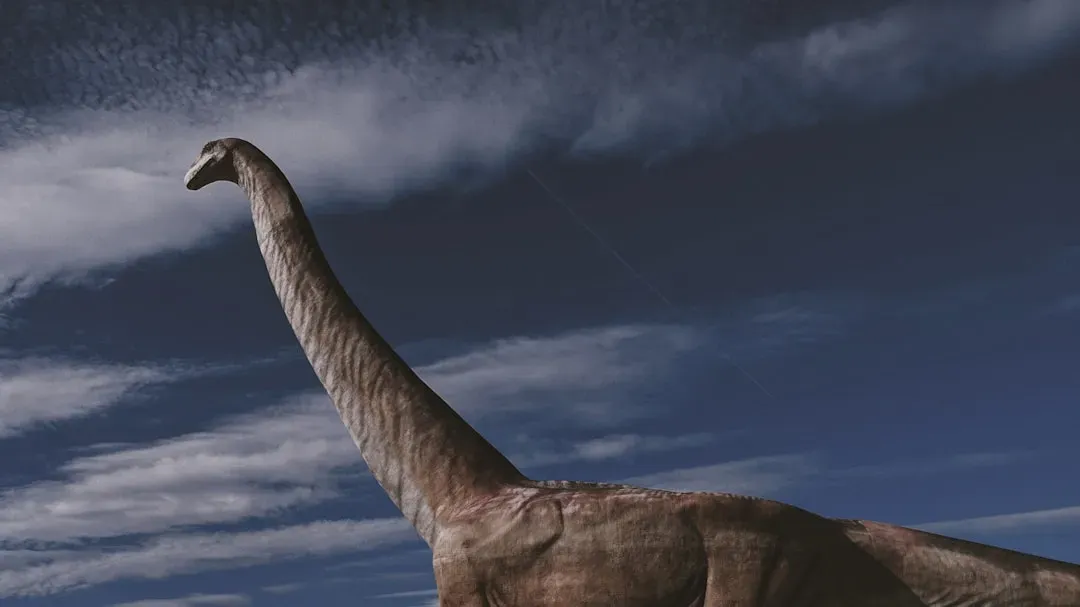
One well-documented migration route is the spread of sauropod dinosaurs, the colossal, long-necked herbivores. Evidence suggests that these massive creatures originated in South America and then dispersed northward, eventually reaching North America and Eurasia. This dispersal was facilitated by the gradual separation of the South American and African landmasses, creating new opportunities for these giants to explore and thrive in new environments. You have to appreciate the sheer audacity of nature here – animals weighing dozens of tons, wandering across entire continental landmasses in search of food.
Comparison of the oxygen isotope ratios of sedimentary carbonates from the Morrison basin of western North America with those of carbonate from camarasaurid dinosaur teeth suggests that they drank water that fell in mountainous regions, so must have undertaken migrations between lowlands and mountainous areas about 300 kilometres apart. The idea is that these large sauropods were able to migrate considerable distances in order to get enough food in. Sauropods were massive feeding machines and would have needed quite a bit of plant food, and perhaps they had to travel a distance to get enough sustenance in an arid region. This is no different from how modern elephants track water sources across vast African landscapes, just on a scale that is almost unimaginable.
Polar Dinosaurs: Migration at the Ends of the Earth
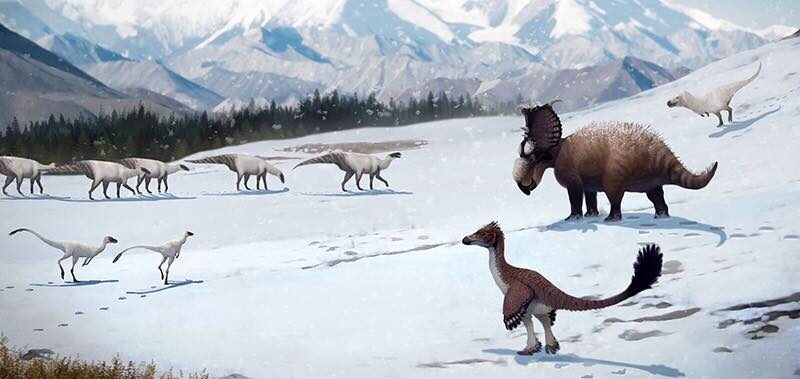
I know it sounds crazy, but some dinosaurs actually lived year-round near the Arctic and Antarctic circles. Instead of migrating to warmer regions to raise their young, polar dinosaurs stayed in ancient Alaska year-round and raised their offspring there. Researchers working with specimens at the University of Alaska Museum of the North have described a new species of hadrosaur, a type of duck-billed dinosaur that once roamed the North Slope of Alaska in herds, living in darkness for months at a time and probably experiencing snow.
The environments recorded in the strata of southern Australia, for example, were further south and within the Antarctic Circle when dinosaurs thrived there in the Cretaceous. By reconstructing the tectonic jigsaw and tracking where fossils have been uncovered, paleontologists have found dinosaurs that lived near both the northern and southern poles at different times. Arctic fossil evidence has sparked debates about dinosaur metabolism. The presence of diverse dinosaur species in polar regions suggests that many dinosaurs were likely warm-blooded, and this ability to maintain a constant body temperature would have been essential for surviving in the Arctic’s challenging climate. Honestly, this single fact rewrites the old cliché of dinosaurs as slow, tropical, cold-blooded beasts entirely.
Network Theory and the New Science of Dinosaur Biogeography
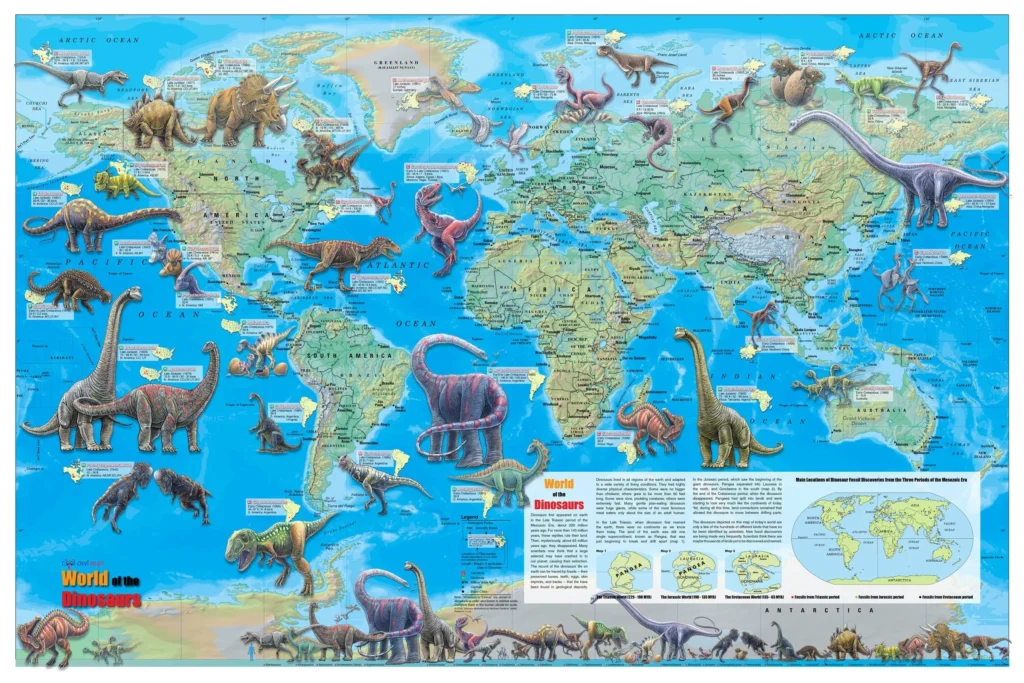
Researchers have used “network theory” for the first time to visually depict the movement of dinosaurs around the world during the Mesozoic Era, including a curious exodus from Europe. Using the same kind of analytical framework that maps connections on the internet, scientists began charting how dinosaur families linked up across continents over geological time. In the study, the researchers used the Paleobiology Database that contains every documented and accessible dinosaur fossil from around the world. Fossil records for the same dinosaur families from different continents were then cross-mapped for different periods of time, revealing connections that show how they migrated.
Researchers reported that dinosaur geography “was influenced by continental fragmentation and rising sea levels throughout the Mesozoic, with fewer family-level connections occurring in the later Cretaceous than in the Triassic, Jurassic and Early Cretaceous when continents were more closely aligned.” In the last four decades, there has been an exponential increase in dinosaur studies, with new species described at an average rate of two per week. This constant update continuously challenges our understanding of dinosaur palaeobiology and Mesozoic ecosystems. The science is young, the fossil record is incomplete, and the picture keeps getting richer. It’s hard to say for sure where the next major discovery will come from, but it will almost certainly surprise us all over again.
Conclusion: A Story Still Being Written in Stone
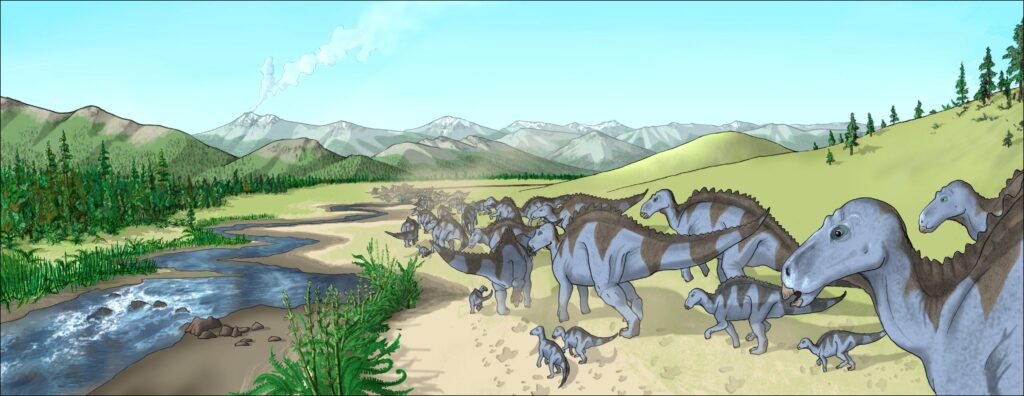
What becomes clear, when you step back and look at the full sweep of dinosaur migration, is that these animals were not passive passengers on a drifting planet. They responded, adapted, and spread with a tenacity that speaks to the deepest drives of life itself. From the colossal sauropods marching hundreds of kilometers in search of upland water, to hadrosaurs raising hatchlings in snow-dusted Alaskan darkness, the migration story of dinosaurs is breathtaking in its scope and complexity.
The study of the dinosaur diaspora has far-reaching implications, not just for our understanding of these prehistoric giants but also for our broader knowledge of Earth’s evolutionary history. By tracing the migration patterns and dispersal of dinosaurs, researchers can gain insights into the complex interplay of tectonic plate movements, climate fluctuations, and the adaptability of life in the face of changing environmental conditions. Every fossil uncovered anywhere on this planet is another page in a story that spans hundreds of millions of years – and we have barely scratched the surface. The next time you look at a world map, you might just find yourself wondering what giant creature once walked across the very ground beneath your feet. What would you have guessed was living there?