
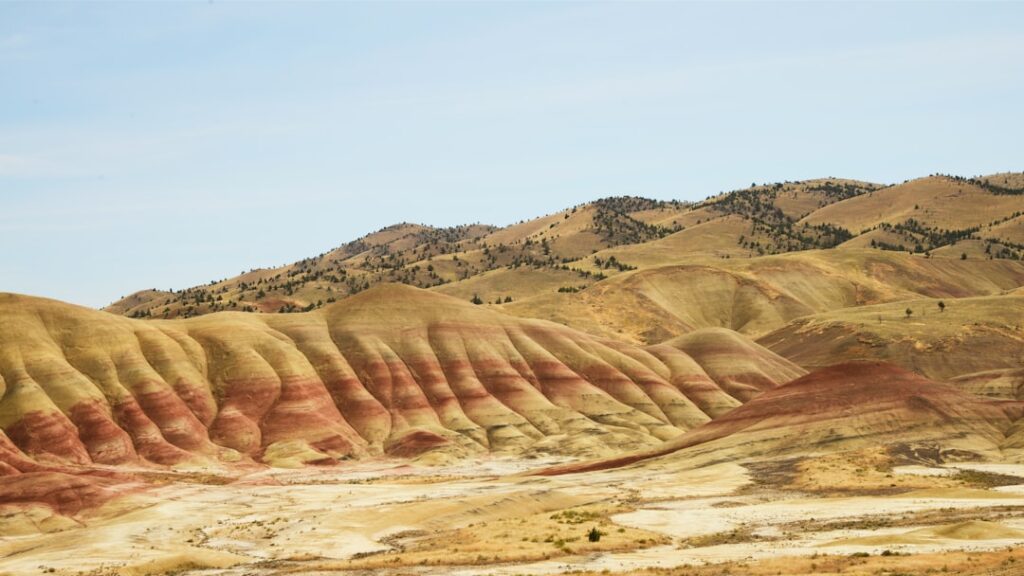
Somewhere beneath your feet, layered into stone and soil that took millions of years to form, the ancient world is still waiting to be found. You might walk past a rocky hillside without giving it a second glance, never realizing that buried just inches below the surface are the bones of creatures that roamed a completely different Earth. That thought alone is enough to send a chill down your spine, honestly.
America is riddled with prehistoric fossil sites, some world-famous, some barely known outside of a tight-knit community of geology enthusiasts. The seven places on this list are remarkable not just because of what they’ve revealed, but because of the jaw-dropping stories they still have left to tell. So buckle up, because what follows might make you want to book a road trip.
1. Ghost Ranch, New Mexico: Where Ancient Dinosaurs Died Together
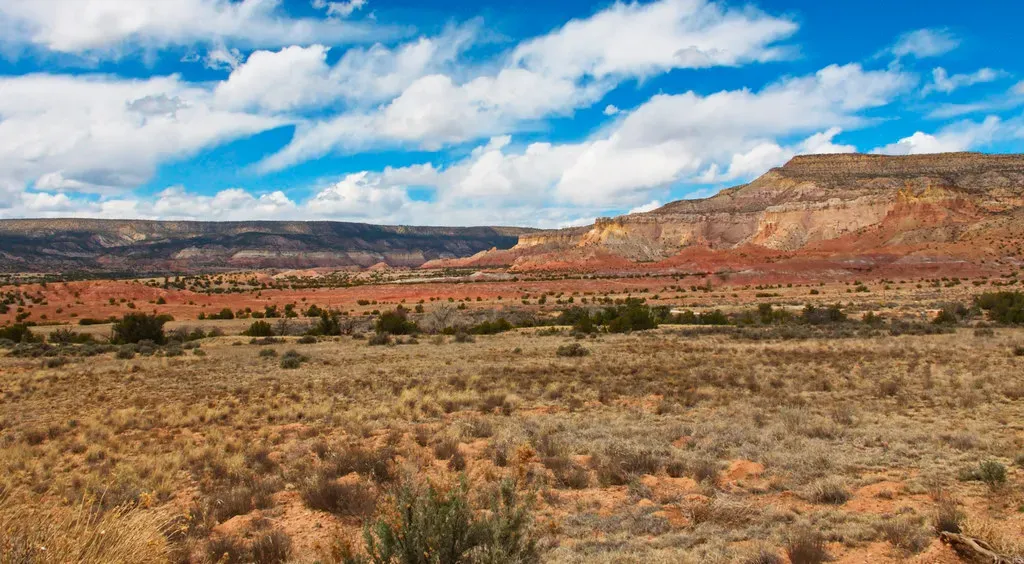
If you’ve ever wondered what it looks like when hundreds of dinosaurs meet their end in a single catastrophic moment, Ghost Ranch in northern New Mexico is your answer. Ghost Ranch is known for a remarkable concentration of fossils, most notably that of the theropod dinosaur Coelophysis, of which it has been estimated that nearly a thousand individuals have been preserved in a quarry there. That’s not a typo. Nearly a thousand. All in one place.
Those animals were living in a warm, monsoon-like climate but struggling with drought during the dry season. Those who hadn’t yet perished were languishing around a diminishing water source, when suddenly a violent storm arrived and the creatures were caught in a flash flood. Many hundreds were killed and their remains were deposited in a muddy wash where they were quickly covered and would remain for over 200 million years. When you stand at Ghost Ranch, you’re essentially standing at one of history’s most dramatic mass extinction moments on a small, localized scale. The Ruth Hall Museum of Paleontology on site gives you a front-row seat to this prehistoric disaster scene, and visiting feels less like a museum trip and more like time travel.
2. Ashfall Fossil Beds State Historical Park, Nebraska: A Volcanic Graveyard Frozen in Time
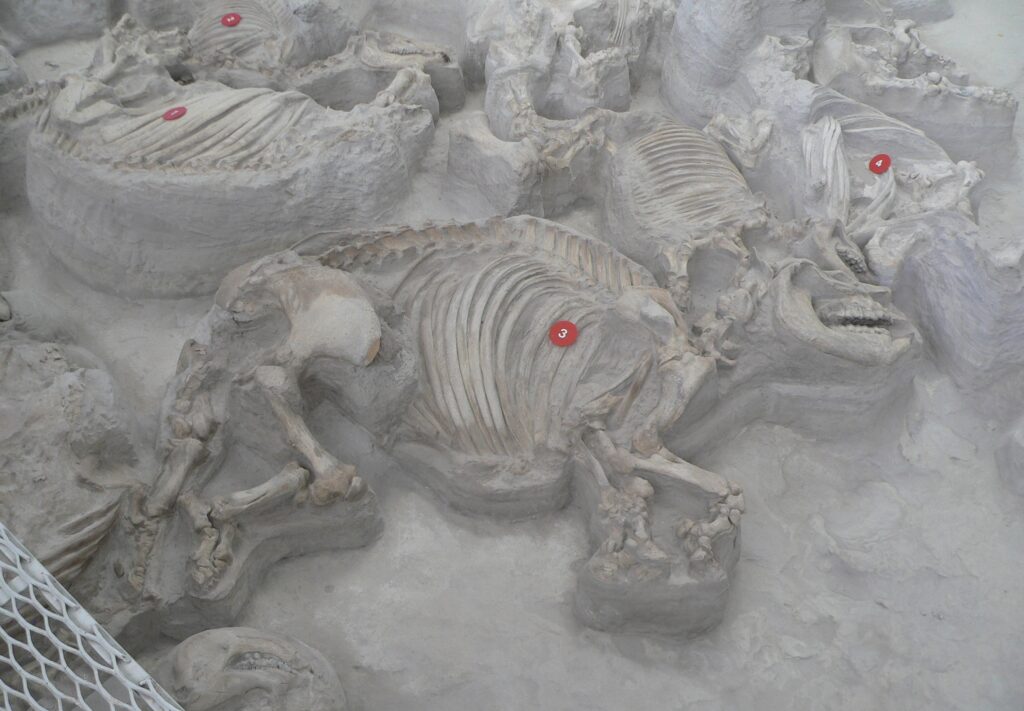
Think of Ashfall Fossil Beds as nature’s version of Pompeii, only millions of years older and filled with rhinos instead of Romans. The Ashfall Fossil Beds were created when volcanic activity about 12 million years ago sent a massive blast of ash across the landscape. The ash clouds suffocated all life that existed and frequented a life-sustaining watering hole. The result is a perfectly preserved prehistoric snapshot that scientists and visitors alike find genuinely haunting.
Hundreds of remarkably preserved skeletons have been found here, including prehistoric camels, tortoises, horses, and even rhinos. A variety of nature trails are available to see the fossils, and visitors intent on seeing them all can camp at the comfortable Grove Lake campsite. You can actually walk through an active dig site at the famous Rhino Barn, where you can see well preserved remains of ancient rhinoceros, three-toed horses, and other fascinating extinct animals. Honestly, few places in the country let you get this physically close to ongoing paleontological research.
3. Hagerman Fossil Beds National Monument, Idaho: The Horse That Changed Everything

You might not expect southern Idaho, with its rolling sagebrush and quiet Snake River bluffs, to hold one of the most scientifically significant fossil sites on the planet. The site’s best-known fossil animal is the Hagerman horse, Equus simplicidens, which is recognized as the earliest known representative of the genus Equus. Some 30 complete skeletons and 200 partial skeletons of the creature, which had greater affinity to a modern-day zebra than to a horse, have been excavated. Think about that the next time you see a horse gallop past you.
The monument is internationally significant because it protects one of the richest known fossil deposits from the Blancan North American Land Mammal Age. These fossils date from 3.07 million to at least 4 million years ago and represent at least 200 species. The fossil beds also contain large numbers of fossils from the Pliocene epoch, with over 3,000 new fossils found yearly. That pace of discovery is staggering for a site most Americans have never even heard of. It’s the kind of place that makes you rethink how much prehistoric history is still sitting quietly in the American landscape.
4. Penn Dixie Fossil Park, Hamburg, New York: Trilobites From the Dawn of Complex Life

Here’s the thing about trilobites. They were complex, multi-part arthropods crawling across ancient ocean floors long before dinosaurs ever existed, and you can hold one in your hand at Penn Dixie Fossil Park in upstate New York. Penn Dixie Fossil Park and Nature Reserve is a 54-acre park located on the site of a former cement quarry in Hamburg, New York. Visitors can collect and keep Devonian Period fossils including trilobites, brachiopods, crinoids, and more.
Penn Dixie Fossils in New York state is open from late April until late October, and for less than $10 a person, you get the chance to find one of the most prized of all fossils: trilobites. They’re also home to prehistoric crabs, sea lilies, starfish, mollusks, coral, snails, and more, along with petrified wood and Paleozoic fish. They have an annual “Dig with the Experts” event which features extra digging equipment and scientific experts onsite to help you identify your finds. Everything is from the Middle Devonian period, meaning the fossils are more than 300 million years old. The fact that you can walk away with a genuine piece of 300-million-year-old history in your pocket for under ten dollars is, in my opinion, one of the great underrated deals in American nature tourism.
5. Fossil Butte National Monument, Wyoming: A Lake That Vanished and Left Its World Behind
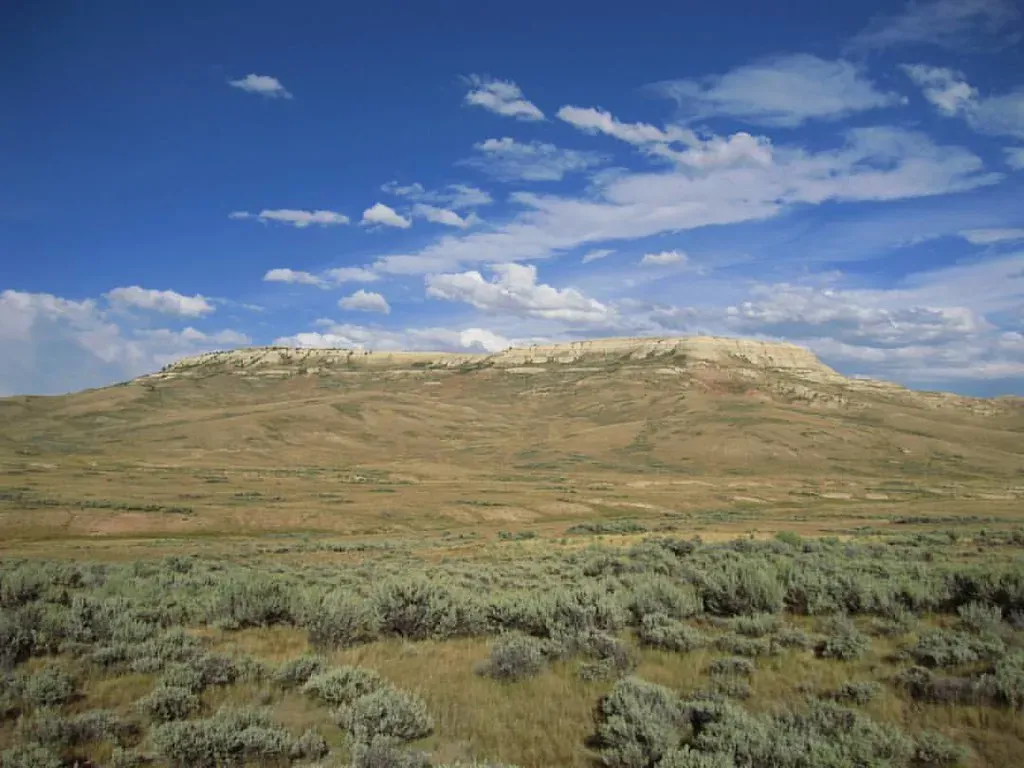
Imagine a massive ancient lake drying up over millions of years, leaving behind the bones, scales, and shells of everything that ever lived in it, pressed into paper-thin layers of rock like a gift waiting to be unwrapped. That’s essentially what happened at Fossil Butte National Monument in Wyoming. Amid the prairies and mountains of Wyoming is a paleontological treasure, Fossil Butte National Monument. Containing some of the best preserved aquatic specimens from the last 60 million years in North America, Fossil Butte National Monument has a wide range of prehistoric animals for tourists to discover. Millions of years ago, this site was once underneath a giant lake, aptly named “Fossil Lake.” Within these waters lived a variety of creatures, from now-extinct freshwater stingrays like Asterotrygon and Heliobatis to ancient fish to even horse-like animals like the Protorohippus.
Nestled in Wyoming’s rugged landscapes, the Green River Formation is a geological treasure. Spanning millions of years, this site showcases the powerful forces that have shaped our planet. Famous for its well-preserved fossils, it offers a rare look into the distant past, where prehistoric creatures lived in lush environments. If you want to go one step further and actually dig for yourself, private quarries adjacent to the monument allow you to split shale and take home genuine ancient fish fossils. It’s the kind of hands-on experience you don’t forget easily.
6. John Day Fossil Beds National Monument, Oregon: 40 Million Years of Evolution on Display
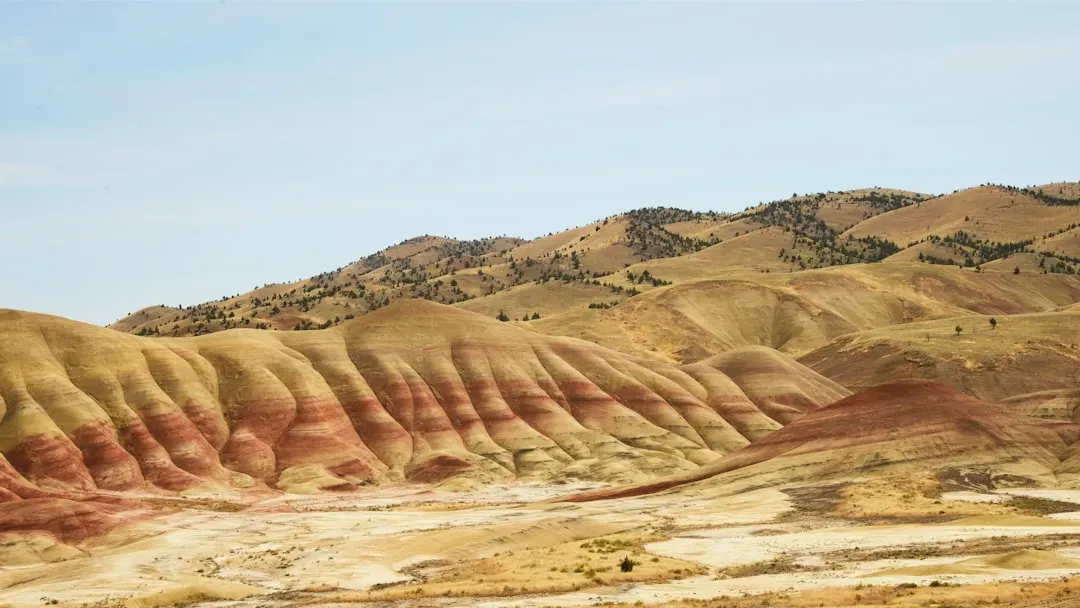
Most fossil sites let you peek through a narrow window into one specific moment in prehistoric time. John Day in Oregon throws the whole wall open. John Day Fossil Beds National Monument protects one of the longest and most continuous records of evolutionary change in North America. The monument is divided into three units dispersed throughout east-central Oregon and requires more than one day to explore.
It may be difficult to picture herds of rhinoceros tromping through east-central Oregon, but relatives of this horned mammal known as brontotheres, or “thunder beasts,” roamed the area 35 million to 50 million years ago. Visually similar to the rhinoceros, these enormous animals are actually more closely related to horses and believed to be social animals. The fossils at this picturesque site span 40 million years and offer one of the richest evolutionary records of the Cenozoic Era, including prehistoric alligators, bears, dogs, pigs, horses, cougars, and even hippopotamuses. You can visit the Thomas Condon Paleontology Center in the Sheep Rock Unit to see more than 500 of these fossils on display, including the “thunder beast.” Let’s be real, there are few places outside of a world-class natural history museum where you get that kind of sweeping evolutionary panorama. John Day earns its underrated status every single visit.
7. Edelman Fossil Park, Mantua, New Jersey: The Only Place on Earth Marked by the Asteroid That Killed the Dinosaurs
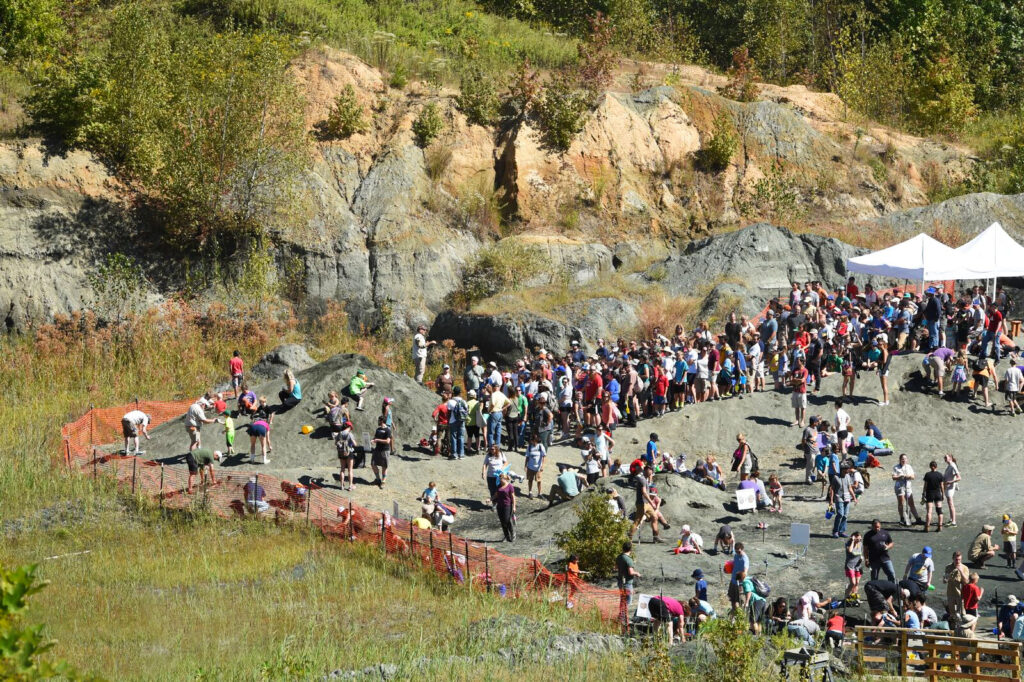
If you think New Jersey doesn’t sound like the most thrilling fossil destination, prepare to be surprised. This 45-foot-deep, former Inversand marl pit has revealed over 100,000 fossils since the 1920s. Remarkably, its green-tinged earth contains the planet’s sole evidence of the asteroid impact that wiped out the dinosaurs 66 million years ago. Sole. Evidence. On the entire planet. That alone should be enough to make your jaw drop.
At the Edelman Fossil Park and Museum’s Quarry in Mantua, New Jersey, you can unearth real fossils from 66 million years ago at this incredible site, where over 100,000 fossils, including mosasaurs, sea turtles, and shark teeth, have been found. Your fossil adventure includes up to 60 minutes of hands-on digging and a fossil to take home. You’re not just visiting a display here. You’re actively participating in one of the most scientifically significant fossil sites on the planet. If you discover something truly special, the museum may keep it for scientific research, but you’ll get credit in their Collections notes and future displays. How many places let you walk away with a literal piece of the Cretaceous-Paleogene extinction boundary in your pocket?
Conclusion: The Ancient World Is Still Out There, Waiting for You
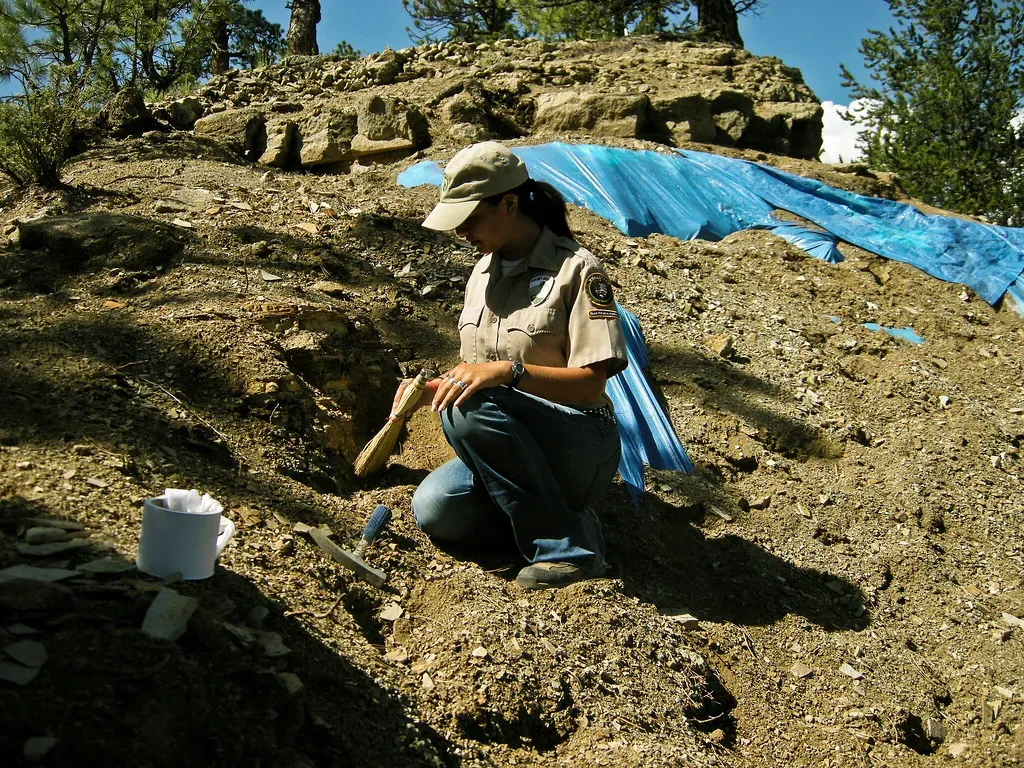
You don’t have to be a professional paleontologist to feel the electricity of finding something millions of years old beneath your fingertips. These seven sites prove that America’s prehistoric story is not locked away in dusty textbooks or behind museum glass. By offering a rare glimpse into worlds forgotten or unknown, fossils have long fascinated humans. That fascination is universal, and it’s very much alive in 2026.
From a volcanic graveyard in Nebraska to a site in New Jersey that holds the literal fingerprint of an asteroid apocalypse, these hidden gems reward curious visitors with something genuinely rare: a direct, physical connection to deep time. Whether you’re traveling with kids, a partner, or just your own stubborn sense of wonder, each of these places offers something no theme park ever could. The past, raw and unfiltered, right at your feet.
So the real question is: which one of these would you visit first? Drop your thoughts in the comments below. You might just inspire someone else to go looking for their own piece of prehistory.