
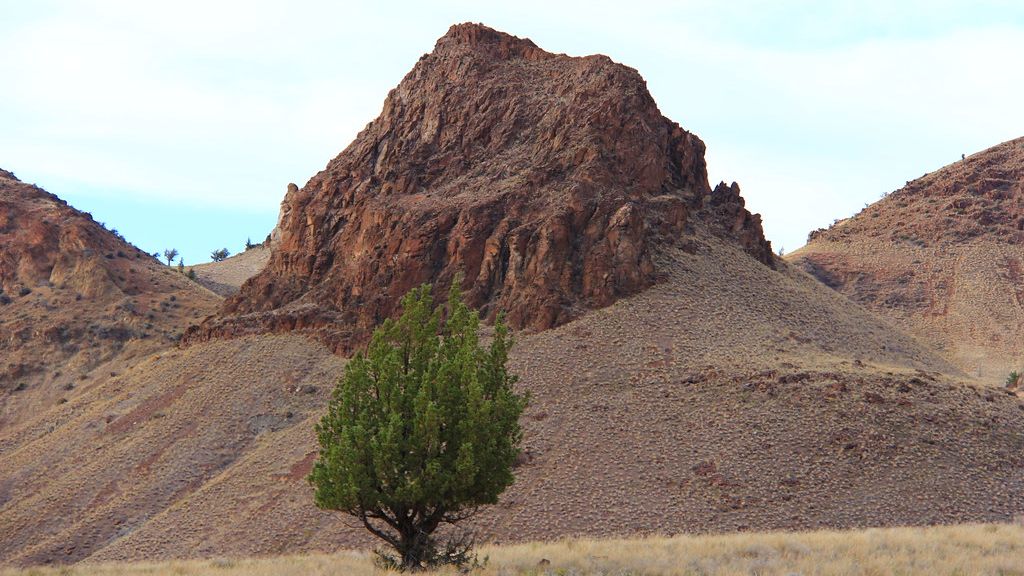
There is something deeply stirring about standing in a place where creatures walked, swam, or soared millions of years before your species existed. North America, it turns out, is quietly one of the most fossil-rich continents on Earth, scattered with sites that would make any amateur time traveler giddy with excitement. You do not need a PhD or a geology hammer to experience it. You just need curiosity and the willingness to show up.
From volcanic graveyards in Nebraska to ancient sinkholes full of mammoth bones in South Dakota, these places are not just for scientists. They are wide open and waiting for you to explore them. So let’s dive in.
1. Dinosaur National Monument, Utah and Colorado
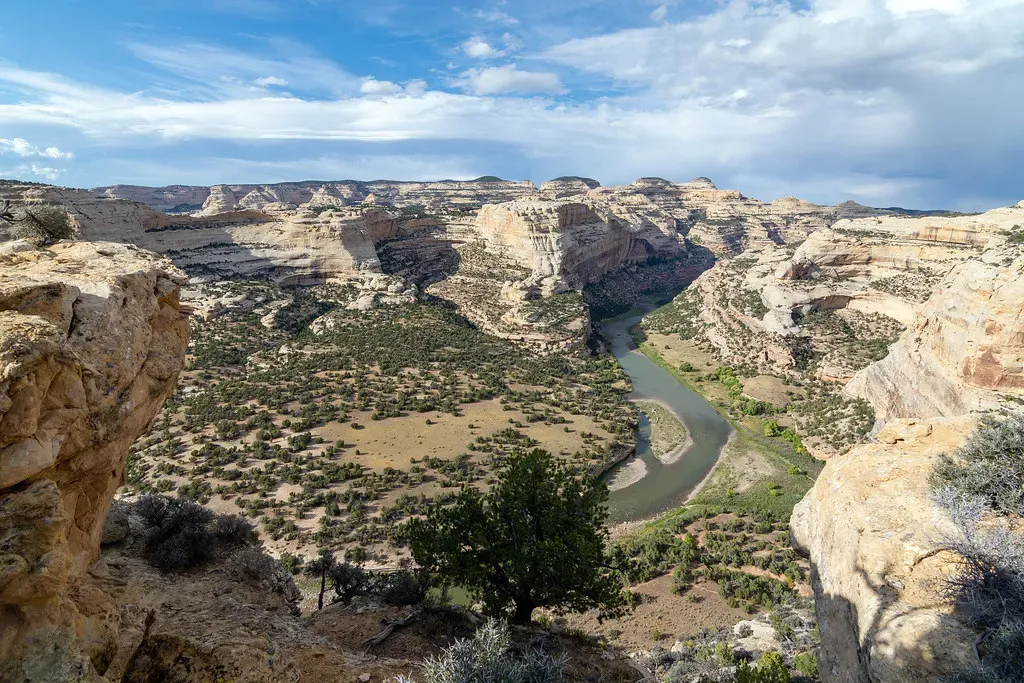
Let’s be real, when most people think of fossil hunting, this is the site that should come to mind first. Dinosaur National Monument is regarded as one of the most famous fossil spots in the United States, situated in Utah’s Uinta Mountains, close to the Colorado border, preserving one of the greatest dinosaur fossil sites in North America, which was unearthed in 1909. Think about that for a second. Over a century of digging, and this place is still giving up its secrets.
You can see over 1,500 dinosaur fossils exposed on the cliff face inside the Quarry Exhibit Hall. You are not looking at replicas or reconstructions. These are actual bones, still embedded in rock, just as they were found. Fossil hunters have been unearthing the bygone beasts in this monument for over 100 years, and the list of species it has yielded includes icons like Allosaurus, Apatosaurus, Diplodocus and Stegosaurus. Honestly, it is jaw-dropping in the truest sense of the word.
2. Badlands National Park, South Dakota
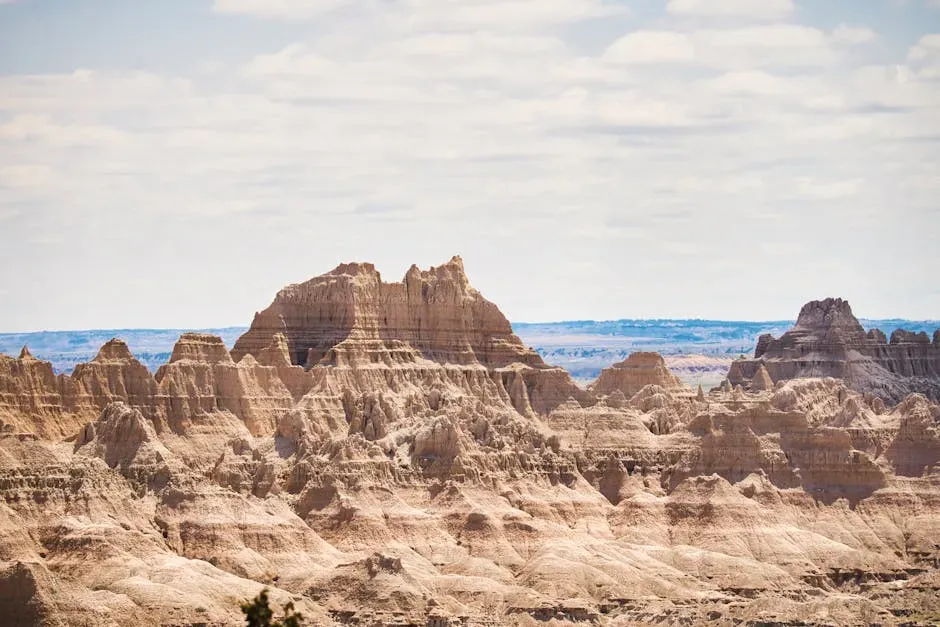
Badlands National Park is home to one of the world’s richest fossil mammal beds from the late Eocene and early Oligocene epochs. What makes this place so special, though, is that it does not feel like a museum. It feels alive, eerie, and constantly shifting. Rainfall, wind, and perpetual freezing and thawing erode approximately one inch of topsoil per year and continue to reveal more ancient mysteries, including fossils and ancient artifacts. Nature itself is the excavator here, and it never takes a day off.
Badlands National Park deposits contain one of the world’s richest fossil beds, with finds of more than 250 fossil vertebrate species, including both herbivores and carnivores. Ancient horses and rhinos once roamed here, as did cat-like mammals and tiny, hornless deer. You can even watch scientists at work. You can visit the Fossil Preparation Lab, where you can watch paleontologists work on fossils right in front of you. How many national parks let you do that?
3. The Mammoth Site, Hot Springs, South Dakota
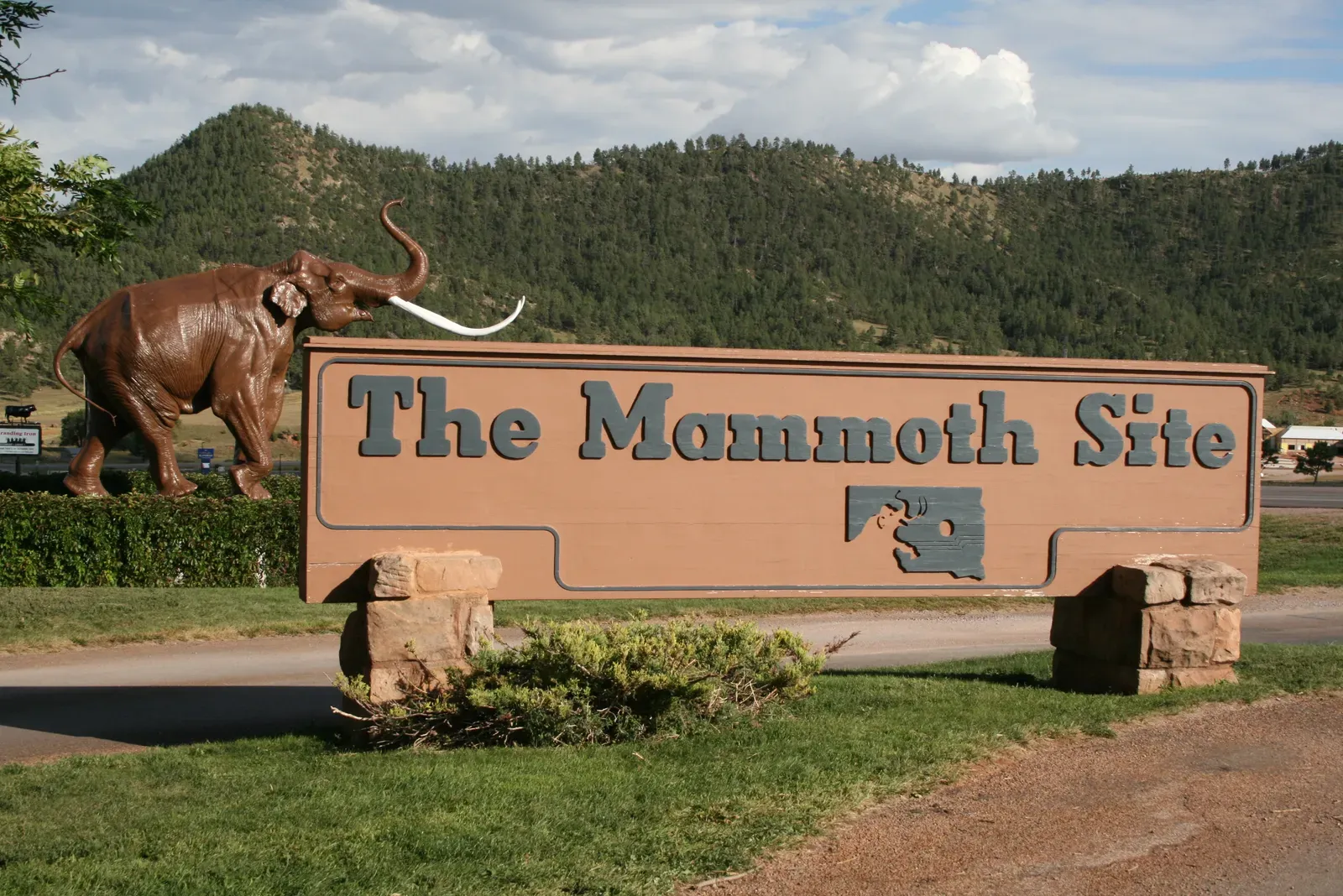
Picture this. A construction worker in 1974 is grading a hill for a housing development when his blade strikes something white and gleaming in the sunlight. In June 1974, heavy equipment operator George Hanson was leveling ground for a housing development when his blade struck something that shone white in the sunlight. He got out for a closer look and what he saw was a tusk, about seven feet long, sliced in half lengthwise, along with other bones. That accidental discovery changed everything.
At the Mammoth Site of Hot Springs, South Dakota, you view fossils “in situ,” or as they were discovered, and because excavation continues year-round, this unique museum is also an active dig site. Over 60 mammoths, including 58 Columbian and 3 woolly, have been unearthed, along with at least 87 other late Ice Age animals. There is nowhere else on the continent quite like it. The Mammoth Site is the only late Ice Age facility of its kind in North America.
4. John Day Fossil Beds National Monument, Oregon
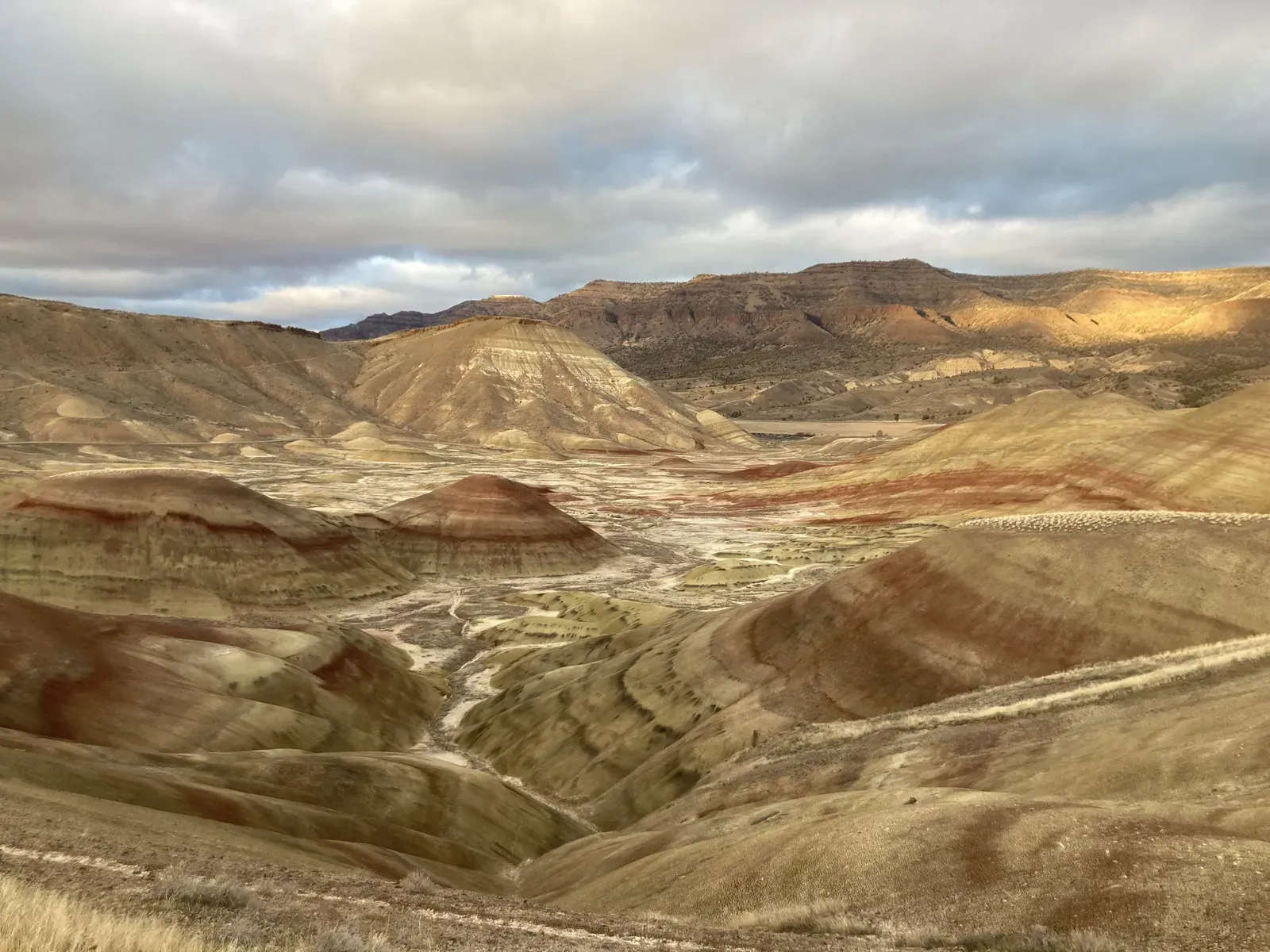
Most people drive through Oregon for the coast or the forests. They are missing something extraordinary hidden further inland. Located in the John Day River basin in north-central Oregon, this landscape of canyons and cliffs, desert plains and multi-colored badlands is spectacular. The fossil record of the John Day Fossil Beds spans no fewer than 40 million years, from the late Eocene to the late Miocene. That is an almost incomprehensible stretch of time captured in one place.
The monument effectively records the “Age of Mammals,” the evolution of North American mammals after the dinosaurs went extinct to as recently as 5 million years ago. The most famous unit in the monument is the Painted Hills Unit, which features stunning color-banded hills and is spectacular at sunrise or sunset. Tiny four-toed horses, huge rhino-like brontotheres, crocodilians, and meat-eating creodonts roamed the ancient jungles that existed at the time. The fossilized remains of ancient palms and bananas are also found in the rocky towers. It is part natural wonder, part time machine.
5. Petrified Forest National Park, Arizona
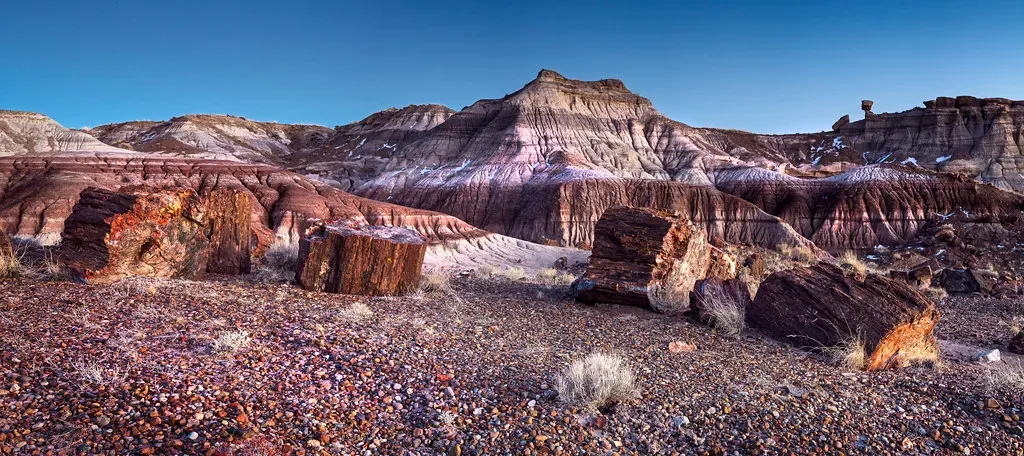
Here is something that sounds impossible until you see it with your own eyes. Entire ancient trees, turned completely to stone, scattered across the desert floor in brilliant purples, reds, and yellows. Roughly 200 million years back, lush trees and plants covered a region in Northeastern Arizona. However, volcanic lava devastated the woodland, and the remnants were buried in volcanic ash and water-saturated silt. Eras later, erosion unveiled the petrified wood that attracts Arizona tourists.
Petrified Forest National Park in Arizona is home to one of the world’s biggest and most vividly colored collections of fossilized wood, historic buildings, and ancient sites. Beyond the trees, visitors can see the fossils of animals and plants from the Late Triassic period, over 200 million years ago, including early dinosaurs. One word of caution though. Just make sure to leave things where you found them. The park loses several tons of petrified wood each year to visitors who don’t obey these rules.
6. Florissant Fossil Beds National Monument, Colorado
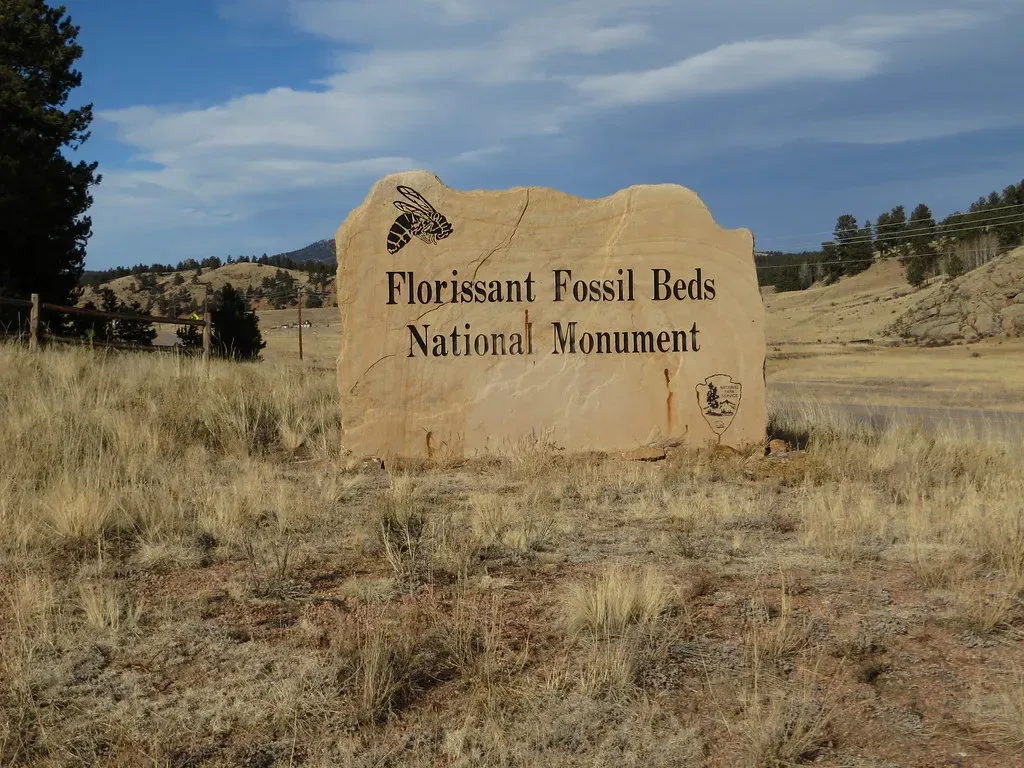
You would not expect a place about two hours south of Denver to be holding some of the most delicate fossils on Earth, but here we are. This site is one of the most diverse insect fossil sites in the world with an impressive trove of specimens from the late Eocene Epoch roughly 35 million years ago. It is amazing to think that hundreds of these fragile creatures survived for millennia sandwiched between thin layers of shale, including beetles, caddisflies, dragonflies, lacewings and mayflies.
Among these many arthropods was the first fossilized butterfly ever discovered in North America. The exceptionally well-preserved specimen, Prodryas persephone, is now in a museum at Harvard University. The site is also known for its many petrified tree trunks, including the only known trio of interconnected petrified redwood trees in the world. Since studies began in the 1800s at Florissant, scientists have discovered fossils of plants, insects and ancient tree stumps. Research projects are ongoing, so if you’ve ever wanted to visit a working fossil site, Florissant is about as close as you can get.
7. Guadalupe Mountains National Park, Texas

Standing at the edge of this park, you would be forgiven for seeing nothing more than a rugged desert landscape. What you are actually looking at, though, is the exposed skeleton of one of Earth’s ancient seas. The Guadalupe Mountains National Park, in Texas, is home to one of the best examples of an ancient marine reef on Earth. About 265 million years ago, during the Permian period, the area was part of a vast, ancient sea. Today, the remains of what was once a 400-mile-long reef are exposed for all to admire, replete with fossils from ancient algae to prehistoric gastropods.
Guadalupe Mountains National Park is known as one of the best examples of an ancient, marine fossil reef on Earth. Imagine a vast tropical sea full of lime-secreting organisms that formed at this well-preserved reef as you look across what now is an arid landscape of jagged peaks, vast desert vistas and a diverse ecology. The visitor center will set your course for exploration along 80 miles of trails. Don’t forget to pick up a fossil guide to help identify prehistoric marine critters along the way. It is a place that transforms your entire sense of geological time.
8. Agate Fossil Beds National Monument, Nebraska
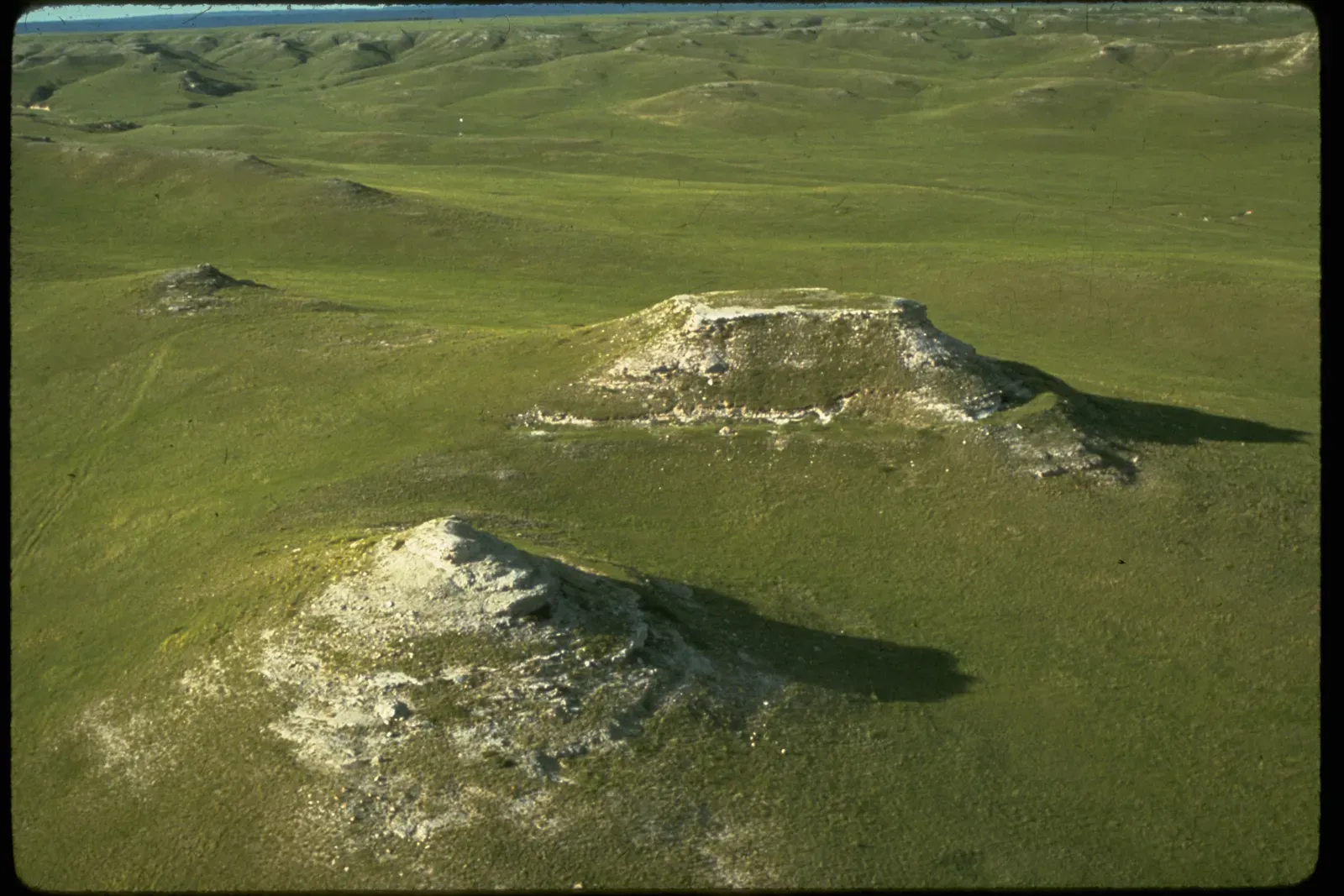
This is one of those places that most people have never heard of, which is honestly a shame. Once you consider the fact that 20 million years ago this region was a grassy, Serengeti-like plain, perhaps it becomes not so surprising that the Agate Fossil Beds have easily become one of the most impressive fossil sites in North America. Think African savanna, but in ancient Nebraska. Totally wild.
According to the National Park Service, this national monument has one of the world’s most complete collections of mammal fossils from the Miocene epoch, which lasted from about 23 million years ago to 5 million years ago. During this period, areas of what is now North America that had been submerged under ancient seas were drying out and grasslands were proliferating, giving rise to new animals that fed on this abundant food source. Among the most unusual finds in the Agate Fossil Beds are two sites containing “devil’s corkscrews,” twisting fossilized burrows once made by ancient beaver ancestors. Two of these strange pieces have been preserved as part of an exhibit on-site.
9. Grand Canyon National Park, Arizona
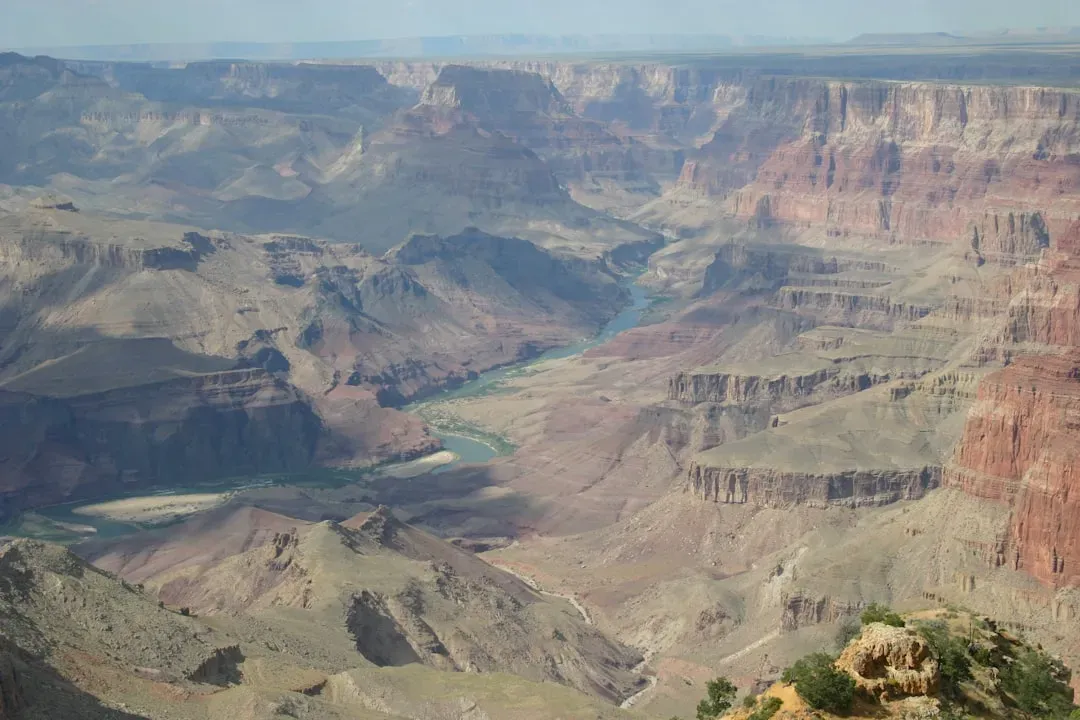
You have probably heard of the Grand Canyon. You might even have visited. The thing is, most people go for the views and completely miss the fossils hiding in plain sight all around them. With 32% of Earth’s geologic history found at this national park, it’s a great place to find other fossils that can be as old as 1,200 million years old. While hiking, keep an eye out for marine fossils like the segmented trilobites or the plant-like crinoids, terrestrial fossils of prehistoric ferns and 8-inch dragonflies, and more recent fossils of sloths and California condors.
To see ancient algae mats, consider taking a trip to the Grand Canyon, which has Precambrian algae fossils embedded in its rocks. The oldest fossils you can see there are 1,200 million to 740 million-year-old stromatolites, which are the limestone structures formed by cyanobacteria, a phylum of bacteria that gets its energy from photosynthesis. I think that fact alone is enough to send your brain into a brief, beautiful meltdown. In the Grand Canyon, you can also check out fossils of 500-million-year-old trilobites found in the Bright Angel shale. You are not just looking at rocks. You are reading the oldest diary on Earth.
Conclusion
North America is, without exaggeration, an open-air museum of life itself. From mammoth graveyards discovered by pure accident to Jurassic bone walls that took teams of scientists decades to uncover, these nine sites offer something that no natural history exhibit can fully replicate. They put you there, on the ground, face to face with deep time.
The best part? You do not need to be a paleontologist to feel the weight of standing at these sites. You just need to look a little more carefully than usual. Whether you are taking your kids, your partner, or just your own restless curiosity, these places will leave a mark on you that is hard to put into words.
So here’s a thought to carry with you: the next time you look down at a patch of exposed rock on a trail, what if something 30 million years old is quietly waiting to be noticed? Would you recognize it? What would you have guessed?