
Think about the last footprint you left behind, maybe in wet sand on a beach, or in soft garden soil after a rainstorm. Now imagine that same impression surviving for millions of years, sitting silently under layers of ash and sediment, waiting to be found. That’s exactly what happened with some of the most extraordinary prehistoric discoveries ever made. Ancient footprints are not just curiosities. They are frozen moments of real life, snapshots of creatures who breathed, moved, and existed long before history was ever written down.
What makes these finds so jaw-dropping is that they don’t just tell us who was there. They tell us how that creature walked, how fast it moved, whether it was alone or part of a group, and sometimes even what kind of world surrounded it. You can study a fossilized bone for decades and still never know how it moved. A footprint gives you that in seconds. So let’s take a walk through time together and explore eight of the most unbelievable ancient footprints ever discovered. Be prepared for a few genuine surprises along the way.
The Laetoli Footprints, Tanzania: The Step That Changed Everything
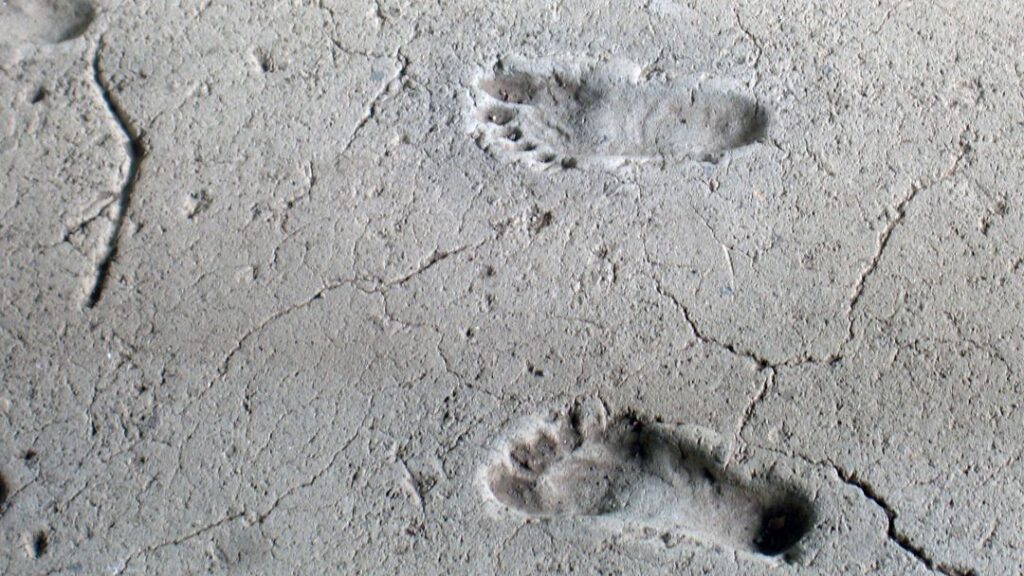
Here is a fact that should genuinely stop you in your tracks: roughly 3.6 million years ago, three early human ancestors walked side by side across freshly fallen volcanic ash in what is now northern Tanzania. The main trackway extends roughly 27 meters and contains about 70 footprints made by those three early humans, and rainfall compacted the fine volcanic material into a natural cement that preserved each step in remarkable detail, from heel strikes to toe impressions, before another ashfall sealed them for more than 3 million years. When you think about it, that’s like nature building its own time capsule, deliberately and perfectly.
Team members led by paleontologist Mary Leakey stumbled upon animal tracks cemented in volcanic ash in 1976, but it wasn’t until 1978 that Paul Abell joined Leakey’s team and found the full 88-foot-long footprint trail. The incredibly rare Laetoli tracks show short strides and a bent-over gait, hallmarks of upright walking long before hominins like Homo sapiens appeared, and the only known early human in the region at that time was Australopithecus afarensis, the same species as the famous Lucy skeleton discovered in Ethiopia. Honestly, the idea that Lucy’s kind was literally walking in groups across a volcanic landscape millions of years ago is one of the most humbling things in all of science.
The Trachilos Footprints, Crete: A Discovery That Rewrote the Rules
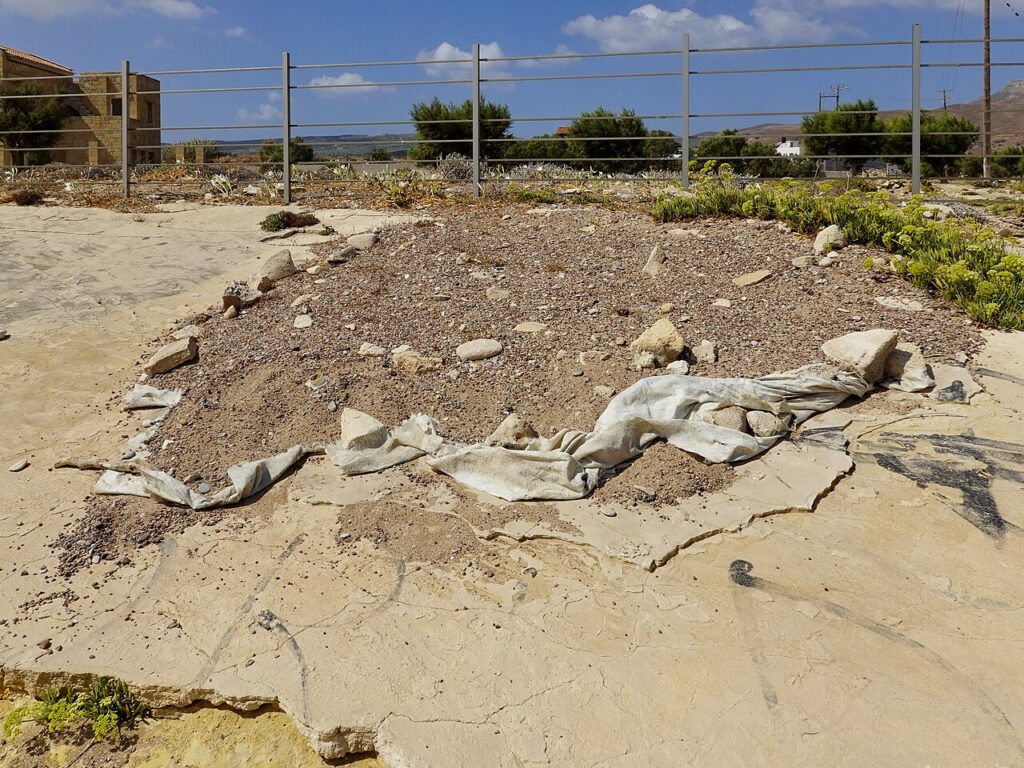
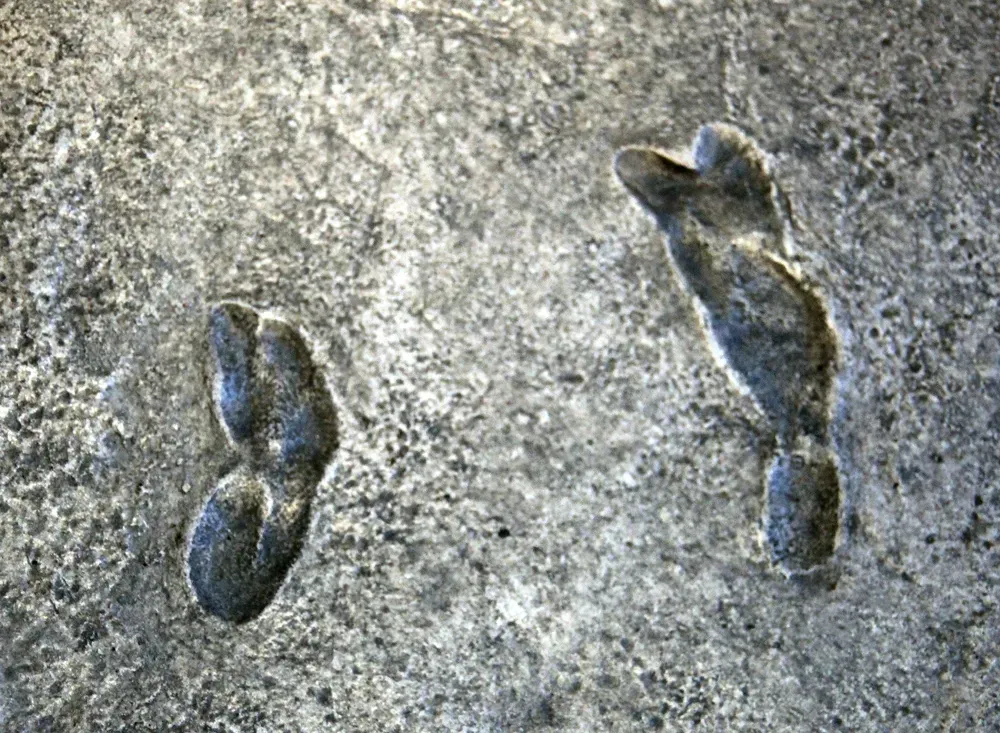
You might think all roads in human evolution lead back to Africa. The Trachilos footprints on the Greek island of Crete put a very serious dent in that assumption. Polish paleontologist Gerhard Gierlinski was simply trying to enjoy a vacation in the summer of 2002, a researcher at the Polish Geological Institute who always traveled with a hammer, a camera and a GPS, and what he discovered along the Mediterranean shores of Trachilos would rock his world entirely. He had spotted something that would set off years of scientific controversy.
Using laser scanning technology, a team of international researchers created high-resolution 3D images of over 50 distinct footprints found within a remarkably small area, and updated dating techniques in October 2021 confirmed the footprints are approximately 6.05 million years old, aligning them with the Miocene epoch. While younger than fossil records of hominins like Sahelanthropus found in Chad, the discovery potentially challenges the generally accepted theory that all early hominins were only present in Africa, with print morphology suggesting the trackmaker could be a basal member of the clade Hominini. It’s hard to say for sure what creature made these prints, but the sheer age and location of them makes this one of the most provocative finds in modern paleoanthropology.
The Happisburgh Footprints, England: An Ancient Family on a Stormy Beach
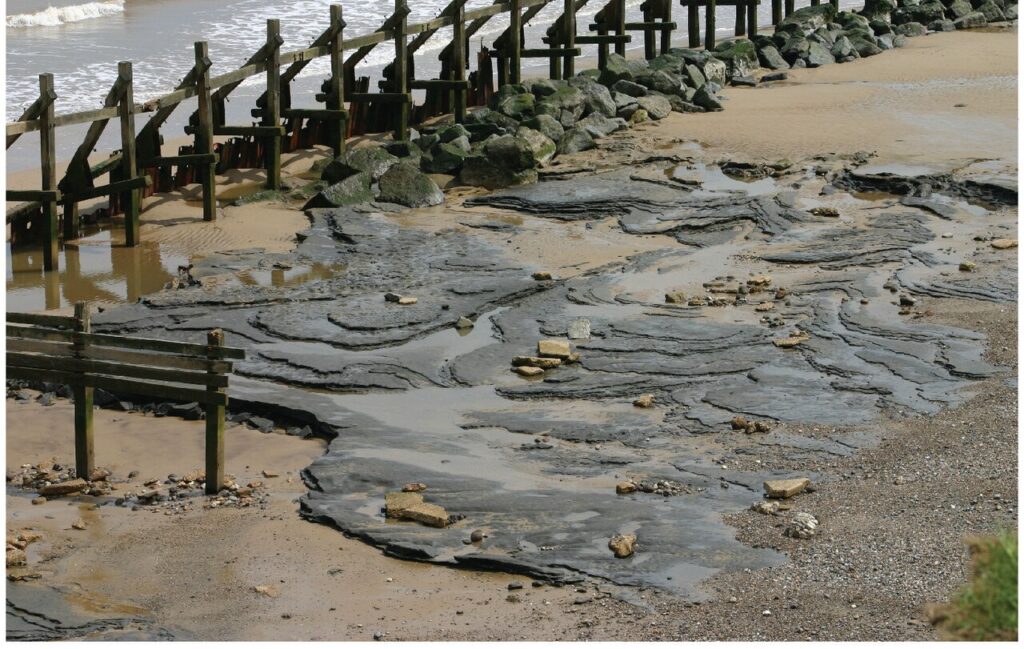
The Happisburgh footprints were a set of fossilized hominid footprints dating to the end of the Early Pleistocene, around 850,000 to 950,000 years ago, discovered in May 2013 in a newly uncovered sediment layer on a beach at Happisburgh in Norfolk, England, and carefully photographed in 3D before being destroyed by the tide shortly afterwards. Just pause on that detail for a moment. The only reason we know about them at all is because someone happened to be there at exactly the right time, before the ocean swallowed them up forever.
Analysis shows that a group of perhaps five individuals was walking in a southerly direction along mudflats in the estuary of an early path of the River Thames, and archaeologists have speculated that the group was searching the mudflats for seafood such as lugworms, shellfish, crabs, and seaweed. The Happisburgh finds marked the first time evidence of early humans from about 900,000 years ago had been found so far north, and palaeontologists had previously believed that hominins of the period required a much warmer climate, but these inhabitants had adapted to the cold, suggesting they had developed advanced methods of hunting, clothing, sheltering, and warming much earlier than previously thought. Think of them as a prehistoric family going about their Tuesday morning, utterly unaware they were about to become famous.
The White Sands Footprints, New Mexico: Ice Age Humans Who Shouldn’t Have Been There
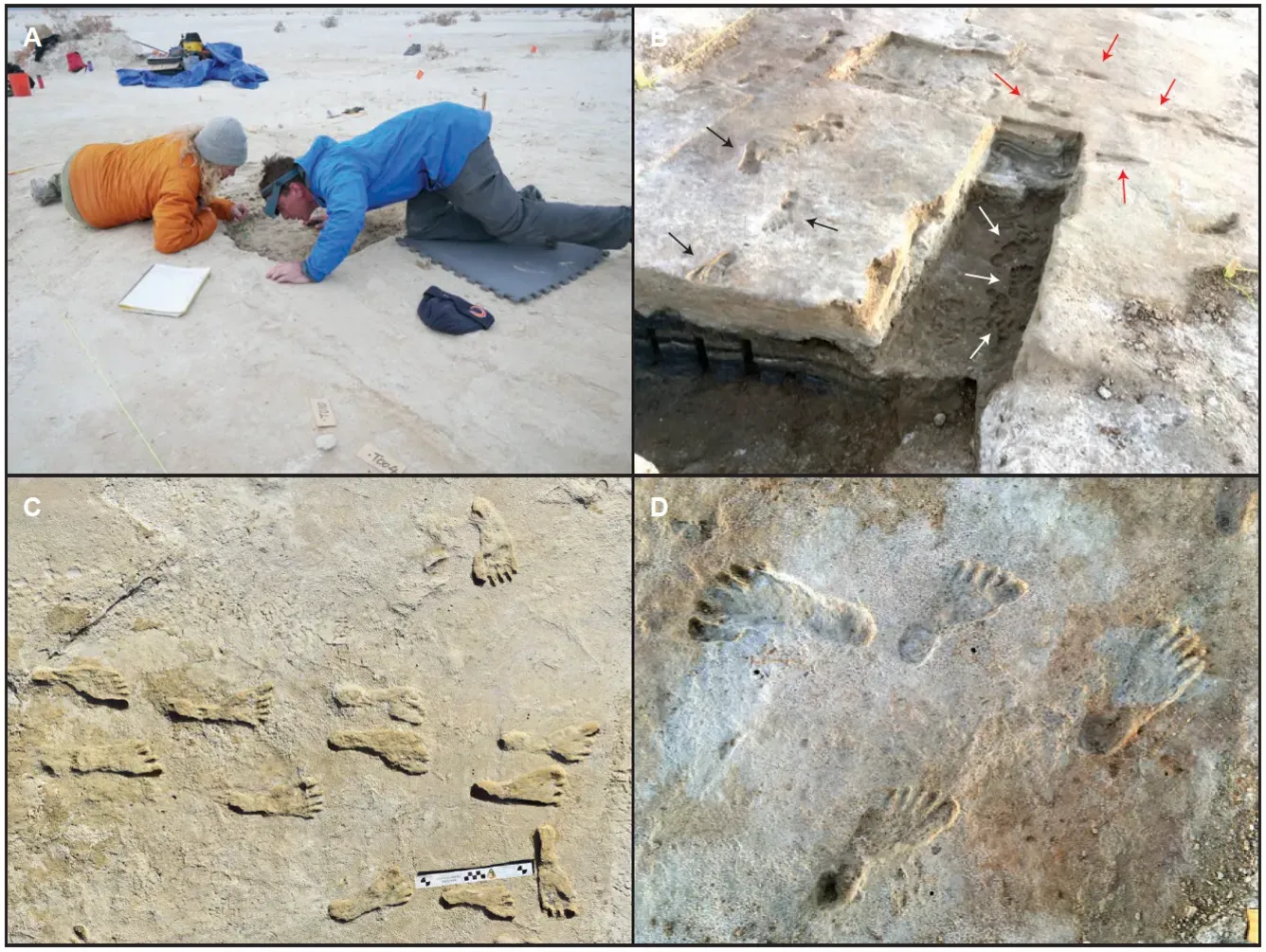
Let’s be real, this one genuinely shook the archaeological world. A study published in Science Advances provides the strongest evidence to date that ancient human tracks found at White Sands National Park, New Mexico, are approximately 23,000 years old, and if confirmed, the find could dramatically change the history of human migration to North America, placing humans on the continent during the Last Glacial Maximum, thousands of years earlier than previously believed. That’s a timeline shattering discovery by any measure.
One set of prints appears to show human hunters tracking a giant sloth, and variations in the tracks left by the sloth show that it stood on its hind legs and spun around, possibly showing fear, though there is no evidence that the hunt was successful. The vast majority of the prints were made by teenagers and children, with few large adult footprints being found in any of the excavated surfaces, and one explanation is that the teenagers and children were assigned tasks such as fetching and carrying near the lake bed, whereas adults were engaged elsewhere in more skilled activities. Imagine an ancient society where the kids were sent down to the water’s edge while the adults handled more dangerous work elsewhere. That’s a remarkably relatable division of labor, even across 23,000 years.
The Ileret Footprints, Kenya: The Moment Walking Became Modern
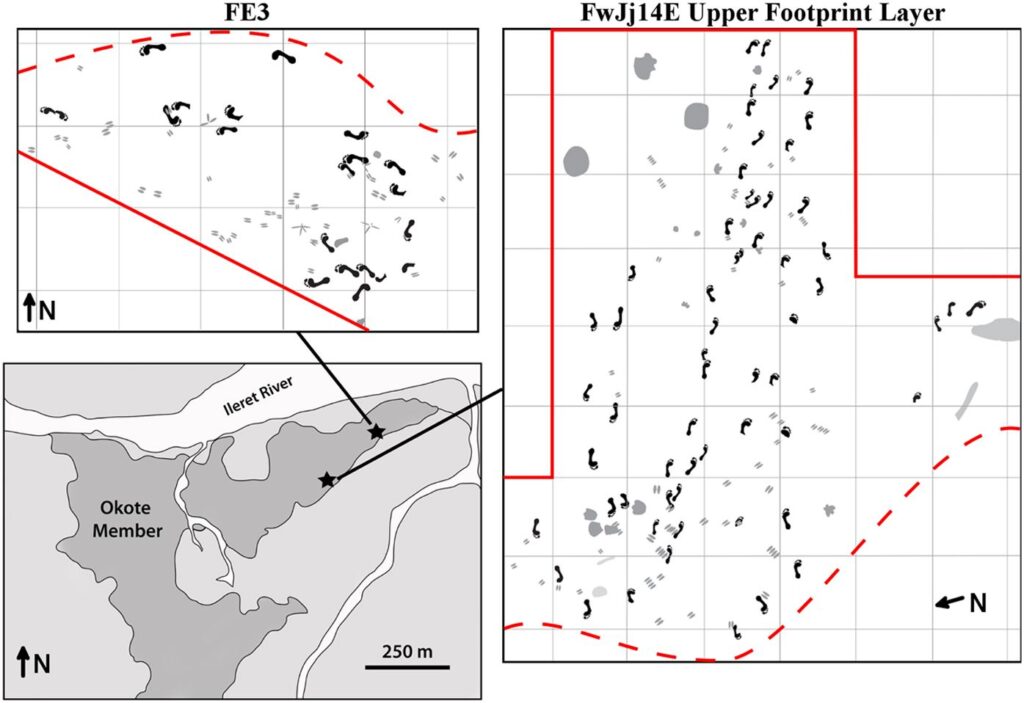
You walk the way you do because of something that happened in Kenya about 1.5 million years ago. Hominin footprints in two sedimentary layers dated at 1.51 to 1.53 million years ago at Ileret, Kenya, provide the oldest evidence of an essentially modern human-like foot anatomy, with a relatively adducted hallux, medial longitudinal arch, and medial weight transfer before push-off. In simple terms, that means these ancient beings were walking with a proper arch, a proper big toe alignment, and a real heel-to-toe stride. Just like you do right now.
Multiple trails of footprints found at the Ileret site, including two trails of two prints each, one trail of seven prints, and a number of isolated prints, reveal that these early hominins most likely traveled in groups, evidence which researchers see as a sign of social behavior. These early hominins are the first to have body proportions comparable to modern humans, and bipedalism is a characteristic of modern humans that is clearly demonstrated here. There’s something deeply moving about the idea that over a million years ago, a group of Homo erectus individuals walked together along a lakeshore in Kenya, leaving behind evidence of both their gait and, perhaps, their social bonds.
Eve’s Footprint, South Africa: The Oldest Anatomically Modern Human Track
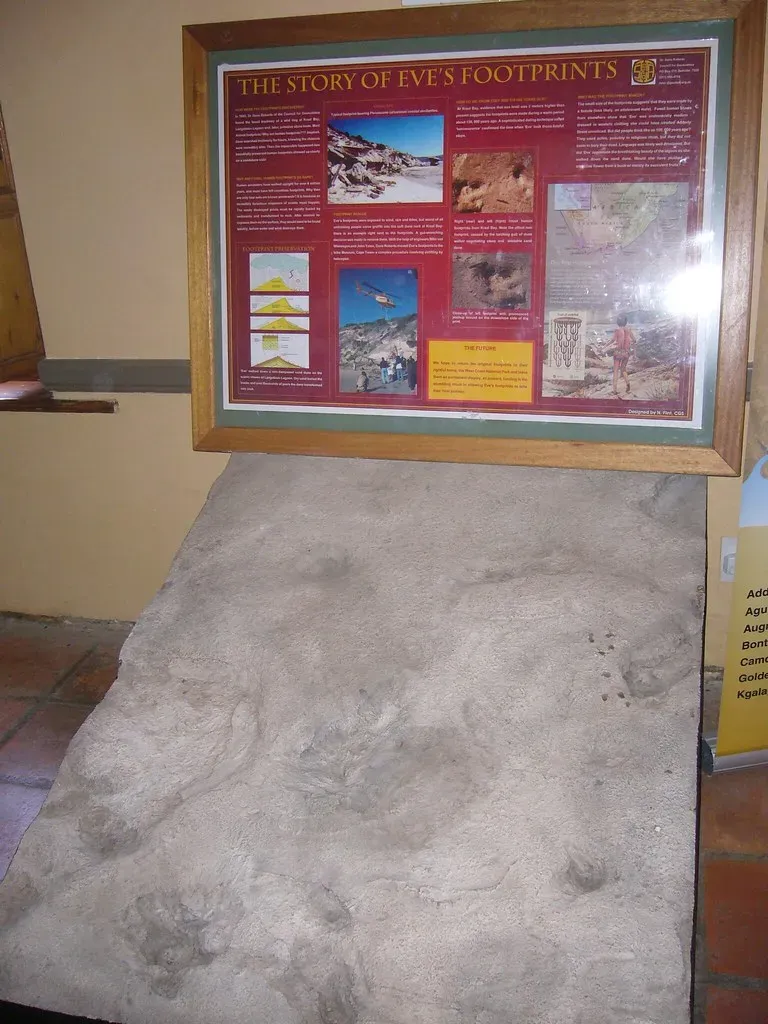
You might have heard of Mitochondrial Eve, the theoretical common ancestor of all living humans. Well, there is a set of fossilized footprints in South Africa that carries her name, and the connection is genuinely remarkable. Eve’s footprint is the popular name for a set of fossilized footprints discovered on the shore of Langebaan Lagoon, South Africa in 1995, and they are thought to be those of a female human, dated to approximately 117,000 years ago. That makes them the oldest known footprints of an anatomically modern human, a direct ancestor of every person alive today.
Researchers say the prints were made on a steep sand dune during a turbulent rainstorm, and the location where they were found is about 120 kilometres northwest of Cape Town in the West Coast National Park, discovered in a ledge of sandstone at the edge of Langebaan Lagoon near the Atlantic coast. The team later found associated evidence of stone tool use, including a core, scrapers, cutting blades, and a spear point in the same area, along with evidence of the use of ochre, leading to the intriguing possibility that the ancient individual may have been wearing the colourful powder. I think that last detail is extraordinary. A woman, 117,000 years ago, possibly decorated with red ochre, caught in a rainstorm on a South African dune. That’s a story, not just a footprint.
The Nefud Desert Footprints, Saudi Arabia: Humans in a Forgotten Green World
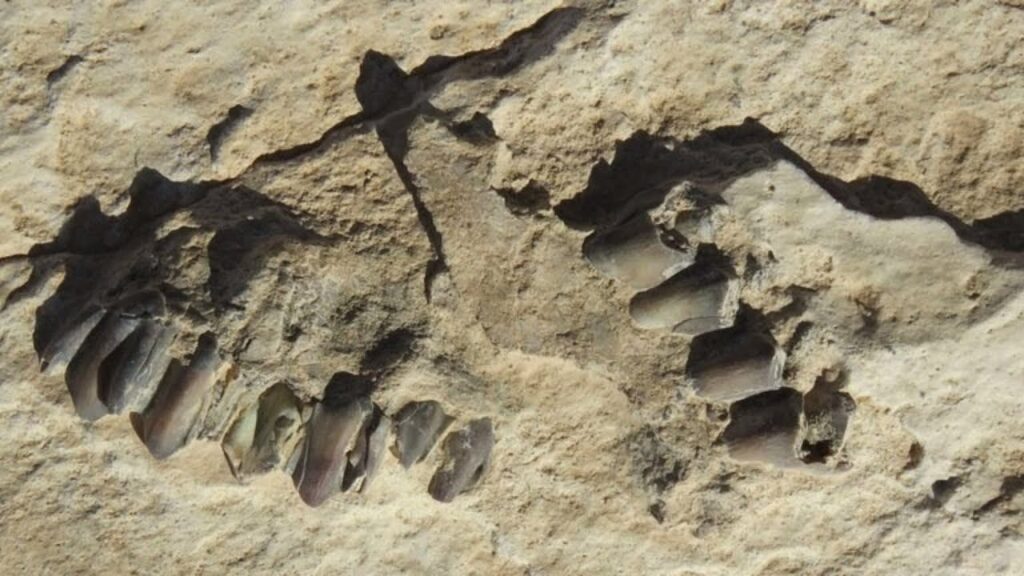
Researchers have discovered 120,000-year-old human footprints in the Nefud Desert of Saudi Arabia, preserved in an ancient lake bed, left by a small group of Homo sapiens. If you look at that region today, all you see is sand and heat. It is one of the most inhospitable environments on the planet. Yet the story those footprints tell is radically different from the landscape you would encounter there today.
What makes this discovery even more remarkable is the environment in which the footprints were found, as the area was once a lake, very different from the dry desert landscape of today, and the presence of animal tracks suggests the region was much greener and more fertile in the past. The discovery challenges the notion that humans avoided the Arabian Peninsula due to its harsh climate, showing instead that they were able to thrive in diverse landscapes as they moved across continents. This is essentially proof that the Arabian Peninsula once served as a green corridor, a welcoming path between Africa and Eurasia, which changes everything we thought we knew about early human migration routes.
The Schöningen Footprints, Germany: A Prehistoric Family Day Out
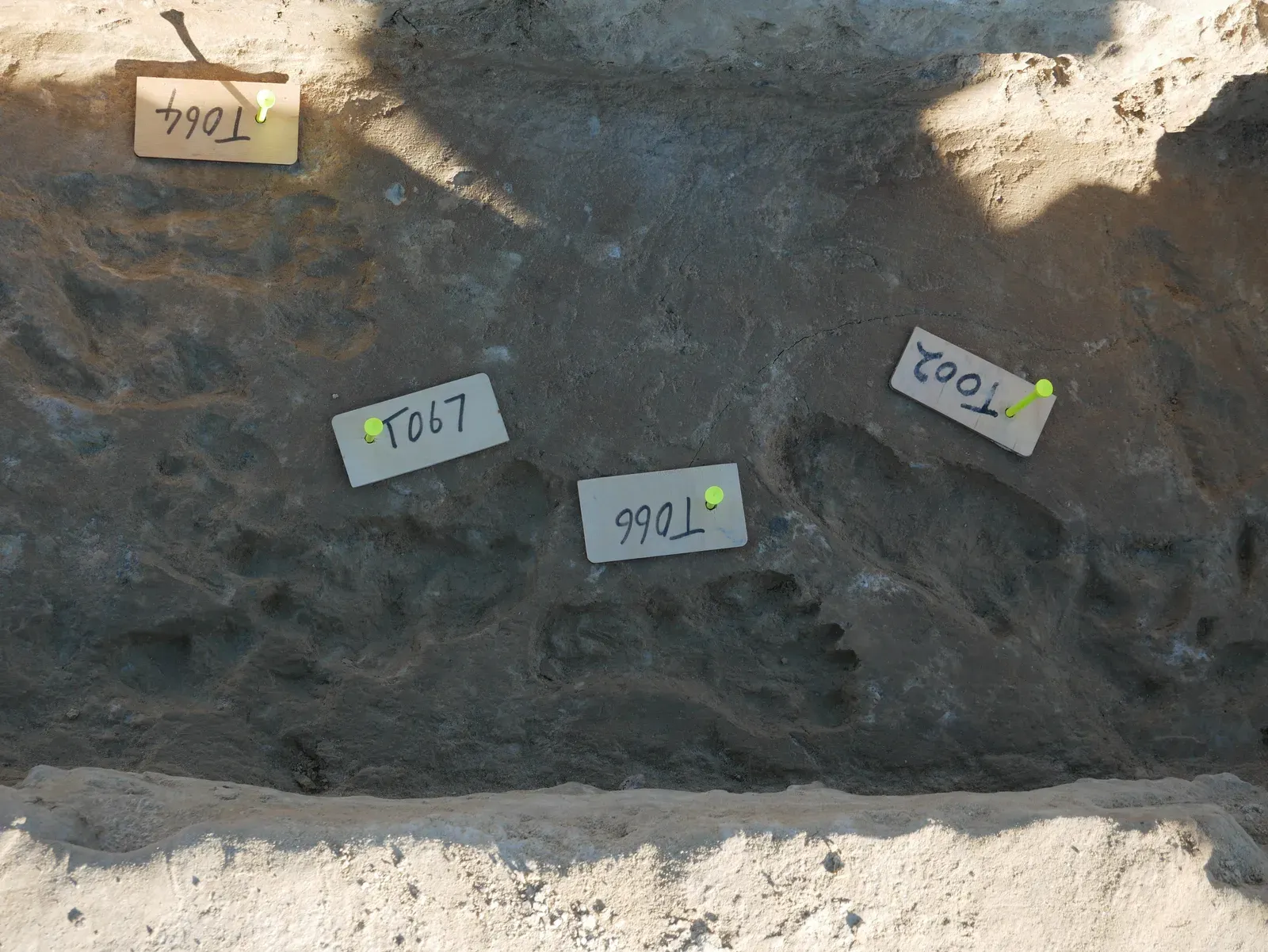
Here’s a story that feels oddly familiar. Around 300,000 years ago, a group of early humans gathered near a lakeshore in what is now Lower Saxony, Germany, not to hunt, not to fight, but apparently just to spend time together. The tracks were discovered in the roughly 300,000-year-old Schöningen Paleolithic site complex, and the footprints, presumably from Homo heidelbergensis, are surrounded by several animal tracks that collectively present a picture of the entire ecosystem at that time.
In an open birch and pine forest with an understory of grasses sat a lake a few kilometers long and several hundred meters wide, and on its muddy shores, herds of elephants, rhinoceroses, and even-toed ungulates gathered to drink or bathe. Based on the tracks, including those of children and juveniles, researchers believe this was probably a family outing rather than a group of adult hunters, and in addition to the human tracks, the team analyzed a series of elephant tracks attributable to the extinct species Palaeoloxodon antiquus, the largest land animal at the time, whose adult bulls reached a body weight of up to 13 tons. Honestly, a family day near the lake with giant straight-tusked elephants in the background sounds like the most prehistoric version of a Sunday picnic you could possibly imagine.
Conclusion: These Footprints Are Your Story Too
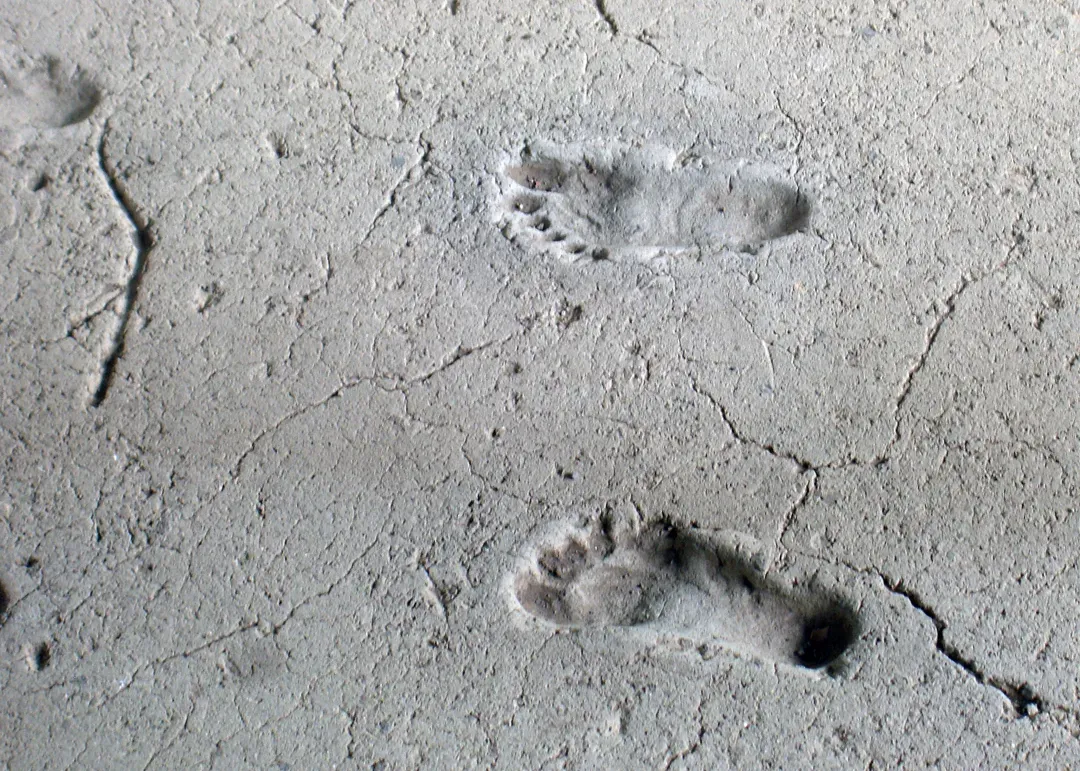
(Original text: self-made), CC BY-SA 3.0)
What is truly breathtaking about these eight discoveries is how personal they feel, even across millions of years. When preserved, footprints are a library of clues about a human’s activities, speed of travel, height, weight, and sometimes even sex. They turn distant prehistoric ancestors into real individuals. You can suddenly picture a mother walking with her children along an ancient lakeshore, or a teenager navigating mudflats in search of food, or a group of upright walkers crossing a volcanic plain, totally unaware they were making history.
Every one of these discoveries reshapes what we thought we knew about who we are and where we came from. Determining who or what made an ancient track requires both dating precision and anatomical interpretation, two things that rarely align perfectly, but when combined with fossils, ancient tools, and DNA, preserved steps become powerful clues in reconstructing ancestral lives. The ancient world left us these messages in mud, ash, and sand. We are only just beginning to read them properly. So here is a thought to carry with you: the next time you leave a footprint somewhere, just imagine who might find it one day, and what story it might tell.
What would you have guessed was the oldest human footprint ever found? Drop your thoughts in the comments below.