
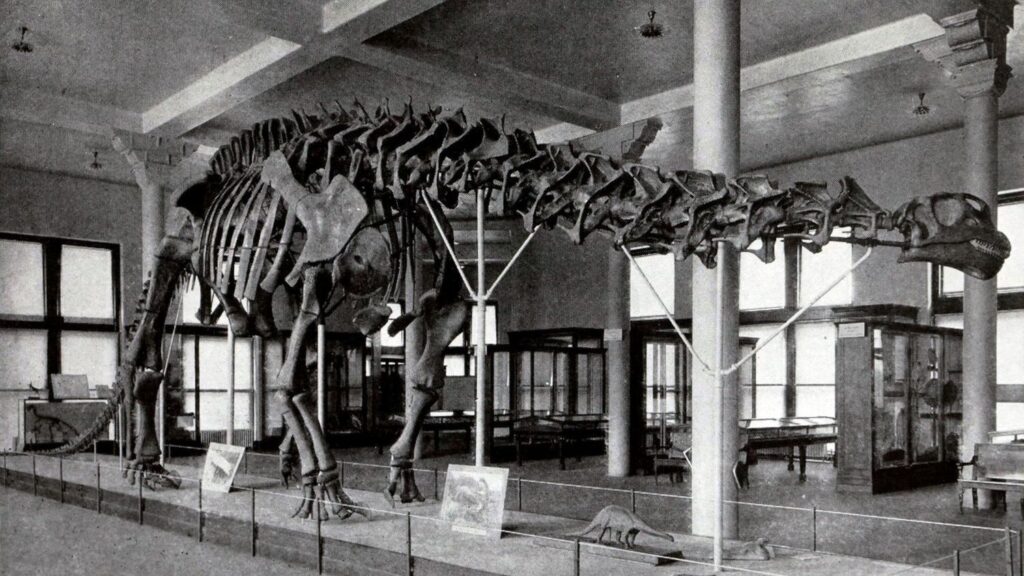
Few creatures in the history of science have managed to capture the human imagination quite like the Brontosaurus. You probably grew up drawing it in school notebooks, watching it lumber across movie screens, or pointing at its towering skeleton in a museum. It felt real. It felt enormous. It felt permanent. The problem? For most of the last century, science said it simply wasn’t real at all.
This is not just a story about a dinosaur. It is a story about rivalry, ego, rushed science, and the strange way a name can outlive its own legitimacy. It is also, perhaps surprisingly, a story with a comeback twist that almost no one saw coming. So let’s dive in.
The Bone Wars: Where It All Went Wrong
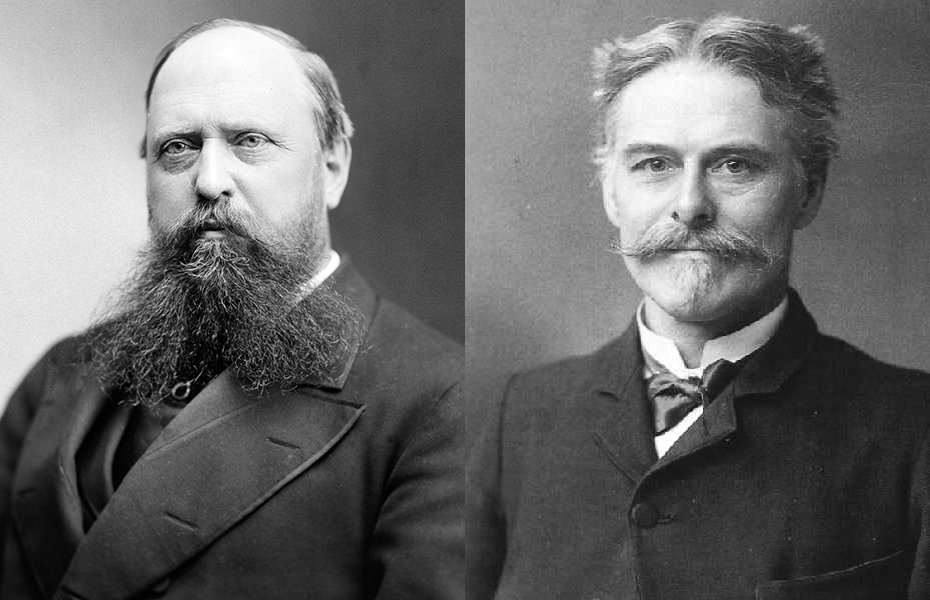
To understand why Brontosaurus ever existed in the first place, you have to go back to one of the most dramatic and frankly embarrassing chapters in the history of American science. The story dates back roughly 130 years, to a period of early U.S. paleontology known as the Bone Wars. Think of it less like science and more like a Wild West showdown, except both gunslingers were holding chisels instead of revolvers.
Othniel Charles Marsh was a professor of paleontology at Yale who made many dinosaur fossil discoveries, while his bitter rival was Edward Drinker Cope of Philadelphia. Their mutual dislike, paired with their scientific ambition, led them to race dinosaur names into publication, each trying to outdo the other. Speed mattered more than accuracy. That competitive recklessness would plant a seed of scientific confusion that would take over a century to fully untangle.
The Hasty Discovery That Started the Myth
derivative work: Dinoguy2 (talk), Public domain)
In 1877, Marsh wrote a brief article in the American Journal of Science describing Apatosaurus’s vertebral column, estimating the animal was 50 feet long, and that same year wrote another article describing a different dinosaur’s pelvis and vertebrae. He was working fast, working competitively, and, honestly, not working carefully enough. You can almost picture him scribbling furiously, glancing over his shoulder to see if Cope had published anything new that morning.
Two years later, Marsh’s fossil collectors sent him a second skeleton he thought belonged to a different dinosaur, which he named Brontosaurus. It wasn’t a different dinosaur. It was simply a more complete Apatosaurus, one that Marsh, in his rush to one-up Cope, carelessly and quickly mistook for something new. That single act of impatience would echo through science classrooms and museum halls for generations to come.
The Wrong Head on the Wrong Body
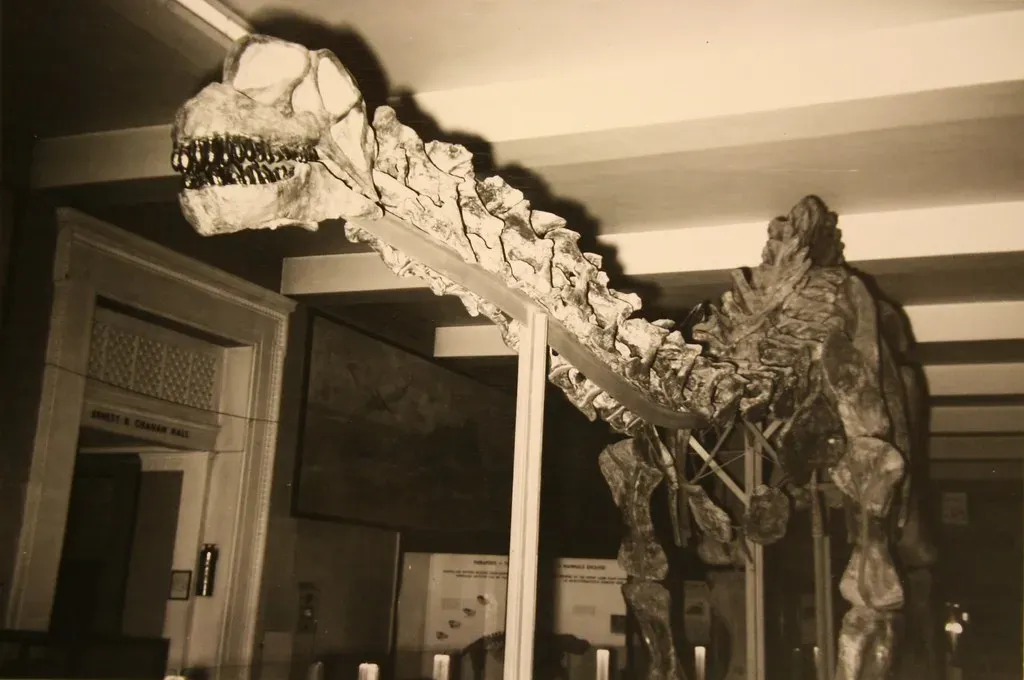
Here is where the story gets genuinely wild. Brontosaurus was described by American paleontologist Othniel Charles Marsh in 1879, the type species being dubbed B. excelsus, based on a partial skeleton lacking a skull found in Como Bluff, Wyoming. No skull. That is a rather crucial detail, and yet the skeleton was still going to be mounted on display for the world to see.
Unable to move forward with a headless dinosaur and fueled by his desire to beat his competitor, Marsh snatched up the nearest skulls he could find that could match the magnitude of his new creature, not giving much thought to the fact that one skull was found four miles from the original dig site and the other was found about four hundred miles away, and the skulls were already matched with another type of dinosaur called the Camarasaurus. The real Brontosaurus skull actually looks more like that of Diplodocus, another sauropod, which has a longer snout. So for decades, museum visitors worldwide were staring at a creature with the wrong face entirely.
The Mistake Gets Spotted, But Nobody Listens
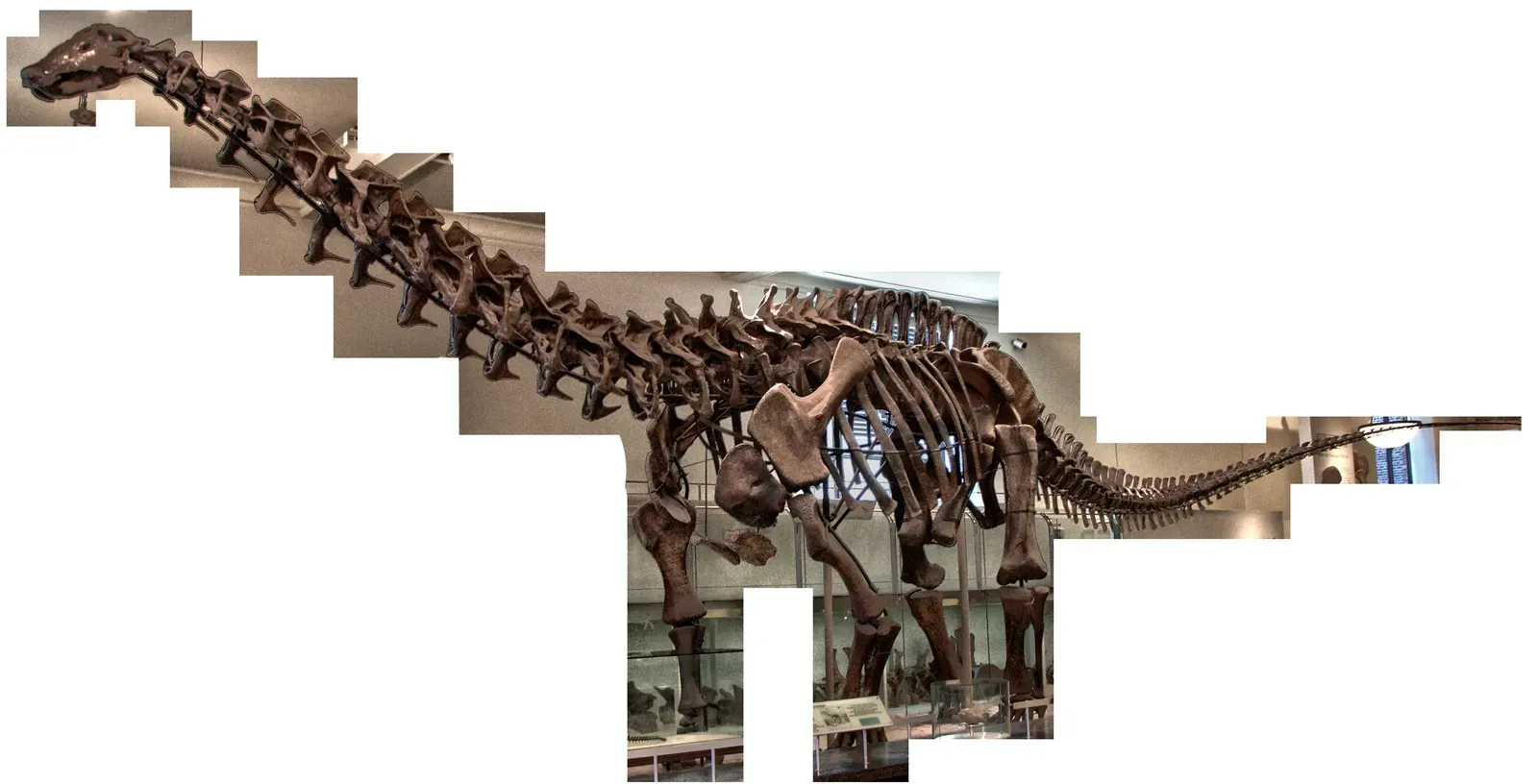
In 1903, paleontologist Elmer Riggs found that Brontosaurus was apparently the same genus as Apatosaurus, which Marsh had first described in 1877. Due to the rules of scientific naming, where the first name published gets priority, Brontosaurus was relegated to scientific history and the fossils were reassigned to Apatosaurus. It should have been over right then. Case closed, thunder lizard officially retired.
Yet science and popular culture are two very different animals. Despite the correction, Henry Fairfield Osborn, a strong opponent of Marsh, labeled the Apatosaurus mount at the American Museum of Natural History as Brontosaurus, and because of that decision the name Brontosaurus was commonly used outside scientific literature, and the museum’s popularity meant Brontosaurus became one of the best-known dinosaurs, even though it was invalid throughout nearly all of the 20th century. The public had already fallen in love with the name, and no scientific correction was going to change that anytime soon.
A Cultural Icon Refuses to Die
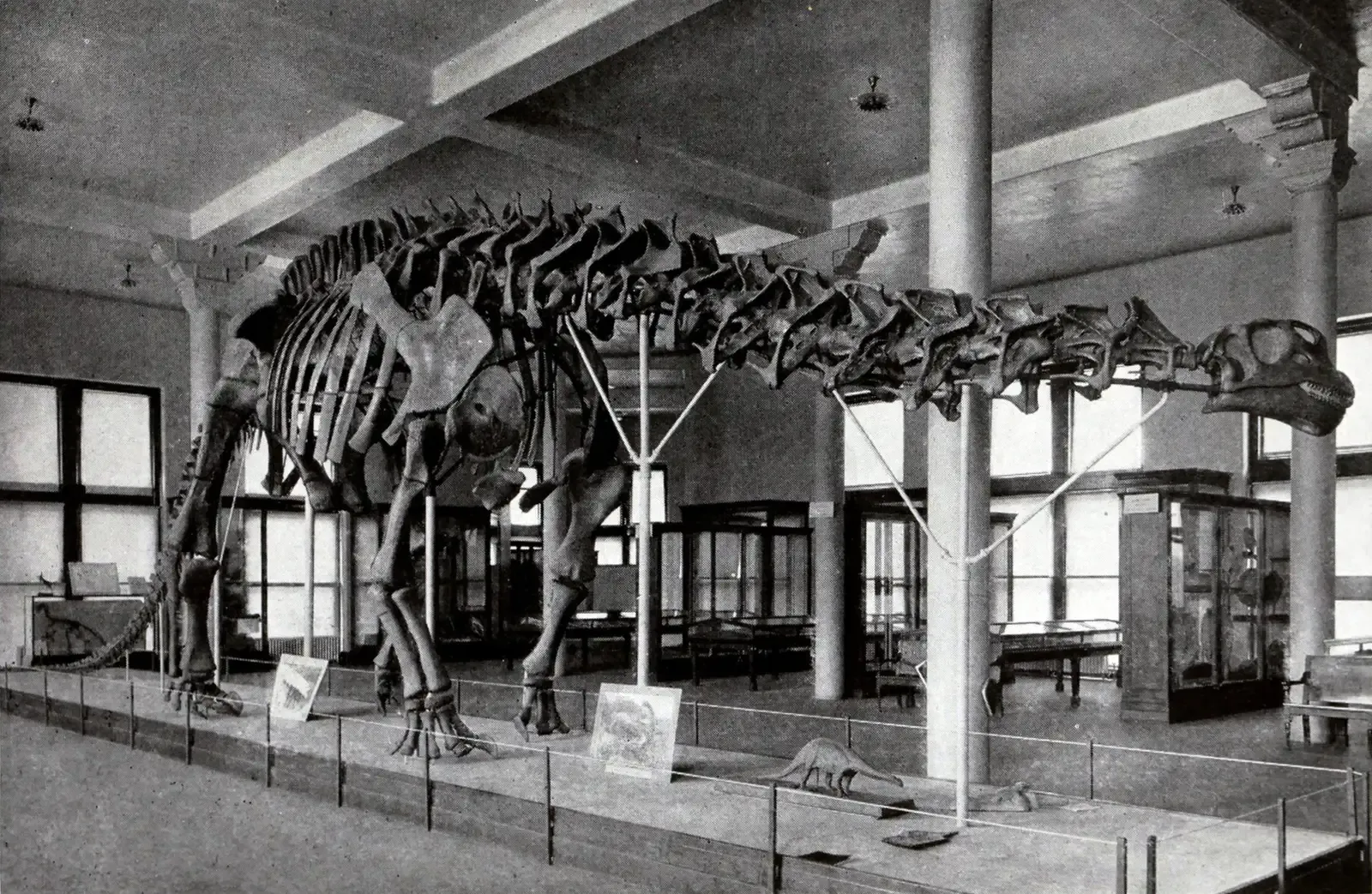
Let’s be real: part of why this dinosaur stuck around so stubbornly is that “Brontosaurus” is simply a better name than “Apatosaurus.” Brontosaurus means “thunder lizard,” while Apatosaurus means “deceptive lizard,” which is quite a bit more boring. Imagine telling a five-year-old that the dinosaur formerly known as Thunder Lizard is now called the Deceptive Lizard. Good luck with that.
Despite the change in classification, the public still embraced the dinosaur as Brontosaurus, owing to the widespread use of its likeness during much of the 20th century in advertising, motion pictures, and television, as well as the presence of Brontosaurus reconstructions in museums throughout North America and Europe. The 1933 film King Kong featured a Brontosaurus chasing characters on Skull Island, and in 1938 the assembling of a Brontosaurus skeleton was a major plot point in the Katharine Hepburn and Cary Grant film Bringing Up Baby. Even a U.S. postage stamp in 1989 refused to let the name go, with the name Brontosaurus used for the stamp because it was more familiar to the general population.
The 2015 Study That Changed Everything
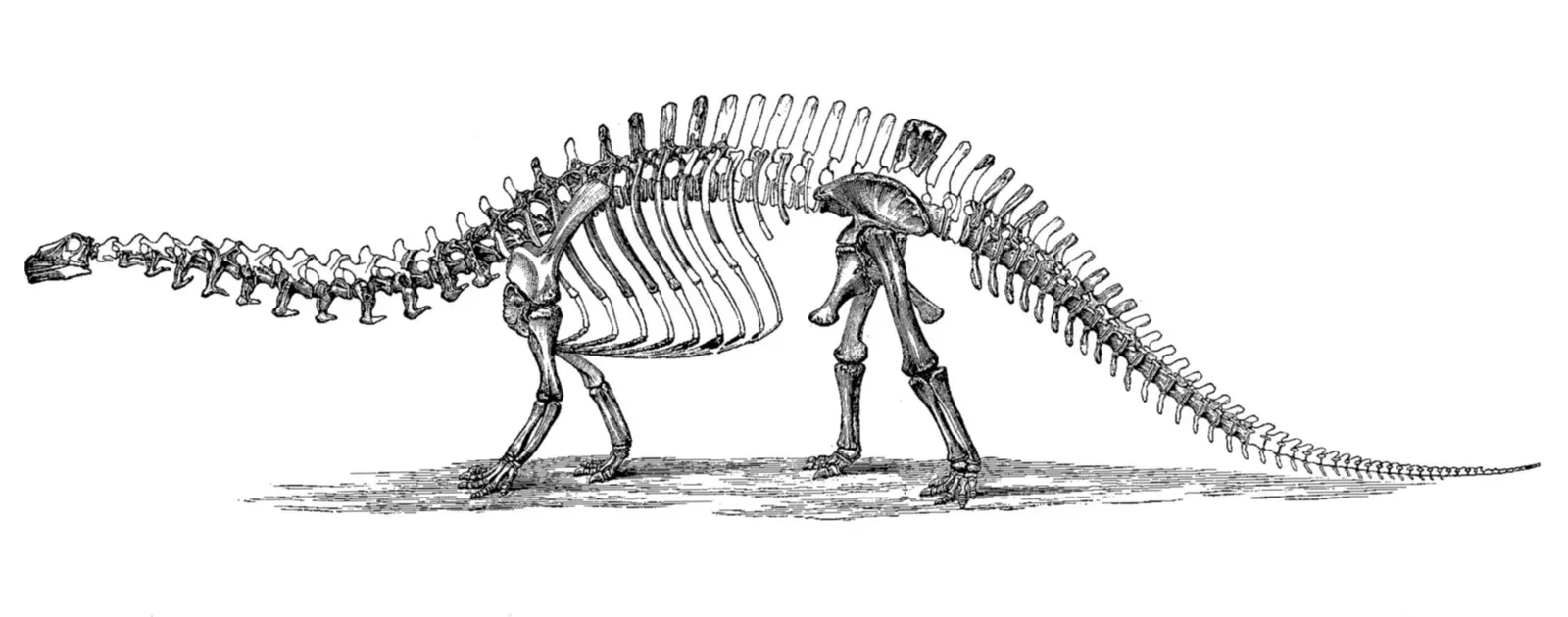
Here is the plot twist nobody expected. In 2015, an extensive study of diplodocid relationships by Emanuel Tschopp, Octavio Mateus, and Roger Benson concluded that Brontosaurus was indeed a valid genus of sauropod distinct from Apatosaurus, and the scientists developed a statistical method to more objectively assess differences between fossil genera and species. After more than a century of scientific exile, the thunder lizard was officially welcomed back.
Tschopp and colleagues examined 477 individual physical features spanning 81 different individual sauropods recovered from sites across the globe. Close examination of the fossils originally associated with Brontosaurus showed that previously overlooked aspects of its shoulder blade, vertebral column, and ankle bones were in fact unique to this animal, including the shape of the chevrons, a series of bones underneath the vertebral column. I think it is worth appreciating just how painstaking that kind of work is. Nearly 500 features, 81 specimens. That is some serious dedication to a single question.
Is Brontosaurus Really Back for Good?
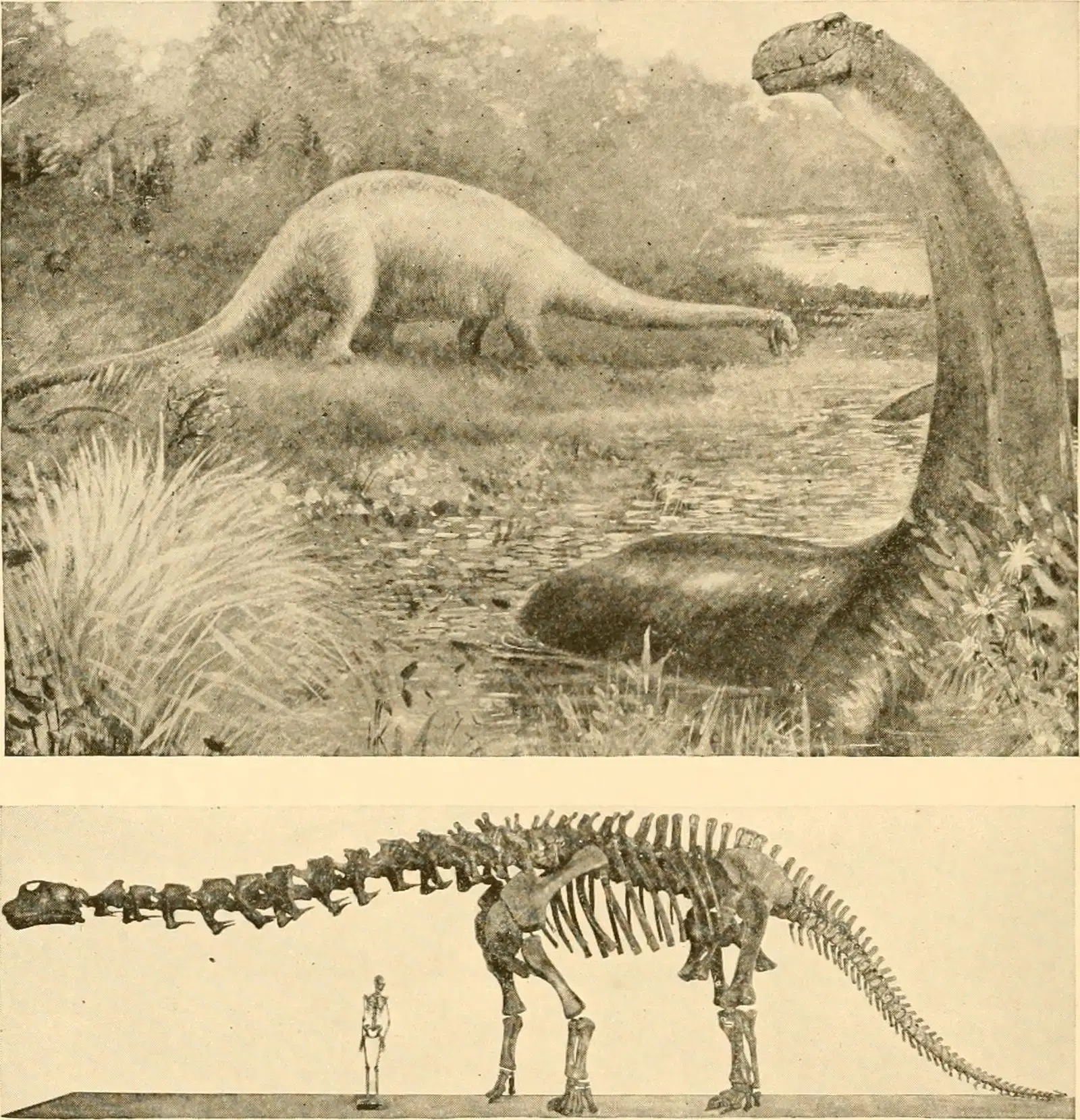
Honestly? It is hard to say for sure, and the scientific community is still not entirely in agreement. The status of Brontosaurus is still uncertain, with some paleontologists still considering it a synonym of Apatosaurus. Some argue that determining differences between the dinosaurs is subjective, and suggest that if other traits were chosen, the two dinosaurs might appear less distinct, as there is no standard way of picking significant characteristics. Science, after all, is not a democracy, but it can feel like one sometimes.
All in all, these findings emphasize that sauropods were much more diverse and fascinating than previously realized, and the recognition of Brontosaurus as separate from Apatosaurus may be only the tip of the iceberg. Brontosaurus actually appears to contain three distinct species, all from around 157 to 151 million years ago in the western U.S., meaning that the biodiversity of dinosaurs at this time may have been much higher than previously thought. The more science digs, the more it finds. Which is both wonderful and a little humbling.
Conclusion
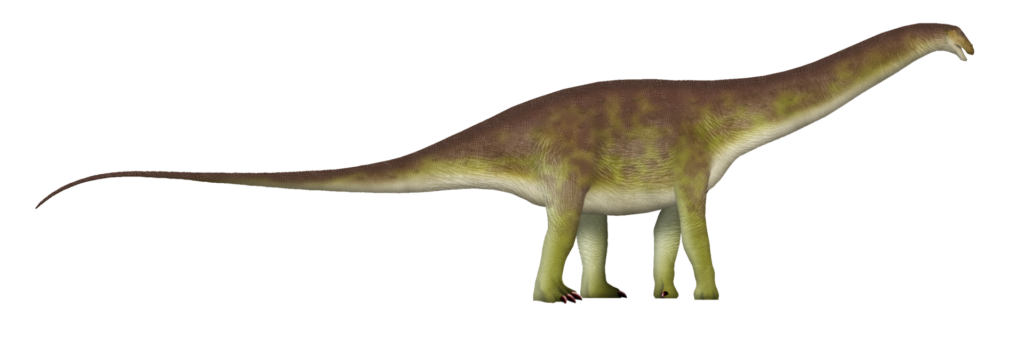
The story of the Brontosaurus is, at its heart, a story about how science actually works. It is messy, competitive, and full of corrections. For over 100 years, scientists thought that Brontosaurus and Apatosaurus were the same dinosaur because their bones look very similar. It took decades of new discoveries, fresh eyes, and a staggeringly thorough analysis to finally challenge what everyone assumed was settled.
What you can take away from all of this is something both reassuring and unsettling: science changes its mind. That is not a weakness. That is precisely how it is supposed to work. A name born from ego and rivalry turned into one of the most recognizable creatures in cultural history, got erased from textbooks, and then came thundering back. Not bad for a dinosaur that “never existed.”
So the next time someone tells you the Brontosaurus was never real, you can smile and tell them it’s actually a little more complicated than that. What do you think: does it deserve its name back for good, or should it stay as Apatosaurus forever? Tell us in the comments.