
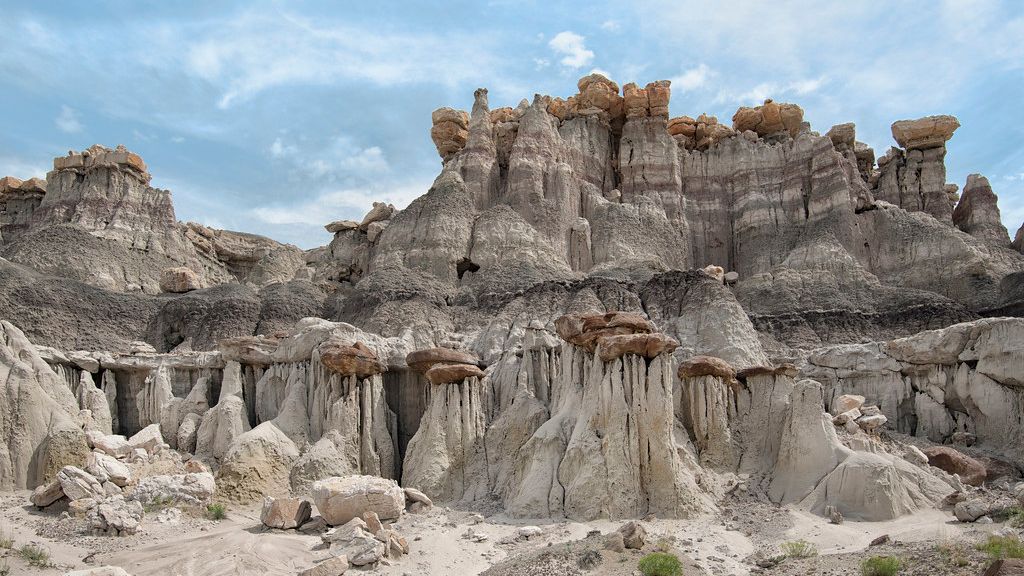
Most people know that dinosaurs ruled the Earth for hundreds of millions of years. But here’s the thing – long before the first dinosaur ever drew a breath, the American landscape was already being sculpted, squeezed, melted, and reborn in ways that most of us can barely fathom. We’re talking about rocks and formations so impossibly old, they predate not just dinosaurs, but most complex life on Earth entirely.
Scattered across this country are places where you can quite literally press your palm against stone that formed when the planet itself was young, wild, and barely recognizable. Think that sounds like the stuff of science fiction? Let’s dive in – you might be stunned by how close some of these ancient wonders actually are.
1. The Grand Canyon’s Vishnu Basement Rocks, Arizona
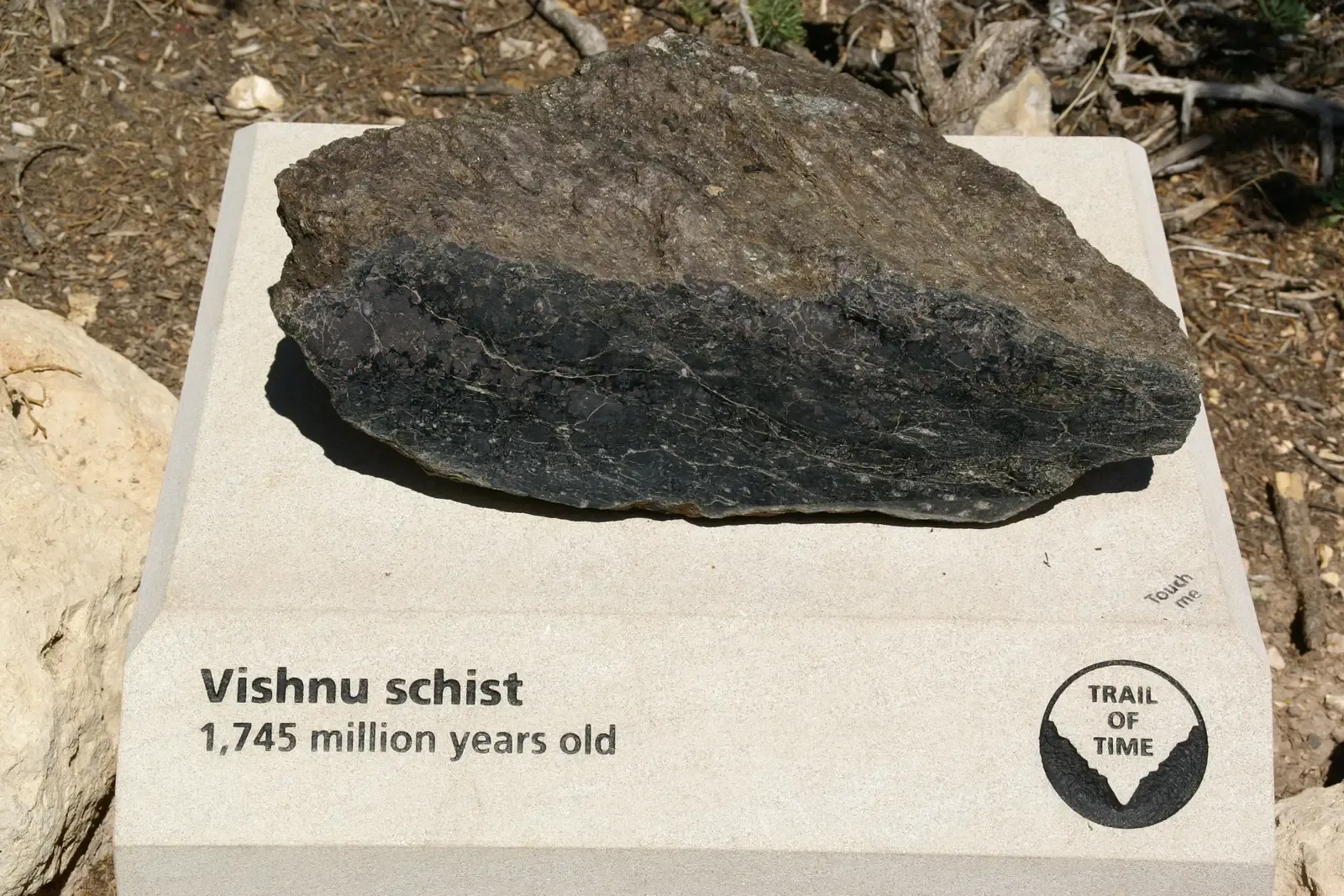
If you’ve ever stood at the rim of the Grand Canyon and stared down into that dark, impossibly deep inner gorge, you were already looking at something extraordinary. At the bottom of the Canyon you’ll find the region’s oldest exposed rocks – Vishnu Schist and Zoroaster Granite. These rocks are the only common rocks in the Grand Canyon that are not sedimentary, and the Vishnu Schist formed roughly 1.7 billion years ago when intense heat and pressure transformed previously formed shale into schist.
The resulting Granite Gorge Metamorphic Suite, which is part of the Vishnu Basement Rocks, consists of the metasedimentary Vishnu Schist and the metavolcanic Brahma and Rama Schists that were formed between roughly 1.75 billion and 1.73 billion years ago. This is the resistant rock now exposed at the bottom of the canyon in the Inner Gorge. I think what makes this place genuinely spine-tingling is the fact that you don’t just read about this history – you stand inside it. Those walls surrounding you on a canyon hike are essentially a time machine, and the dark rocks at river level are the oldest stop on the journey.
2. The Morton Gneiss, Minnesota River Valley
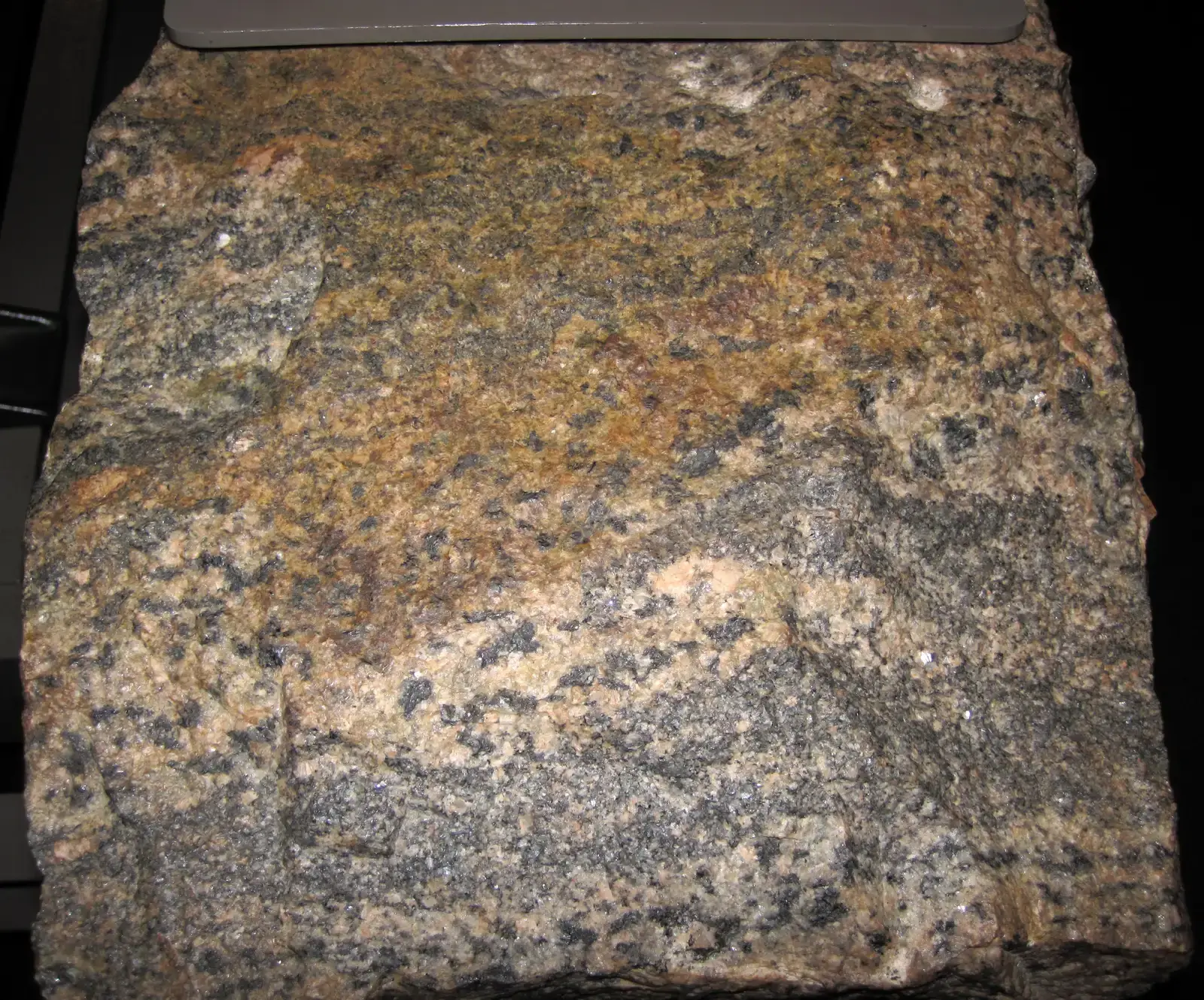
Here’s a geological wonder that most people have never heard of, even though they may have walked right past it – possibly as building stone on a city sidewalk. Some of the oldest rocks in the world include the gneiss found in the Minnesota River valley. The Morton Gneiss, which is 3.6 billion years old, is a coarsely crystalline, foliated metamorphic rock, and its texture and mineral assemblage give clues as to how it formed.
When cut and polished, Morton Gneiss shows bands and swirls of black, pink, and gray, with white flecks that sometimes look like galaxies and nebulae floating in space. The rock’s colors come from quartz, potassium feldspar, plagioclase feldspar, and biotite and amphibole. Zircon crystals from the gneiss have been dated to roughly 3,524 million years ago. Honestly, the fact that something this ancient is literally used as a decorative building stone in Minnesota towns is both poetic and almost absurd. You could be leaning against a wall that’s older than most life on this planet.
3. Voyageurs National Park, Northern Minnesota
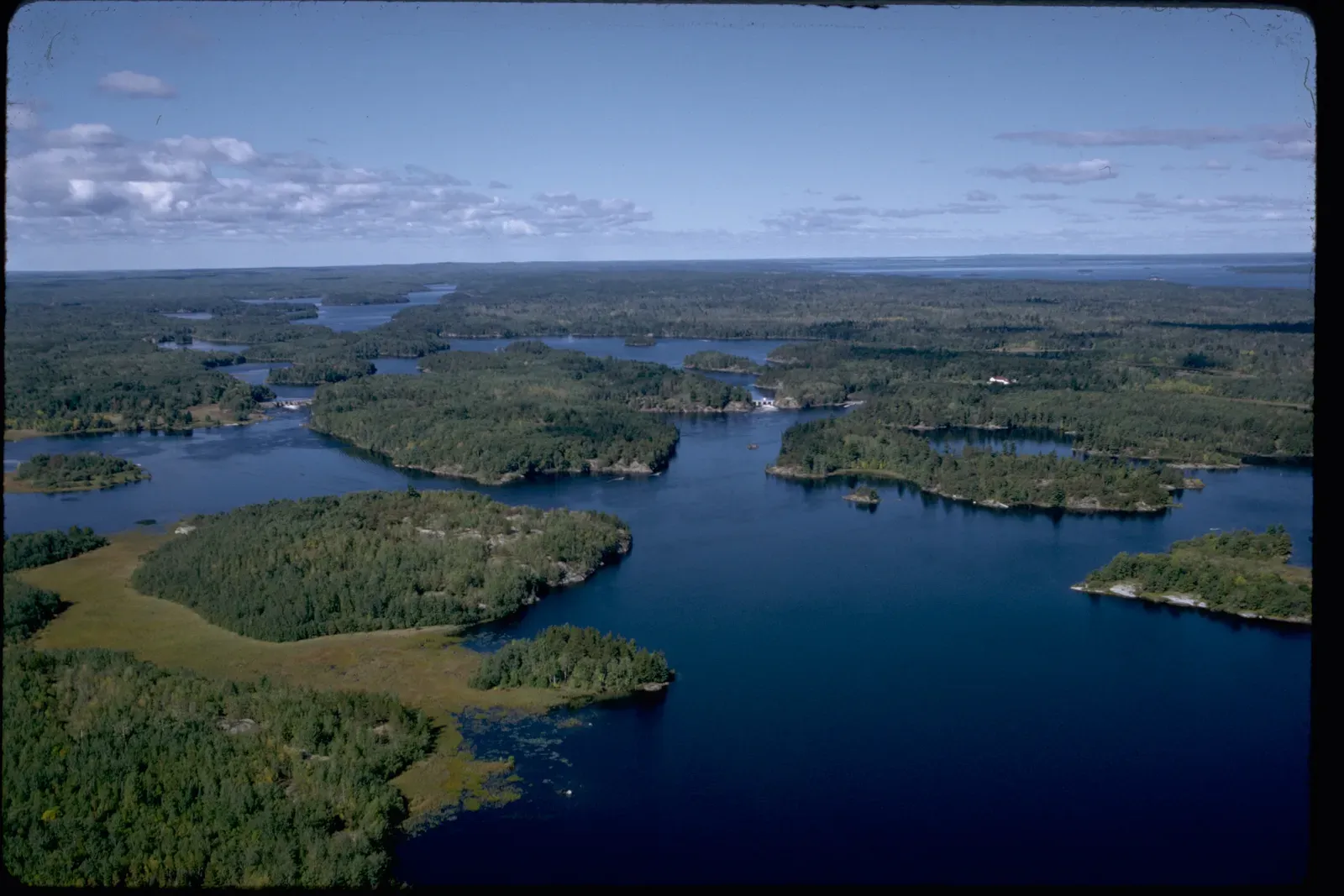
Voyageurs National Park is the kind of place people visit for the moose and the lake views, and they leave not realizing they spent several days paddling and hiking across some of the oldest exposed rock on the entire North American continent. Voyageurs National Park is located on the Canadian Shield, with the rocks averaging between roughly one and three billion years old. These are some of the oldest rocks on the North American continent.
The geologic features and processes in Voyageurs reflect two widely separated time periods that formed the present landscape: the older, 2.5 billion year old Precambrian Archean foundation, and the much more recent Pleistocene Epoch ice age. Think of it this way – the ice age that shaped what you see at the surface was, geologically speaking, just a thin coat of paint over a wall that’s been standing for billions of years. The park’s rocky peninsulas and islands are, in every true sense, the ancient bones of a continent.
4. The Beartooth Mountains, Montana and Wyoming
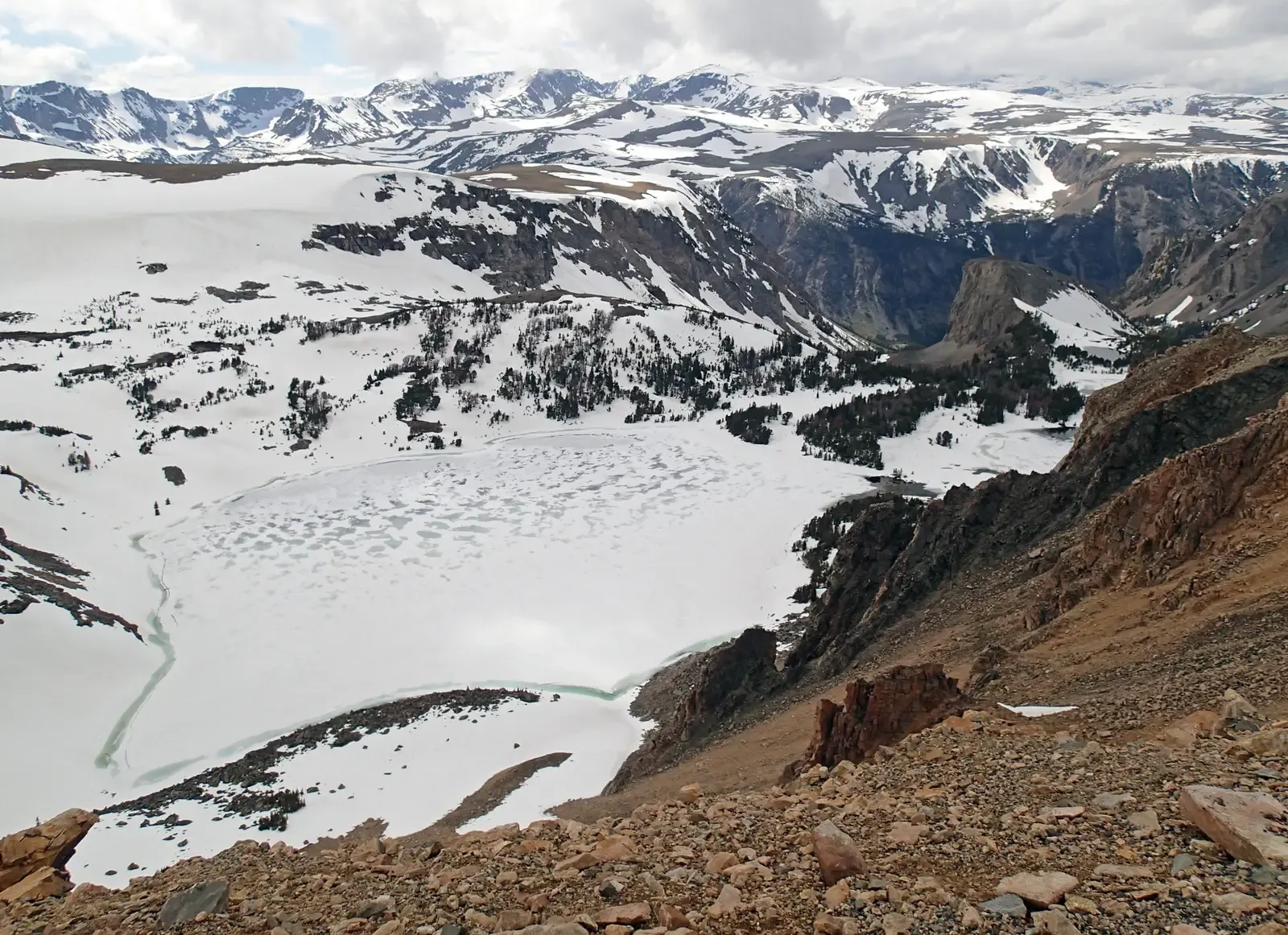
Drive the famous Beartooth Highway in Montana and Wyoming, and you’ll be climbing through one of the most striking ancient landscapes in the lower 48. The rocks here don’t just feel old – they are staggeringly old. Between roughly 3.0 and 2.5 billion years ago, ancient sediments and crystallized igneous rocks were subjected to heat and pressure, forming gneisses in the main block of the Beartooth Mountains. Since the age of the Earth is generally accepted as 4.6 billion years, these Beartooth rocks represent some of the first rocks formed after the cooling of the initially molten Earth. These ancient rocks are called the Precambrian “basement” because they form the foundation for the much younger sedimentary rocks that were deposited on top.
At about 2.8 billion years ago, the granites and gneisses were intruded by many small igneous rock bodies, forming sills, stocks, and dikes. At about 2.7 billion years ago, the Stillwater Complex was emplaced – a succession of ultramafic to mafic rocks derived from a large complex magma body deep in the Earth’s crust. The Stillwater Complex hosts valuable minerals including platinum, palladium, gold, silver, chromium, and iron. So yes, these mountains aren’t just scenic. They’re ancient, mineral-rich, and absolutely extraordinary from a geological standpoint.
5. The Great Unconformity, Grand Canyon, Arizona
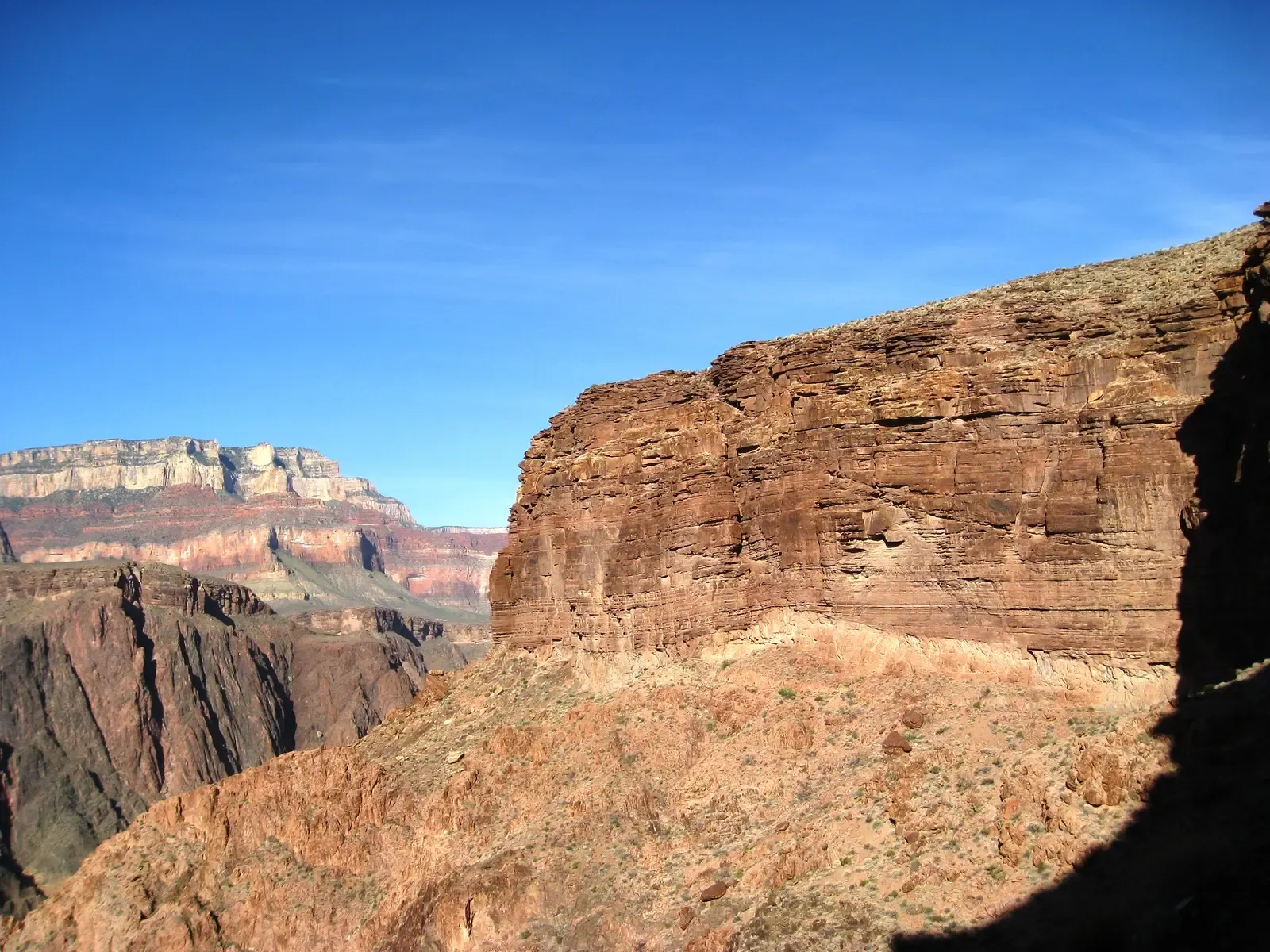
Still in the Grand Canyon, but a different geological story entirely – and honestly one of the most jaw-dropping features in all of Earth science. The Great Unconformity is a boundary visible in the canyon walls where rock layers that are roughly 500 million years old sit directly on top of rocks that are nearly two billion years old. That gap of over a billion years of missing geological record is mind-bending.
Unconformities are gaps in the geologic record that occur when rocks or sediments are eroded away and time elapses before new deposition occurs. New sediment eventually forms new rock layers on top of the eroded surface, but there is a period of geologic time that is not represented. Picture holding a book where someone ripped out well over a billion pages from the middle. That’s what you’re looking at from the canyon rim. The geology of the Grand Canyon area includes one of the most complete and studied sequences of rock on Earth, and the nearly 40 major sedimentary rock layers exposed in the canyon range in age from about 200 million to nearly 2 billion years old. It’s simultaneously one of the most complete geological records and one of the most dramatic gaps.
6. The Adirondack Mountains, New York
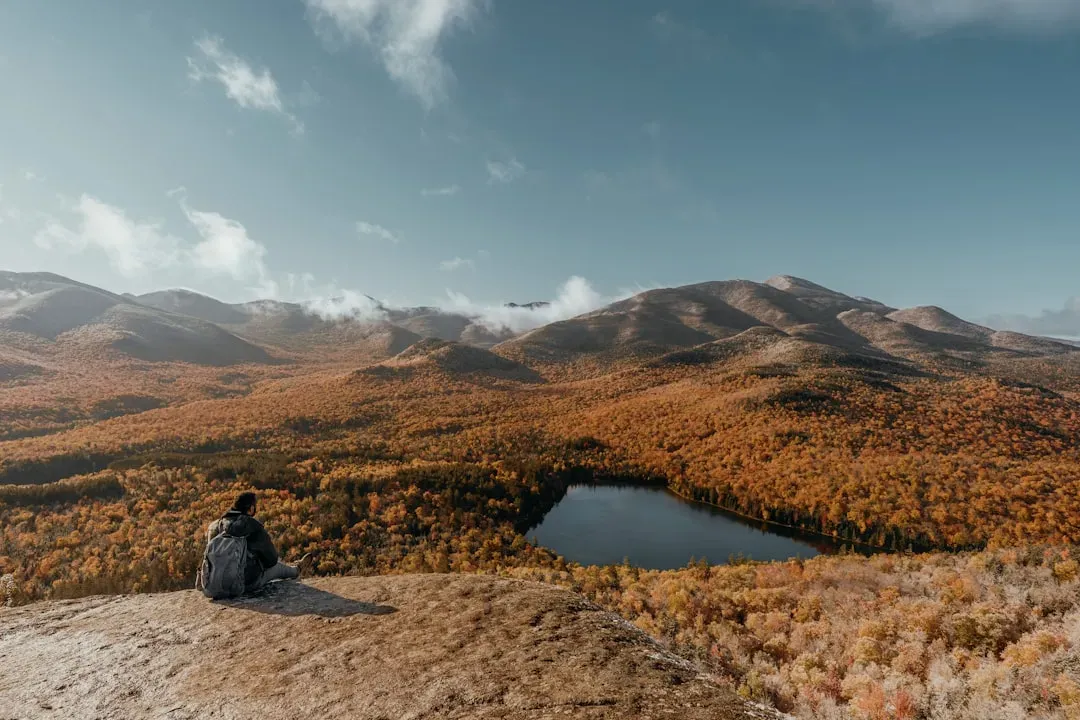
The Adirondacks are beloved for their hiking trails and fall foliage, but beneath all that beauty lies some seriously ancient geology that most visitors completely overlook. The core of the Adirondack Mountains is made of Precambrian metamorphic and igneous rocks, part of the larger Grenville Province, that formed roughly one billion years ago – a full half-billion years before the first fish even appeared on Earth.
The Precambrian was truly the “Age of Early Life.” During the Precambrian, continents formed and our modern atmosphere developed, while early life evolved and flourished. Soft-bodied creatures like worms and jellyfish lived in the world’s oceans, but the land itself remained barren. The Adirondacks sit atop a unique geologic dome – a circular uplift where ancient deep-crustal rocks have been pushed up over time. Every continent has a core of very ancient metamorphic rocks, and in the US Northeast, the Adirondacks are among the most visible and accessible expressions of that ancient core. It’s a rare thing to hike across rocks that predate land-based life entirely.
7. The Superior Upland and Lake Superior Shoreline, Minnesota and Wisconsin
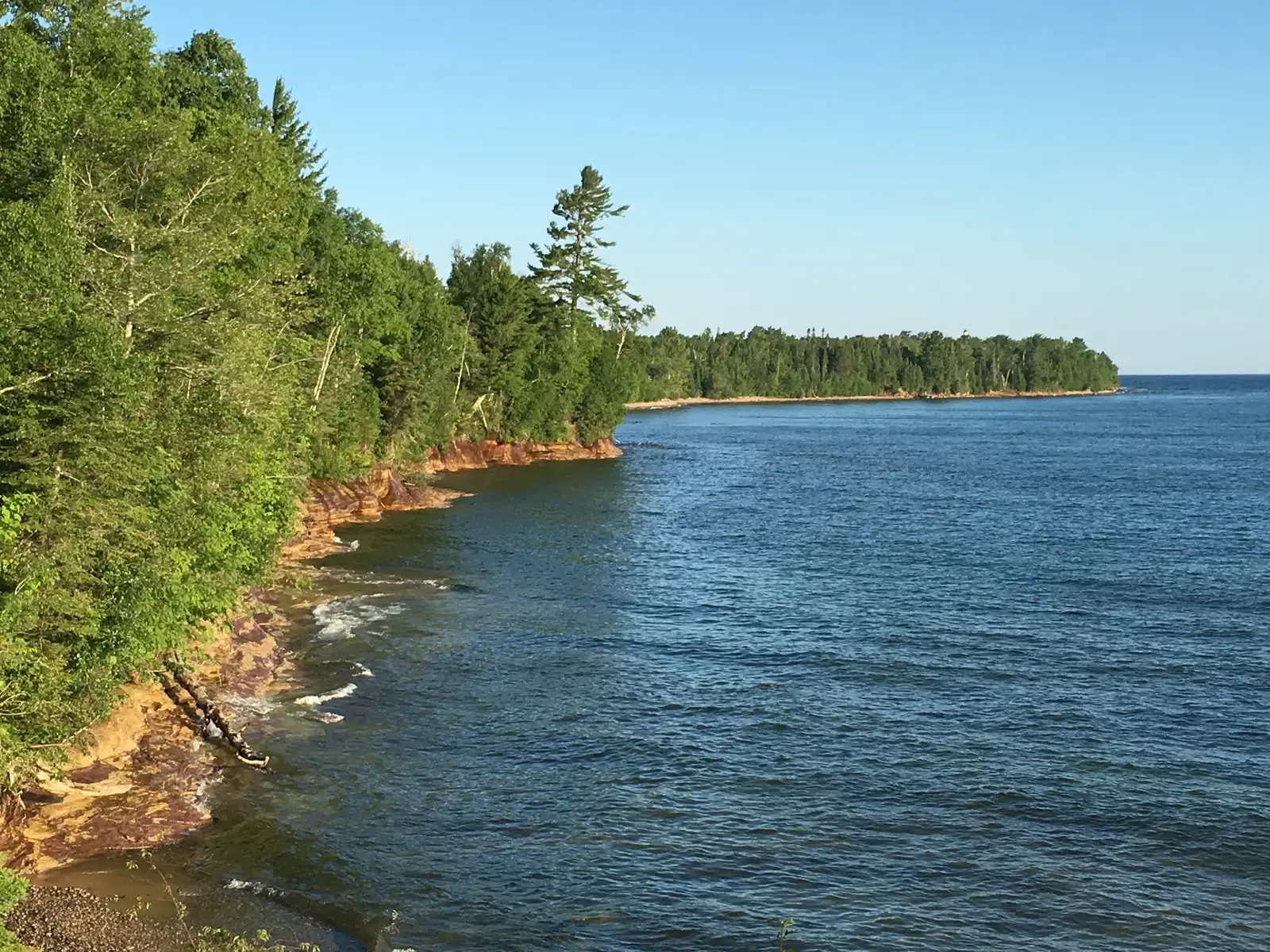
The shores of Lake Superior are famous for their dramatic scenery, and that scenery has roots going back to a time before complex life existed anywhere. The Superior Upland Province is the southern extension of the Laurentian Upland Province, part of the nucleus of North America called the Canadian Shield. The basement rocks of the Laurentian Upland Province were metamorphosed about 2,500 million years ago in a mountain-building collision of tectonic plates called the Kenoran Orogeny. The rocks of the Superior Upland are mostly Precambrian metamorphic rocks and overlying Paleozoic rocks covered by a thin veneer of glacial deposits left behind when glaciers melted at the end of the Pleistocene Ice Age.
The oldest rocks in the national parks of this region are Precambrian in age, from 3 billion to 600 million years old. This time interval saw the development of algae, fungi, and soft-bodied marine plants and animals. It’s a humbling thought, isn’t it? You’re standing on rock that formed when the most sophisticated life on this planet was essentially a mat of algae drifting in ancient seas. The Lake Superior shoreline, with its famous agates and basalt formations, is one of the most geologically compelling places a casual traveler can visit without needing special equipment or guide expertise.
8. The Colorado Plateau and Its Precambrian Core, Utah and Arizona
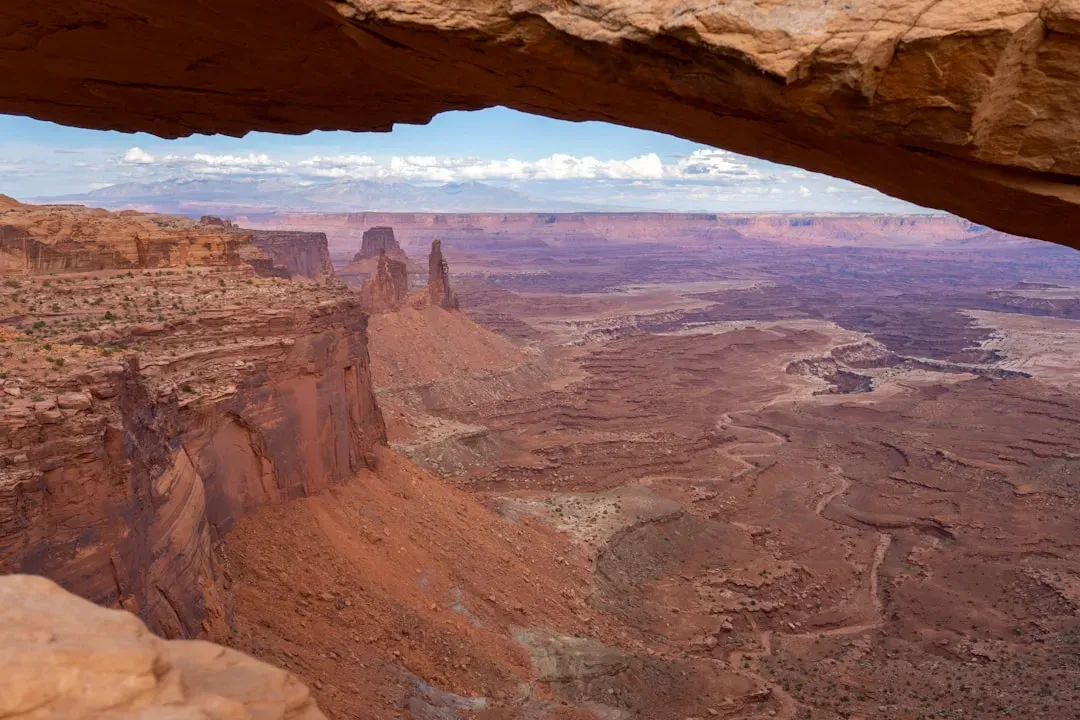
The Colorado Plateau is a geological marvel unlike anywhere else on Earth. It’s a massive, thick block of crust that has, almost miraculously, avoided the extreme deformation that has reshaped the rest of the American West. One of the most geologically intriguing features of the Colorado Plateau is its remarkable stability. Relatively little rock deformation – such as faulting and folding – has affected this high, thick crustal block within the last 600 million years or so. In contrast, the plateau is surrounded by provinces that have suffered severe deformation.
The oldest known rocks found at the surface in the southwestern United States are late Archean to early Proterozoic metamorphic rocks known as the Grouse Creek Block and the Farmington Canyon Complex in what is now northwestern Utah. The Precambrian accounts for roughly 88 percent of the Earth’s entire geologic time, and nowhere is that staggering span more visually and dramatically accessible than within the canyons and exposures of the Colorado Plateau. Arches, cliffs, and canyon walls that tourists photograph every single day are essentially windows cut into the deep past of this planet.
A Closing Thought Worth Carrying With You
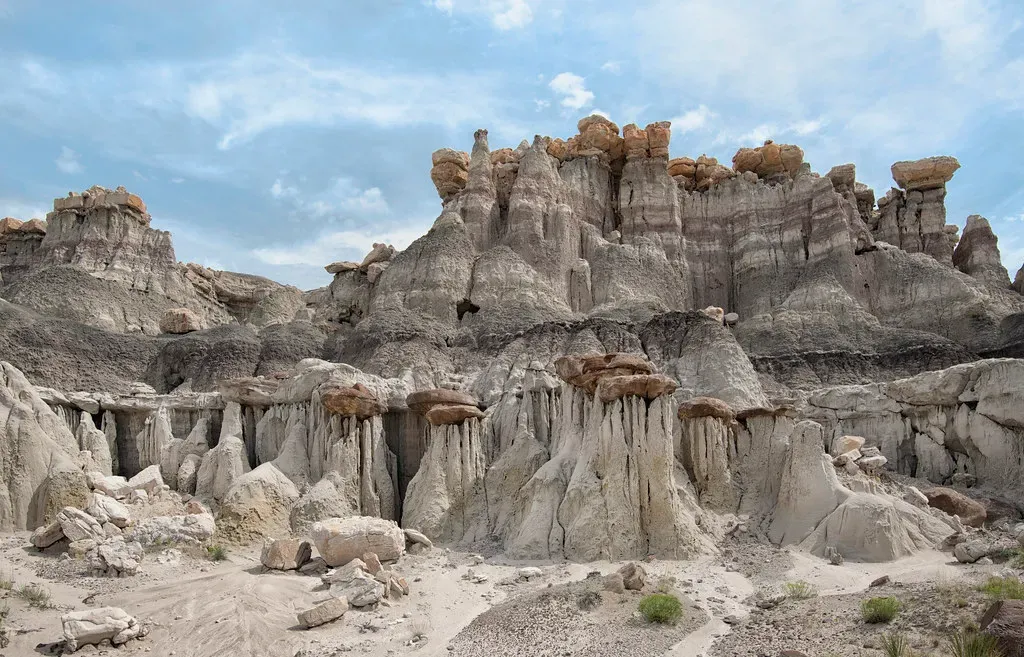
There’s something deeply moving about realizing that the ground beneath your feet has a history so vast it makes all of human civilization feel like a blink. The Precambrian is the least-understood part of Earth history, yet it is arguably the most important. Precambrian time spans almost nine-tenths of Earth history, from the formation of the Earth to the dawn of the Cambrian Period. It represents time so vast and long ago that it challenges all comprehension.
These eight places aren’t just scenic destinations or geological curiosities. They’re proof that the world has been through things we can barely imagine – continent collisions, ocean floors pushed miles underground, mountain ranges rising and eroding to nothing – all before a single dinosaur walked the Earth. Next time you’re near one of these formations, take a moment to actually touch the rock. Because what you’re reaching back toward isn’t just geology. It’s almost the beginning of everything.
Which of these ancient wonders surprised you most? Tell us in the comments – we’d love to know which one you’re already planning to visit.