
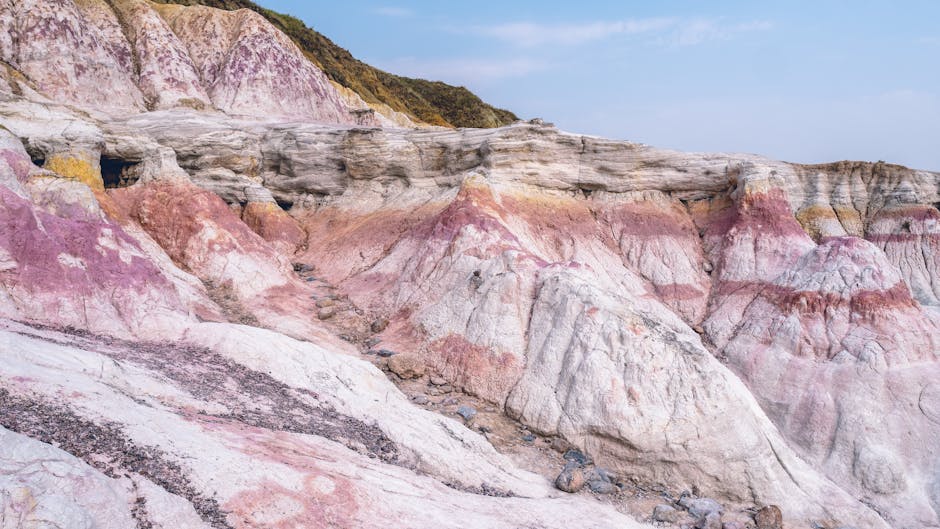
Somewhere beneath your feet, right now, there may be a dinosaur bone waiting to be found. It sounds dramatic, but it is very real. Across the American landscape, ancient rock formations have been quietly preserving some of the most extraordinary prehistoric secrets for tens of millions of years, just below the surface of ordinary-looking hillsides, canyons, and badlands.
You might assume we already know most of what there is to know about dinosaurs. Honestly, that assumption could not be further from the truth. New discoveries are still being made every year, and some formations have barely been scratched by scientific exploration. Let’s dive in.
The Morrison Formation: America’s Greatest Dinosaur Vault
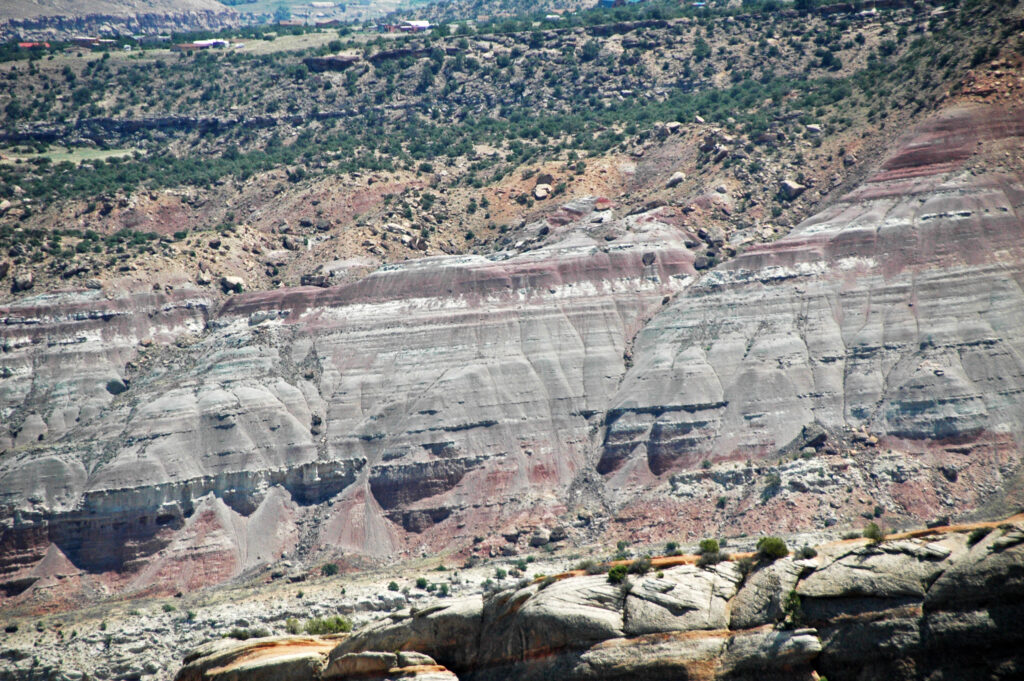
If you had to pick just one place on Earth that rewrote everything we thought we knew about giant prehistoric life, the Morrison Formation would top that list. The Morrison Formation is a distinctive sequence of Upper Jurassic sedimentary rock found in the western United States and has been the most fertile source of dinosaur fossils in North America. Think of it like a library, except instead of books, the shelves are packed with ancient bones locked in layers of mudstone and sandstone.
It is centered in Wyoming and Colorado, with outcrops in Montana, North Dakota, South Dakota, Nebraska, Kansas, the panhandles of Oklahoma and Texas, New Mexico, Arizona, Utah, and Idaho. Fossils of nearly 50 different species of dinosaurs have been discovered in the Morrison Formation. That kind of diversity is staggering, and it covers some of the most iconic names you have ever heard, including creatures like Stegosaurus, Diplodocus, Apatosaurus, and the fearsome Allosaurus.
The formation was named after Morrison, Colorado, where some of the first fossils were discovered by Arthur Lakes in 1877. That same year, it became the center of the Bone Wars, a fossil-collecting rivalry between early paleontologists Othniel Charles Marsh and Edward Drinker Cope. Let’s be real, that rivalry was essentially the original paleontology drama, and it produced a treasure trove of species discoveries that still shape how you understand Jurassic life today.
Because the Morrison Formation rocks are widely distributed and often have fossils, people have continued to explore its outcrops and frequently make new discoveries. In fact, so many fossils have been collected that some important specimens were unstudied for decades, or published once and then forgotten for many years. There is something both thrilling and humbling about that. Even with over a century of excavation, this formation still holds secrets that no one has opened yet.
The Hell Creek Formation: The Last Chapter of the Dinosaur Age
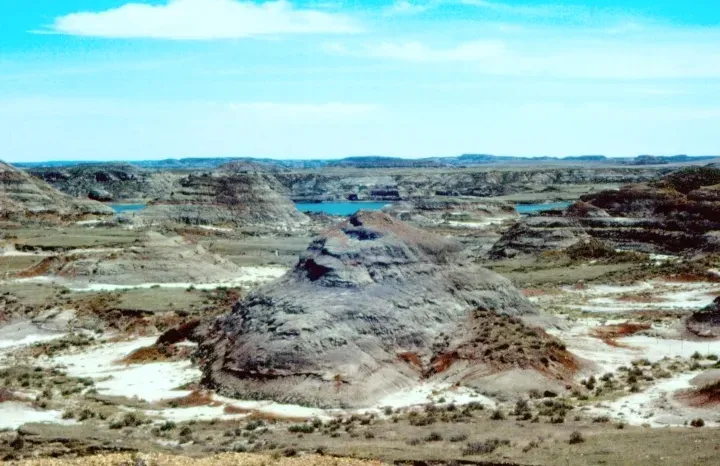
Imagine standing on a windswept badland in Montana or South Dakota, knowing that the ground beneath you contains the bones of the very last dinosaurs that ever walked the Earth. That is exactly what you are standing on when you visit the Hell Creek Formation. The Hell Creek Formation is an intensively studied division of mostly Upper Cretaceous and some lower Paleocene rocks in North America, named for exposures studied along Hell Creek, near Jordan, Montana, and the formation stretches over portions of Montana, North Dakota, South Dakota, and Wyoming.
Fossils contained in these beds represent some of the last dinosaurs to exist on the planet prior to the great K-Pg mass extinction. When you look at the rock layers here, you are essentially reading the final pages of a 165-million-year story. Notable dinosaur finds include Tyrannosaurus and Triceratops, ornithomimids, caenagnathids like Anzu, a variety of small theropods, pachycephalosaurs, ankylosaurs, and crocodylomorphs. The sheer variety is breathtaking.
The most complete hadrosaurid dinosaur ever found, an Edmontosaurus, was retrieved in 2000 from the Hell Creek Formation and was widely publicized in a National Geographic documentary aired in December 2007. The largest Triceratops skull ever discovered, nicknamed ‘Dragon King,’ was found in Glendive, Montana, which is in the Hell Creek Formation. You would be hard pressed to find another geological unit that has contributed more iconic individual specimens to science.
The Hell Creek Formation is famous for skeletons of large dinosaurs, but it is also rich with deposits that have tiny bones, teeth, and scales. These deposits are called vertebrate microsites, and are places where rivers concentrated very small fossils on sandbars. Microsites may have fossil bones of lizards, snakes, turtles, frogs, and salamanders, as well as early birds and small dinosaurs. So even if you are not digging up a T. rex, the smaller finds from this formation paint an incredibly detailed picture of an entire prehistoric ecosystem on the brink of catastrophe.
The Chinle Formation: Where the Age of Dinosaurs First Began
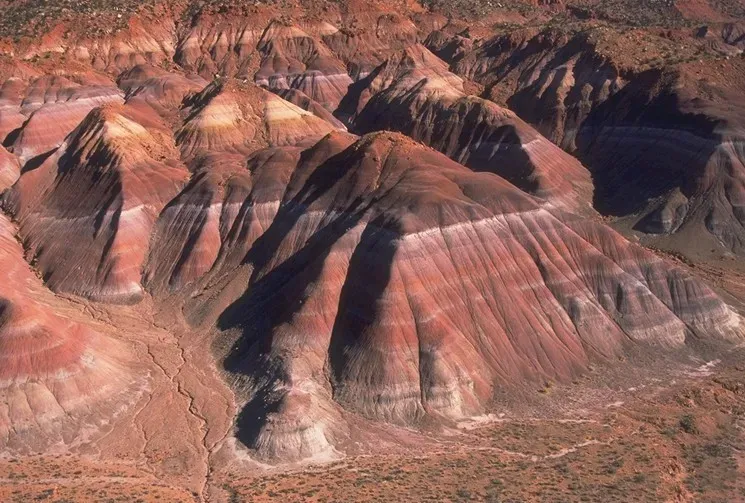
Here is something that might genuinely surprise you: some of the earliest known dinosaurs on Earth did not come from a glamorous, well-known discovery site. They came from the colorful, almost painting-like badlands of the American Southwest. The Chinle Formation is a widely distributed and distinctive rock sequence of siltstones and shales that are easily eroded. Along tall cliffs throughout the Southwest, the slopes underlain by fine-grained Chinle rocks have distinctive varied colors of maroon, purple, gray and yellow, reflecting their floodplain history.
The Coelophysis dinosaur bones are found in the Late Triassic Chinle Formation, and the Late Triassic Period is known as the beginning of the “Age of Dinosaurs.” Coelophysis, which lived from roughly 225 to 190 million years ago, is among the earliest discovered meat-eating dinosaurs. Picture a world where dinosaurs were just getting started, still competing with other reptilian relatives for dominance. That is the Chinle’s world.
In 1947, paleontologists discovered a rich fossil quarry of Coelophysis skeletons in Chinle rocks. Thousands of bones were found, including intact skeletons, that represent hundreds of individuals. The large number of Coelophysis suggests that possibly they gathered in packs, although groups might also have been drinking from a water hole. Death swept in with a catastrophic flash flood that washed the animals into a topographic low, possibly a small pond, where they were quickly and simultaneously buried. It is a haunting, almost cinematic scene frozen in time.
The fossil record at the Whitaker quarry is exceptional in that the skeletons display a full spectrum of growth development, ranging from juveniles to fully grown adults, and both genders are represented. Coelophysis was apparently cannibalistic because tiny baby Coelophysis bones have been found in the rib cage of a large Coelophysis. If that does not make you stop and think about how strangely familiar some prehistoric behaviors were, nothing will. Coelophysis was the second dinosaur to be transported to space; NASA’s Endeavor Space Shuttle borrowed a skull from the Carnegie Museum of Natural History and carried it to the Mir space station.
The Two Medicine Formation: Montana’s Surprising Nursery of Life
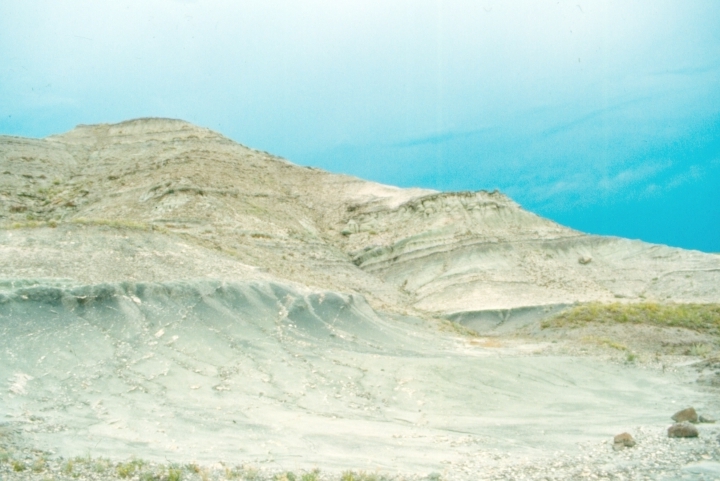
Of all the formations on this list, the Two Medicine Formation may be the one that changed how you think about dinosaur parenting more than any other. Tucked into northwestern Montana, this geological unit rewrote the rulebook on dinosaur behavior in a way that no one expected. The Two Medicine Formation was deposited in the Late Cretaceous, approximately 75 million years ago, in central Montana, and is known for its relative abundance of dinosaur eggs, nests, and baby dinosaurs, all of which are generally rare in the fossil record.
Egg Mountain, which is near Choteau, Montana, was discovered in 1977 by Marion Brandvold, who discovered the bones of juvenile dinosaurs at this site. It is a colonial nesting site on the Willow Creek Anticline in the Two Medicine Formation that is famous for its fossil eggs of Maiasaura, which demonstrated for the first time that at least some dinosaurs cared for their young. Think about the impact of that discovery. Before Egg Mountain, you might have assumed dinosaurs were cold, instinct-driven creatures that abandoned their eggs. The Two Medicine Formation proved otherwise.
These nests belonged to a dinosaur which has been named Maiasaura peeblesorum, the state fossil of Montana, whose genus name means “caring mother lizard.” By studying the bones of Maiasaura, it has been determined that Maiasaura experienced a dramatic change in size as they aged, growing from their hatch size of less than 1 kilogram to an adult size of roughly 2,000 kilograms in a period of just 8 to 10 years. That growth rate is extraordinary, and it tells you something profound about the energy and care these animals invested in their young.
Egg Mountain is a colonial nesting site famous for its fossil eggs of Maiasaura, and the eggs were arranged in dug-out earthen nests, each nest about a parent’s body length from the next, with baby dinosaurs found with skeletons too cartilaginous for them to walk, similar to those of altricial, helpless baby birds. The parent or parents must then have brought food to the young. You are not just looking at bones here. You are looking at ancient family life, preserved in stone.
The Cedar Mountain Formation: Utah’s Overlooked Cretaceous Treasure
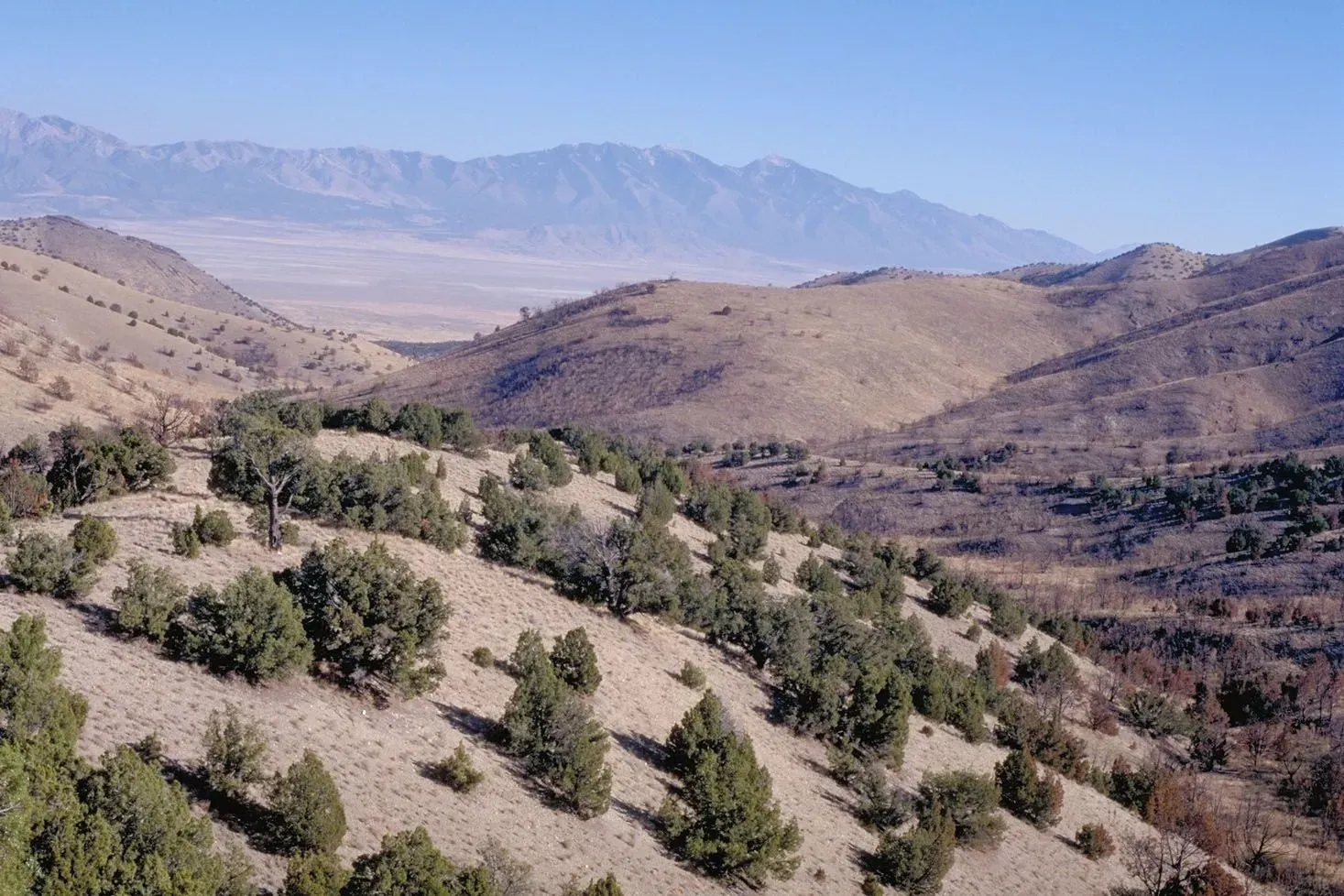
You may have heard of the Morrison Formation sitting just below it or the Late Cretaceous giants found nearby, but the Cedar Mountain Formation in eastern Utah has long been the overlooked middle child of American paleontology. That is finally changing. The Cedar Mountain Formation is a distinctive sedimentary geologic formation in eastern Utah. The formation was named for Cedar Mountain in northern Emery County, Utah, where William Lee Stokes first studied the exposures in 1944.
The Cedar Mountain Formation was once thought to be devoid of vertebrate fossils, particularly dinosaurs. Recently, abundant vertebrate fossil material has been recovered from the formation, and nine previously undescribed dinosaur taxa have been recovered. Think about that kind of reversal. Scientists once wrote off this entire formation as essentially empty, and then, with fresh eyes and better techniques, they found something spectacular hiding right beneath the surface.
The dinosaurs in the lower part of the formation differ from those in the upper part. These two dinosaur assemblages show the replacement of older, European-like dinosaurs with younger, Asian-like dinosaurs as the North American Continental Plate drifted westward. That kind of evolutionary shift, recorded layer by layer in the same geological unit, is something you simply cannot find just anywhere. It is a snapshot of continental drift written in bones.
Meat-eating or theropod dinosaurs are represented by the small coelurosaur Nedcolbertia justinhoffmani, the giant raptor Utahraptor ostrommaysorum, and a large carnosaurid perhaps related to Utah’s state fossil, the Late Jurassic Allosaurus. Together with pollen and charophytes, these dinosaurs indicate that these rocks are approximately 125 to 120 million years old. For a formation that people once thought had nothing to offer, that list of discoveries is nothing short of remarkable.
The Harebell Formation and Yellowstone’s Hidden Record: The Frontier Nobody Expected
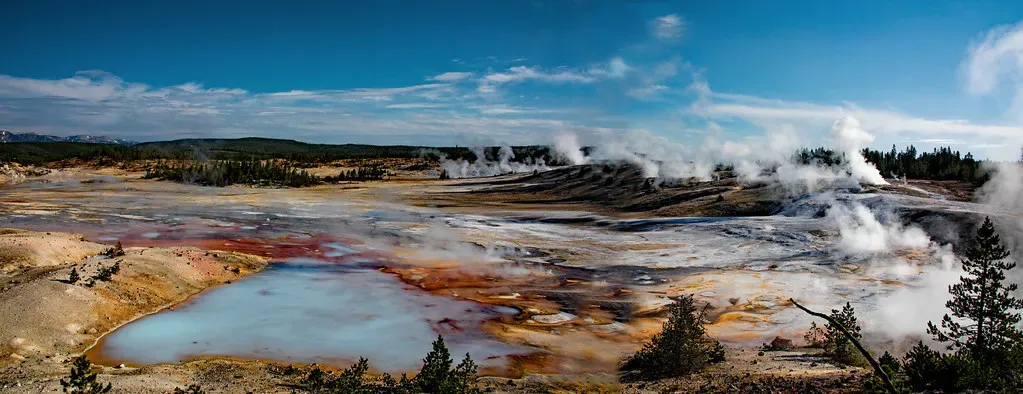
Most people who visit Yellowstone are there for the geysers, the bison, or the wolves. Very few realize they are standing over some of the least-explored fossil real estate in the entire country. It is, honestly, one of the most surprising dinosaur stories hiding in plain sight. Yellowstone has a secret that very few visitors are even aware of: Yellowstone has fossils, enough to rival other national parks that are renowned for their fossil riches, like Petrified Forest and Dinosaur National Monument.
Researchers recently described a tooth found in the Cretaceous Harebell Formation stratotype as belonging to a juvenile Tyrannosaurus dinosaur. This was the first confirmed dinosaur fossil ever found in Yellowstone. That is a stunning revelation. A place millions of people walk through every year, and it took this long to confirm it was hiding the bones of the most iconic predator in prehistory.
There has been little modern paleontological exploration done within the park, especially of rocks from Mesozoic time, between 250 to 65 million years old. One notable exception was a one-day expedition led by Dr. Jack Horner with the Museum of the Rockies in the 1990s. Despite this survey only being one day, the group was able to find a piece of turtle shell, dinosaur egg fragments, and what is thought to be a skeleton of an aquatic reptile known as a plesiosaur. One single day of searching, and they found all of that. You have to wonder what a full season of excavations might reveal.
The park’s famous Specimen Ridge is part of the stratotype for the Eocene Lamar River Formation. The ridge contains excellently preserved 50-million-year-old fossil forests. Many of the petrified tree stumps of this ancient “forest” stand in their original upright positions, some up to eight feet wide and more than 20 feet tall. As exciting as the known fossil deposits and locations in Yellowstone are, the fossils that have yet to be discovered are equally significant. In other words, the real chapter of Yellowstone’s dinosaur story has barely been written yet.
Conclusion: The Ground Beneath Your Feet Holds More Than You Think
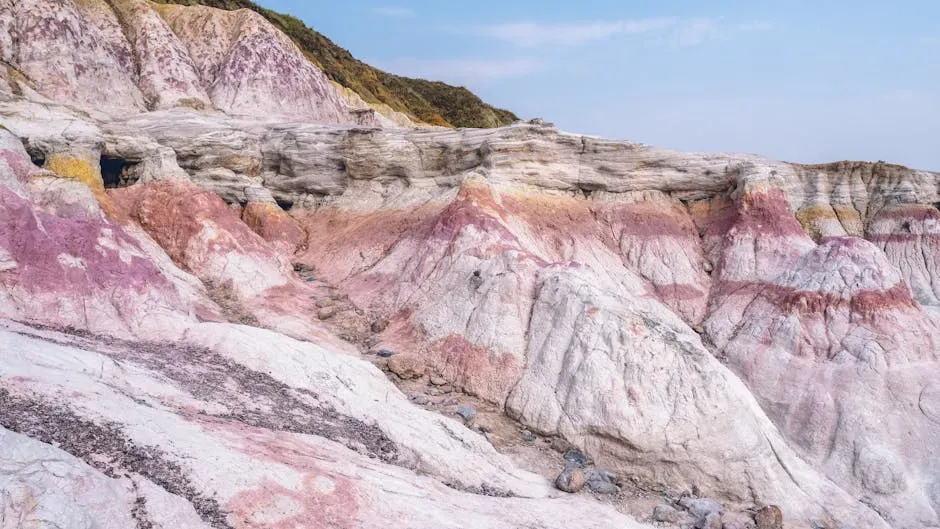
What strikes you most after exploring these six geological formations is not just how much has already been found. It is how much almost certainly remains hidden. From the massive, bone-packed layers of the Morrison Formation to the surprisingly unexplored fossil beds lurking beneath Yellowstone’s geysers, the American landscape is essentially a prehistoric archive still in the process of being read.
Science keeps rewriting the rules. Formations once dismissed as barren have yielded entirely new species. A single one-day expedition in Yellowstone found plesiosaur remains, dinosaur egg fragments, and turtle shell. Imagine what more dedicated exploration could uncover. Every erosion cycle, every new research team, every fresh pair of eyes on an old outcrop has the potential to change everything we thought we understood about prehistoric life.
The Earth keeps its secrets buried deep, but not forever. The question is not whether more discoveries are out there. It is simply a matter of when, and who will be the one to find them. What formation would you want to explore first?