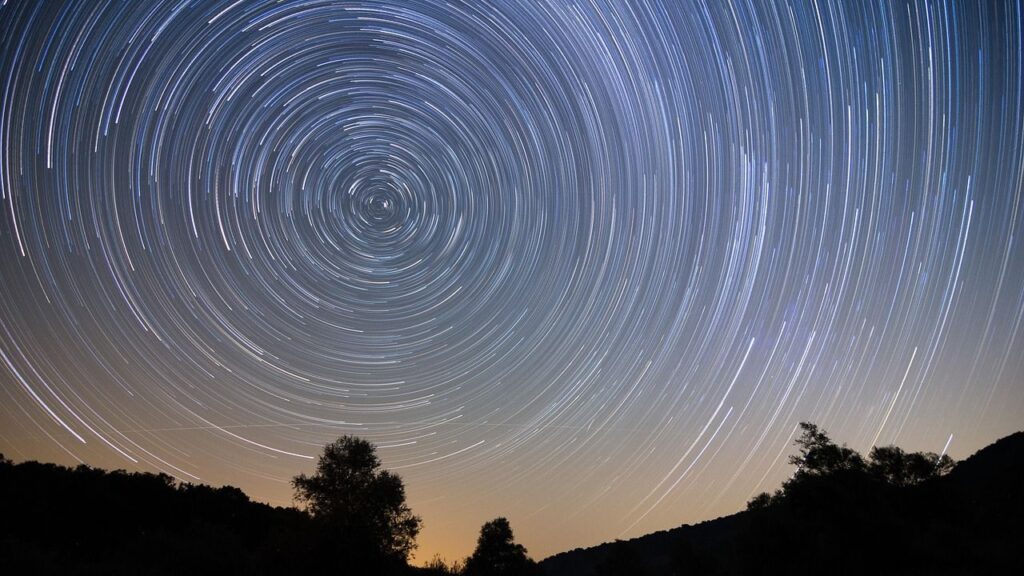
There are moments in life when something shifts your perspective so dramatically that you almost feel dizzy. Standing at the edge of the Grand Canyon is one of them. Looking up at a sky full of stars on a clear night is another. Grasping the concept of “deep time,” however, might just be the most disorienting and thrilling perspective shift of all.
Most of us walk through life thinking in terms of minutes, years, maybe a century at most. Deep time asks you to do something almost impossibly difficult: to truly feel the weight of billions of years. What does that really mean for you, for your species, for everything you think you know? Let’s dive in.
What Deep Time Actually Means, and Why It Was Such a Revolutionary Idea
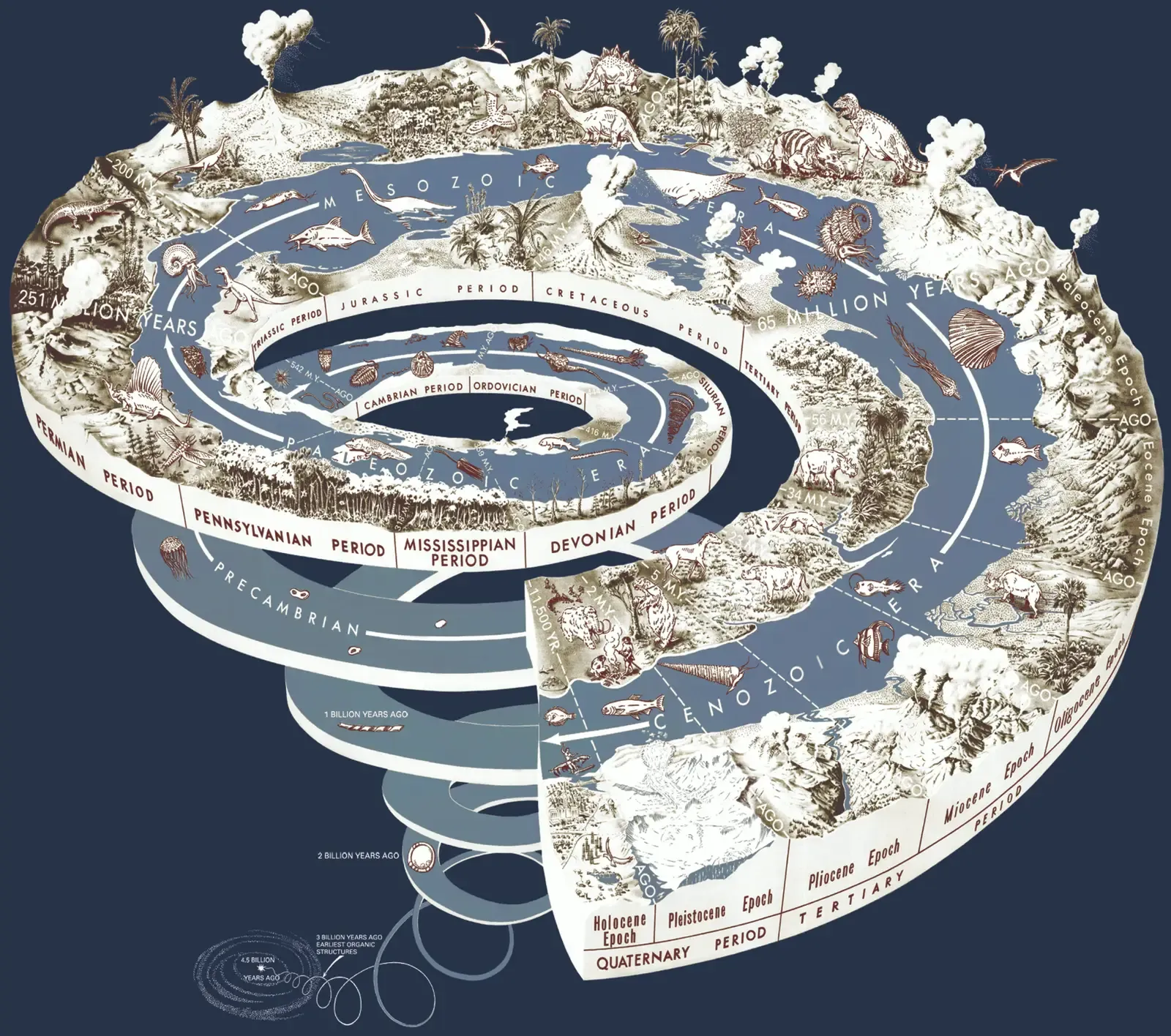
Here’s the thing – for most of human history, people had no real concept of just how old the Earth actually was. As concepts from historiography were applied to the study of nature, the field of natural history emerged, and the evidence of past changes found in rocks could not be explained within the biblical time frame of six thousand years that the church proclaimed as the age of the Earth. That was the prevailing belief for centuries. Six thousand years. It seems almost quaint now.
Deep time refers to the successive realization on the part of geologists in the eighteenth and nineteenth centuries that the age of the Earth has to be described in terms of millions, even billions, rather than thousands of years. Think about what that discovery meant. It didn’t just change science. It fundamentally reshaped the human story. First developed as a scientific idea in the 18th century and popularized in the 20th century by writers such as John McPhee, the concept of deep time has influenced fields ranging from geology and evolutionary biology to climate science, philosophy, education, and environmental ethics.
The Man Who First Looked Into the Abyss of Time

The philosophical concept of geological time was developed in the 18th century by Scottish geologist James Hutton, whose “system of the habitable Earth” was a deistic mechanism keeping the world eternally suitable for humans. Hutton was, honestly, one of the most underrated thinkers in all of scientific history. He looked at rocks the way a detective looks at a crime scene. His innovative 1785 theory, based on Plutonism, visualized an endless cyclical process of rocks forming under the sea, being uplifted and tilted, then eroded to form new strata under the sea.
The moment Hutton’s ideas clicked for those around him is both memorable and oddly poetic. As mathematician John Playfair, one of Hutton’s friends and colleagues in the Scottish Enlightenment, remarked upon seeing the strata of the angular unconformity at Siccar Point with Hutton and James Hall in June 1788, “the mind seemed to grow giddy by looking so far into the abyss of time.” That phrase still gives me chills. The 19th century saw major expansion in how scientists conceptualized Earth’s history, transforming deep time from a radical idea into a foundational principle of geology and evolutionary theory.
You Are a Blink in the Eye of Geological History
Let’s be real about what the numbers actually say about you and your species. Earth is 4.567 billion years old – just one-third of the time since the Big Bang occurred an astounding 13.8 billion years ago. Possibly more difficult to grasp is the fact that Homo sapiens first appeared about 300,000 years ago, so humans have only been on planet Earth for a tiny fraction of its existence, roughly one fifteen-thousandth of deep time.
If you need a more tangible image, try this one. Imagine compressing the time the universe has existed into the span of a single day, with the Big Bang occurring at the stroke of midnight. Humans crash the party late, at 11:59:56pm, just four seconds before the end of the day. Four seconds. Your entire civilization, every war, every invention, every generation of your family – all of it squeezed into four seconds on a cosmic clock. Human civilization in particular amounts to perhaps 0.001% of Earth’s history, a blip on the timeline.
Why Your Brain Simply Cannot Process Deep Time Naturally
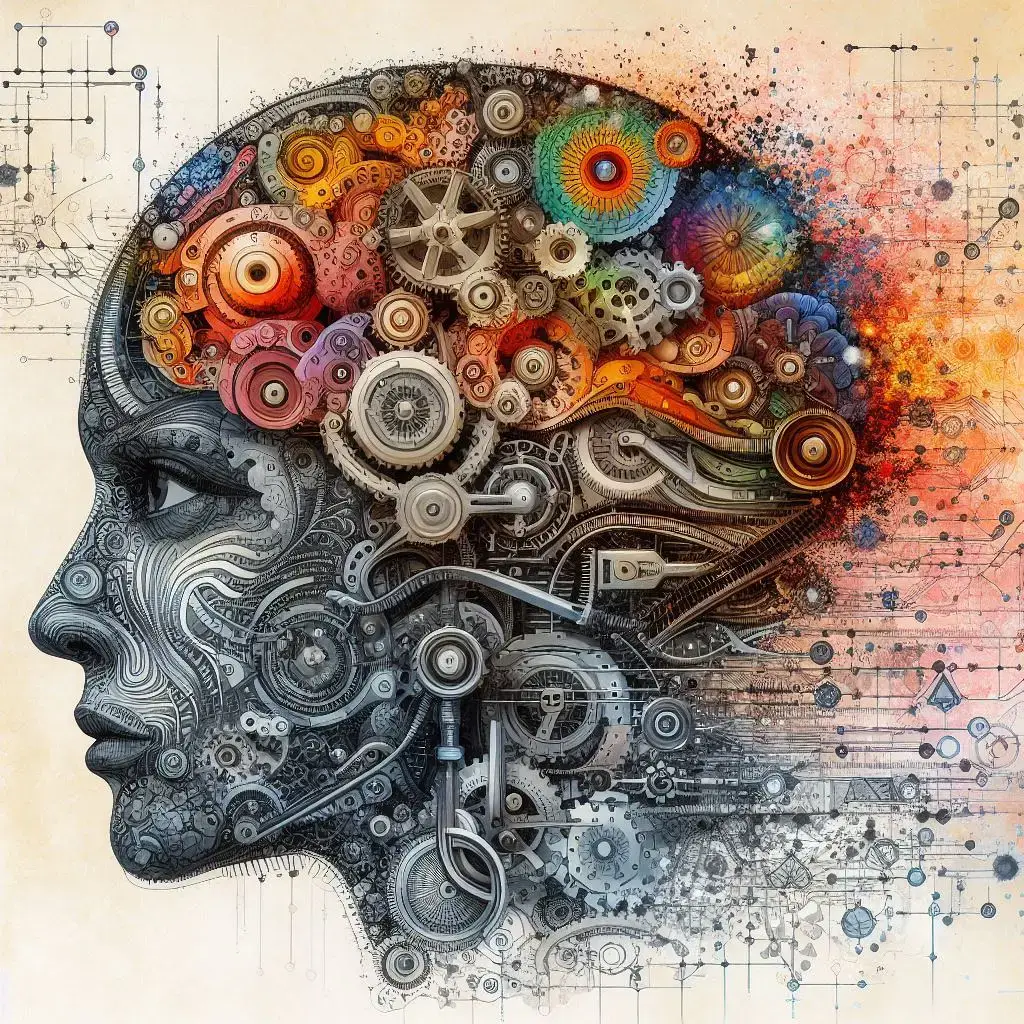
Here’s something fascinating and slightly humbling: your brain was never built for this. For humans, the immensity of time is hard to understand because our brains evolved to count small groups quickly and to relegate larger groups to the concept of “many.” As hunter-gatherers, tracking the number of berries on a bush or animals in a herd was all you needed. Nobody needed to count a billion of anything. It is even difficult for many geoscientists to really come to a true understanding of how long 4,600,000,000 years really is.
Honest admission: even when you write out the number with all those zeros, something in the mind goes quiet and a little blank. To understand the time since the Earth’s inception, you need to put it into perspective you can actually understand, which is why scientists often use analogies for the length of time rather than the absolute value. One striking analogy stretches Earth’s history across the length of your arm. If your shoulder represents the Earth’s formation and your fingertip represents today, humans emerged so far along your middle finger that lightly filing the nail on that finger would file away all of the time since humans evolved. That’s not a metaphor that’s easy to shake once you’ve heard it.
What Deep Time Reveals About Climate, Life, and Earth’s Epic Story

There is a reason scientists who spend their careers studying Earth’s deep past tend to be among the most vocal about its future. Deep time geological research helps us see the effects on the grand scale of geochemical cycles on past environments, with implications for our own environment. It shows that natural processes such as large-scale volcanism or methane release from seabed hydrates are perfectly capable of altering the environment very radically. In other words, the planet has seen dramatic climate swings before, long before humans ever arrived.
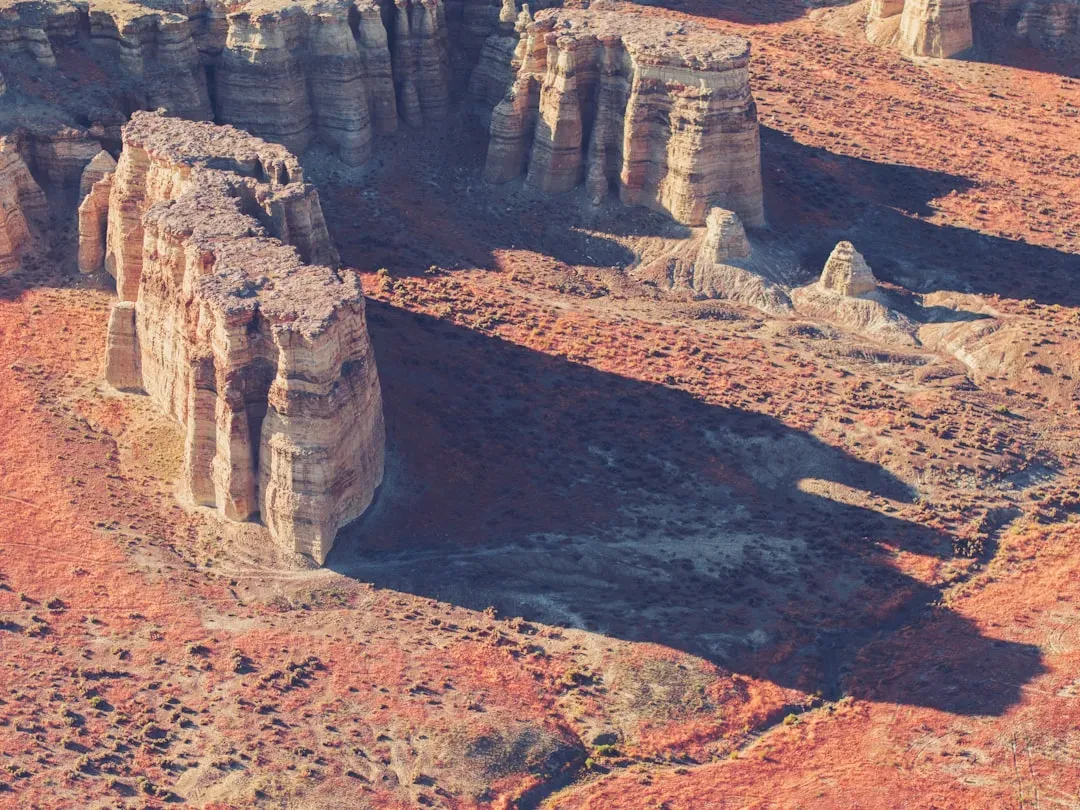
Earth’s chronology is captured in deposited rock layers called strata. Different strata contain different rocks and fossilized organisms depending on the time and conditions of their deposition. This pattern tells the story of the evolution of Earth and life. It’s like reading a diary the planet kept without ever intending to. Deep time provides the temporal framework for understanding the formation and evolution of Earth, the development of life, and the slow-moving processes that shape planetary change. Without this framework, modern geology, biology, and climate science simply would not exist in any meaningful form.
Deep Time, the Anthropocene, and What It Means for You Right Now

Today, deep time is increasingly used in science communication and public engagement, offering a lens for understanding human impact during the Anthropocene. The Anthropocene is the proposed geological epoch defined by your species’ influence on Earth’s systems. That’s a staggering thought – your generation is possibly creating a new chapter in the planet’s geological diary. The University of Vienna’s Anthropocene Project promotes “deep time literacy” as a tool for understanding our species’ geological footprint.
There’s also a deeply practical argument for why understanding deep time matters to you personally. Scholar Jakko Kemper argues that deep time offers a necessary counterbalance to the “microtime” of tech-driven economies, which prioritize short-term profits and optimization over long-term planetary care. By grounding human activity within geological time, deep time thinking challenges anthropocentric timelines and encourages more reflective approaches to environmental and technological governance. In other words, thinking in deep time might literally make you a better steward of the only planet you’ve ever called home. The Smithsonian National Museum of Natural History opened the David H. Koch Hall of Fossils, a deep time exhibit contextualizing Earth’s evolutionary past alongside present ecological challenges, encouraging visitors to think beyond human lifespans and understand the long arc of planetary transformation.
Conclusion: Standing Humbly at the Edge of Everything
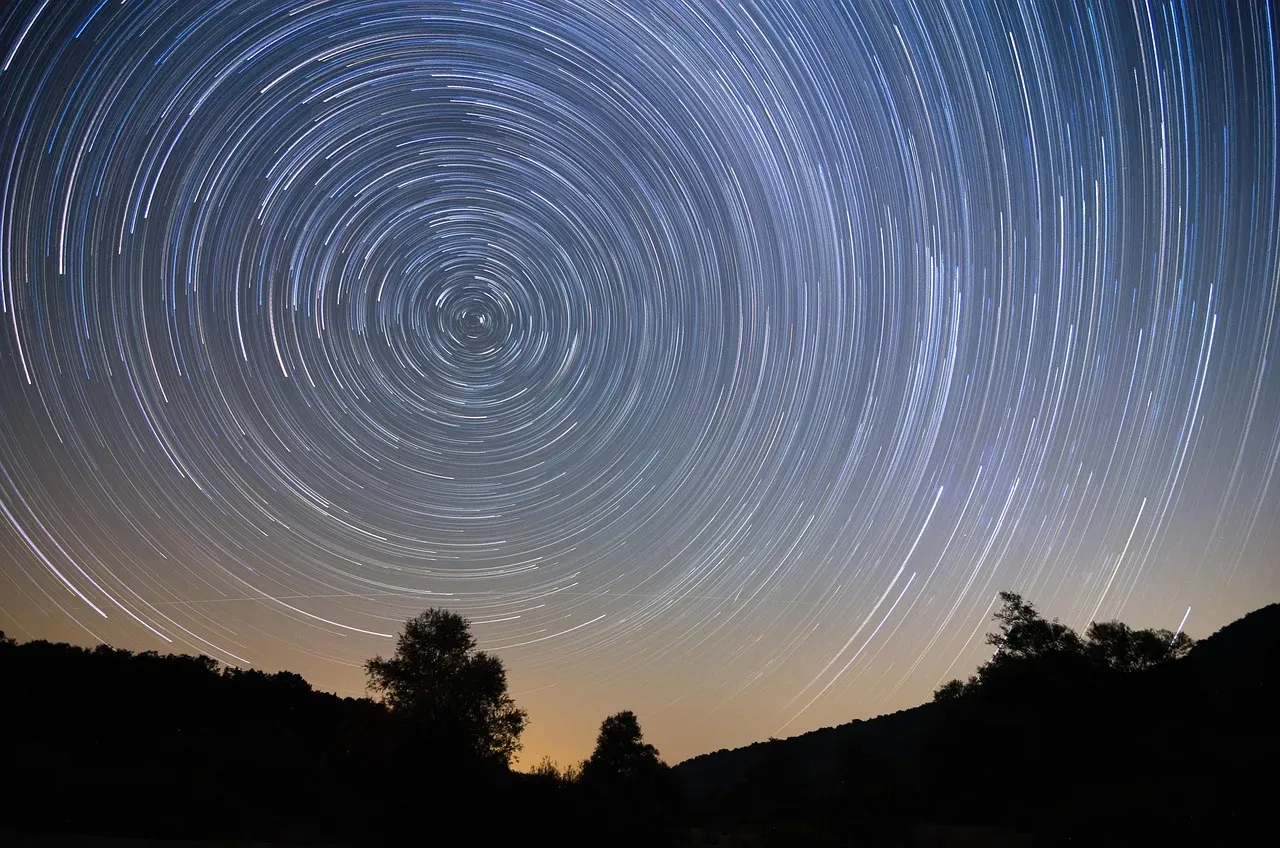
Deep time isn’t just a scientific concept. It’s a profound invitation to reconsider everything you think you know about your place in existence. Deep time lets you contextualize time far beyond that which falls within the scope of human history. The utter magnitude of deep time is at once awe-inspiring and terrifying, a truth humanity has struggled to reckon with in the last few hundred years.
There’s something almost liberating about it, though. Once you genuinely sit with the idea that mountains rose and fell before your species ever drew breath, that oceans flooded continents and retreated again in silence, that the rocks beneath your feet carry stories billions of years old, your own anxieties begin to feel appropriately sized. Small, even. Human history is embedded within much larger time frames, namely the history of the universe, the Earth, and evolution. These histories precede the existence of the human species and are most likely to continue after its disappearance.
Deep time doesn’t diminish you. Honestly, it does the opposite. It places you inside the most astonishing story ever told. So here’s a question worth sitting with: knowing that nearly all of Earth’s history unfolded without you, does that make your brief moment on this planet feel more precious, or less? Tell us in the comments.