
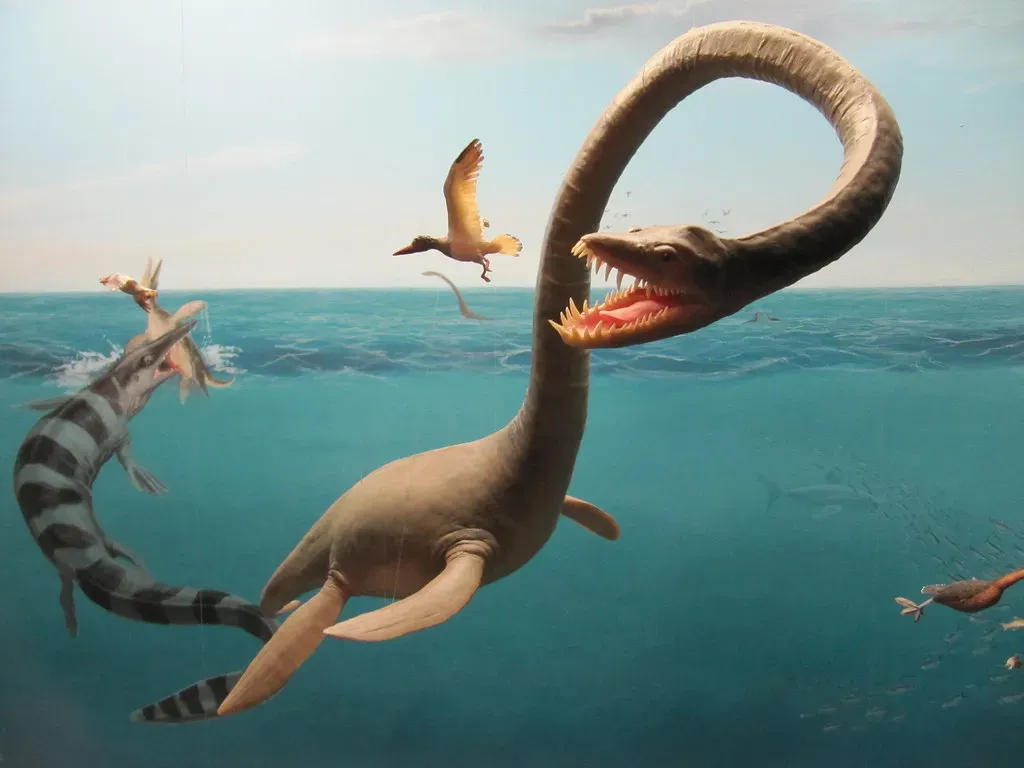
Long before humans ever dipped a toe into the ocean, something monstrous lurked beneath the surface. Something with teeth the size of your arm, jaws that could crunch through bone like a biscuit, and a body so colossal it makes today’s great white shark look like a goldfish. The ancient seas were not gentle places. They were arenas of raw, primal violence, ruled by creatures so extraordinary that they still haunt the imagination of scientists and storytellers alike.
Honestly, what most people think they know about prehistoric ocean predators barely scratches the surface. The real story is stranger, darker, and far more mind-blowing than any Hollywood blockbuster has ever dared to show. So buckle up and prepare to be genuinely stunned. Let’s dive in.
Megalodon’s Bite Could Crush a Car in Half
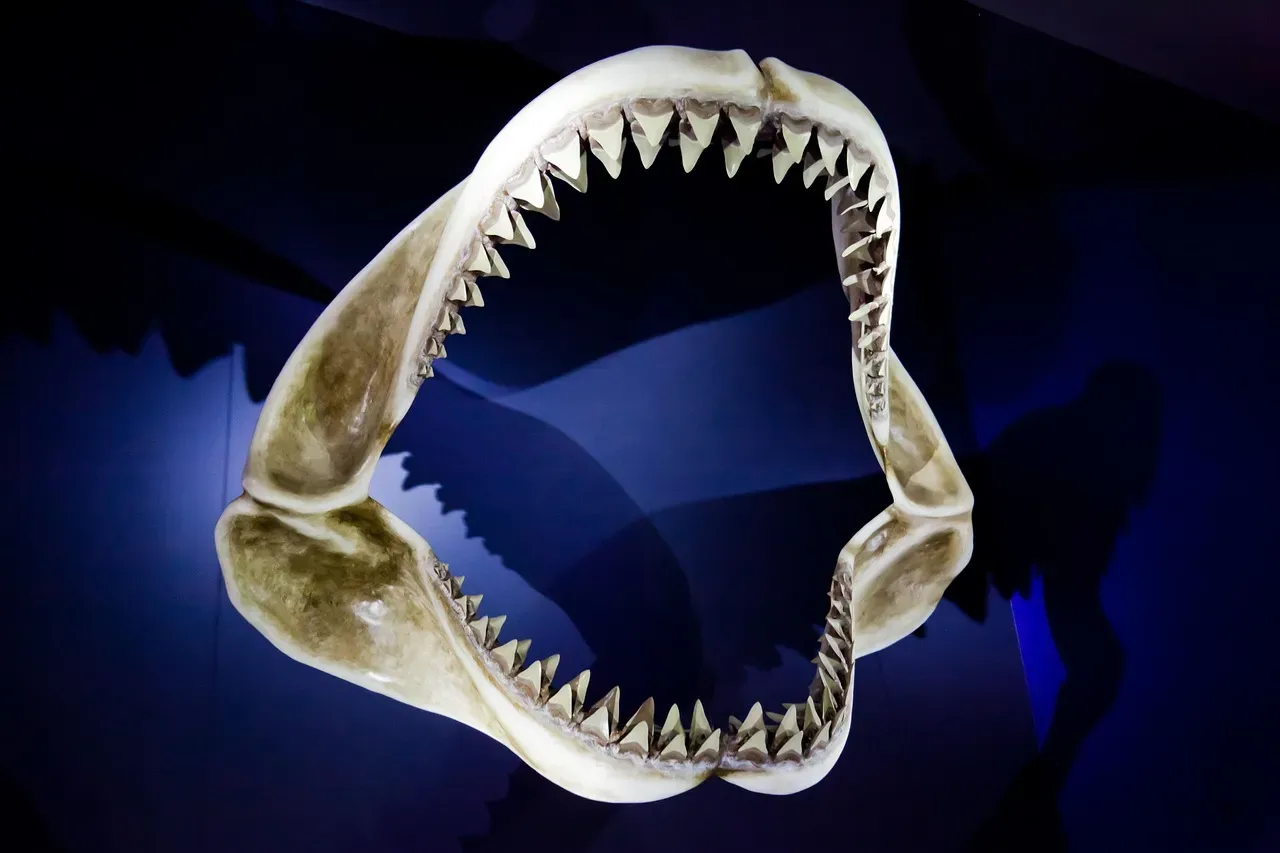
You’ve heard of Megalodon. You’ve seen the movies. But here’s the thing – nothing in popular culture comes close to capturing just how horrifyingly powerful this creature actually was. Megalodon was an extinct species of shark that lived roughly 23 to 3.6 million years ago, potentially growing as large as 60 feet in length, with a jaw nearly 11 feet wide and teeth that could grow to 7 inches long. Think about that for a second. Its teeth alone were bigger than most people’s hands.
Armed with rows of serrated teeth that could be up to 18 centimeters long, the shark was capable of crushing bone and tearing through flesh with a bite force of roughly 40,000 psi. To put that in perspective, today’s saltwater crocodile – already considered one of the most fearsome biters alive – generates only around 3,700 psi. Megalodon didn’t just eat its prey. It obliterated it. Fossil evidence confirms that Megalodon actively preyed on large whales, with teeth marks found on whale vertebrae, and its teeth were built in a way that they would rarely crack even upon striking bone.
Mosasaurus Was a Lizard, Not a Dinosaur, and It Was Enormous
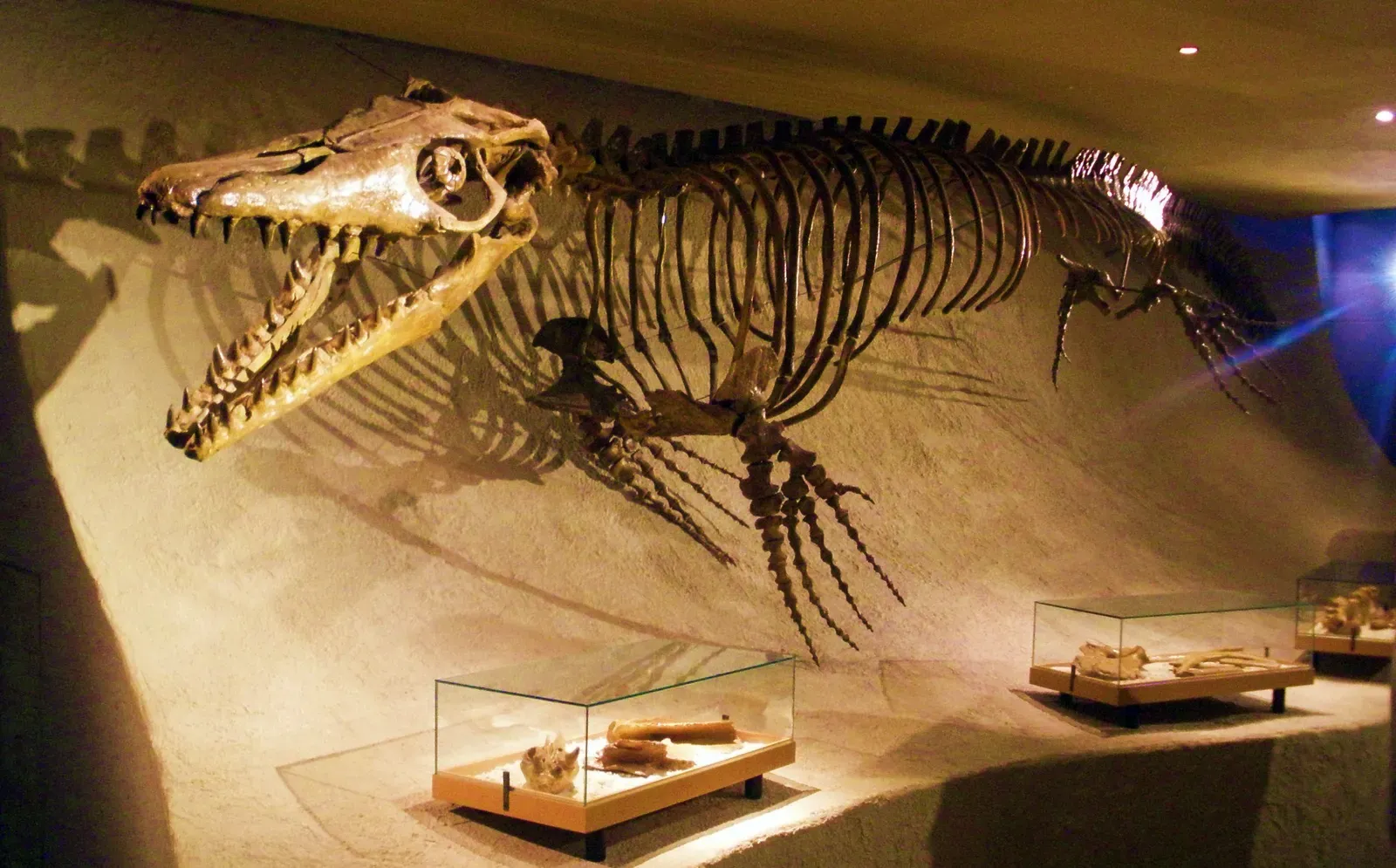
Most people assume Mosasaurus was some kind of dinosaur. It isn’t. Not even close. Mosasaurus was actually a reptile from the mosasaur family, more closely related to snakes and lizards, and often grew to around 50 feet in length. Picture a giant monitor lizard that decided the ocean wasn’t terrifying enough and evolved into something much worse. That’s basically what happened. This fearsome marine reptile was related to modern monitor lizards and reached over 50 feet in length, with double-hinged jaws lined with backward-curving teeth that made it devastatingly efficient as a predator.
What truly made Mosasaurus so formidable was its long, double-hinged jaw and sharp spiked teeth that allowed it to hold onto and tear up its prey, and this animal, which existed around 82 to 66 million years ago, generally preferred shallow waters. Yet don’t let the word “shallow” fool you – no one was safe there. It could eat pretty much whatever it chose, making meals out of sharks, birds, other mosasaurs, and fish. Mosasaurus wasn’t picky. It was simply the boss of everything around it.
Dunkleosteus Had No Teeth – Just Bone Blades That Cut Like Scissors
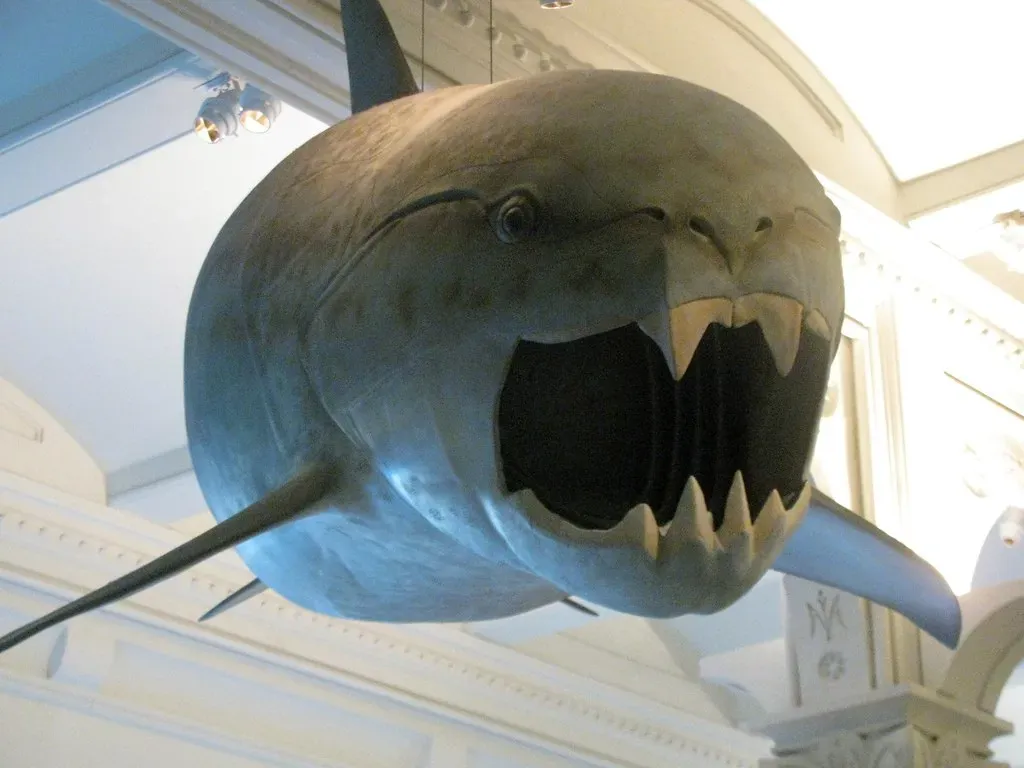
Here’s something that I think genuinely blows people’s minds: one of the most lethal ocean predators in Earth’s history had no teeth whatsoever. Dunkleosteus did not possess any teeth at all – instead, its powerful jaws were lined with teeth-like bony plate extensions that had evolved to form a deadly pair of savagely shaped shears, closing with awesome force to trap and decapitate prey. Imagine scissors made of bone, powered by a creature the size of a school bus. That’s Dunkleosteus. This extinct genus of large armored fish existed during the Late Devonian period, about 382 to 358 million years ago, and was a pelagic fish inhabiting open waters – one of the first vertebrate apex predators of any ecosystem.
Dunkleosteus could concentrate a force of up to 7,400 newtons at the tip of its mouth, placing it in the league of Tyrannosaurus rex and modern crocodiles as having the most powerful known bite, and it could open its mouth in one-fiftieth of a second – which would have caused a powerful suction that pulled prey directly into its mouth. That suction trick, by the way, is reinvented by many of the most advanced modern fish hunters today. Fossils of Dunkleosteus are frequently found alongside boluses of fish bones and semi-digested remains of other fish, indicating it may have routinely regurgitated prey bones rather than digest them. Even its digestion was extreme.
Livyatan Had the Largest Biting Teeth of Any Known Animal
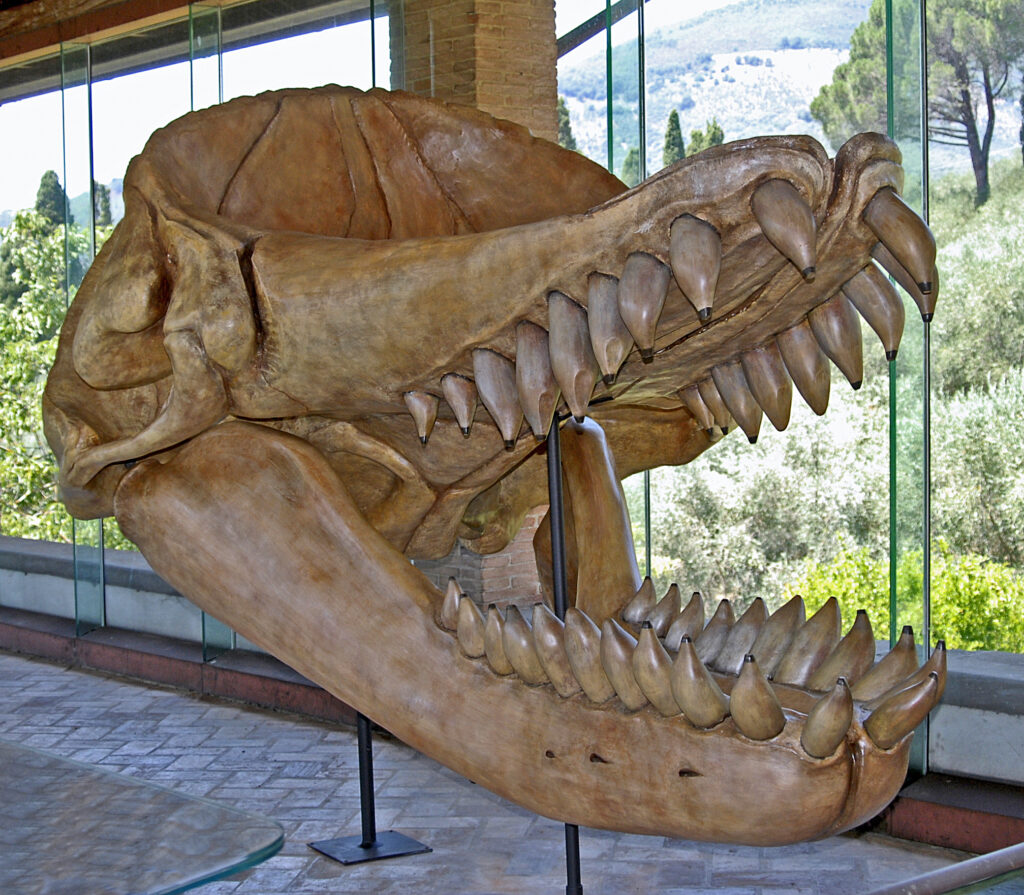
If you’ve never heard of Livyatan melvillei, you’re in for a shock. Livyatan is an extinct genus of macroraptorial sperm whale, with a genus name inspired by the biblical sea monster Leviathan, and a species name honoring Herman Melville, the author of Moby-Dick. The naming is almost poetic – a real-life sea monster named after one of literature’s most iconic fictional ones. Livyatan’s total length has been estimated to be about 44 to 57 feet, similar to that of the modern sperm whale, making it one of the largest predators known to have existed, and its teeth measured roughly 36 centimeters – the largest biting teeth of any known animal, excluding tusks.
The teeth of Livyatan are large – about 14 inches long and 4 to 5 inches in width – nearly the size of a 2-liter bottle of soda, and more than double the size of the largest known Tyrannosaurus rex teeth. Let that sink in for a moment. Its teeth were bigger than T-rex teeth. Livyatan and Megalodon were likely the apex predators of the same region and era. These two behemoths sharing the same ocean is perhaps the most terrifying ecosystem ever to exist on this planet. The spermaceti organ in Livyatan’s skull is thought to have been used in echolocation and communication, or possibly for ramming prey and other sperm whales.
Mosasaurus Wiped Out Alongside the Dinosaurs – But It Was Thriving Right Up Until the End
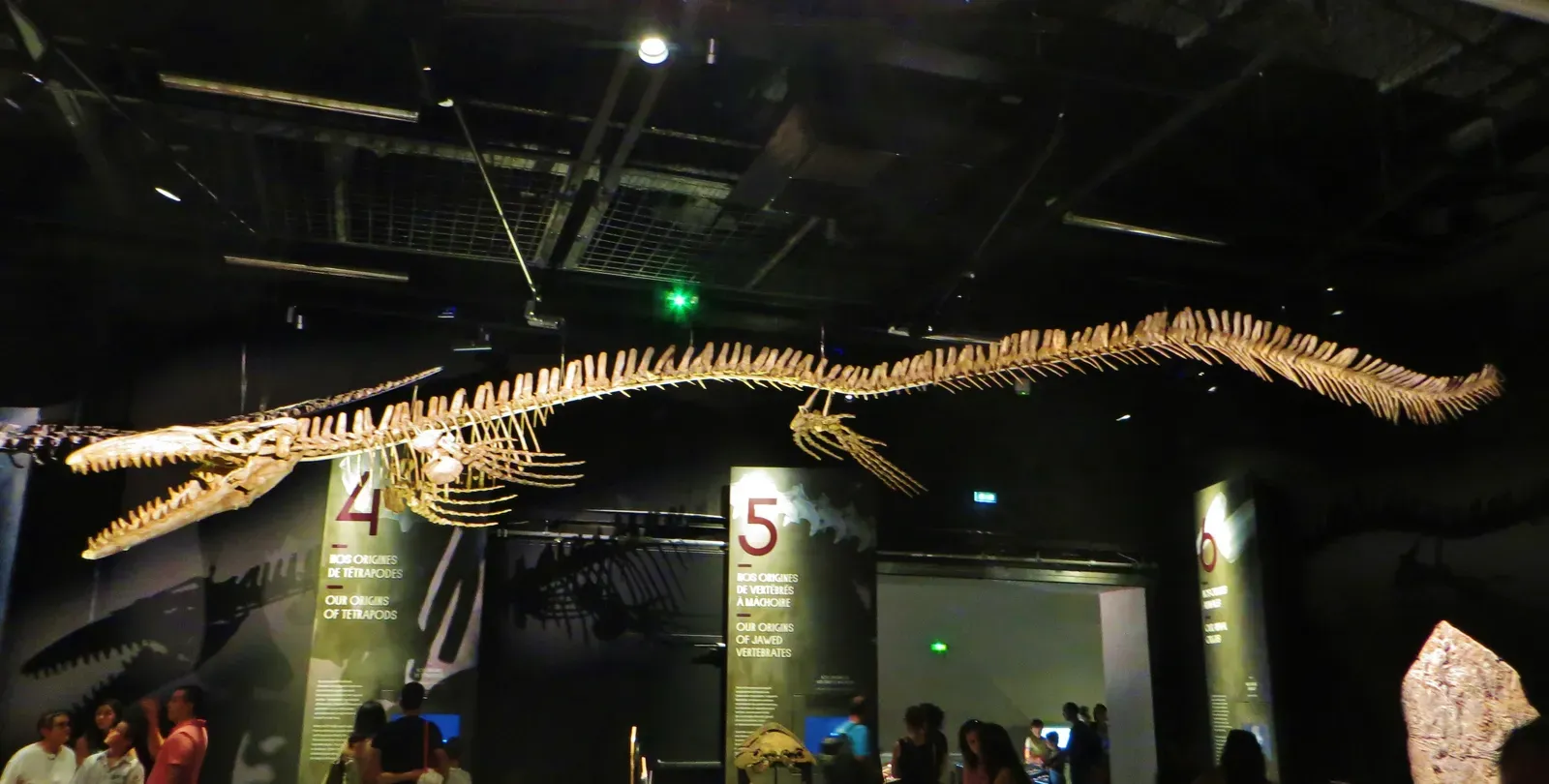
Here’s a fact that surprises most people: Mosasaurus wasn’t in decline when the asteroid hit. It was doing extremely well. By the end of the Cretaceous Period, 66 million years ago, mosasaurs were still thriving – and while some smaller species had gone extinct as temperatures dropped, larger species were still living all around the world, with rocks in Morocco from the end of the Cretaceous containing the remains of as many as 16 different mosasaur species. That’s not a dying group. That’s a dominant one.
The presence of so many large predators together at the same time suggests that the marine reptiles and the wider oceans weren’t in decline – instead, it’s likely that the mosasaurs were wiped out for the same reason the dinosaurs were: a massive asteroid striking Earth just off the coast of what is now Mexico. They were victims of catastrophic bad luck, not evolutionary failure. As the top predators, mosasaurs would have been most vulnerable to the sharp decline in their prey, and without enough food to stay alive, all mosasaurs would have died shortly after the asteroid strike. The biggest, baddest animals in the ocean brought down not by a rival – but by a rock from space.
Liopleurodon’s True Size Was Wildly Exaggerated – Yet It Was Still Terrifying
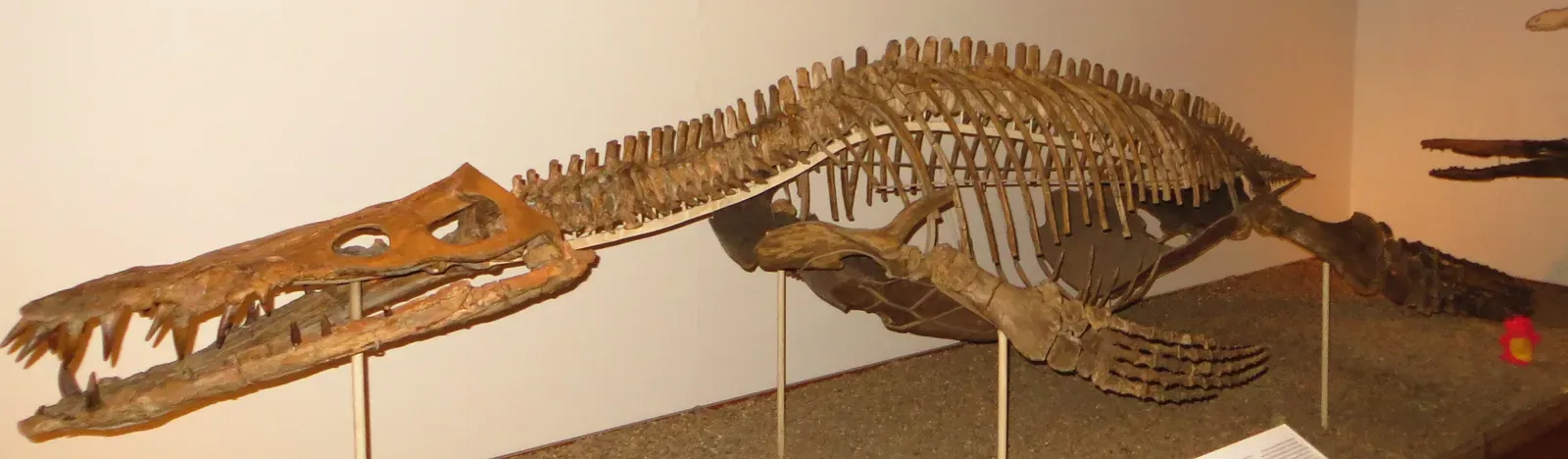
Pop culture has done Liopleurodon both a favor and a disservice. The famous BBC documentary Walking with Dinosaurs depicted it as an 82-foot giant, which got people excited – but that figure was way off. In 1999, its size was greatly exaggerated in the BBC documentary series Walking with Dinosaurs, where it was depicted as reaching 82 feet in length. However, different attributed specimens show that the animal could reach a size ranging from 13 to 26 feet long, with some researchers estimating a maximum length of approximately 33 feet. Still not small. Still absolutely nightmare-inducing.
Various studies show that Liopleurodon would have been an ambush predator, feeding on fish, cephalopods, and other marine reptiles. It hunted like a giant, finned ambush specialist, hiding in plain sight until something edible swam too close. Four strong paddle-like limbs suggest that Liopleurodon was a powerful swimmer, and a study involving a swimming robot demonstrated that although this form of propulsion is not especially efficient, it provides very good acceleration – a highly desirable trait in an ambush predator. Studies of the skull have also shown it could probably scan the water with its nostrils to ascertain the source of certain smells and use that data to locate possible prey. It smelled you before you ever saw it coming.
Kronosaurus Had a Bite Stronger Than Tyrannosaurus Rex
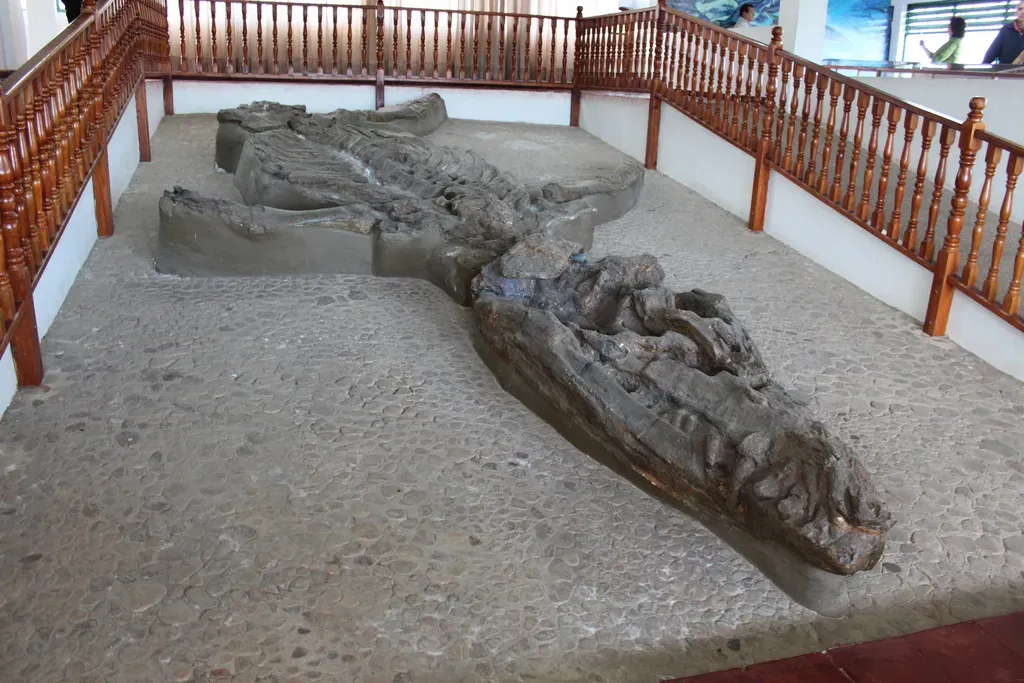
Uploaded by FunkMonk, CC BY-SA 2.0)
Kronosaurus is sometimes overlooked in the popular pantheon of prehistoric killers, but it absolutely should not be. Kronosaurus was a large marine reptile belonging to the pliosaur family, distinguished by its massive skull, short neck, and streamlined body equipped with large paddle-like flippers – anatomical features that made it a highly effective swimmer and a dominant predator in its aquatic environment. Think of it as a torpedo with a head the size of a small car. Fossil evidence shows Kronosaurus preyed on sea turtles and other plesiosaurs, with bite force estimates suggesting it reached between roughly 15,000 to 27,000 newtons of force.
Using biomechanical analyses, researchers discovered that Kronosaurus exceeded the bite force of any living animal, itself being only slightly surpassed in some estimates by Tyrannosaurus rex. Slightly surpassed by a T-rex – and that’s about the highest company you can keep. Kronosaurus would have been an apex predator of the ancient Eromanga Sea, an inland sea that once covered a large part of Australia during the Early Cretaceous. The skull of a juvenile specimen shows it would have been attacked by an adult, indicating intraspecific aggression or even potential evidence of cannibalism within the genus. Even young Kronosaurus weren’t safe from their own kind.
Megalodon and Mosasaurus Never Actually Met – They Were 50 Million Years Apart
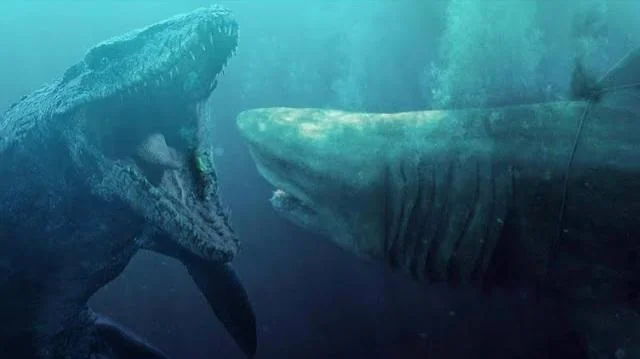
One of the most popular debates in prehistoric pop culture is Megalodon versus Mosasaurus. It’s exciting, fun, and almost completely impossible. Both were apex predators of the sea while they lived, but these two monsters would never have met, being separated by about 50 million years. They existed in completely different eras, on totally different timelines. It’s a bit like imagining a Roman soldier fighting a medieval knight – the concept is fun, but the timeline just doesn’t work. Crucially, these two predators did not coexist: Mosasaurus became extinct approximately 66 million years ago, long before Megalodon appeared in the fossil record, and while Megalodon occupied expansive open oceans and coastal areas, Mosasaurus often thrived in shallower, warmer inland seas.
Megalodon shares a lineage with today’s great white sharks, offering clues about its behavior and physiology, while Mosasaurus is more closely related to modern reptiles like monitor lizards, hinting at its adaptability and versatile hunting techniques. Two completely different branches of life, ruling two completely different oceans, millions of years apart. Understanding these creatures offers a window into two major periods of marine history, each defined by its own apex predator – and as rulers of their respective domains, they showcase the evolutionary marvels of their times, illustrating the diverse paths evolution can take to dominate the same environment. Separately, each was supreme. Together, they existed only in our imagination – and honestly, that’s probably for the best.
Conclusion
The ancient oceans were not the calm, silent depths we sometimes picture when we stare out at the sea. They were battlegrounds ruled by creatures of almost incomprehensible power – from the bone-shearing jaws of Dunkleosteus to the whale-killing teeth of Livyatan, from the ambush genius of Liopleurodon to the raw, unstoppable dominance of Megalodon. Each of these predators was the product of millions of years of ruthless evolution, perfectly shaped to destroy in its own unique and spectacular way.
What’s perhaps most humbling is that science is still uncovering new details about all of them. Every fossil discovery reshapes what we thought we knew. The ocean keeps its secrets well – and the ancient one kept even more. Next time you swim in the sea, spare a thought for what once ruled the deep. It might just make you appreciate being alive in a much tamer era. What would you have done if these creatures were still out there today?