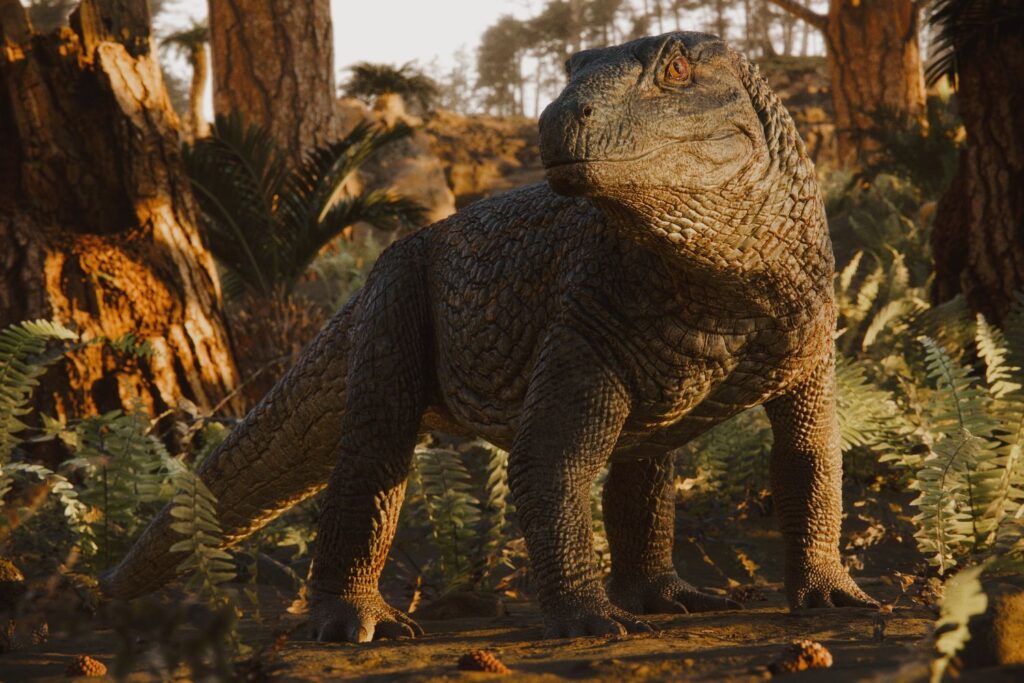
Southern Brazil – Paleontologists unearthed a striking fossil in May 2025 that unveils a fierce predator from 240 million years ago. The discovery of Tainrakuasuchus bellator, an armored reptile resembling a dinosaur but ancestral to crocodiles, highlights the vibrant ecosystems preceding the dinosaur era. This find also reinforces geological evidence of Pangea, when South America and Africa formed a connected landmass.
A Predator Emerges from the Rocks
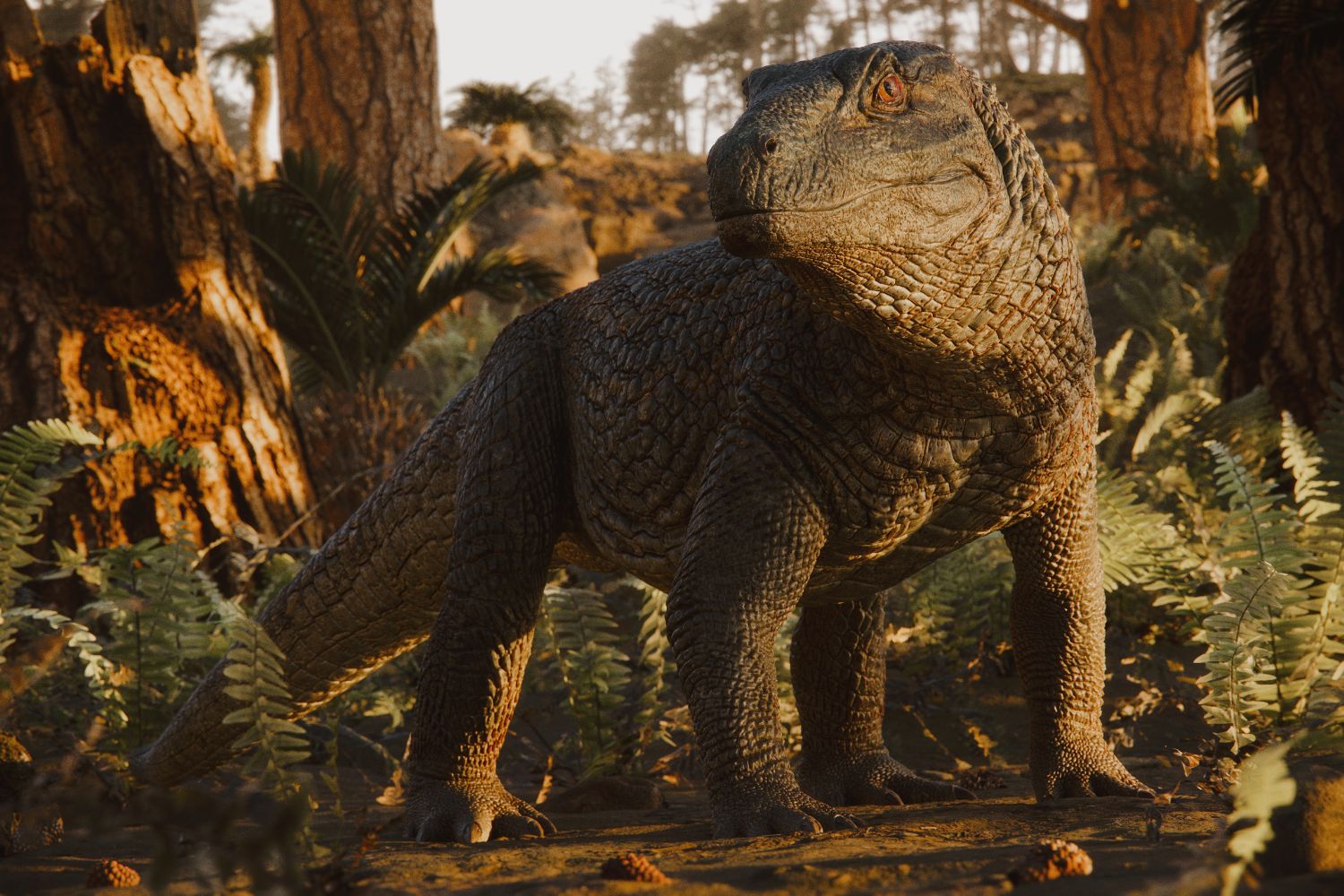
A Predator Emerges from the Rocks (Image Credits: Upload.wikimedia.org)
Researchers stumbled upon a partial skeleton during fieldwork in Dona Francisca municipality, Rio Grande do Sul state. The specimen, preserved in hard rock, required careful laboratory preparation to reveal its secrets. Once exposed, it displayed features of a previously unknown species within the pseudosuchian group.
Dr. Rodrigo Temp Müller of the Universidade Federal de Santa Maria led the team. He described the moment of revelation: “Once the anatomical details were revealed, we were delighted and really excited to reveal that the specimen represented a species previously unknown to science.” The fossils included parts of the lower jaw, vertebrae, and pelvic girdle, offering crucial clues to its identity.
Formidable Features of Tainrakuasuchus
This reptile measured about 2.4 meters long and weighed around 60 kilograms. Its back bore osteoderms, bony armor plates akin to those on modern crocodiles. A slender mandible housed ziphodont teeth – sharp, serrated, and recurved – ideal for seizing prey.
Elongated cervical vertebrae suggested a long, flexible neck for agile strikes. The pelvic structure clearly set it apart from dinosaurs, with distinct hip and femur joints. Though limbs remained unpreserved, evidence pointed to quadrupedal locomotion like its relatives.
- Armor: Osteoderms along the back for protection.
- Teeth: Ziphodont dentition for gripping and tearing.
- Neck: Relatively long for precise hunting movements.
- Jaw: Slender profile enabling speed over power.
- Size: Mid-sized predator amid larger contemporaries.
Bridges Across Pangea
Tainrakuasuchus bellator closely resembled Mandasuchus tanyauchen, a species unearthed in Tanzania decades earlier. This similarity underscored faunal exchanges during the Middle Triassic, when Pangea united the continents. Organisms roamed freely across what oceans now divide.
Dr. Müller noted, “Tainrakuasuchus bellator’s discovery is further evidence of the ancient connection between Brazil and Africa during the Triassic period – when the world’s continents were united into a single supercontinent, Pangea.” Such links revealed shared evolutionary paths in southern Gondwana regions.
Thriving in a Pre-Dinosaur World
The creature inhabited an arid desert fringe, the same landscape where early dinosaurs first appeared. Southern Brazil hosted diverse reptile communities, with pseudosuchians filling varied niches. Tainrakuasuchus hunted actively, though giants up to seven meters prowled nearby.
Pseudosuchians dominated land vertebrates alongside early ornithischians. Their adaptability showcased ecosystem complexity before dinosaurs rose to prominence. This “extremely rare” fossil enriched understanding of those transitional times.
| Feature | Tainrakuasuchus bellator | Modern Crocodile |
|---|---|---|
| Armor | Osteoderms on back | Osteoderms on back |
| Teeth | Ziphodont, recurved | Conical, gripping |
| Locomotion | Quadrupedal | Semiaquatic |
Key Takeaways
- Tainrakuasuchus bellator filled predatory niches 240 million years ago, pre-dating dinosaur dominance.
- Its anatomy links pseudosuchians to modern crocodilians while differing from dinosaurs.
- The Brazil-Tanzania fossil kinship affirms Pangea’s role in Triassic dispersal.
This armored warrior reminds us how interconnected Earth’s ancient history remains. As new fossils emerge, they rewrite narratives of life’s grand progression. What do you think about this pre-dinosaur predator? Tell us in the comments.