
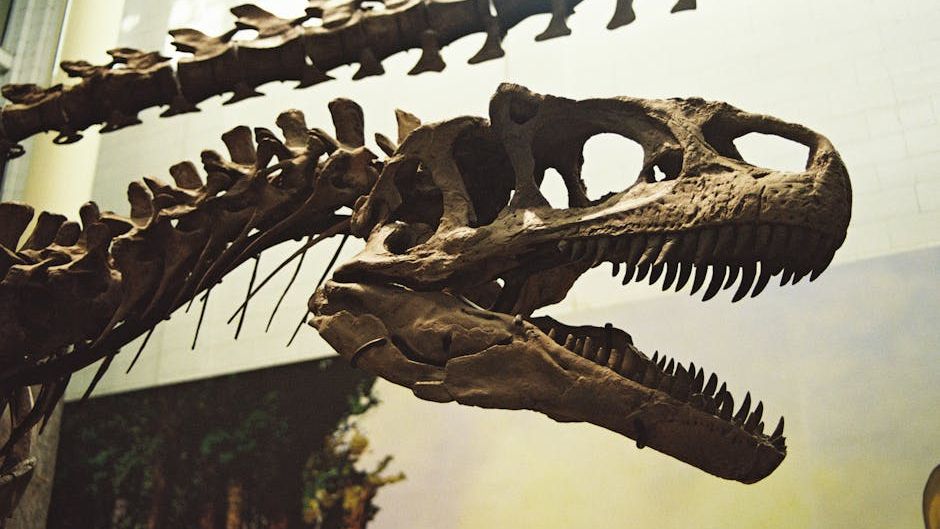
Imagine holding a piece of stone in your hand, knowing that it carries the story of a creature that roamed the Earth over a hundred million years ago. Fossils are more than just old bones locked in rock. They are time capsules, each one capable of rewriting entire chapters of natural history. Some of these finds have been so groundbreaking that they completely overturned what scientists thought they knew about dinosaurs, their families, and the complex world they inhabited.
From Montana nesting grounds to German limestone quarries, from the Mongolian desert to the badlands of Montana, the fossils on this list didn’t just add a new name to a textbook. They shook the very foundations of paleontology. You’re about to discover how a single ancient bone, claw, or nest can change absolutely everything. Let’s dive in.
1. Deinonychus: The Fossil That Sparked a Scientific Revolution
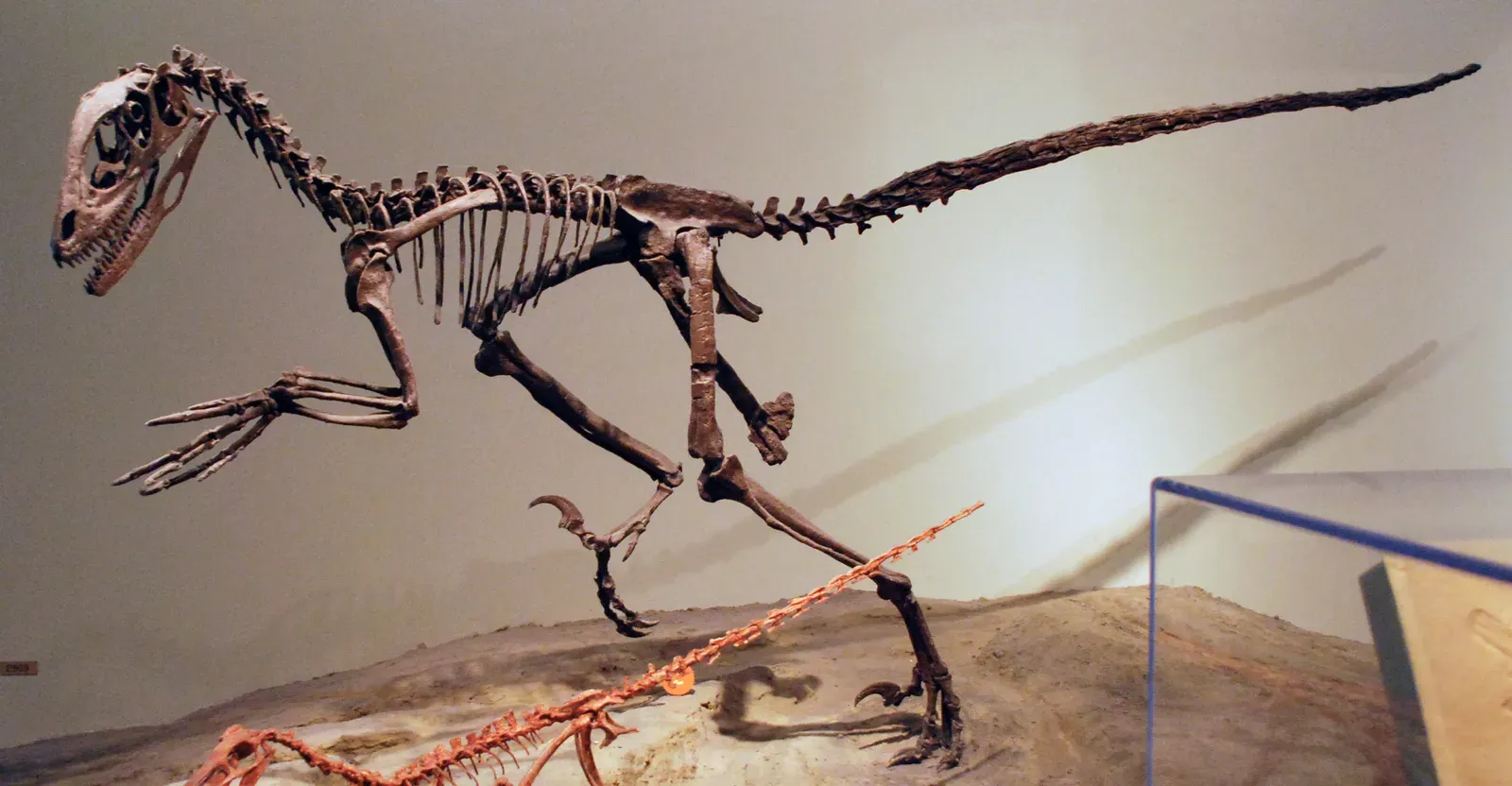
Most people picture dinosaurs as slow, lumbering, cold-blooded creatures. That image, honestly, was the dominant view for a very long time. Then came Deinonychus, and nothing was ever quite the same again. Beginning with the discovery of Deinonychus in 1964, paleontologist John Ostrom challenged the widespread belief that dinosaurs were slow-moving lizards.
Ostrom unearthed the remains of a relatively small carnivore that had hollow bones, a sleek, horizontal posture, and a pair of large, sickle-shaped claws on its feet. What he found wasn’t a sluggish reptile dragging its tail through prehistoric mud. It was something altogether different, athletic and terrifyingly alive.
Paleontologist John Ostrom’s study of Deinonychus in the late 1960s revolutionized the way scientists thought about dinosaurs, leading to the “dinosaur renaissance” and igniting the debate on whether dinosaurs were warm-blooded or cold-blooded. Think of it like the moment scientists realized the Earth wasn’t flat. The whole framework had to shift.
Discovering Deinonychus also resurrected the hypothesis that birds descended from dinosaurs. Ostrom’s work on Deinonychus even influenced the “Velociraptor” portrayal in the Jurassic Park novel. So the next time you watch a raptor scene in a movie, you can thank this extraordinary fossil from Montana for putting that idea in motion.
2. Archaeopteryx: The Missing Link Between Feathers and Scales
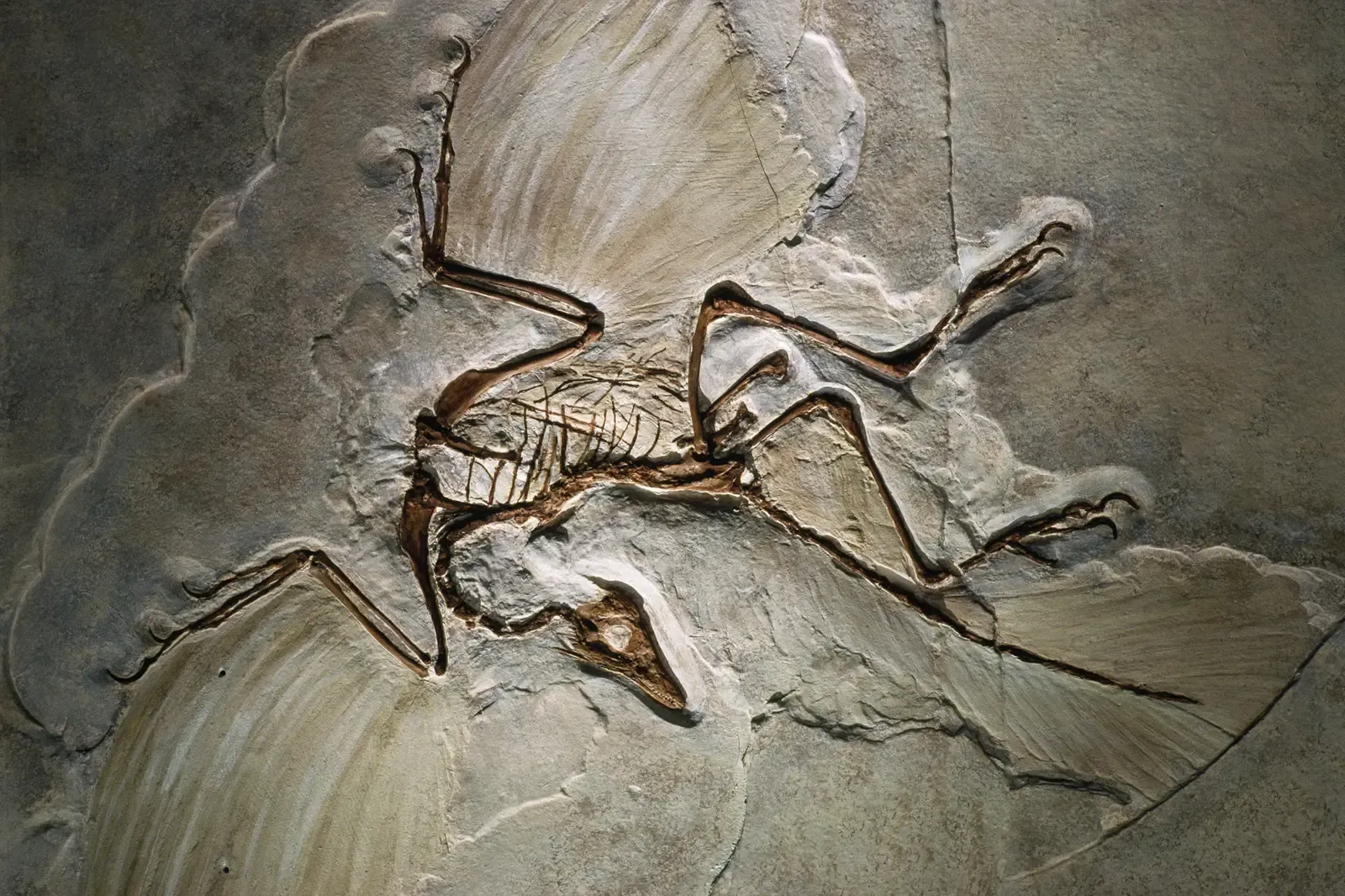
Here’s the thing about Archaeopteryx. It arrived at exactly the right moment in history to cause maximum scientific chaos. When the small bird-like Archaeopteryx fossil was discovered in the limestone deposits of Solnhofen, Germany in 1860, it made waves not only in the world of palaeontology, but also evolutionary science.
This 150-million-year-old fossil from the Late Jurassic period exhibits an extraordinary combination of reptilian and avian features: teeth, a bony tail, and three claws on each wing like a dinosaur, yet also possessing feathers and a wishbone like modern birds. Picture a creature caught mid-transformation, frozen in stone between two completely different worlds. That’s Archaeopteryx.
Archaeopteryx provided the first compelling evidence for Darwin’s theory of evolution by showing a clear transitional form between major animal groups. It demonstrated that birds likely evolved from small, feathered dinosaurs, rather than from a separate evolutionary lineage.
Today, most paleontologists consider Archaeopteryx an early bird, though not necessarily a direct ancestor of modern birds, but its significance in transforming our understanding of evolution cannot be overstated. It turned what was once a wild theory into something scientists could actually point to and say, “Look, here it is.”
3. Maiasaura: Proof That Dinosaurs Were Devoted Parents
Before Maiasaura, the popular assumption was pretty simple. Dinosaurs laid their eggs, walked away, and never looked back. Honestly, it sounds reasonable enough for a reptile. Then a discovery in Montana in 1978 completely shattered that assumption.
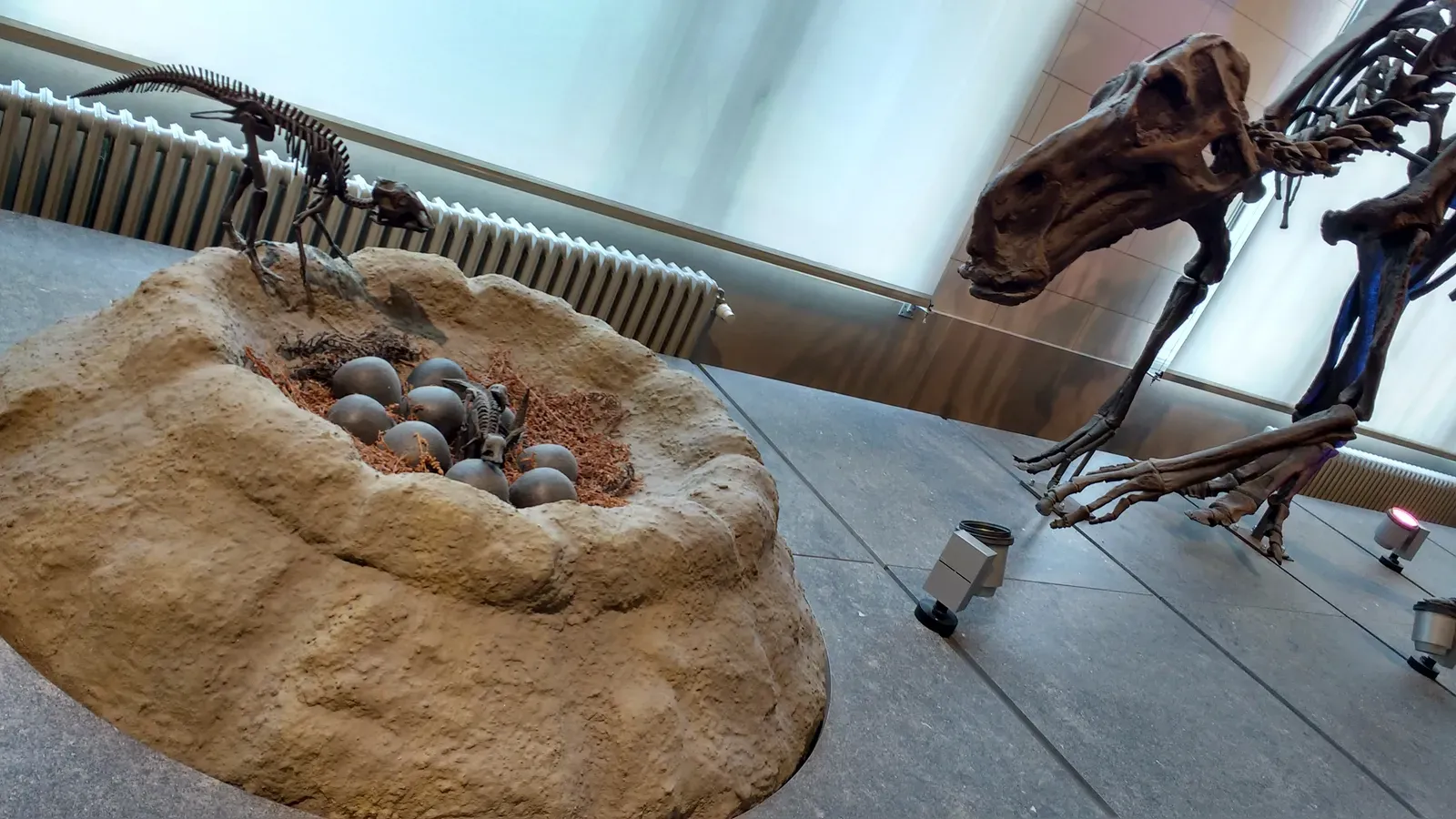
The Maiasaura fossils were interestingly found in a large nesting colony in Montana in 1978, with eggs, embryos and young animals all discovered inside nests. This provided evidence for the first time that some giant dinosaurs raised and fed their young in the nest, and would inform their name, Maiasaura, which comes from the Greek goddess Maia, the “Good Mother.”
Fossilized nests showed hatchlings that were so undeveloped they could not even walk, so the parents must have brought food for them to the nest. This became a landmark discovery that changed the course of dinosaur behavioral thinking, and hence, the Maiasaura got its nickname, “good mother lizard.”
Maiasaura lived in herds and raised its young in nesting colonies. The nests in the colonies were packed closely together, like those of modern seabirds, with the gap between the nests being around 7 metres; less than the length of the adult animal. The nests were made of earth and contained 30 to 40 eggs laid in a circular or spiral pattern. The image of a solitary, emotionless dinosaur suddenly gave way to something far more relatable. Something almost tender.
4. The Jehol Biota Feathered Dinosaurs: China Rewrites the Rulebook
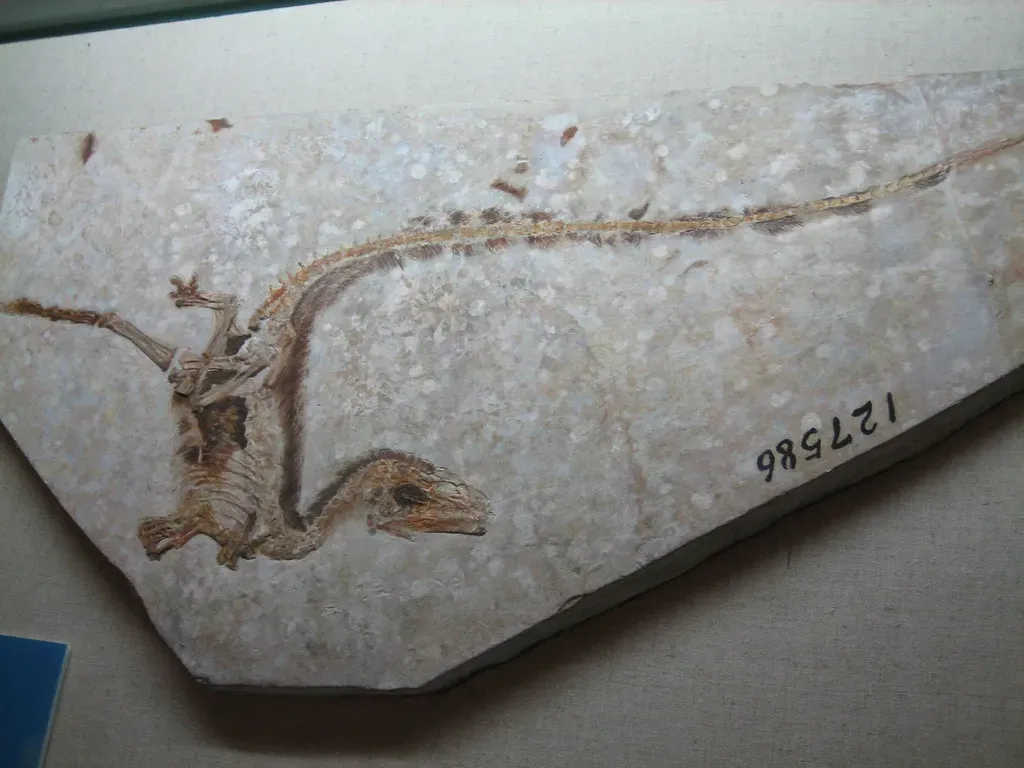
I know it sounds crazy, but for a long time, the idea of a feathered dinosaur was considered fringe science. Then China happened. Starting in the 1990s, an extraordinary wave of fossil discoveries from Liaoning Province changed the global conversation almost overnight.
Beginning in the 1990s, this fossil treasure trove yielded numerous feathered dinosaur specimens that fundamentally transformed our understanding of dinosaur appearance, behavior, and their evolutionary relationship with birds. Species like Sinosauropteryx, the first non-avian dinosaur discovered with preserved feathers, Microraptor with its four wings, and Yutyrannus, a 9-meter-long tyrannosauroid with primitive feathering, provided indisputable evidence that many dinosaurs were feathered.
The Jehol discoveries challenged the traditional image of dinosaurs as scaly, reptilian creatures and forced scientists to reimagine what these animals looked like in life. More importantly, they provided overwhelming evidence for the dinosaurian origin of birds by documenting the progressive evolution of feathers and flight-related adaptations across different dinosaur lineages.
Paleontologists have known that many non-avian dinosaurs had plumage since the mid-1990s, but the past decade has seen the expansion of fuzziness to even more branches of the dinosaur family tree. Dinosaurs that were previously envisioned as scaly, like Ornithomimus, have been found with evidence of feathers. The discovery reframed an entire family tree. Not just one or two species but whole branches of the dinosaur world were now understood to have been feathered, fuzzy, and far more bird-like than anyone had dared to imagine.
5. Sue the T. rex: A Monster That Told Us About Dinosaur Biology
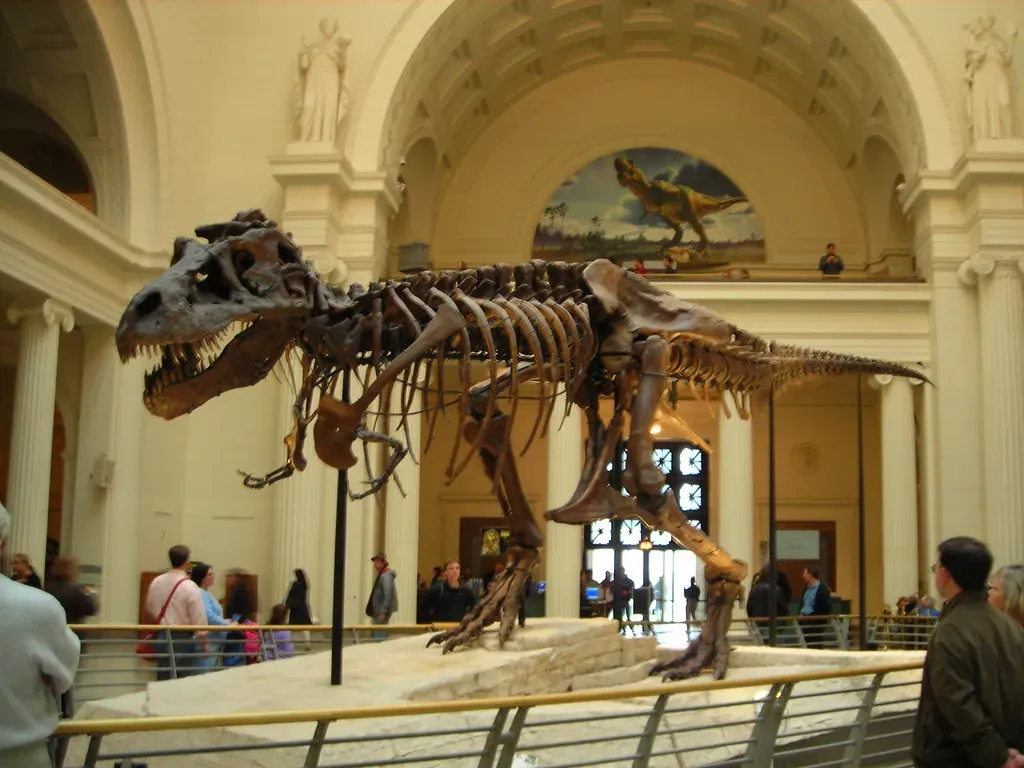
You probably know Sue by name. The most famous T. rex skeleton in the world, currently residing in Chicago’s Field Museum of Natural History, is so complete that scientists essentially had a front-row seat to the life of the most iconic predator that ever lived.
In 1990, fossil hunter Sue Hendrickson discovered one of the most complete and well-preserved skeletons of Tyrannosaurus rex ever found. Nicknamed Sue, this specimen provided an unprecedented opportunity to study the anatomy and biology of this iconic predator. Before Sue, much of what was known about Tyrannosaurus rex came from incomplete remains.
Sue’s skeleton allowed scientists to analyze growth patterns, bone injuries, and biomechanics in detail. Studies of Sue and similar specimens reshaped ideas about dinosaur physiology. Evidence increasingly suggested that many theropod dinosaurs were more active and possibly had higher metabolic rates than once believed. The image of sluggish, tail-dragging reptiles gave way to dynamic, agile animals.
Fossils like Sue also revealed signs of disease and healed injuries, hinting at lives marked by struggle and survival. A T. rex with healed wounds is a T. rex that faced danger, recovered, and kept going. That detail alone feels surprisingly moving. It makes the ancient feel oddly human.
6. The Sleeping Nodosaur: A 112-Million-Year-Old Snapshot
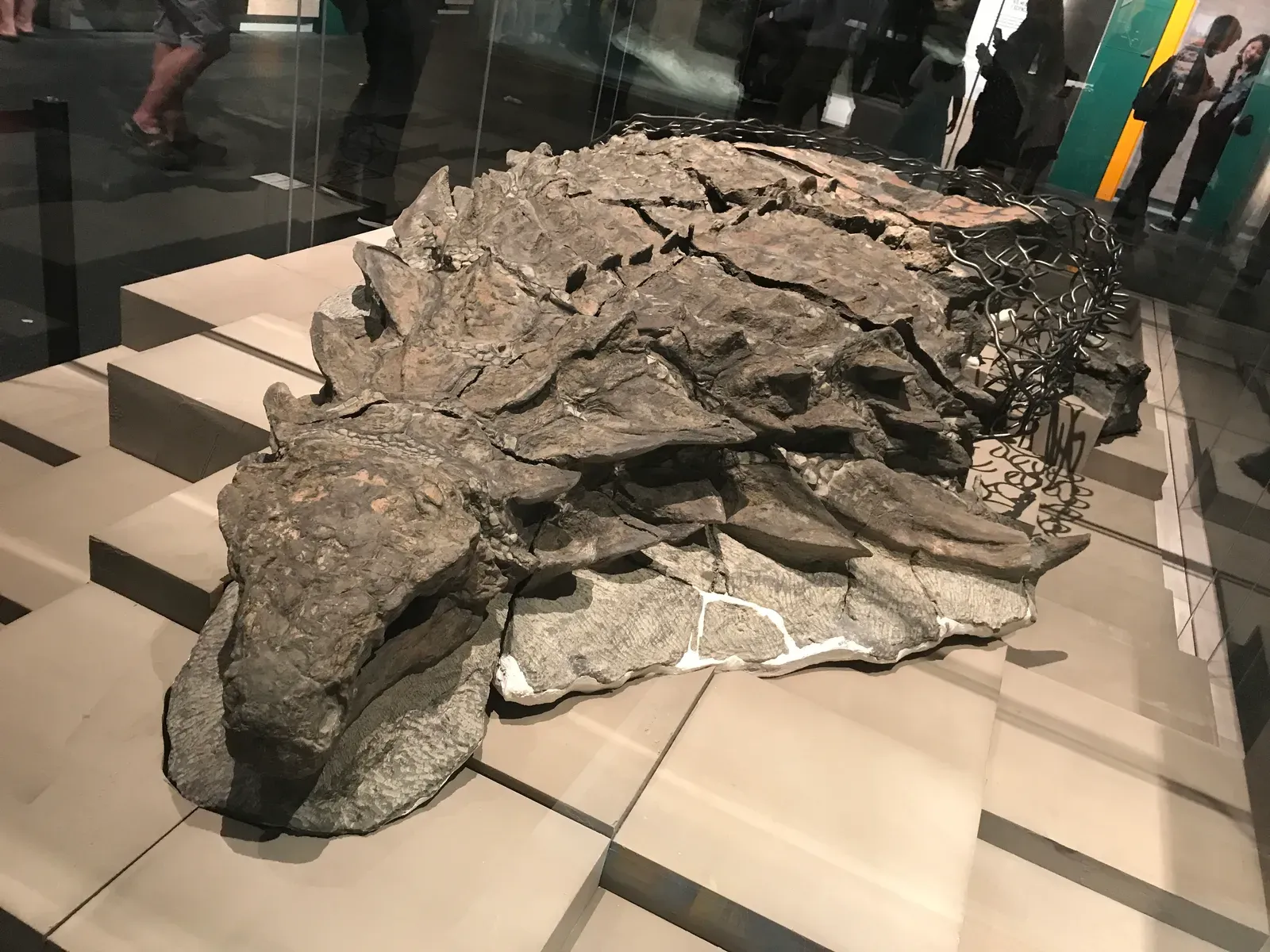
Most fossils look like bones. Rock-hard, fragmented, requiring enormous imagination to picture the living animal. The Nodosaur discovered in 2011 in Canada is something else entirely. It’s a fossil that genuinely stops people in their tracks.
In 2011, one of the most incredible dinosaur discoveries was unearthed: the ‘Sleeping Nodosaur.’ Though 112 million years old, its impressive preservation gives the appearance that it is merely sleeping, offering one of the most realistic images of a dinosaur ever found. Also known as the ‘Sleeping Dragon,’ the armoured dinosaur’s unique spiky exterior became fossilised in this three-dimensional manner after its body fell face-up onto the prehistoric seabed after its death.
This fossil was accidentally discovered by miners in Canada. It is one of the best preserved dinosaurs ever discovered, with much of the tissue in its body fossilized, rather than decomposed. Think about that for a moment. Soft tissue from the Cretaceous period, preserved well enough that you can see the texture of the animal’s skin. It’s the kind of thing that makes paleontologists lose sleep with excitement.
The Nodosaur belongs to the ankylosaur family, and its extraordinary preservation revealed incredibly fine details about the armor plating, body shape, and even skin pigmentation of this dinosaur group. It showed scientists that ankylosaurs were even more heavily armored and intricate in their defenses than skeletal remains alone could ever suggest. A skin-deep understanding, quite literally, of an armored dinosaur family.
7. Megalosaurus: The Fossil That Started Everything
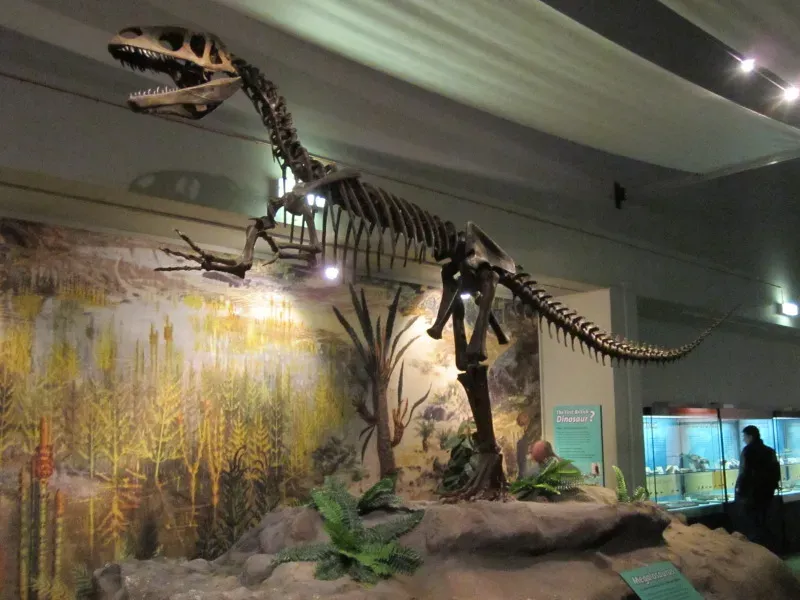
Every great story has a starting point. For the science of dinosaurs, that starting point is a partial jawbone from a quarry in Oxfordshire, England. Megalosaurus isn’t the most glamorous fossil on this list. Still, without it, none of the others would carry the same meaning.
On 20 February 1824, during a meeting of the Geological Society of London, palaeontologist William Buckland formally introduced Megalosaurus. Megalosaurus was the first dinosaur to be described by scientists. Its bones were previously thought to be those of an elephant. That alone tells you how far our understanding has come in the centuries since.
The word dinosaur didn’t come into existence until 20 years later, coined by anatomist Richard Owen, founder of the Natural History Museum in London, based on shared characteristics he identified in his studies of Megalosaurus and two other dinosaurs, Iguanodon and Hylaeosaurus, which were first described in 1825 and 1833, respectively.
The discovery of new fossils and the development of new techniques to study them have enabled scientists to delve into the fascinating lives of these ancient reptiles like never before. Some of these discoveries have been so significant that they drastically changed how we look at dinosaurs. Megalosaurus was the door. Everything else walked through it. Without this first formal recognition, the entire science of paleontology as we know it today simply wouldn’t exist.
Conclusion
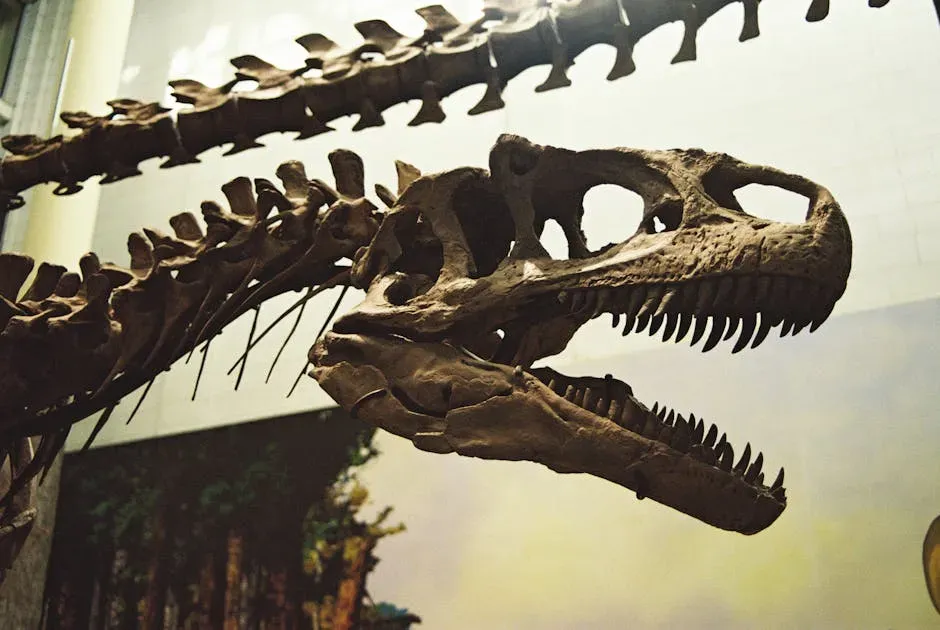
Each fossil on this list did something remarkable. It forced smart, careful scientists to look at their assumptions and say, “We got that wrong.” From the “terrible claw” of Deinonychus to the sleeping serenity of the Nodosaur, from Maiasaura’s motherly devotion to the feathered chaos of the Jehol Biota, these discoveries didn’t just add data. They rewired entire fields of study.
What makes it even more extraordinary is that scientists estimate that most dinosaur species remain undiscovered, so it’s likely that our ideas about them will only continue to change. The story of dinosaur families is still very much being written, one extraordinary fossil at a time.
The next world-changing discovery could be sitting in a canyon wall right now, waiting for a sharp pair of eyes and a curious mind. Which of these seven fossils surprised you the most? Let us know in the comments.