
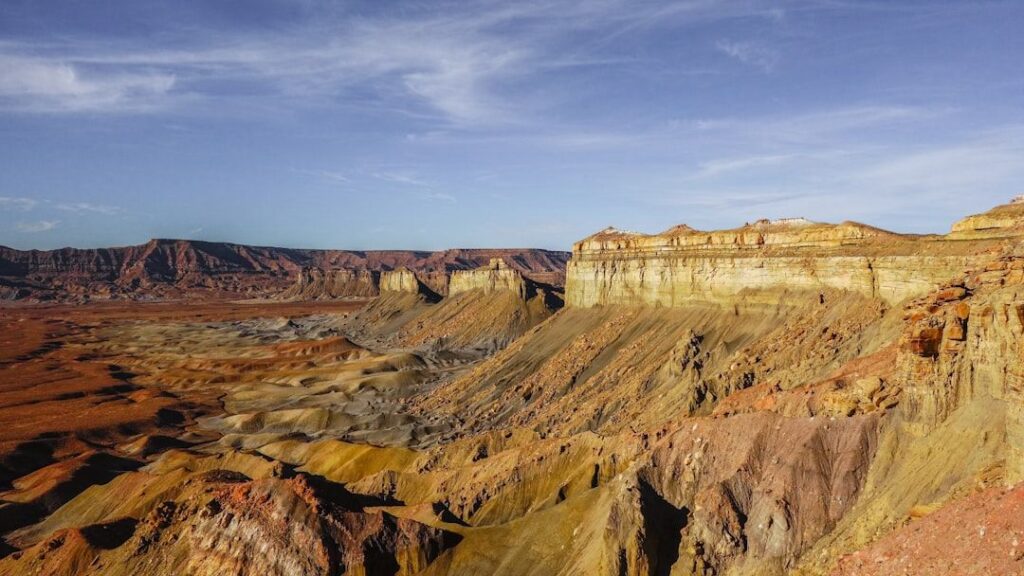
Imagine standing on a sun-scorched ridge in southern Utah, the wind cutting across your face, when you glance down and notice something poking out of a crumbling cliff face – a bone. Not just any bone, but one that hasn’t seen daylight in over 75 million years. That’s not a scene from a movie. That’s a Tuesday morning for scientists working inside one of the most astonishing fossil sites on the planet.
The Grand Staircase-Escalante National Monument in Utah is a place that tends to rewrite the textbooks every few years. Sprawling across nearly a million acres of remote, dramatic landscape, it holds secrets that the scientific world is still scrambling to uncover. If you’ve never heard much about it, you’re about to find out why researchers consider it one of the most important patches of earth in all of paleontology. Let’s dive in.
A Landscape That Was Once a Prehistoric Jungle
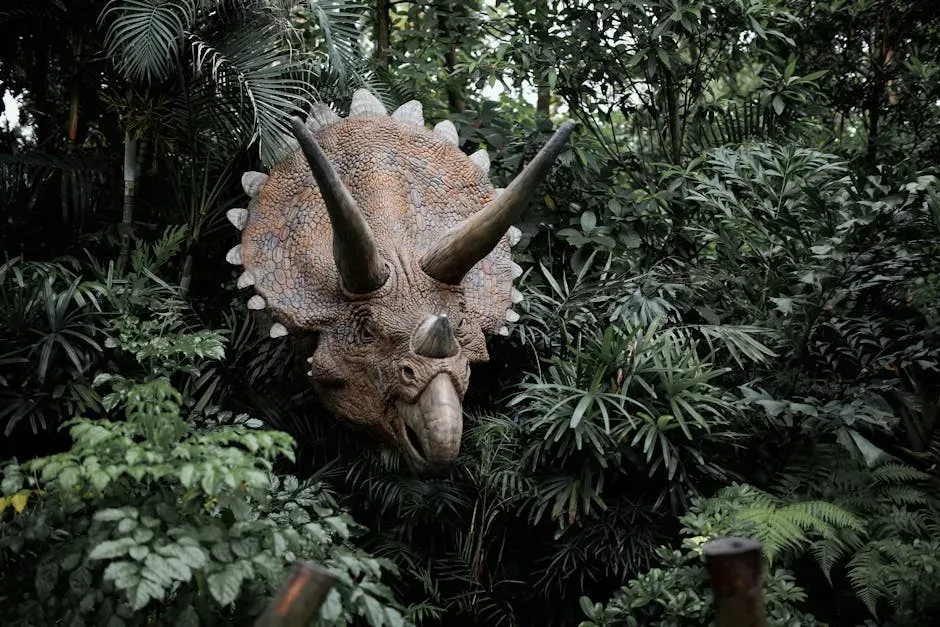
Here’s the thing about the dry, rocky badlands of southern Utah – they look nothing like what they once were. Over 76 million years ago, what is now the Grand Staircase-Escalante National Monument looked entirely different. Instead of spectacular desert landscapes, it was home to a lush, tropical rainforest, where abundant plants supported a thriving ecosystem of prehistoric life.
From the origin of the first dinosaurs during the Triassic period through the Cretaceous period 145 to 66 million years ago, southern Utah was a popular place for dinosaurs to call home. The now dry, rocky expanse was a swampy forest in the Cretaceous period, with giant pine trees, ferns, duckweed, and flowering plants – essentially a buffet for its enormous dinosaur residents. It’s almost impossible to picture, but the cliffs and canyon walls you’d hike through today were once rich riverbanks and coastal wetlands bursting with life.
The Kaiparowits Plateau – Ground Zero for Discovery
The rock that makes up the Kaiparowits Plateau, a 1,650-square-mile area of sandstone and mudstone in the central part of the monument, holds an extraordinary density of dinosaur fossils. Sand and mud quickly buried the still-intact organisms, and today, the eroding rock continues to expose fossils right at the surface. Think of it like a slow-motion unboxing that nature has been running for millions of years.
The Grand Staircase-Escalante National Monument spans across nearly one million acres of public land, and one of the richest troves of fossils in the monument is found on the Kaiparowits Plateau, a 50-mile-long ridge. The preservation of the fossils there is incredible, with articulated skeletons, fossilized skin, and plants so shockingly intact that their delicate details can still be read in the rock. Honestly, no other fossil site on Earth comes close to that level of completeness.
Species Found Nowhere Else on Earth
To date, paleontologists have recognized about 30 distinct species that are only found in this area, known as endemic species. Of those, about 15 are dinosaurs, with more yet to be described. These dinosaurs were living at roughly the same time as those found in the rocks of Montana and Alberta, which makes it clear that these animals are truly unique. That’s a staggering level of exclusivity for one location.
As paleontologist Dr. Scott Sampson has noted, most of the dinosaur fossils in Grand Staircase are found nowhere else on Earth, and not only are there dinosaurs unique to the monument, but the preservation of the fossils may be the best in the entire world. For example, fossils of dinosaur skin are extremely rare elsewhere, yet about half of the duck-billed dinosaur skeletons found in the monument included skin impressions. That alone is enough to make any scientist lose sleep with excitement.
Iconic Species – From “King of Gore” to “Thorny Head”
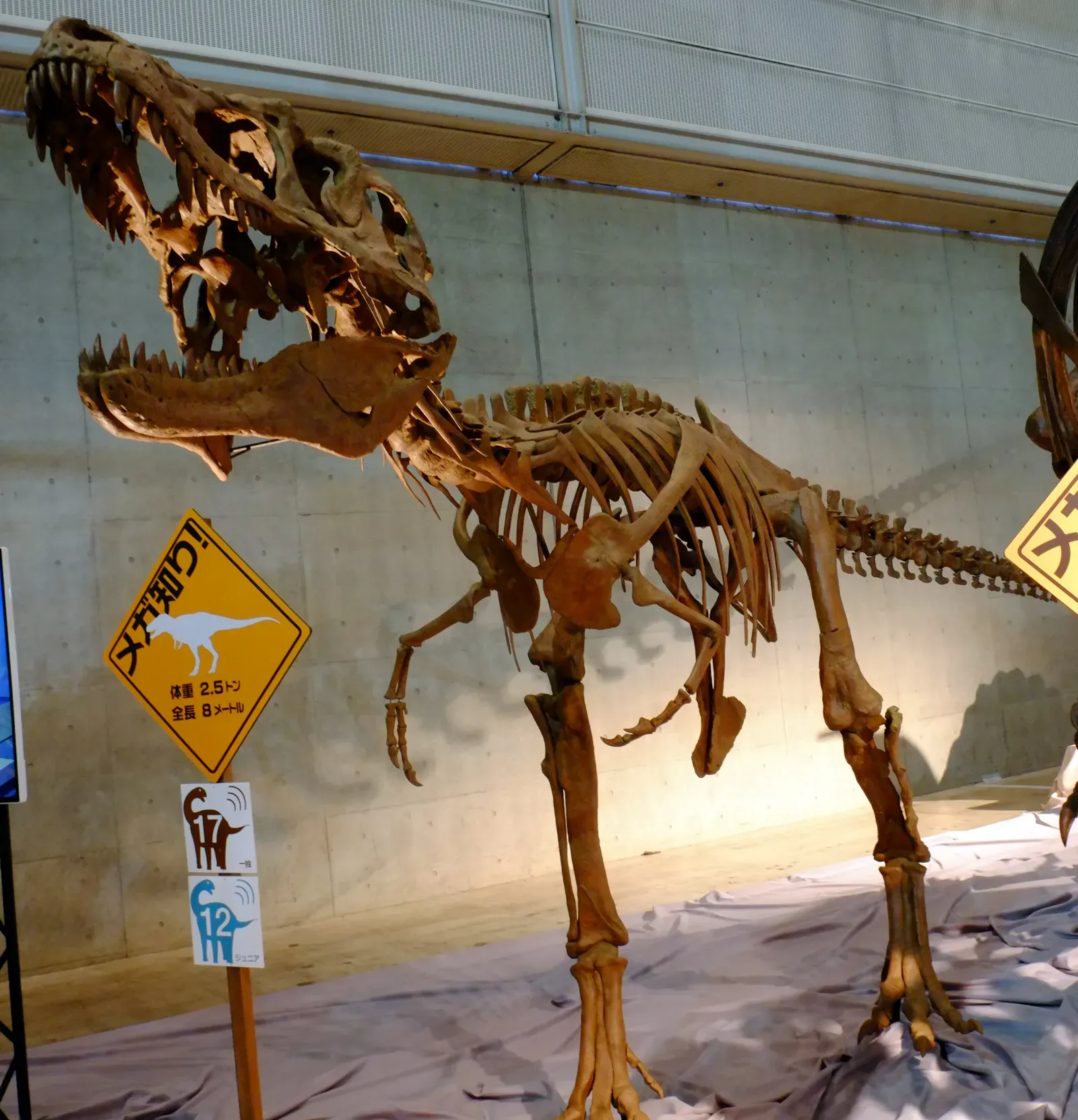
The monument has given the world some truly jaw-dropping finds, and the names alone tell a wild story. Among the creatures that roamed in Grand Staircase was a tyrannosaur dubbed Lythronax, which means “King of Gore,” a 2.5-ton carnivore with jaws lined with serrated teeth capable of crushing bone. The Kosmoceratops, found in 2007, has a 6-foot-long skull with an unprecedented 15 horns, and its discovery shows that different species of horned dinosaurs existed at the same time on the lost continent of Laramidia about 75 million years ago.
Paleontologists also named a new ankylosaurid species, Akainacephalus johnsoni, meaning “Johnson’s thorny head,” from fossils found in the monument. The remains include the animal’s skull and parts of its skeleton, including its tail club, with the dinosaur’s most distinctive feature being bony knobs dotting its skull that resemble pyramids. Another remarkable find, Nasutoceratops titusi, possesses an oversized nose relative to other members of its family and exceptionally long, curving, forward-oriented horns over the eyes. You simply can’t make this stuff up.
Behavior Revealed – Tyrannosaurs Hunting in Packs
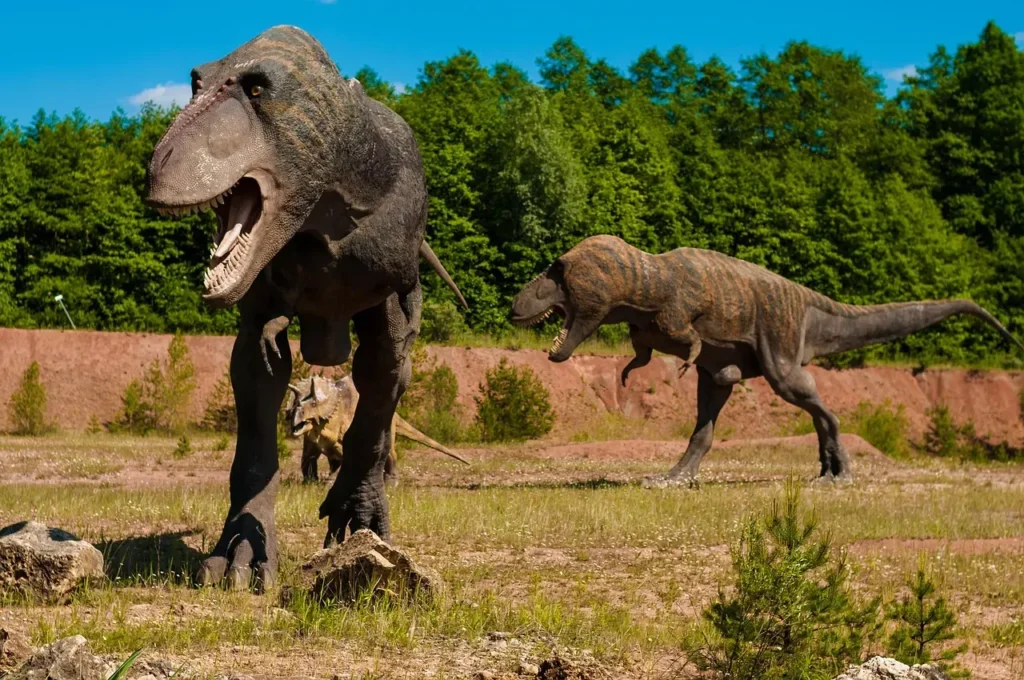
Perhaps one of the most shocking revelations to come out of this monument involves not just what lived there, but how those animals behaved. Back in 2014, paleontologists discovered a group of fossils in the famous Rainbows and Unicorns Quarry of the Kaiparowits Plateau. Among the finds were four Teratophoneus dinosaurs, young and old, that indicated these creatures were social animals that lived and hunted in groups, much like today’s wolves.
Experts determined the tyrannosaurs whose remains were discovered in the monument were likely social predators, meaning they may have hunted in packs, upending the traditional notion of the solitary stalking predator. The fossils were unearthed in what scientists refer to as the “Rainbows and Unicorns Quarry,” so named because it has been a reliable source of surprising and paradigm-shifting discoveries. I think it’s safe to say that finding out T-rex relatives hunted in wolf-like packs is the kind of discovery that makes the entire field of paleontology pause and rethink everything.
Tiny Eggs, Enormous Implications – And What Still Lies Underground
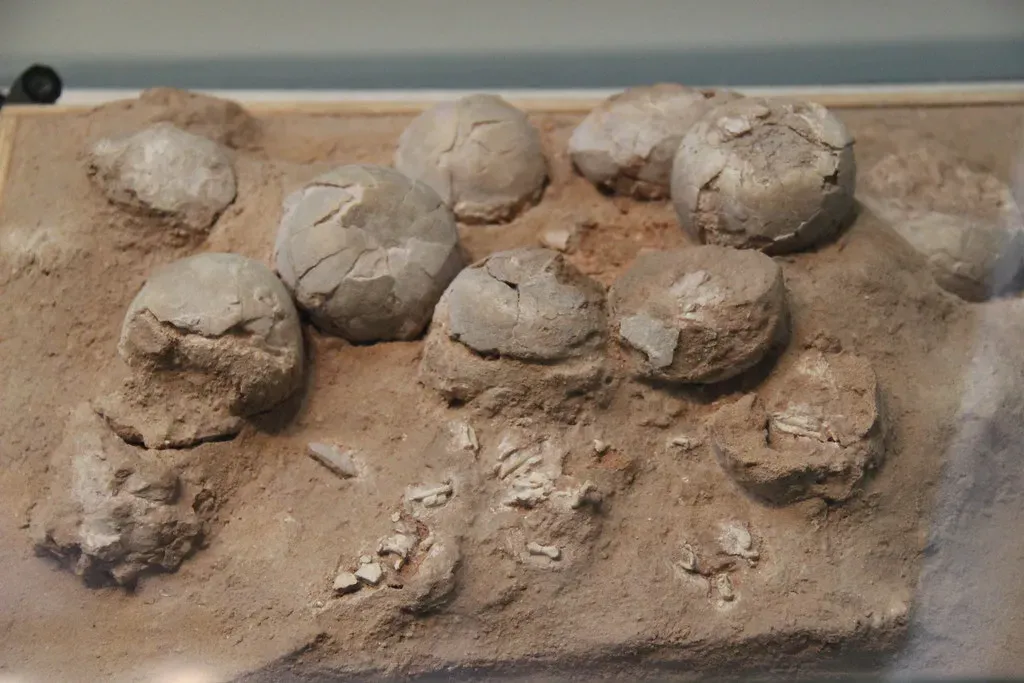
Among the most remarkable recent discoveries, paleontologists working in the Kaiparowits Plateau found marble-sized, bump-covered spheres that turned out to be tiny dinosaur eggs, among the smallest ever described from the Mesozoic fossil record. Because the new eggs were among the smallest ever described from that era, the team submitted their work to the prestigious scientific journal Nature, and it was subsequently accepted. That’s the kind of “wait, did that just happen?” moment that defines careers.
Though only a tiny fraction of the area has been excavated by paleontologists, it has already proven unusually fruitful, yielding the only known specimen of a new Triceratops ancestor in 1998 among many other fossils. Because the Grand Staircase-Escalante region has such a good fossil record, scientists can track the evolution of life on Earth, from the appearance of flowering plants to the evolution of dinosaurs into birds. Mammals, frogs, lizards, and smaller creatures also help tell a story about the changing climate as temperatures and animal communities shifted with moving landmasses. The deeper scientists dig, the more the monument delivers.
Conclusion
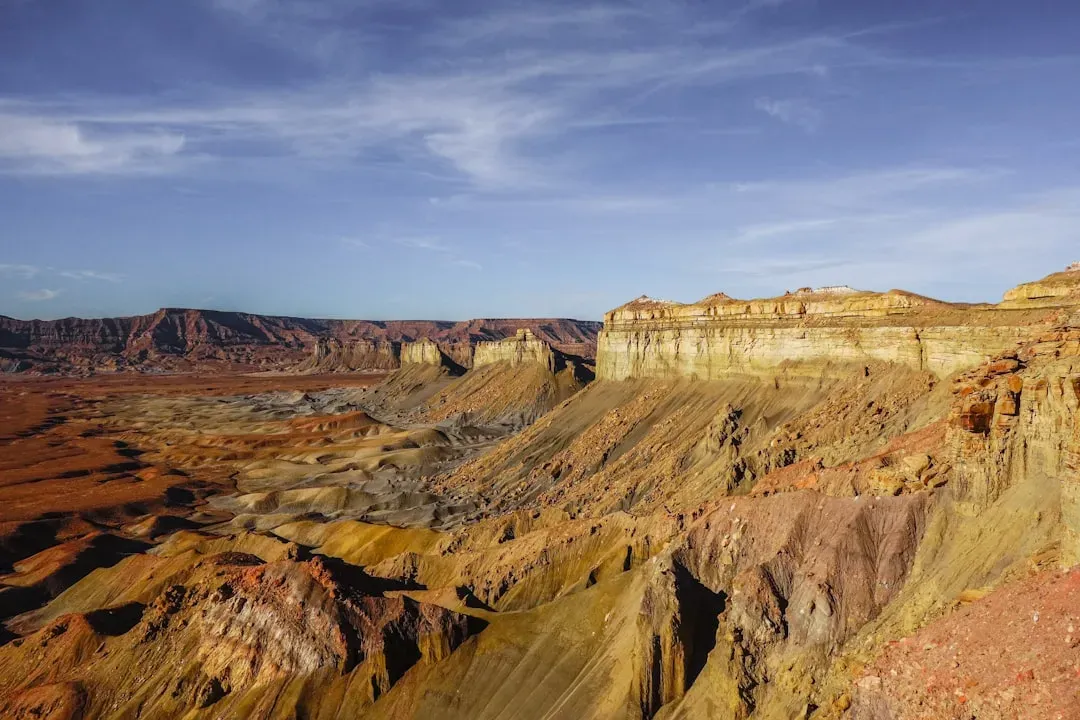
The Grand Staircase-Escalante National Monument is, without question, one of the most scientifically vital pieces of land on our planet. It doesn’t just contain fossils. It contains entire lost worlds, frozen in sandstone and mudstone, waiting to be read like chapters of an ancient book. Scientific exploration on the monument has come a long way since its establishment in 1996, and as paleontologists continue stepping back into time, it becomes clear that there is still so much more to discover.
Every crumbling canyon wall, every eroded ridge, every sunbaked plateau shelf could be holding the next species that reshapes what we know about life on Earth. The monument is not just a destination for scientists. It’s a reminder that the ground beneath your feet has a story older and stranger than anything we could ever imagine. So the next time you walk across rocky ground in southern Utah, look down. You just might be standing on history.
What would you have guessed was buried beneath those desert sands? Tell us your thoughts in the comments below.