
Most of us grew up picturing dinosaurs as solitary, brooding giants roaming empty landscapes alone. A T. rex hunting on its own. A lone Brachiosaurus stretching its neck toward a treetop. That image, it turns out, is surprisingly incomplete. Across continents and geological periods, the fossil record has quietly been assembling a very different story, one that is far more social, more complex, and honestly more mind-blowing than the movies ever showed you.
The evidence has been building for decades, and some of the most dramatic discoveries are reshaping how scientists understand ancient life. You are about to look at seven remarkable fossils that together paint a picture of dinosaurs as deeply social creatures, creatures that moved in herds, raised their young in colonies, and looked out for one another across millions of years. Let’s dive in.
1. The Mussaurus Patagonicus Nesting Ground – The Oldest Known Dinosaur Herd
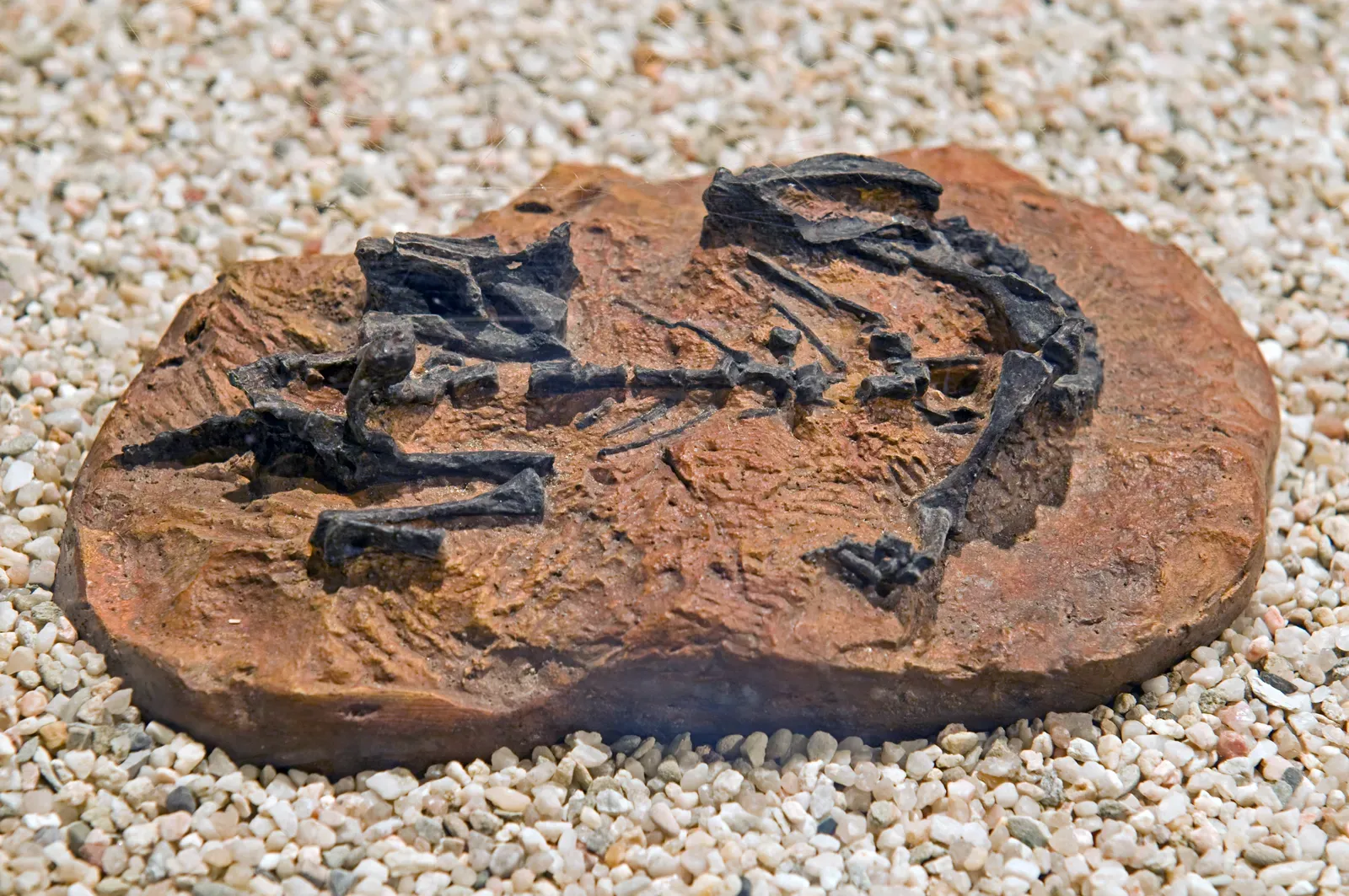
If you want a single discovery that rewrites everything about when dinosaur herding began, this is it. In Argentina’s Patagonia region, scientists unearthed an entire community of fossilized dinosaurs with more than 100 eggs and 80 skeletons of Mussaurus patagonicus, a long-necked herbivore. The sheer scale of the find was staggering, the kind of site that leaves even seasoned paleontologists momentarily speechless.
Analysis of the rocks surrounding the remains suggests that they are approximately 193 million years old, predating previous records of complex social behavior among dinosaurs by more than 40 million years. Think about that for a moment. Forty million years earlier than anyone thought. That’s longer than the entire span that separates humans from our earliest ape-like ancestors. The new discoveries indicate the presence of social cohesion throughout life and age-segregation within a herd structure, in addition to colonial nesting behaviour, providing the earliest evidence of complex social behaviour in Dinosauria.
2. The Bernissart Iguanodons – A Herd Frozen in Time Beneath a Belgian Coal Mine
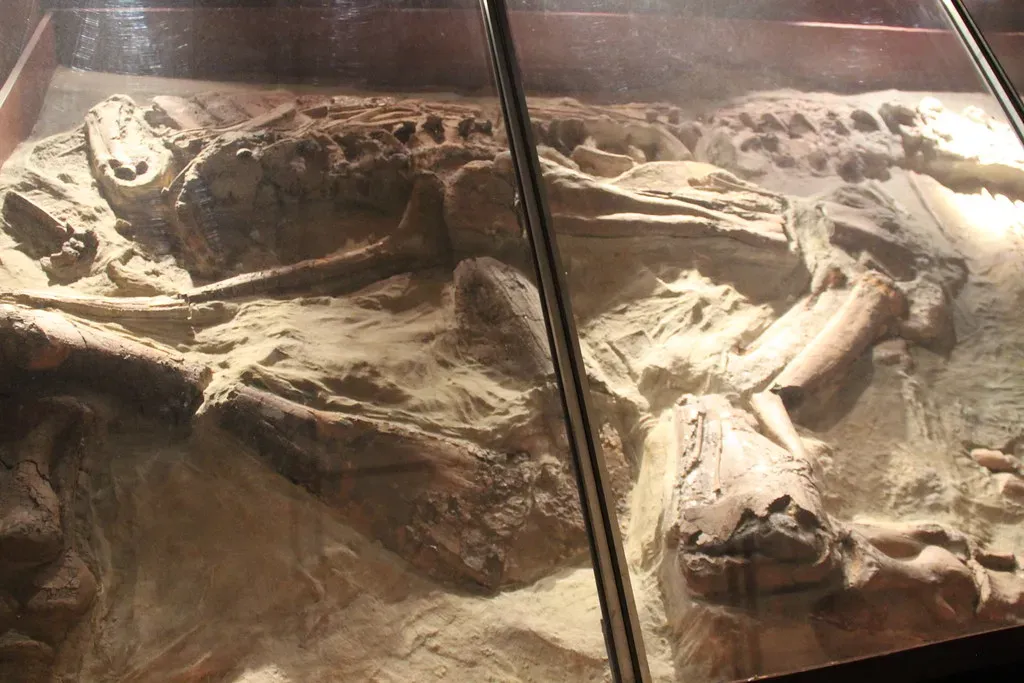
Here’s a discovery that sounds like something out of an adventure novel. The first potential evidence for herding or flocking as a widespread behavior common to many dinosaur groups in addition to birds was the 1878 discovery of 31 Iguanodon, ornithischians that were then thought to have perished together in Bernissart, Belgium, after they fell into a deep, flooded sinkhole and drowned. Miners stumbled upon them hundreds of meters underground, and the world of paleontology has never quite recovered from the shock of it.
Evidence suggests that Iguanodon bernissartensis may have been a social dinosaur, living in herds as a defense mechanism against predators. The discovery of multiple individuals preserved together in the Bernissart coal mines in Belgium suggests that these dinosaurs may have traveled in groups, possibly moving across landscapes in search of food and water or for protection against large theropods. The fossil remains of many individuals have been found, some in groups, which suggests that iguanodontids traveled in herds. It’s the sort of mass-death event that, grim as it was for the animals, turned out to be an extraordinary gift for science.
3. The Maiasaura Egg Mountain Colony – Proof of Social Nesting on a Massive Scale
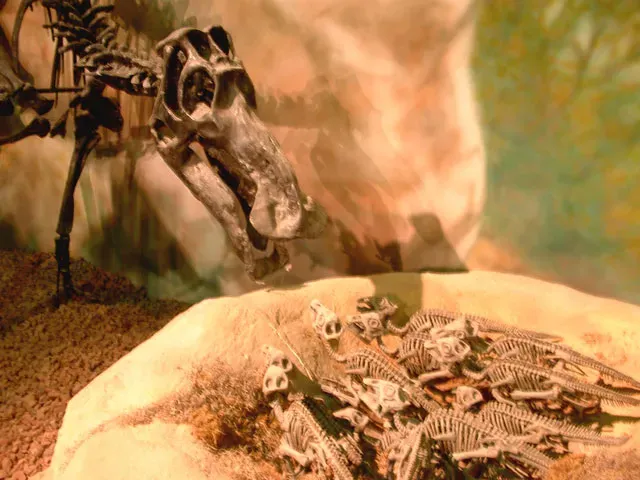
Few fossil discoveries carry the emotional weight of Egg Mountain in Montana. She found remains of juvenile dinosaurs at the site, and in 1978 showed her discoveries to paleontologist Jack Horner. Horner and his team went on to discover not just juvenile dinosaurs, but 14 dinosaur nests in a single area of the site. This is how the area got the name Egg Mountain. It supplied the first strong evidence that dinosaurs fed and cared for their young, and furthermore the first evidence that dinosaurs exhibited complex behaviors.
The discovery at Egg Mountain indicated that Maiasaura exhibited colonial nesting behavior, where large groups, likely herds, would all nest together in one area. After hatching, the adults may have actively cared for their young for a significant amount of time. It has been suggested that Maiasaura seasonally migrated in order to meet the immense food needs of such a large group. When you consider that Maiasauras were gregarious creatures, living in huge herds with even up to 10,000 individuals in a single group, the social complexity involved becomes almost difficult to comprehend.
4. The Sinornithomimus Bonebed – A Juvenile Flock Trapped in Dying Mud
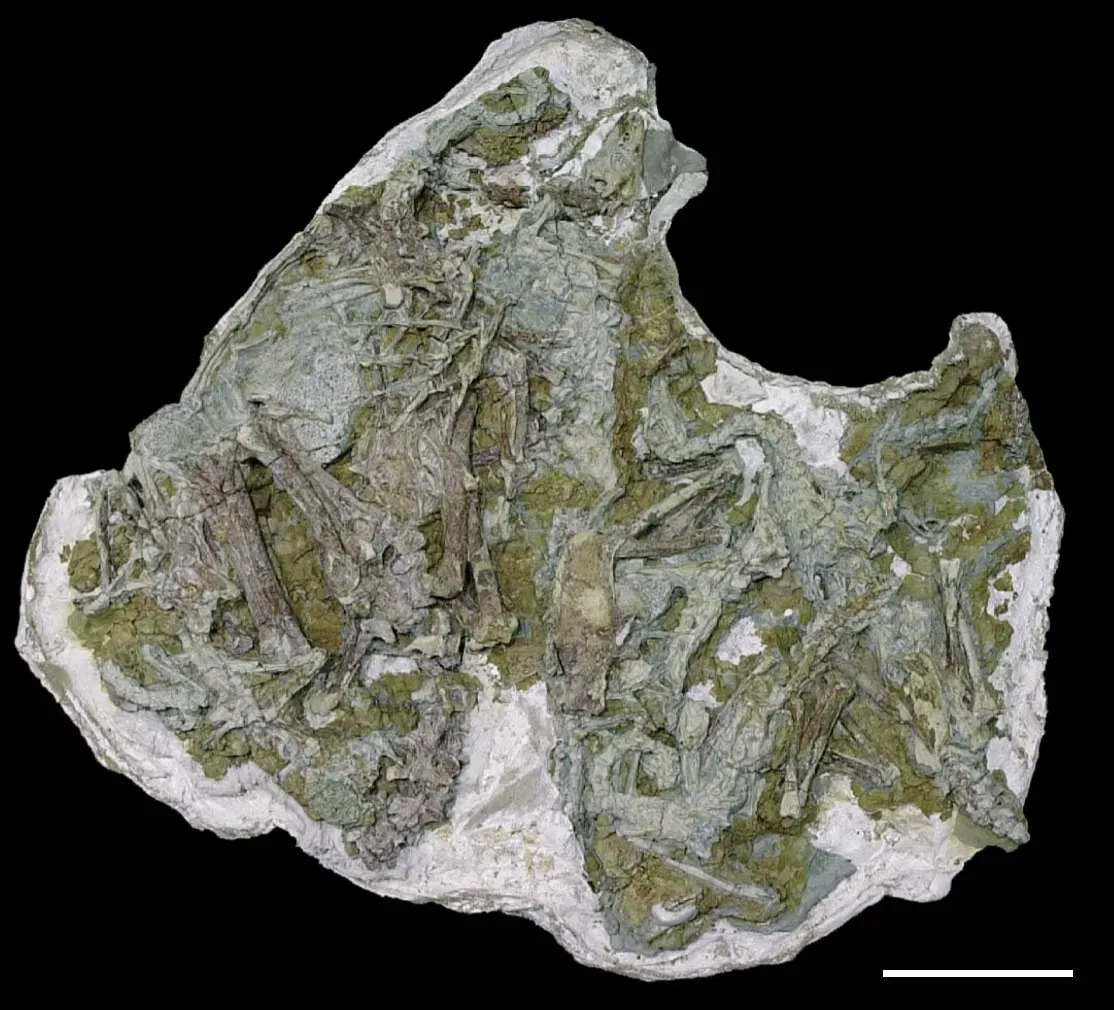
This one genuinely gives me chills. Imagine a group of young dinosaurs gathering at the edge of a drying waterhole, not knowing they are walking into a trap. They contained at least fourteen skeletons found in close association, nine of which are nearly complete and relatively uncrushed. The find consisted of three sub-adult to adult specimens and eleven juveniles. The unweathered state of the bones, preserved in siltstone interspersed with layers of clay and the absence of evidence for post-mortem movement, argue for a catastrophic event that killed all the individuals present in the find simultaneously and instantaneously.
A second expedition in 2001 at the same site led to the discovery of another fossilized herd of thirteen juveniles and subadults of Sinornithomimus. Their positioning suggests that they died together and over a short interval, likely after having become mired in the mud of a drying waterhole. The site in Inner Mongolia has yielded remains of over 20 Sinornithomimus, from one to seven years old. The consistency of ages within both groups is what makes this so compelling. These were not random stragglers. They were a flock, moving and dying together.
5. The Mussaurus Age-Segregated Clusters – Social Structure That Rivals Modern Animals
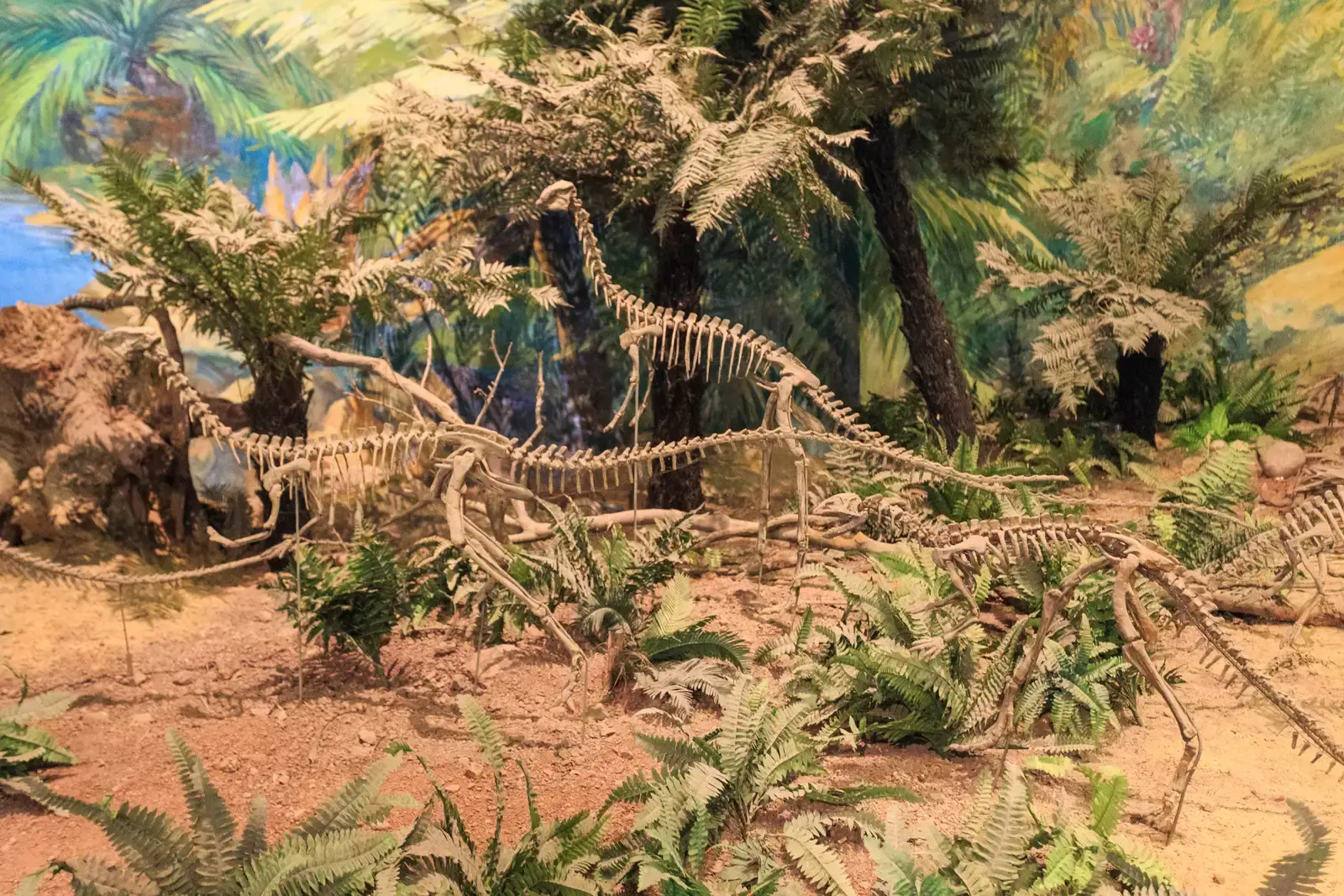
One of the most intellectually exciting things about the Patagonian Mussaurus site isn’t just that the dinosaurs were in a group. It’s how the group was structured. The study team interprets the clustering as evidence that Mussaurus moved in age-segregated herds, with animals of similar sizes and ages moving together within the group. If so, the discovery gives paleontologists the oldest evidence ever found of this kind of herd behavior within dinosaurs. You get exactly this same kind of behavior when you watch elephants or wildebeest on a nature documentary today.
The scientists identified a cluster of 11 juveniles aged less than a year old, two adults found together and nine specimens aged between a year old and adult. The scientists suggest that the presence of age-specific clusters of individuals in the same location could indicate that Mussaurus patagonicus lived in herds throughout their lives but primarily associated with others their own age within herds. The researchers speculate that the evolution of complex social behavior among sauropodomorphs may have coincided with increases in body size. Meeting the increased energy requirements associated with larger body sizes may have required them to coordinate their behavior and form herds to forage over long distances.
6. The Canadian Dinosaur Provincial Park Trackways – A Mixed-Species Herd on the Move

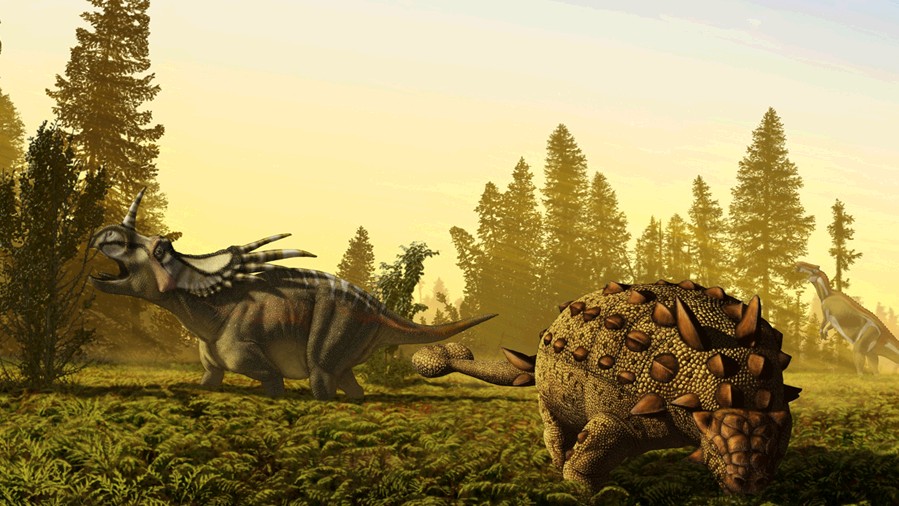
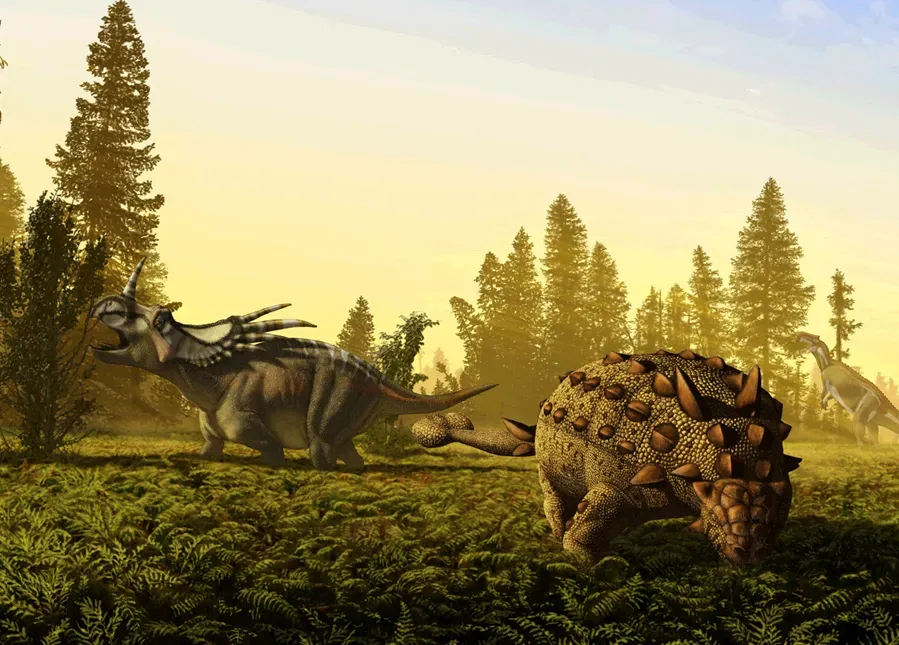
Here’s something that, honestly, nobody saw coming. It’s one thing to prove that a single species moved in groups. It’s something else entirely to find evidence of different species traveling together. A collection of footprints from a group of ceratopsians and an Ankylosaurus could be the first evidence of dinosaur herds that were made up of multiple species. Think zebras and wildebeest crossing the Serengeti together, but push that image back roughly 76 million years.
Many of the newly described footprints were made by ceratopsians, the group of horned dinosaurs that includes Triceratops. The 13 ceratopsian tracks are thought to belong to at least five individuals walking together across the landscape during the Cretaceous Period. Another set of footprints walking among the herd is thought to belong to an ankylosaurid, a different group of dinosaurs which includes the tank-like armoured Ankylosaurus. The presence of other dinosaur footprints among the ceratopsians has led researchers to believe that these trackways could show the first evidence of mixed-species herding behaviour in dinosaurs. This would have been similar to how modern wildebeest and zebras travel together across the African plains.
7. The Sauropod Trackways of Portugal and Montana – Giants That Moved Together
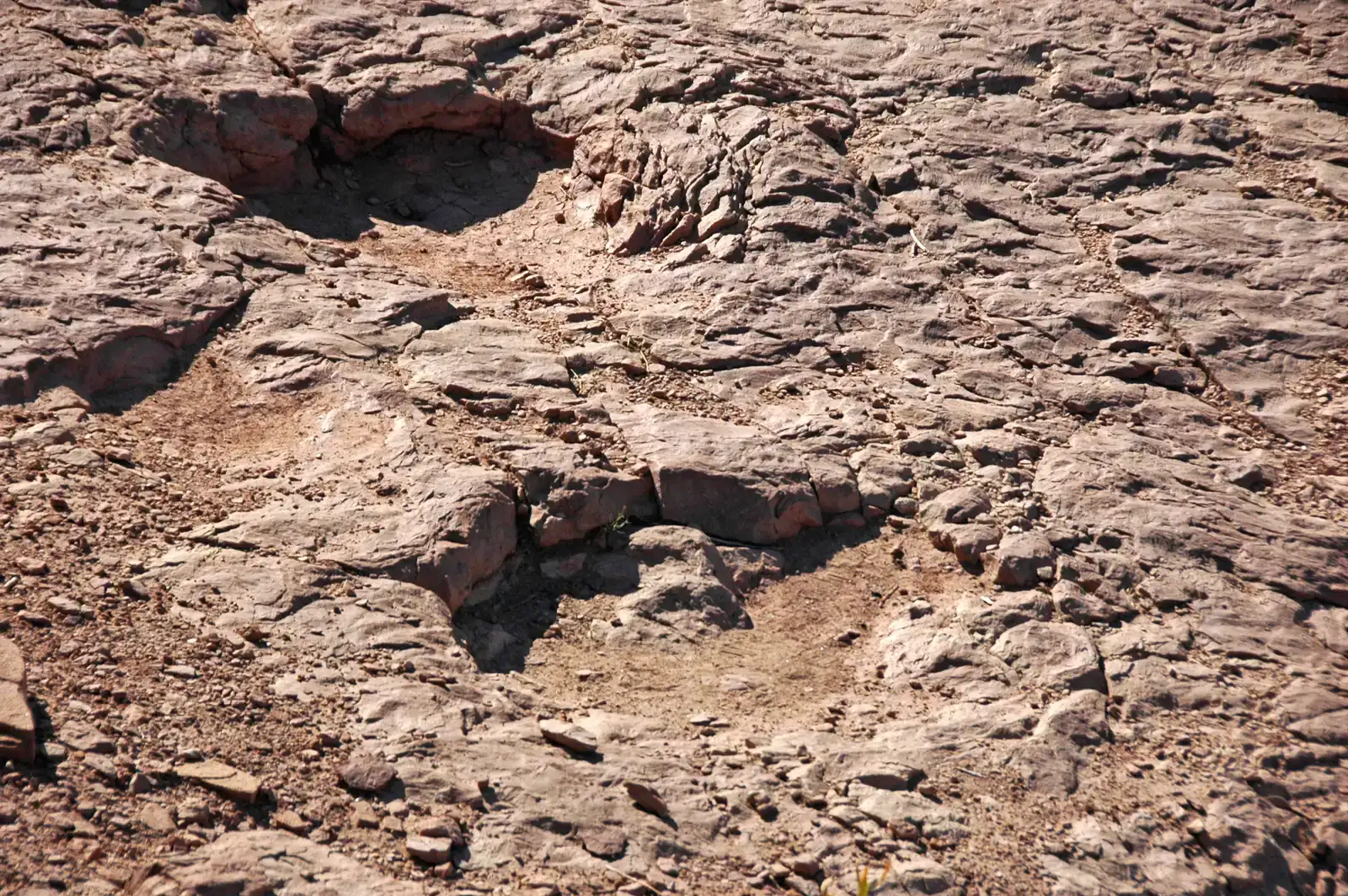
You might assume that animals the size of sauropods, enormous long-necked dinosaurs that could weigh as much as a loaded freight truck, would have been solitary just by the nature of their scale. The trackway evidence disagrees completely. Trackways of hundreds or even thousands of herbivores indicate that duck-billed hadrosaurids may have moved in great herds, like the American bison or the African springbok. Sauropod tracks document that these animals traveled in groups composed of several different species, at least in Oxfordshire, England.
The Mother’s Day Quarry in the Upper Jurassic Morrison Formation of Montana contains the remains of several immature diplodocoid sauropods. An assemblage in the Upper Cretaceous Javelina Formation of Big Bend National Park in Texas consists entirely of juvenile Alamosaurus. Both the Mother’s Day and Big Bend assemblages are interpreted as remnants of age-segregated herds. Congregating into herds may have evolved for defense, for migratory purposes, or to provide protection for young. It’s the same logic that makes a school of fish or a murmuration of starlings so compelling to watch: there is safety, efficiency, and perhaps something almost like community, in moving together.
Conclusion: The Fossil Record Speaks, and It Says “Together”
The picture that emerges from these seven extraordinary finds is hard to ignore. Across vast stretches of geological time, on multiple continents, spanning herbivores and even some predators, dinosaurs were doing something profoundly familiar. They were living socially. Protecting the young. Traveling in formation. Building communities. The notion of the lone, brutish dinosaur is essentially a myth at this point, and the fossils themselves are the ones who corrected the record.
What is especially exciting is that this field is far from finished. Every new bonebed, every set of fossilized footprints, every cluster of eggs yet to be unearthed has the potential to deepen and complicate what you think you know. Other mass-death sites have been discovered subsequently. Those, along with multiple trackways, suggest that gregarious behavior was common in many early dinosaur species. The more carefully scientists look, the more social dinosaurs appear to have been.
Perhaps the most powerful takeaway from all of this is simple: community is ancient. The instinct to gather, protect, and move together stretches back nearly 200 million years. Which raises a question worth sitting with – does knowing that make you see the dinosaurs any differently? Tell us what you think in the comments.