Picture a world where the forests and open grasslands of North America were stalked not by lions or tigers, but by creatures carrying blades for teeth. Creatures that could open their jaws nearly twice as wide as any modern cat. Creatures so perfectly engineered for killing that their design persisted, in various forms, for tens of millions of years. It sounds like something straight out of a monster movie, yet it is the factual, fossil-backed history of a continent you might call home.
What most people don’t realize is just how rich and varied this group of predators truly was. When you hear the term “saber-toothed cat,” your mind probably jumps straight to the iconic Smilodon, probably imagining a heavy, slow beast with comically oversized fangs. Honestly, that image barely scratches the surface. The story of saber-toothed cats in prehistoric North America is layered, strange, and far more thrilling than popular culture has ever let on. So let’s dive in.
The Ancient Lineage: Where It All Began
Saber-toothed cats existed from the Eocene through the Pleistocene Epoch, spanning an almost incomprehensible stretch of time from roughly 56 million to about 11,700 years ago. Think about that for a moment. These animals weren’t a brief evolutionary experiment. They were a dominant, recurring solution to the challenge of hunting large prey, and they kept working for an extraordinary length of time.
Though commonly known as the saber-toothed tiger, Smilodon was not closely related to the tiger or other modern cats, belonging to the extinct subfamily Machairodontinae, with an estimated date of divergence from the ancestor of living cats around 20 million years ago. In other words, if you placed a modern tiger and a saber-toothed cat side by side in the same room, they would be about as closely related as you are to a lemur. Same broad family tree, very different branches. DNA analysis published in 2005 confirmed and clarified cladistic analysis in showing that the Machairodontinae diverged early from the ancestors of modern cats and are not closely related to any living feline species.
The Star of the Show: Smilodon fatalis and Its North American Reign
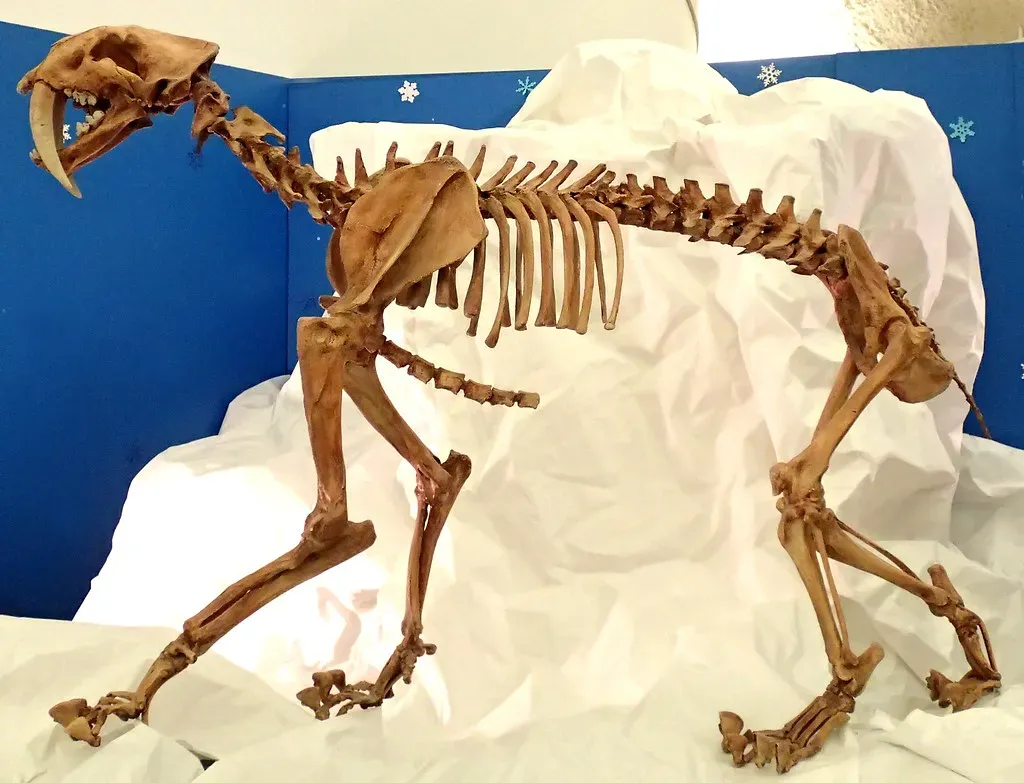
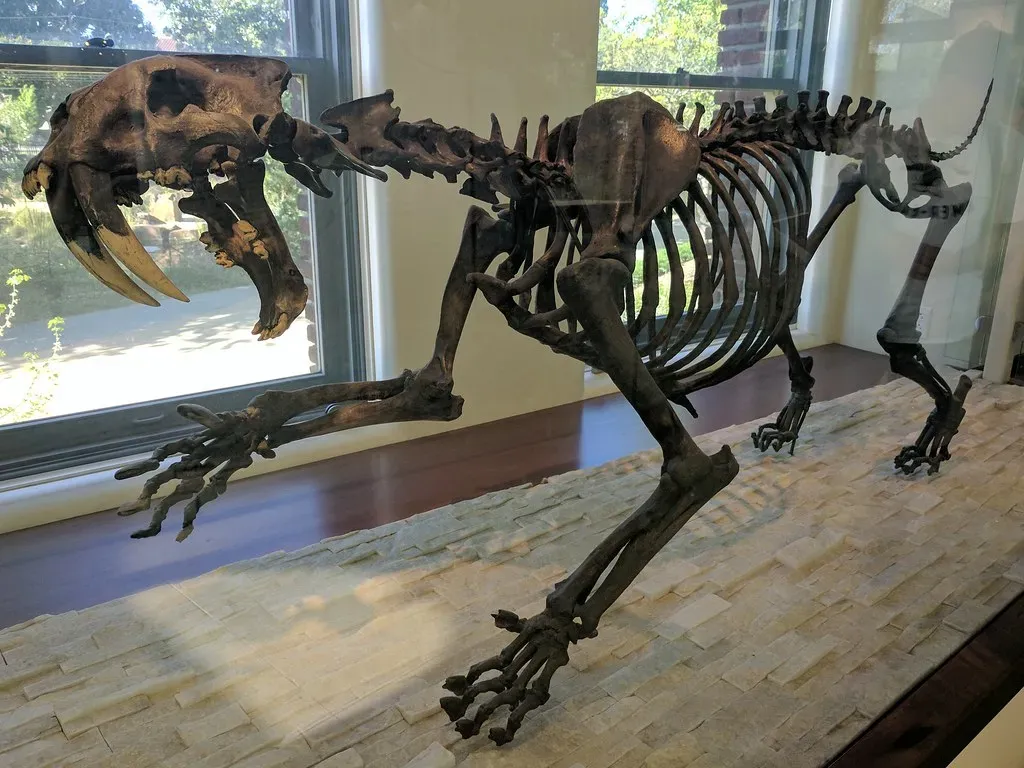
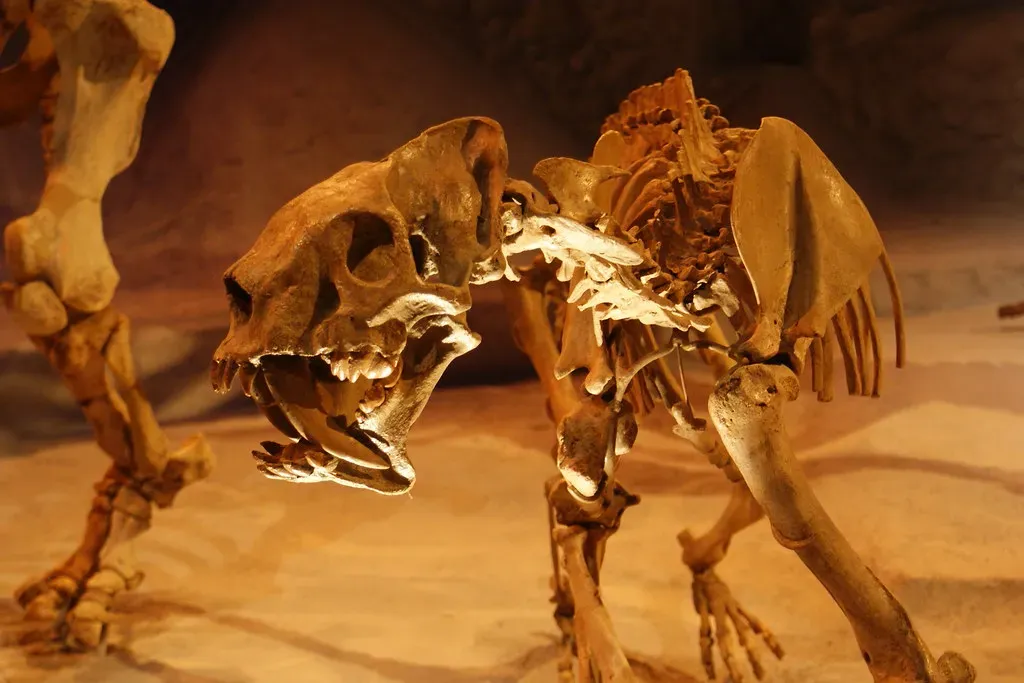
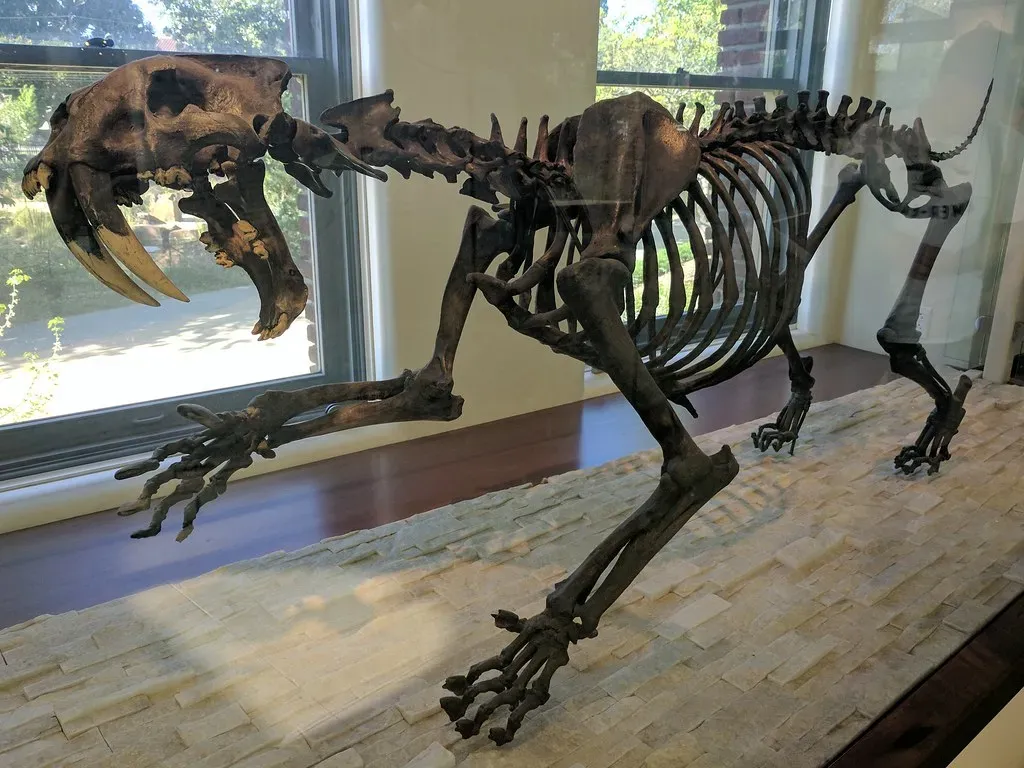
Smilodon fatalis was a formidable creature, reaching over 3 feet tall at the shoulder with a body length of nearly 6 feet and weighing between 350 and 620 pounds. Its scientific name means “fate scalpel tooth,” referring to the elongated blade-like upper canines that could reach 11 inches in length. Let that sink in. Eleven inches of curved, serrated tooth. That is longer than many kitchen knives you have sitting in a drawer right now.
The ancestor of Smilodon evolved in Eurasia and entered North America approximately 5 million years ago. The oldest Smilodon is called Smilodon gracilis, which lived 2.5 million years ago and was a smaller and less robust species. After crossing the Isthmus of Panama roughly 2 million years ago, Smilodon evolved into two separate species: the North American Smilodon fatalis, and the larger South American Smilodon populator. It is a fascinating example of how geography itself shapes evolution, like a continental experiment running over millions of years.
Meet the Relatives: Homotherium, the Scimitar Cat
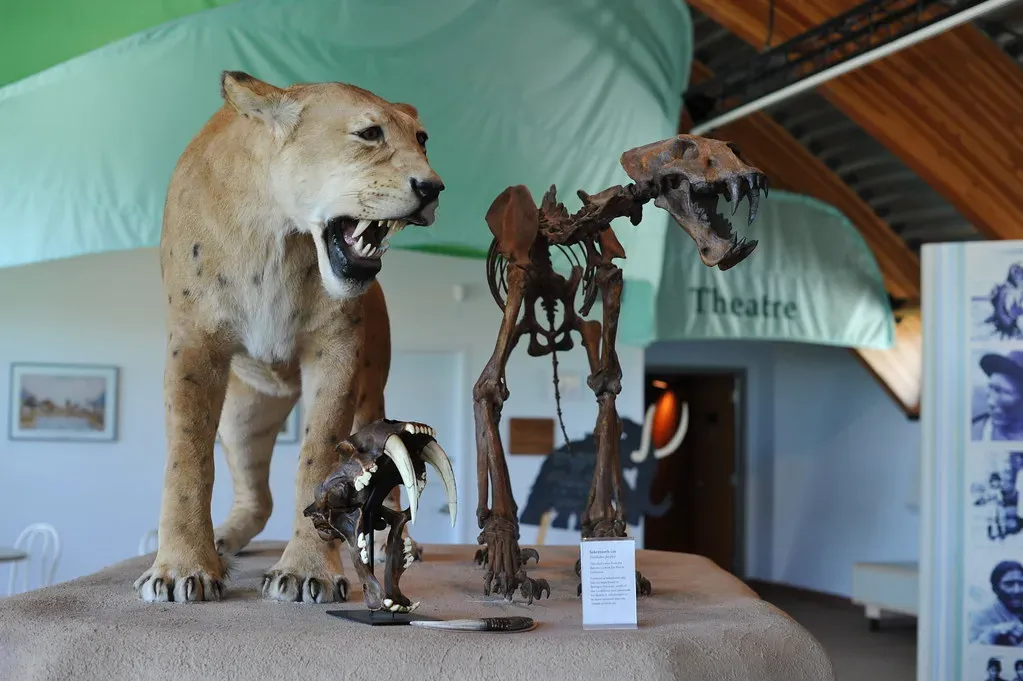
Homotherium is an extinct genus of scimitar-toothed cat belonging to the extinct subfamily Machairodontinae that inhabited North America, Eurasia, and Africa, as well as possibly South America during the Pliocene and Pleistocene epochs from around 4 million to 12,000 years ago. Here’s the thing though: despite being in the same subfamily as Smilodon, Homotherium was built in a completely different way. It looked and hunted almost nothing like its more famous cousin.
Homotherium serum, the most derived known species from the Pleistocene of North America, bore a sloped back that might have made it excellent at running long distances, similar to the living spotted hyena. It also had a well-developed visual cortex, a large nasal cavity that would have allowed for better oxygen intake, and smaller, only partially retractable claws that might have functioned like spikes for a better grip on the ground, all of which seems to point to a highly active lifestyle and cursoriality. Where Smilodon was a muscular ambush predator built like a heavyweight wrestler, Homotherium was more like a marathon runner with a blade in its mouth.
Xenosmilus: The North American Wild Card Nobody Expected
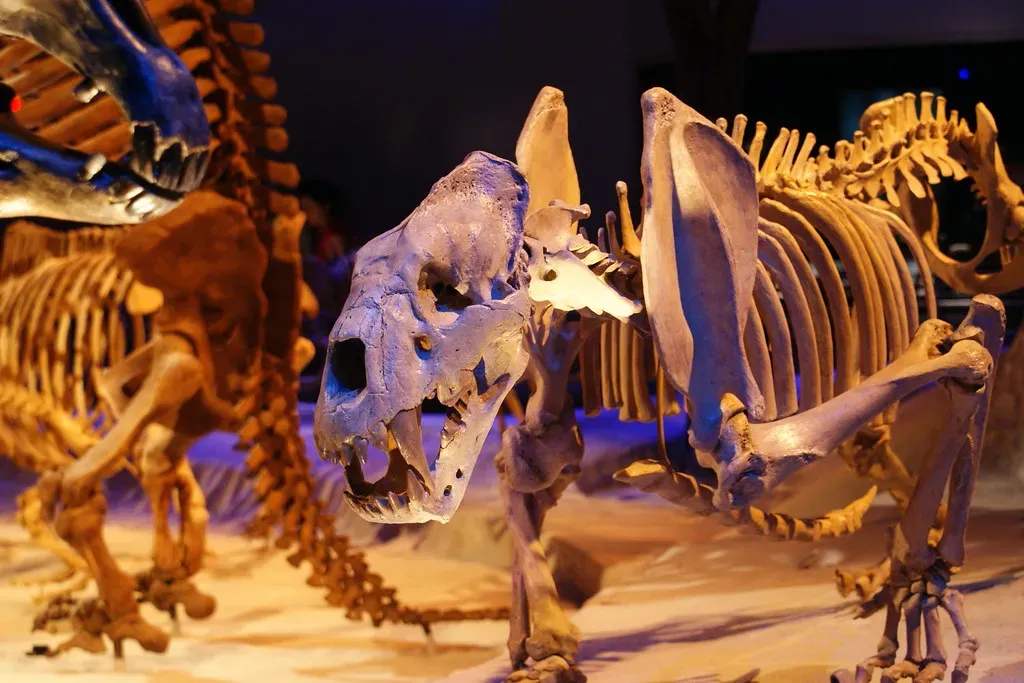
Xenosmilus is an extinct genus of homotherin machairodontine felid that roamed North America from the Early Pleistocene. The type species of the genus, X. hodsonae, is known from Early Pleistocene deposits in Florida. This animal is genuinely one of the most bizarre and fascinating creatures in the entire catalog of prehistoric North American predators, and yet most people have never heard of it. I think that’s a real shame, because Xenosmilus breaks all the rules.
Before the discovery of Xenosmilus, all known saber-toothed cats fell into two general categories. Dirk-toothed cats had long upper canines and stout legs. Scimitar-toothed cats had only mildly elongated canines and long legs. Xenosmilus broke these groupings by possessing both stout muscular legs and body, and short broad upper canines. Unlike most other saber-toothed cats, all of Xenosmilus’s teeth were serrated, not just its fangs and incisors. Scientists were so confounded by this creature when its fossils were finally described in 2001 that it prompted a rethinking of how these animals were categorized entirely.
The Rich Ecosystems They Hunted In
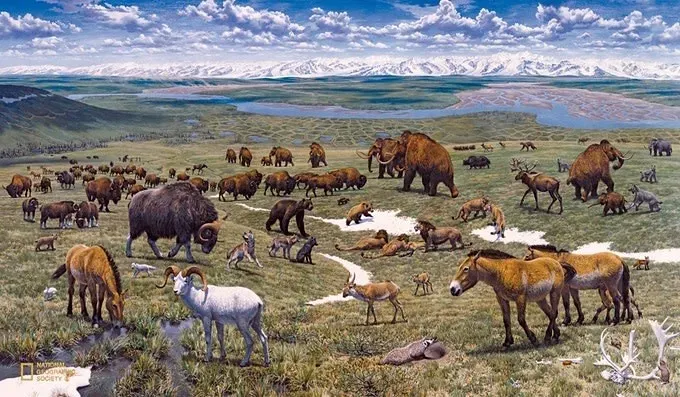
The habitat of North America varied from subtropical forests and savannah in the south to treeless mammoth steppes in the north. The mosaic vegetation of woods, shrubs, and grasses in southwestern North America supported large herbivores such as horses, bison, antelope, deer, camels, mammoths, mastodons, and ground sloths. This was essentially a buffet of enormous proportions, and the saber-toothed cats were among the most important diners at the table.
North America also supported other saber-toothed cats, such as Homotherium and Xenosmilus, as well as other large carnivores including dire wolves, short-faced bears (Arctodus simus) and the American lion. In a sense, North America during the Pleistocene was like Africa’s Serengeti on steroids. Multiple apex predators competing for massive prey, each carving out its own ecological niche. The competition must have been brutal, constant, and extraordinary to witness.
The La Brea Tar Pits: A Frozen Snapshot of Saber-Tooth Life
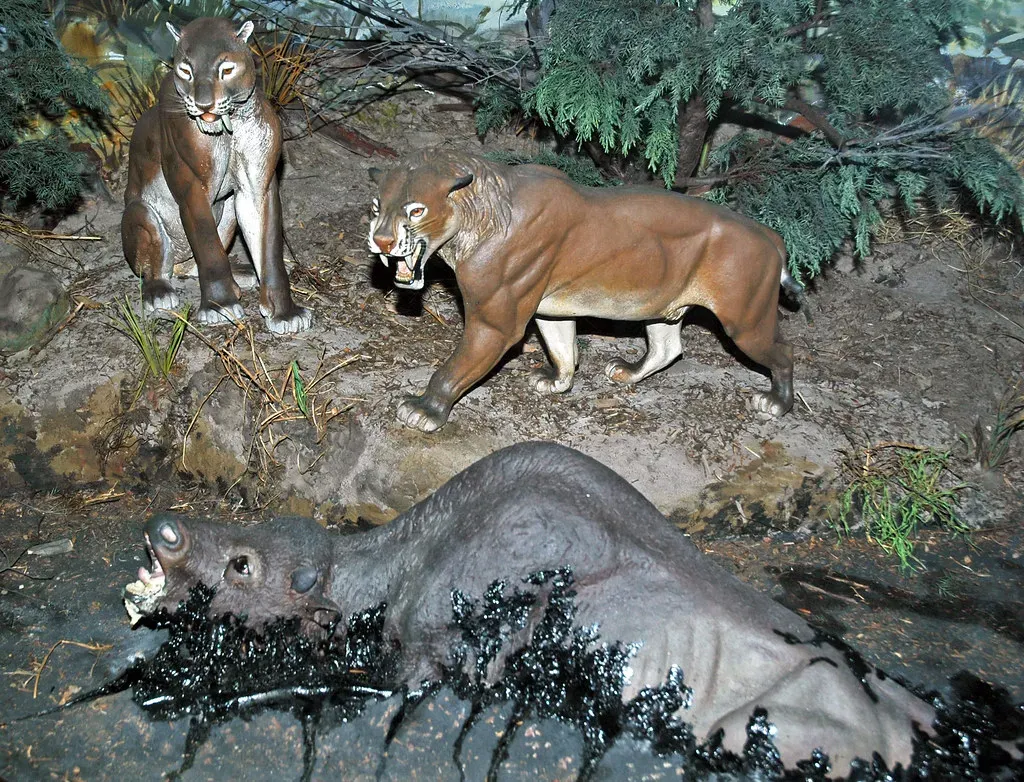
Rancho La Brea holds one of the world’s richest collections of a single mammal community through time, spanning the last Ice Age, the arrival of humans in North America, and the ongoing transformations of urban Los Angeles. The most common mammals include dire wolves (Aenocyon dirus), saber-toothed cats (Smilodon fatalis), and coyotes (Canis latrans), all carnivores. Historically, the majority of the mammals excavated from the deposits have been large carnivores, supporting a hypothesized “carnivore trap” in which large herbivores entrapped in asphalt attracted predators and scavengers, who themselves became entrapped while trying to steal a quick meal.
In stark contrast to its rarity in the Florida fossil record is the massive number of well-preserved specimens of Smilodon fatalis at Rancho La Brea in Los Angeles, California. Over 2,000 skulls alone have been found in the various tar pits there. This tremendous sample has been most studied by paleontologists, who have used it to analyze almost every imaginable aspect of the paleobiology of this famous species. It is one of those rare scientific gifts. A natural time capsule that gave researchers thousands of individuals to examine instead of the usual handful of scattered fragments.
The Extinction: A Perfect Storm of Bad Luck
Large-scale wildfires, possibly started by humans, in an ecosystem made fire-prone by climate change caused the disappearance of saber-toothed cats, dire wolves, and other large mammals in southern California nearly 13,000 years ago, according to a study by researchers at La Brea Tar Pits. The extinction wasn’t the result of one single catastrophe. It was more like a chain of dominoes falling. And once they started tipping, there was no stopping them.
Along with most of the New World Pleistocene megafauna, Smilodon became extinct by 10,000 years ago in the late Pleistocene extinction phases of North and South America. Its extinction has been linked to the decline and extinction of large herbivores. Hence, Smilodon could have been too specialized at hunting large prey and may have been unable to adapt. This is perhaps the ultimate lesson here. Being supremely specialized is a superpower right up until the environment changes faster than you can keep up. Then it becomes a fatal vulnerability.
Conclusion

Prehistoric North America was not home to just one iconic saber-toothed cat. It was home to a whole guild of them, each shaped differently by evolution, hunting by different strategies, thriving in different habitats. From the powerful, ambushing Smilodon fatalis and its smaller ancestor S. gracilis, to the endurance-hunting Homotherium and the rule-breaking Xenosmilus, this continent once hosted a diversity of bladed predators that rivals anything the modern world can offer.
The fossil record these animals left behind, particularly at places like the La Brea Tar Pits, continues to reshape our understanding of ancient ecosystems, predator behavior, and even the nature of extinction itself. There’s something genuinely humbling about knowing that for millions of years, this land belonged to creatures that make our modern big cats look almost tame by comparison. What do you think: if you could walk through prehistoric North America for a single day, would you be brave enough to go?