For most of human history, dinosaurs lived in our imaginations as dull, gray beasts. Museum illustrations painted them in muddy browns and lifeless greens. Even Hollywood, for all its spectacle, usually kept them drab. But what if the reality was something far more extraordinary? What if these ancient giants were as colorful as the most vibrant creatures alive today?
It turns out, scientists are actually figuring this out, and the answers are nothing short of astonishing. From shimmering iridescent feathers to speckled giants roaming Jurassic forests, the story of dinosaur color is one of the most exciting detective stories in modern science. Let’s dive in.
The Gray Dinosaur Myth and Why It Needs to Die
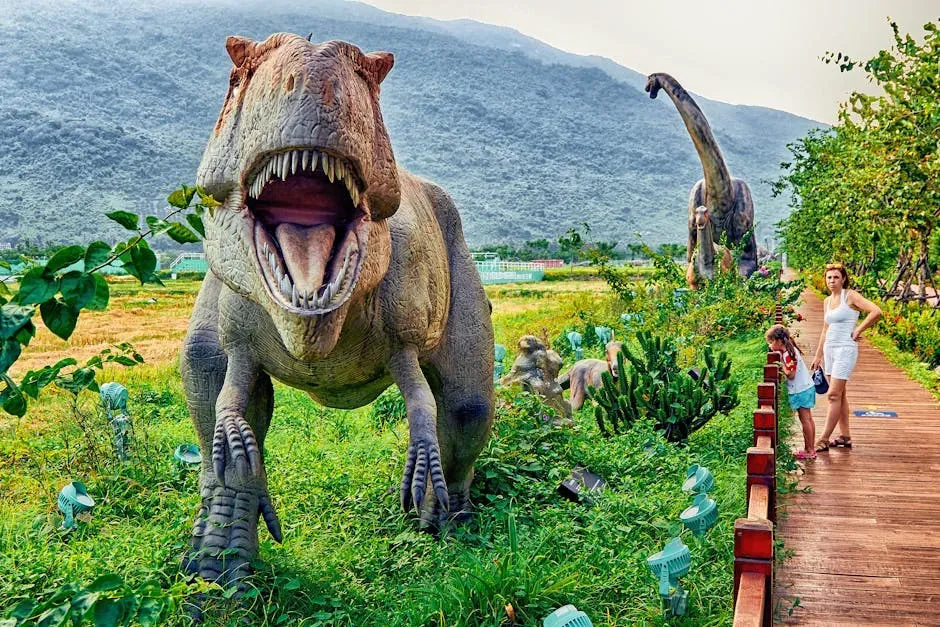
Honestly, the idea that dinosaurs were uniformly gray or brown was never really based on evidence. It was simply a default assumption. Think about it like this: if you had no idea what color a parrot was, and someone just told you “it’s probably greenish-gray,” you’d probably accept it. For decades, that’s essentially what artists and scientists did with dinosaurs.
Dinosaur coloration is generally one of the unknowns in the field of paleontology, as skin pigmentation is nearly always lost during the fossilization process. However, studies of feathered dinosaurs and skin impressions have shown the color of some species can be inferred through the analysis of color-determining organelles known as melanosomes that are preserved in fossilized skin and feathers.
The shift in thinking has been remarkable. Scientists have moved the idea of dinosaur color out of the realm of art and into the realm of science. That’s a profound leap. What was once pure artistic guesswork is now a rigorous scientific discipline with real results, and those results keep getting more colorful by the year.
Melanosomes: The Tiny Keys That Unlocked a Colorful Past
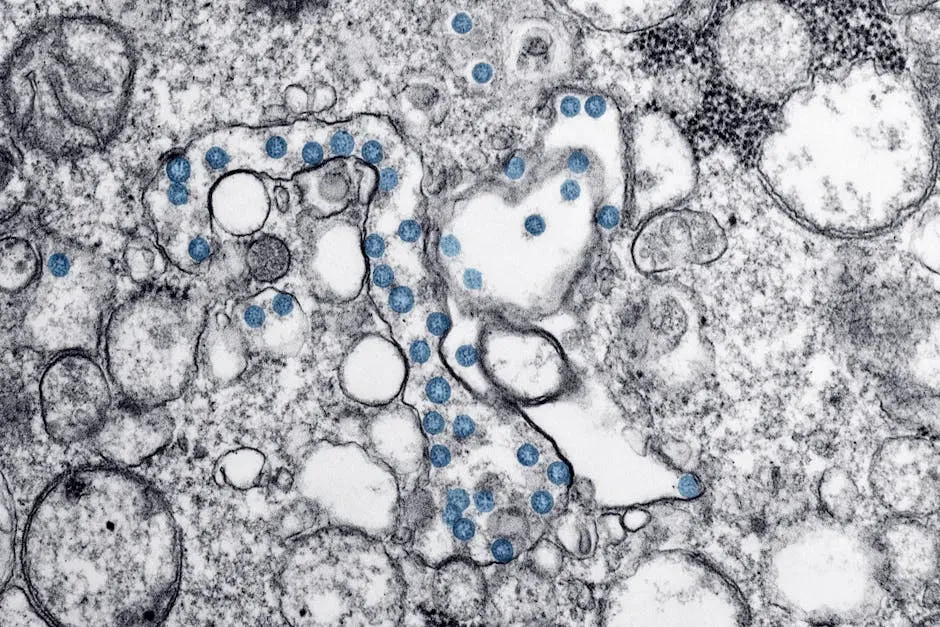
So what exactly unlocked all of this? The answer lies in structures so small that a hundred of them can fit across a single human hair. The discovery of melanosomes in fossil feathers opened a window onto the previously unknown world of prehistoric color, because melanosomes contain the color-associated pigment melanin. The two most common types of melanin found in modern birds are eumelanin, associated with black and grey feathers, and phaeomelanin, found in reddish brown to yellow feathers.
It was Jakob Vinther, a Yale graduate student, who first developed the technique for identifying colors in fossil bird feathers in 2008. It involves microscopic structures in the feathers called melanosomes. In living birds, the shapes, sizes, and arrangement of these molecules give feathers their colors.
By considering the length, width, and aspect ratio of the melanosomes, as well as how much they vary in shape, scientists could predict feather color using a statistical method called quadratic discriminant analysis with roughly ninety percent accuracy. That is not speculation. That is science.
Anchiornis and Microraptor: The First Dinosaurs Brought Back to Life in Color
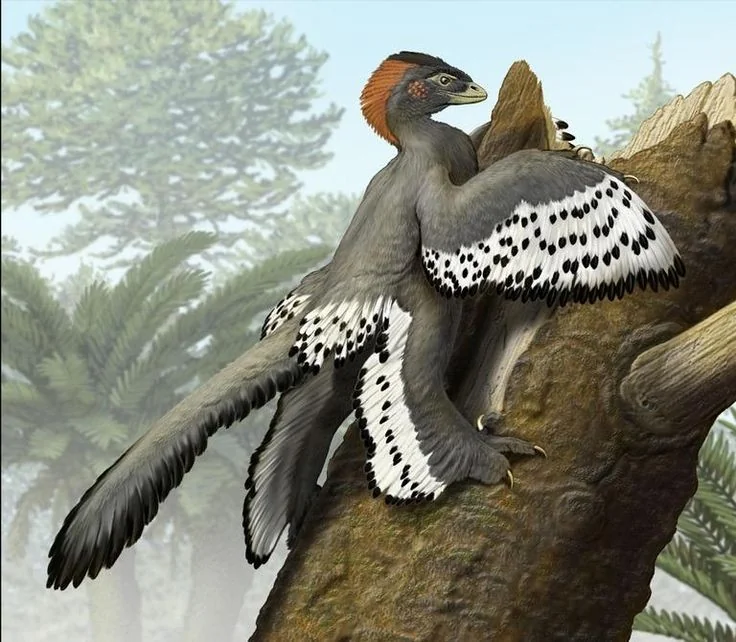
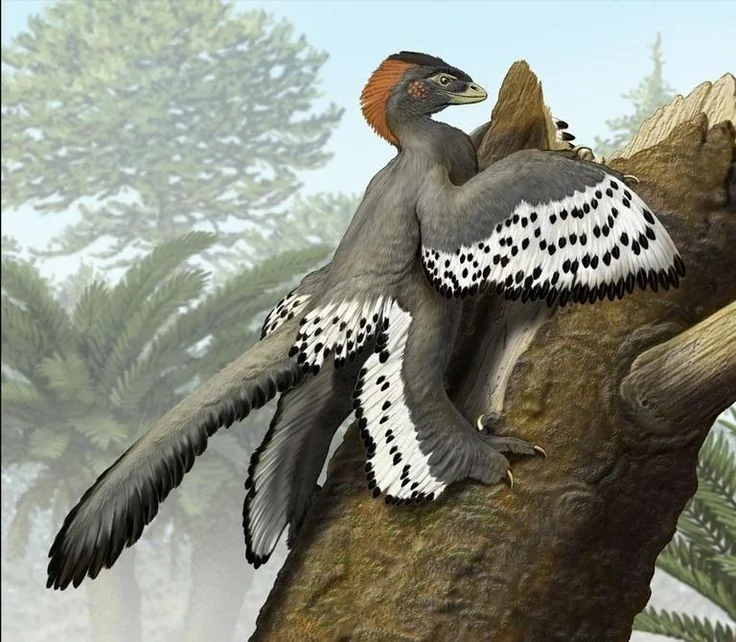
In 2010, paleontologists studied a well-preserved skeleton of Anchiornis, an averaptoran from the Tiaojishan Formation in China, and found melanosomes within its fossilized feathers. As different shaped melanosomes determine different colors, analysis allowed paleontologists to infer that Anchiornis had black, white, and grey feathers all over its body and a crest of dark red or ochre feathers on its head. Think of it as a prehistoric woodpecker in reverse: dark body, brilliant red hat.
In 2012, researchers analyzed a specimen of Microraptor and determined that the coloration of its typical feathers was iridescent black. The melanosomes were narrow and arranged in stacked layers, reminiscent of the blackbird. In Microraptor, the preserved feathers contain long, sausage-shaped melanosomes arranged to bend light in eye-catching ways. Its plumage thus would have been black, with the same shiny sheen as a crow’s. A crow-like dinosaur with four wings. If that doesn’t blow your mind, honestly, nothing will.
Camouflage in Deep Time: Psittacosaurus and the Forest Disguise
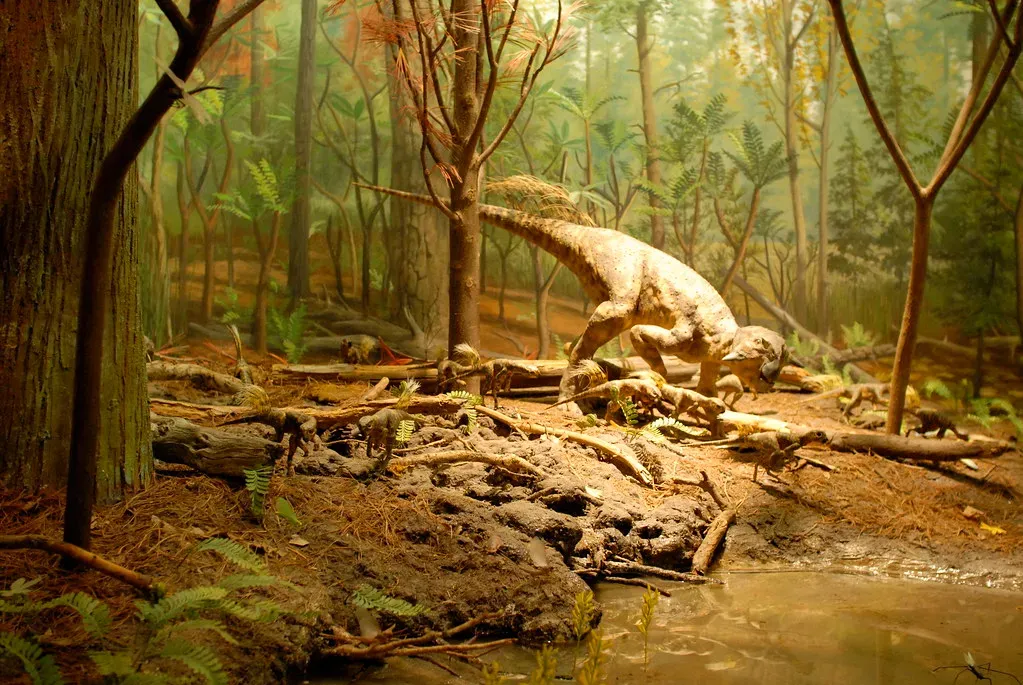
Color in dinosaurs wasn’t just about looking good at a mating display. For some species, it was a matter of life and death. Psittacosaurus, a speckled dinosaur about the size of a golden retriever, had a camouflaging pattern that may have helped it hide in forests. The dinosaur was “very much on the bottom of the food chain” and needed to be inconspicuous.
Researchers found that Psittacosaurus was light on its underside and darker on top. This color pattern, known as countershading, is a common form of camouflage in modern animals. According to scientists, Psittacosaurus most likely lived in an environment with diffuse light, such as in a forest.
Here’s the clever part. To investigate what environment Psittacosaurus had evolved to live in, the team took a cast of the model and painted it all grey, then placed it in the Cretaceous plant section of Bristol Botanic Garden and photographed it under an open sky and underneath trees to see how the shadow was cast under those conditions. By comparing the shadow to the pattern in the fossil, they could then predict what environment this dinosaur lived in. Color as a habitat tracker. Extraordinary.
Borealopelta and the Armored Giant That Hid in Plain Sight
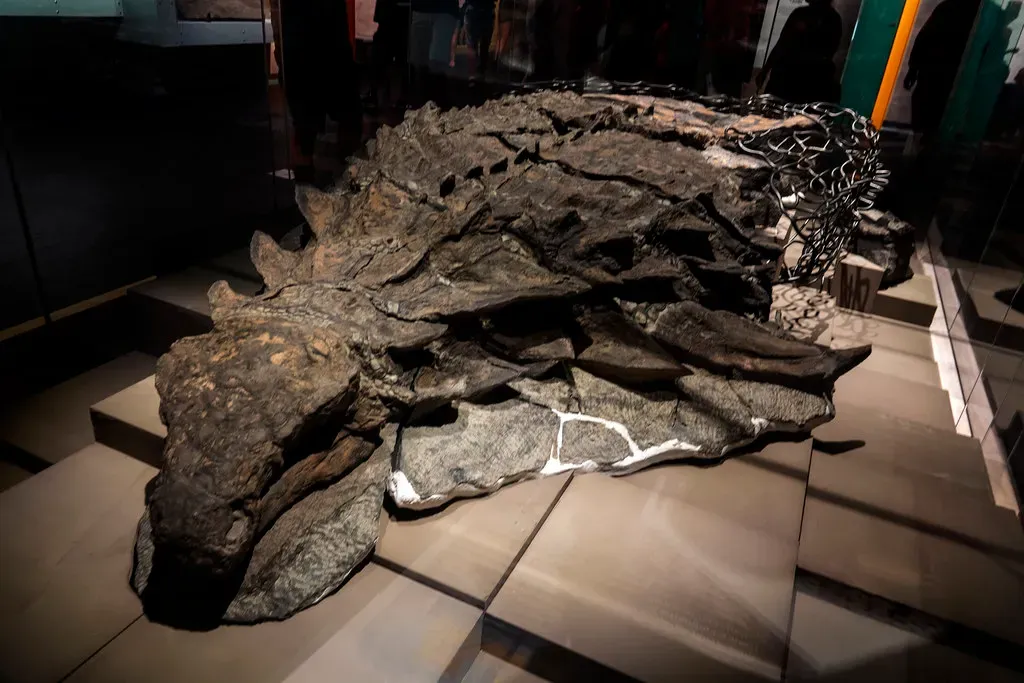
You might assume a massive, heavily armored dinosaur wouldn’t bother much with camouflage. Why hide when you’re basically wearing a tank? Yet the evidence suggests otherwise. A 2017 examination of melanosomes preserved in a specimen of Borealopelta indicated that the nodosaurid had a reddish-brown coloration in life, with a counter-shaded pattern that may have been used for camouflage. This discovery may indicate that Borealopelta was under threat of predation despite its large size, and that the armor on its back was primarily used for defensive rather than display purposes.
The nodosaurid Borealopelta, famous for its near-perfect skin impressions, was revealed to have skin comprised of red and brown on its back and white on its underbelly. This colouration is known as countershading and would have helped Borealopelta camouflage seamlessly into its environment. Even a walking armored fortress, it seems, preferred not to be noticed. Nature is endlessly fascinating like that.
The Diplodocus Bombshell: Sauropods Were Not Gray Blobs
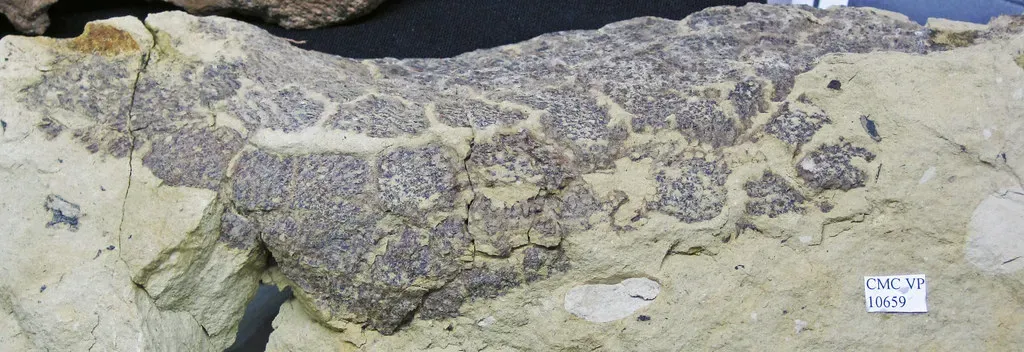
If you needed one discovery to shake up everything you thought you knew about the largest animals to ever walk the Earth, the 2025 Diplodocus study is it. For more than a century, sauropods like Diplodocus and Apatosaurus had been imagined as gray, uniform giants with wrinkly, elephant-like skin and no bold markings. They had long been assumed to be relatively plain animals. New research published in 2025 by Tess Gallagher and colleagues changed that picture entirely, identifying for the first time fossilized melanosomes in sauropod skin, with the microscopic structures indicating that juvenile Diplodocus may have displayed far more complex coloration than previously imagined, including speckling or patchy pigmentation.
The fossil skin comes from baby Diplodocus specimens unearthed at the Mother’s Day Quarry in Montana’s Morrison Formation, a Late Jurassic site packed with young sauropods that likely died together during a dry spell before a debris flow buried them. Fossilized skin from a juvenile Diplodocus shows two distinct types of melanosomes, suggesting possible speckled color patterning. The melanosome sizes and shapes resemble those producing brown or dark hues in modern reptiles and birds. This provides the first evidence of melanosome shape diversity in sauropod scales, indicating more complex coloration than previously recognized. The gray giant is officially dead as an assumption.
The Ongoing Scientific Debate: How Reliable Are Color Reconstructions?
Let’s be real for a second. Not everyone in the scientific community agrees that these color reconstructions are perfectly reliable. The technique is brilliant, but it has genuine critics. For over a decade, the shape of melanosomes, cell organelles that contain the pigment melanin, have helped paleontologists reconstruct dinosaur colors. Still, some question the rigor of this approach.
Research has shown that melanosomes can change shape and shrink over the course of millions of years, potentially affecting color reconstructions. Further complicating the picture is that animals contain additional non-melanin pigments such as carotenoids and what is known as structural color, which was only recently identified in fossils.
It’s hard to say for sure just how accurate every reconstruction truly is, especially for older, less perfectly preserved specimens. The findings imply that we may need to review our understanding of the colors of ancient animals, because fossil melanosomes previously assumed to represent external hues may in fact be from internal tissues, especially if the fossil has been disturbed over time. Science is messy, iterative, and honest about its limitations. That’s actually the sign of a healthy field.
Conclusion: Dinosaurs in Full Color
The story of dinosaur color research is one of the most remarkable scientific journeys of the past two decades. What began with a Yale graduate student peering at a fossil feather under a microscope has grown into a field that is literally repainting prehistoric life. From the iridescent crow-black shimmer of Microraptor to the forest camouflage of Psittacosaurus, and now the speckled juvenile Diplodocus of Montana, the evidence keeps building toward one irresistible conclusion: the Mesozoic world was far more visually spectacular than anyone dared imagine.
Beyond allowing paleontologists and artists to reconstruct extinct organisms more accurately, fossil pigments are revealing previously unknown facets of the daily lives of both dinosaurs and other long-gone creatures. Color tells us where they lived, how they hid, how they competed, and how they communicated. It makes these creatures real in a way that bare bones simply cannot.
We are living in the golden age of dinosaur color science, and if the 2025 Diplodocus discovery is anything to go by, the most jaw-dropping revelations may still be waiting in the rock. Which dinosaur would you most want to see fully reconstructed in its true colors?