
You might think of US deserts as empty, scorched wastelands where nothing much happens. Honestly, that’s exactly what makes what’s hidden beneath them so jaw-dropping. Beneath the cracked earth and drifting sands of the American West, some of the most significant paleontological discoveries in human history have been quietly waiting – sometimes for over 200 million years.
From New Mexico’s rust-colored badlands to the dramatic canyon country of Utah and Arizona, these vast, arid landscapes have yielded fossils that have rewritten entire chapters of natural history. The stories behind these finds are as wild and gripping as the creatures themselves. So let’s get started.
Ghost Ranch, New Mexico: Where a Flash Flood Became a Time Capsule
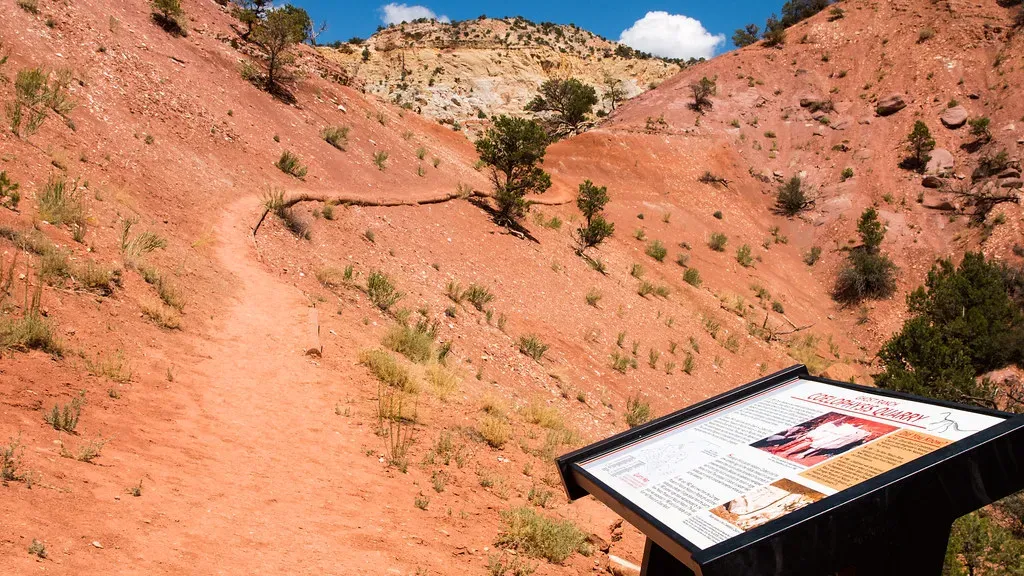
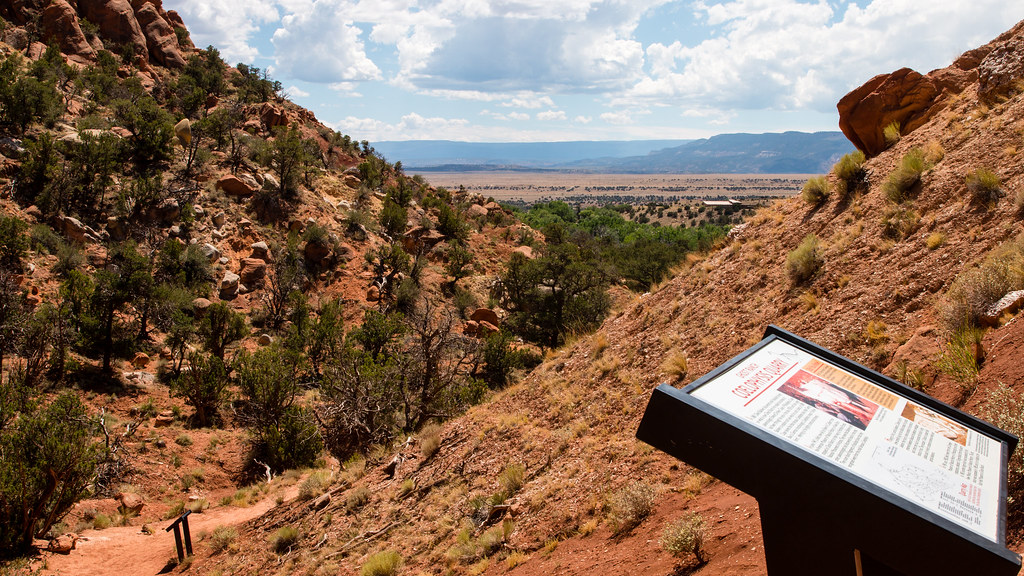
Let’s be real – most people know Ghost Ranch as the place where artist Georgia O’Keeffe painted all those legendary desert landscapes. What you might not know is that the same dramatic terrain is also home to one of the most astonishing dinosaur fossil sites on the entire planet. In 1947, paleontologist Edwin H. Colbert documented the discovery of over a thousand well-preserved fossilized skeletons of a small Triassic dinosaur called Coelophysis in a quarry at Ghost Ranch. That number is so staggering it almost sounds made up.
Since its discovery in 1947, the quarry has yielded the remains of at least 1,000 individuals from approximately 30 cubic meters of excavated material. Scientists believe a catastrophic flash flood swept these creatures into a topographic low, burying them rapidly. The skeletons are well-preserved, with about a quarter being articulated or complete, and the leading hypothesis consistent with both the fossil and sediment record is that the animals were killed by a flood, washed into a low spot or pond, and immediately buried.
Coelophysis bauri first appeared in the mid-Triassic Period around 228 million years ago. Its genus name means “hollow form,” referring to its hollow limb bones, and the animal grew up to almost 9 feet in length. Think of it like an agile, fast-moving predator built more like a greyhound than the hulking dinosaurs you see in movies. The fossil discovery was one of the most notable in the history of the state, and led to Coelophysis bauri being named the official state fossil of New Mexico in 1981. Ghost Ranch, it turns out, is still actively giving up new secrets today.
Cleveland-Lloyd Dinosaur Quarry, Utah: A Mystery That Science Still Can’t Fully Solve
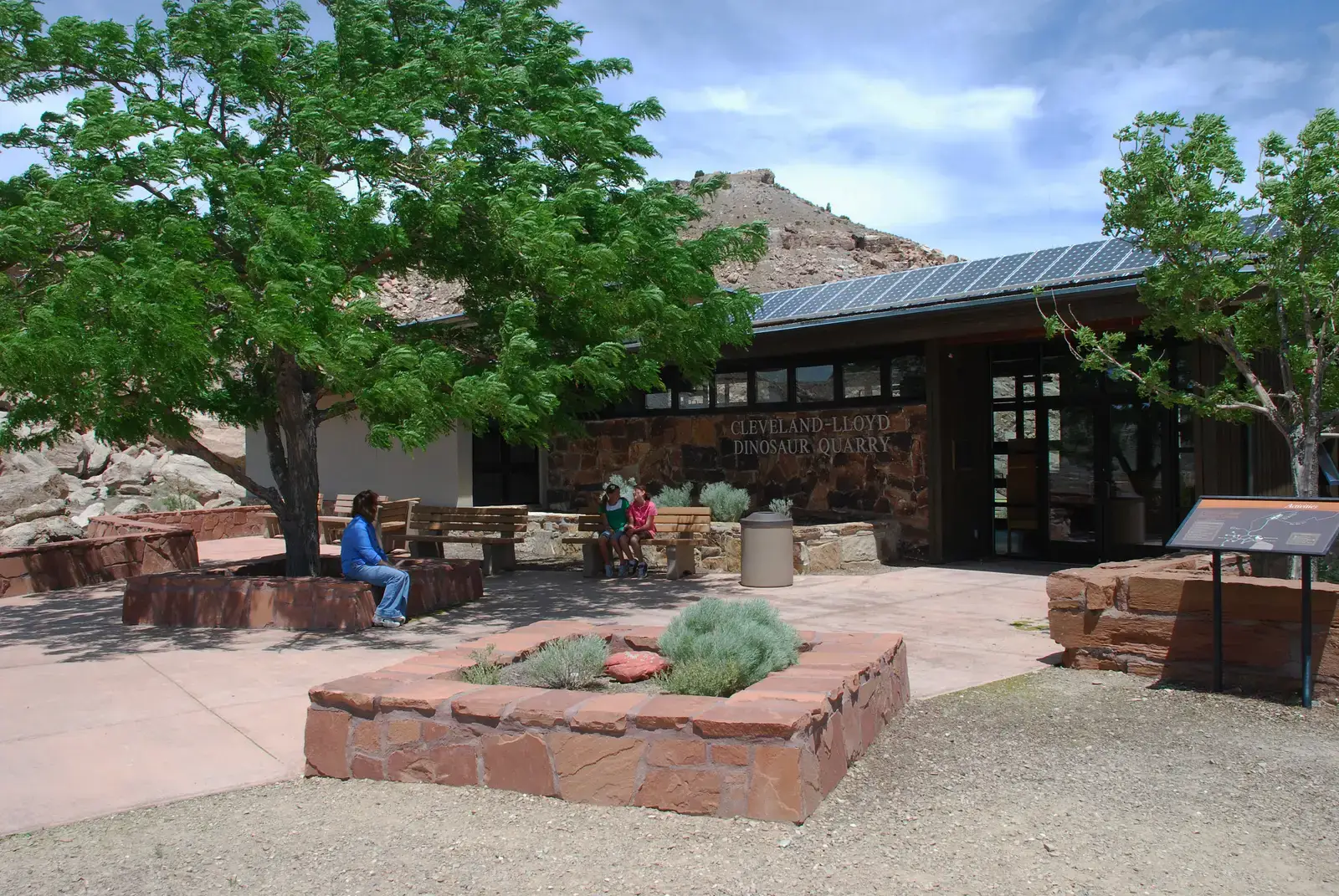
Tucked away in the remote desert of central Utah’s San Rafael Swell sits a place that should be far more famous than it is. Jurassic National Monument, at the site of the Cleveland-Lloyd Dinosaur Quarry, is well known for containing the densest concentration of Jurassic dinosaur fossils ever found, located in the geological layers known as the Morrison Formation. You read that right – the densest concentration on Earth, and yet many people have never even heard of it.
Well over 15,000 bones have been excavated from this Jurassic site, and there are many thousands more awaiting excavation and study. Here’s the fascinating twist: the site is notable for its unusually high number of carnivorous dinosaurs – more than three quarters of the bones come from predators like Allosaurus fragilis, with over 46 individuals identified. Why were there so many carnivores in one place? More recent studies suggest the mass deaths were the result of a drought, not a predator trap – with multiple groups of Allosaurus possibly coming to the area to find water and dying due to harsh conditions, perhaps from diseases caused by drinking contaminated water. Even after decades of research, the full story remains one of paleontology’s most tantalizing open questions.
Petrified Forest National Park, Arizona: A Window Into the Dawn of Dinosaurs
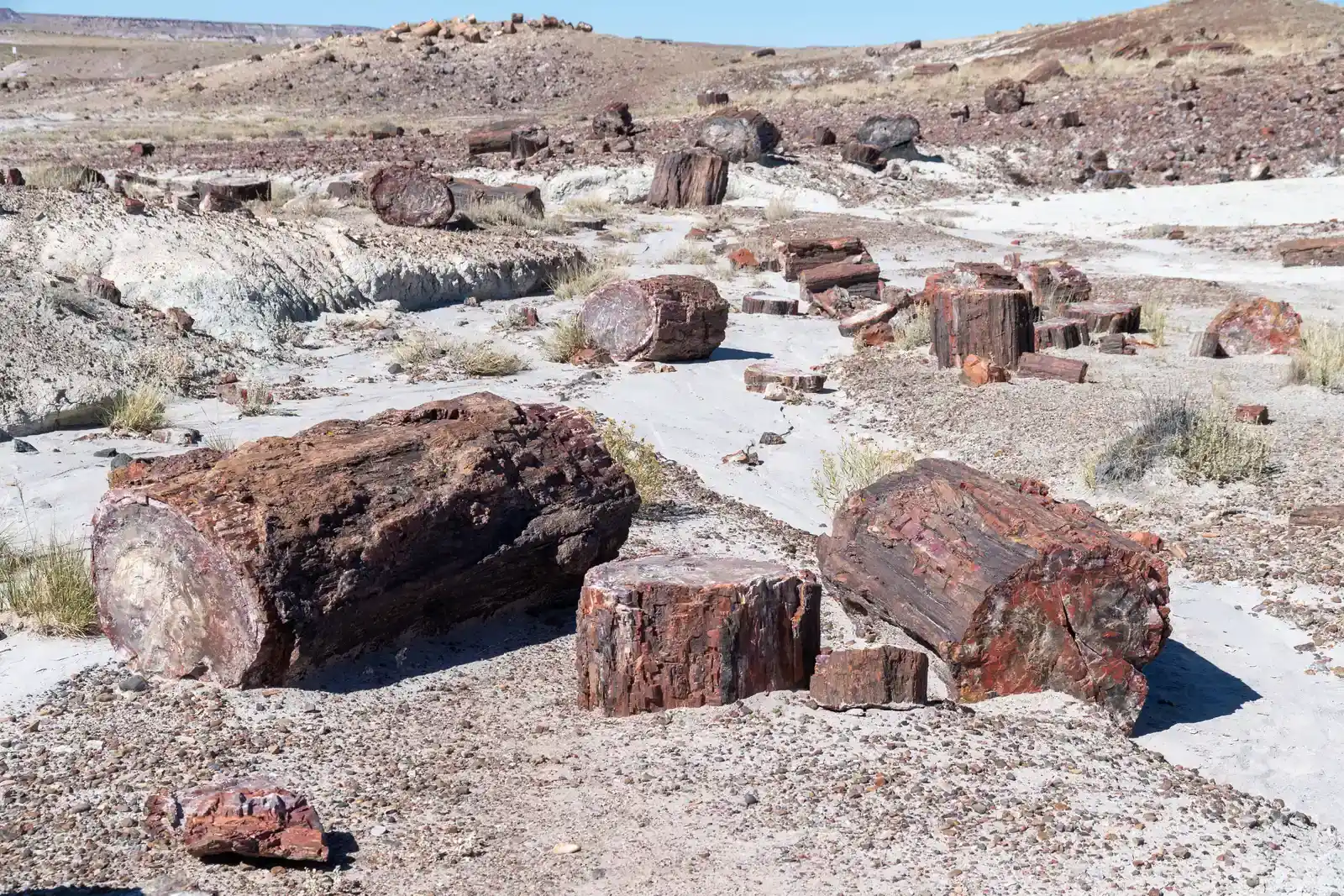
The Petrified Forest is named for its magnificent plant fossils, in particular its hulking 200-million-year-old logs that have crystallized into shiny, colorful stone, but paleontologists now have a clearer picture of the animals that lived among the trees during the Triassic. That’s what makes this park such a dual wonder – it’s visually stunning on the surface and scientifically explosive just beneath it. The Chinle Formation here is particularly notable for its rich fossil record including early dinosaurs, crocodiles, mammals, and a variety of plants and invertebrates.
You’d be amazed at just how much detail scientists have pulled from what looks like ordinary desert rock. Researchers now have around 7,500 specimens in the Petrified Forest collection just from a single locality called Thunderstorm Ridge, though the fossils are so small this only takes up a small portion of a storage cabinet – it took 4,500 pounds of rock to produce that many specimens, with rock hauled to the lab, screen-washed with water, and carefully picked through. Some of the results are remarkable. This painstaking work has led to recently described finds such as an early mammal relative called Kataigidodon venetus that was the size of a chipmunk, and a tiny lizard named Microzemiotes sonselaensis that may have been venomous. It’s a reminder that even the smallest, most easily overlooked fossils can completely change scientific understanding.
Glen Canyon, Utah: Fossils Rescued From Rising Waters
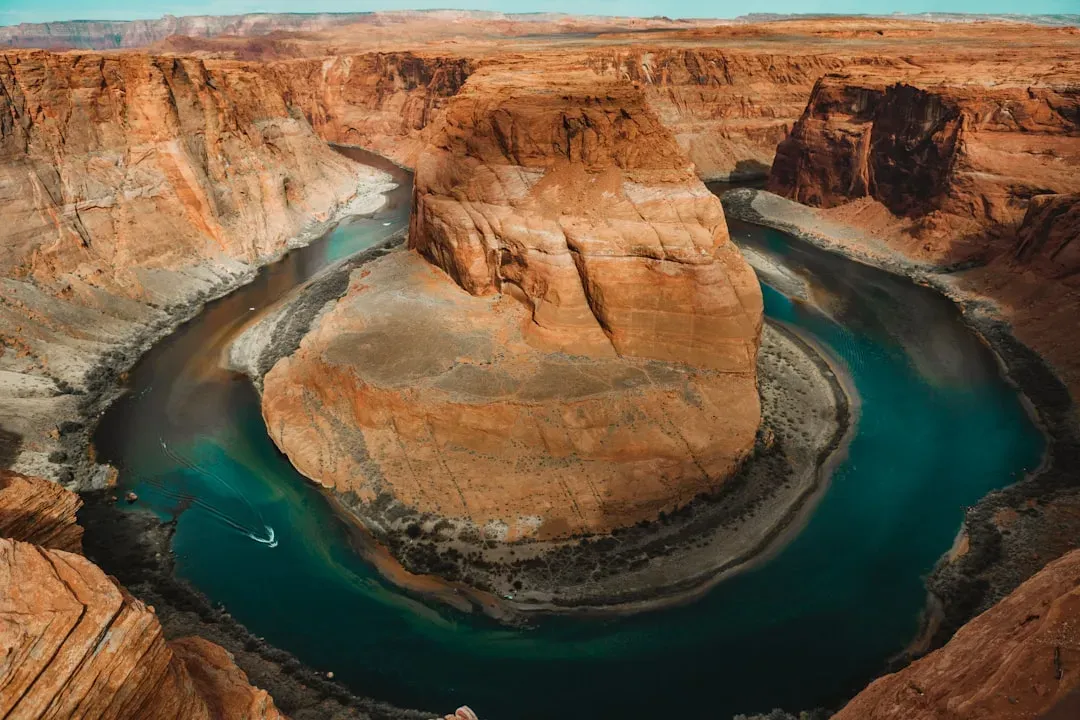
Here’s a story that sounds almost too cinematic to be real. In March 2023, paleontologists were documenting fossil tracksites near Lake Powell when they discovered a rare fossil horizon full of impressions of bones and bone fragments of tritylodontid mammaliaforms – early herbivorous mammal-relatives from the Early Jurassic, approximately 180 million years ago. These are the kinds of finds that rewrite textbooks. The drama doesn’t stop there.
The site had been submerged by Lake Powell’s fluctuating water levels and was only found because the paleontologists were in the right place at the right time before annual snowmelt filled the lake – giving the field teams only a window of approximately 120 days to recover the fossils. Talk about pressure. Studying these fossils will help paleontologists learn more about how early mammal relatives survived the mass extinction at the end of the Triassic Period and diversified through the Jurassic Period. The towering geologic formations surrounding Lake Powell are home to a vast suite of unexplored fossil remains, making Glen Canyon NRA one of the National Park Service’s most significant areas for paleontological research. It’s hard to say for sure, but discoveries like this suggest the region may still hold secrets that would genuinely shock the scientific world.
The Mojave Desert, California: Ancient Oceans Hidden in Dry Rock
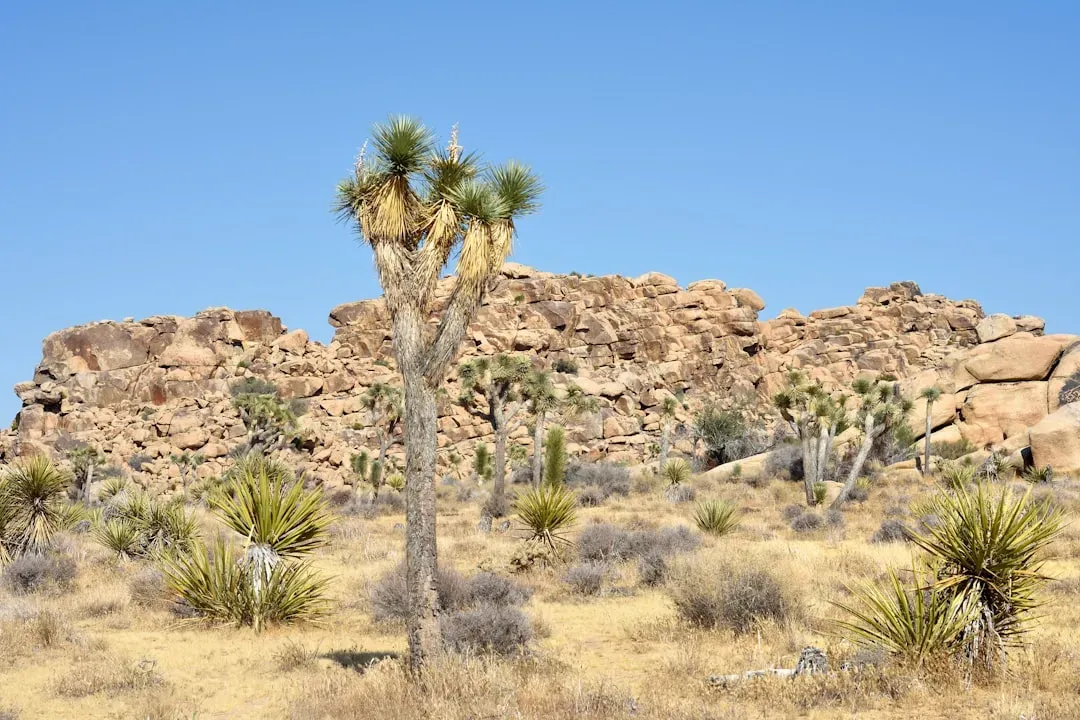
When you think of the Mojave, you picture blistering heat, Joshua trees, and lizards. You almost certainly don’t picture ancient marine life crawling across a shallow sea floor. Yet that’s exactly what the rock record reveals. Abundant and diverse marine fossils are preserved in units dated from the late Proterozoic through most of the Cambrian, as well as from the Devonian through the early Permian, and more recent volcanic tuff and unconsolidated sedimentary deposits in valleys preserve Cenozoic flora and fauna. The desert, in other words, is a layered archive of almost incomprehensible time.
The Wood Canyon Formation in the Mojave is paleontologically notable because it spans the Proterozoic to Cambrian boundary, preserving fossils from the early radiation of animals with hard parts. This is about as foundational as paleontology gets. Abundant and diverse marine fossils are preserved in units dated from the late Proterozoic through most of the Cambrian, as well as from the Devonian through the early Permian. Meanwhile, over near Calico in the Barstow Formation, rocks formed during the Miocene Epoch have also yielded a rare and highly unusual type of insect fossil preserved inside sedimentary nodules, a find so unexpected it was virtually stumbled upon by amateur collectors decades before scientists took a closer look. The Mojave, for all its seeming emptiness, is stacked floor to ceiling with ancient life.
Conclusion: The Desert Keeps Its Secrets Well
There’s something deeply poetic about the fact that our driest, most unforgiving landscapes are also our richest fossil archives. Erosion, that same slow, relentless force that strips these deserts bare, is also the force that brings ancient bones back to the surface. The real significance of these discoveries lies in how they illuminate the grand history of life on Earth – from its beginnings more than three billion years ago, fossils record how life adapted or perished in the face of major environmental challenges.
Each of these five sites tells a story that no museum exhibit can fully capture. You have to stand in that heat, look at those cracked cliffs, and try to imagine the world they once were. Whether it’s a desert flood that buried a thousand dinosaurs in New Mexico, a toxic pond in Utah, or a race against rising lake waters in Glen Canyon, these discoveries remind you that the past is never truly gone. It’s just waiting for the right moment to resurface.
What story do you think is still buried out there, waiting to be found? Tell us in the comments – we’d love to know what gets your imagination going.