Valentia Island, Ireland – Fossilized footprints etched into ancient rock slabs along this remote southwestern shore offer a rare glimpse into one of prehistory’s pivotal moments. These Devonian tetrapod trackways, preserved in the Valentia Slate Formation, capture the tentative ventures of early four-limbed vertebrates onto dry land some 385 million years ago. Scientists regard the site as a cornerstone for understanding the transition from water to terrestrial life. The tracks, visible today on ripple-marked bedding planes, stand as enduring testimony to evolution’s early experiments.
A Chance Find That Rewrote History
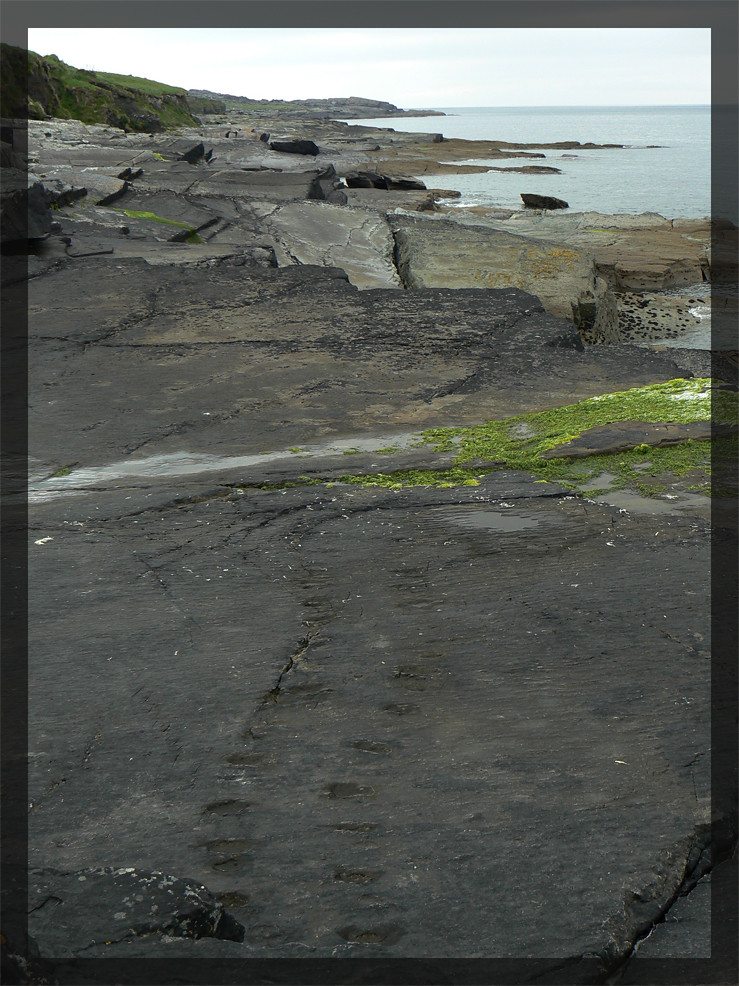
A Chance Find That Rewrote History (Image Credits: Flickr)
In the early 1990s, Swiss graduate student Iwan Stössel stumbled upon the first trackway while conducting fieldwork on the island’s northeastern coast. This serendipitous discovery near Chapeltown sparked intensive studies that revealed multiple sets of prints across several sites. Researchers later identified at least nine trackways at locations including Dohilla, Coosadillisk, and Culoo Head. Detailed analyses confirmed their Middle Devonian origin through palynological data and U-Pb dating of an embedded tuff layer.
The site’s exposure in fine-grained sandstones and siltstones preserved the impressions with remarkable clarity. Stössel’s find elevated Valentia to global prominence, as it joined a select few Devonian localities worldwide. Preservation occurred rapidly after the animals passed, likely during a brief flooding event that hardened the mud before erosion could erase the traces. Today, protective ropes and interpretive signs safeguard the outcrop for visitors.
Unpacking the Footprints’ Secrets
The trackways consist of parallel rows of shallow, irregular depressions, with smaller forefoot (manus) prints alternating alongside larger hindfoot (pes) impressions. The longest sequence stretches an impressive 15 meters and includes over 145 individual prints, marking it as the most extensive early tetrapod trail known. Some shorter paths reveal tail drags or body traces, suggesting the creatures measured 0.5 to 1 meter in length and 15 to 30 centimeters in width.
Variations in stride and print size indicate animals of differing ages or species navigating the substrate. While most suggest deliberate walking on firm ground, others imply a paddling motion in shallow water. Ripple marks beneath the tracks point to a dynamic riverside habitat, where mud flats emerged intermittently. These details paint a picture of cautious exploration rather than confident strides.
The Devonian Landscape of Valentia
During the Givetian to Frasnian stages, roughly 383 to 388 million years ago, this region formed part of a vast alluvial plain within the Munster Basin. The Valentia Slate Formation, rich in purple siltstones, records fluvial environments: proximal river channels, floodplain drains, and crevasse splays. Semi-arid conditions prevailed, with seasonal floods creating ideal conditions for track preservation less than 20 kilometers from the basin’s edge.
Palynomorphs and isotopic dating pinpoint the age at around 385 million years, aligning the site with Poland’s Zachełmie tracks as among the earliest vertebrate land evidence. The tetrapods likely followed perennial river corridors northward from marine origins, adapting over millions of years. This setting, far from deep water, underscores their bold foray into terrestrial realms.
Evolutionary Implications and Global Context
These trackways challenge earlier timelines for vertebrate land colonization, predating most body fossils by tens of millions of years. They demonstrate fully terrestrial locomotion in Middle Devonian tetrapods, bridging fish-like ancestors to amphibians. Comparable sites in Australia and Poland reinforce a pattern of widespread early experimentation with limbs on land.
- Nine trackways across three sites highlight population activity in river margins.
- Longest at 15 meters with 145 prints, surpassing other Devonian examples.
- Tail drags in some indicate transitional behaviors between swimming and walking.
- Preservation in non-saturated sediments confirms subaerial movement.
- Animals inhabited semi-arid floodplains, migrating via river networks.
| Site | Trackway Features | Environment |
|---|---|---|
| Dohilla | Multiple prints, body drags | Crevasse splay |
| Coosadillisk | Parallel manus-pes | River channel margin |
| Culoo Head | Shorter sequences | Floodplain drain |
Such evidence reshapes our view of Devonian ecosystems, where these pioneers navigated muddy expanses under a distant equator.
Key Takeaways
- Valentia’s tracks, dated to 385 million years ago, rank among the planet’s oldest tetrapod fossils.
- The 15-meter trail documents sustained walking by early four-limbed vertebrates.
- Riverside habitats facilitated the shift from aquatic to land-based life.
Valentia Island’s tetrapod trackways endure as a profound reminder of life’s resilient drive to conquer new frontiers. They invite reflection on our shared ancestry with these ancient trailblazers. What do you think about these prehistoric steps? Tell us in the comments.