
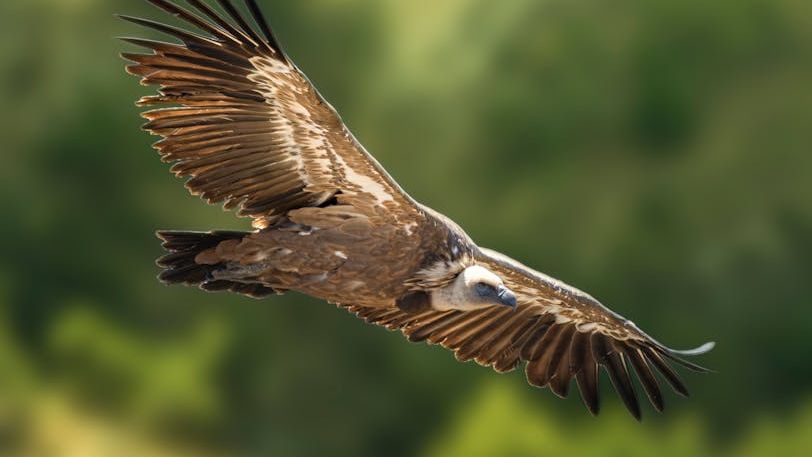
There is a bird soaring above the Mediterranean right now, riding invisible columns of warm air at heights most of us will only ever see from an airplane window. It weighs as much as a medium-sized dog, spans nearly the length of a small car from wingtip to wingtip, and can devour a carcass laced with anthrax without flinching. If that doesn’t already sound prehistoric, just wait.
The Griffon Vulture is one of nature’s most jaw-dropping engineering achievements, a creature so perfectly designed for its role that it almost seems unfair. Whether you think of it as grotesque or magnificent, honestly, you can’t help but be fascinated by it. Let’s dive in.
Fact 1: A Wingspan That Will Make Your Jaw Drop
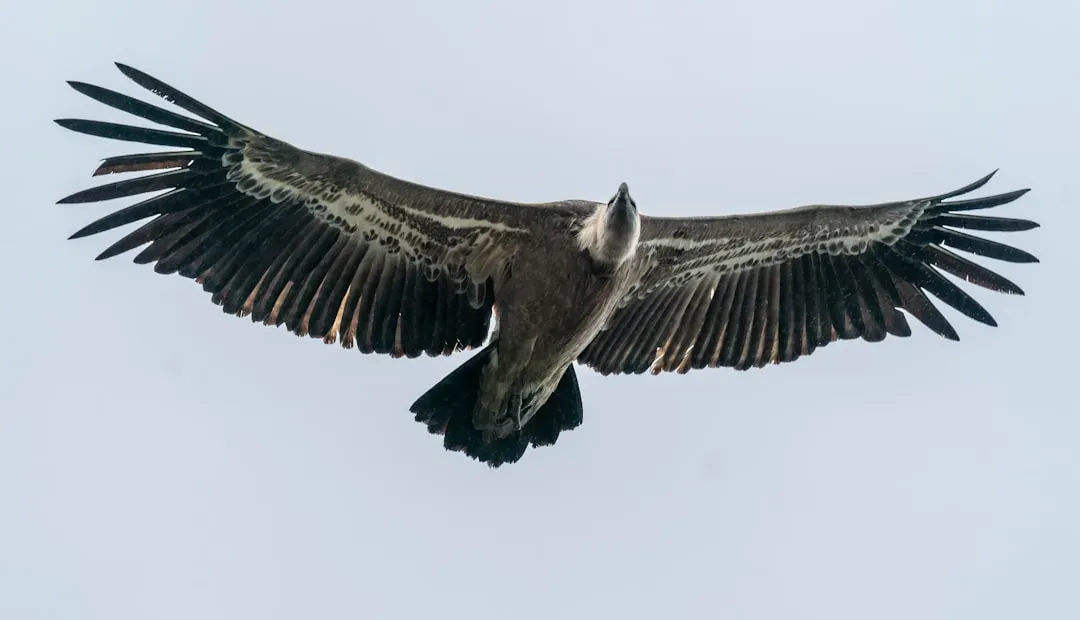
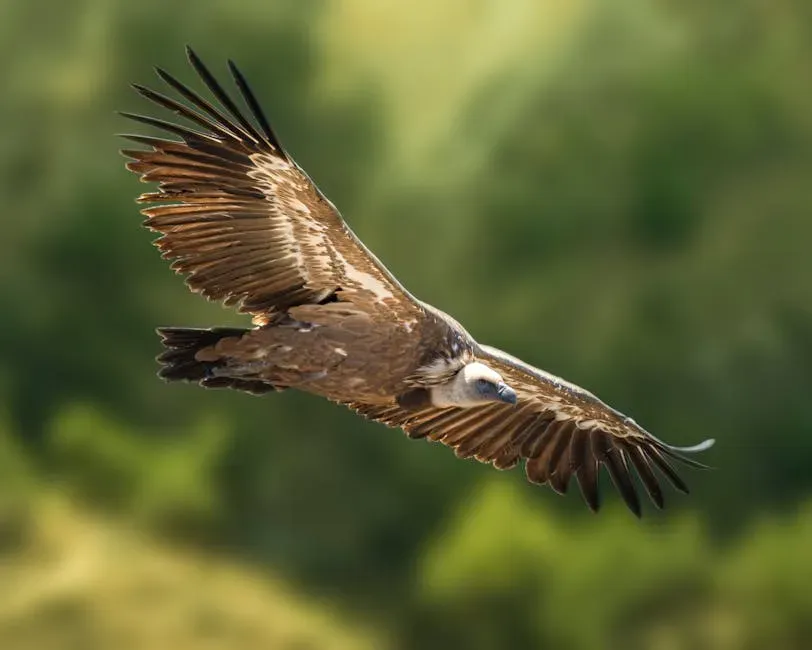
When you first see a Griffon Vulture spread its wings, the instinct is to take a step back. The griffon vulture measures between 93 and 122 centimeters in length, with a wingspan stretching from 2.3 to 2.8 meters. To put that in perspective, that’s wider than most people are tall, and then some.
A griffon vulture’s wingspan falls between eight and nine feet, while a bald eagle’s sits at around seven feet. In terms of body weight, a bald eagle typically weighs around ten pounds, while a griffon vulture tips the scale anywhere from thirteen to twenty-four pounds. So the next time someone talks about eagles being the kings of the sky, you can politely correct them.
Fact 2: A Master of Energy-Efficient Flight
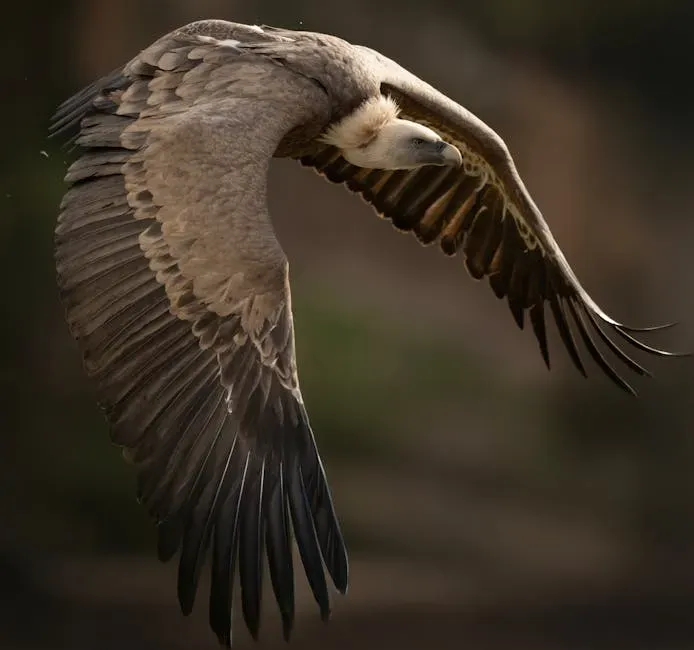
Here’s the thing about the Griffon Vulture: it barely works to stay airborne. That sounds like a contradiction for a bird this large, but it is absolutely true. Its physical build constrains it to a soaring-gliding style of flight that depends entirely on local atmospheric conditions, as it must search over vast areas for carcasses that are unpredictable in both time and space.
Compared to most birds, which can elevate their metabolic rate to upwards of sixteen times their baseline during flight, soaring griffon vultures expend only about 1.43 times their basal metabolic rate. They are also remarkably efficient in their ability to return to a resting heart rate within just ten minutes of landing. Think of it like a high-performance glider that barely uses any fuel. Nature’s version of economy travel, done absolutely right.
Fact 3: Eyesight That Defies Belief
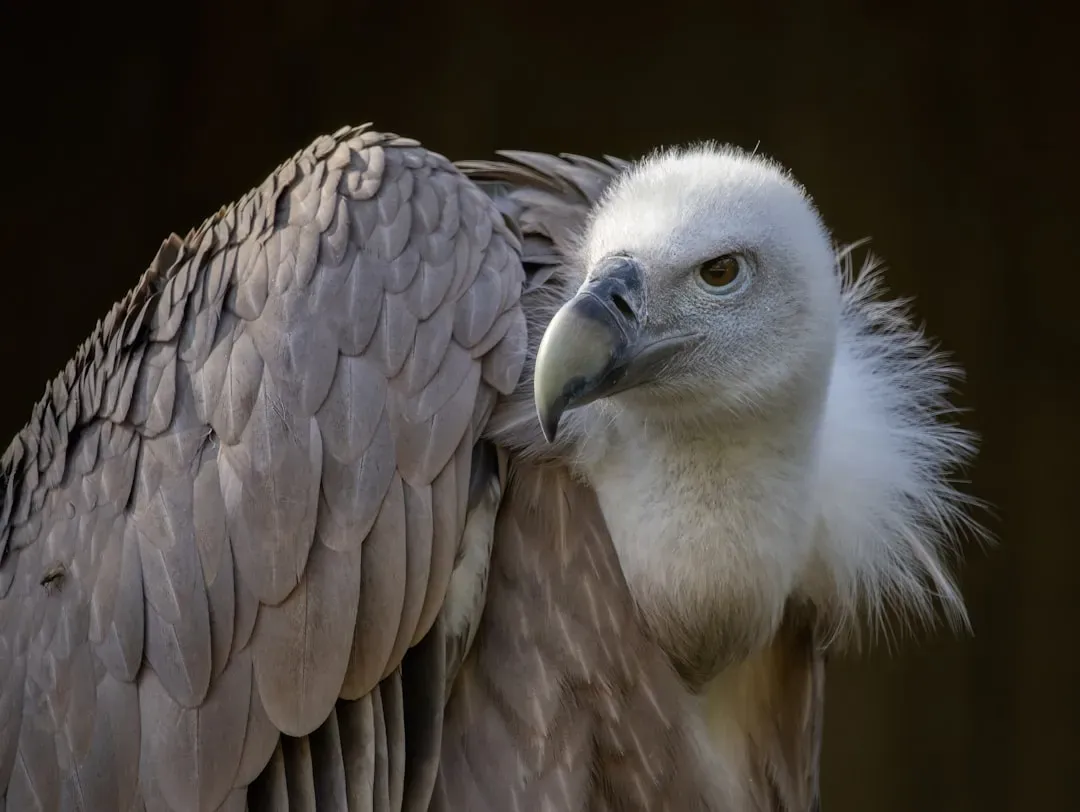
You might think vultures sniff out their meals the way a dog tracks a scent. You would be wrong. Griffon vultures have a poor sense of smell, relying exclusively on exceptional eyesight to locate food. A soaring vulture is able to spot a three-foot carcass from a distance of 6.4 kilometers, or four miles, away. That is nothing short of extraordinary.
Also known as the Eurasian Griffon, this large short-tailed vulture has excellent eyesight and can spot an animal carcass from a distance in excess of five kilometres while in flight. Imagine being able to read a stop sign from the other side of your city. That is roughly the visual equivalent of what this bird does, every single day, while gliding hundreds of meters up in the air.
Fact 4: A Stomach That Could Survive a Chemistry Lab
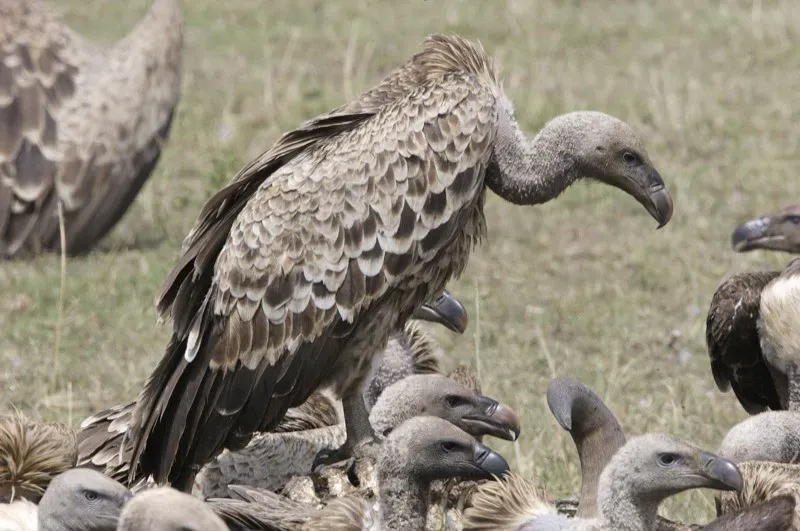
Let’s be real: eating rotting, bacteria-riddled carcasses would kill most animals. Not the Griffon Vulture. The main reason vultures do not get sick from eating rotten, bacteria-infested meat is their digestive system. Vultures possess the strongest digestive acid in the entire Animal Kingdom. We are talking about stomach conditions that would dissolve most things you could throw at them.
Griffon vultures are capable of consuming terrifying bacteria including anthrax, botulism, and cholera. As a result of evolving to eat such rotten material, they have developed a remarkable tolerance to these diseases and actively help remove them from circulation. It’s a biological superpower dressed up in feathers. Research shows that the evolution of obligate scavenging in vultures has been accompanied by widespread positive selection acting on genes underlying gastric acid production and immunity. Evolution, when pushed hard enough, truly delivers miracles.
Fact 5: They Are Nature’s Ultimate Cleanup Crew
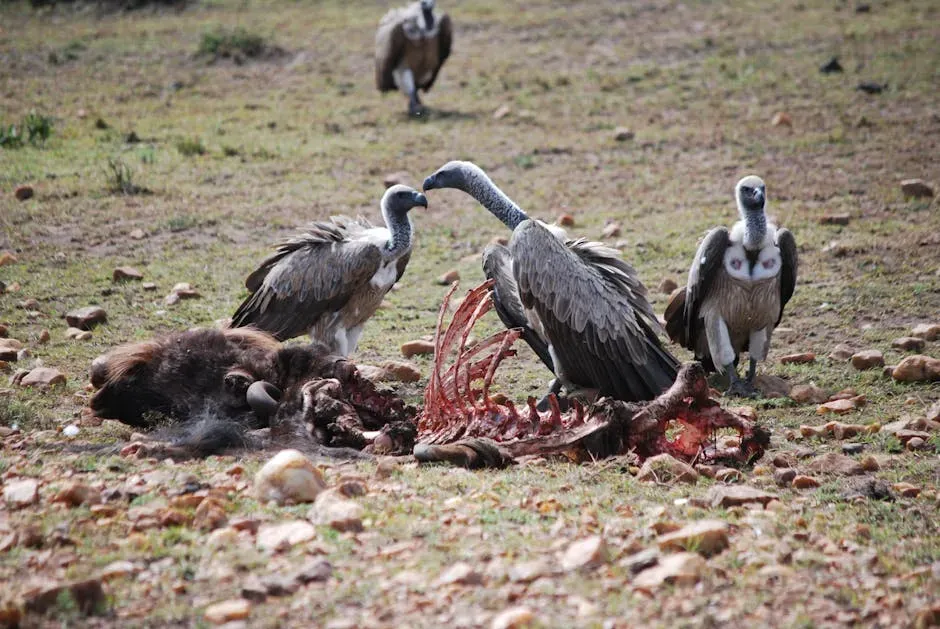
It would be easy to write off the Griffon Vulture as simply gross. That would be a serious mistake. The very nature of these scavengers makes them critically important in several ways. Hoovering up rotting flesh prevents it from lying around and spreading disease. The nutrients stored in the dead animal’s flesh are then put back into the soil when the vulture excretes, fuelling the next generation of plants and microbes at the base of the food chain.
Nearly seventy percent of the world’s carrion, and the diseases accompanying it, is eliminated by vultures. Without them, ecosystems would be buried in disease-ridden waste. The India example is chilling: when veterinary drugs used to treat cattle killed vultures and left carcasses unattended, the resulting rise in stray dogs and rabies outbreaks led to approximately 20,000 human deaths annually. That is the cost of losing these birds. Sobering doesn’t even cover it.
Fact 6: A Social Life More Complex Than You’d Expect
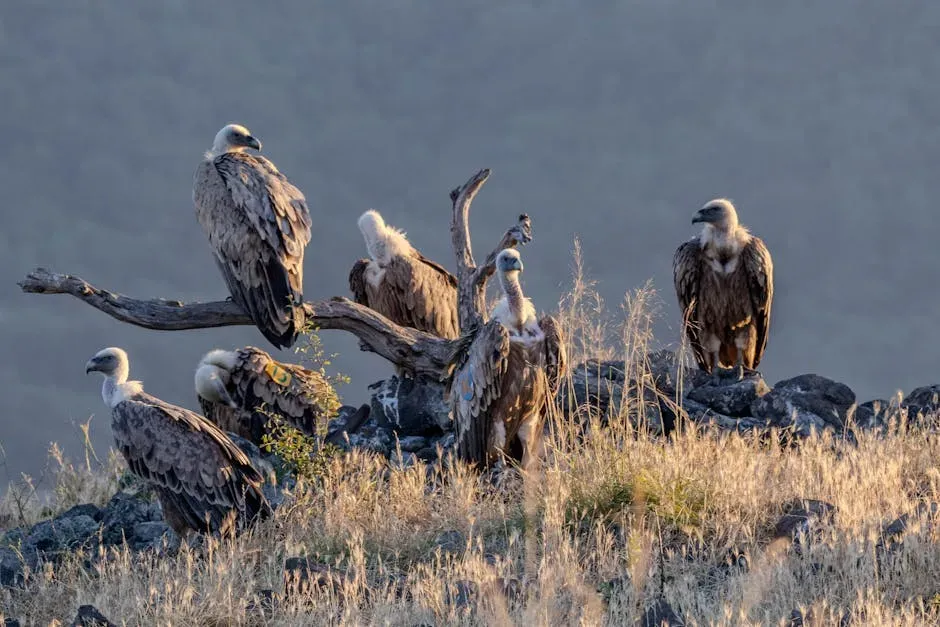
You might picture a lone vulture hunched over a carcass in the desert. The reality is far more interesting. Griffon Vultures are very social compared to other vulture species, foraging in groups and breeding in colonies on steep cliffs. Their social structure is surprisingly sophisticated, almost like a well-run community.
They display classic “information center” behavior, watching one another’s departures and flight lines so that following a successful forager can lead many vultures to a carcass. Feeding at a carcass involves competitive but ritualized behavior, including hissing, wing-spreading, and neck jabbing, though actual injury is minimized by threat displays and rank order. Think of it like a very intense office hierarchy, except everyone is competing over a dead goat.
Fact 7: Cliff Nesters With a Lifelong Bond
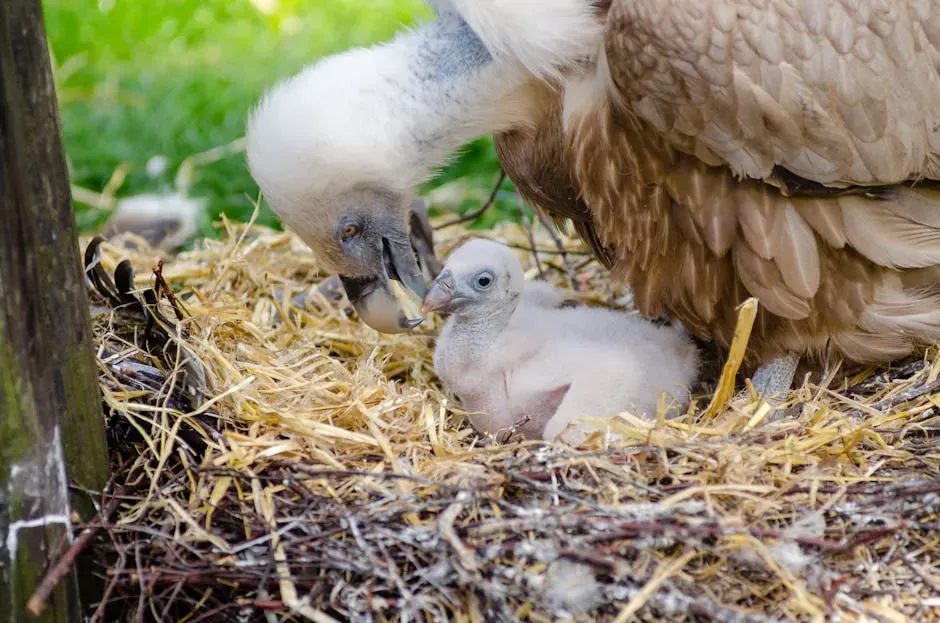
This species is monogamous, and pair bonds are often lifelong. Beautiful courtship flights take place around the nesting cliffs. There is something quietly touching about that. These massive, prehistoric-looking birds choose a partner and stick with them, potentially for decades.
Griffon vultures breed in colonies generally containing fifteen to twenty pairs, though sometimes up to one hundred and fifty. They build their nests on cliff faces in rock cavities or on protected ledges where a human would have difficulty reaching, using sticks one to two centimeters in diameter, finer twigs, and grasses. One of the most remarkable nesting habits is that many of them reuse the same nest each year, with the structure growing larger over time due to repairs made by the birds. Their cliff-side homes are essentially passed down through generations.
Fact 8: A Lifespan That Rivals Our Own
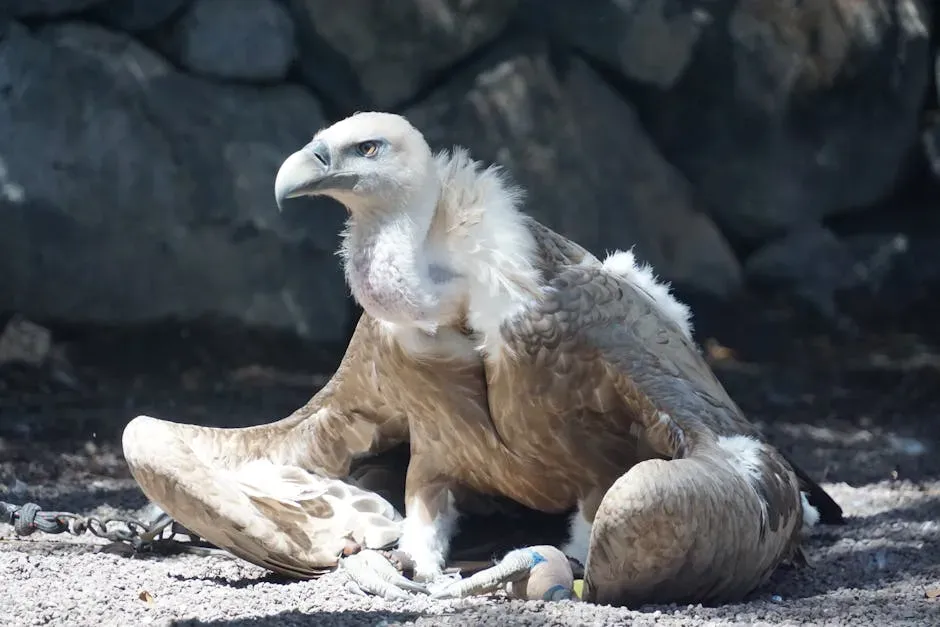
Here is a fact that I think genuinely surprises most people. We tend to assume large birds live long, but the Griffon Vulture pushes those expectations to a whole new level. The maximum recorded lifespan of the griffon vulture is 41.4 years for an individual in captivity. That’s a longer life than many domestic animals, and not far off from human lifespans in some parts of history.
The typical lifespan of the Griffon Vulture falls between 35 and 42 years. It’s hard to say for sure how long they live in the wild on average, given all the threats they face, but their biological potential for longevity is remarkable. A bird that can live four decades while soaring above mountains and digesting anthrax is, without question, one of nature’s toughest survivors.
Fact 9: A Thermoregulation System Built Into Their Bare Skin
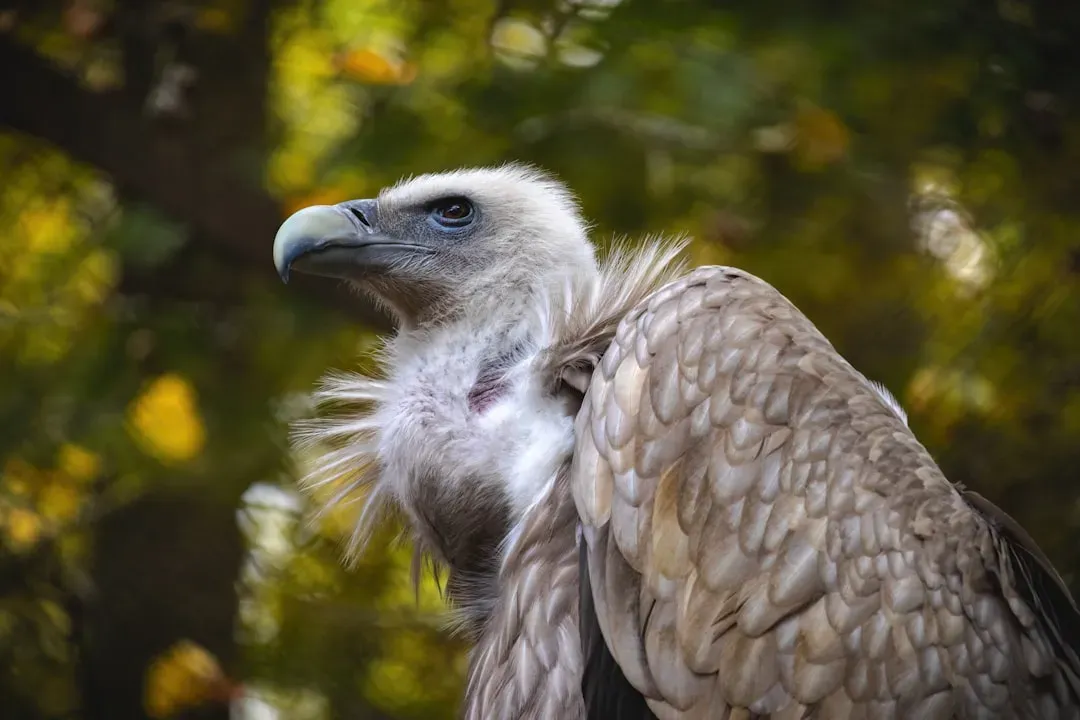
That bald, pale head isn’t just for looks, and it certainly isn’t a design flaw. It is one of the cleverest thermal engineering solutions in the animal kingdom. Vultures use their bald heads as a means to thermoregulate in both extreme cold and hot temperatures. Changes in posture can increase bare skin exposure from seven percent to thirty-two percent, allowing for more than a doubling of convective heat loss in still air.
Griffon vultures have also been found to tolerate increased body temperatures as a response to high ambient temperatures. By allowing their internal body temperature to change independently of their metabolic rate, griffon vultures minimize their loss of water and energy in thermoregulating. Like other vultures, they have evolved with almost no feathers on their head and neck, having only fine, short down instead. This aids in ease of cleaning after a messy meal and helps to prevent disease when inserting their head into a rotting carcass. Form, function, and survival, all wrapped up in one bare, wrinkly head.
Fact 10: Their Conservation Battle Is Far From Over
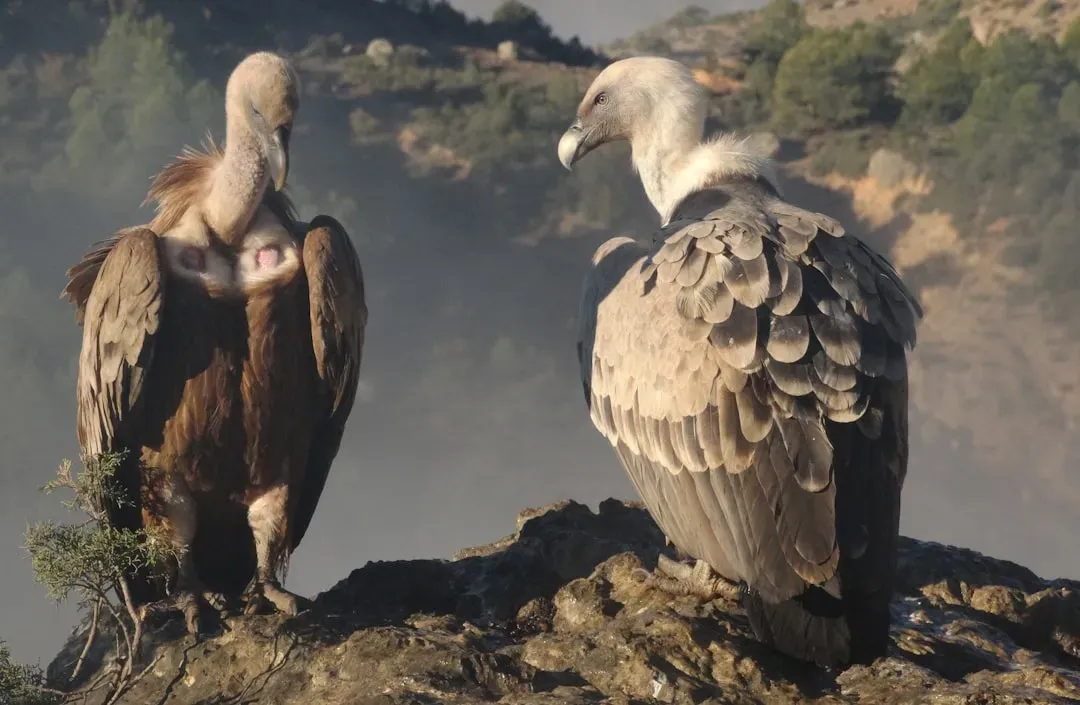
You might assume the Griffon Vulture is thriving everywhere. The truth is more complicated, and in some places, truly alarming. Following a decline in the twentieth century driven by wildlife poisoning, hunting, and decreasing food supplies, the species has increased dramatically in some areas, particularly Spain, France, and Portugal, with the population in western Europe now numbering around 30,000 breeding pairs, about 25,000 of which are found on the Iberian Peninsula. That is a genuine conservation success story.
Yet in other regions, the picture is dire. The Griffon Vulture in Cyprus is at serious risk of disappearing. Without intervention, the species could be extinct on the island within the next fifteen years. A study by the Vulture Conservation Foundation found that a minimum of 200 vultures is needed for a stable population, yet today, only around 37 remain, making it the smallest vulture population in Europe. Despite population growth in some areas in recent years, they continue to face threats such as poisoning, electrocution, disturbance, and lack of food. The battle to protect this incredible bird is ongoing, and every single bird genuinely matters.
Conclusion: A Bird That Deserves More Than It Gets
The Griffon Vulture doesn’t get the glory of an eagle or the romance of a hawk. It circles the dead, plunges its bald head into carcasses, and eats bacteria that would kill most other creatures outright. It sounds like a villain from a nature documentary. In reality, it is one of the most perfectly engineered, ecologically vital, and quietly fascinating animals on the planet.
From its near-aircraft-level wingspan and iron-clad stomach to its lifelong partnerships and forty-year lifespan, this bird earns its place among nature’s greatest achievers. It has soared above civilizations, been worshipped by ancient Egyptians, and continues to hold ecosystems together in ways most people never even realize. The Griffon Vulture is not just surviving in the skies. It is thriving, adapting, and reminding us that the most extraordinary creatures are sometimes the ones we overlook entirely.
Now that you know what this ancient flier is truly capable of, do you still see it as just a scavenger, or as something far more impressive? Tell us your thoughts in the comments below!