There’s something oddly fascinating about the idea that deep in your personality, buried under years of social conditioning, career goals, and Netflix binges, something ancient is still running the show. You might think of yourself as a modern, civilized human, but science keeps nudging us toward a different truth.
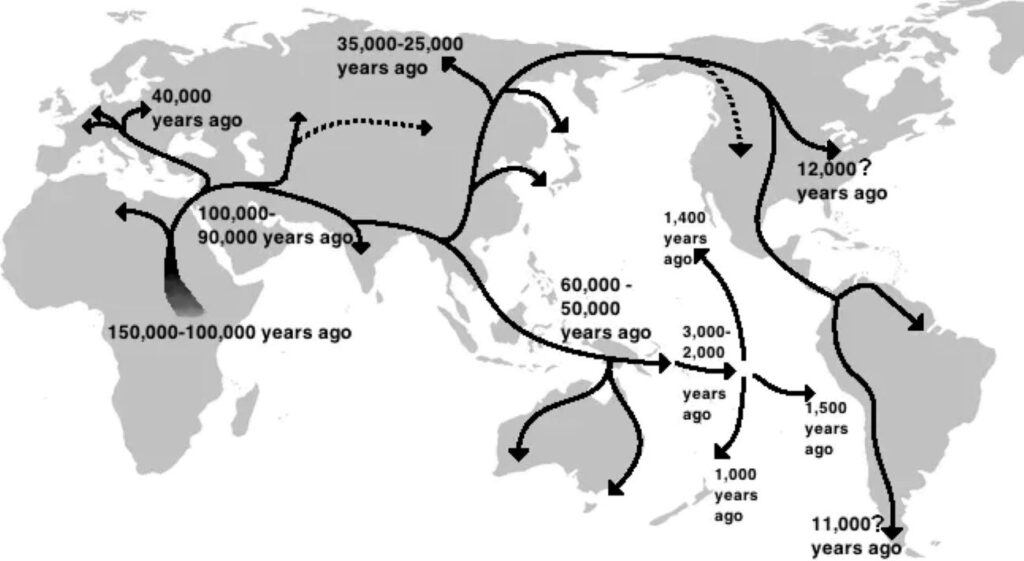
Evolutionary psychology holds that although human beings today inhabit a thoroughly modern world of space exploration and virtual realities, they do so with the ingrained mentality of Stone Age hunter-gatherers. Homo sapiens emerged on the Savannah Plain some 200,000 years ago, yet people today still seek those traits that made survival possible then, like an instinct to fight furiously when threatened. Sounds a lot like some people you know, right? Let’s dive in.
You Command a Room Without Saying a Word

Let’s be real. Some people don’t walk into a room. They arrive. You’ve seen it happen, maybe you’ve even done it yourself. There’s a gravitational pull around certain personalities that silences conversations the moment they step through a door.
They don’t walk into meetings, they “arrive.” They possess a force field around them that can quieten a room. Their energy has a perpetual, subtle, and sometimes not so subtle latent menace. Their calculating intelligence is there for all to see. This is no social trick. It’s something far older, wired into the nervous system of a species that once had to establish dominance or be eaten.
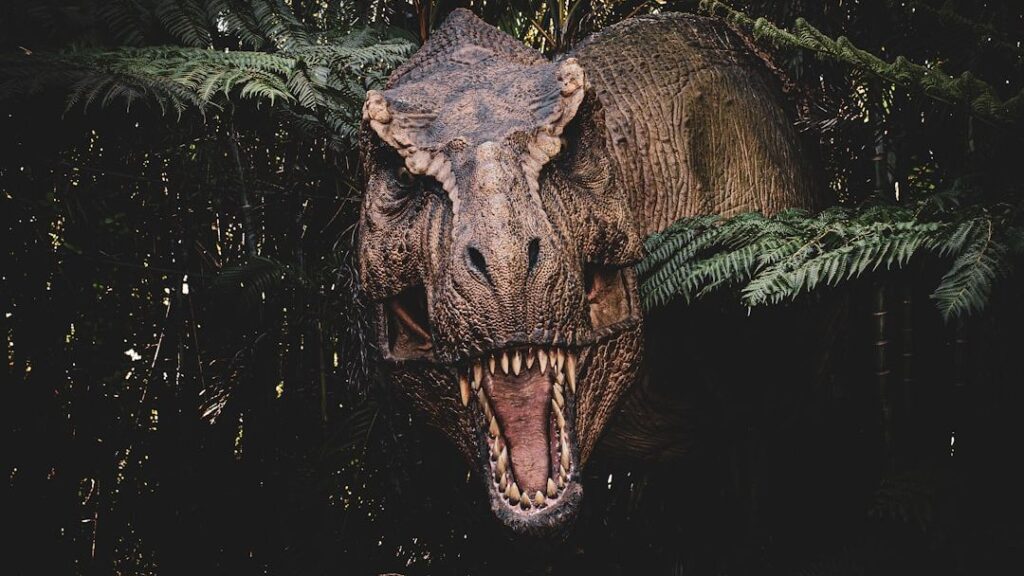
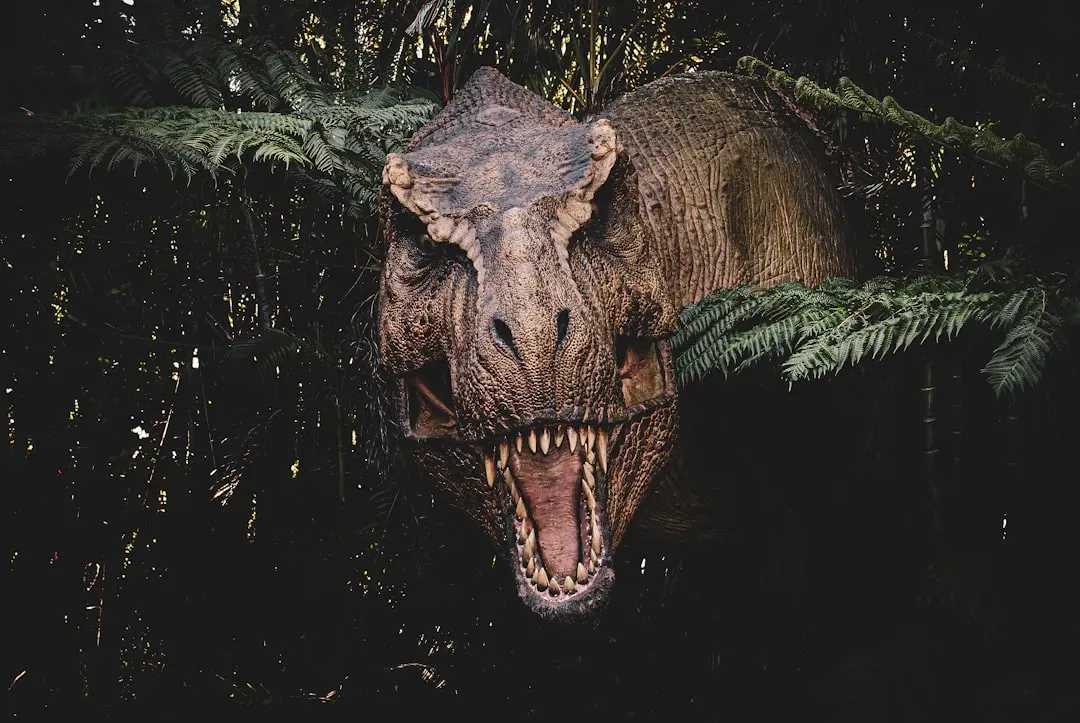
If you embody dominance and a natural ability to lead, just like a commanding apex predator, you take charge and inspire others with your confidence. Think of the T. rex in any environment. It didn’t need a name badge or a title. Its very presence communicated power. Honestly, some humans are built the same way.
You Are Fiercely Territorial About What’s Yours

Ever felt an irrational flicker of possessiveness over your workspace, your creative ideas, or even your favorite corner of the couch? That’s not petty behavior. That’s ancient programming. That surge of possessiveness over something as small as your favorite coffee mug at work is your territorial instinct kicking in. This primal urge to claim and defend territory isn’t just about physical space. It can extend to ideas, relationships, and even abstract concepts.
Humans are still influenced by ancestral demands like territorialism, reproduction, survival, secure feeding sources, dominance, and cumulative behavior, which often conflict with cultural drives. So when you feel that surge of protectiveness over your project, your partner, or your parking spot, you’re not being unreasonable. You’re channeling something from about 230 million years ago. A mammoth would completely understand.
Your Instincts Kick In Faster Than Your Brain Can Think

You’ve had that experience, right? Something happens, and before your mind can process a single thought, your body has already reacted. Your heart pounds. Your muscles tense. You’re already moving. That’s not anxiety. That’s prehistoric programming at its finest.
The survival response, fight-flight-freeze, is triggered by a perceived threat. In early human history, individuals who reacted quickly to danger were most likely to survive and therefore reproduce, passing down the trait of rapidly responding to threats. Think about it like this: your nervous system is a reptile in a human suit, always scanning for predators even when you’re just sitting in a corporate meeting. Many behavioral traits acquired over hundreds of thousands of years still influence human behavior. Your gut reaction isn’t irrational. It’s ancient wisdom.
You Are a Natural Leader Who Thrives Under Pressure

Here’s the thing about prehistoric apex predators. They didn’t panic when things got messy. They adapted, they focused, and they acted. If you’ve ever noticed that you feel oddly calm, even sharpened, during a crisis, while everyone else is spiraling, that’s a trait straight out of the Cretaceous period.
There are many advantages to having dominant personalities on a team. They make strong leaders, particularly in times of crisis, and they may also excel at handling stressful situations and heavy workloads. Their energy can encourage fellow team members to stay focused on their tasks and targets. That’s not arrogance. That’s the same quality that kept pack leaders alive long enough to pass their genes down to you. They set ambitious goals and strive to achieve excellence in everything they do. Their drive for success can be contagious, motivating others to perform at their best.
You Move Through the World With Solitary Confidence

Not every mighty prehistoric beast was a pack animal. Some of the most powerful creatures to ever walk the earth were solitary operators who needed no herd, no approval, no validation. If you feel completely at ease on your own, making your own rules and charting your own path, you’re echoing that same energy.
The Pterodactyl’s life in the heavens epitomizes freedom. Unchained and adventurous, they embraced the vast open sky as their domain. Like a true free spirit, their flight paths were their own to choose. If that resonates, you might be the kind of person who doesn’t need a flock. Pterodactyls didn’t need a flock. They flaunted their self-sufficiency with solo flights. Their confidence in solitude reflects the maverick’s path of individuality and self-reliance. Solitude isn’t emptiness. For some personalities, it’s where the real strength lives.
You Are Deeply Protective of Your Inner Circle

Many of the mightiest prehistoric creatures weren’t just aggressive for the thrill of it. They fought hard for something. Their territory, their offspring, their pack. If your protective instincts toward the people you love run almost ferociously deep, you’re wired the same way. It’s not possessiveness. It’s a primal loyalty few people truly understand.
The Stegosaurus was typically a docile creature, but one born to protect itself thanks to the spiky plates along its spine. Those who identify with this beast are usually easygoing but may appear a little guarded when first meeting someone new. Like a real Stegosaurus, you’re protective of yourself and those in your inner circle. Think of it this way: a Triceratops wasn’t charging because it was angry at the world. It was charging because something it loved was threatened. Triceratops lovers could reflect a steadfast, protective nature. If you’d flip the world upside down for your people, welcome to the herd.
Conclusion
It’s easy to look at the traits above and think they’re exaggerated comparisons. I’d argue the opposite. Humans are bound to their ancestral demands imprinted as a set of basic drives, including territorialism, reproduction, survival, secure feeding sources, dominance, and cumulative behavior, which exist in friction with our cultural drives. These aren’t quirks. They’re blueprints.
Understanding the influence of these primal drives on our behavior is more than just an interesting scientific exercise. It’s a powerful tool for self-awareness and personal growth. By recognizing the primal instincts that drive many of our actions, we can make more conscious choices about how we respond to the world around us. The question isn’t whether you have prehistoric beast energy. The better question is, now that you know, what will you do with it?