Long before any dinosaur took its first lumbering step across our planet, the Earth was already busy doing something extraordinary. It was building itself. Layers upon layers of rock, mineral, and molten fury were slowly hardening into the bones of a world that would one day teem with life. These formations were not shaped by gentle hands. They were forged in violence, heat, and a planetary chaos we can barely imagine.
You might think of ancient history as something measured in centuries or even millennia. Honestly, that barely scratches the surface. The geological formations featured here are measured in billions of years, making even the mightiest dinosaur look like yesterday’s news. So buckle up, because what you’re about to discover will completely rewire your sense of time. Let’s dive in.
The Nuvvuagittuq Greenstone Belt: The Most Controversial Rock on Earth
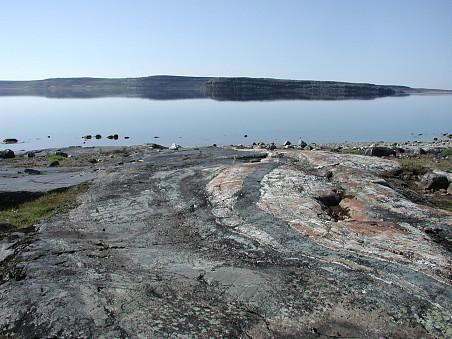
Imagine standing on the eastern shore of Hudson Bay in northern Quebec, with your boots planted on rock that may be nearly as old as Earth itself. Located in Quebec, Canada, the Nuvvuagittuq Greenstone Belt is one of Earth’s oldest known rock formations, dating back approximately 4.3 billion years. That number is almost impossible to hold in your head. For context, dinosaurs only appeared roughly 230 million years ago. This rock predates them by roughly 18 times over.
The controversy surrounding this formation is real and ongoing. The Nuvvuagittuq Greenstone Belt has been dated several times by different research groups, with widely divergent results. Most agree the rock is at least 3.75 billion years old, but that wouldn’t make it Earth’s oldest. Still, even its most conservative age estimate puts it in a league of its own. In 2017, a team of researchers presented findings on what they believe to be traces of life found in the banded iron formation of the belt, and their microscopic investigation revealed small tubes made of the iron mineral hematite. Life signals inside one of the oldest rocks on Earth? That is hard to wrap your mind around.
The Acasta Gneiss: Canada’s Rock of Ages
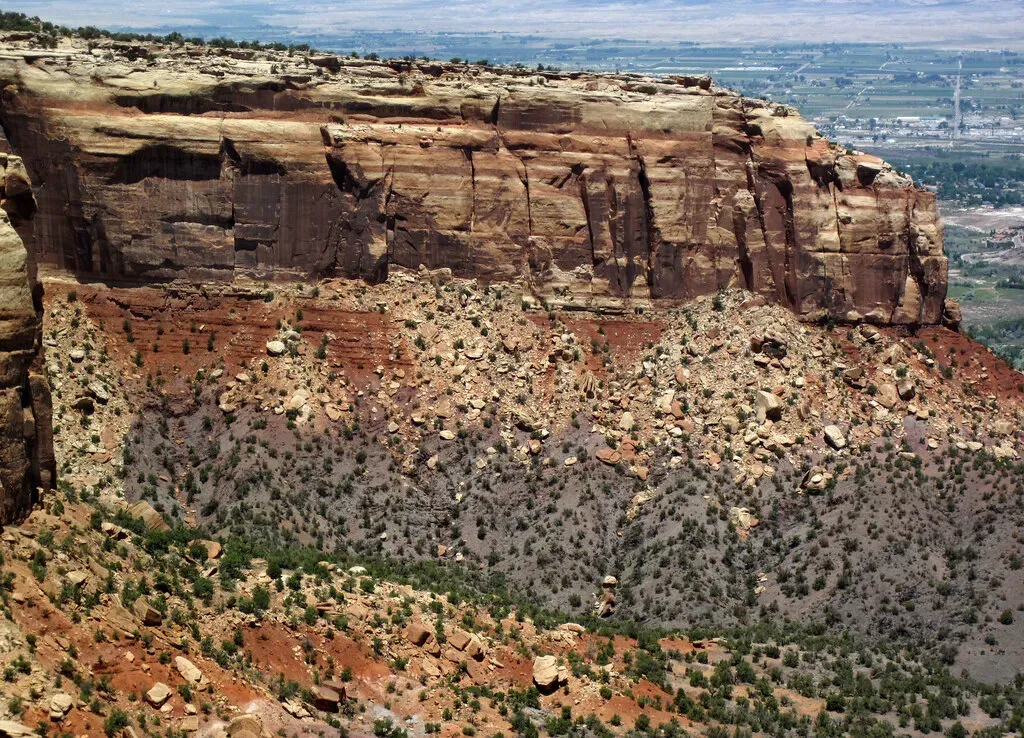
If geological formations were celebrities, the Acasta Gneiss would be the one everyone agrees on. The Acasta Gneiss Complex, a group of rocks exposed along a riverbank nearly 200 miles north of Yellowknife in northwestern Canada, is more widely agreed to be the planet’s oldest geological formation. That kind of scientific consensus doesn’t come easily. These rocks are unambiguously dated at 4.03 billion years old, marking the boundary between the Hadean Eon and the next chapter in Earth’s history: the Archean.
Here’s the thing about the Acasta Gneiss that makes it even more impressive. Due to its age, the Acasta Gneiss was formed during the Hadean, the earliest eon in Earth’s history, and it is only about a half-billion years younger than Earth itself. Think about that for a moment. This rock formed when the planet was still cooling from its own birth. The Acasta Gneiss, found in Canada’s Northwest Territories, is one of Earth’s oldest exposed rock formations, dating back around 4.02 billion years, and this ancient rock provides valuable information about the conditions and compositions of Earth’s early crust. It’s basically an open book about a world that no longer exists.
The Jack Hills Zircons: Earth’s Tiniest Time Capsules
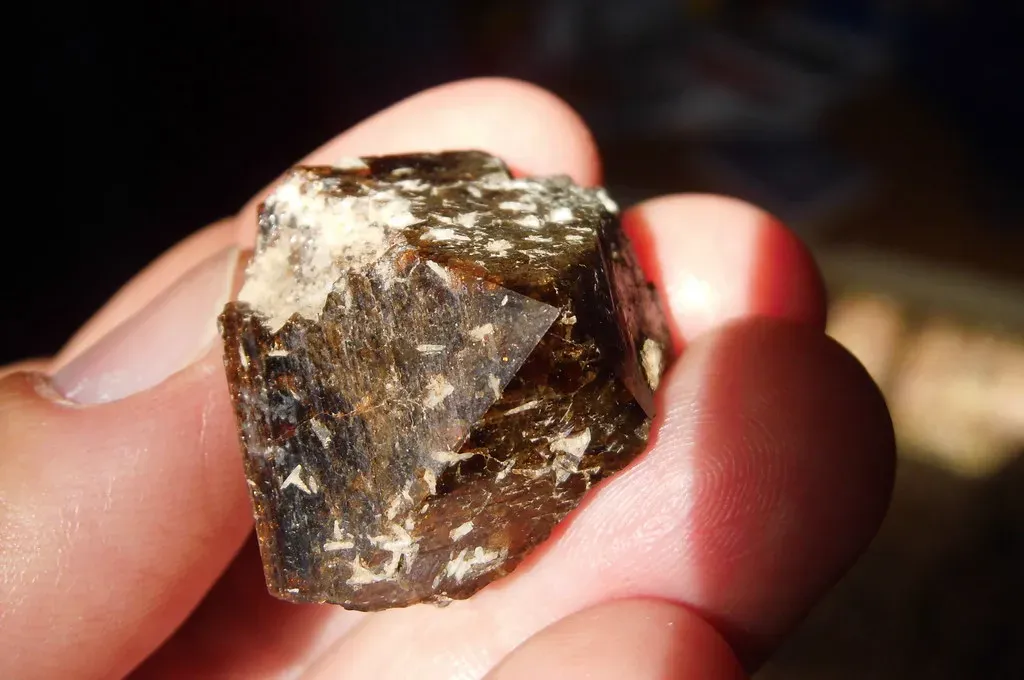
Sometimes the most important things come in the smallest packages. The Jack Hills in Western Australia contain tiny traces of rock that are older than the hills themselves, and this ridge contains crystallized minerals called zircons dating to 4.4 billion years ago, making them the oldest Earth materials ever found. You could hold one of these zircon crystals between two fingertips and not feel a thing, yet it would have been witnessing the formation of this entire planet.
What makes zircon so uniquely powerful as a geological time keeper is both elegant and fascinating. Zircon crystals are extremely durable and can withstand multiple cycles of geological activity. More importantly, they incorporate uranium during their formation. Uranium undergoes radioactive decay into lead at a known rate, allowing scientists to precisely date the crystals using the uranium-lead radiometric dating method, making them invaluable time capsules for studying the early Earth. It’s like the crystal came pre-loaded with its own internal clock. These zircons show a remarkable feature: their oxygen isotopic composition has been interpreted to indicate that more than 4.4 billion years ago there was already water on the surface of Earth. Water. On a planet people once assumed was entirely hellish and uninhabitable.
The Isua Greenstone Belt: Greenland’s Ancient Ocean Floor
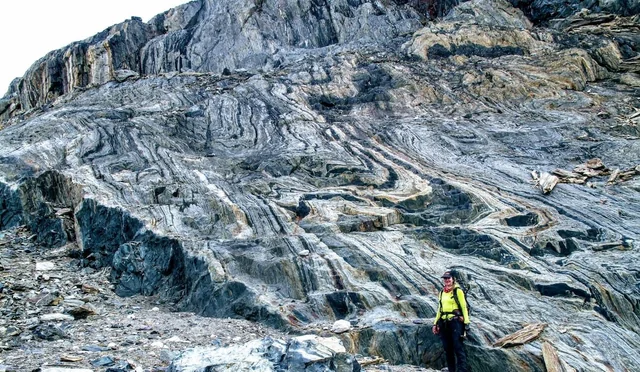
Greenland holds secrets that most people don’t know about, and one of the biggest is buried in its western coast. The Isua Greenstone Belt is one of the oldest rock formations on Earth, aged between 3.7 and 3.8 billion years. That places it far, far beyond the world of dinosaurs and into an era when life itself was still experimenting with its very first primitive forms. Since its discovery, the Greenstone Belt has been thoroughly studied since it houses one of the oldest and best preserved ancient plate tectonic sequences.
The Isua belt does more than just sit there looking old. It actively challenges what we think we know about when life began on Earth. Isua is also important because some researchers have argued it holds the earliest evidence of life on Earth, dating to 3.7 billion years ago. In 2017, researchers discovered what looked like tiny waves in a cross section of the surface of a rock outcrop, and the researchers said the ripples are the fossilized remains of cone-shaped stromatolites, layered mounds of sediment and carbonates that build up around colonies of microbes that grow on the floor of shallow seas or lakes. Even if you’re skeptical by nature, the idea that this rock may contain echoes of life older than anything we’ve imagined is genuinely thrilling.
The Barberton Greenstone Belt: A UNESCO-Protected Window into a Primordial World
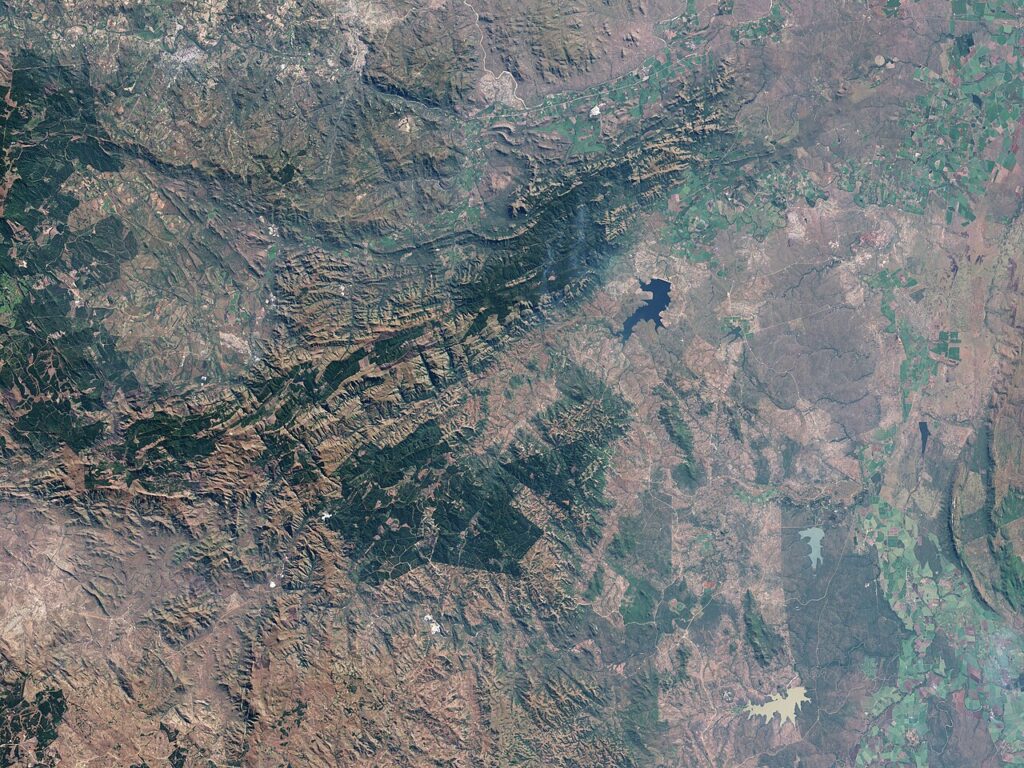
South Africa is famous for many things, but tucked into the rugged mountains of Mpumalanga lies something that quietly outranks them all. The Barberton Greenstone Belt contains the best-preserved, oldest, and most diverse sequence of volcanic and sedimentary rocks on Earth that has not been affected by subduction and erosion. It is a complex of volcanic, sedimentary, and shallow intrusive rocks ranging in age from 3.6 to 3.25 Ga, and it is 15 km thick. That thickness is staggering. It’s like a multi-story building built by the planet itself, layer by ancient layer.
What truly sets Barberton apart is the sheer range of stories it tells. From these rocks, more has been learned than from anywhere else about the surface processes at work as the Earth cooled from a molten body to the creation of the primitive biosphere and lithosphere. It also preserves evidence of some of Earth’s most violent moments. The Barberton Greenstone Belt records impact events in 8 layers containing spherules spanning from about 3.5 to 3.2 billion years ago, and the impactors that generated these events are thought to have been much larger than those that created the largest known still-existing craters on Earth, with an estimated diameter of roughly 20 to 50 kilometres. Massive, ancient, violent and absolutely essential to understanding what made Earth the planet it is today.
The Pilbara Craton: Western Australia’s Prehistoric Bedrock
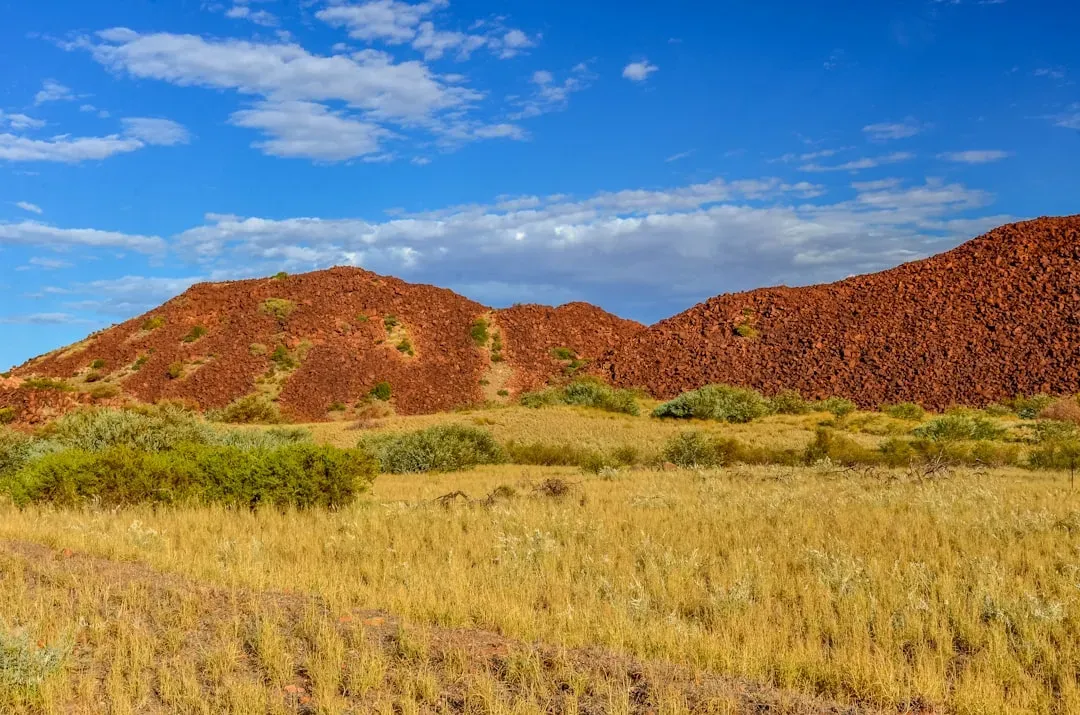
Most visitors to Western Australia’s Pilbara region come for the red desert landscapes and dramatic gorges. They probably don’t realize they’re standing on some of the most primordial crust on the entire planet. The Pilbara Craton is an old and stable part of the continental lithosphere located in the Pilbara region of Western Australia, and it is one of only two pristine Archaean 3.8 to 2.7 Ga crusts identified on Earth, along with the Kaapvaal Craton in South Africa. Two pristine crusts in the whole world. You’re looking at some very rare real estate.
The Pilbara Craton offers something even more remarkable than its age. Evidence of the earliest known life on land may have been found in 3.48-billion-year-old geyserite and other related mineral deposits uncovered in the Dresser Formation in the Pilbara Craton. Biogenic sedimentary structures such as stromatolites and MISS were described from tidal, lagoonal and subtidal coastal settings that can be reconstructed from the Dresser stratigraphy. I think that’s the kind of discovery that makes you stop and stare. Life on land, preserved in rock, nearly three and a half billion years before you were born. The Pilbara Craton along with the Kaapvaal Craton are the only remaining areas of Earth with pristine 3.6 to 2.5 Ga crust, and the extremely old and rare nature of this crustal region makes it a valuable resource in the understanding of the evolution of the Archean Earth.
The Napier Complex: Antarctica’s Frozen Ancient Secret
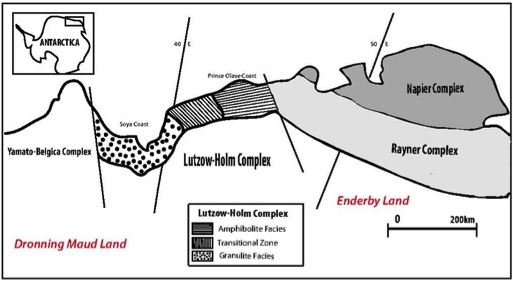
Antarctica is already extreme enough as a place. But beyond the ice and cold, it hides something that makes even the continent’s most dramatic features seem ordinary by comparison. The Napier Complex in eastern Antarctica holds zircons dating to around 3.6 billion years ago and just one zircon dating to 4 billion years ago. That single, solitary zircon clocking in at 4 billion years is the kind of geological outlier that keeps scientists up at night. The Napier Complex is in Enderby Land in Antarctica, grouped among ancient geological formations including the Ancient Gneiss Complex and other Archean-age rocks found in narrow belts and small areas around the world.
What gives the Napier Complex its scientific weight is not just age, but implication. Scientists noted that the Napier Complex’s significance cannot be overestimated, since it may indirectly evidence the existence of an Early Archean crustal block with a minimum age of 4 billion years. Antarctica tends to preserve things beautifully, which is part of what makes this frozen continent such a geological goldmine. Archean rocks are exposed on Earth’s surface in very few places, such as in the geologic shields of Canada, Australia, and Africa, and Antarctica adds one more critical piece to that puzzle. It’s hard to say for sure just how many more ancient secrets are still buried under kilometres of ice down there.
The Ancient Gneiss Complex of Eswatini: Africa’s Forgotten Archean Giant
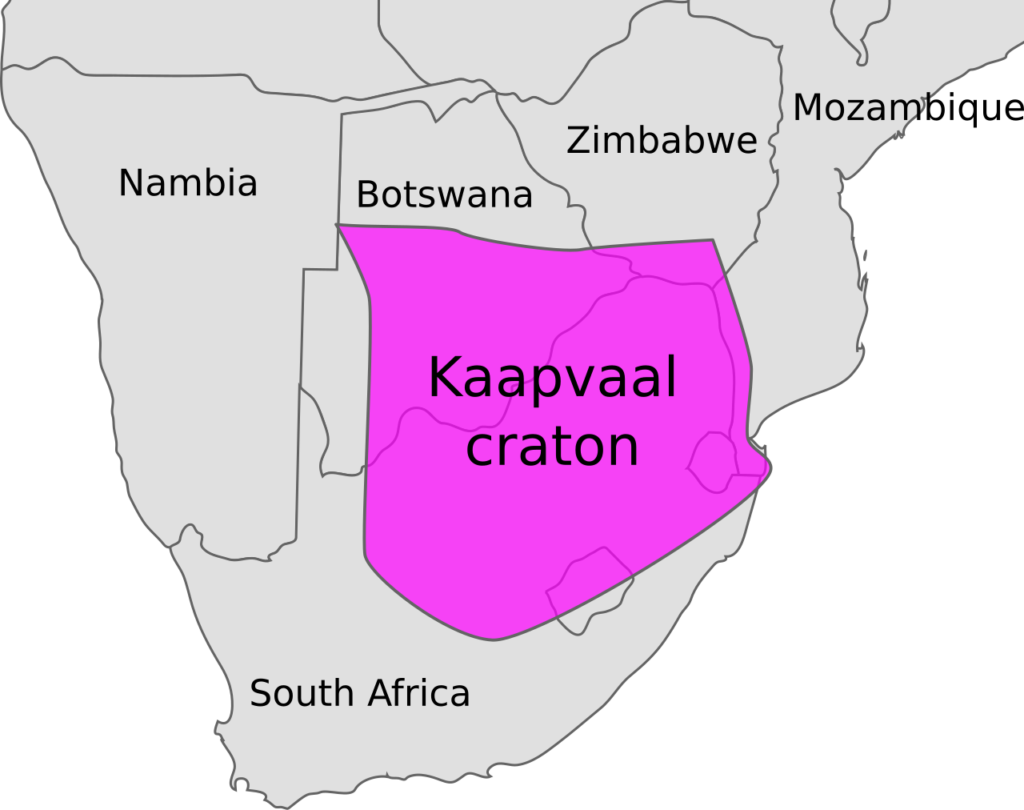
It doesn’t get nearly the press coverage it deserves, but the Ancient Gneiss Complex sitting in the region of Eswatini and South Africa is one of the most geologically significant terrains on the planet. Other old formations include the Ancient Gneiss Complex, dated at 3.6 Ga, placing it squarely in an era when the Earth was still finding its feet, volcanically, tectonically, and atmospherically. Let’s be real: most people have never even heard of this place, yet it holds records that rival the most famous geological sites in the world.
The Ancient Gneiss Complex sits within the broader context of the Kaapvaal Craton, one of the world’s rare surviving shields of truly primordial crust. The Ancient Gneiss Complex of Swaziland is listed among the narrow and small-area occurrences of ancient gneiss and granulite belts that survive as some of the most ancient exposed rocks on Earth’s surface. These rocks endured billions of years of plate collisions, erosion, and geological upheaval to remain standing. These ancient rocks are essential to understanding Earth’s historical geology, paleogeography, and the geologic time scale, and each rock holds a unique story of Earth’s formation and evolution, offering scientists valuable data on our planet’s changing conditions over billions of years. You could spend a career studying formations like this and still leave with more questions than answers.
Conclusion: The Original Architects Deserve Your Awe
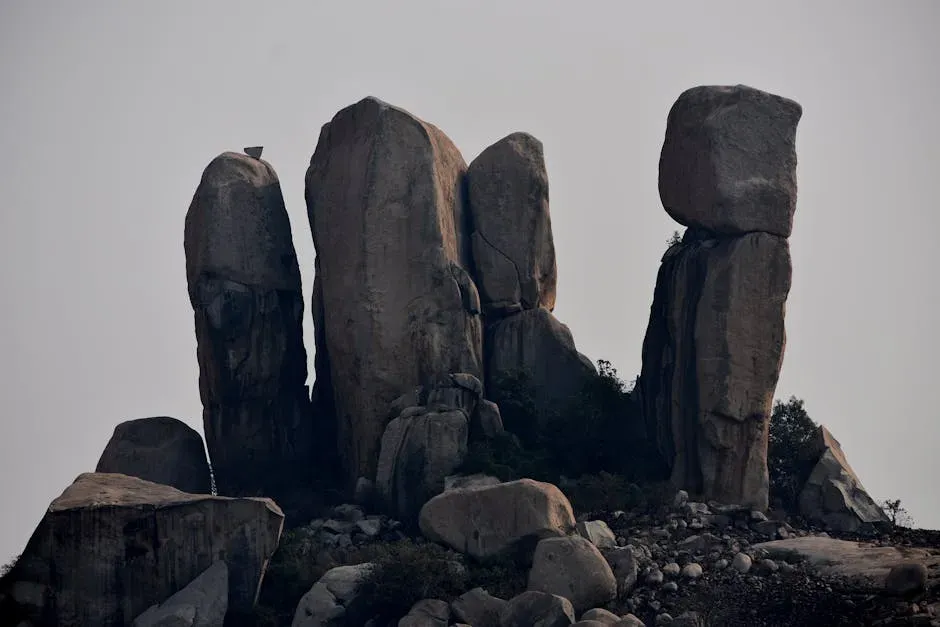
It’s genuinely humbling to step back and think about what these 8 formations represent. They are not just old rock. They are the original blueprints of a living, breathing planet. While dinosaurs tend to dominate our imagination of the ancient past, these geological formations existed for billions of years before the first reptile ever hatched from an egg. They are the true first architects of Earth’s surface.
Every continent, every ocean basin, every mountain range we know today ultimately traces its origins back to formations like these. The oldest dated rocks formed on Earth are more than 4 billion years old, formed during the Hadean Eon of Earth’s geological history, and mark the start of the Archean Eon, which is defined to start with the formation of the oldest intact rocks on Earth. That is a lineage stretching back to the very birth of our world.
The next time you pick up a rock, even a pebble on a hiking trail, consider that you might be holding a small chapter in a story billions of years in the making. These formations remind us that the planet we inhabit is far older, far stranger, and far more resilient than we tend to give it credit for. Which of these ancient formations surprised you the most? Tell us in the comments below.