Long before humans started worrying about survival, nature had already been running millions of years of ruthless, high-stakes experiments. The creatures that roamed ancient oceans, forests, and plains weren’t just big or scary. They were clever in the most unexpected biological ways, developing tricks for survival so strange that scientists are still piecing together the full picture today.
Think about it this way: evolution is basically a blind engineer with unlimited time and zero mercy. What it produced over hundreds of millions of years reads like science fiction. Some of these animals would barely register as “normal” by any modern standard, yet each one had a survival strategy so effective it dominated its era. You’re about to discover ten of the most fascinating examples. Let’s dive in.
1. Anomalocaris: The Cambrian Ocean’s First Master Hunter
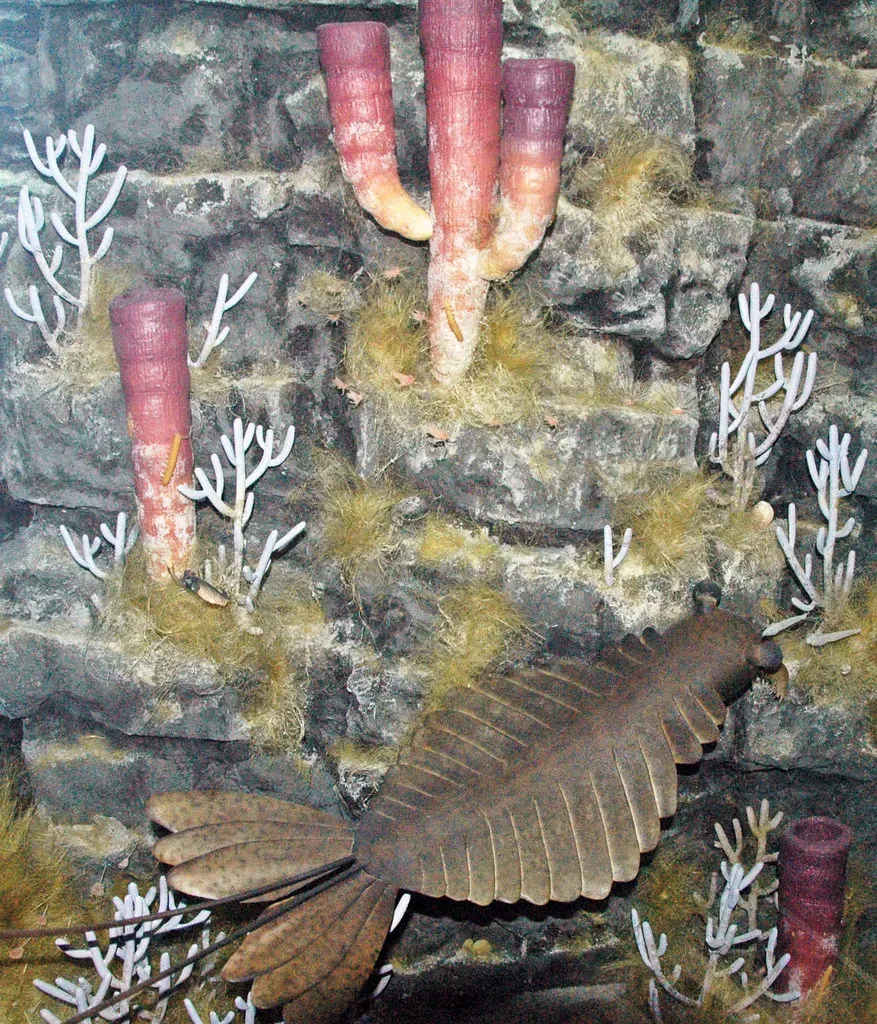
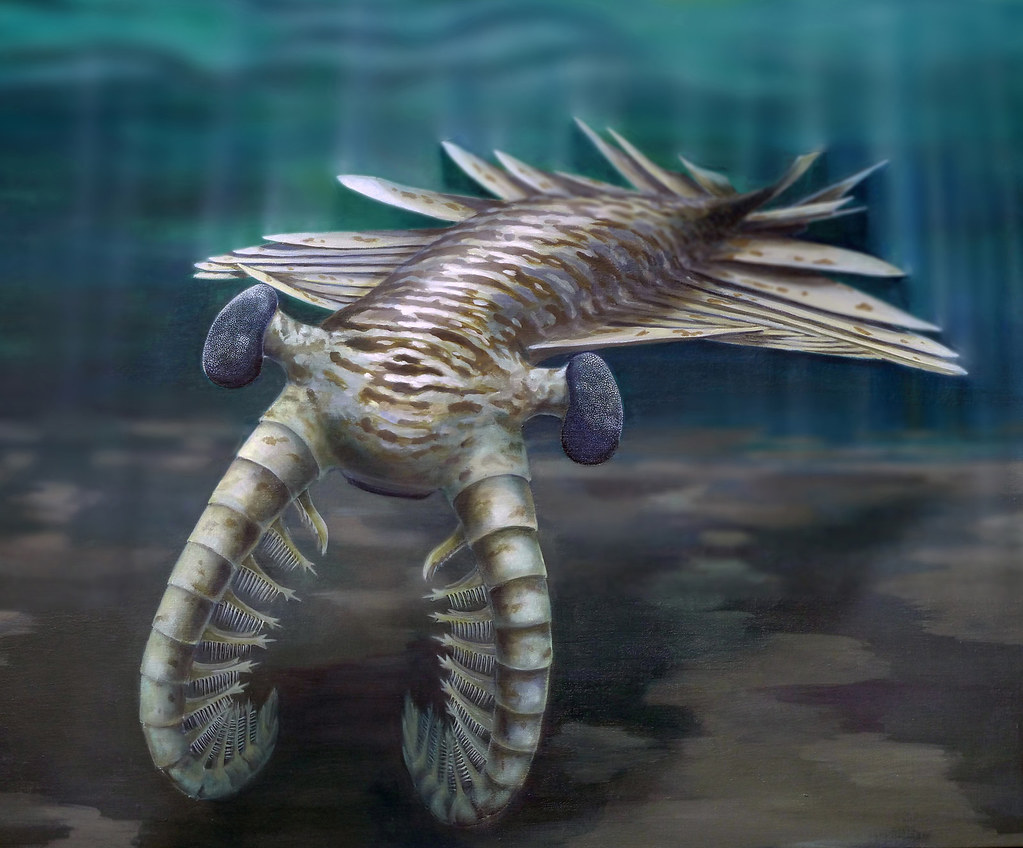
Here’s a creature that genuinely looks like someone’s fever dream. Anomalocaris, meaning “unusual shrimp,” is widely regarded as the world’s first apex predator, and it was the largest hunter of the Cambrian period, measuring up to a meter in length from its grasping frontal appendages to the tips of its tail fans. Think of it as the killer whale of a world that existed over half a billion years ago, ruling waters that had no other animal even close to its size.
Stalked compound eyes with thousands of lenses gave Anomalocaris extremely sharp vision, while its undulating swimming motion made it a fast swimmer, and once it caught up to its prey, it could grab it using front limbs equipped with sharp spikes on each segment. What’s even wilder is that advanced arthropod eyes able to “tell friend or foe and detect features of the environment” had evolved very early, before the evolution of jointed legs or hardened exoskeletons, and its eyes were 30 times more powerful than those of trilobites. You’re looking at a creature that evolved high-definition vision before most life had even developed a proper skeleton.
2. Hallucigenia: The Dream-Like Spine Walker With a Deceptive Defense
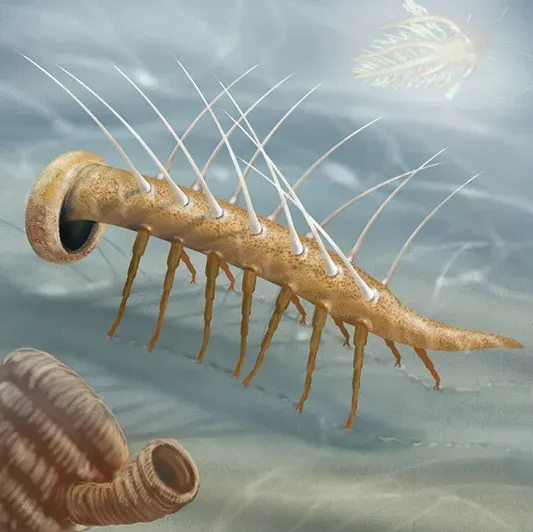
Hallucigenia lived during the Cambrian about 505 million years ago, evolving shortly after the Cambrian explosion, a period in geologic history characterized by the rapid evolution of various animal groups. Its name alone tells you everything. This creature’s “bizarre, dream-like quality” is the reason for its genus name, and the strange-looking creature looked like something one would see in a dream. Honestly, I think that’s an understatement.
With its spiky protrusions and multiple tentacle-like legs, Hallucigenia seemed straight out of a science fiction scene, creeping along the ocean floor as a small, worm-like animal, with a body adorned with spines that may have served as defense mechanisms against predators. This creature was not defenseless, and predators that went after it may have received a painful stab from the spines on its back. While it is impossible to tell if the spines were venomous, they probably served as an efficient protection against threats and predators. A tiny creature with a spiky armor system, surviving in the most dangerous waters that ever existed.
3. Dunkleosteus: The Armored Fish With a Self-Sharpening Bite
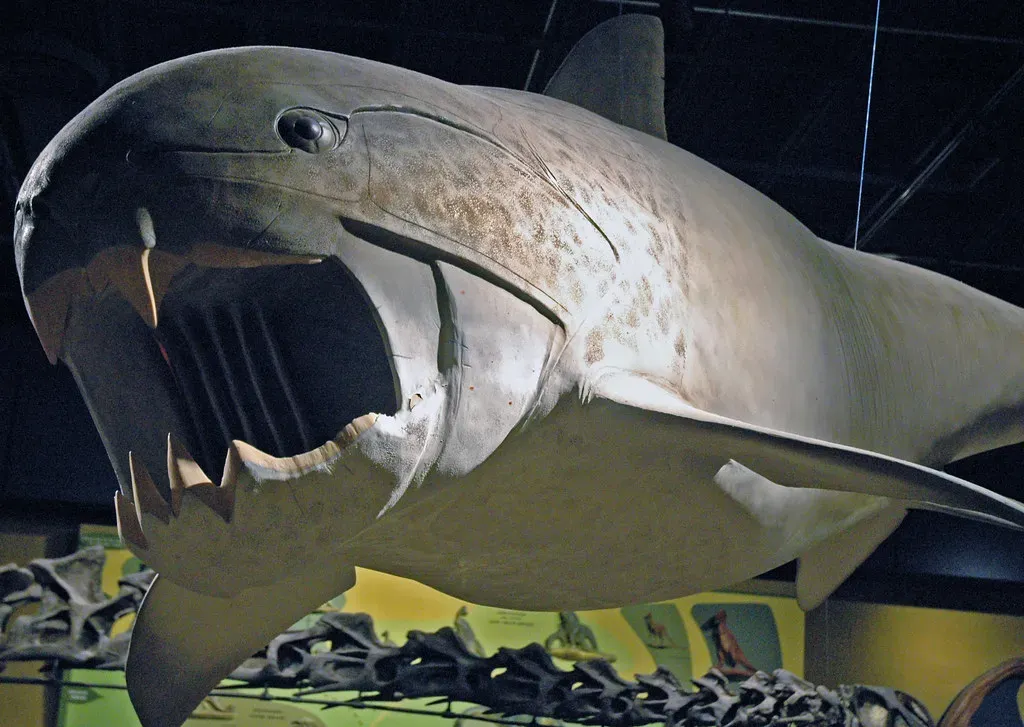
Let’s be real, nothing quite prepares you for Dunkleosteus. Dunkleosteus was a formidable predator of the Devonian period, renowned for its massive armored head and powerful jaw, reaching lengths exceeding 30 feet, making it the terror of ancient seas, with a bite force strong enough to crush bones, and its head encased in thick bony plates providing both protection and an intimidating appearance.
Here’s what makes it truly remarkable: unlike virtually every animal alive today, Dunkleosteus didn’t have conventional teeth. One of the scariest creatures ever to live in the ocean, this Devonian fish could grow up to 33 feet long, had an armored face, and used a beak-like mouth instead of teeth to devour its prey. It was one of the largest of the Placoderms, a group of armored fish that are now extinct. Its blade-like bony plates sheared against each other as it bit, constantly self-sharpening with every meal, like a living pair of biological scissors that never went dull.
4. Meganeura: The Giant Dragonfly That Ruled the Ancient Sky
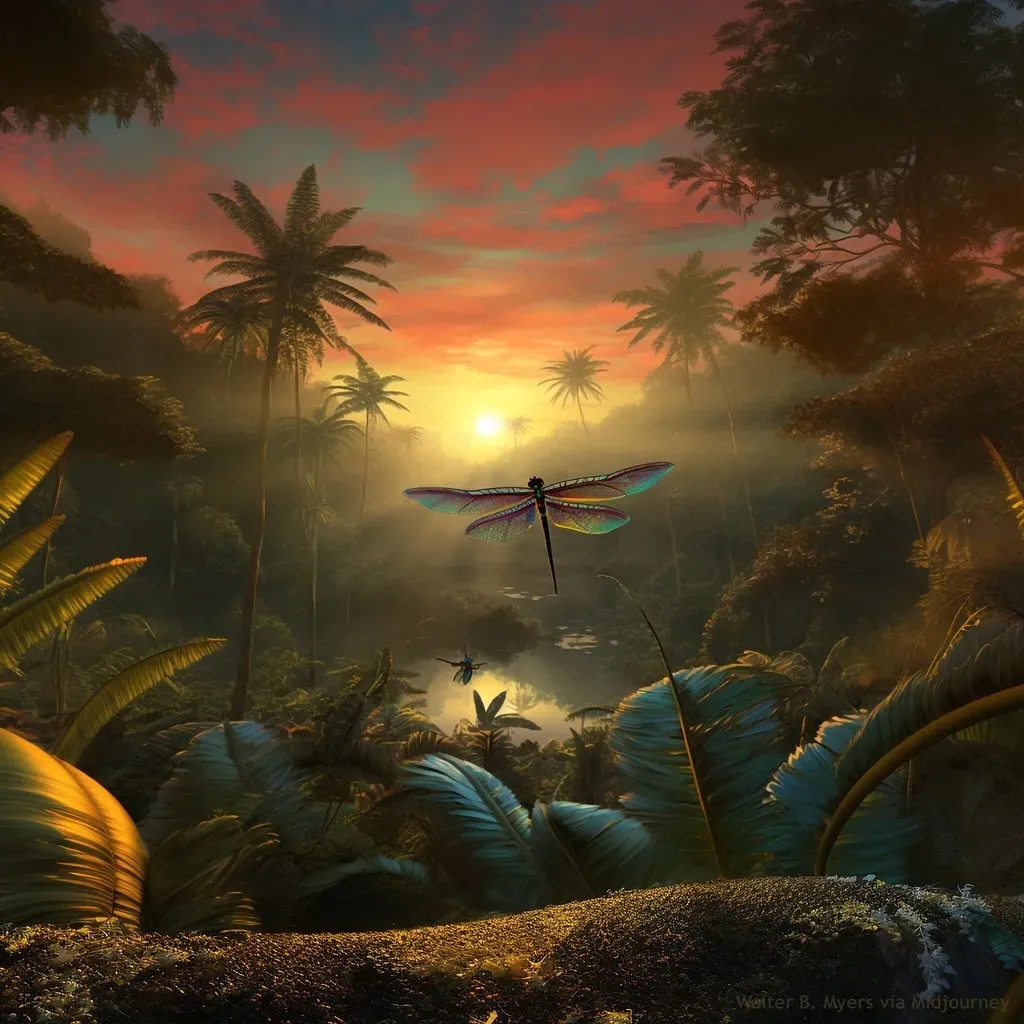
If you think today’s dragonflies are impressive, imagine one with a wingspan larger than a modern crow. In Late Carboniferous skies, Meganeura dominated the aerial hunting grounds above coal swamps and wetlands around 300 million years ago, using robust mandibles to catch prey in flight, with a dragonfly-like form and a 75-centimeter wingspan. It’s the kind of insect that would send most people running indoors.
With a wingspan measuring more than 70 centimeters, six spindly legs, and huge compound eyes, Meganeura was widely regarded as the largest flying insect ever, dwarfing its extant dragonfly relatives, and like many of today’s dragonfly species, it lived in open habitats close to ponds and slow-moving streams. Scientists believe the key to Meganeura’s extraordinary size was the Earth’s atmosphere at the time, which contained dramatically higher oxygen levels than today, allowing insects to grow far larger than any species alive now. It’s a sobering reminder that the rules of nature can change completely depending on atmospheric conditions.
5. Tiktaalik: The Fish That Taught Itself to Walk
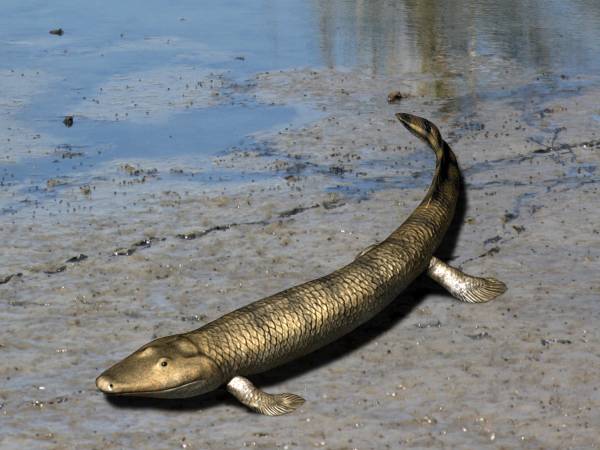
You want a creature that genuinely changed the direction of life on Earth? Meet Tiktaalik. In pursuit of prey, Tiktaalik relied not only on what it had up top but underneath too, and unlike most other fish, it had robust fins that could support its weight outside of the water, attached to highly mobile joints, a combination that allowed Tiktaalik and others of its kind to experiment with a life on land.
This huge size, combined with large jaws full of needle-like teeth, a mobile neck, and eyes on the top of its head, suggests it was a predator specially adapted for hunting fish in the shallows, and some think it may have even preyed on other smaller “fishapods” that lived on the margins between land and water. Think of Tiktaalik as the biological pioneer that cracked open the door to all terrestrial life, including you. Without this creature awkwardly hauling itself toward the shoreline hundreds of millions of years ago, nothing on land today would exist as it does. It’s hard not to feel a strange sense of gratitude.
6. Megatherium: The Giant Sloth That May Have Been a Killer
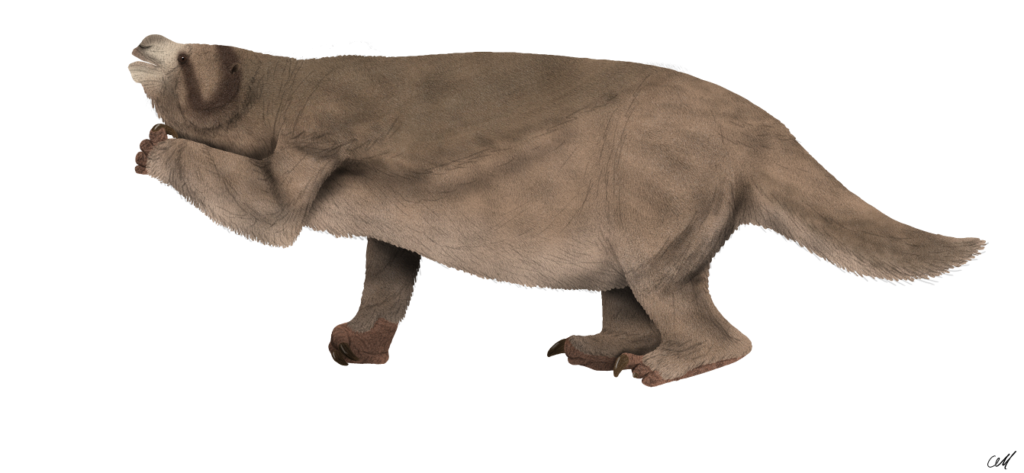
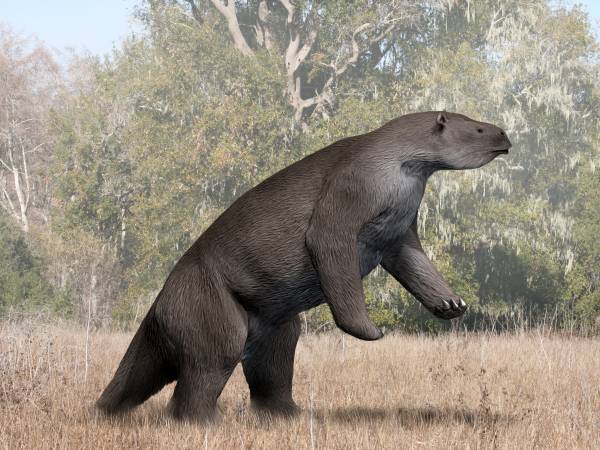
Popular culture has always painted giant sloths as lumbering, slow, and harmless. Science has a rather more shocking story to tell. Megatherium was actually a giant ground sloth related to modern sloths, and an inhabitant of South America during the Quaternary period, where an adult standing on its hind legs could reach a height of 20 feet. That’s roughly the height of a two-story building. On its hind legs.
Megatherium was previously regarded as a slow tree ripper, but recent studies show that its great claws might have been used for stabbing and killing, and if this was the purpose of its claws, it would make the giant sloth the largest predator of the South American plains. Imagine the shock of paleontologists realizing that what they assumed was a gentle giant may have been one of the most terrifying ambush predators of its era. The idea of a bear-sized sloth with stabbing claws hunting prey across ancient grasslands is one of prehistory’s most jaw-dropping plot twists.
7. Pterodaustro: The Pink Flamingo Pterosaur Nobody Expected
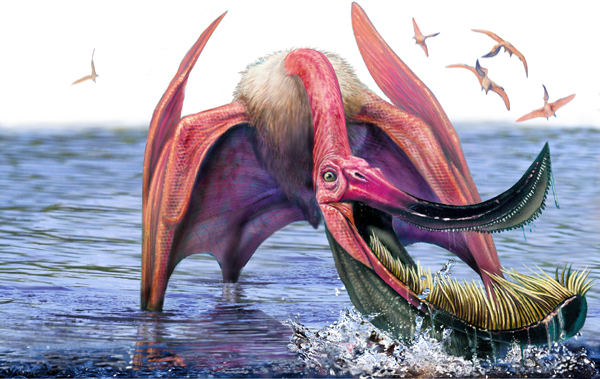
Not every prehistoric survival tactic was about brute force or razor-sharp teeth. Some creatures evolved solutions that were elegant, strange, and borderline beautiful. This pterosaur had an unusual set of teeth similar to the baleen of some whales, and it almost certainly used these teeth to eat small aquatic organisms, similar to the way a flamingo eats brine shrimp, with some scientists suggesting that since flamingos get their pinkish hue from their diet, Pterodaustro might have been pinkish too.
Here’s the thing: developing a filter-feeding system inside a flying reptile is nothing short of remarkable. While every other predator of its era was evolving bigger teeth or stronger claws, Pterodaustro essentially became a prehistoric flamingo, mastering an entirely different food niche. Flying reptiles such as pterosaurs adapted to their environments, showcasing the incredible adaptability of life forms throughout prehistoric times. Pterodaustro is proof that sometimes the most effective survival strategy is simply finding a meal that nobody else is bothering to eat.
8. Nothosaurus: The Ambush Swimmer Between Two Worlds
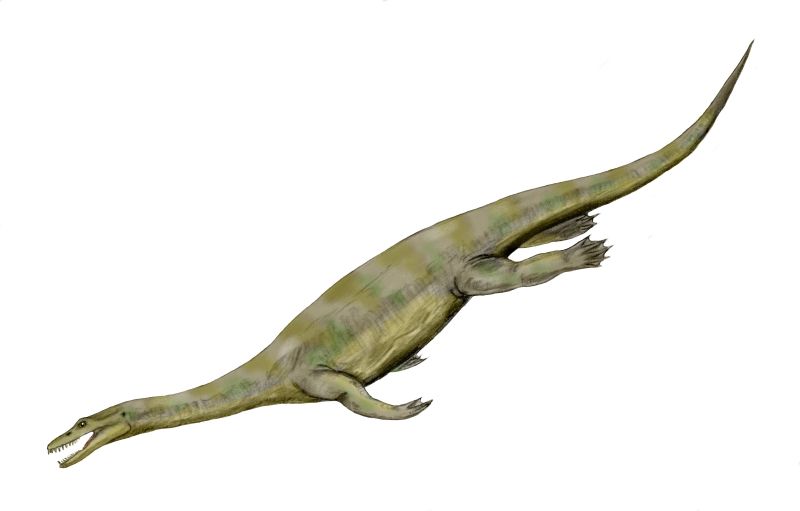
Nothosaurus is one of those creatures that sits right at the fascinating crossroads of two very different lifestyles. Nothosaurus itself lived in the mid-Triassic, and its name’s meaning is translated as “false lizard.” It wasn’t fully aquatic and wasn’t entirely terrestrial, which is exactly what made it so dangerous. It could chase prey in the water and retreat to land, a tactical flexibility that most predators of its time simply didn’t have.
Scientists have considered two possibilities as to how Nothosaurus gave birth to its offspring: the eggs were laid on sandy shores like modern sea turtles, or Nothosaurus would give live birth to its young at sea just as some sharks do today. That reproductive ambiguity tells us something important: this animal was actively bridging evolutionary worlds. Living between land and sea meant it could exploit both environments for food and safety. It’s the prehistoric equivalent of having a backup plan baked right into your biology.
9. Deinotherium: The Downward-Tusked Earth Digger
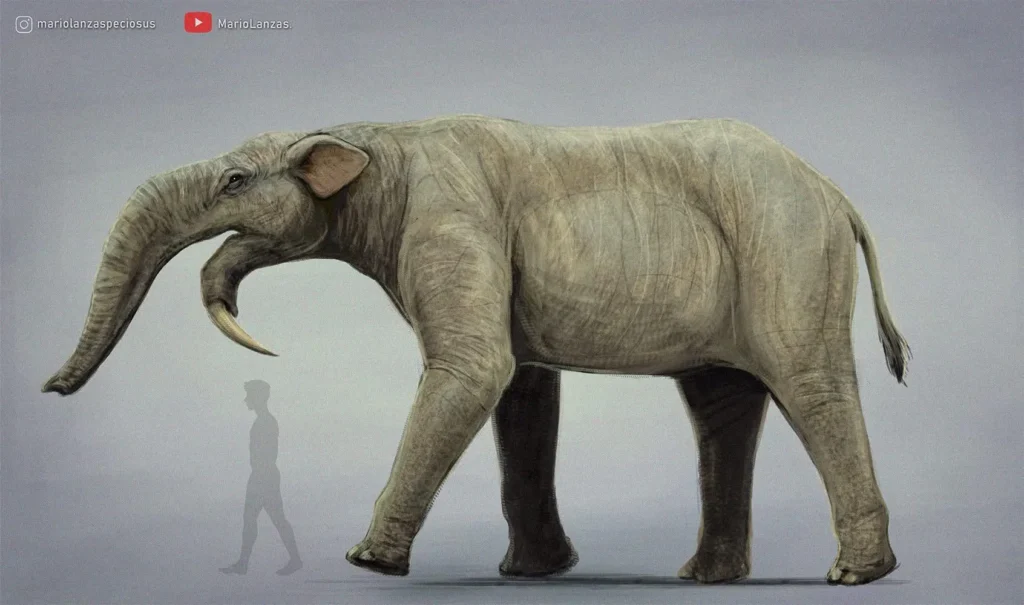
At first glance, Deinotherium looks like a slightly off-brand elephant. Look closer, and you realize the design choices are genuinely extraordinary. Deinotherium, also sometimes called the “terrible beast,” was a prehistoric animal that resembled the modern day elephant, and it existed between 23 million to 5 million years ago in the Middle Miocene Period. It was enormous, with a skull alone measuring four feet tall, placing its total size at estimates of 11 to 13 feet tall and weighing about 12 tons, making these creatures one of the largest animals to ever have walked the planet.
What separates Deinotherium from every elephant you’ve ever seen is the direction of its tusks. Deinotherium belonged to the family Deinotheriidae, and the animal had a pair of chin tusks that were curved downward and attached to the lower chin, which might have been used to dig up the soil and access plant roots, and notably, it had no upper tusk. Downward-curving tusks as digging tools is a survival strategy so specific and specialized that no other large mammal has ever replicated it. It essentially evolved its own built-in gardening equipment, purely to access food sources other animals couldn’t reach.
10. Coelacanth: The Deep-Sea Cave Dweller That Cheated Extinction
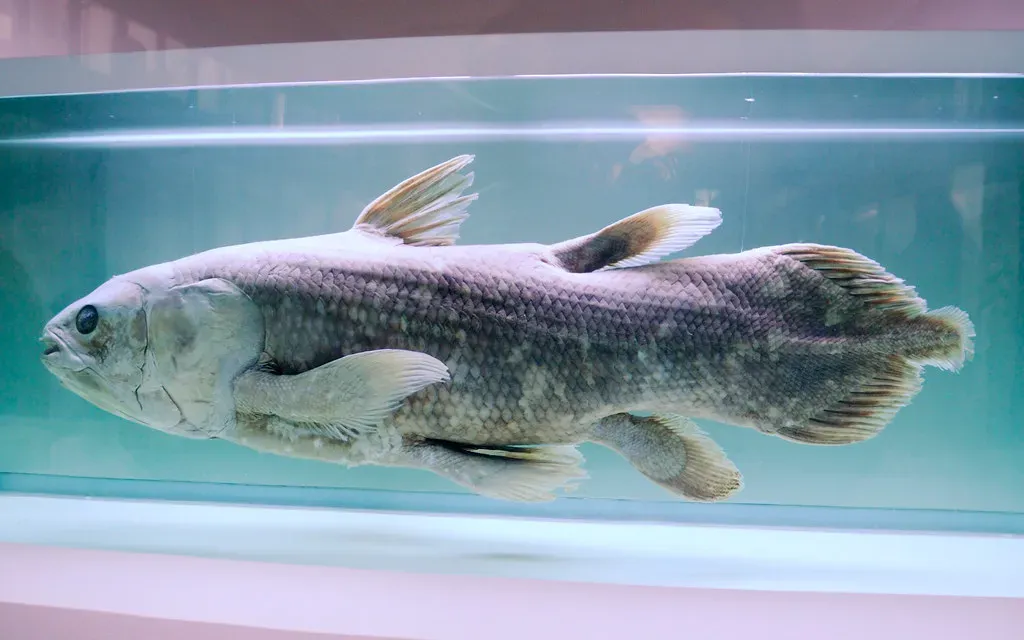
Of all the entries on this list, the Coelacanth is uniquely special for one reason: it survived. It is thought Coelacanth adapted to life in the deep, sheltering in caves during the day and only venturing out at night to hunt, and it’s probably this adaptation that saved Coelacanth from annihilation during four of Earth’s “Big Five” mass extinctions. Four. Mass extinctions. Think about that for a moment.
From the ocean’s deepest depths to its shallowest coastal shores, certain marine species have stood the test of time by adapting over the course of millions of years, and these prehistoric sea creatures offer insights into the ocean’s history and ever-changing environments, with each having its own unique story of adaptation and survival strategies. The Coelacanth’s strategy was almost laughably simple in concept: hide during the day, hunt at night, stay in the deep, avoid trouble. It’s hard to say for sure, but there’s something almost philosophical about the fact that the creature that outlasted all the giants did so by being quiet, cautious, and consistent. Not every survival story is about being the biggest or the fiercest.
Conclusion: What These Ancient Survivors Teach Us

When you look at these ten creatures together, a pattern emerges that no textbook quite captures the way the fossils themselves do. Survival was never about one single trick. Creatures evolved into all the wild and wacky forms we know today for many reasons, including alterations of ecosystems, changing food supplies, and the appearance of new niches opened by the deaths of predators or competitors. Each creature on this list responded to its world with a specific, often counterintuitive adaptation, from developing the first high-definition eyes in history, to hiding in ocean caves for millions of years.
What’s especially humbling is that many of these strategies still echo in the biology of animals alive today. The filter-feeding technique, the ambush lifestyle, the specialized digging tools. Nature didn’t reinvent the wheel. It just kept refining it across geological time. While these creatures may be long extinct, their fossilized remains continue to reveal the incredible diversity and power of life’s most formidable survivors, and understanding these animals not only satisfies our fascination with prehistory but also provides insights into how ecosystems function and evolve over time.
Prehistoric life wasn’t just a warm-up act for the modern world. It was the laboratory where every survival blueprint was written. Which of these creatures surprised you most? Drop your thoughts in the comments below.