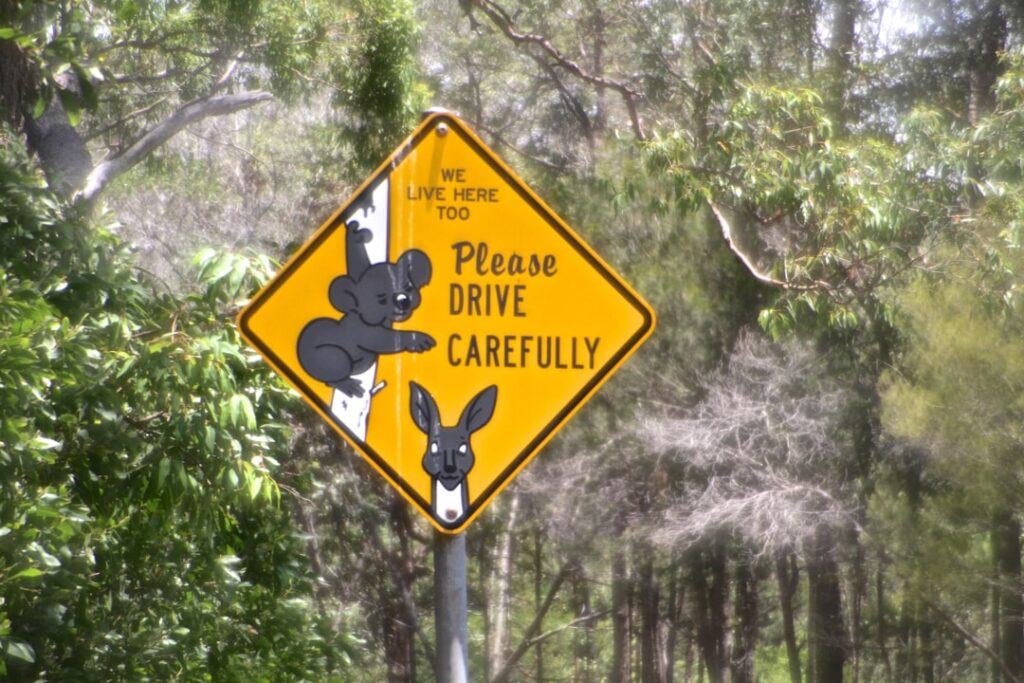
Redlands Coast, Queensland – Researchers marked a significant milestone when a prototype AI-powered camera embedded in a smart road sign captured a koala crossing a road live for the first time in a field setting. This breakthrough addresses the growing dangers koalas face from vehicle strikes as urban expansion fragments their habitats. Griffith University-led teams demonstrated the system’s potential to enhance road safety and wildlife conservation in high-risk areas.
A World-First Field Triumph
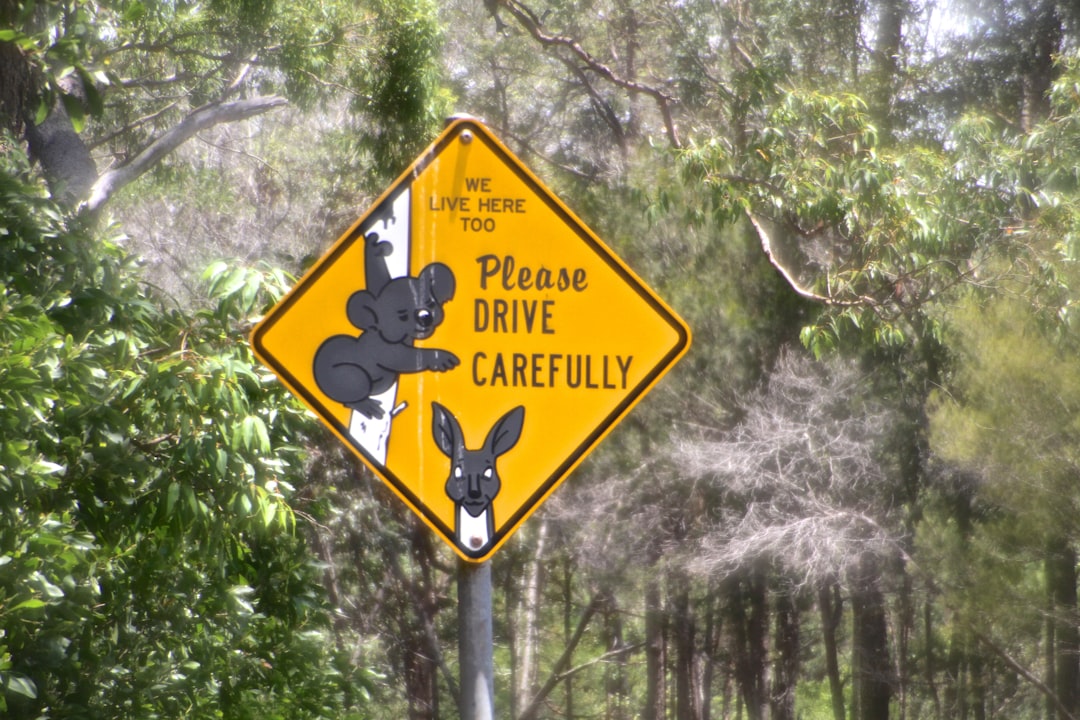
A World-First Field Triumph (Image Credits: Unsplash)
The detection occurred during a trial that began in March 2025, confirming the technology’s reliability under real-world conditions. Engineers integrated the camera into an intelligent road sign, where it processed footage instantly to identify the marsupial as it approached and traversed the roadway. This success built on earlier efforts to create an AI database trained on thousands of koala images and videos from conservation parks and community cameras.
Professor Jun Zhou, Deputy Head of Griffith’s School of Information and Communication Technology, highlighted the limitations of conventional signage. “Drivers become desensitised after repeated exposure to signs without encountering wildlife, reducing their responsiveness when real hazards arise,” he stated. The new system counters this by activating only when needed, especially during dusk and dawn when koalas move most actively and visibility drops.
Behind the Cutting-Edge Technology
The prototype relies on edge computing, a method that handles data processing close to the source rather than sending it to distant servers. This setup enables real-time video analysis, allowing the AI to spot koalas among 16 common southeastern Queensland species within seconds. Motion-triggered cameras feed footage directly into the model, which had been refined over years of data collection at over 40 sites.
Partners including the New South Wales Department of Climate Change, Energy, the Environment and Water, Telstra, and Redland City Council supported the initiative under the NSW Koala Strategy. Their collaboration funded development aimed at curbing road fatalities and aiding population recovery. Future iterations could link detections to dynamic displays urging drivers to slow down.
Koalas Under Siege from Road Traffic
Vehicle collisions rank among the top killers for koalas, declared endangered in Queensland, New South Wales, and the Australian Capital Territory. Between 2009 and 2014, car strikes accounted for 52% of reported wild koala deaths in southeastern Queensland, according to a University of Queensland database.[2] Habitat fragmentation forces the nocturnal tree-dwellers to navigate busy roads, compounding risks from bushfires, disease, and predators.
Dr. Douglas Kerlin, a Griffith senior research fellow, noted the challenges in tracking populations. “They can be hard to see,” he explained, emphasizing their arboreal habits and vast range.[2] Recent studies in Redlands showed stabilization since 2018, crediting targeted conservation, yet road mortality persists as development intensifies.
- Habitat destruction through urbanization and deforestation
- Diseases affecting eucalyptus-dependent diets
- Bushfires, notably those in 2019-2020
- Dog attacks in expanding suburbs
- Vehicle strikes on fragmented corridors
Scaling Up for Broader Impact
Professor Zhou described the achievement as “more than a tech milestone – it’s a turning point.” He envisioned expansion into high-risk corridors, creating adaptive infrastructure that responds to animal behavior.[3] Redland City Council Mayor Jos Mitchell praised the science-driven approach, reflecting years of local investment.
Trials continue to refine power needs for longer recordings and integration with existing signage. While physical barriers like fencing exist, experts like Kerlin stress understanding koala interactions with infrastructure. “You either have to stop wildlife crossing the roads when cars are in the area, or you have to get drivers to take more care if wildlife is about,” he said.
Key Takeaways
- AI edge computing enables instant koala detection without cloud delays.
- Prototype success paves way for driver alerts, tackling 52% roadkill rate in studied areas.
- Collaboration across universities, councils, and government accelerates scalable conservation tech.
This innovation signals hope for koalas navigating a human-dominated landscape, blending technology with ecology to prevent needless deaths. As deployments grow, road safety could align more closely with biodiversity goals. What steps should communities take next to protect these iconic animals? Share your thoughts in the comments.