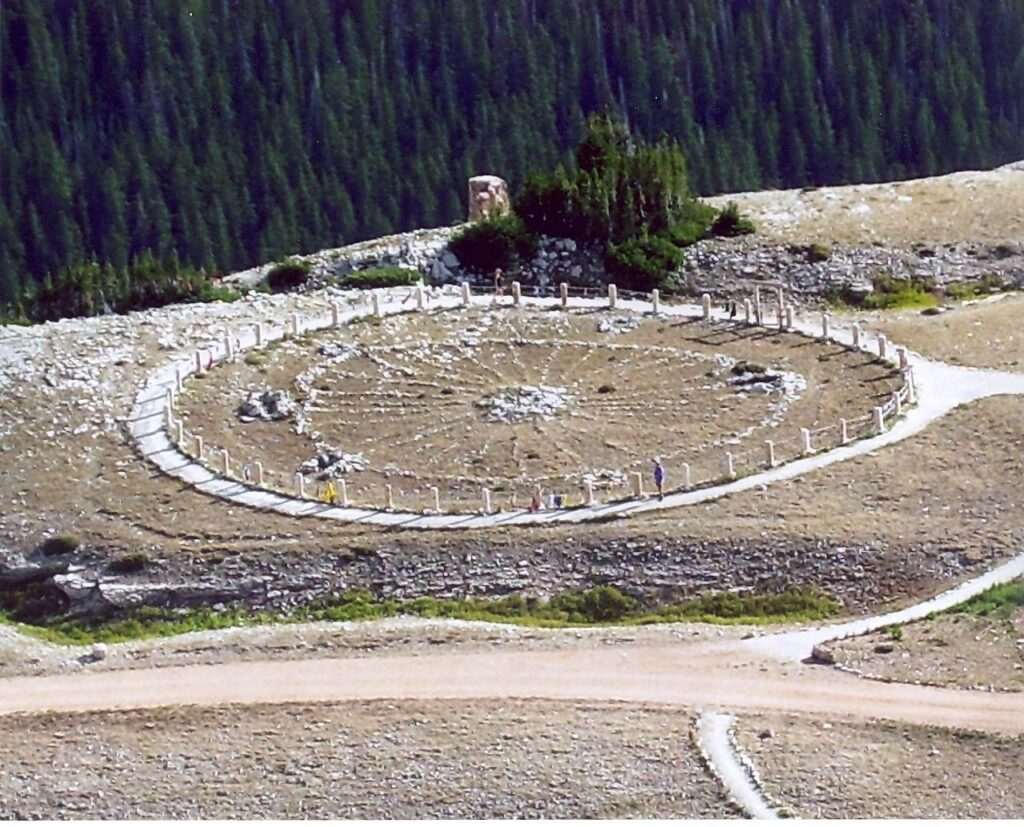
High on a windswept ridge in the heart of Wyoming, nearly two miles above sea level, sits one of the most enigmatic stone structures in all of North America. It is ancient. It is deliberate. It is strikingly beautiful in its simplicity. Circles of white limestone, arranged with what researchers believe to be extraordinary precision, stare up at the open sky on a mountain that has attracted humans for thousands of years.
You would not stumble upon this place by accident. Getting there requires effort, intention, and a willingness to step into a story that no one has yet fully figured out. The closer you look, the more questions arise. So let’s dive in.
A Stone Structure Like No Other: What You’re Actually Looking At
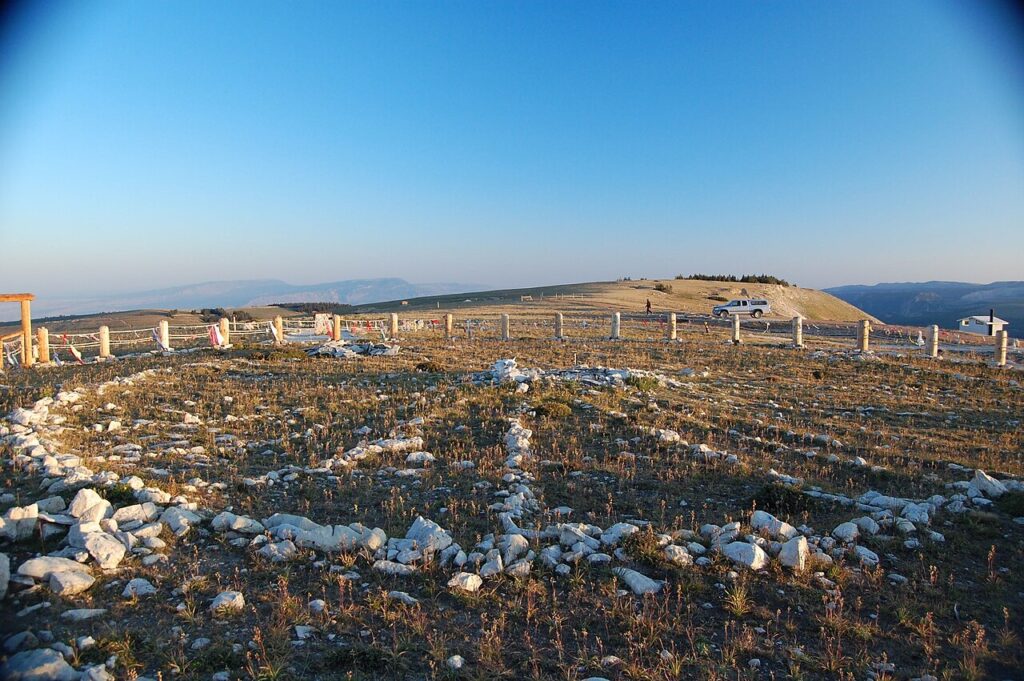
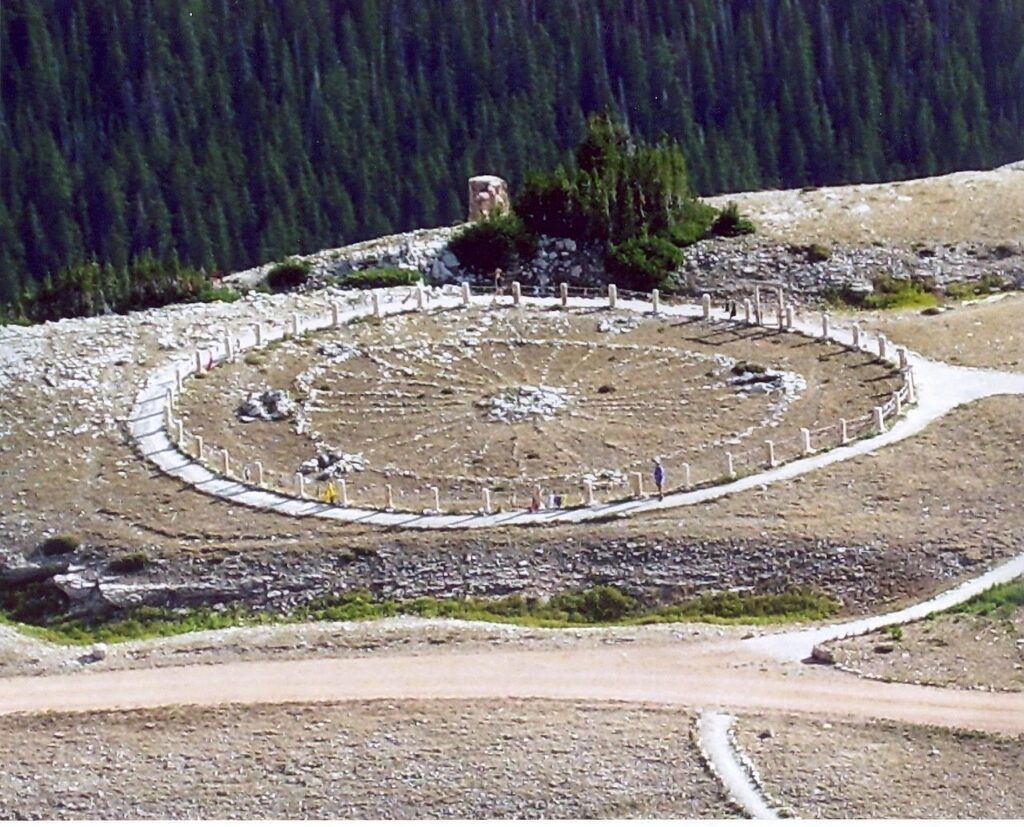
Sitting at 9,640 feet in elevation, the Medicine Wheel is situated on the exposed, slightly sloping limestone surface of the prominent northwestern ridge of Medicine Mountain. Honestly, when you picture it from above, it looks exactly like what its name suggests – a giant wheel etched into the Earth by hands long gone.
It is 82 feet in diameter, includes 28 spokes extending from the center to the rim, and a series of seven stone circles, known as cairns – six at or near the rim and a larger, 12-foot-diameter cairn in the center. The stones themselves are not exotic or imported – the wheel is made of hundreds of white limestone rocks arranged in a roughly circular shape, and most rocks used as material for the massive wheel originate from the bottom of the mountain, meaning the builders carried them to the top. Let that image sink in for a moment.
How Old Is It Really? The Dating Debate You Need to Know About
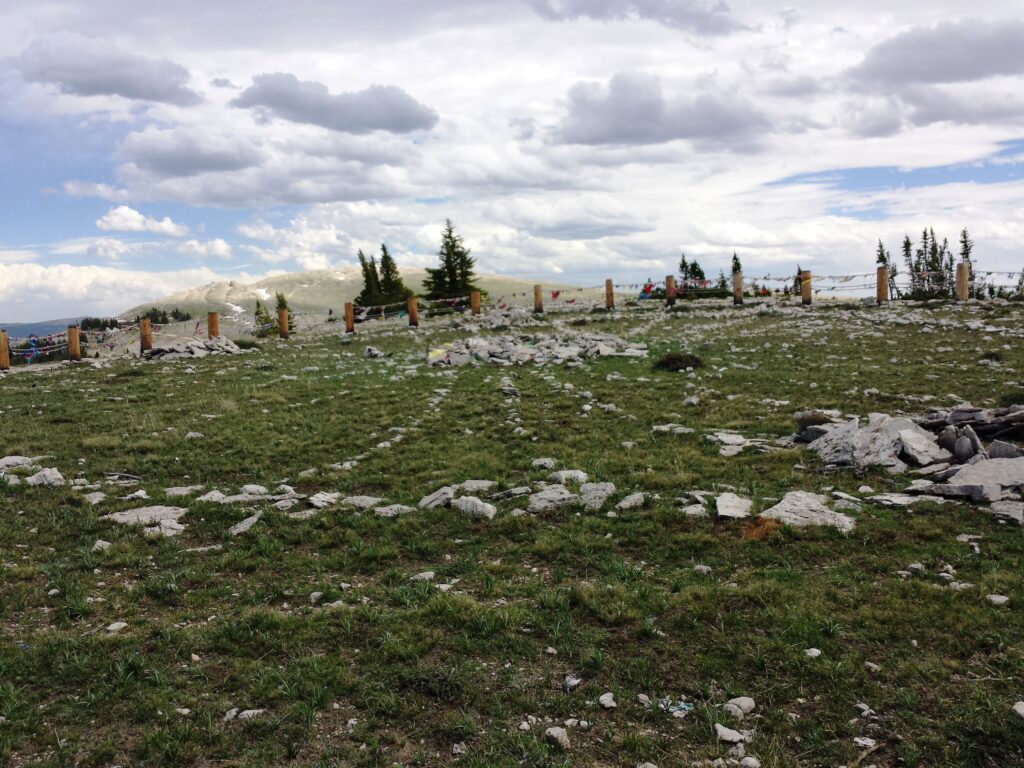
Age estimates for the Medicine Wheel range from a few hundred years to more than 3,000 years, though the cultural history of the Big Horn Mountains dates back over 10,000 years. That’s a staggering range of uncertainty, and it tells you just how hard it is to pin this place down.
The only reliable scientific date gleaned from the Bighorn Medicine Wheel thus far is one dendrochronologic sample derived from wood incorporated into the structure of the western cairn – this sample’s latest growth ring dates to 1760 CE. However, past research suggests that the Medicine Wheel is a composite structure with the central cairn and some outer cairns constructed earlier than the rim and spokes. In other words, it may have been built in stages over a very long stretch of time – think of it less like a single construction project and more like a cathedral that kept getting expanded by generations.
Who Built It? The Mystery Nobody Has Solved
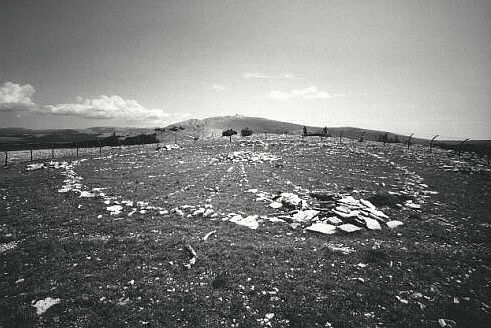
It is not known what group of indigenous peoples built the Wyoming Medicine Wheel, or when they did so, but various Native American tribes have used the wheel as a sacred site for centuries. That total absence of a clear builder is part of what makes this place so genuinely haunting.
Oral history from several indigenous nations sets the Big Horn Medicine Wheel as already existing, having been built by “ancient ancestors” or “people without iron.” During negotiations to include the Big Horn Medicine Wheel in the registry for National Historic Landmark and Sacred Site status, the Crow stated that the Wheel was already present when they came into the area. Here’s the thing – when the people who have lived closest to this land for centuries say they didn’t build it and cannot trace it to a specific ancestor, that should give you pause. There are layers of mystery here that science alone cannot unravel.
The Sky Above: Jaw-Dropping Astronomical Alignments

Astronomer John Eddy investigated the Big Horn Medicine Wheel’s structure in 1972 and made a number of important discoveries, publishing his findings in Science in 1974. He found that certain cairns were aligned in the direction of summer solstice sunrise and summer solstice sunset. That alone is remarkable. But it gets even more precise than that.
He found that specific cairn pairs correspond to the rising points of the stars Sirius, Aldebaran, and Rigel, respectively. Observing the first yearly heliacal rising of these stars would have been an effective tool for determining the progress of the solar year. Rigel then rises at dawn 28 days, or one lunar month, after Aldebaran, and Sirius rises another 28 days after Rigel. It is known that the number 28 is sacred among some tribes because of its association with the lunar cycle – and there are 28 spokes in the medicine wheel. I know it sounds almost too perfect, but the numbers do not lie.
Sacred Ground: What the Medicine Wheel Means to Indigenous People
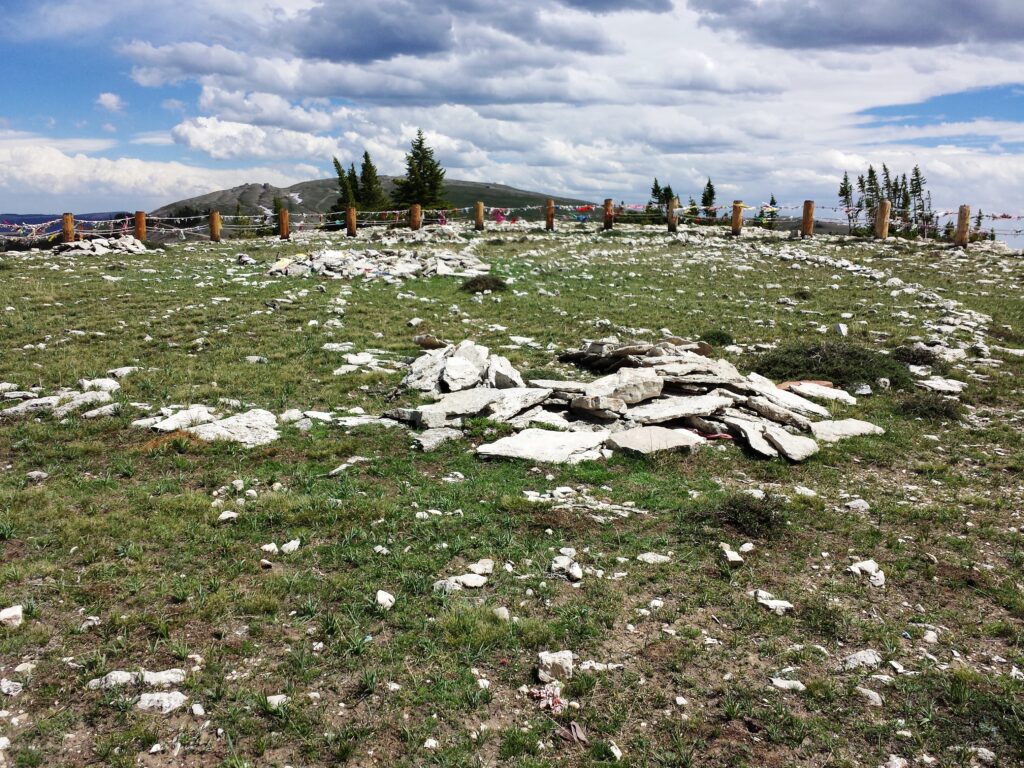
Today, Native American Indian people and cultures from around the world still cross paths at Medicine Mountain. Native American Indians, representing 81 different tribes, still utilize this ancient trail to practice their traditional ceremonies. This is not a relic frozen in the past. It is a living, breathing sacred space, used right now in 2026.
For centuries, the Bighorn Medicine Wheel has been used by Crow youth for fasting and vision quests. Various other tribes, including the Arapaho, Bannock, Blackfeet, Cheyenne, Crow, Kootenai-Salish, Lakota Sioux, Plains Cree, Shoshone, and others, also go to Bighorn to offer thanks, pray for healing, and perform other tribal ceremonies. Both the Shoshone and Crow peoples believe that high-elevation landscapes are sacred places where people can connect with ancestors to receive wisdom about how to navigate the future. That perspective fundamentally changes how you see a structure like this one.
Preservation, Protection, and How the Site Is Managed Today
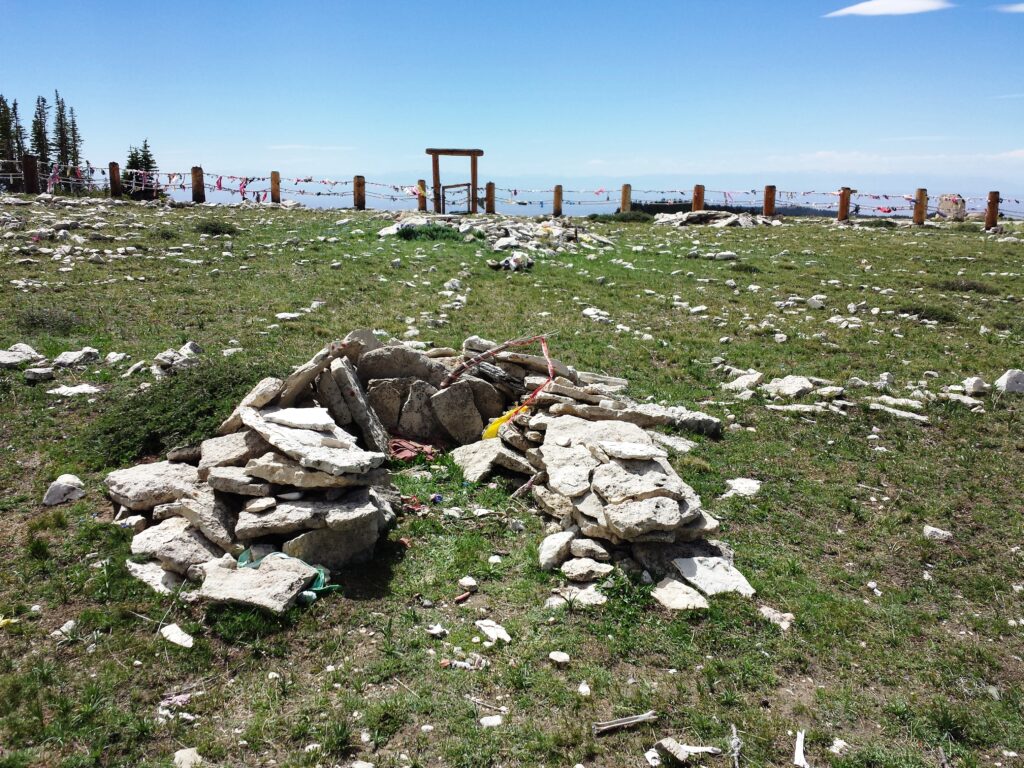
The Medicine Wheel was designated a National Historic Landmark in 1970 due to its unique scientific research values and to the overwhelming support of prominent Wyoming politicians. Still, designation alone did not translate to protection. Over the decades, some visitors removed rocks from the Wheel and vandalized the site with graffiti. In the early 1990s, tribes and coalitions fought to protect this land from such damages and thefts.
The protocols that were eventually agreed upon designate 23,000 acres as sacred space to Native Americans and include provisions allowing Native American practitioners to use the site for ceremonies. Vehicular access is generally prohibited, and visitors are required to walk one and a half miles each way to visit the Bighorn Medicine Wheel. In 2011, the landmark boundaries were substantially enlarged from 110 to 4,080 acres in response to an accumulating body of information regarding Native American traditional cultural use of the surrounding landscape. That expansion was hard-won and meaningful – a recognition that the sacred cannot be contained within a single chain-link fence.
Conclusion
The Bighorn Medicine Wheel does not offer easy answers. It rewards those who approach it with humility and real curiosity. You find a structure that is geometrically precise, spiritually significant to dozens of nations, astronomically sophisticated, and still stubbornly mysterious after more than a century of scholarly investigation. That combination is extraordinarily rare.
What you take away from this place depends entirely on what you bring to it. Scientists see a celestial calendar. Indigenous elders see a living altar. Historians see a puzzle that keeps refusing to be solved. Maybe the most honest thing you can say is that it is all of those things at once. Some places on this planet simply hold more questions than answers – and perhaps that is exactly the point.
What would you feel standing at the center of that ancient stone wheel, staring up at the same sky those builders once watched so carefully? Drop your thoughts in the comments.