Imagine standing in a dimly lit cave, torchlight flickering across a painted rock wall, and coming face to face with an image that looks unmistakably like a creature from 65 million years ago. Sounds impossible, right? Yet, this is precisely the debate that has gripped scientists, archaeologists, and curious minds for decades. The question of whether ancient humans ever encountered dinosaurs, or at the very least left behind traces of such encounters in their art, is one of the most electrifying controversies at the crossroads of paleontology and prehistoric art.
You might expect a simple answer, but honestly, the reality turns out to be far richer, stranger, and more nuanced than either side of the debate likes to admit. From rock carvings in Utah to cave paintings in France, Africa, and South America, the story woven across stone walls across the world is anything but straightforward. Let’s dive in.
The Basics: What We Know About Early Cave Art and Its Creators
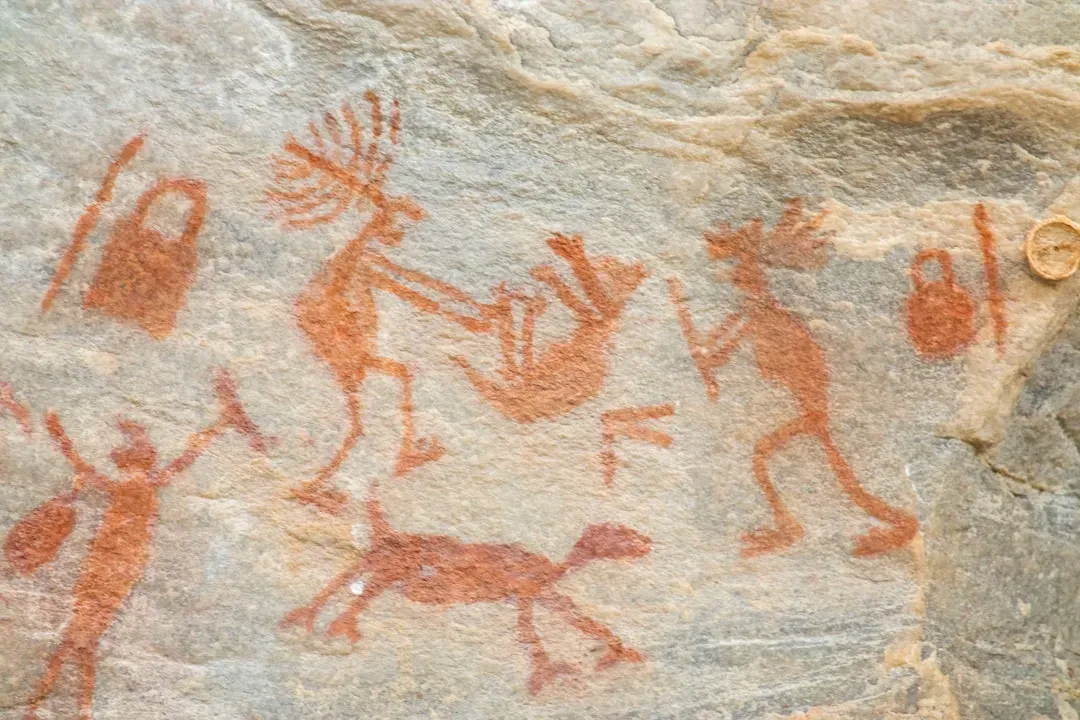
Before the formal study of paleontology, ancient humans were already depicting the natural world around them. Some of the earliest known depictions of prehistoric animals come from cave art such as those found in France’s Lascaux Cave and Chauvet Cave, dating back more than 30,000 years. These paintings, while not necessarily intended as scientific reconstructions, provide invaluable glimpses into how early humans perceived their environment. Think of these images less like a newspaper report and more like an emotional diary, a raw and visual way of making sense of a wild and mysterious world.
These representations were limited to creatures that coexisted with humans. Extinct creatures such as dinosaurs would remain largely unknown until much later, with their depictions emerging only after the scientific discovery of their fossils. So right off the bat, science draws a firm line: you were not painting what you hadn’t seen. Still, that hasn’t stopped people from looking harder, and looking with a hopeful eye.
The Geological Gap: Why Human-Dinosaur Coexistence Defies Science
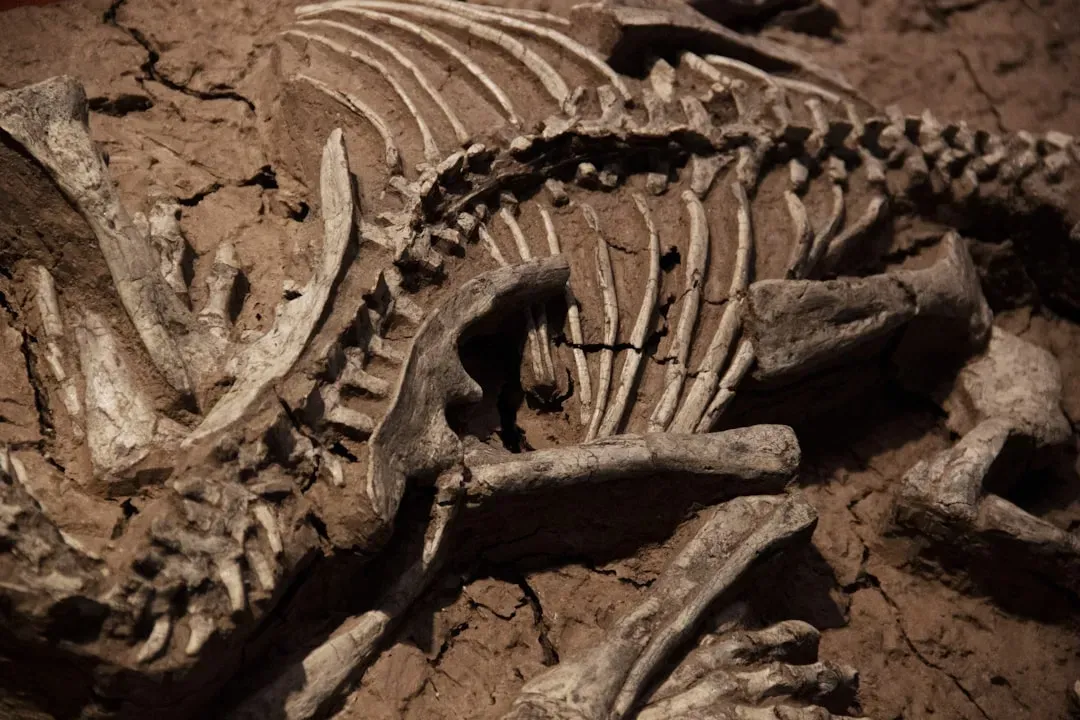
About 65.5 million years ago, the last of the non-avian dinosaurs were wiped out in the fallout from one of the earth’s most catastrophic extinction events. They left only bones and traces in the rock behind. That’s a staggering stretch of time. To put it in perspective, if the entire span of Earth’s history were a single calendar year, humans would show up only in the last few minutes of December 31st, and dinosaurs would have vanished back in early November.
The fossil record and radiometric dating indicate that pterosaurs and non-avian dinosaurs became extinct about 65 million years ago and that humans (Homo sapiens) appeared less than one million years ago. Given this enormous temporal divide, the idea that any early human artist ever looked a living dinosaur in the eye becomes, scientifically speaking, essentially impossible. However, that has not stopped a surprisingly persistent and fascinating conversation from continuing well into the 21st century.
The Most Famous “Dinosaur” Cave Paintings and What They Actually Show
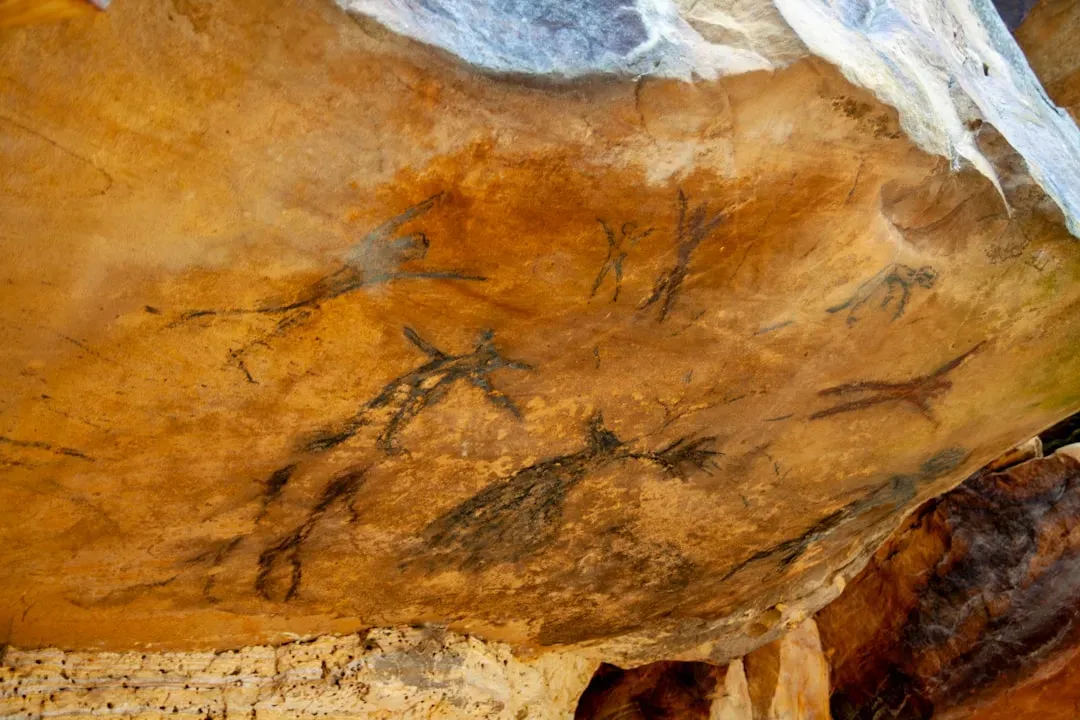
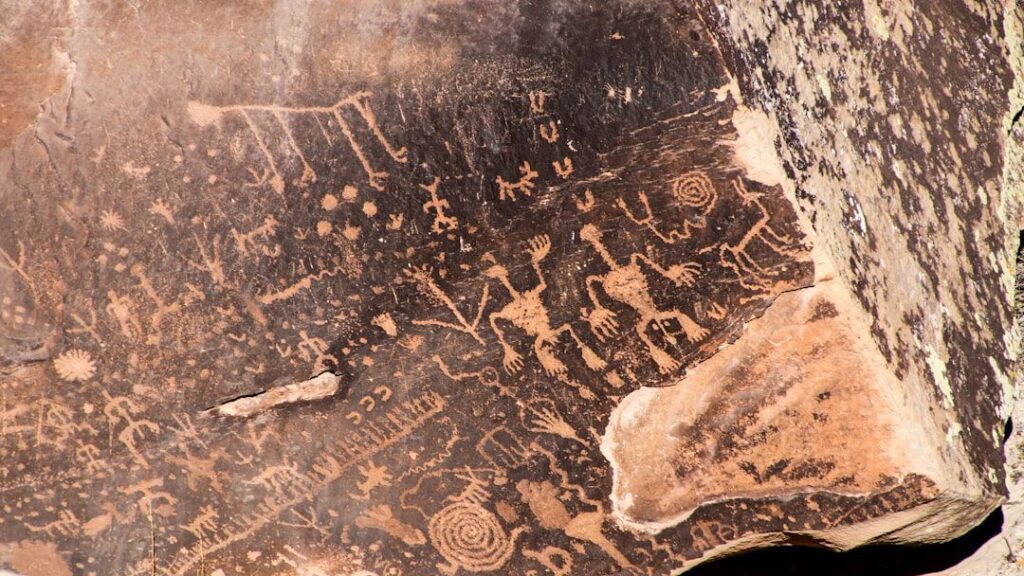
One of the most famous examples of alleged dinosaur cave art is the rock painting at Black Dragon Canyon in Utah, USA. Some creationists have argued that this painting depicts a winged monster or pterosaur, and is therefore proof that humans and dinosaurs once coexisted. However, a detailed analysis by archaeologists and paleontologists has shown that the painting is actually a composite of several images, including a snake, a human figure, and some geometric shapes. Let’s be real, this is a classic case of seeing what you want to see, like spotting a dragon in a cloud formation.
An alleged dinosaur petroglyph in Havasupai Canyon, Arizona, is a stylized bird with an extension on one foot. A second alleged dinosaur petroglyph in Havasupai Canyon is a stylized bighorn sheep or rabbit. An alleged dinosaur cave painting in Tanzania is an obvious giraffe. Three alleged cave paintings of long-necked dinosaurs in Zambia have short necks and most likely represent lizards. One by one, what initially seemed like smoking-gun evidence turns into something far less dramatic once you look at it without the excitement goggles on.
The Brazil Discovery: When Humans Really Did Encounter Dinosaur Traces
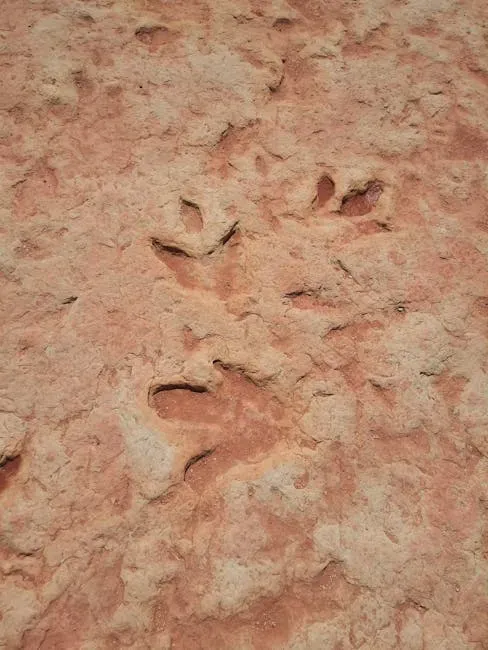
In northeastern Brazil, in a geological formation called the Sousa Basin, 9,000-year-old man-made petroglyphs have been found alongside 100-million-year-old dinosaur footprints. A recent study claims that the prehistoric art was deliberately created by humans who were careful not to disturb the nearby dinosaur tracks, with many of the petroglyphs a mere two to four inches from the fossilized prints. Some of the glyphs even appear to be illustrated representations of the footprints. This is genuinely remarkable. Not a direct encounter with living dinosaurs, but something almost as haunting: ancient people noticing, honoring, and even illustrating the ghostly impressions left by creatures they could not possibly have identified.
The petroglyphs offer crucial evidence about the historical population and shed light on the rituals and practices of that time. Researchers believe ancient humans deliberately placed these carvings next to the dinosaur prints, noting that some petroglyphs are only 2 to 4 inches away and may depict the footprints themselves. This suggests that people of that era were deeply curious about the footprints and interacted with them. Honestly, that kind of intellectual curiosity feels very human. You stumble upon something strange, something massive and unexplainable, and you respond the only way you know how: you make art.
The Bushmen of Lesotho: Perhaps the Most Accurate Prehistoric “Paleontologists”
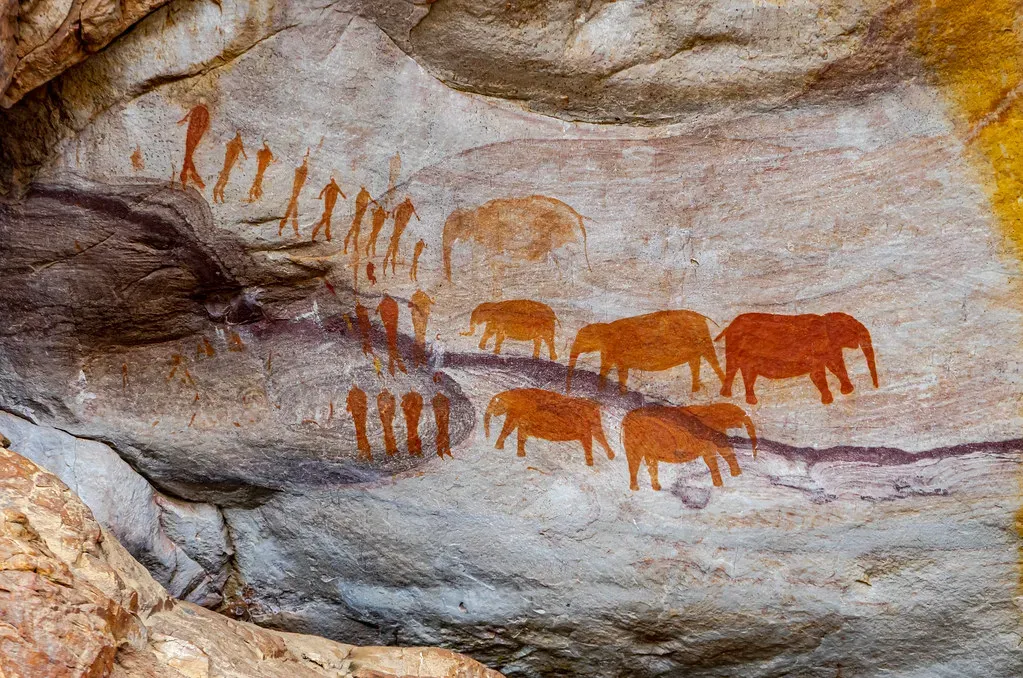
Remnants of Bushmen cave paintings showing representations of dinosaurs evidently reconstructed from footprints, trackways and skeletal remains have been found in Lesotho. This is a region of prolific dinosaur trackways preserved in Lower Jurassic sedimentary rocks, and the Bushman culture is renowned for extraordinary skill in the tracking of modern animals. Here is where things get genuinely fascinating. These were not random doodles on cave walls. These were careful, skilled observations by some of the most talented trackers in human history.
It is probable that the track and trackmaker representations depict ornithopod dinosaurs. The track drawings are accurate, and the trackmaker representations show that Bushman artists anticipated modern reconstructions of bipedal dinosaurs and produced depictions that are more realistic than many paleontological reconstructions that endured until quite recently. I think that deserves a moment of genuine awe. Ancient hunter-gatherers, working from fossilized footprints alone, managed to reconstruct creatures more accurately than 19th-century European scientists who had actual bones. The San people weren’t interacting with living dinosaurs, but they were brilliant enough to reason backward from trace evidence to creature, essentially doing what paleontologists do today.
Fossils, Myths, and the Dragon Connection
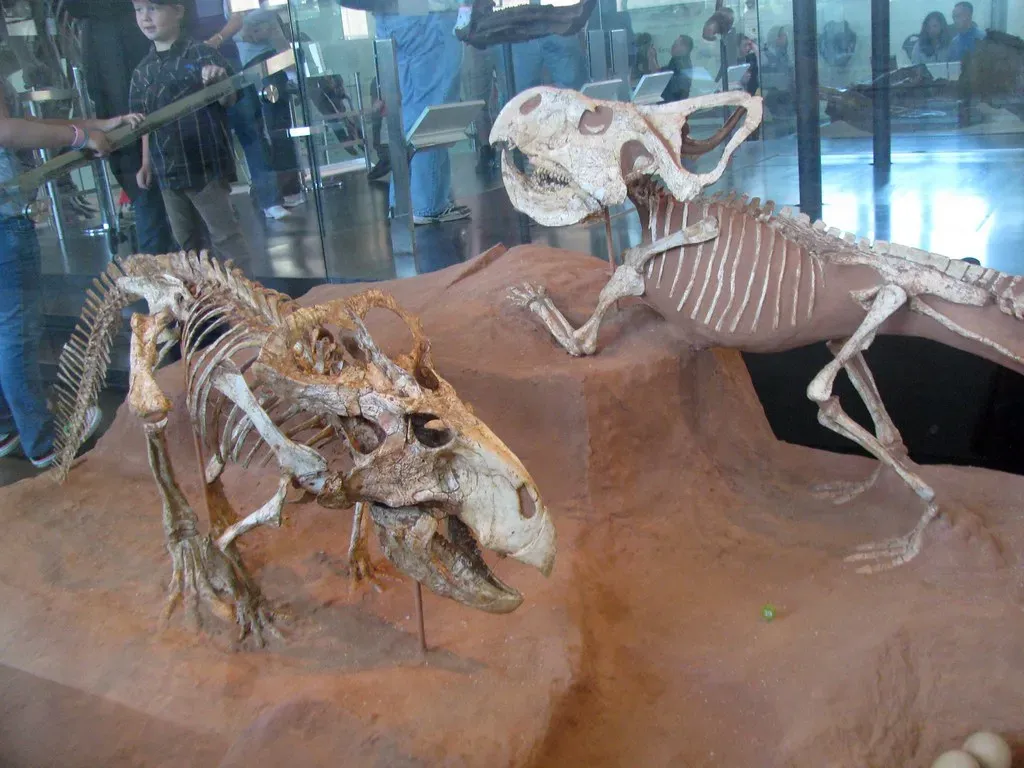
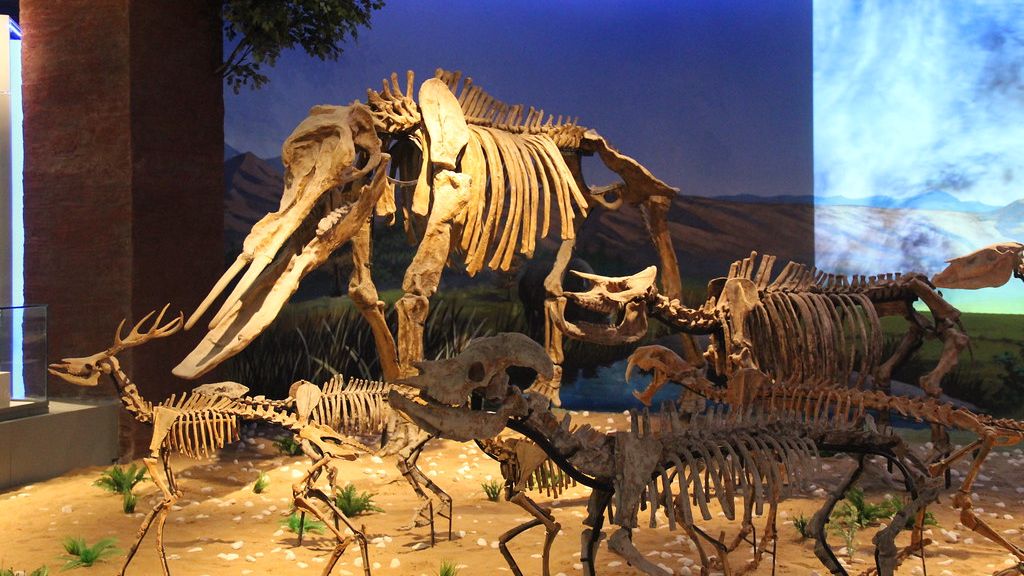
Many paleontologists today believe there might be a link between the mythological creatures ancient peoples believed to be dragons and the discovery of dinosaur fossils. This is the field of geomythology, a genuinely captivating area of study. Think of it this way: imagine you are a person living 3,000 years ago, you find a gigantic skull in the desert with a curved beak and massive eye sockets, and you have no framework for understanding extinction. What do you call it? A monster. A god. A dragon.
In the Gobi Desert where the Scythians dug for gold, Protoceratops fossils are plentiful and even include nests, eggs, and hatchlings that match the depictions of griffins in ancient art and legends. After exploring the links between Greek mythology and fossils of dinosaurs and other prehistoric creatures, researcher Adrienne Mayor went on to research the connections between local fossils and Native American mythical creatures. She concluded that ancient cultures were very attuned to the natural world around them and made careful observations of the fossils in their environment. Based on their understanding of how the world works, they came up with imaginative explanations for the histories they saw in the bones and rocks they found. It’s hard to say for sure whether every dragon myth traces back to a dinosaur bone, but the pattern is undeniably striking.
What Science Says: Pareidolia, Misidentification, and the Power of Context
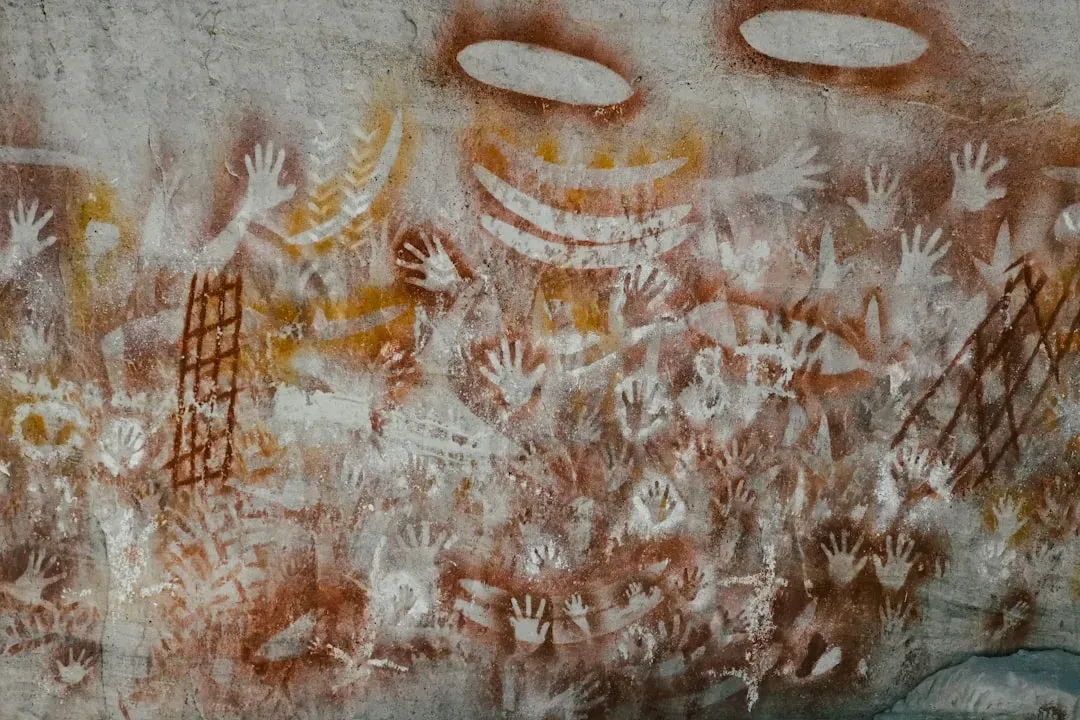
Have you ever watched the clouds go by and thought you saw one in the shape of an animal, or seen the “man in the moon”? These are examples of pareidolia, seeing what we believe to be a significant shape or pattern when it isn’t really there. This phenomenon also explains the “dinosaur” on Kachina Bridge. Pareidolia is a powerful force, especially when you go looking for something specific. If you want to see a sauropod in a rock carving, you absolutely can. Our pattern-hungry brains will cooperate enthusiastically, whether the evidence is there or not.
When evaluating the meanings of ancient images it is important to consider their archaeological, cultural, and historical contexts as well as local natural history. It is unwise to jump to the conclusion that a dinosaur or pterosaur is represented without first studying such contexts to determine whether a less exciting alternative explanation is more plausible. This is really the heart of the scientific method applied to rock art. Context matters enormously. An image next to symbols of spirit animals or shamanic figures tells a very different story than an image carved near actual fossil footprints. You need to look at the whole picture, not just the creature in the center of it.
Conclusion: A Window Into Curiosity, Not Coexistence
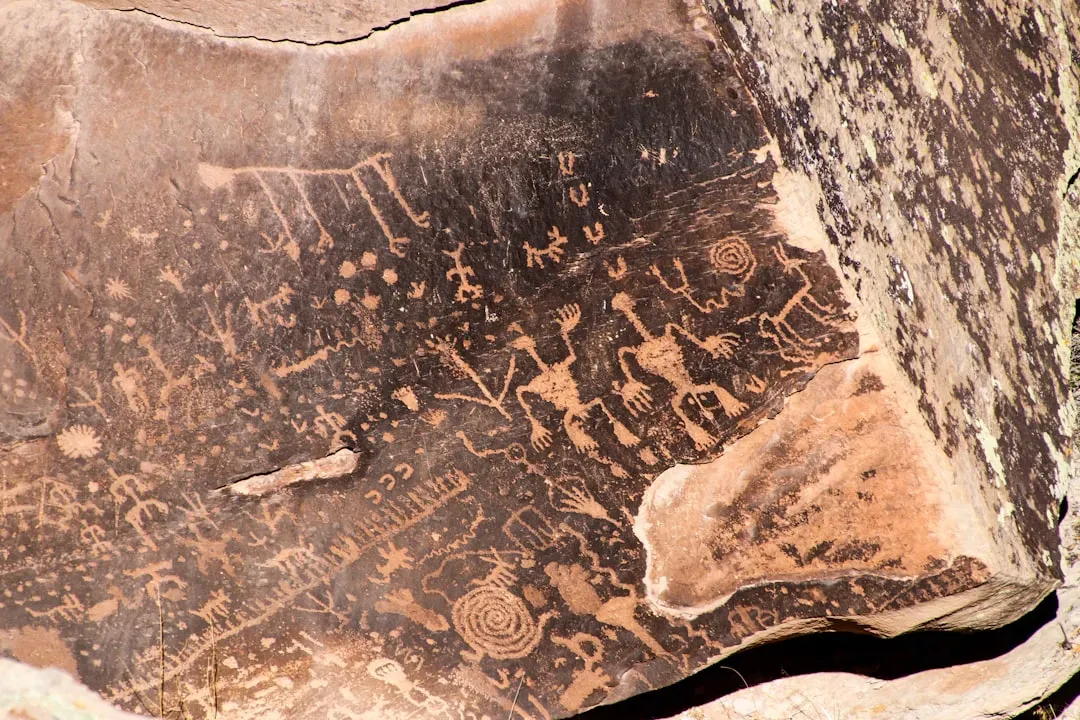
So, can ancient cave art reveal direct interactions between early humans and living dinosaurs? The scientific consensus says no. The fossil record, geological evidence, and the sheer span of time between the two groups make that essentially impossible. What cave art can reveal, however, is something arguably even more profound: it shows you how early humans processed the strange, the massive, and the unexplainable remnants of a world that predated them by unimaginable epochs.
From the Bushmen of Lesotho deducing the shape of bipedal creatures from fossilized footprints, to the ancient peoples of Brazil who carefully carved petroglyphs just inches from 100-million-year-old tracks, what you are really seeing is human curiosity at its most raw and beautiful. Without an understanding of evolution, extinction, or deep time, it was difficult to determine what fossils were or where they came from. Yet ancient peoples tried anyway, and they left the record of that attempt on stone walls for us to read thousands of years later. That, honestly, is more moving than any dragon could ever be. What do you think these ancient artists were really trying to tell us? Leave your thoughts in the comments.