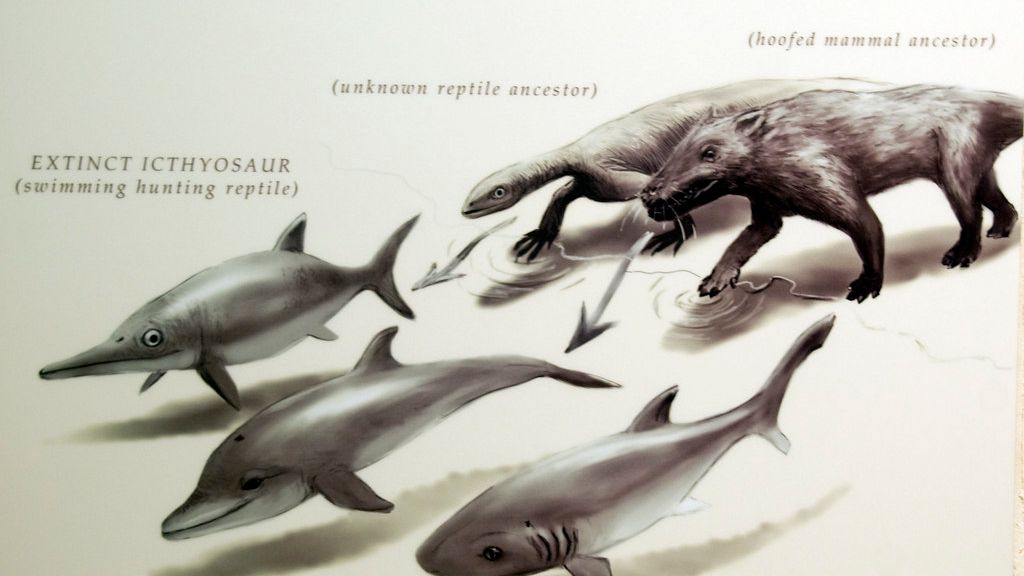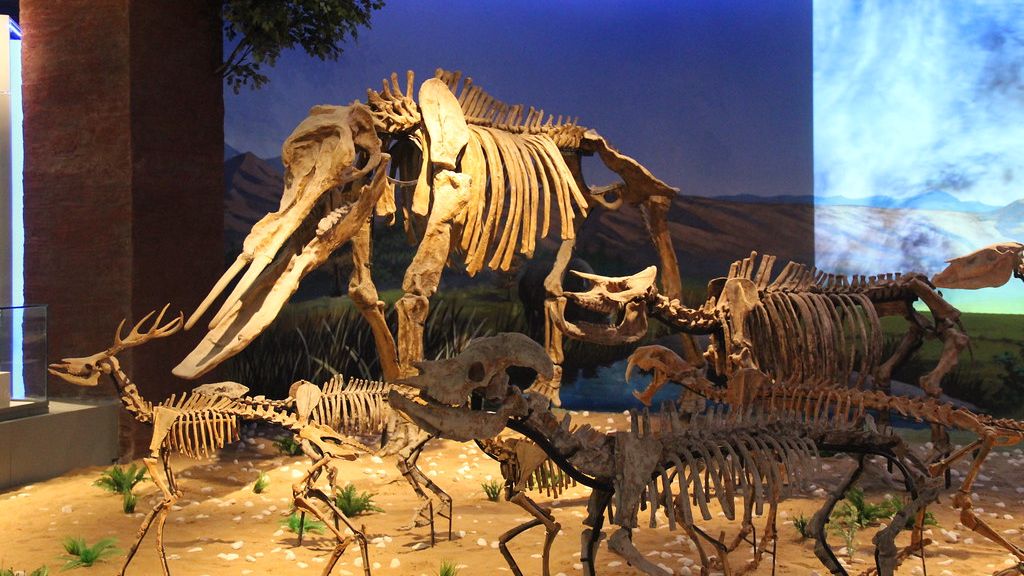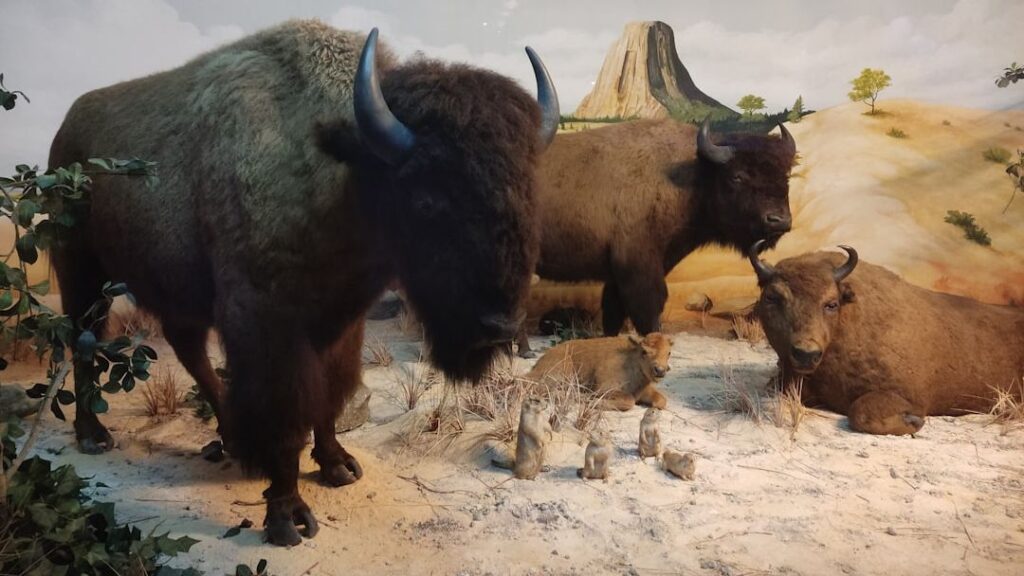
There’s something almost poetic about the idea that the roads your ancient ancestors walked weren’t roads at all. They were invisible trails cut through grasslands, across frozen tundra, and over mountain passes, carved not by any human hand, but by the thundering hooves and massive feet of animals that no longer exist. These creatures weren’t just prehistoric curiosities. They were, in a very real sense, the navigators of human history.
Think about it this way. Long before compasses, maps, or trail blazes, early humans needed a reason to move and a direction to head. The answer was almost always moving on four legs just ahead of them. The story of how our species populated the globe is, in no small part, the story of following dinner. Let’s dive in.
The Hunger That Drove a Species Across the World
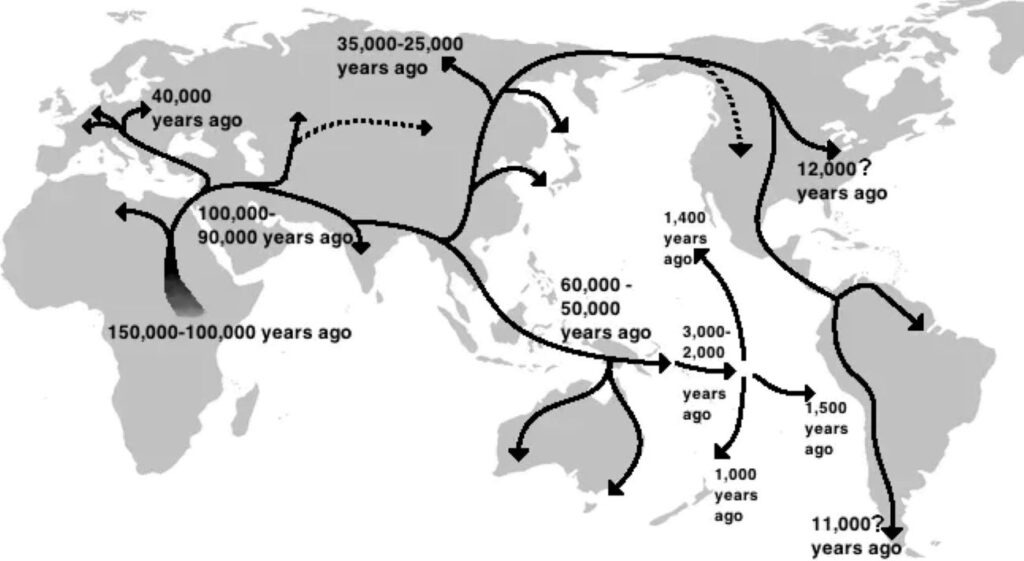
Let’s be real about something most history books gloss over. Early humans did not migrate because they were curious explorers itching for adventure. They moved because they were hungry. The initial spread of humanity across the Earth was driven primarily by food and climate, and nomadic tribes of up to a few dozen people likely followed the migration patterns of the herd animals they hunted. That’s not a small detail. That’s the entire engine of prehistoric movement.
Push factors that drove early human migrations included the climate taking a turn for the worse, natural disasters, competition with hostile neighboring groups, food and other resources running too low to support the population within an area, or the more mobile type of food, meaning herds of herbivores, migrating away. You can almost picture a small band of people watching a vast herd of aurochs or bison crest a distant ridge, knowing that following them was less a choice and more a matter of survival.
The availability of resources was a constant motivator for these hunter-gatherer societies. They moved in pursuit of migrating animal herds or to find new areas with abundant vegetation and fresh water. The animals knew where the good grazing was. The good grazing meant water. Water meant life. The logic, honestly, is as clean as it gets.
Megafauna as Prehistoric Pathfinders
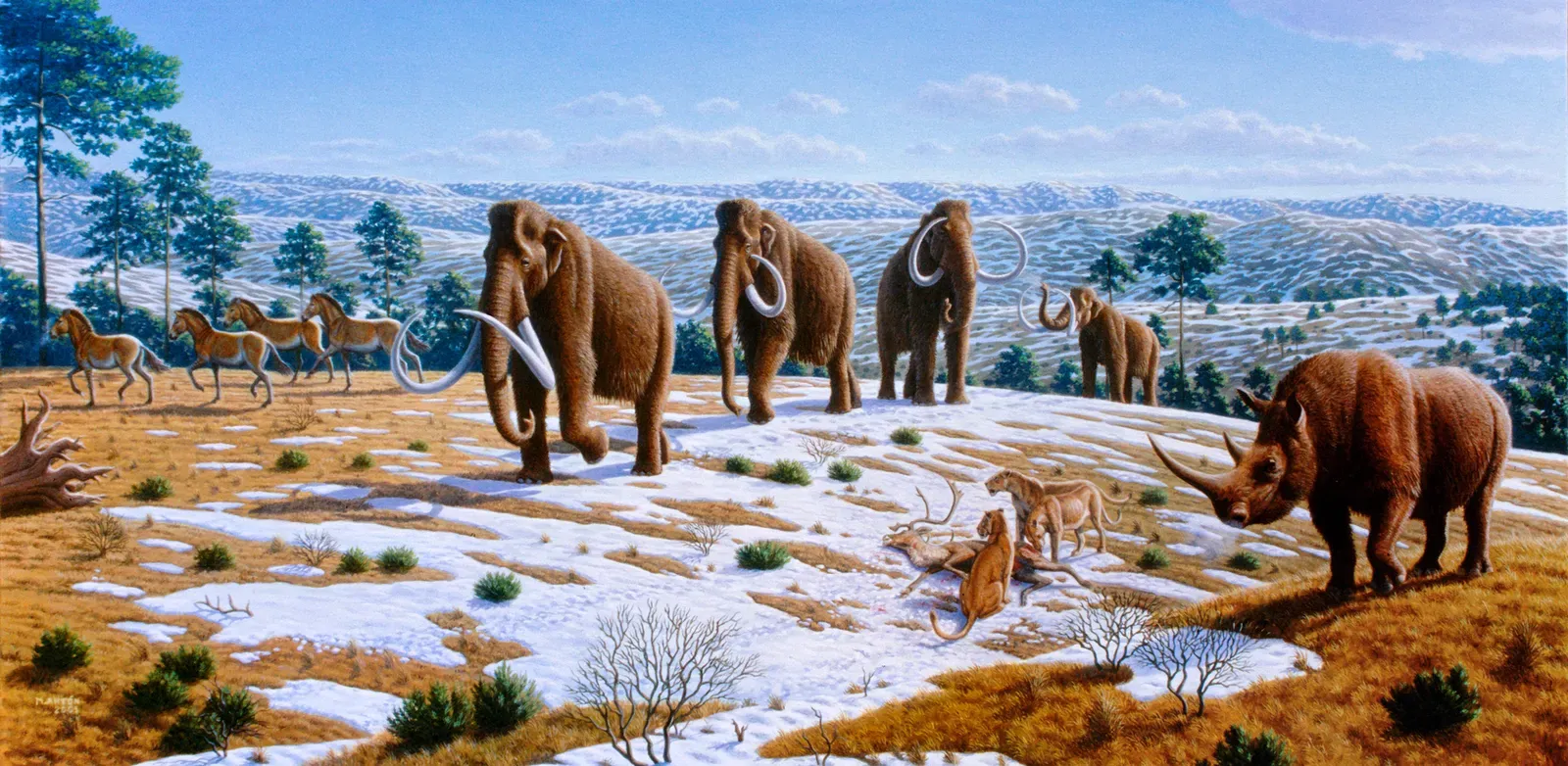
You have to appreciate the scale of what ancient megafauna actually were. Woolly mammoths, giant bison, cave bears, woolly rhinoceroses. These were animals of staggering size moving across landscapes in enormous numbers, and wherever they moved, they stamped out routes that humans could follow. Changes in the climate would have caused trees and plants to migrate, and the herds of animals that fed on them would have followed. Ancient humans would have followed too, taking them into unfamiliar territory.
Following herds of large herbivores would have been a good strategy in the challenging process of migration, and a 2016 study suggests Homo erectus may also have done this, while also sticking close to flint deposits and avoiding areas with loads of carnivores, at least early on in their dispersal. Honestly, that kind of strategic thinking is remarkable. It wasn’t just about chasing food. It was about reading the landscape intelligently, using animals as both a resource and a geographic guide.
Early humans developed an understanding of mammoth behavior through observation and experience. They learned to recognize patterns in mammoth herds’ movement, migration routes, feeding grounds, and watering holes. This is what I find genuinely mind-bending. These were not random wanderers. They were careful observers building up ecological knowledge over generations.
Mammoth Trails and the Archaeology of Hunting Camps
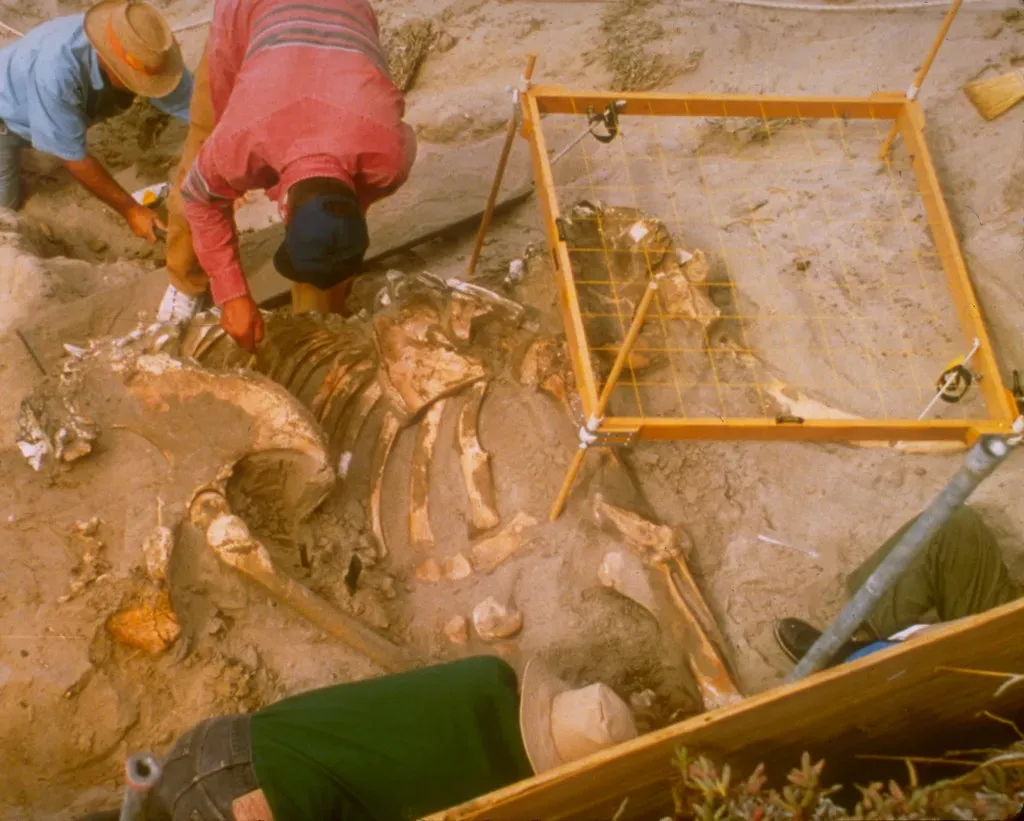
One of the most compelling pieces of evidence linking mammoth movement to human settlement comes from recent research in Alaska. Researchers have linked the travels of a 14,000-year-old woolly mammoth with the oldest known human settlements in Alaska, providing clues about the relationship between the iconic species and some of the earliest people to travel across the Bering Land Bridge. Scientists made those connections by using isotope analysis to study the life of a female mammoth. It’s like a detective story told in tusk layers.
Isotopic analyses of a female mammoth tusk found in a 14,000-year-old archaeological site show that she moved roughly 1,000 kilometers from northwestern Canada to inhabit an area with the highest density of early archaeological sites in interior Alaska until her death. DNA from the tusk and other local contemporaneous archaeological mammoth remains revealed that multiple mammoth herds congregated in this region. Early Alaskans seem to have structured their settlements partly based on mammoth prevalence and made use of mammoths for raw materials and likely food.
When the tusk and the remains of two related juvenile mammoths were excavated in 2009, they appeared alongside evidence of campfires, the use of stone tools, and butchered remains of other game. The discovery of this evidence “indicates a pattern consistent with human hunting of mammoths.” These weren’t random campsites. They were strategically placed right where the animals gathered, season after season.
The Beringian Crossing: Following Herds Across Continents
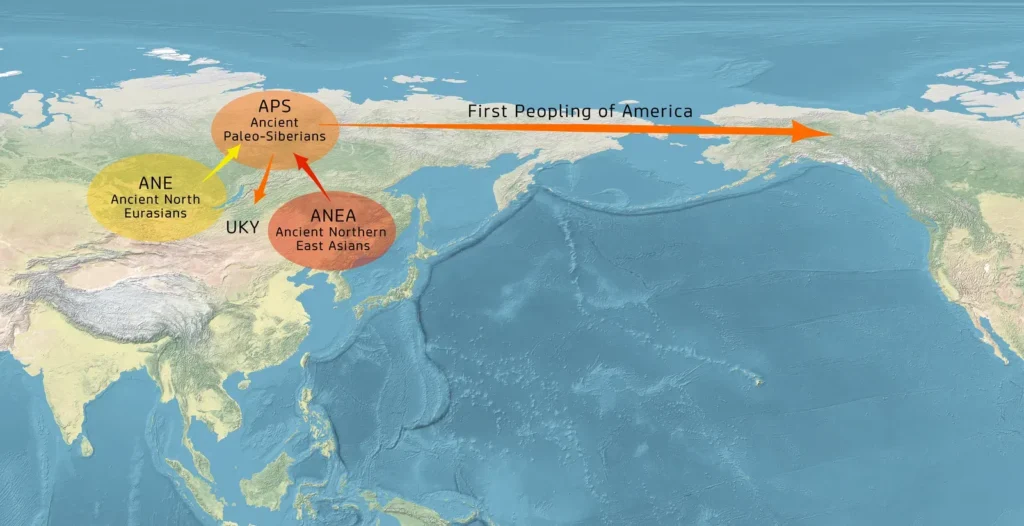
Perhaps nowhere is the animal-driven migration theory more vividly illustrated than in the peopling of the Americas. The most generally accepted theory is that Ancient Beringians moved when sea levels were significantly lowered due to the Quaternary glaciation, following herds of now-extinct Pleistocene megafauna along ice-free corridors that stretched between the Laurentide and Cordilleran ice sheets. These corridors weren’t maps drawn by humans. They were paths opened by the movement of massive animals.
Early human groups were largely nomadic, relying on following food sources for survival. Mobility was part of what made humans successful. As nomadic groups, early humans likely followed the food from Eurasia to the Americas, which is part of the reason why tracing megafaunal DNA is so helpful for gaining insight into these migratory patterns. The idea that you can track human migration by studying the DNA of the animals they chased is, I think, one of the most brilliant methodological breakthroughs in modern archaeology.
Analyses of biomarkers and microfossils preserved in sediments from Lake E5 and Burial Lake in northern Alaska suggest early humans burned Beringian landscapes as early as 34,000 years ago. The authors of these studies suggest that fire was used as a means of hunting megafauna. Using fire to drive herds. Crossing a frozen land bridge. Building camps where the mammoths gathered. The picture that emerges is not of wandering primitives, but of shrewd, adaptive strategists.
The African Exodus and the Role of Shifting Herbivore Ranges
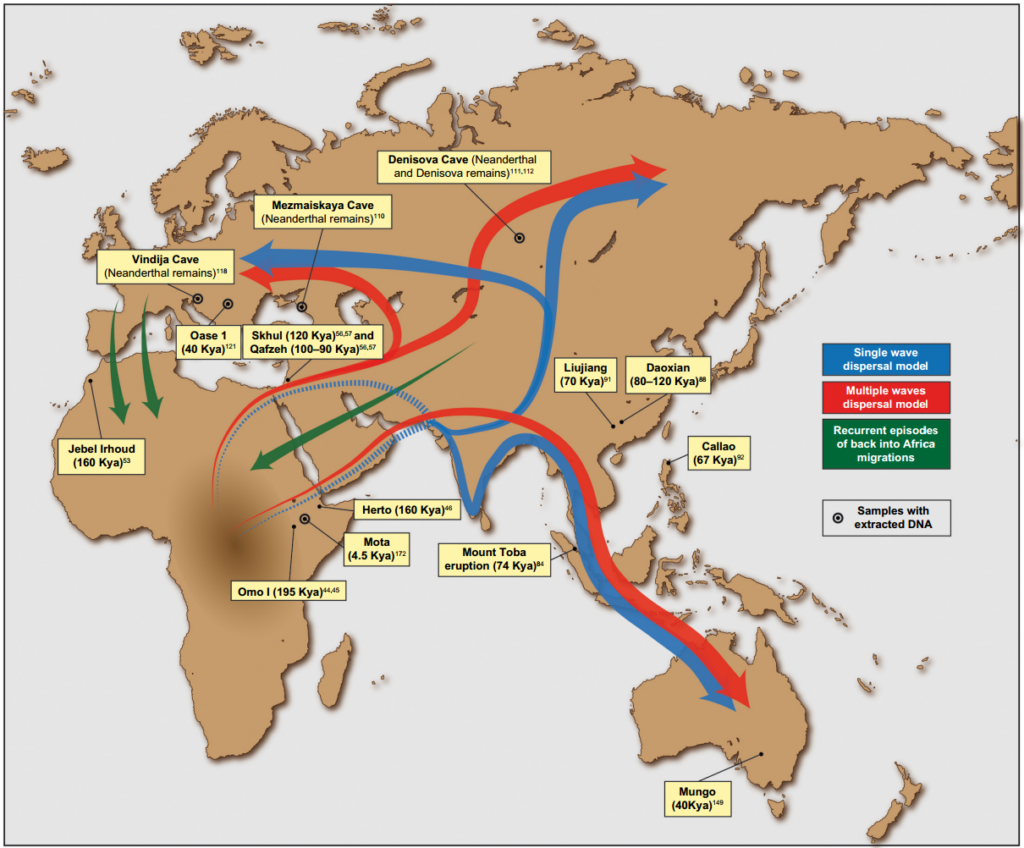
The story begins, of course, in Africa. There is evidence that modern humans left Africa at least 125,000 years ago using two different routes: through the Nile Valley, the Sinai Peninsula and the Levant, and a second route through the present-day Bab-el-Mandeb Strait on the Red Sea. These weren’t random directions. Both routes tracked regions where large herbivores were known to migrate seasonally, providing reliable food corridors through otherwise hostile terrain.
The Arabian Peninsula is hot and arid today, but it wasn’t always like this. The remains of ancient lakes have been found, including a very interesting site known as Khall Amayshan 4 in the Nefud Desert. It shows that the conditions were right for permanent freshwater lakes to exist in the region at least five times between 400,000 and 55,000 years ago. Where there was water, there were grazing animals. Where there were grazing animals, there were humans not far behind.
Adapting to new environments was a key driver of human evolution. As humans moved into regions with different climates, they developed new survival skills, such as creating warmer clothing from animal skins in colder areas. The animals didn’t just guide humans geographically. They equipped them for the journey, providing the very skins and bones that made survival in new, harsher environments possible.
When Animal Herds Vanished, Human Cultures Transformed
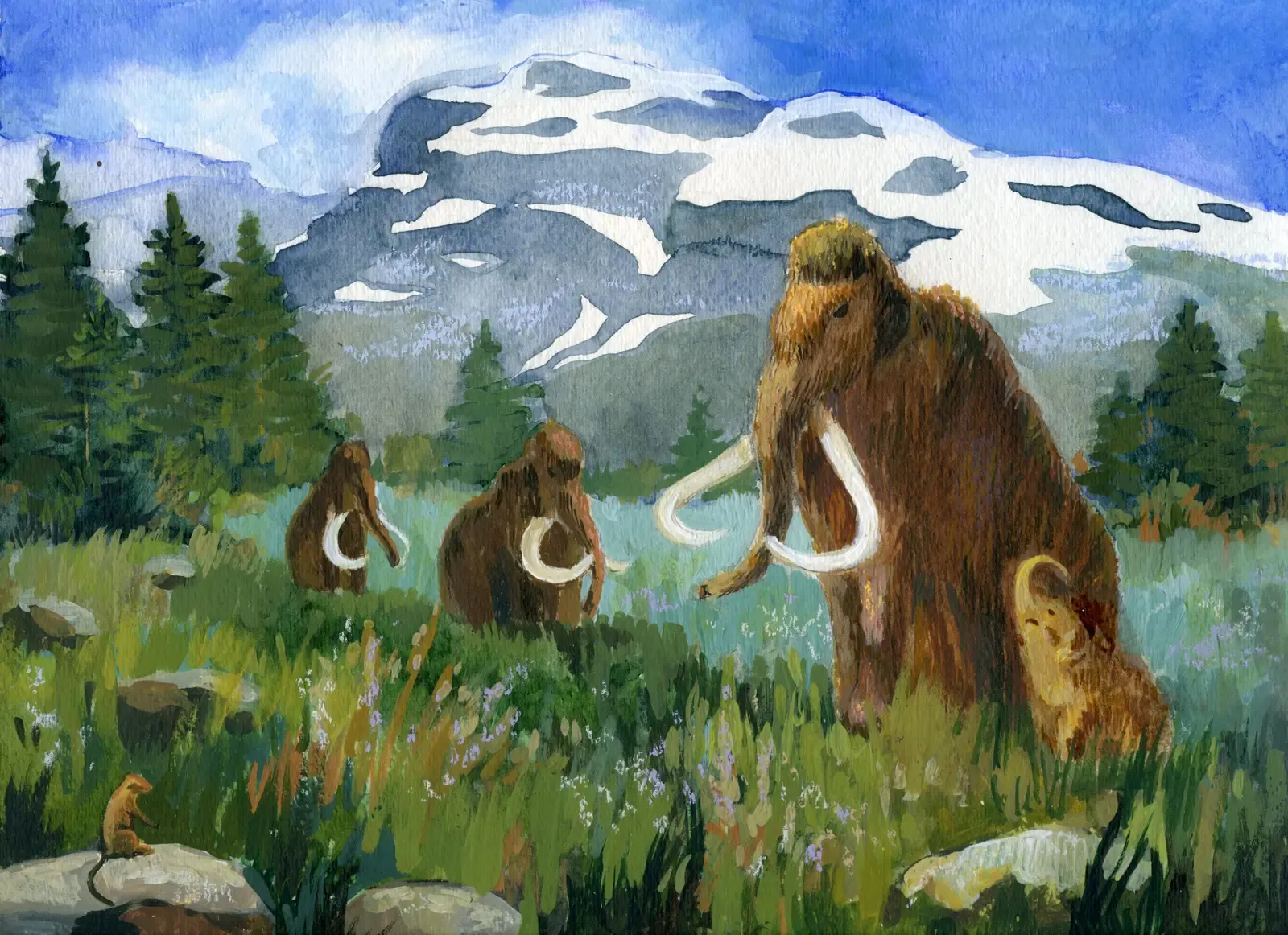
Here is the thing that doesn’t get discussed enough. The relationship between human migration and animal herds was not just about movement. It was a deeply co-dependent bond that, when broken, reshaped entire civilizations. It has been suggested that human hunting exerted significant pressure on woolly mammoth populations for thousands of years across their range, making the population abundance of woolly mammoths considerably lower than it would have been otherwise even prior to their range decline, and likely hastened the range collapse of woolly mammoths in response to climate change.
The grass and shrub-dominated steppe landscape that had been common in Interior Alaska was beginning to shift toward more forested terrain. “Climate change at the end of the ice age fragmented mammoths’ preferred open habitat, potentially decreasing movement and making them more vulnerable to human predation.” This is a genuinely tragic irony. The very humans that the mammoths had unwittingly guided across continents may have contributed to their final disappearance.
This expansion was made possible by cognitive and technological advancements. The development of more complex stone tools, the controlled use of fire, and the ability to construct shelters allowed humans to survive in environments far different from their African homeland. The emergence of complex language enabled better coordination and the sharing of knowledge for adapting to unfamiliar challenges. Slowly, humans stopped needing the herds quite as desperately. They had learned enough from following them to survive on their own terms.
Conclusion
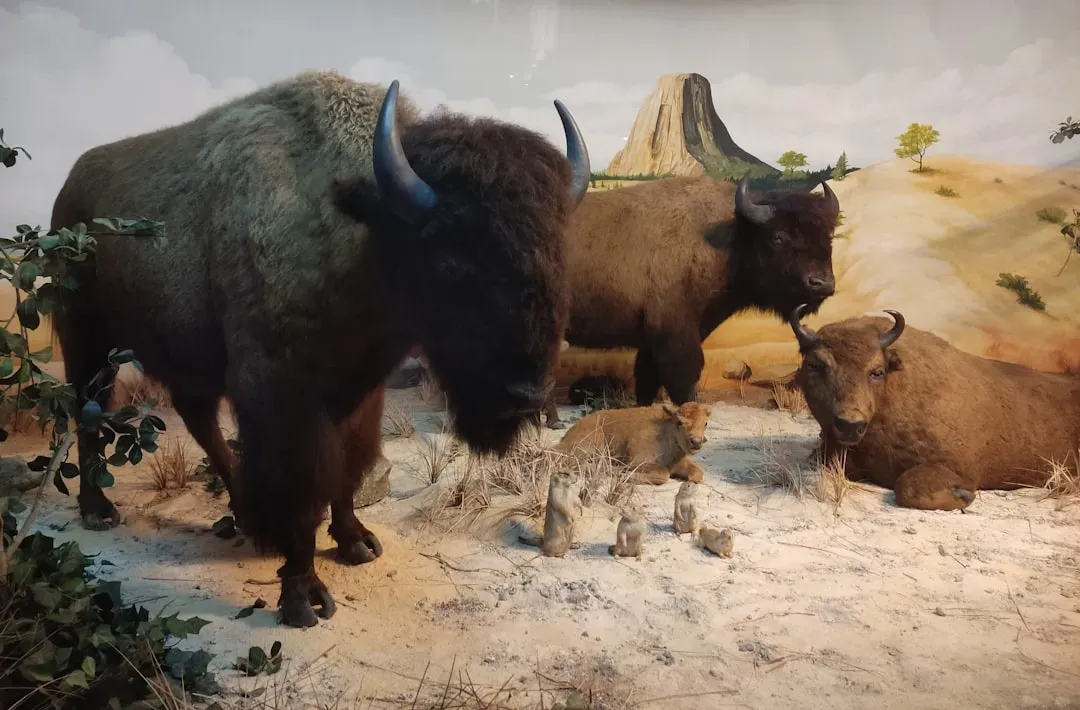
The great prehistoric migrations were not purely acts of human will or curiosity. They were, in many ways, choreographed by the animals that roamed the earth long before written history. Over-wintering game herds of bison, elk, deer, and pronghorn as well as plenty of fuel and shelter made certain areas ideal places for early humans to spend the winter. The animals selected the sites. The humans followed and settled. That dynamic shaped the human world in ways we are still uncovering today.
Every inhabited continent, every language family, every ancient culture owes something to a herd of animals that crossed a ridge at just the right moment. It’s a humbling thought. The next time you look at a map of the world, consider that the invisible lines connecting every human population on Earth might trace right back to the ancient footpaths of woolly mammoths and thundering bison. What would you have guessed was navigating our ancestors across the planet?