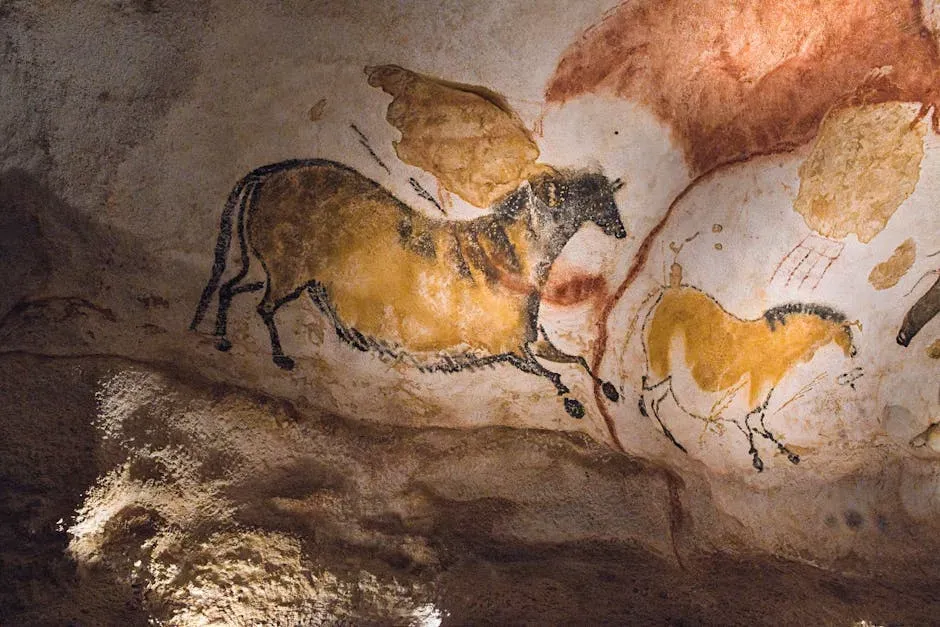
Most people, when they think of ancient cave art, picture the Lascaux caves in France or the painted walls of Altamira in Spain. Europe gets most of the glory. What very few people realize is that right here in the United States, hidden deep inside limestone cave systems, ancient artists were creating work of extraordinary complexity and scale. Thousands of years before anyone thought to look, prehistoric Americans were going underground, lighting their way with river cane torches, and producing some of the most sophisticated visual imagery ever recorded on this continent.
This is not mythology or speculation. The evidence is real, verified, and frankly astonishing. It rewrites a part of American prehistory that most of us never even knew was missing. So let’s dive in.
The Discovery That Changed Everything: Mud Glyph Cave in Tennessee
Picture a cold winter day in 1980. A group of recreational cavers squeezed through a slippery mud slope, navigated tight keyholes in the rock, and trudged through an underground stream. Eventually, they entered a high and relatively dry passage deep in the cave’s dark zone, beyond the reach of external light. On the walls around them, they began to see lines and figures traced into remnant mud banks laid down long ago when the stream once flowed at that higher level. They had no idea they had just stumbled onto one of the most significant archaeological finds in North American history.
The Tennessee cavers recognized they were seeing something extraordinary and brought archaeologist Charles Faulkner to the cave. He initiated a research project there, naming the site Mud Glyph Cave. His archaeological work showed that the art was from the Mississippian culture, some 800 years old, and depicted imagery characteristic of ancient Native American religious beliefs. That single find opened a door that nobody even knew existed, and researchers have been rushing through it ever since.
A Landscape Rich in Hidden Art: Dozens of Sites Across the Southeast
After Mud Glyph Cave was investigated, archaeologists at the University of Tennessee, Knoxville, initiated systematic cave surveys. Today they have cataloged 92 dark-zone cave art sites in Tennessee, Alabama, Georgia, Kentucky, Virginia, and West Virginia. There are also a few sites known in Arkansas, Missouri, and Wisconsin. That is a staggering number for a region where deep cave art was completely unknown to researchers just decades ago.
Honestly, it puts a dent in the comfortable assumption that American prehistory is fully mapped. As surveys continue, researchers uncover more dark cave sites every year. With each new discovery, the tradition is beginning to approach the richness and diversity of the Paleolithic art of Europe, where 350 sites are currently known. That archaeologists were unaware of the dark-zone cave art of the American Southeast even 40 years ago demonstrates the kinds of new discoveries that can be made even in regions that have been explored for centuries. Think about that for a moment. Centuries of exploration, and we still missed this.
Three Distinct Art Forms: How These Ancient Artists Worked
There are three forms of southeastern cave art. Mud glyphs are drawings traced into pliable mud surfaces preserved in caves, like those from Mud Glyph Cave. Petroglyphs are drawings incised directly into the limestone of the cave walls. Pictographs are paintings, usually made with charcoal-based pigments, placed onto the cave walls. Each technique required a different level of skill, preparation, and intention.
Let’s be real: creating detailed images in the pitch dark of a cave while crouching or lying flat is no small feat. The fact that these drawings were made on such a large scale, and in such a difficult to reach location, suggests a strong degree of intention behind their creation. These were not bored teenagers scribbling on walls. These were deliberate, planned acts of artistic and perhaps spiritual expression, carried out by people who clearly knew exactly what they were doing.
The Oldest Cave Art in America: A 6,000-Year-Old Masterpiece
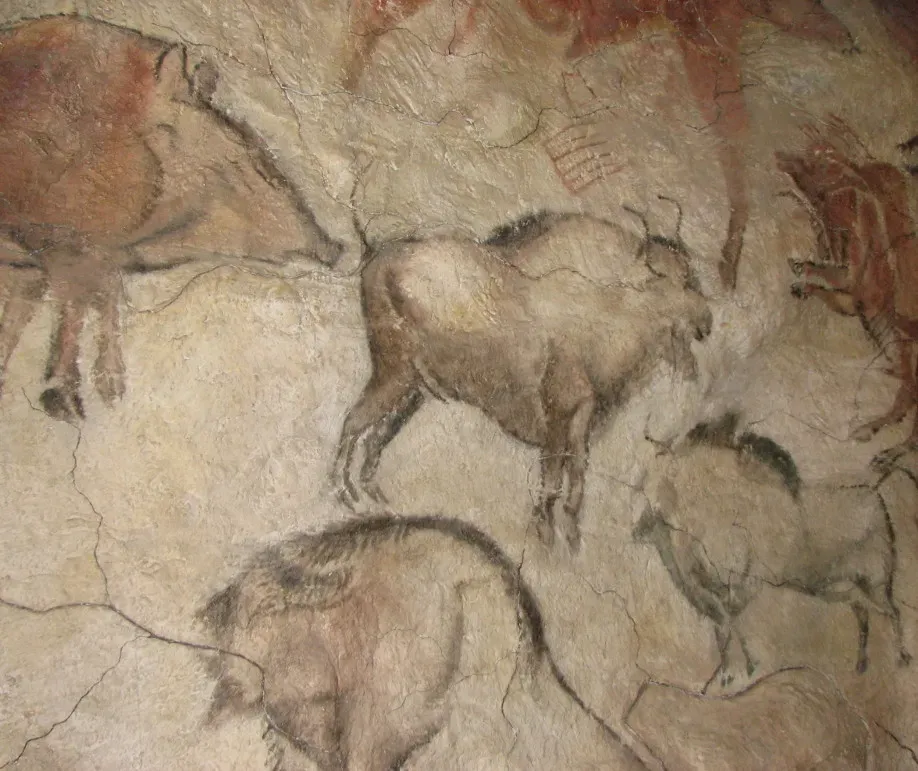
The timeline of American prehistoric art keeps getting pushed further back, and it’s genuinely jaw-dropping. One site, in particular, discovered within the Cumberland Plateau which cuts across Tennessee between Chattanooga and Nashville, was drawn 6,000 years ago, the oldest to date in North America. Six thousand years is not a small number. To give you a sense of scale, that’s roughly as far back as the earliest writing systems in ancient Mesopotamia.
The oldest site dates back 7,000 years, but much of the cave art was created between 800 and 1600 AD. This means you’re looking at a continuous artistic tradition spanning thousands of years across multiple generations and cultures. Cave art in the Southeast was created over a long period of time. These artists worked in ancient times when ancestral Native Americans lived by foraging in the rich natural landscapes of the Southeast, all the way through to the historic period just before the Trail of Tears saw the forced removal of indigenous people east of the Mississippi River in the 1830s. That continuity is remarkable.
The Alabama Cave That Hid the Largest Cave Art in North America
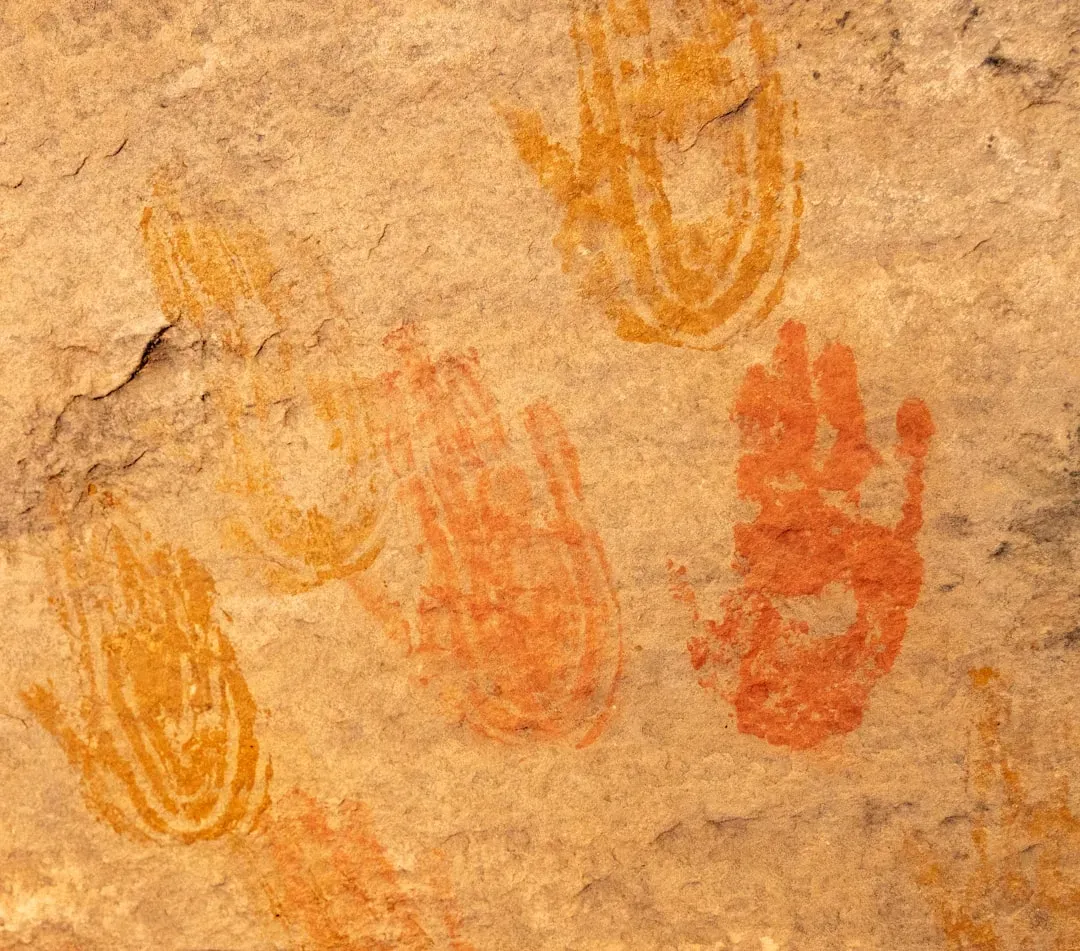
Here is where things get truly spectacular. Deep in northern Alabama, on private land whose exact location is a closely guarded secret, sits a cave known only as the 19th Unnamed Cave. Hundreds of images are etched into mud across roughly 4,300 square feet of the cave’s ceiling. Abstract shapes and swirling lines appear alongside rattlesnakes, bears, insects, birds and humanlike figures created by Native American artists under the flickering light of river-cane torches sometime between 660 and 949 C.E. That alone would make it extraordinary.
Massive Native American drawings, which remained unseen in an Alabama cave for more than 1,000 years, have been unveiled by a team of scientists. It’s the largest known cave art ever discovered in North America. The art was practically invisible until researchers investigated the cave and used 3D scans to reveal the works, including one stretching for 11 feet in length. To put that in perspective, an 11-foot image drawn in mud on a cave ceiling, in complete darkness, over a thousand years ago. It’s the kind of detail that makes you stop and reconsider what “primitive” actually means.
3D Technology Unlocks Secrets That the Naked Eye Could Never See
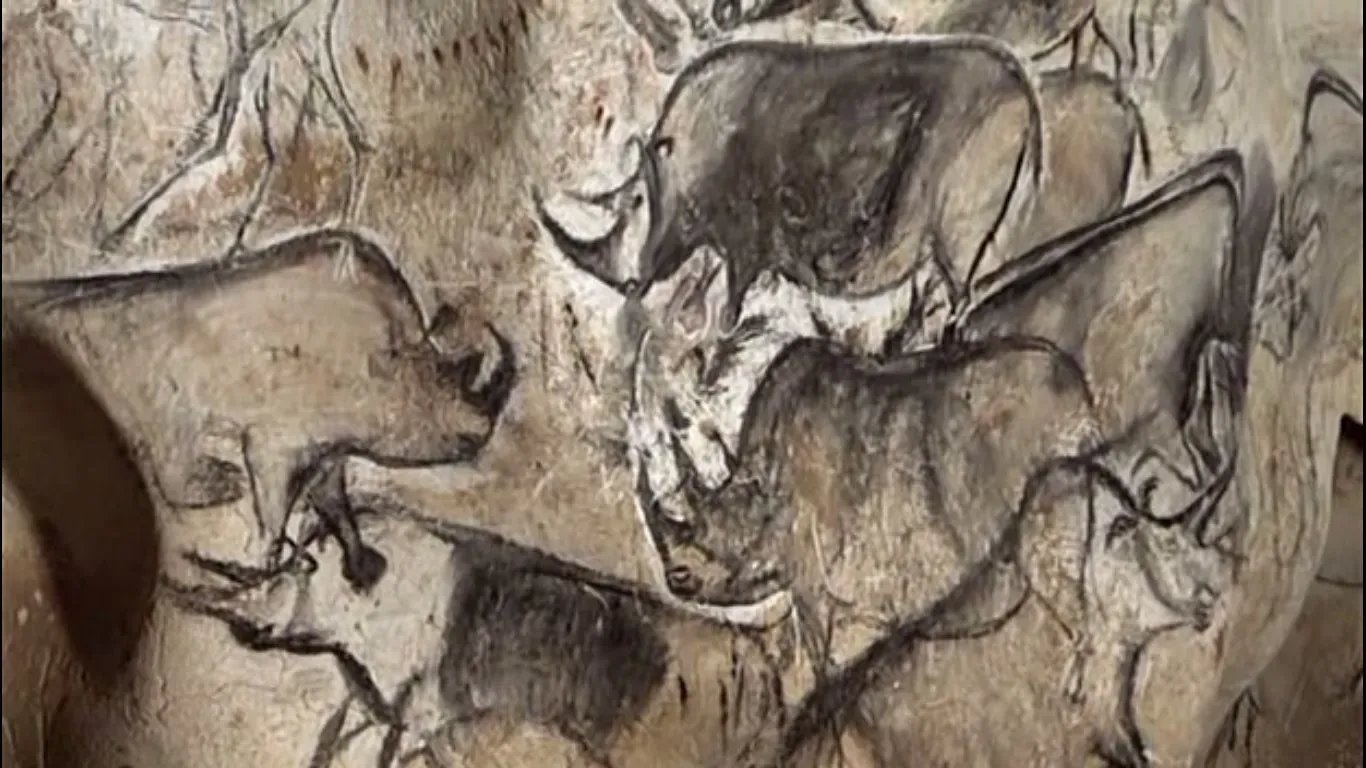
This is where modern science meets ancient creativity in a way that feels almost cinematic. To get a more complete picture of the art, researcher Simek revisited the cave in 2017 with Stephen Alvarez, a photographer and founder of the nonprofit Ancient Art Archive, which documents ancient rock art around the world and shares it online via virtual reality. Alvarez wanted to use a new technique called 3D photogrammetry to create a realistic 3D model of the cave and see whether they could uncover additional images that had gone unobserved in the tight space.
Over a period of two months, they took nearly 16,000 overlapping, high-resolution images. They stitched the photos together, using computer software to align the images in 3D space; researchers could then manipulate the resulting model using virtual reality software. The result was astonishing. Photogrammetry revealed thousands of additional glyphs and images, most outside the canon of Native American iconography previously detected in the Southeastern United States. The cave was far richer than anyone had imagined, and only a machine could show us what human eyes had missed for centuries.
What the Art Reveals: Spirituality, Symbolism, and a Living Legacy
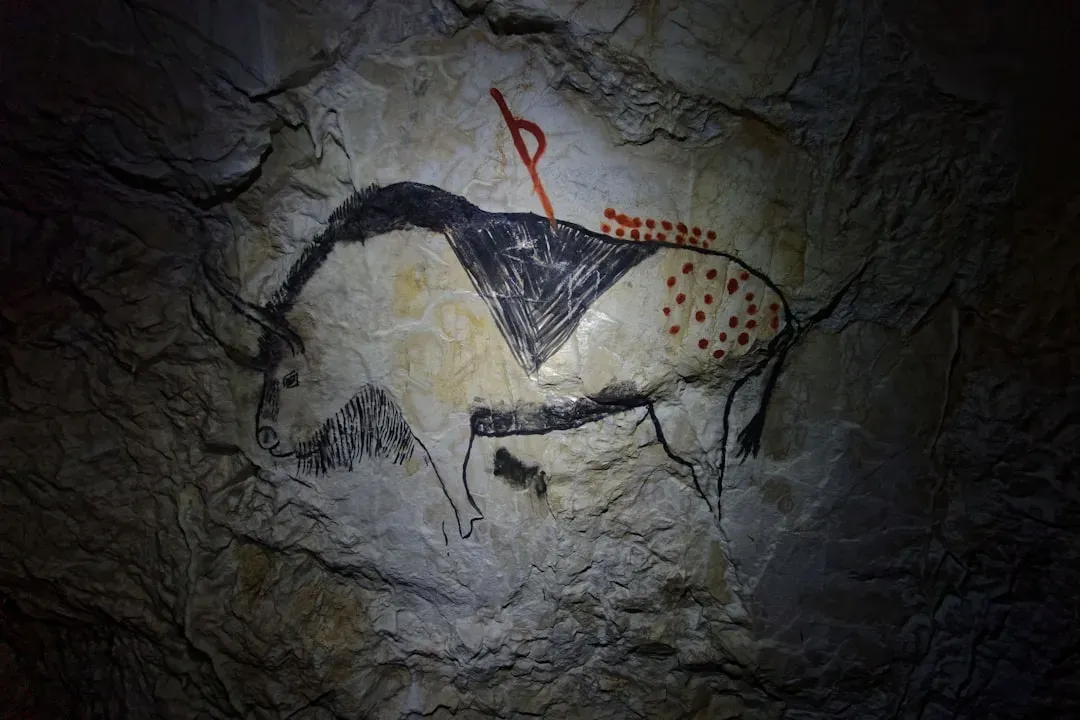
Beyond their sheer visual impact, these artworks carry deep cultural meaning. Though the exact meaning of the glyphs is unclear, caves like the one in which they were found were often linked to the underworld, the researchers say. Think of it like a medieval cathedral. The art wasn’t decoration. It was theology, cosmology, and identity, all pressed into mud and stone by hands that understood the weight of what they were making.
Archaeological work showed that much of the art was from the Mississippian culture and depicted imagery characteristic of ancient Native American religious beliefs. Many of those beliefs are still held by the descendants of Mississippian peoples: the modern Cherokee, Chickasaw, Choctaw, Coushatta, Muscogee, Seminole, and Yuchi, among others. This is not just ancient history locked in stone. It is a living, breathing cultural inheritance that connects modern Indigenous communities directly to their ancestors in the dark, painted caves of the American Southeast. That connection is profound, and it deserves far more recognition than it currently receives.
Conclusion: America’s Hidden Art History Is Just Getting Started
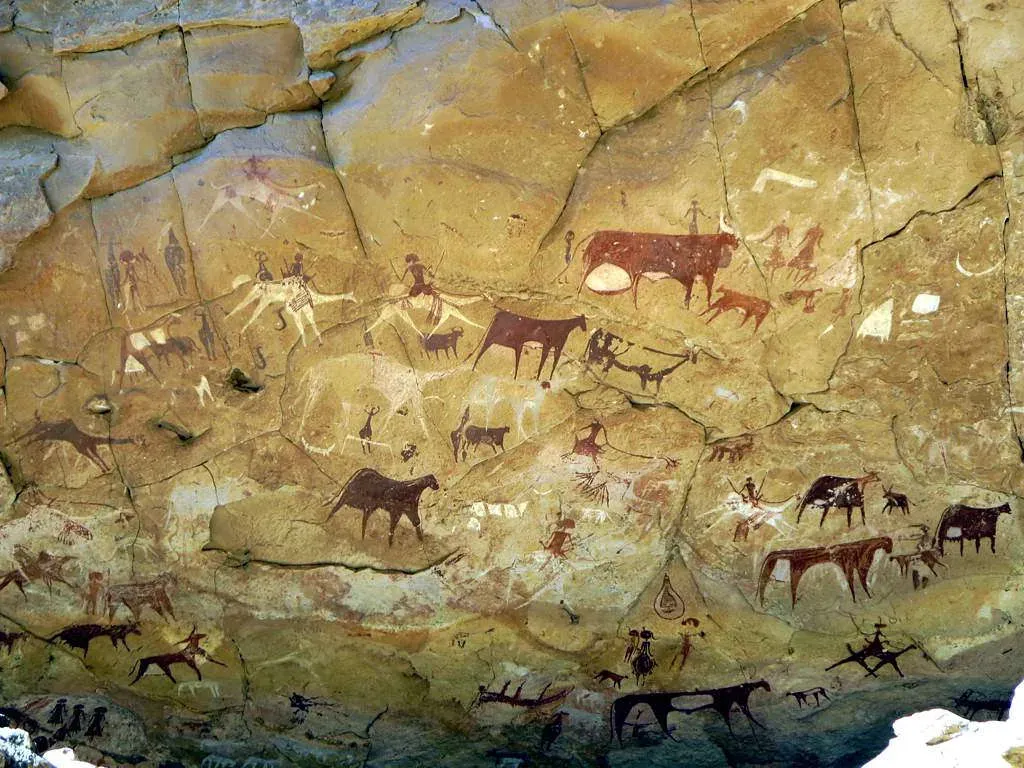
For far too long, the story of advanced prehistoric art was told almost exclusively through a European lens. The caves of France and Spain dominated the narrative while the American Southeast sat quietly in the dark, literally, waiting to be seen. What archaeologists have uncovered across Tennessee, Alabama, Georgia, and beyond forces a complete rethinking of how complex, intentional, and spiritually rich prehistoric American culture truly was.
A sophisticated tool kit stocked with wooden darts, a boomerang, and a spear-thrower resurfaced in a cave in Texas some 6,500 years after it was left behind by a prehistoric hunter, reminding us that these caves were not abandoned spaces but active, purposeful environments used by people of remarkable ingenuity. The art found alongside such evidence only deepens that picture.
The most humbling thought of all is this: if 92 dark-zone cave art sites could remain unknown to the modern world until just a few decades ago, how many more are still out there, waiting in silence for someone with a torch and the courage to look? What would you have guessed was hiding beneath the American landscape this whole time? Share your thoughts in the comments below.