Imagine standing on a dry, windswept plain in New Mexico, surrounded by endless dunes of pale gypsum – and then realizing that beneath your feet, thousands of years before any civilization we once thought possible, other human beings walked the exact same ground. That feeling of vertigo, of time collapsing on itself, is pretty much what archaeologists have been grappling with lately. Everything we thought we knew about when people first arrived in the Americas is being rewritten, one stunning discovery at a time.
The debate has been simmering for decades, but in the last few years it has absolutely erupted. New dating techniques, ancient DNA, and some genuinely jaw-dropping fossil finds have forced researchers to confront a deeply uncomfortable question: what if our entire timeline for the peopling of the Americas was wrong by thousands of years? Let’s dive in.
The Clovis First Theory: A Foundation Now Under Serious Pressure
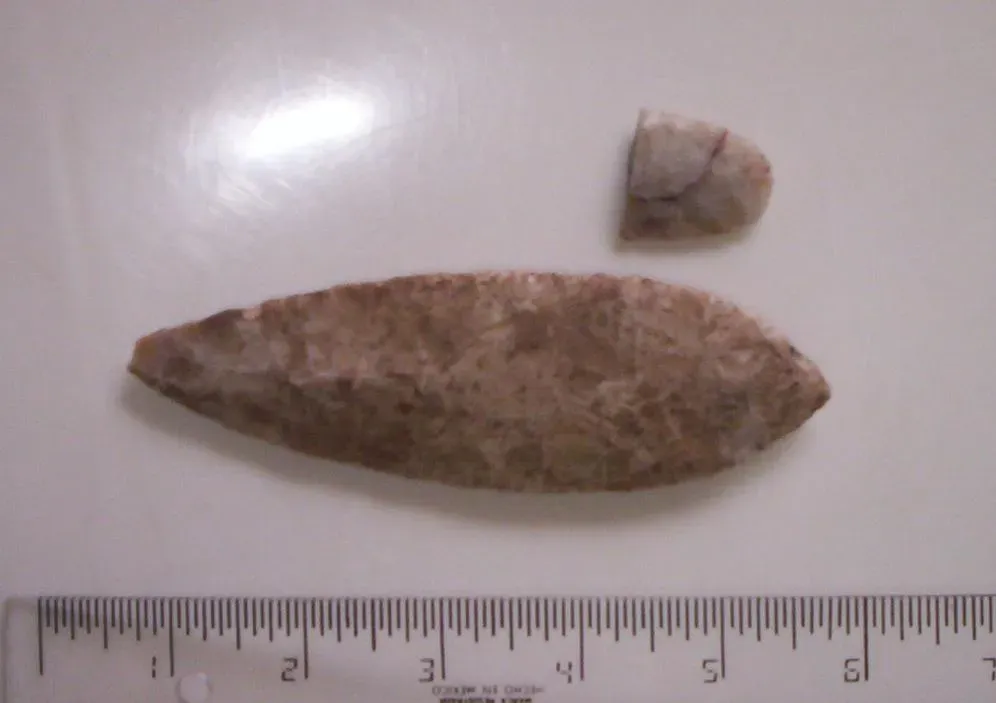
For most of the twentieth century, the story seemed settled. Researchers widely believed in the “Clovis-first model,” which proposed that the first Americans migrated over the Beringia land bridge from Asia during a time when glacial passages opened. The theory felt rock solid for generations, largely because the evidence supporting it was consistent and widespread across the continent.
This model linked the first inhabitants to distinctive spear points, known as Clovis points, ranging in age from roughly 13,250 to 12,800 years old. You can imagine the confidence archaeologists had in this idea. It was tidy, geologically logical, and supported by finds scattered from coast to coast. Honestly, for a long time, it just made sense.
The previously accepted Clovis-first model, suggesting that the first inhabitants of the Americas were linked with the Clovis tradition marked by distinctive fluted lithic points, has been effectively refuted. That refutation didn’t happen overnight. It took decades of contested dig sites, heated academic arguments, and ultimately, a flood of new physical evidence that became simply impossible to dismiss.
Footprints in the Sand: The White Sands Revolution
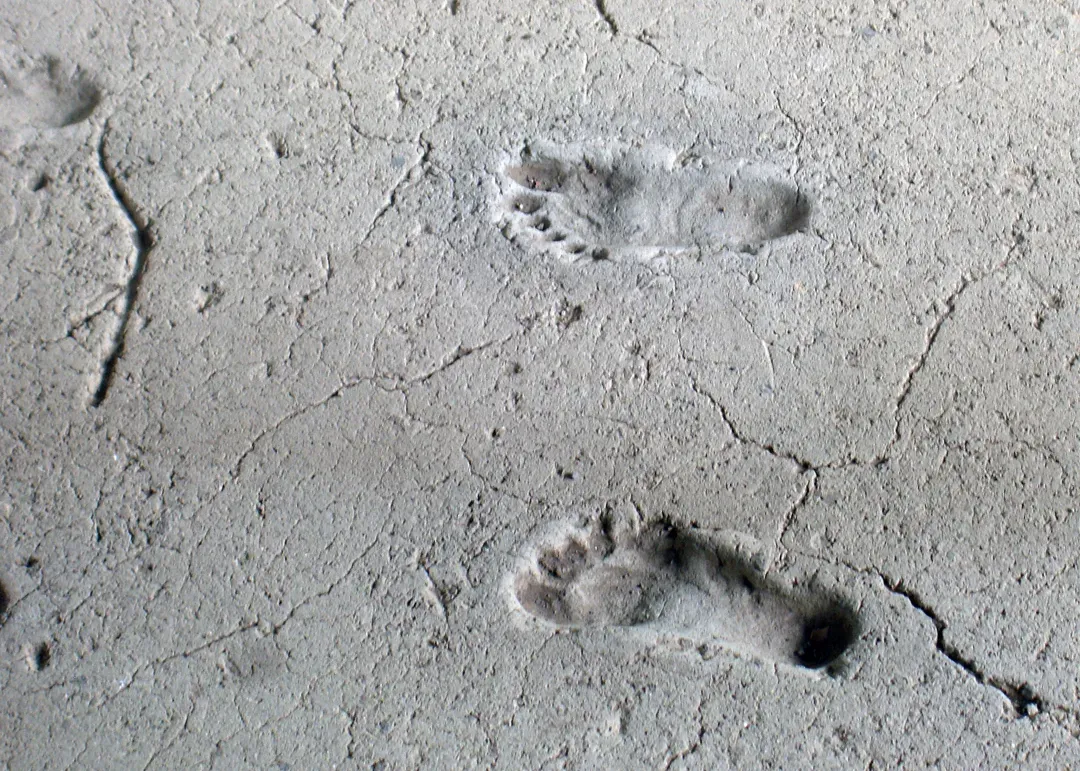
(Original text: self-made), CC BY-SA 3.0)
Here’s the thing that still astonishes me. The most powerful evidence for an earlier human presence didn’t come from stone tools or carved bones. It came from footprints. Actual human footprints, frozen in ancient mud, in New Mexico’s White Sands National Park. Researchers presented evidence from excavated surfaces in White Sands National Park, where multiple in situ human footprints are stratigraphically constrained and bracketed by seed layers yielding calibrated radiocarbon ages between roughly 23 and 21 thousand years ago.
The claim in 2021 that these human footprints discovered in mud were between 23,000 and 21,000 years old turned the standard theory on its head. Critics immediately pushed back, arguing the dating method used on aquatic plant seeds was flawed. So researchers went back and tried again, and again. The mud dated between 20,700 and 22,400 years old, lining up with the original footprint age range. That makes three different materials: seeds, pollen, and mud, dated by three different labs, all telling the same story.
Radiocarbon dating of ancient mud at White Sands confirms the human footprints are 21,000 to 23,000 years old, predating the Clovis culture by about 10,000 years. Three independent labs using seeds, pollen, and mud have produced 55 consistent dates, providing robust evidence for early human presence in North America during the Last Glacial Maximum. At some point, the weight of consistent, independent evidence becomes very hard to argue against. This is one of those points.
Pre-Clovis Sites: A Growing List That Can’t Be Ignored
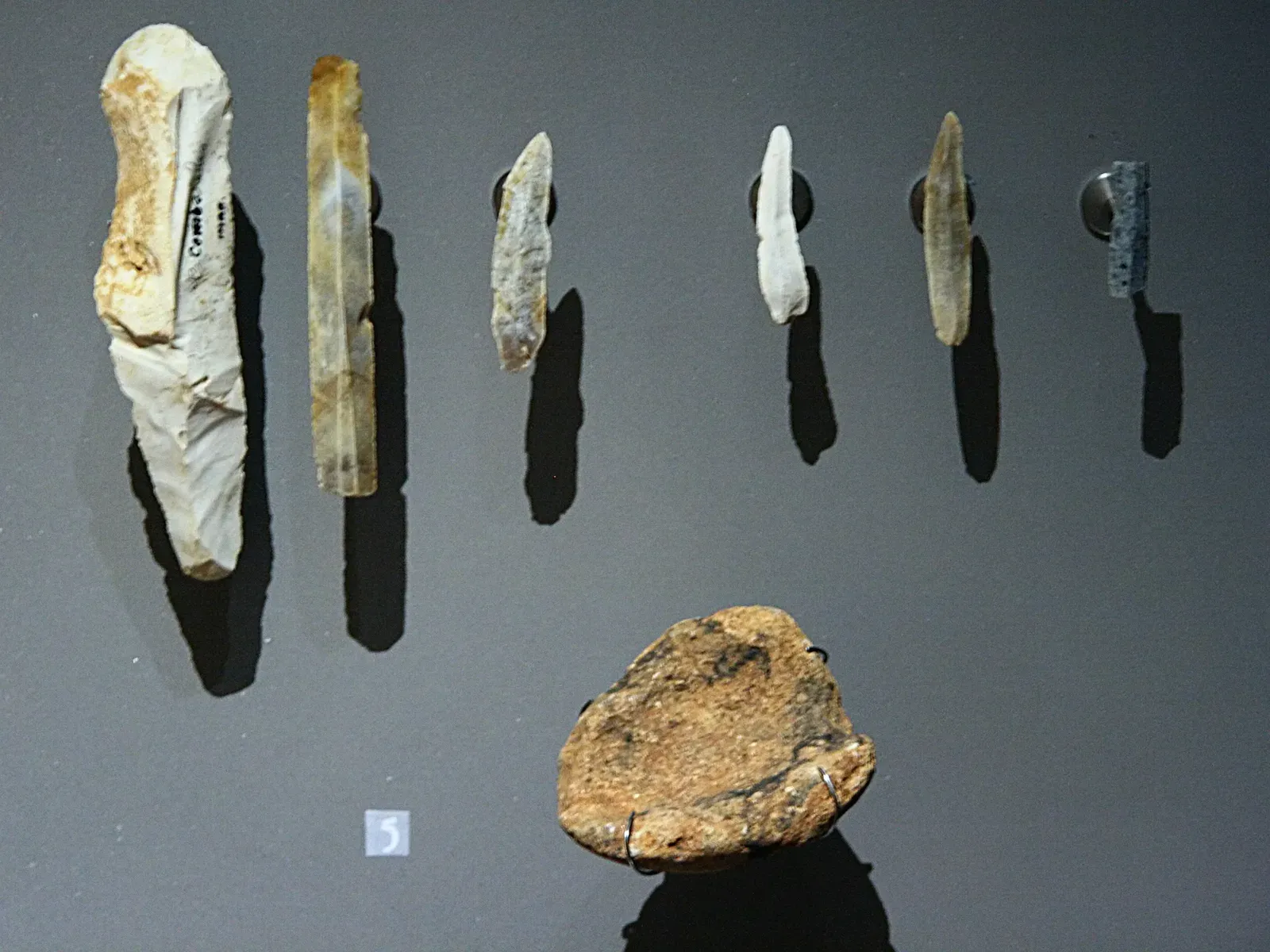
Numerous claims of earlier human presence began to challenge the Clovis first model beginning in the 1990s, culminating in significant discoveries at Monte Verde, Chile, dating back 14,500 years. At Oregon’s Paisley Caves, fossilized human feces date back 14,300 years. In Texas, at Buttermilk Creek complex, stone tool fragments date back 15,500 years. Each of these sites, on its own, might be dismissed as an anomaly. Together, they form a pattern that is increasingly difficult to explain away.
At Meadowcroft Rockshelter, Pennsylvania, archaeologist James Adovasio and his team uncovered a stone point more than 12,000 years old, unlike anything made by the Clovis people. Below this find, in deeper layers of soil, researchers found the remains of a fire pit and a stone tool later dated to 16,000 years ago, making it the oldest tool yet discovered in North America at the time. The evidence keeps stacking up across the continent, from Pennsylvania to Chile.
A team of researchers analyzed ancient remains found at the Cooper’s Ferry archaeological site in western Idaho and found biological samples between 16,560 and 15,280 years old. The discovery refutes the long-held theory that North America’s first humans arrived some 13,000 years ago. Think of it like a jigsaw puzzle: each new pre-Clovis site is another piece that makes the full picture clearer, and right now, that picture shows humans arriving far earlier than anyone once dared to propose.
The Kelp Highway: An Ancient Coastal Superhighway

If humans were in New Mexico 23,000 years ago, how exactly did they get there? The land corridor through the glaciers wasn’t even open yet. That’s where the coastal migration theory comes in, and it is, I think, one of the most fascinating ideas in all of modern archaeology. The kelp highway theory suggests that the first Americans arrived not by land, but by sea, following the coastline of the Pacific Rim of northeastern Asia and Beringia as far south as South America.
Growing in cool nearshore waters along rocky coastlines, kelp forests offer some of the most productive habitats on earth, with high primary productivity and three-dimensional habitat supporting a diverse array of marine organisms. Today, extensive kelp forests are found around the North Pacific from Japan to Baja California. After a break in the tropics, kelp forests are also found along the Andean Coast of South America. Essentially, these ancient seafarers had a built-in food highway running the entire length of the continent’s edge.
Testing the kelp highway hypothesis is challenging because much of the archaeological evidence would have been submerged by rising seas since the last glacial maximum about 26,500 years ago. That’s the cruel irony here. The best evidence for this coastal migration route may be sitting right now under dozens of meters of ocean, completely invisible to archaeologists. It’s a bit like trying to solve a puzzle while someone keeps hiding the most important pieces underwater.
What Ancient DNA Is Telling Us

Archaeology gives you bones and tools. Genetics gives you the actual biological story. In recent years, ancient DNA research has become one of the most powerful tools for understanding early American migration, and the picture it paints is genuinely complex. DNA sequences acquired from a handful of ancient human remains found at archaeological sites in the Americas suggest that the peopling of the Americas is far more complex than a single population of Clovis people crossing Beringia some 13,000 years ago.
In 2018, one group of researchers found evidence of four separate migrations from North America to South America, with more recent groups displacing older ones. That same year, another study pointed to a split of Native American ancestors between 18,000 and 14,000 years ago into two separate branches, which then split and mixed again and again as they radiated into the Americas. This is nothing like the simple single-wave migration story that dominated the field for so long.
The migration wave is estimated to have emerged about 20,000 years ago. The Ancient Beringians are said to be a common ancestral group among contemporary Indigenous American populations today. Meanwhile, some Amazonian Native Americans descend partly from a Native American founding population that carried ancestry more closely related to indigenous Australians, New Guineans and Andaman Islanders than to any present-day Eurasians or Native Americans. That particular finding sent shockwaves through the scientific community, and it still hasn’t been fully explained.
The Monte Verde Controversy and What It Means for the Bigger Picture
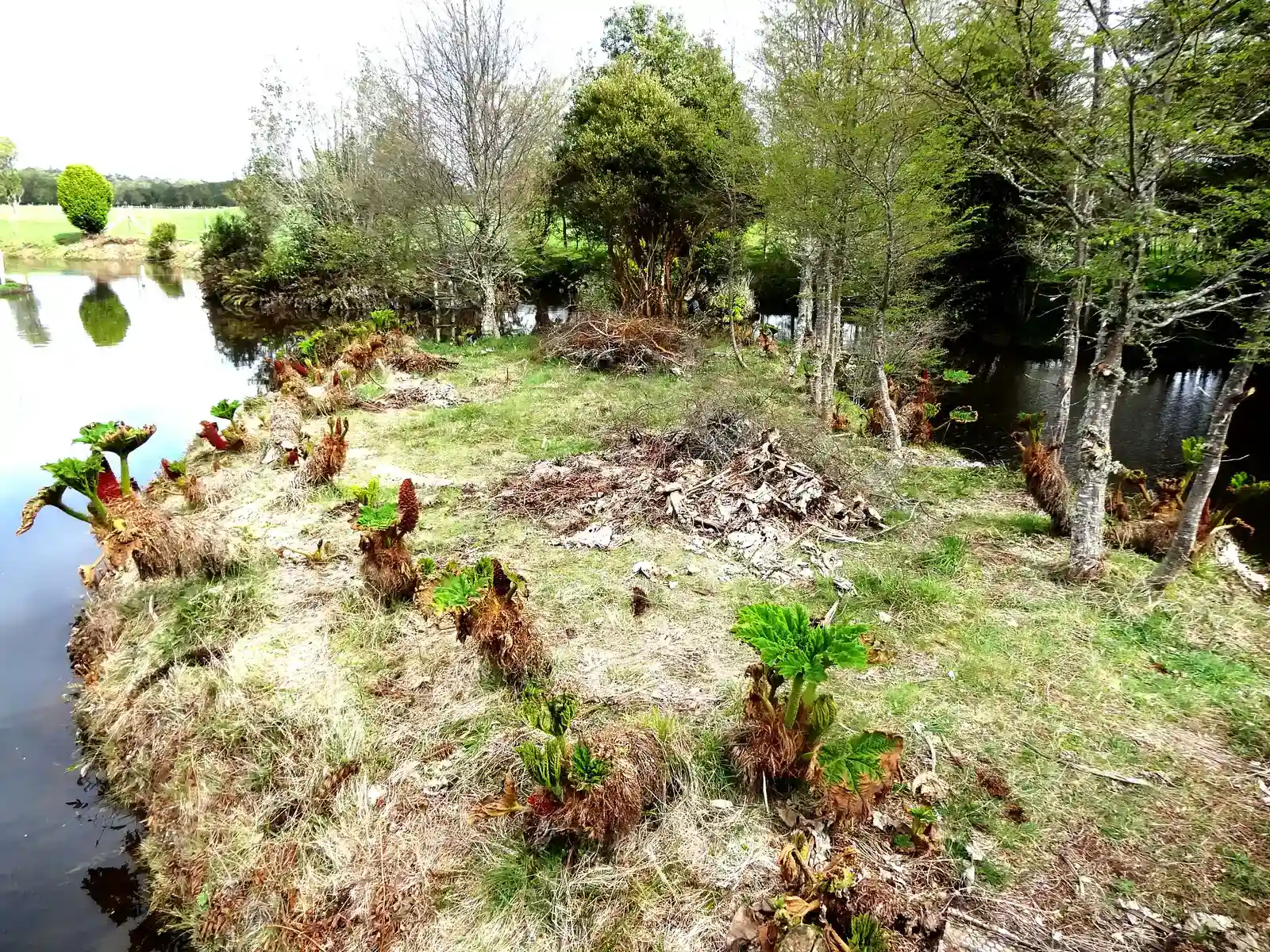
The discovery of the ancient campsite called Monte Verde in Chile shook the archaeological world in the 1970s as it overturned long-held assumptions about when and where the first humans arrived in the Americas. For decades, Monte Verde served as the anchor for all pre-Clovis arguments. Its incredible preservation, wooden structures, mastodon meat, and stone tools made it genuinely compelling. But now, even that anchor is being questioned.
The updated timeline published in Science contends that human artifacts found at the Monte Verde archaeological site cannot be older than 4,200 to 8,600 years. That’s dramatically younger than the widely accepted timeline, which maintains that the site is roughly 14,500 years old. Shockingly, that latest work is the first independent investigation of Monte Verde in 50 years. Half a century passed without anyone independently verifying one of archaeology’s most important sites. That, in itself, is a sobering reminder of how fragile scientific consensus can be.
It’s hard to say for sure what Monte Verde’s revised timeline ultimately means for the broader debate. New excavations and discoveries have pushed back the age for human colonization of Australia to 65,000 years, and well-dated sites in North America now suggest human occupation by 20,000 years ago. Monte Verde’s fate matters, but it is no longer the only card on the table. The White Sands footprints, the Cooper’s Ferry site, Meadowcroft, Paisley Caves – the pre-Clovis case now rests on far broader and more independent foundations than it ever did before.
Conclusion: The Story of the First Americans Is Being Rewritten in Real Time
We are living through a genuine revolution in our understanding of human prehistory. The settled narrative of people crossing a land bridge 13,000 years ago and spreading south has been dismantled, piece by piece, by footprints in desert mud, stone tools in ancient rock shelters, and sequences of ancient DNA. Growing genetic evidence, new models of possible coastal migration routes, and other data continue to help archaeologists assemble a broader picture of America’s first inhabitants and a far deeper timeline for their arrival than most would have ever expected.
It’s the last major mysterious migration chapter in our human origins story. Scientists know that Homo sapiens arose in Africa around 300,000 years ago, then moved into Europe and Asia starting around 100,000 years ago, and only much later arrived in the New World. The question of exactly when and how they arrived in the Americas may be the most complex puzzle in all of human history.
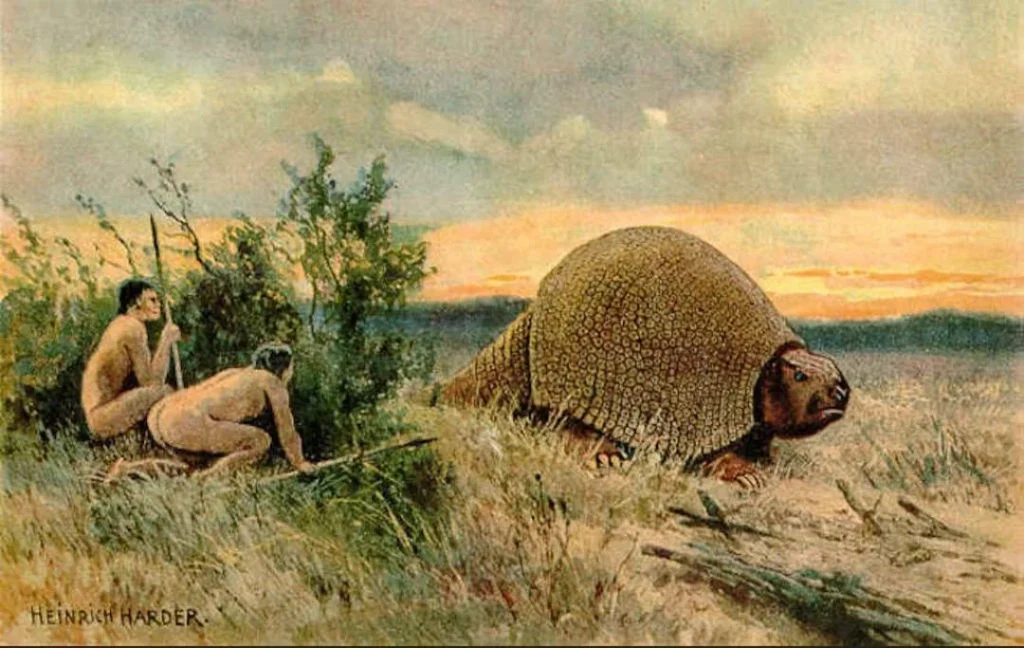
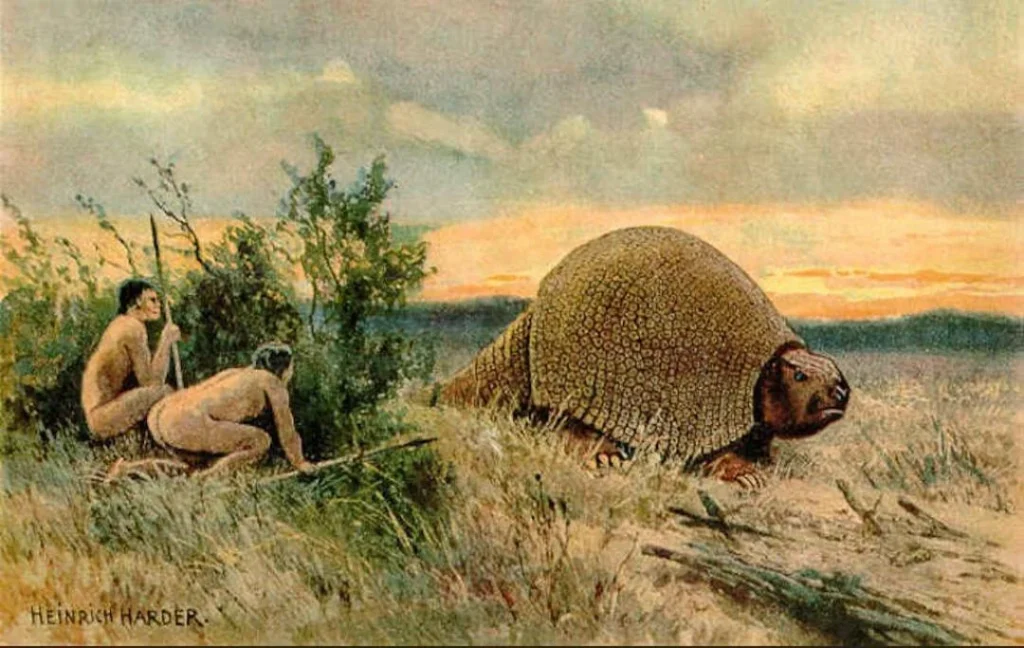
What we can say with confidence in 2026 is this: the Americas were home to human beings far earlier than a single generation of scientists once believed, possibly walking beside mammoths and giant sloths while glaciers still locked most of the northern continent in ice. The next great discovery could be buried under the ocean floor, waiting for technology we haven’t yet invented. Did you expect that the story of the first Americans would turn out to be this ancient, this complicated, and this far from over? Share your thoughts in the comments below.