You probably picture it standing in a field, looking magnificent, those three iconic horns gleaming in the Cretaceous sun. Maybe you think of it as the lumbering plant-eater that T. rex occasionally snacked on. Honestly, that image does not even begin to capture what the Triceratops actually was. This creature was a walking biological fortress, one of the most sophisticated and well-armed animals that ever roamed the Earth.
What science has uncovered over the last few decades is genuinely jaw-dropping. From combat scars etched into ancient bone, to teeth so complex they put many predators to shame, the real story of the Triceratops is one that deserves a far bigger spotlight. Buckle up, because you’re about to see this prehistoric giant in an entirely new light. Let’s dive in.
A Living Tank That Ruled the Late Cretaceous
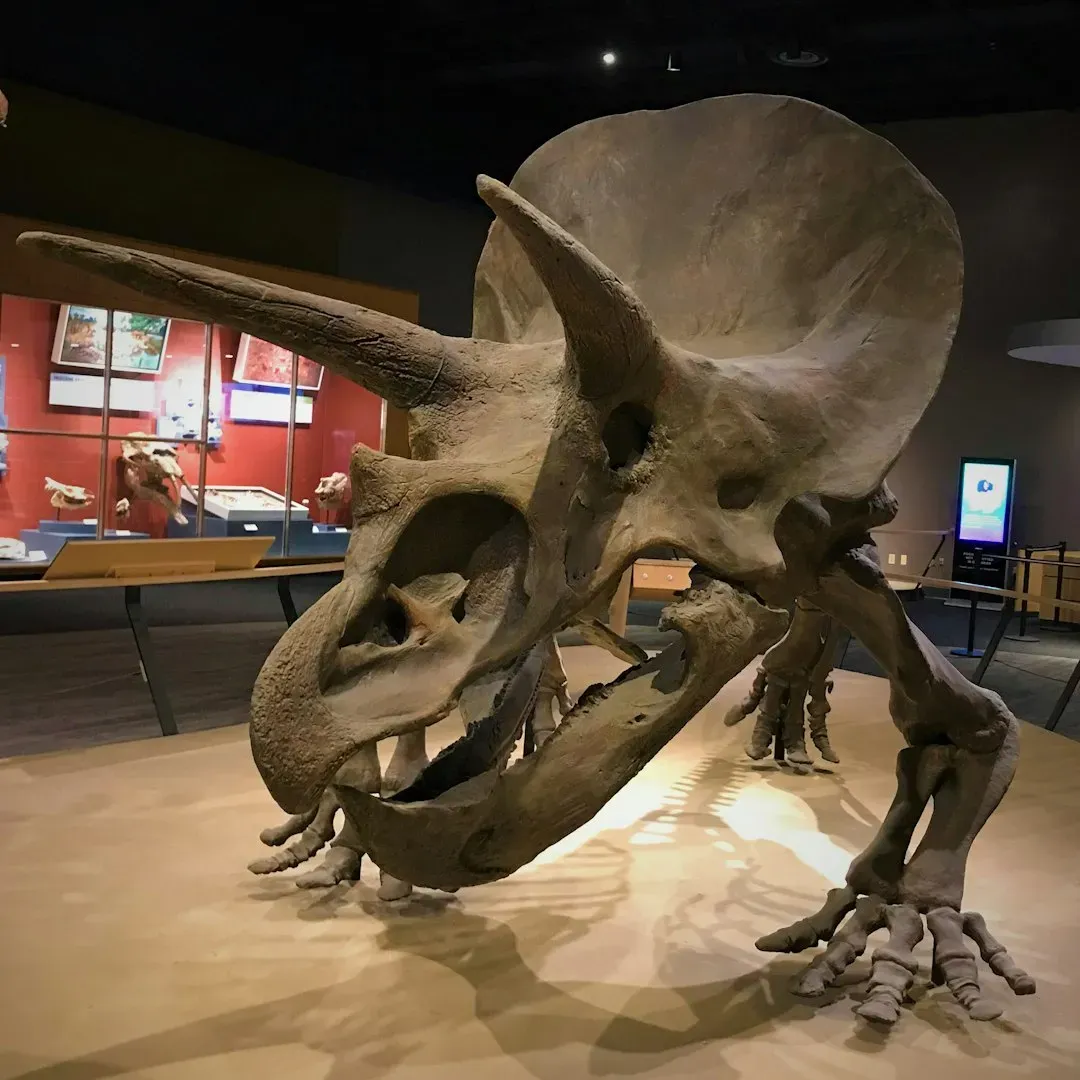
Let’s be real: when you try to imagine an animal that weighed as much as a large African elephant and wore a bony shield on its head, the word “formidable” barely scratches the surface. The Triceratops lived during the late Maastrichtian age of the Late Cretaceous period, about 68 to 66 million years ago, on the island continent of Laramidia, now forming western North America. You were looking at an animal that dominated its landscape for roughly three million years.
Bearing a large bony frill, three horns on the skull, and a large, four-legged body exhibiting convergent evolution with rhinoceroses, Triceratops is one of the most recognizable of all dinosaurs and the best-known ceratopsian. Think of it like a rhinoceros crossed with a medieval battering ram, but significantly larger and far more complex. These defenses made Triceratops one of the most successful dinosaur species of all time. In fact, at one major dig site, roughly four out of every ten discovered fossils belonged to Triceratops, suggesting that the species may have dominated the Cretaceous period.
Those Horns Were a Swiss Army Knife, Not Just a Spear
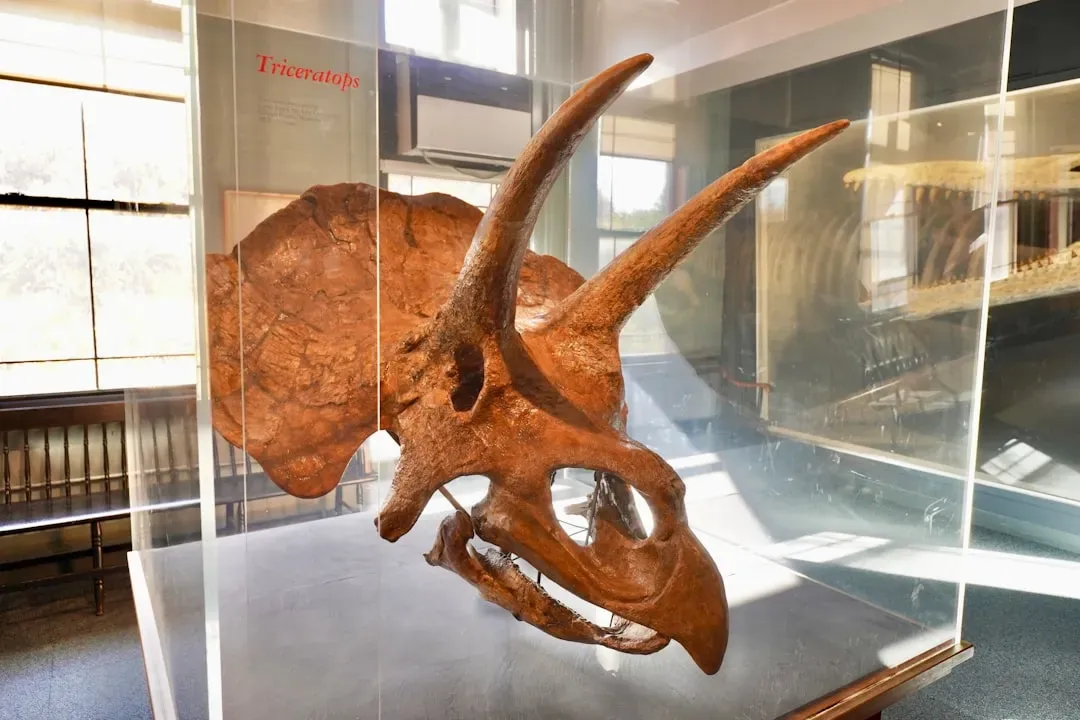
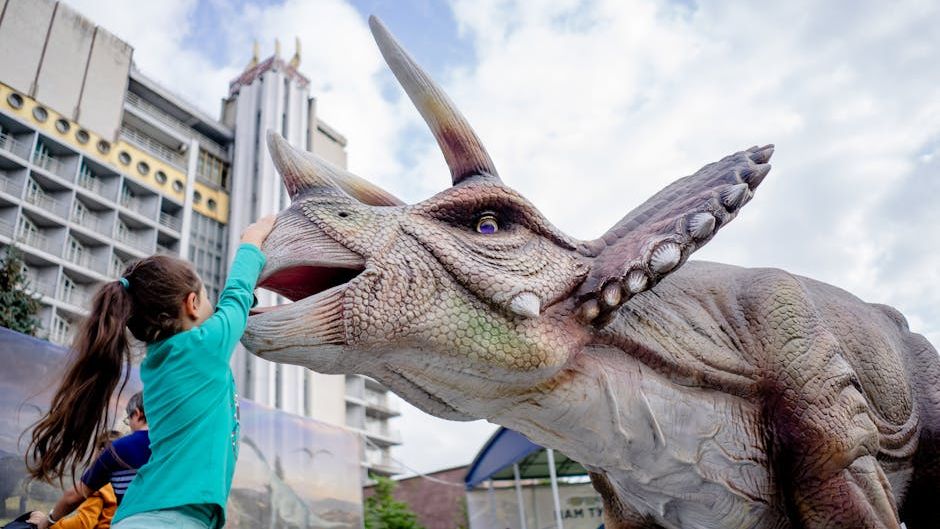
Here’s the thing most people get wrong about the Triceratops horns: they weren’t just for poking T. rex in the belly. For the Triceratops, their horns were a multipurpose tool, whether to fight rivals in fierce head-to-head combat, help defend against predators, or just to impress potential mates. That’s a lot of functionality packed into three bones growing out of your face.
Baby Triceratops horns were straight and small, but changed as they grew. When they became adults, the horns on their brow curved forward while the lone nose horn stayed straight. That transformation is remarkable on its own. The size and shape of the horns changed so much as the dinosaur aged that scientists first thought fossils of young and old Triceratops were two different species entirely. I know it sounds crazy, but paleontologists were essentially fooled by puberty.
The Frill Was Far More Than a Fancy Neck Decoration
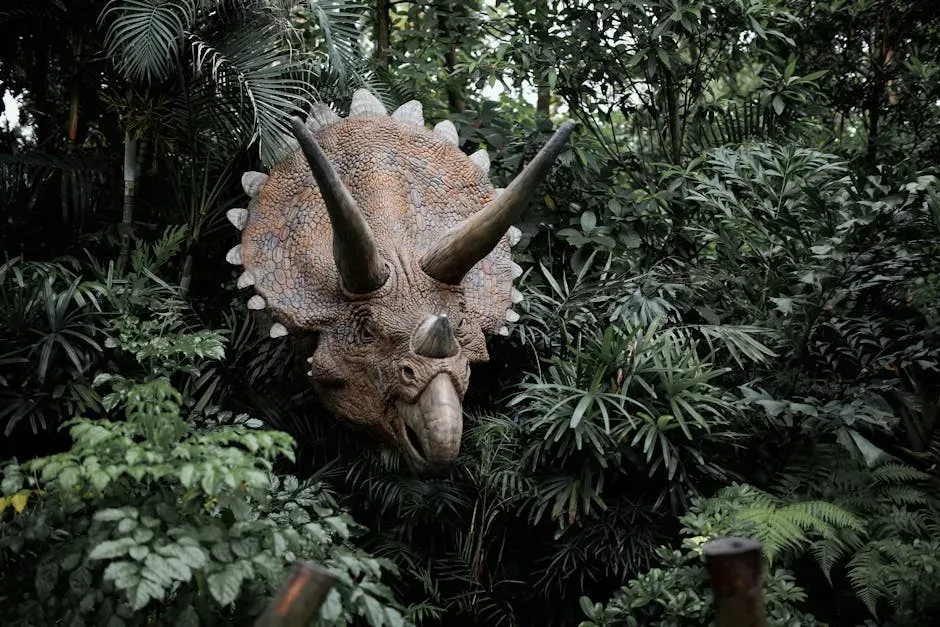
You’d be forgiven for thinking the frill was just nature showing off. It was anything but decorative flair. Made of solid bone, it was one of the Triceratops’ most crucial defense tools. The shape and size of the bony frill made it difficult for predators like the Tyrannosaurus rex to bite through to the neck. It was also thick enough to absorb the impact of head-to-head fights with other Triceratops.
Triceratops was huge and heavy, with three-foot-long horns over its eyes and a giant bony frill for a headdress. It could even flush blood into the frill to make colorful patterns that might have helped intimidate challengers. Then there’s the thermoregulation angle. The frill and horn cores of Triceratops were used as thermoregulatory structures, with the horn cores interpreted as being especially important in the stabilization of brain temperatures at extreme ambient temperatures, and the frill serving a more consistent role in body temperature regulation. So yes, the frill was essentially a built-in air conditioning system.
Science Has Proof It Actually Fought – and Won
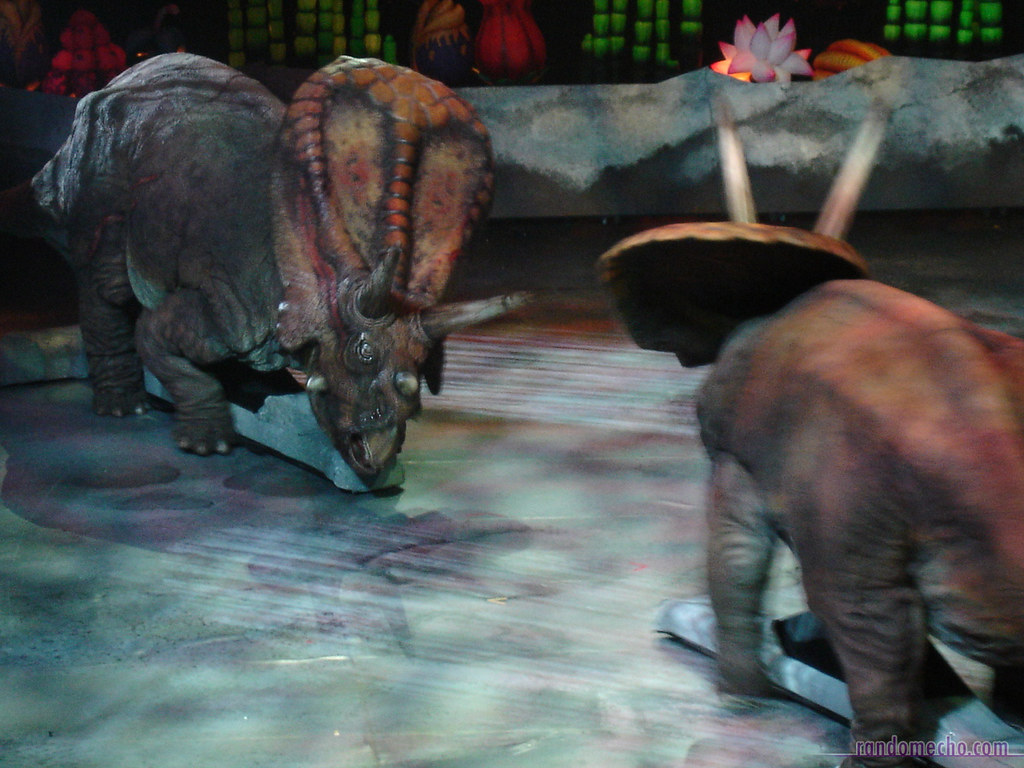
This is where it gets genuinely exciting. A statistical analysis of wounds found on 186 samples strongly implies that Triceratops used its horns to duel with rivals and its frill as a shield to protect vital organs in what must have been bruising contests that left many animals with bony skull lesions, some of which would salt the paleontological record. This is not speculation. This is math and bone tissue telling you a story.
Compared to Centrosaurus, Triceratops had ten times as many lesions on its squamosal bone, which starts from behind its eye and covers the lower part of its frill. If you imagine two bulls lowering their heads and jousting with their horns, the squamosal bone is the one that would take the brunt of the impact. Even more striking is a specimen nicknamed “Big John.” This specimen has a similar injury to the squamosal caused by what appears to be another Triceratops horn, and the squamosal bone shows signs of significant healing, further vindicating the hypothesis that this ceratopsian used its horns for intra-specific combat.
Its Teeth Were Quietly One of the Most Advanced in Dinosaur History
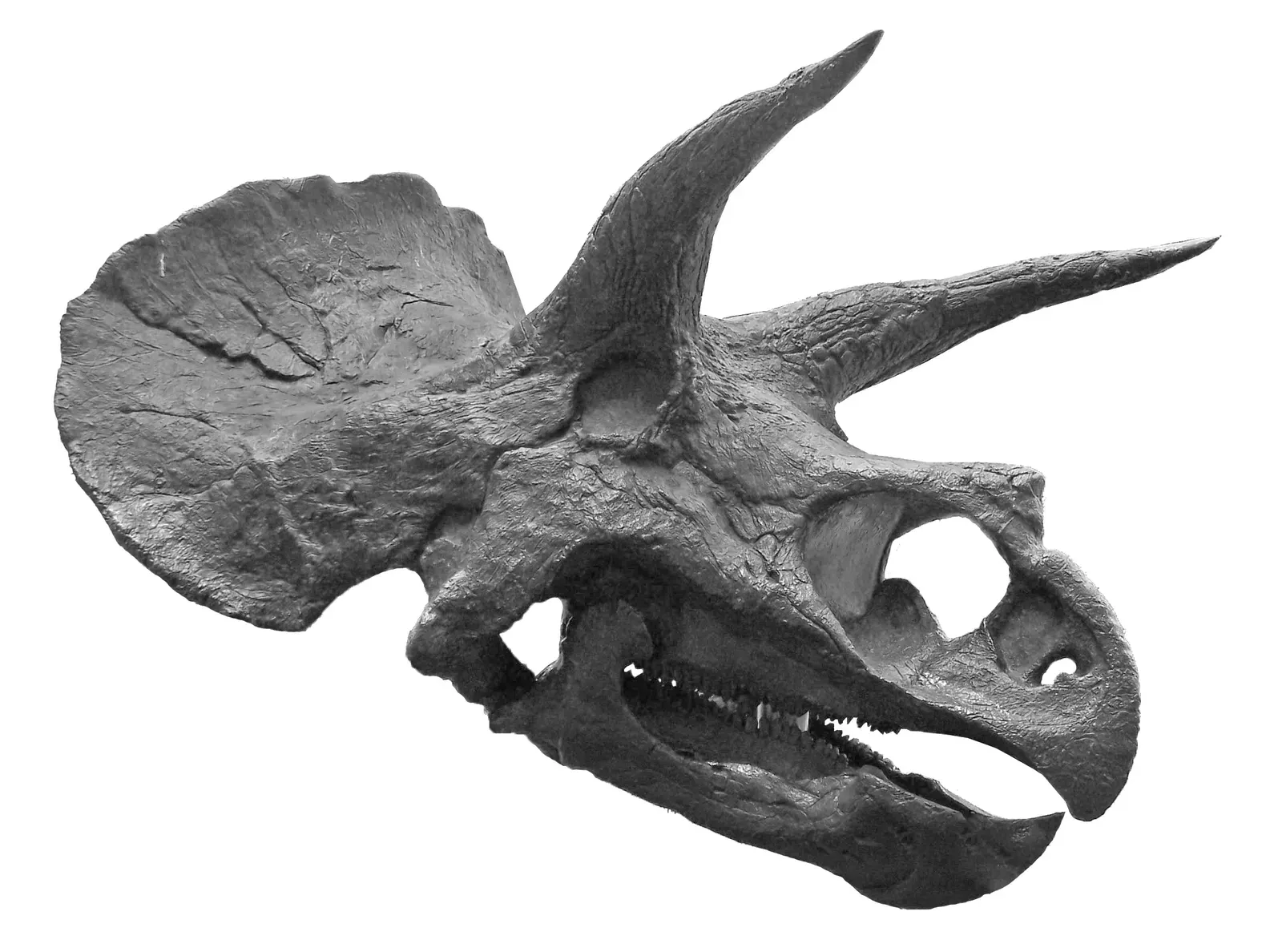
Most people assume a plant-eater is essentially toothless compared to the big predators. Not this one. These herbivores had beaklike mouths and powerful jaws lined with rows of sharp teeth to shred and grind low-lying vegetation. Evidence suggests that Triceratops teeth were incredibly complex, enabling them to slice through dense vegetation that would have been difficult for other herbivores to consume. That’s a competitive edge in a world where food sources were shared.
Instead of a huge jaw lined with sharp fangs, the Triceratops had a strong curved beak that looked much like the beak of a parrot. While this might not appear as intimidating, it was everything a Triceratops ever needed, as their beaks could easily snip and slice through fibrous plants. It’s a bit like comparing a scalpel to a chainsaw. One looks scarier, but the other is actually more precise. Triceratops used its beak-like jaw and slicing teeth to pluck and chew tough plants that other dinosaurs couldn’t eat. That gave it access to a food supply that was essentially off limits to its competitors.
The Relationship With T. Rex Was More Complex Than You Think
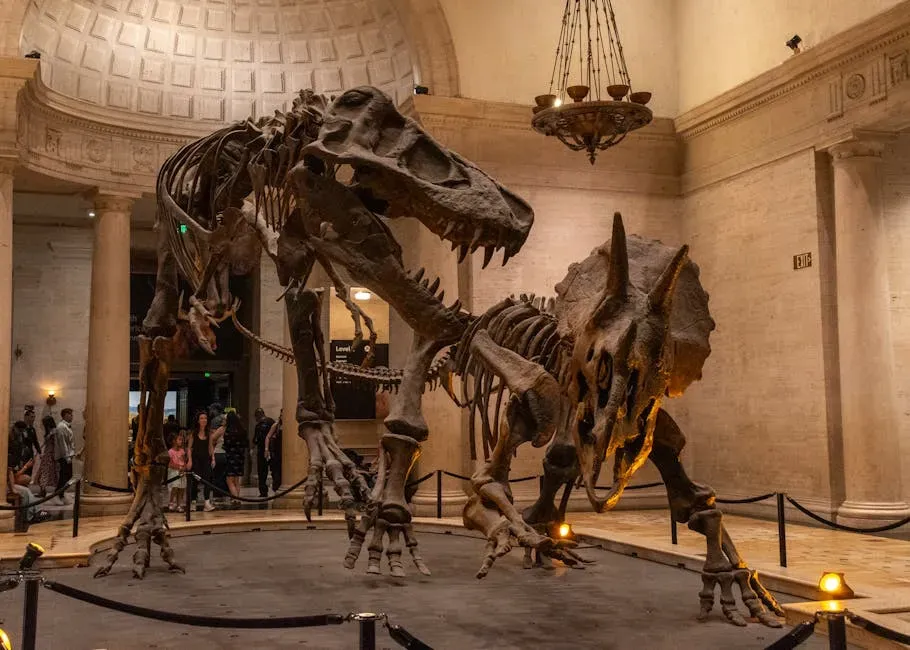
Pop culture has turned the Triceratops vs. T. rex matchup into the prehistoric version of a boxing grudge match. But what does the actual fossil record tell you? X-ray analysis of bite marks found on a Triceratops bone shows the location of those marks to be denser than the bone around it, indicating healing and bone regrowth. This is critical because it means the Triceratops lived through the encounter, and was therefore alive when the marks were made. So at least one Triceratops walked away from a T. rex attack. That is remarkable.
The famous “Dueling Dinosaurs” fossil provides irrefutable direct evidence of a violent interaction between a Triceratops and a tyrannosaurid. It consists of the articulated skeletons of a tyrannosaur and Triceratops horridus individual associated in a sandstone block. The Tyrannosaurus rex in that fossil had most of its teeth broken; it also bears a broken finger and its skull is cracked. When the predator ends up with a broken skull and shattered teeth, you start to get a very different picture of how these confrontations actually played out.
Its Social Life and Migration Habits Were Far More Sophisticated Than Expected
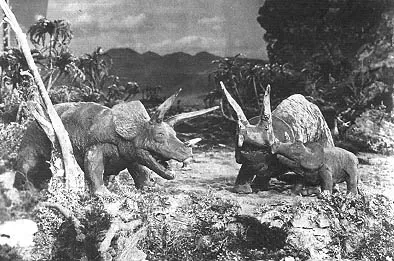
For a long time, scientists believed the Triceratops was a solitary wanderer. That assumption is being steadily dismantled. In 2013, researchers searching for Tyrannosaurus in Wyoming stumbled on something unexpected: a group of Triceratops that had lived and died together. After a decade of excavations, they had uncovered over 1,200 bones belonging to at least five individuals. The bonebed indicates the individuals died together, as a group, potentially in a swamp.
Analysis of the teeth found at the site indicates they were migratory and traveled together across long distances. That’s a stunning behavioral discovery for an animal once thought to roam alone. Studies also suggest that these formidable creatures may have lived in social groups where they would travel together for protection from predators and scavengers. Think about it: a herd of animals this size, armored with horns and bony shields, moving together across the Late Cretaceous landscape. That would have been one of the most intimidating sights in the history of life on Earth.
Conclusion: The Triceratops Was One of Nature’s Greatest Achievements
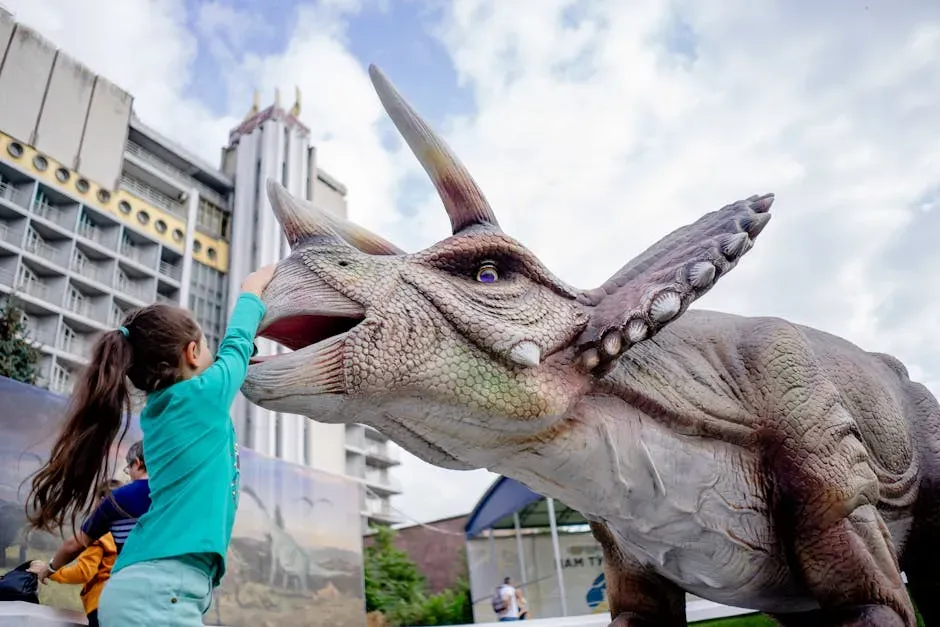
Every time science revisits the Triceratops, the picture gets richer and more impressive. You’re not looking at a slow, passive salad-eater that occasionally had a bad day when T. rex showed up. Its large size and well-armored body made it a tank-like animal in a world where Tyrannosaurus Rex was always waiting around the corner. It survived by being extraordinarily well-designed for both offense and defense.
From horns that doubled as social signals and combat weapons, to a frill that regulated body temperature and deflected killer bites, to teeth that carved through food sources no other dinosaur could access, this was an animal that evolution clearly invested in heavily. Triceratops lived about 68 to 66 million years ago, just before the mass extinction that ended the reign of the dinosaurs, making it one of the last known dinosaurs to roam Earth. It survived until the very last moment, which says everything you need to know about just how formidable it truly was.
The next time you see a Triceratops skeleton in a museum, look a little closer. Those scars on the frill, those curved brow horns, that massive, battle-tested skull. Each one tells a story of an animal that fought, migrated, communicated, and thrived. Did you ever imagine a plant-eater could be this extraordinary?