
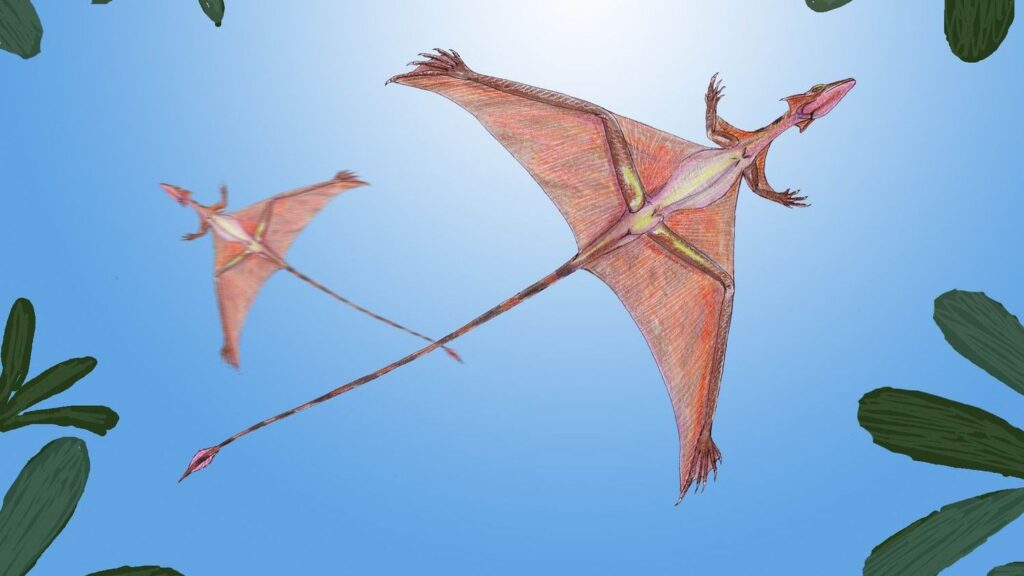
When you look up at a bird soaring effortlessly above the rooftops, you might assume that flight is a story that began with feathers. It didn’t. Long before the first true bird ever spread its wings, the ancient skies were already crowded with astonishing creatures that had cracked the code of aerial movement in ways evolution would never quite repeat. Some had skin-stretched wings. Others glided on their back legs. One had four wings like a living biplane.
The story of prehistoric flight is stranger, more varied, and honestly more thrilling than most people realize. These five creatures didn’t just foreshadow birds, they were pioneers in an era of radical evolutionary experimentation where nature tried every solution it could imagine. Buckle up, because this is a wild ride through prehistoric skies.
Pterosaurs: The Original Masters of the Air
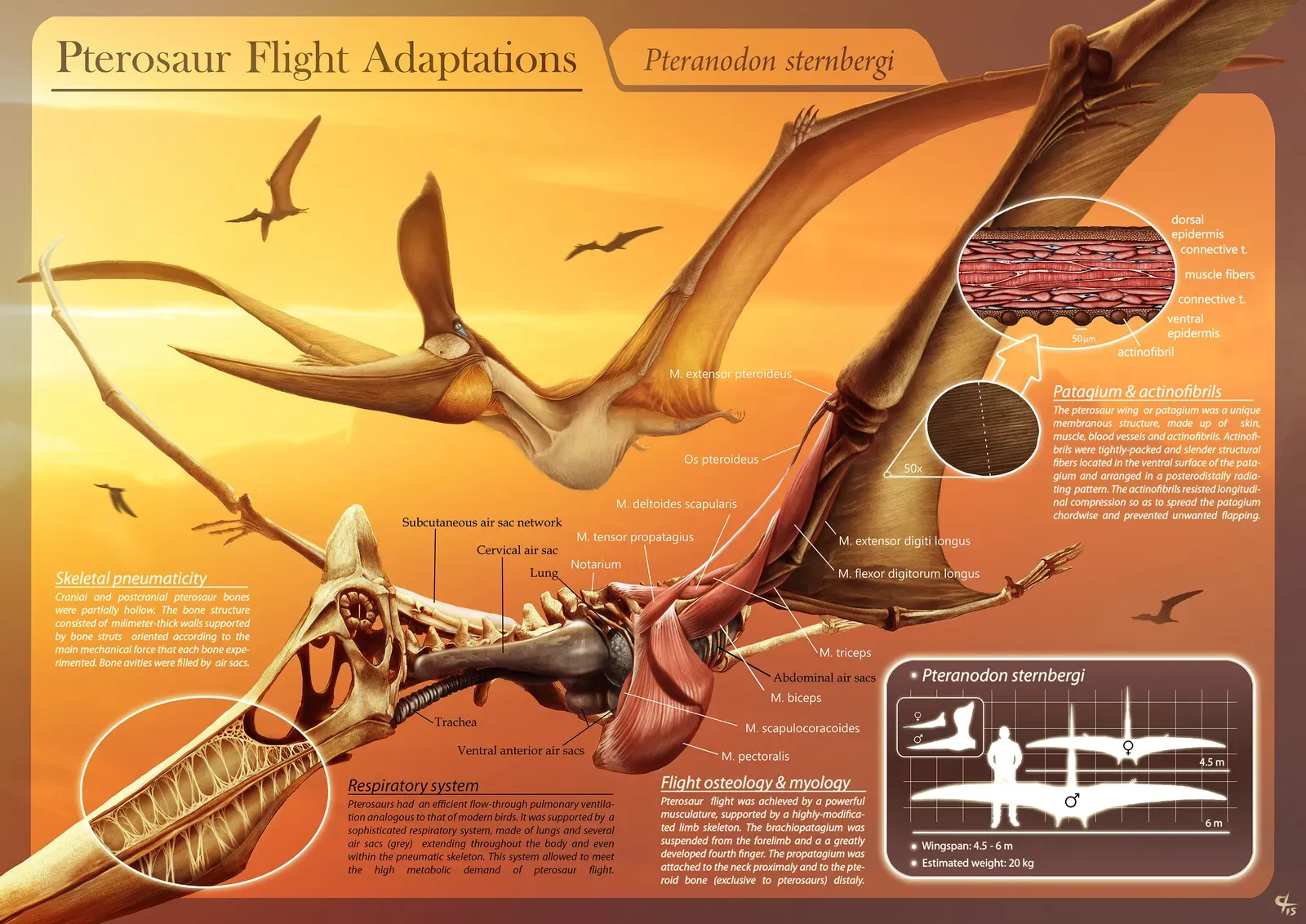
Here’s a fact that genuinely floors most people: pterosaurs are the earliest vertebrates known to have evolved powered flight. We’re not talking about millions of years before birds. These creatures were the first vertebrate animals to evolve powered flight and conquer the air, long before birds took wing, and they prevailed for more than 160 million years before vanishing along with the non-bird dinosaurs at the end of the Cretaceous period. That’s an almost incomprehensible run of dominance in the skies.
Their wings were formed by a membrane of skin, muscle, and other tissues stretching from the ankles to a dramatically lengthened fourth finger. Think about that for a moment. Not a hand, not a claw, not feathers, just one enormously elongated finger holding up a wing. Pterosaurs ranged from the size of a sparrow to a small airplane, and are still the largest animals that ever flew. The range in size alone is staggering, and their diversity of diet, habitat, and lifestyle was just as wild.
Quetzalcoatlus: The Sky Giant That Defied All Logic
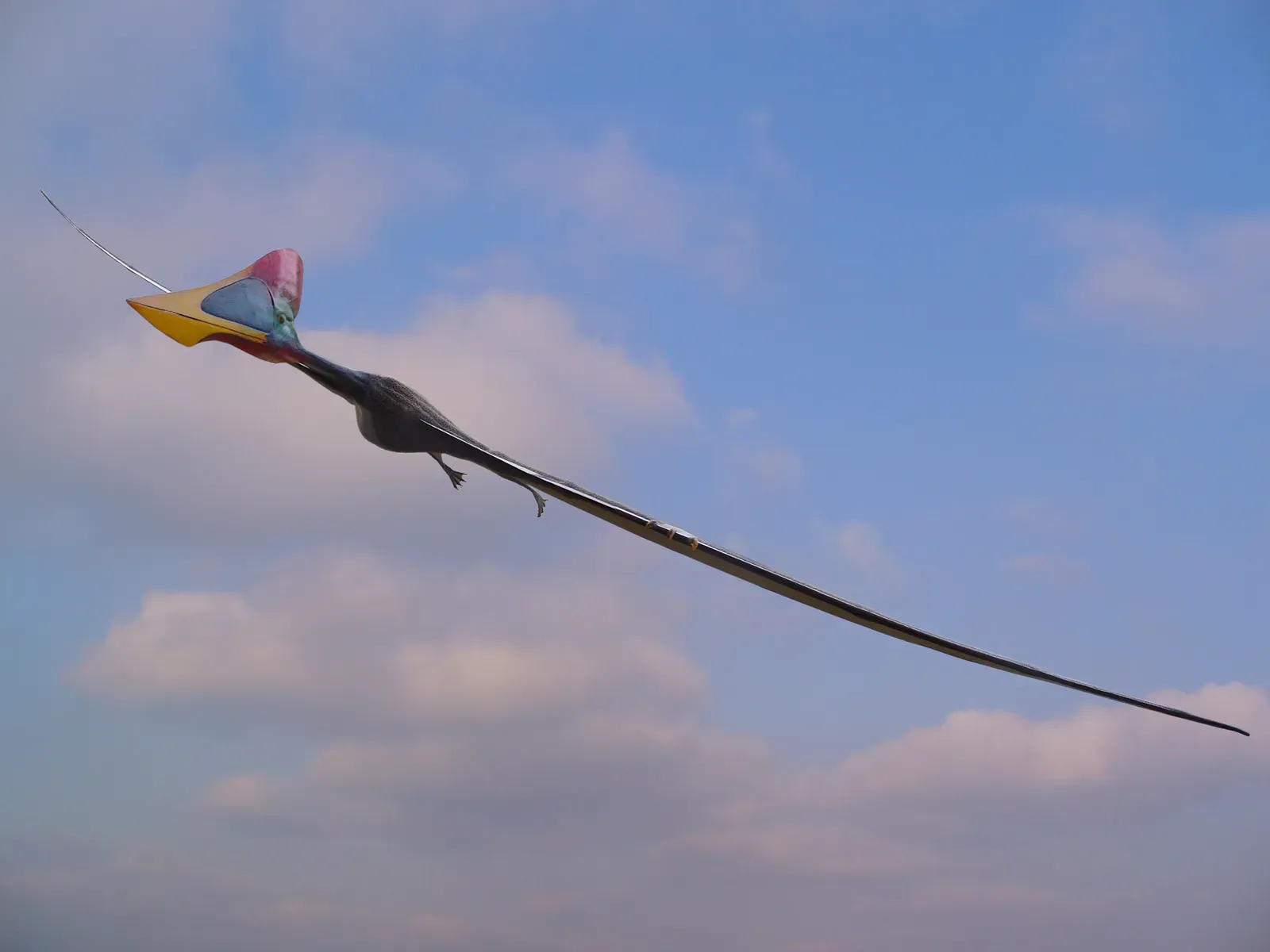
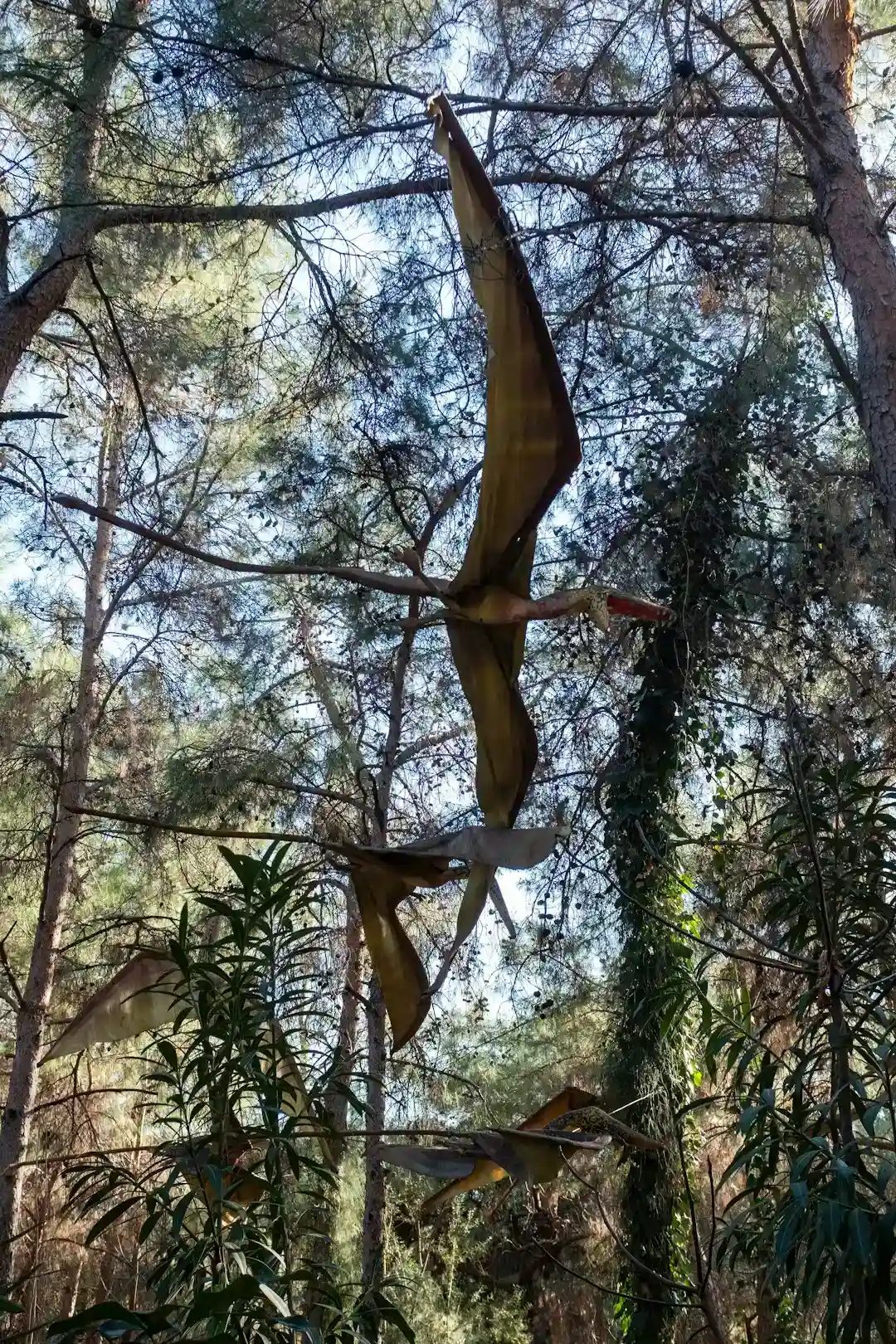
If you want a creature that sounds completely made up, look no further than Quetzalcoatlus. One member of the genus, Q. northropi, is widely believed to have been the largest flying creature that ever lived, with paleontologists contending that members of the species stood about 5 meters tall and had a wingspan of up to 11 meters. That wingspan is roughly the length of a school bus. On wings made of skin.
Scientists have long debated how or even whether Q. northropi could fly, given the pterosaur’s massive size and weight. Like many other flying animals, Quetzalcoatlus had hollow bones that reduced its weight, but it was still much larger than the largest known flying birds. An analysis of existing fossils in 2021 provided evidence that it could indeed fly, and because of its massive wings, it likely took off by leaping some 2.5 meters into the air, then flapped its powerful wings to reach an altitude at which it could soar like a condor. Estimates suggest it might have flown at speeds of up to 130 km per hour and covered as much as 640 km in a single day. Honestly, that’s terrifying and magnificent at the same time.
Microraptor: The Four-Winged Feathered Flier
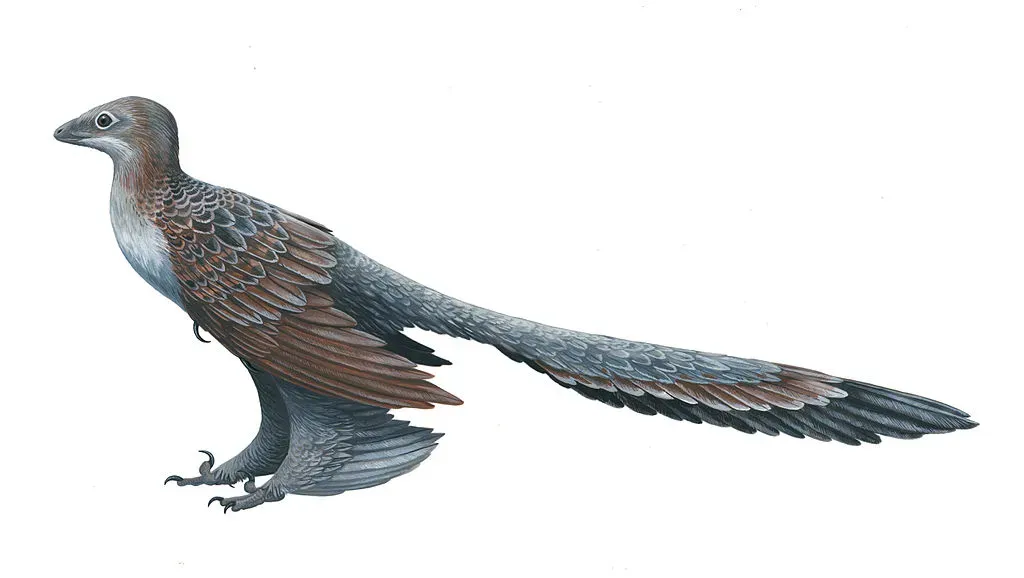
Microraptor had long pennaceous feathers that formed aerodynamic surfaces on the arms and tail but also on the legs, which led paleontologist Xu Xing in 2003 to describe the first specimen to preserve this feature as a “four-winged dinosaur” and speculate that it may have glided using all four limbs for lift. Subsequent studies have suggested that Microraptor was capable of powered flight as well. A dinosaur flying on four wings. Nature, it seems, had no interest in playing by the rules.
Microraptor gui, a four-winged dromaeosaur from the Early Cretaceous of China, provides strong evidence for an arboreal-gliding origin of avian flight. It possessed asymmetric flight feathers not only on the hands but also on the feet. It lacked the muscles for a ground takeoff and couldn’t get a running start for fear of damaging its leg feathers, but a computer simulation showed that Microraptor could successfully fly between treetops, covering over forty meters in an undulating glide. For a creature that weighed roughly as much as a carton of milk, that’s a remarkable achievement.
Sharovipteryx: The Delta-Winged Triassic Oddity
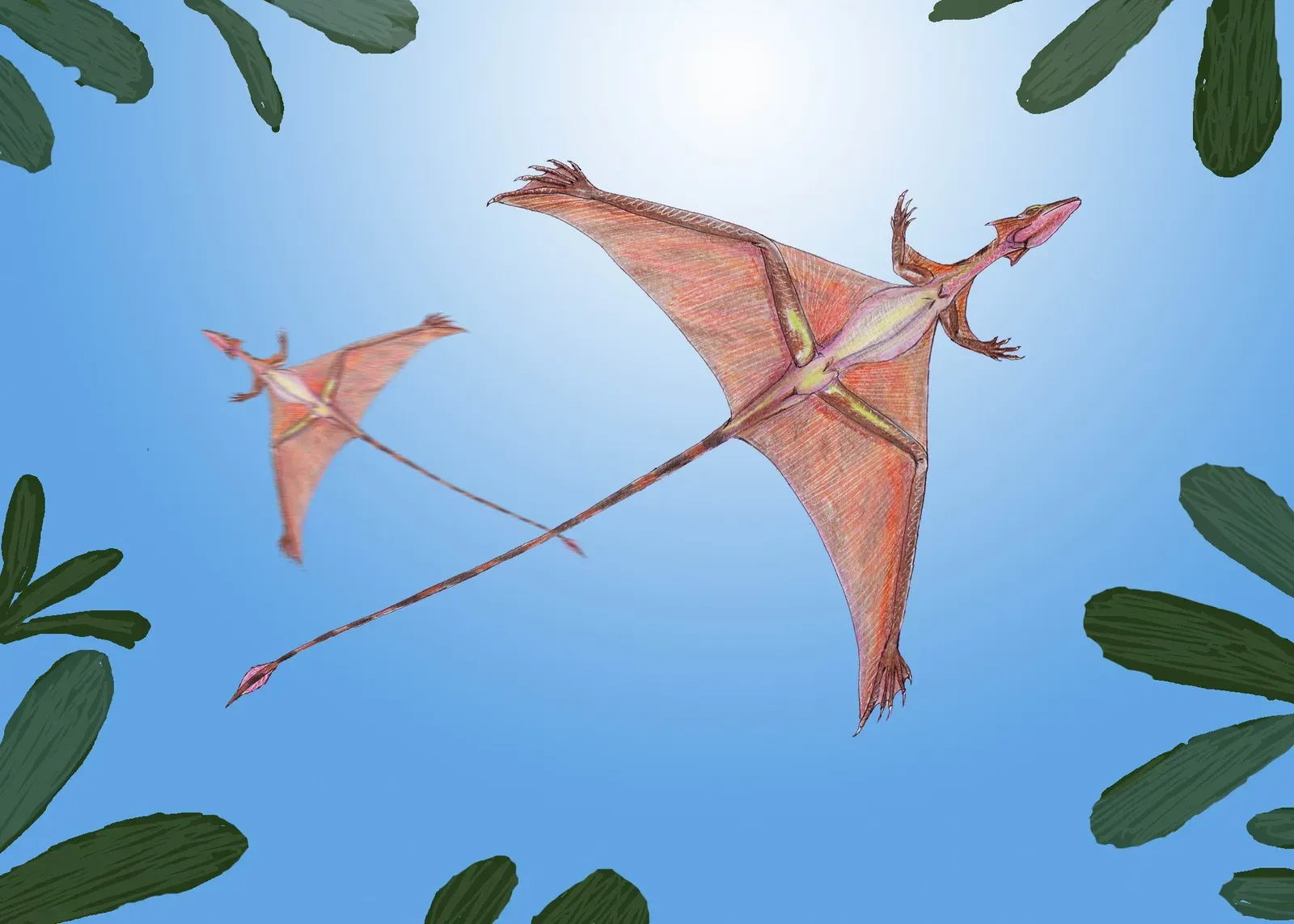
If you thought everything above was weird, allow Sharovipteryx to completely rewrite your understanding of what a flying creature can look like. Sharovipteryx is a genus of early gliding reptiles containing the single species Sharovipteryx mirabilis, known from a single fossil and the only glider with a membrane surrounding the pelvis instead of the pectoral girdle. You read that correctly. Every other flying vertebrate uses its front limbs to fly. Sharovipteryx used its hind limbs.
The wing membrane, which stretched between its very long hind legs and tail, would have allowed it to glide as a delta wing aircraft does. If the tiny front limbs also supported a membrane, they could have acted as a very efficient means of controlling pitch stability, much like an aeronautic canard. Without a forewing, controlled gliding would have been very difficult. This lizard-like reptile was found in 1965 in Kyrgyzstan, dating to the middle-late Triassic period, about 225 million years ago. It’s a design that appeared once in all of evolutionary history and then vanished forever, which makes it one of the most haunting creatures ever to exist.
Mecistotrachelos: The Long-Necked Soarer of Virginia
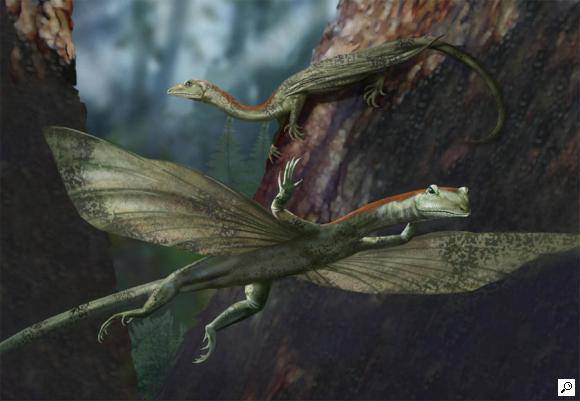
Mecistotrachelos is an extinct genus of gliding reptile from the Late Triassic of Virginia, generally interpreted as an archosauromorph distantly related to crocodylians and dinosaurs. The type and only known species is M. apeoros, a name that translates to “soaring longest neck,” in reference to its gliding habits and long neck. This superficially lizard-like animal was able to spread its lengthened ribs and glide on wing-like membranes. Picture a lizard unfolding its ribs like a set of wings. That is exactly what this creature did.
The long ribs of Mecistotrachelos almost certainly were covered with some form of skin which facilitated gliding habits, and the flexible hind limbs with hooked toes indicate it was well-adapted for an arboreal habitat. Mecistotrachelos didn’t have enough flexibility in its long neck to achieve an ideal gliding posture, so it must have glided with its neck outstretched despite the risk of crashing, and the bones of the hind foot were hooked for perching on vegetation, with its teeth suggesting an insect diet. It’s hard not to feel a certain admiration for this creature – committed enough to glide even with a long, rigid neck pointed straight out into the wind. That’s either evolution at its boldest or its most reckless.
Conclusion: The Sky Was Never Just for Birds
What makes all five of these creatures so compelling is how completely different their approaches to flight were. Within only two million years of the Mid-Triassic era there was a sudden appearance of a large diversity of gliding and flying reptiles, each with very different solutions for gliding and active flight, requiring considerable re-engineering of the basic body plan. Nature essentially ran multiple simultaneous experiments, and the results were breathtaking.
Pterosaurs were the only vertebrates with powered flight for about 80 million years. Then around 150 million years ago, in the Jurassic period, a second group of backboned animals started to take wing: feathered dinosaurs. This group included four-winged creatures such as Microraptor and Anchiornis, as well as the most accomplished fliers of the bunch: birds. The skies were never empty, never boring, and never exclusively avian. Every time you watch a hawk circle overhead, remember that long before that bird existed, something far stranger, far weirder, and arguably far more impressive was already up there doing the same thing. What would you have guessed was the world’s first flier?