Mammoth Cave National Park, Kentucky – Deep within the world’s longest known cave system, paleontologists identified fossils belonging to two new species of prehistoric sharks that prowled ancient seas over 325 million years ago. These discoveries emerged from limestone formations that once lay beneath a vast shallow ocean, preserving delicate teeth and even rare cartilage structures. The finds highlight the park’s unexpected role as a treasure trove for understanding early shark evolution.
Predators from a Forgotten Sea
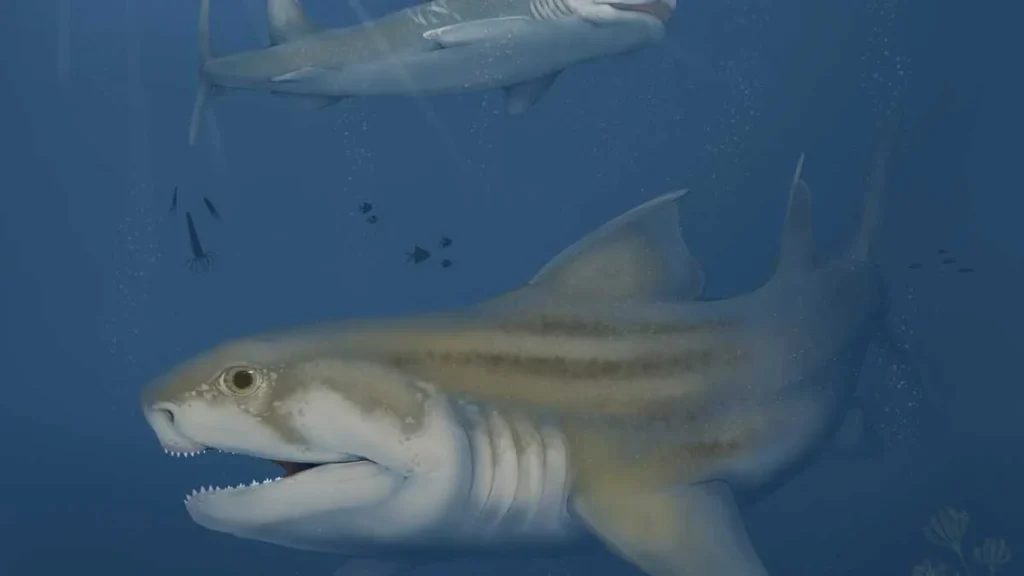
Predators from a Forgotten Sea (Image Credits: Reddit)
Researchers spotted the first clue in 2019 when park superintendent Barclay Trimble glanced upward during an expedition and noticed an unusual tooth embedded in the cave ceiling. That specimen turned out to be from Troglocladodus trimblei, a ctenacanth shark named in his honor. Its trident-like teeth suggested a powerful hunter capable of seizing prey in murky near-shore waters.
The second species, Glikmanius careforum, revealed itself through teeth, partial jaws, and gills discovered in a narrow passage. These structures indicated a short-headed predator with a bite strong enough to tackle smaller sharks, bony fish, and squid relatives known as orthocones. Both sharks measured about 10 to 12 feet long, comparable to modern lemon sharks in size.
Features That Set Them Apart
Troglocladodus trimblei stood out with its forky teeth, found in both adult and juvenile forms across multiple cave layers like the St. Louis and Ste. Genevieve Formations. The genus name translates to “cave branching tooth,” reflecting the discovery site and morphology. Glikmanius careforum pushed back the known origins of its genus by more than 50 million years, thanks to the first cartilage fossils recorded for it.
Ctenacanth sharks like these featured defensive spines with comb-like barbs, distinguishing them from today’s sharks. Their fossils appeared remarkably fresh, as if recently shed, due to the cave’s stable conditions that shielded them from weathering.
- Length: 10-12 feet for both species
- Teeth: Branched and trident-shaped for gripping
- Rare finds: Jaws and gills for Glikmanius
- Hunting style: Active predators in shallow waters
- Defenses: Spined fins with barbs
A Window into Mississippian Oceans
Some 325 million years ago, during the Middle to Late Mississippian period, the region now occupied by Mammoth Cave sat under a seaway linking eastern North America, Europe, and northern Africa. Tectonic shifts later formed Pangaea, sealing off this habitat. Acidic rainwater dissolved the resulting limestone about 10 to 15 million years ago, carving the cave’s 420-plus miles of passages.
Reaching these fossils demanded arduous efforts – crawling on hands and knees for a quarter mile through tight squeezes. Yet the preserved state offered pristine details on ancient marine life, including over 70 fish species identified so far.
Collaborative Hunt Beneath the Earth
The breakthroughs stemmed from the National Park Service’s Paleontological Resources Inventory, launched in 2019. Ancient shark expert John-Paul Hodnett of the Maryland-National Capital Parks and Planning Commission led the effort, partnering with the University of Alabama and the Cave Research Foundation. Members of the foundation even unearthed the Glikmanius jaws.
“In such a stable environment, those things look like they just came out of the shark’s mouth yesterday,” Hodnett observed. Rick Toomey, another key figure, described them as “active predators, really fast-swimming, catching other decent-sized fish, and in the case of Glikmanius, possibly even eating other sharks.” Superintendent Trimble emphasized teamwork: “Every new discovery at Mammoth Cave is possible due to collaborations.”
Key Takeaways from the Depths
- Two new ctenacanth species expand knowledge of Mississippian shark diversity.
- Fossils from protected cave layers reveal hunting behaviors and early evolution.
- Ongoing surveys promise more revelations from unmapped passages.
These sharks remind us that Kentucky’s subterranean world holds echoes of prehistoric oceans. As explorations continue, Mammoth Cave stands poised to rewrite chapters of ancient marine history.
What ancient secrets might the cave yield next? Share your thoughts in the comments.