
Long before the first Tyrannosaurus ever thundered across what would become North America, Earth was already teeming with life. Crawling, slithering, and prowling across vast prehistoric landscapes were creatures so strange and so powerful that they make even the most ferocious dinosaurs seem like latecomers to the party. The story of reptilian life on Earth doesn’t begin with dinosaurs. It begins hundreds of millions of years earlier, in a world barely recognizable to us today.
Think about that for a second. Some of these animals were already extinct for tens of millions of years before a single dinosaur ever drew breath. This isn’t just a footnote in paleontology. It’s an entirely separate, wildly dramatic chapter of life on Earth that most people have never heard of. So let’s dive in.
Hylonomus: The Original Reptile That Started It All
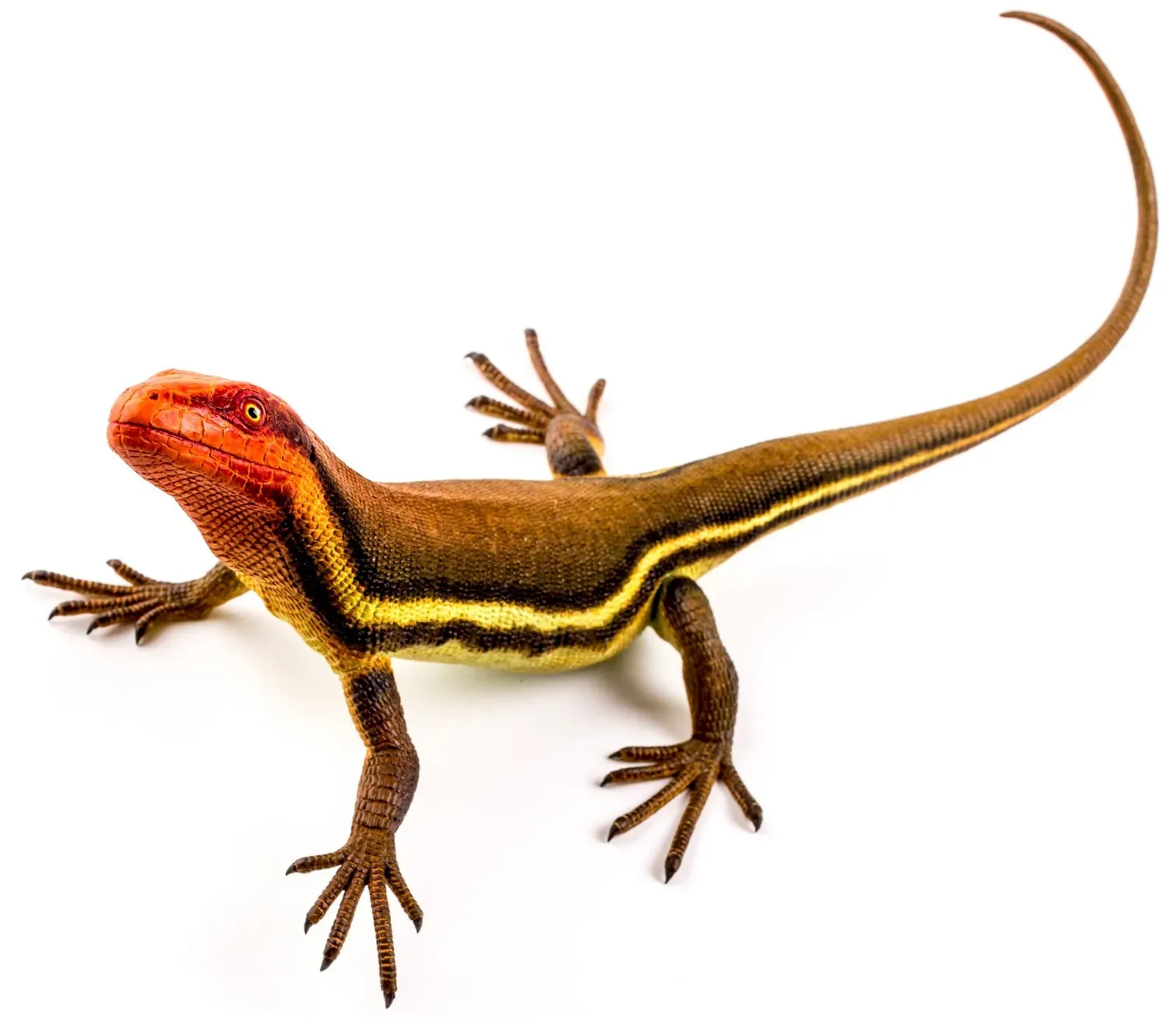
This file was uploaded by MUSE – Science Museum of Trento in cooperation with Wikimedia Italia., CC BY-SA 3.0)
If you’re looking for the very beginning of the reptile story, you find yourself in the swampy forests of what is now Nova Scotia, Canada, roughly 315 million years ago. About 315 million years ago, a small lizard-like creature scurried through those ancient forests, and that creature, Hylonomus, holds the title of the earliest known reptile in fossil records. It’s almost impossible to wrap your head around. That’s older than coal. Older than wings. Older than almost everything you think of as “ancient.”
The tracks found in Nova Scotia are attributed to Hylonomus, the oldest unquestionable reptile known. It was a small, lizard-like animal, about 20 to 30 centimeters long, with numerous sharp teeth indicating an insectivorous diet. It wasn’t a predator in any dramatic sense. More like the prehistoric equivalent of a gecko, quietly munching on bugs while the world around it was still dominated by giant amphibians. Yet it changed everything.
Unlike amphibians, this pioneering species could lay eggs with hard shells on land, freeing it from returning to water for reproduction. That single biological upgrade, the ability to reproduce on dry land, was the key that unlocked the entire future of reptiles. Without Hylonomus, there may have been no lizards, no crocodiles, no birds, and certainly no dinosaurs.
Mesosaurus: The Swimmer That Proved Continents Move
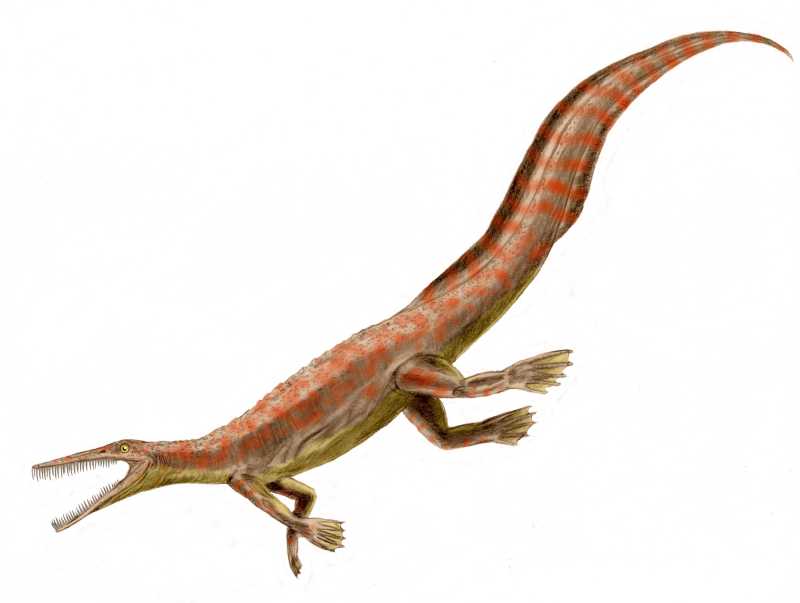
One of the best known early reptiles is Mesosaurus, a genus from the Early Permian that had returned to water, feeding on fish. Now, here’s where things get fascinating. Mesosaurus lived around 280 million years ago, which puts it squarely in the Permian period, a full 50 million years before the first dinosaurs appeared. It was essentially a land reptile that chose the ocean as its home, like an ancient version of a sea lion deciding the beach life was overrated.
Honestly, what makes Mesosaurus even more remarkable isn’t its age or its diet. It’s the role its fossils played in science. Fossil remains of Mesosaurus were discovered on opposite sides of the Atlantic Ocean, in South America and in Africa. This became one of the early pieces of evidence supporting the theory of continental drift. A small, fish-eating reptile from before the age of dinosaurs helped scientists understand that the continents themselves once formed a single supercontinent. The world at the time was dominated by the supercontinent Pangaea, which had formed due to the collision of Euramerica and Gondwana during the Carboniferous.
Dimetrodon: The Sail-Backed Creature Most People Mistake for a Dinosaur
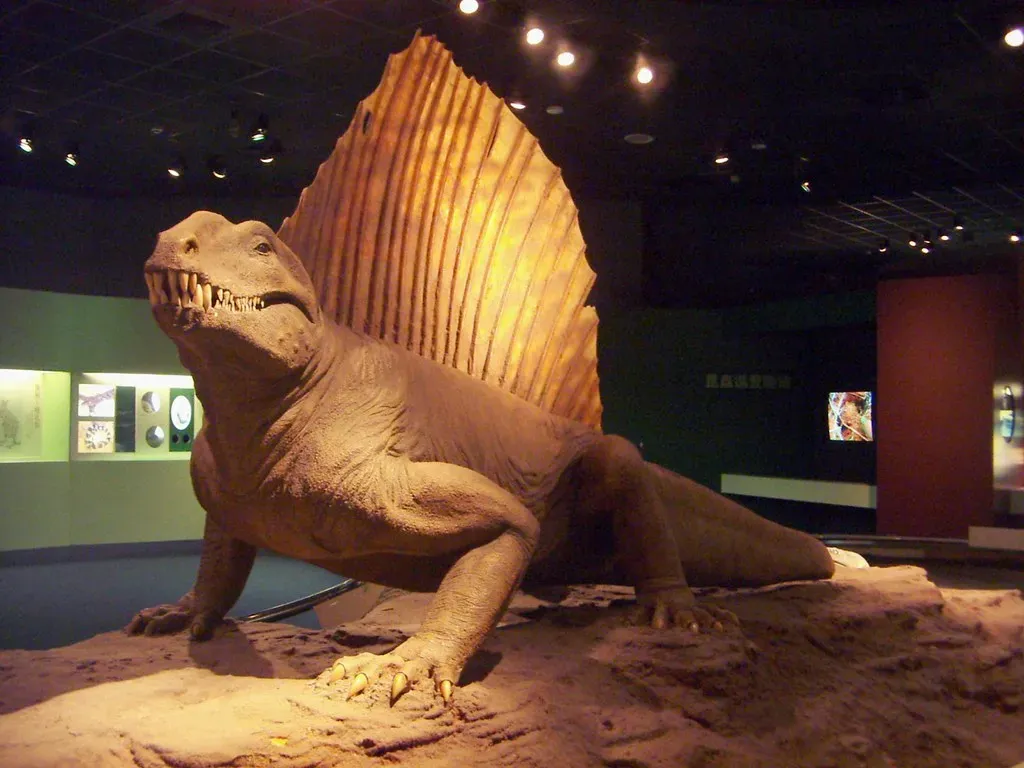
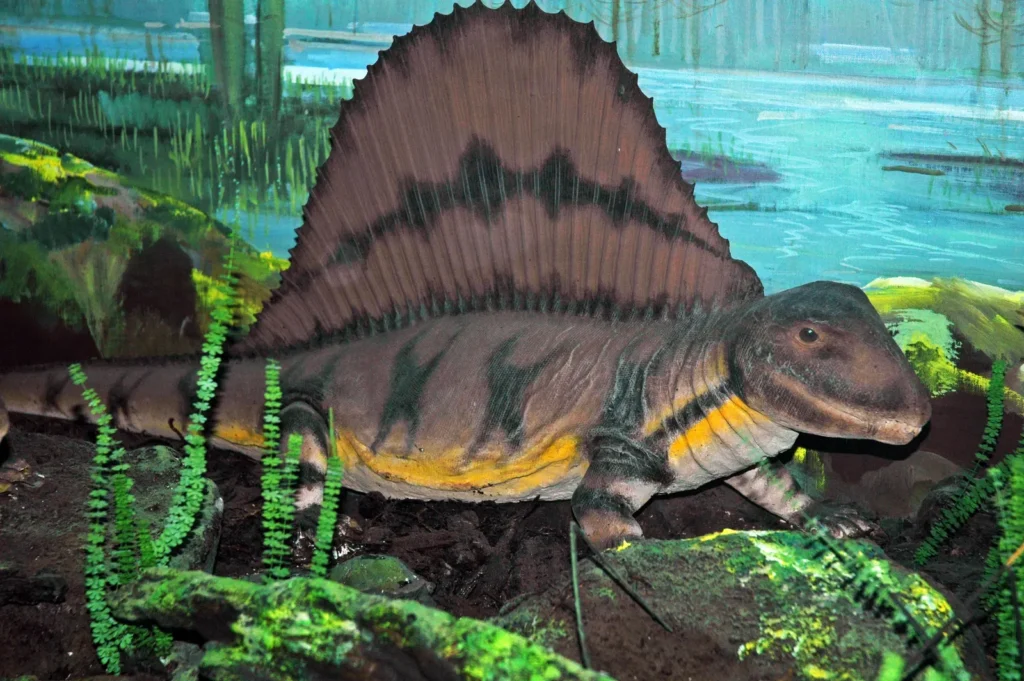
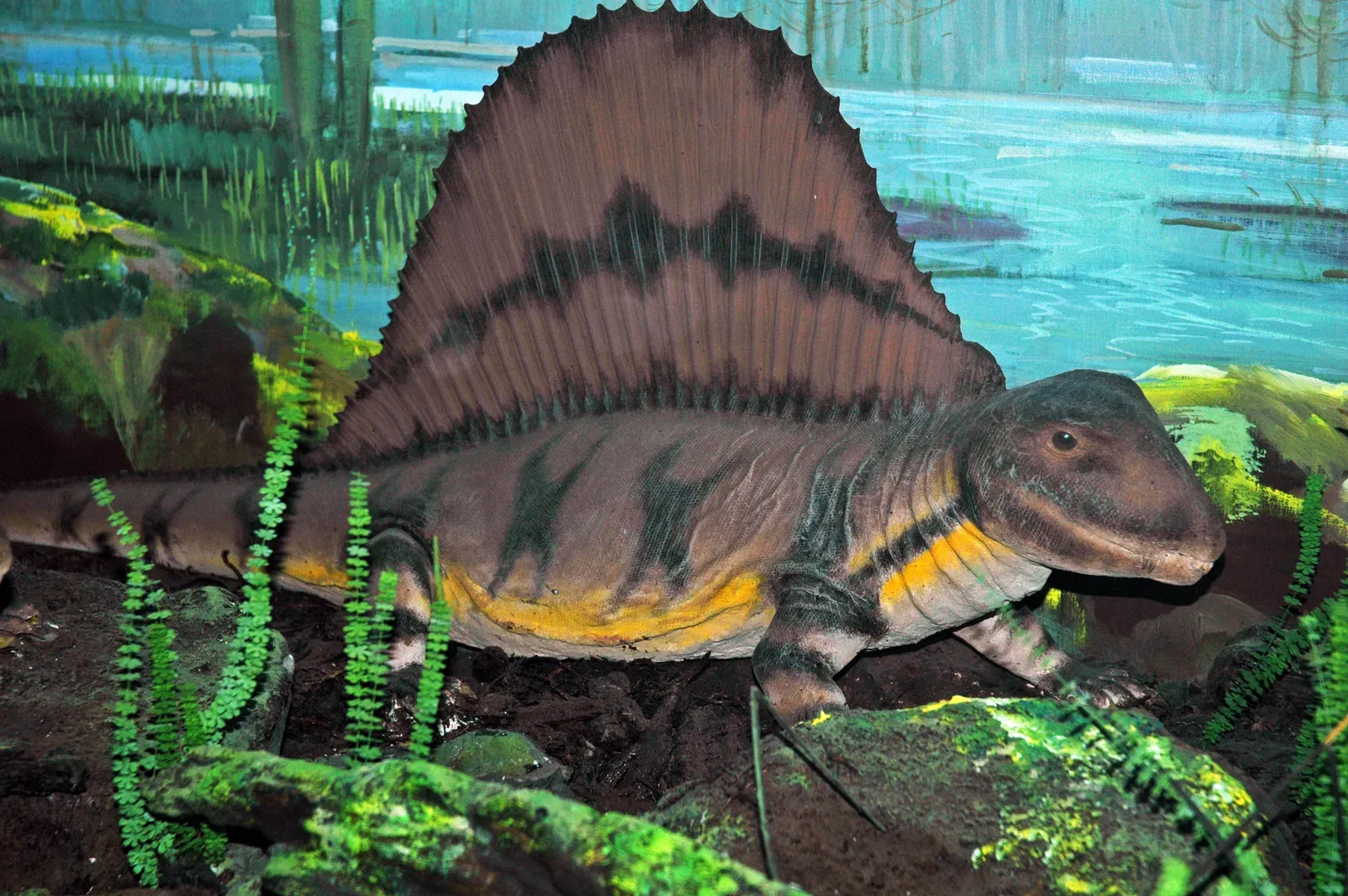
Let’s be real. If you’ve ever seen a toy labeled “Dimetrodon” in the dinosaur section of a shop, it was in the wrong place. Dimetrodon is a notable early synapsid that lived during the Early Permian period, approximately 290 million years ago, and is frequently mistaken for a dinosaur. However, it predates dinosaurs by tens of millions of years. That’s not a minor distinction. It’s like confusing a kangaroo with a dinosaur because they both hop.
Recognized for its distinctive sail-like dorsal fin, which extends from the base of its skull to its tail, Dimetrodon was a carnivorous quadruped that could grow up to 3 meters long. That magnificent sail wasn’t just for show. Scientists believe that this fin helped Dimetrodon with thermal regulation by absorbing the sun. Think of it like a built-in solar panel attached to a nightmare predator.
This species is categorized as a pelycosaur within the Sphenacodontidae family and is more closely related to modern mammals than to reptiles or dinosaurs. That’s right. If you want to be precise about it, Dimetrodon is more closely related to you than it is to a Triceratops. Spend a moment with that thought. It’s wild.
Gorgonops: The Saber-Toothed Terror of the Permian
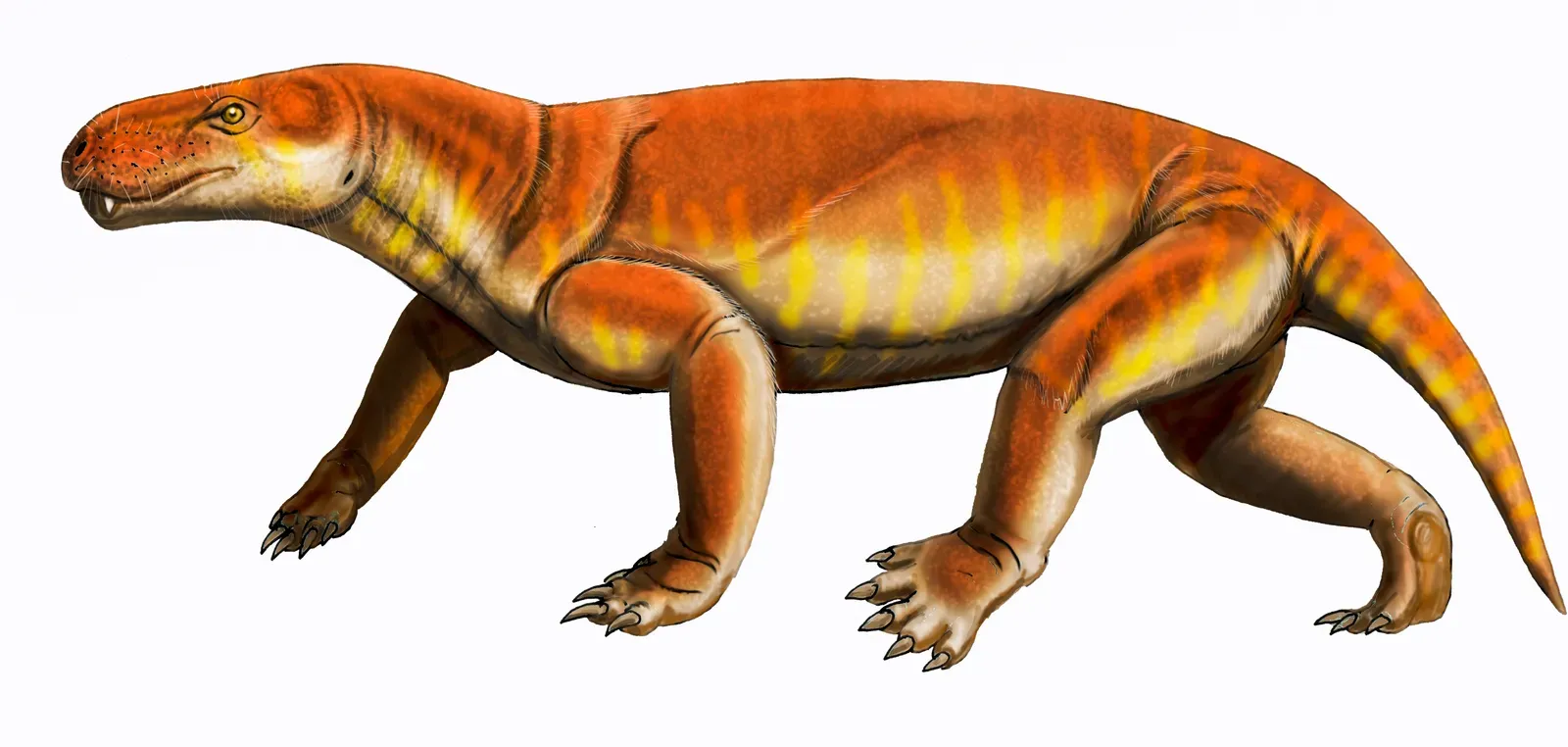
Gorgonops was a creature that lived in what is now Southern Africa during the Late Permian era, between 260 and 254 million years ago. Its name alone sounds like something that should star in a horror film. The Gorgons of Greek mythology were creatures so terrifying that a single glance could turn you to stone. Palaeontologists clearly had a sense of drama when they named this one.
Gorgonops is most well-known for its teeth, which were proportionally long, sharp, and curved. They were similar in appearance to the canines on some carnivorous mammals, and because of their sheer length, they are often compared to saber-tooth cats. In addition to the two downward-facing saber teeth, Gorgonops also possessed shorter teeth for nipping in the front of its face and shorter, broader teeth just behind the sabers, probably for cutting. It was essentially the Permian’s answer to a Swiss Army knife, but built entirely for killing.
Gorgonops was a synapsid, which means it belonged to the same group as mammals, yet it also shared characteristics with animals we consider reptiles. Because of this, Gorgonops and its close relatives are also informally referred to as “mammal-like reptiles.” It represents a dazzling middle ground in evolution, a creature that hadn’t quite decided whether it wanted to be a reptile or a mammal, and it was absolutely terrifying either way.
Lystrosaurus: The Survivor That Outlasted the Apocalypse
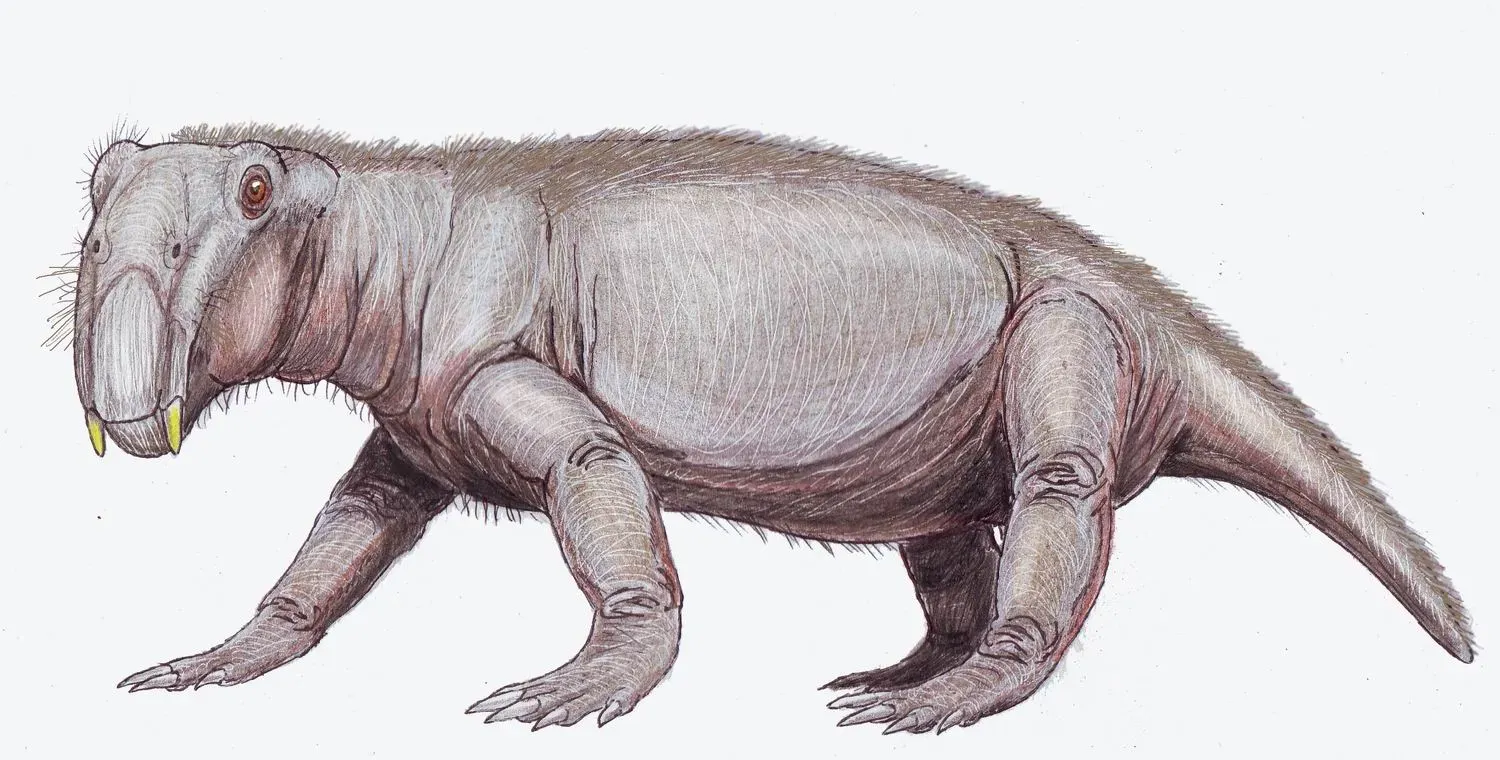
If the Permian-Triassic extinction event, also known as the Great Dying, was Earth’s version of the apocalypse, then Lystrosaurus was the creature that just refused to die. The Permian period lasted from 299 to 251 million years ago and produced the first large plant-eating and meat-eating animals. The period ended with the extinction of some 90 percent of all life. Almost everything was wiped out. Almost. Lystrosaurus survived.
The dicynodont Lystrosaurus made up as much as 95 percent of all land species at one time, roaming the early Triassic world in near-total biological dominance. Imagine a world where one single species represents nearly every land vertebrate on the planet. That’s extraordinary. Many scientists refer to this reptile as a “shovel lizard” because it would use the two tusks on the side of its head to dig out vegetation.
One of the best-known of this group was Lystrosaurus, whose fossils have been found in India, southern Africa, and Antarctica, thus providing evidence that these three landmasses were once connected. Much like Mesosaurus, this humble, shovel-tusked survivor didn’t just outlast the apocalypse. It helped future scientists understand the ancient geography of an entirely different Earth.
Anteosaurus: The Killing Machine Nobody Talks About
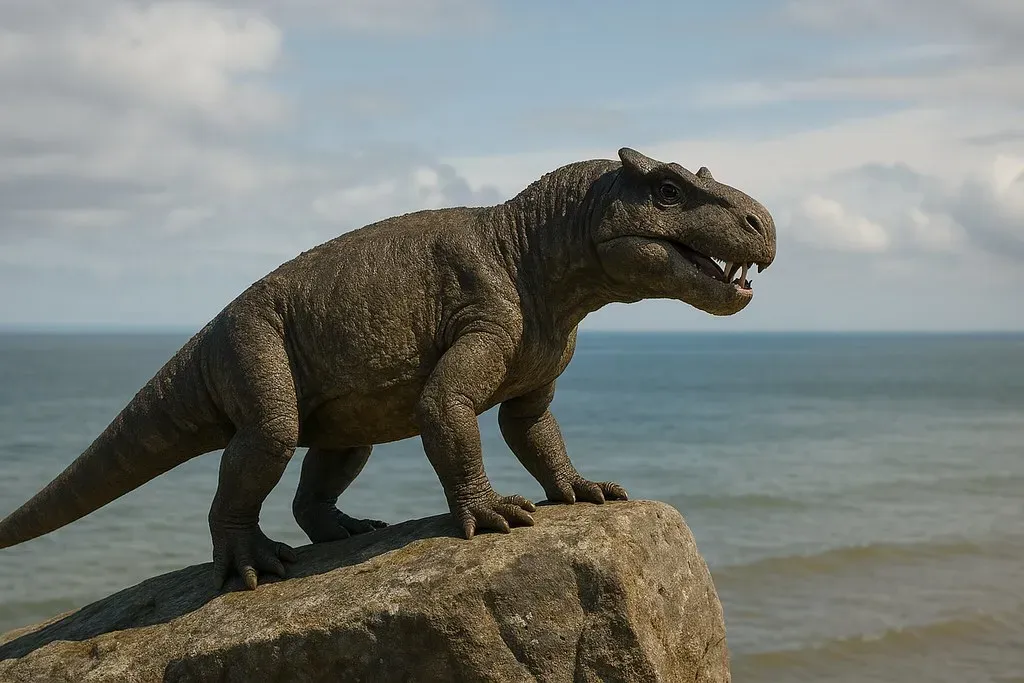
Anteosaurus was a premammalian reptile that lived in Africa during the middle Permian, between 265 to 260 million years ago. Despite being just about the size of an adult rhinoceros, the ancient animal was a ferocious carnivore with powerful jaws and massive, bone-crushing teeth. You’d think something that size and ferocity would be more famous. Somehow, it remains one of prehistory’s most underappreciated monsters.
For years, scientists assumed it was sluggish and slow. That assumption turned out to be completely wrong. The study revealed that specific characteristics of the brain and balance organs were developed in such a way that would have made the reptile the opposite of slow-moving. The organ of balance in Anteosaurus, which is located within the inner ear, was relatively larger than that of its closest relatives and other predators. This indicates that Anteosaurus was capable of moving much faster than its prey and competitors.
Anteosaurus was a Dinocephalian, a mammal-like reptile that predated the dinosaurs. Dinocephalians dominated the planet in their time but died out about 30 million years before dinosaurs emerged. Think about the implications. An entire dynasty of powerful, fast-moving creatures rose and fell completely before the very first dinosaur species ever evolved. Earth had already seen empires rise and collapse by the time the dinosaurs showed up.
Tanystropheus: The Most Bizarre Neck in Prehistoric History
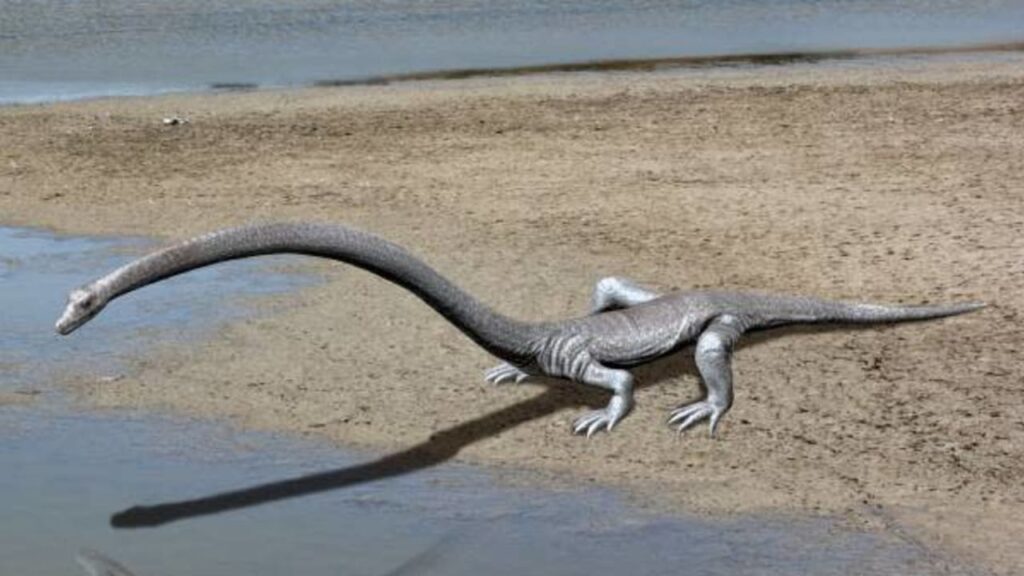
Here’s the thing about Tanystropheus. When you first see a reconstruction of it, you genuinely wonder if palaeontologists made a mistake. It was a 6-meter-long reptile with a neck longer than its tail and body combined. That sounds physically absurd. It looks physically absurd. Yet this creature was very real, and it was thriving in the Triassic period, well before dinosaurs rose to dominance.
Tanystropheus was initially misdescribed as a dinosaur, but it was a protorosaur and lived in the Middle Triassic, just before the first dinosaurs. It was long thought to have been too top-heavy to be terrestrial. More recent studies argue that most of its weight was centred around its body, making it more than capable of walking on land. Science has a way of continually surprising us, particularly when prehistoric creatures are involved. What looks impossible often turns out to be entirely reasonable once you dig deeper into the biomechanics.
Scutosaurus: The Armored Giant of the Permian Plains
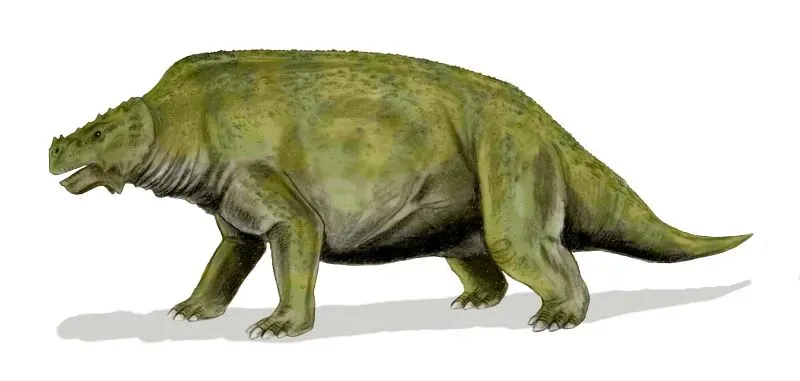
Scutosaurus was practically a walking fortress. This massive herbivore from the Late Permian period, about 254 to 252 million years ago, grew up to 3 meters long and weighed as much as a small car. Its most distinctive feature was the extensive bony armor covering its body, including thick plates and spiky projections. It looked like someone tried to build a tank out of a lizard. Given that the Permian world was filled with predators like Gorgonops, that armor wasn’t optional.
The name Scutosaurus means “shield lizard,” referring to its impressive defensive adaptations. Living in what is now Russia, these creatures traveled in herds across semi-arid plains, grazing on tough vegetation with their specialized teeth. There’s something deeply human about the image of a herd of armored lizards slowly crossing a vast ancient plain, 250 million years before our own species existed. Despite their formidable armor, Scutosaurus couldn’t survive the devastating Permian-Triassic extinction event that wiped out nearly 96 percent of marine species and 70 percent of terrestrial vertebrates about 252 million years ago.
Milleretta: The Quiet Anapsid That Time Forgot
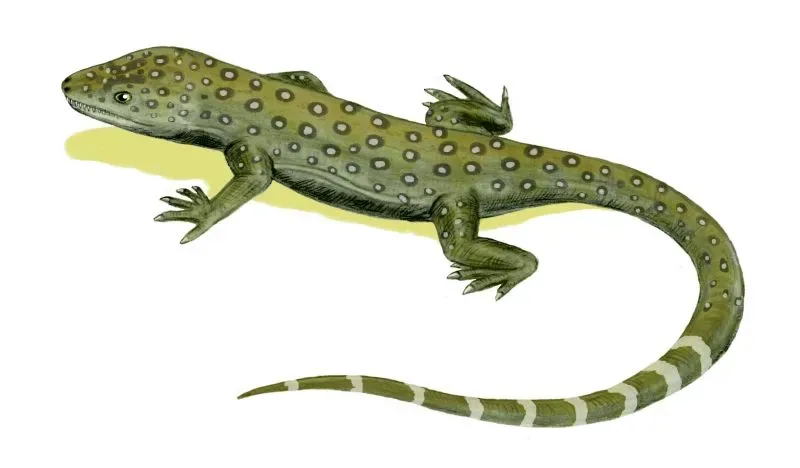
Not every ancient reptile was a monstrous predator or an armored colossus. Some were quietly going about their business in the undergrowth, and Milleretta was exactly that. While many prehistoric reptiles had skulls with openings behind the eyes, Milleretta belonged to a different group. This cat-sized reptile from the Late Permian period, about 260 to 252 million years ago, was an anapsid, having a solid skull without temporal openings, similar to modern turtles. Found in South Africa, Milleretta likely fed on insects and small animals in its woodland habitat.
With a stocky body and sturdy limbs, it wasn’t built for speed but rather for steady, deliberate movement through its environment. Milleretta and its relatives represent an important branch of early reptile evolution. You might think of Milleretta as the tortoise of its era, not flashy, not fearsome, just quietly surviving in a world packed with things that wanted to eat it. Most anapsid groups vanished during the Permian-Triassic extinction, but turtles, with their similar skull structure, somehow carried that ancient legacy forward. In a way, every turtle you see today carries a small piece of Milleretta’s ancient blueprint.
Conclusion: A World That Existed Long Before We Were Told the Story Began
The real takeaway from all of this is that the dinosaurs, spectacular as they were, didn’t invent the idea of reptilian dominance. Long before T-Rex roamed the Earth and even before the first dinosaurs appeared, our planet was home to a fascinating array of reptiles. These ancient creatures dominated landscapes during the Permian and early Triassic periods, setting the evolutionary stage for the dinosaurs that would follow. Every sail-backed predator, every armored herbivore, every bizarre long-necked mystery creature was part of a long, winding story that eventually led to the world we know.
After the Permian-Triassic extinction cleared the field, reptiles exploded in diversity during the Triassic period. This is when most major modern reptile groups, including the ancestors of crocodiles, lizards, and turtles, first appeared, alongside now-extinct groups like the dinosaurs’ earliest relatives. We tend to think of history as starting when something famous happens. But Earth’s biological history is far older, far stranger, and far more layered than any single chapter can tell.
The nine ancient reptiles above ruled, survived, and evolved across hundreds of millions of years before a single dinosaur ever took its first step. The next time someone tells you they love dinosaurs, maybe ask them if they’ve heard of Gorgonops. What would you have guessed about what ruled the Earth before the age of dinosaurs?