
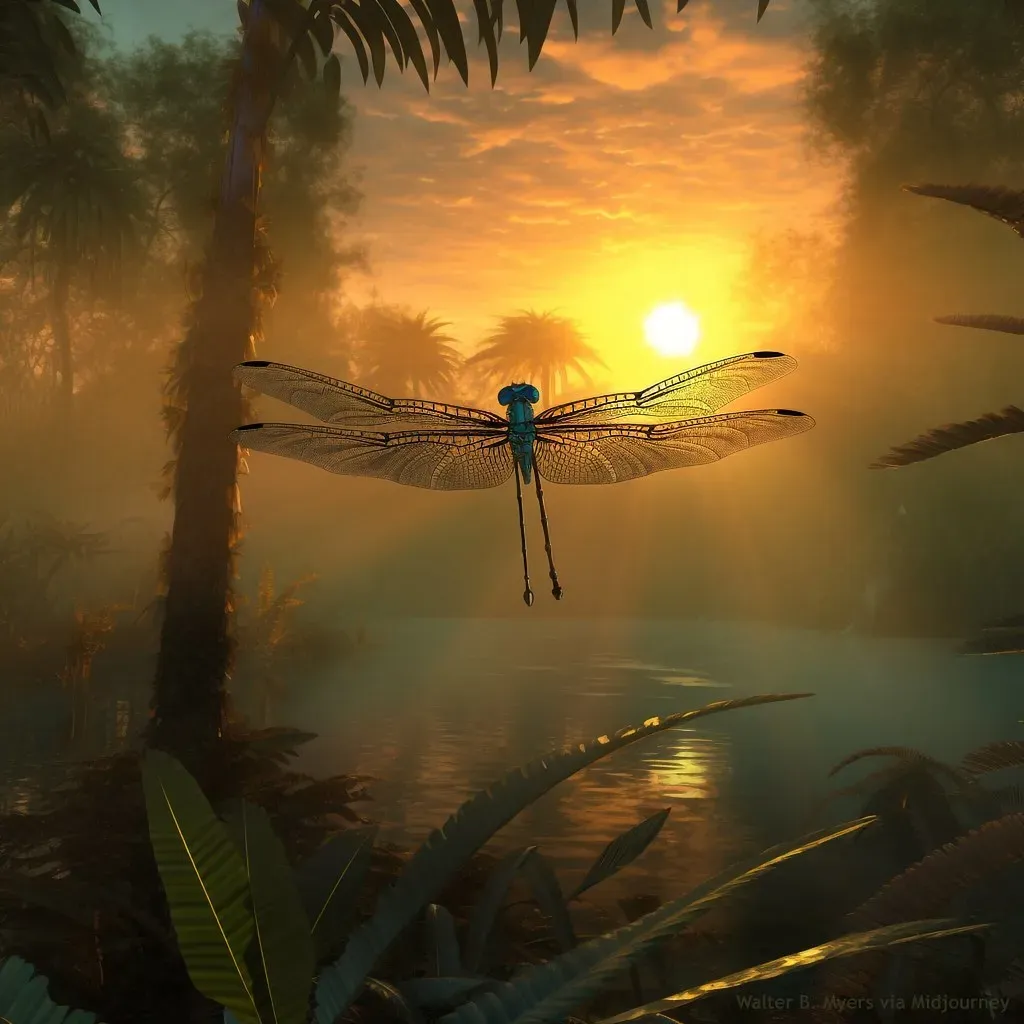
Picture a dragonfly. Now make it the size of a hawk. Give it a two-and-a-half-foot wingspan, compound eyes the size of golf balls, and razor-sharp mandibles capable of snatching prey right out of the air. Then add a millipede longer than a car crawling across the forest floor below. This wasn’t a nightmare. This was Tuesday, roughly 300 million years ago.
Long before the first dinosaur ever set foot on Earth, the planet belonged to something far stranger and, honestly, far more unsettling. You’d be stepping into a world that most people have never heard of, full of creatures that defy imagination yet left their marks in the rocks beneath our feet. Let’s dive in.
A World You’d Barely Recognize: The Carboniferous Period
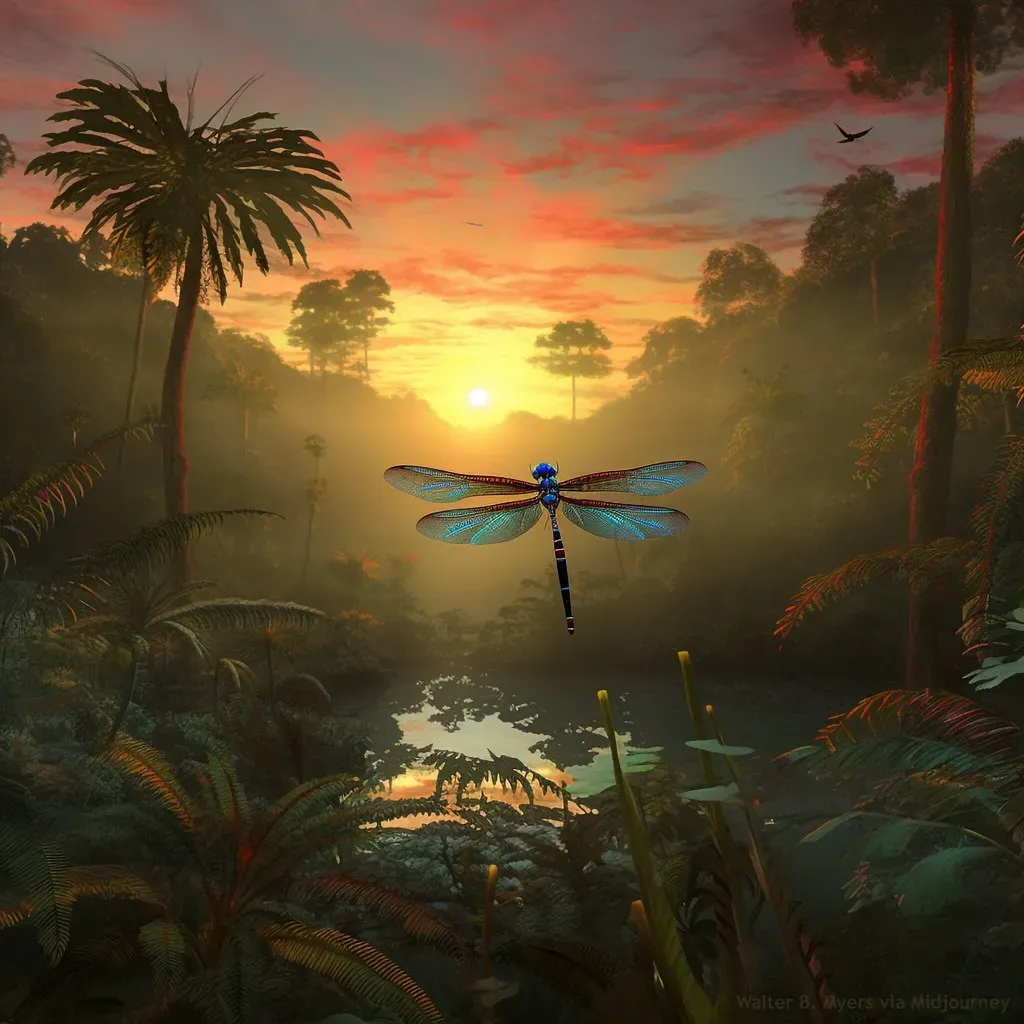
Earth during the Carboniferous Period, roughly 359 to 299 million years ago, was an era marked by unprecedented evolutionary innovation, bizarre gigantism, and vast coal formations that continue to impact our world today. Think of it as a planet-wide greenhouse, dense, hot, and soaking wet, utterly unlike anything alive today.
The continents were merging into a supercontinent now known as Pangaea, and massive tropical forests filled with lush vegetation grew over much of the planet. The air was hot and humid, with vast swampy rainforests covering much of the land, making it the perfect environment for early insects to grow and thrive. If you were somehow dropped into that world, you’d struggle to find a single familiar landmark.
The Oxygen Secret: Why Bugs Grew Enormous
Here’s the thing. You can’t understand giant insects without understanding what the air itself was doing. The Carboniferous Period was defined by its oxygen-rich environment, with oxygen levels in the atmosphere reaching up to 35% compared to today’s 21%, a condition that was particularly favorable for arthropod gigantism. That’s not a small difference. That’s a fundamentally different sky.
In the Carboniferous, wood-eating bacteria didn’t exist yet, so Earth’s giant, primordial forests were taking in lots of carbon dioxide and pumping out lots of oxygen. Since the trees weren’t decomposing, the CO2 wasn’t being released back into the atmosphere. The result was an all-time high in the world’s levels of atmospheric oxygen. Insects don’t have lungs. They rely on a system of tubes called tracheae that deliver oxygen directly to their tissues through diffusion, and the efficiency of this system imposes size limitations. Higher atmospheric oxygen content allowed oxygen to diffuse deeper into insect bodies, effectively removing this constraint and permitting the evolution of larger body sizes.
Meet Meganeura: The King of the Carboniferous Sky
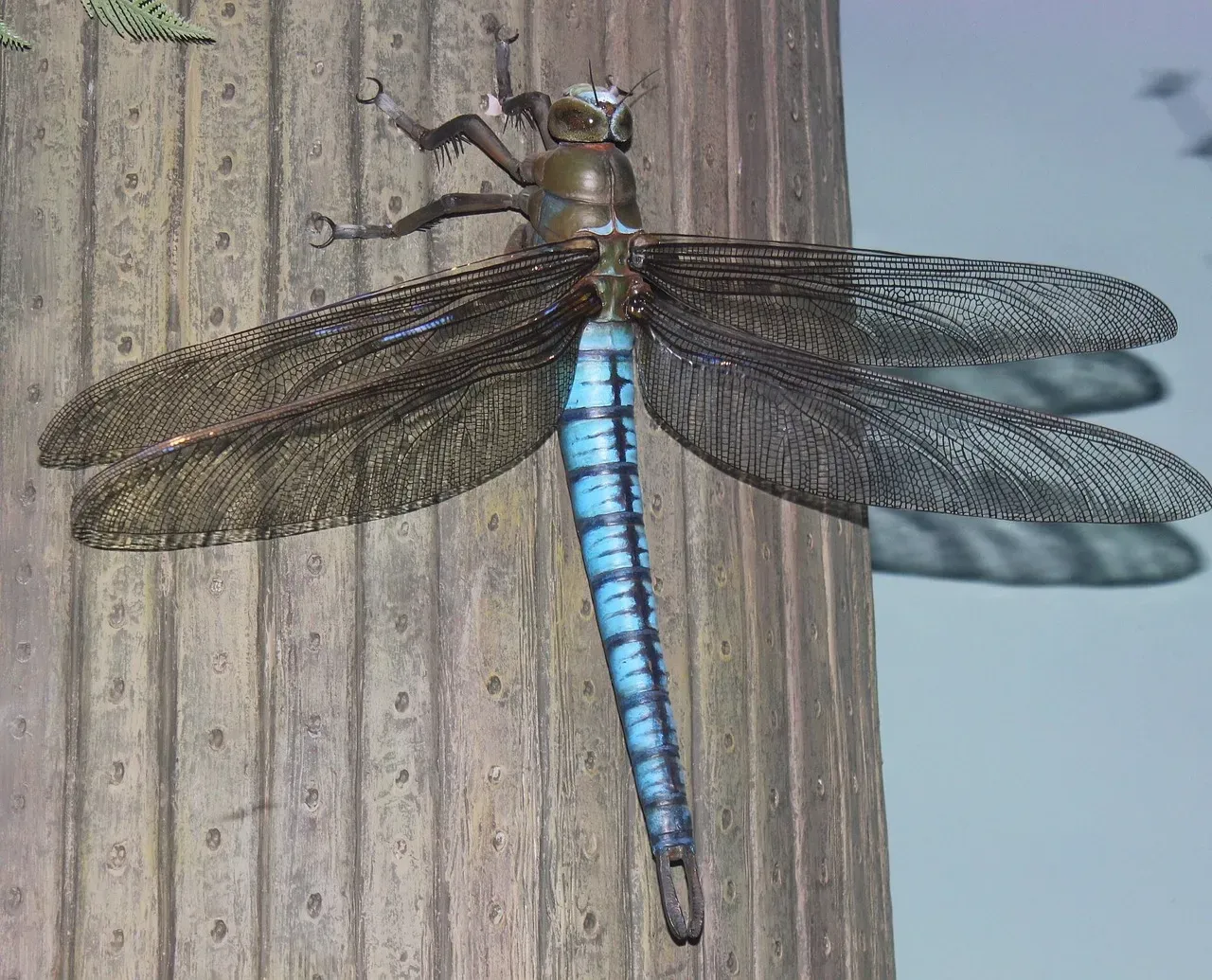
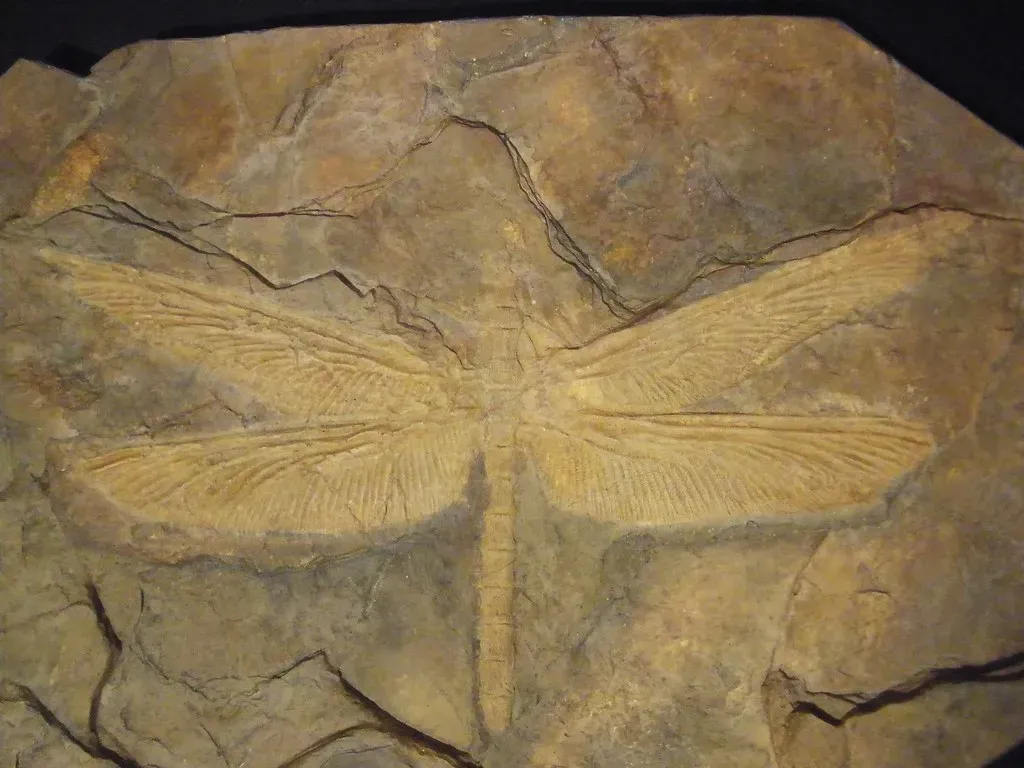
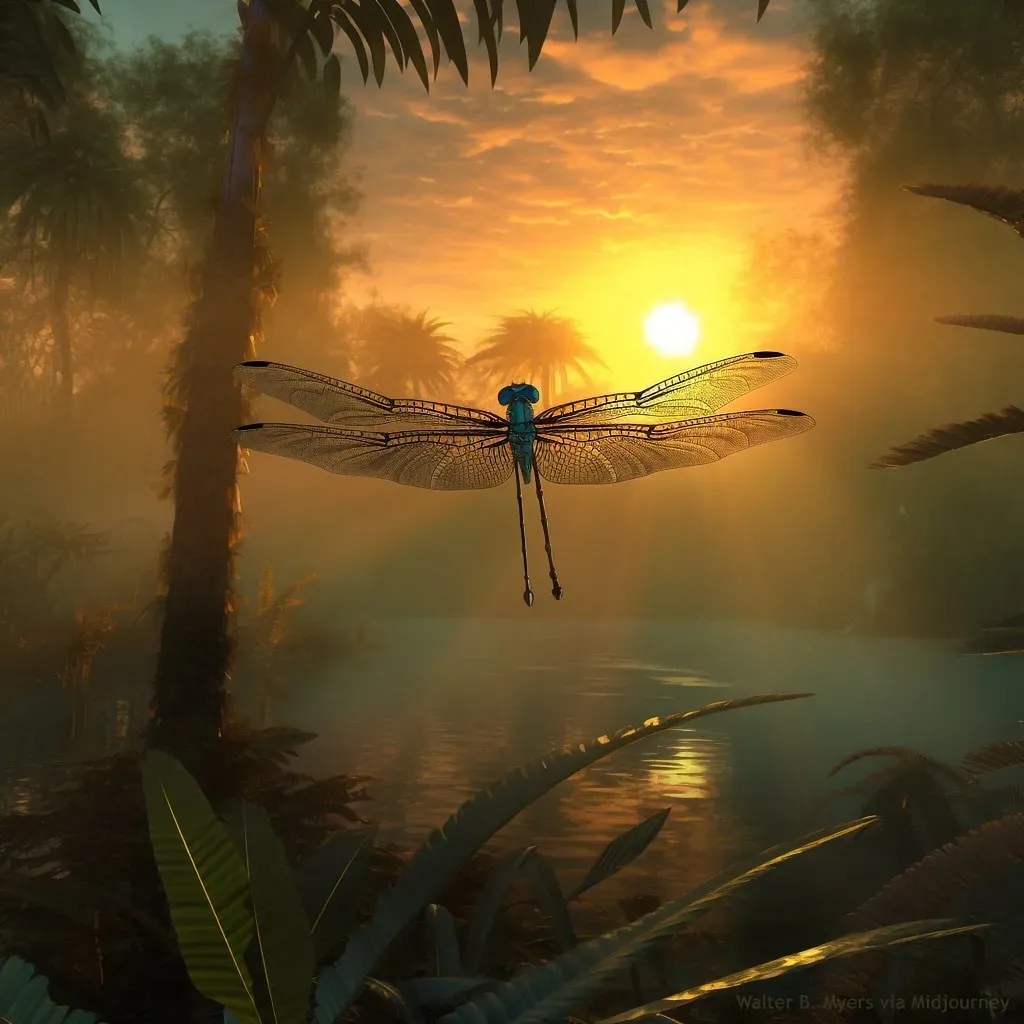
Before dinosaurs evolved, back when the world was swampy and green 300 million years ago, giant dragonfly-like insects called griffinflies filled the skies. The most iconic of them all was Meganeura. With a single wing length reaching 32 centimetres, a wingspan of about 65 to 75 cm, Meganeura monyi is one of the largest known flying insect species and is considerably larger than the biggest modern dragonfly. Honestly, just sit with that for a second.
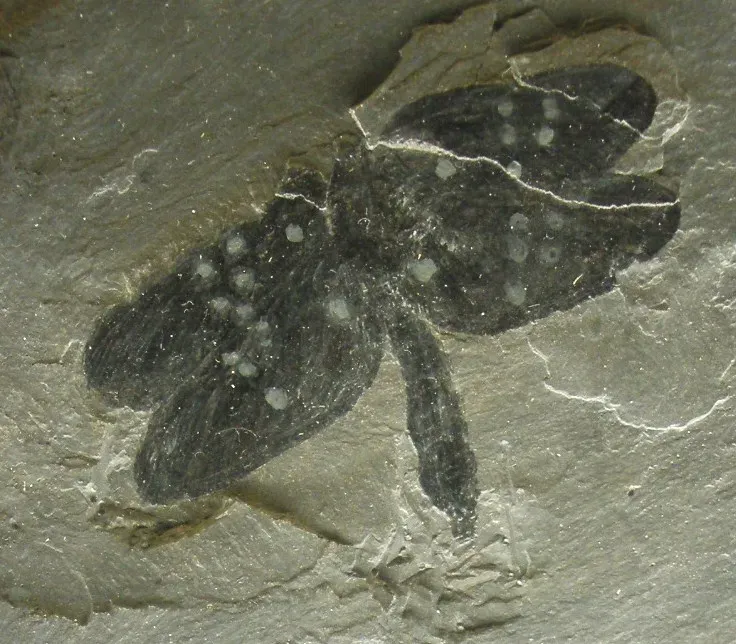
Like today’s dragonflies, Meganeura had large, multifaceted eyes, giving it nearly 360-degree vision, and its sharp mandibles and spiny legs made it a formidable predator, capable of capturing prey mid-flight. Fossils of Meganeura were first discovered in Late Carboniferous Coal Measures of Commentry, France, in 1880. Scientists have been trying to fully understand this creature ever since, and even after nearly 150 years of study, it still holds mysteries.
Arthropleura: The Giant That Crawled Through Your Nightmares
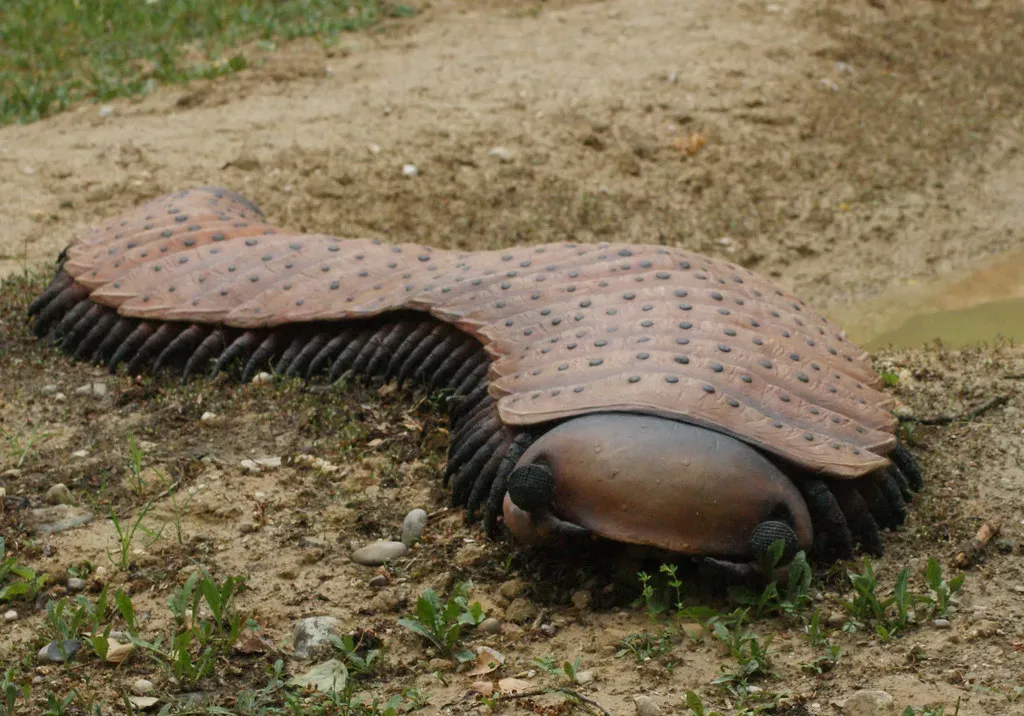
If the skies belonged to Meganeura, the forest floor belonged to something even more physically imposing. Arthropleura is an extinct genus of massive myriapod that lived in modern-day Europe and North America around 344 to 292 million years ago, and was capable of reaching at least 2 metres in length, possibly up to over 2.5 metres, making it the largest known land arthropod of all time. That’s roughly the length of a small car. Imagine meeting that thing on a forest trail.
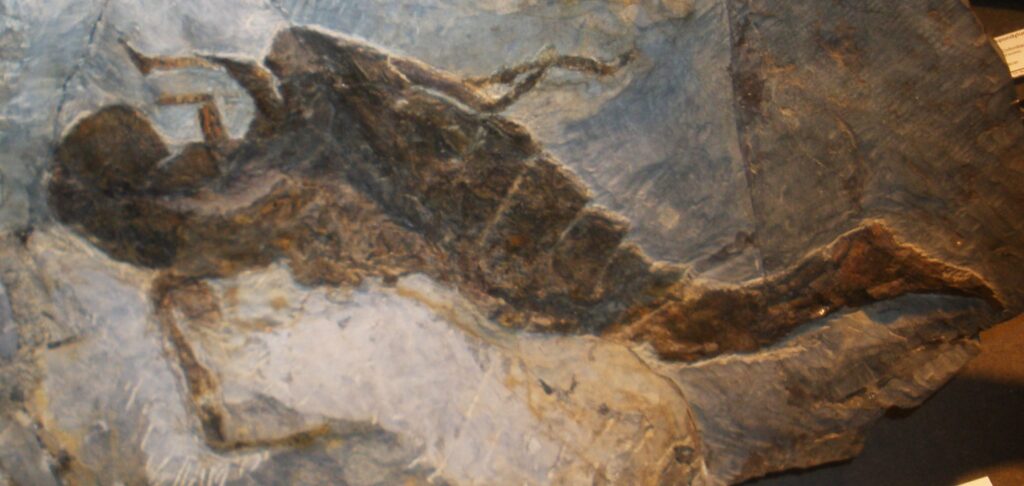
The fossil of this creature dates from the Carboniferous Period, about 326 million years ago, over 100 million years before the Age of Dinosaurs, and reveals that Arthropleura was the largest-known invertebrate animal of all time, larger than the ancient sea scorpions that were the previous record holders. Arthropleura is believed to be a detritivore, feeding on either dead and decaying plant matter or animal remains when available. So for all its terrifying size, it was probably more interested in your compost pile than in you.
No Predators, No Limits: The Evolutionary Free-for-All
Oxygen alone doesn’t fully explain why insects grew so massive. There’s another piece to this puzzle, and it’s surprisingly simple. The other factor for their giant growth is much simpler: a lack of competition. During the Carboniferous, life was only beginning to spread onto land. Large, carnivorous amphibians were restricted to the swamps, reptiles were in their earliest stages of evolution, and mammals, birds, and dinosaurs hadn’t evolved yet. With no competition on the land, there was nothing preventing insects and arachnids from growing to massive sizes.
It is possible that insects and other arthropods grew large in order to compete with one another. Predatory insects, such as Meganeura, may have grown large to take down bigger prey, while herbivores may have grown large to ward off carnivores like Meganeura. Think of it like an evolutionary arms race with no referee. The largest insects lived during this time, as they were the only animals capable of flight, and lack of agile aerial predators allowed flying insects to grow large without being easy targets. Every ecological pressure that today keeps insects small simply didn’t exist yet.
The Fall of the Giants: How Their Reign Ended
Nothing lasts forever. Not even the reign of planet-dominating mega-insects. The most significant factor in their decline was the gradual reduction in atmospheric oxygen, which fell from 35% to levels closer to our current 21%, making the tracheal respiratory system insufficient for supporting very large body sizes. The very thing that had made their size possible was slowly being taken away.
Still, oxygen wasn’t the only executioner. After the evolution of birds about 150 million years ago, insects got smaller despite rising oxygen levels, according to a study by scientists at the University of California, Santa Cruz. The decoupling of insect size and atmospheric oxygen coincident with the radiation of birds suggests that biotic interactions, such as predation and competition, superseded oxygen as the most important constraint on maximum body size of the largest insects. It’s a remarkable one-two punch: the atmosphere shifted against them, and then a whole new class of hungry, agile predators arrived to finish the job. The extinction of the giant arthropods and many amphibians allowed reptiles to arise as the new dominant lifeforms.
Conclusion: A Chapter of Earth History Worth Remembering
It’s easy to think of insects as tiny, forgettable background characters in the story of life on Earth. But you’ve just seen that for tens of millions of years, they were the headline act. Over 70 million years before the first dinosaurs and pterosaurs appeared on Earth, a far different group of animals reigned supreme: the insect. Reaching their largest sizes during the Carboniferous Period, some of the earliest flying insects grew as large as present-day hawks. That’s not a footnote in history. That’s an entire era.
The Carboniferous Period, with its giant insects, lush forests, and unique atmospheric conditions, formed an essential chapter in Earth’s evolution. Though it has long since passed, understanding this period allows us to appreciate the intriguing diversity of our planet’s history, and the unending miracles of natural evolution. The coal you may use to heat a home, the oxygen you’re breathing right now, the body plan of every dragonfly you’ve ever watched hover over a pond. All of it traces back to that steaming, bug-ruled world.
We tend to crown the dinosaurs as Earth’s most dominant rulers, yet the insects held that throne for far longer, shaped the atmosphere, built the forests, and left behind the fossil fuels that powered our modern civilization. The giant insects didn’t just live here. They made here. So the next time a dragonfly zips past you, remember what it once was. What do you think: does knowing that insects ruled the Earth before dinosaurs change the way you see the tiny creatures buzzing around you today? Tell us in the comments.