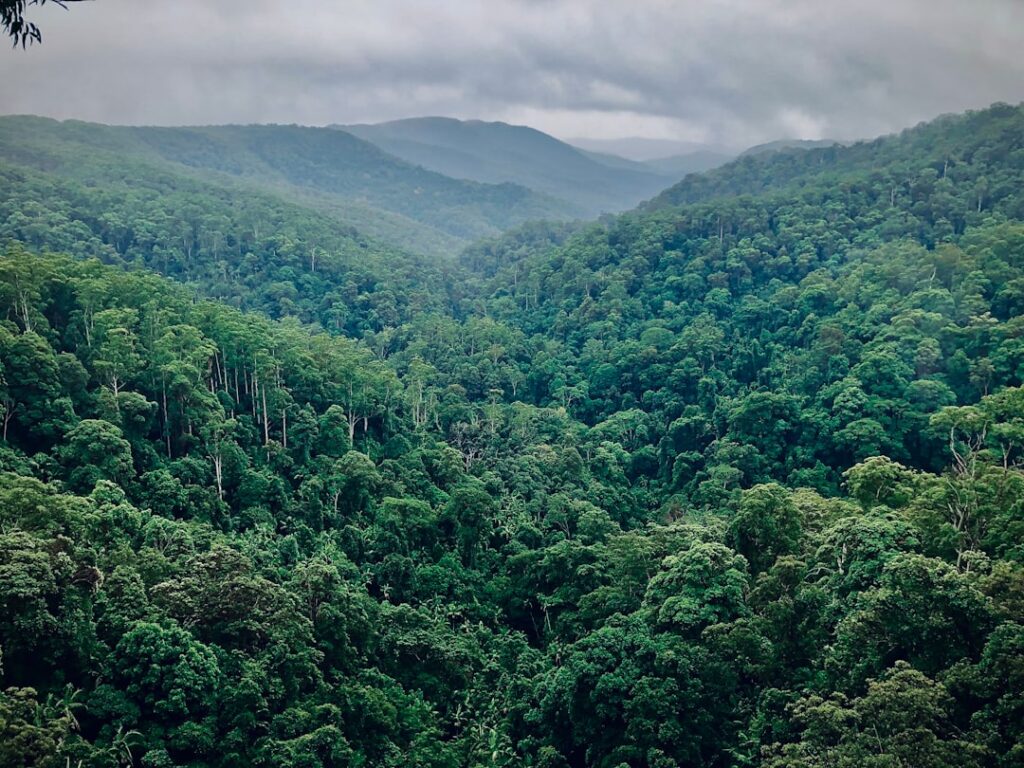
Amazon Basin – The vast rainforest, often called Earth’s lungs, has faced relentless pressure from record droughts, wildfires, and deforestation in recent years. Major tributaries like the Rio Negro and Madeira River reached their lowest levels in over a century during the 2024 crisis.
Yet, fresh research offers a counterpoint to the prevailing gloom. Scientists discovered that up to 36% of the forest – primarily shallow water table wetlands – not only survived extreme dry spells but gained biomass and regenerated strongly.
Resilient Wetlands Defy the Odds

Resilient Wetlands Defy the Odds (Image Credits: Unsplash)
Forest ecologists tracked 25 one-hectare plots along a 600-kilometer transect in central-southern Brazil, spanning more than a decade of data. During the severe El Niño-driven drought of 2015, palm and wetland trees in these areas showed no spike in mortality rates. Instead, aboveground biomass increased from 2010 to 2015, accompanied by robust seedling growth.
This outcome contrasted sharply with upland forests, where deep water tables left trees vulnerable to withering. The study, published in the Journal of Ecology, highlighted how these ancient wetland ecosystems – covering 36% of Amazonia – have persisted for millions of years.
Hydrology Holds the Key to Survival
Belowground water access emerged as the critical factor. In shallow water table zones, saturated soils and local hydrology buffered the effects of surface-level rain shortages. Sturdy palms, which comprise one in five tree species across the Amazon, played a starring role in this resilience, maintaining health and spurring regeneration.
Researchers noted that soil fertility and hydrological interactions amplified biomass gains. These dynamics underscore a need to refine climate models, which previously overlooked such belowground influences.
| Forest Type | Drought Response | Biomass Change |
|---|---|---|
| Upland (deep water table) | High tree mortality | Decline |
| Wetland (shallow water table, 36% of Amazon) | Low mortality | Increase |
A Timeline of Amazon Droughts
The rainforest endured four major droughts in two decades: 2005, 2010, 2015-16, and the record-breaking 2023-24 events. Satellite data from a PNAS study revealed widespread degradation in moisture and canopy height during the latest episode, with less than half of affected areas likely to fully recover.
Brazil, which holds 60% of the Amazon spanning nine nations, bore much of the brunt. These stressors have shifted parts of the biome from carbon sink to source, fueling fears of a tipping point.
- 2005: Early severe drought signals intensifying patterns.
- 2010: Widespread tree die-off in upland areas.
- 2015-16: El Niño amplified heat and dryness.
- 2023-24: Worst on record, drying even some wetlands.
Experts Weigh In on the Findings
Lead researcher Flávia Costa of Brazil’s National Institute of Amazonian Research called the results transformative. “Our research goes against the belief that the Amazon is collapsing,” she stated. “There are possibilities of a positive outcome.”
Earth system scientist Carlos Nobre cautioned against over-optimism, noting the uptick in drought frequency. Enrique Ortiz, a tropical ecologist, praised the fieldwork-based approach: “It spans large areas so the scientists have a good handle on what’s actually happened over time.” The study suggests these wetlands could act as biodiversity refugia amid broader threats.
While the discovery tempers collapse predictions, vulnerabilities persist. Protecting these resilient zones demands targeted policies across Amazon nations, integrating local hydrology into forecasts.
Key Takeaways
- Shallow water table wetlands cover 36% of the Amazon and thrived during 2010 and 2015 droughts.
- Palms drove biomass gains, offering sustainable harvest potential for communities.
- Refined models needed to map resilience and guide conservation.
These resilient forests signal that the Amazon’s story remains one of complexity, not inevitability. Prioritizing their safeguarding could preserve vital carbon stores and habitats. What steps should nations take next to protect the Amazon? Share your views in the comments.