You probably think of fossils as dusty bones locked away in museum drawers, but a handful of them have completely rewritten what you know about life on Earth. These are not just old skeletons; they are plot twists in the story of evolution, the kind of finds that force scientists to admit, sometimes reluctantly, that their favorite theories were wrong or at least incomplete.
As you move through these eight discoveries, you’ll see how a single jaw, a feathered imprint, or even the outline of something soft and squishy can flip an entire field on its head. You’ll travel from ancient seas to early forests and into the lives of your own distant ancestors. By the end, you may never look at a fossil the same way again.
1. Archaeopteryx: The Feathered Fossil That Bridged Dinosaurs and Birds
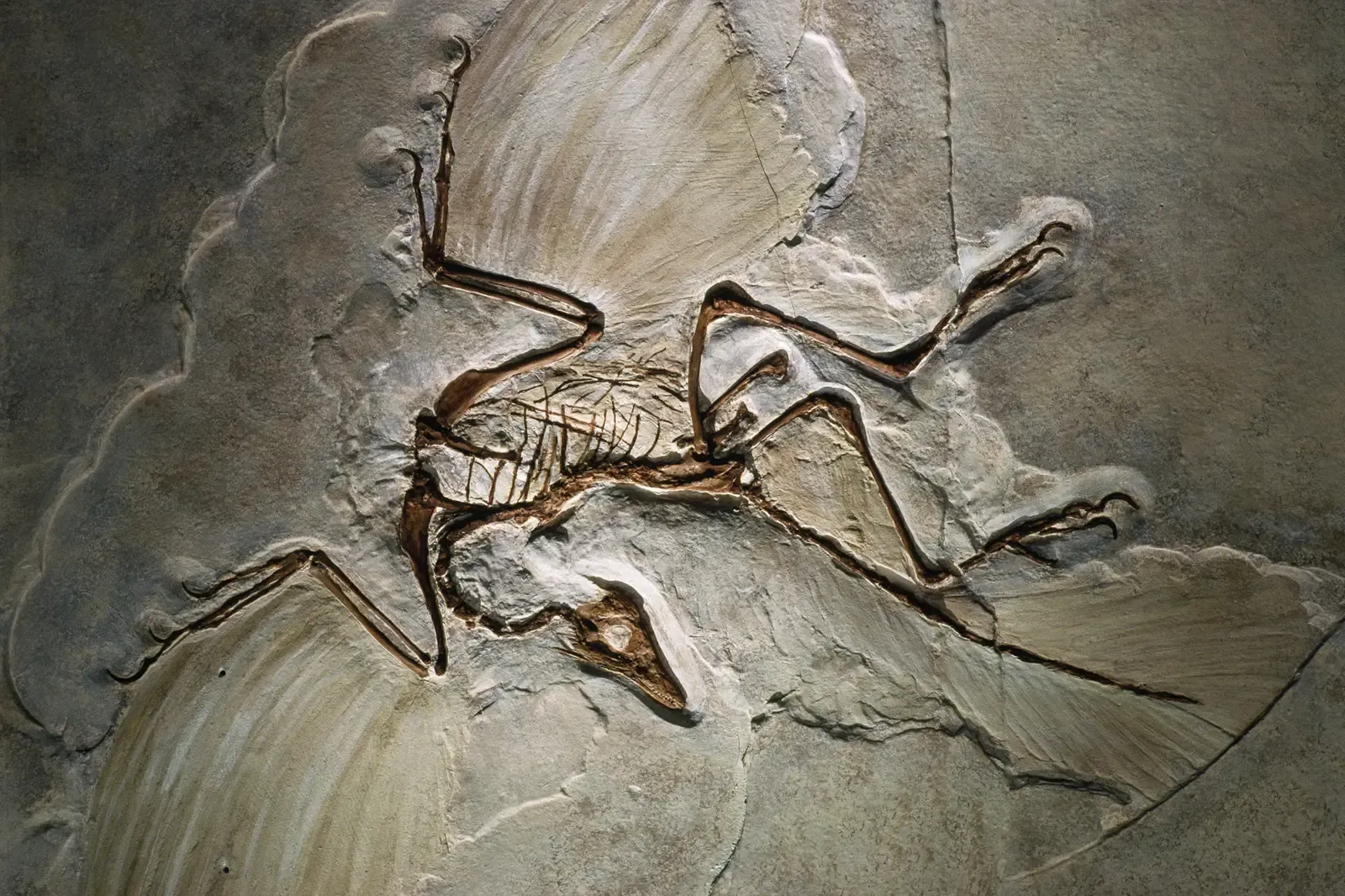
If you’ve ever wondered where birds really came from, Archaeopteryx is the fossil that dragged that debate into the light. When you look at it, you see a strange mix: teeth, claws on its wings, and a long bony tail like a small dinosaur, but with fully formed flight feathers like a bird. This weird combination gave you something you almost never get in evolution debates: a concrete, stone-pressed example of a true transitional form between non-avian dinosaurs and early birds.
For you as a modern reader, Archaeopteryx matters because it shattered the old idea that evolution should look tidy and linear. Instead, you see how messy and experimental nature really is, with traits overlapping and blurring categories you grew up thinking were clear-cut. Today, new research on its skull and soft-tissue traces suggests it may have had a more bird-like feeding system than you might expect, including a mobile tongue and specialized structures in its mouth. That kind of detail lets you imagine not just how it looked, but how it lived and fed in the Late Jurassic skies.
2. Lucy (Australopithecus afarensis): Rethinking Your Place in the Human Family Tree
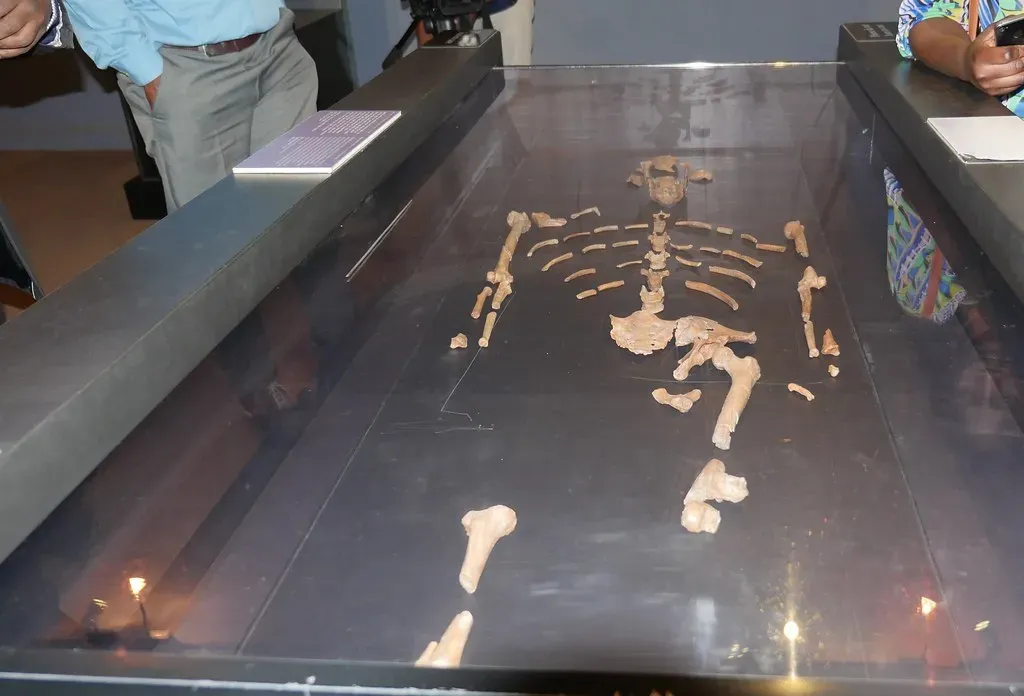
When you hear about Lucy, you are really stepping into a moment when the human story suddenly became more real, almost uncomfortably so. Here you have a small-bodied, small-brained hominin walking upright in East Africa over three million years ago, long before your own species existed. Her skeleton, about two fifths complete, showed hips, knees, and a spine that told you clearly: this ancestor was already walking on two legs, even though her brain was nowhere near the size you tend to associate with “being human.”
What makes Lucy so powerful for you is not that she settled every argument, but that she forced the right questions. You are pushed to accept that bipedalism showed up well before big brains, which overturns the intuitive order many people imagine. Ongoing debates now challenge whether Lucy’s species is your direct ancestor or one of several closely related branches, but either way, she anchors your sense that human evolution was a branching, crowded process. Instead of a straight ladder from ape to human, you’re looking at a tangled family tree where Lucy is one of the most vivid, haunting characters.
3. Tiktaalik: The “Fishapod” That Walked You Toward Land
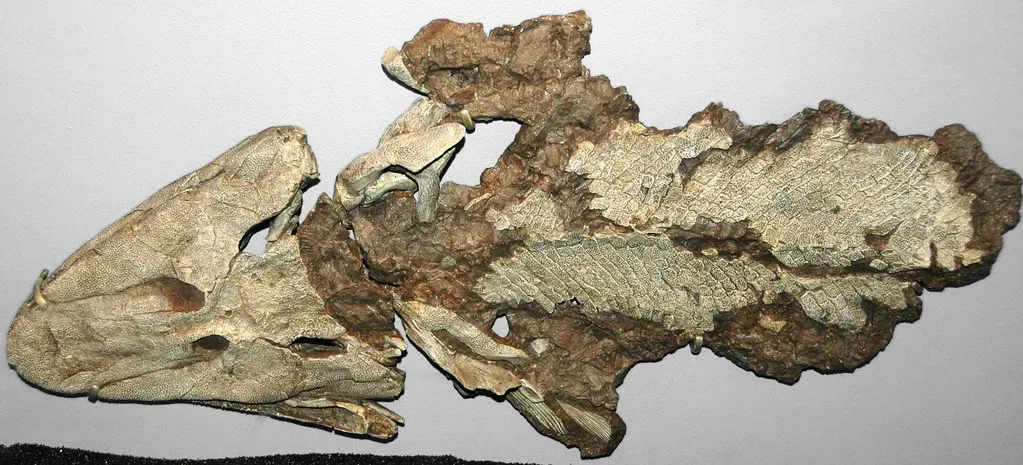
If you’ve ever tried to picture how fish first crawled onto land, Tiktaalik hands you a shockingly clear snapshot of that transition. When you picture it, imagine a large, flat-headed fish with sturdy, limb-like fins, a neck that lets the head move independently of the body, and ribs able to support part of its weight in shallow water. It looks like a fish that is just starting to try out life at the water’s edge, testing a world where breathing air and propping itself up might offer a survival edge.
For you, Tiktaalik is a powerful answer to the old complaint that evolutionary transitions are missing from the fossil record. Its mix of fish traits (scales, fins, gills) and tetrapod traits (a functional neck, robust ribs, and jointed bones inside the fins) fits precisely into a gap that scientists predicted using anatomy and geology before they ever found it. Later discoveries of its pelvis and hind fins showed that strong, weight-bearing structures evolved in the water first, before full-time life on land. When you think about every lizard, frog, or human leg you see today, Tiktaalik is one of the fossils that tells you how that whole basic blueprint got started.
4. The Burgess Shale: A Soft-Bodied Explosion of Cambrian Life
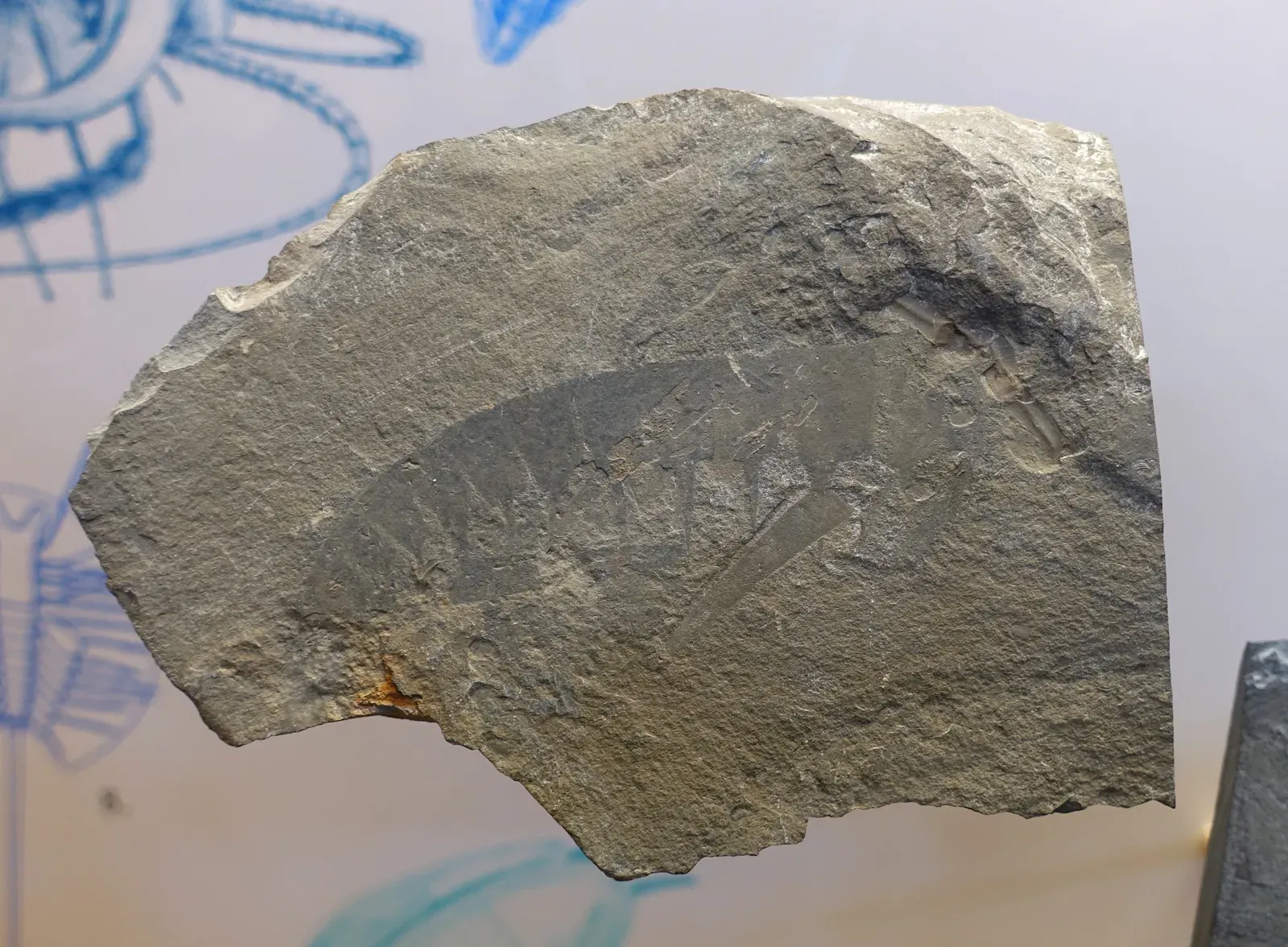
Most fossils you picture are hard parts: bones, shells, or teeth. The Burgess Shale in the Canadian Rockies throws you into a different world, where even soft-bodied creatures from over half a billion years ago are preserved in stunning detail. When you look at reconstructions from these rocks, you get spiky worms, odd shrimp-like predators with clawed frontal appendages, and bizarre forms with no obvious modern match. You’re not just seeing early animals; you’re seeing the aftermath of the Cambrian Explosion, that burst of evolutionary experimentation when many major animal groups first appear in the fossil record.
What this deposit does for you is destroy the illusion that evolution moved slowly and gently at all times. Instead, you see a period of rapid diversification, with many strange body plans that either evolved into modern groups or vanished entirely. The Burgess Shale shows you that soft tissues, which usually vanish without a trace, can sometimes survive and fill in huge blind spots in your understanding. Because similar soft-bodied fossil sites have now been found on several continents, you start to grasp that the Cambrian seas were not a quiet prelude, but a wild, crowded stage where your own distant animal ancestry was being hammered into shape.
5. The KT Boundary and the Dinosaur-Killing Asteroid: Fossils at the End of the World
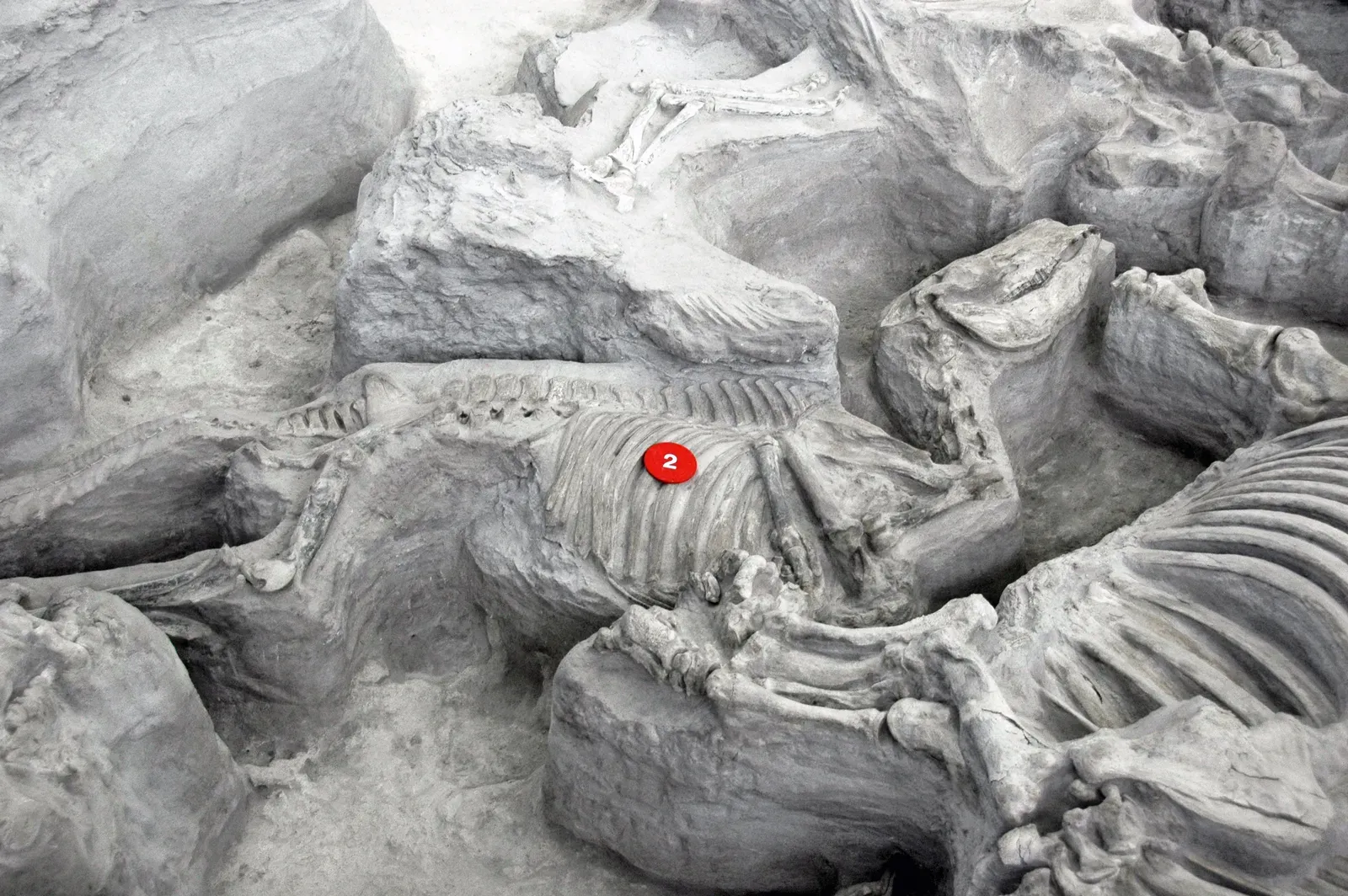
Instead of a single skeleton, here you’re looking at a line in the rocks: the boundary between the Cretaceous and Paleogene periods, around sixty-six million years ago. In some places, you can literally place your finger on a thin layer rich in the element iridium, tiny glassy spherules, and shocked minerals that all point to an immense asteroid impact. Below that layer, dinosaur fossils and diverse marine life are common; above it, they are abruptly gone or radically changed. You are looking at the fossilized trace of a global catastrophe.
For you, this discovery changed dinosaurs from a slowly fading group into victims of sudden, planetary-scale disaster. Fossil sites that capture the last non-avian dinosaurs and the earliest post-impact mammals tell you how violently ecosystems can be reset. You also get a deeper respect for how fragile and contingent your own existence is: if that asteroid had missed, large dinosaurs might have continued to dominate, and your lineage of tiny mammals might never have gotten its big break. When you hear about modern extinction risks, those fossils at the KT boundary become a stark warning written in stone.
6. Feathered Dinosaurs from Liaoning: Seeing Dinosaurs in Living Color
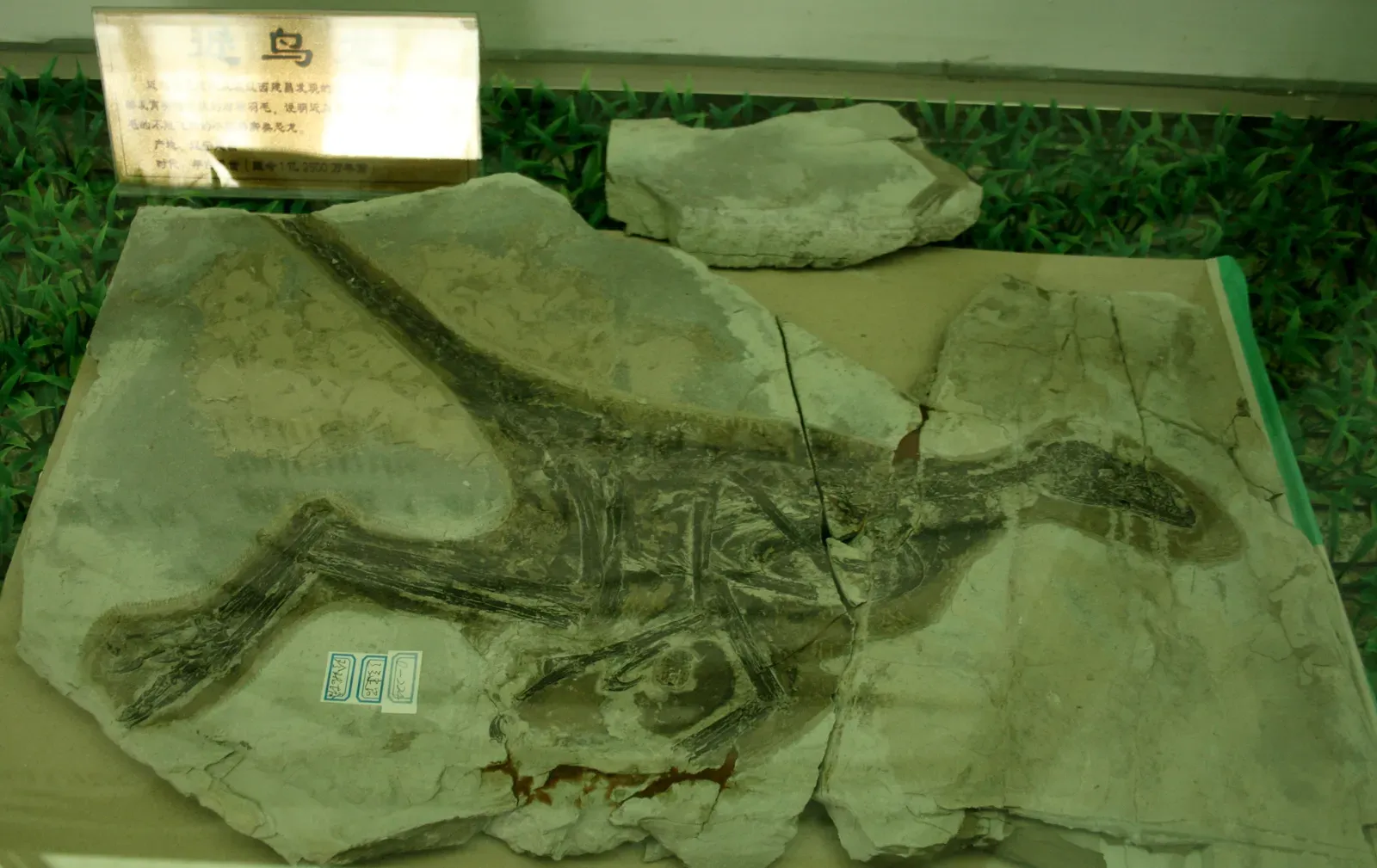
Uploaded by FunkMonk, CC BY-SA 2.0)
If you grew up with images of scaly, lizard-like dinosaurs, the feathered fossils from northeastern China completely upend your mental museum. In the fine-grained rocks of Liaoning, you get fossils where delicate feathers, wings, and even patterns of color-bearing structures are preserved around dinosaur skeletons. Suddenly, you are not just told that birds evolved from dinosaurs; you can literally see small, non-avian theropods with full feather coats, wings, and tail fans that blur the line between raptor and bird.
These fossils do more for you than just make dinosaurs look cooler. They let scientists study the evolution of feathers from simple filaments to complex flight structures, and even reconstruct approximate colors in some species by analyzing microscopic pigment bodies. That means you can start to imagine certain dinosaurs as rusty red, iridescent, or patterned instead of just generically gray or green. For your understanding of evolution, this Liaoning treasure trove confirms that many traits you see in birds today – insulation, display feathers, and aerodynamic surfaces – were being tested long before true powered flight became common.
7. Ichthyostega and Acanthostega: Early Limbs That Weren’t Quite Ready for Land
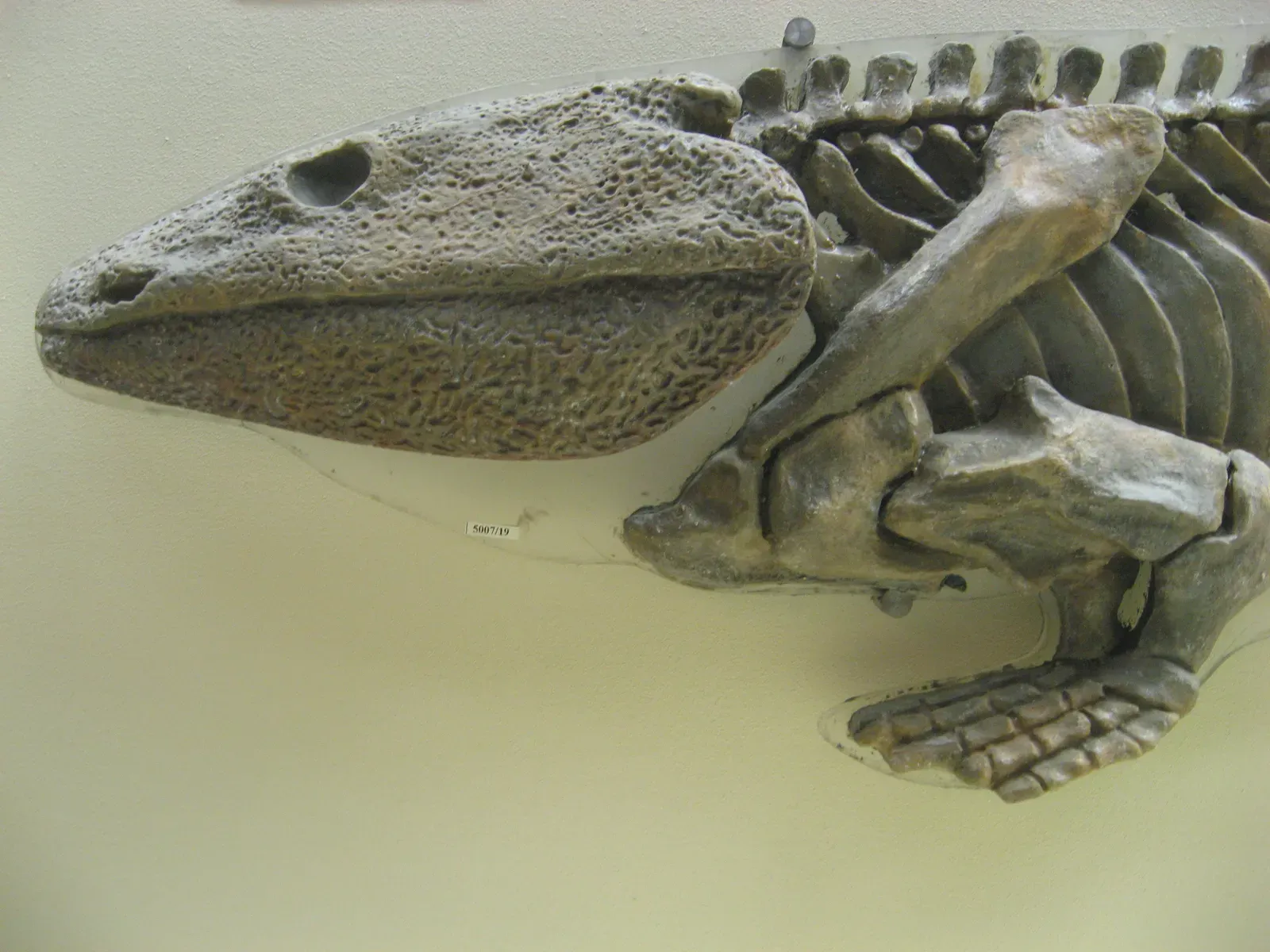
Before Tiktaalik grabbed headlines, fossils like Ichthyostega and Acanthostega were already forcing you to rethink the classic “fish crawls out, walks away” story. When scientists first examined these creatures from the Late Devonian, they found clear limbs with digits instead of fins, yet many features still tied them strongly to an aquatic lifestyle. Acanthostega, for instance, had limbs that were surprisingly poorly suited for walking on land, along with internal gill structures that show it was very much a water dweller.
For you, these animals highlight an uncomfortable but fascinating truth: evolution does not always shape traits for their final, iconic purpose. Digits did not appear as a perfected design for walking on dry land; they may have first been useful for maneuvering in weedy, shallow waters or pushing through debris. That perspective changes how you think about your own body: your arms and legs carry a deep history of compromise, repurposing, and gradual change. Seeing these early limbed vertebrates in the fossil record fleshes out the story between Tiktaalik-like fish and fully terrestrial animals, giving you a more continuous, convincing path from sea to shore.
8. Early Whale Fossils: Watching a Mammal Go Back to the Sea
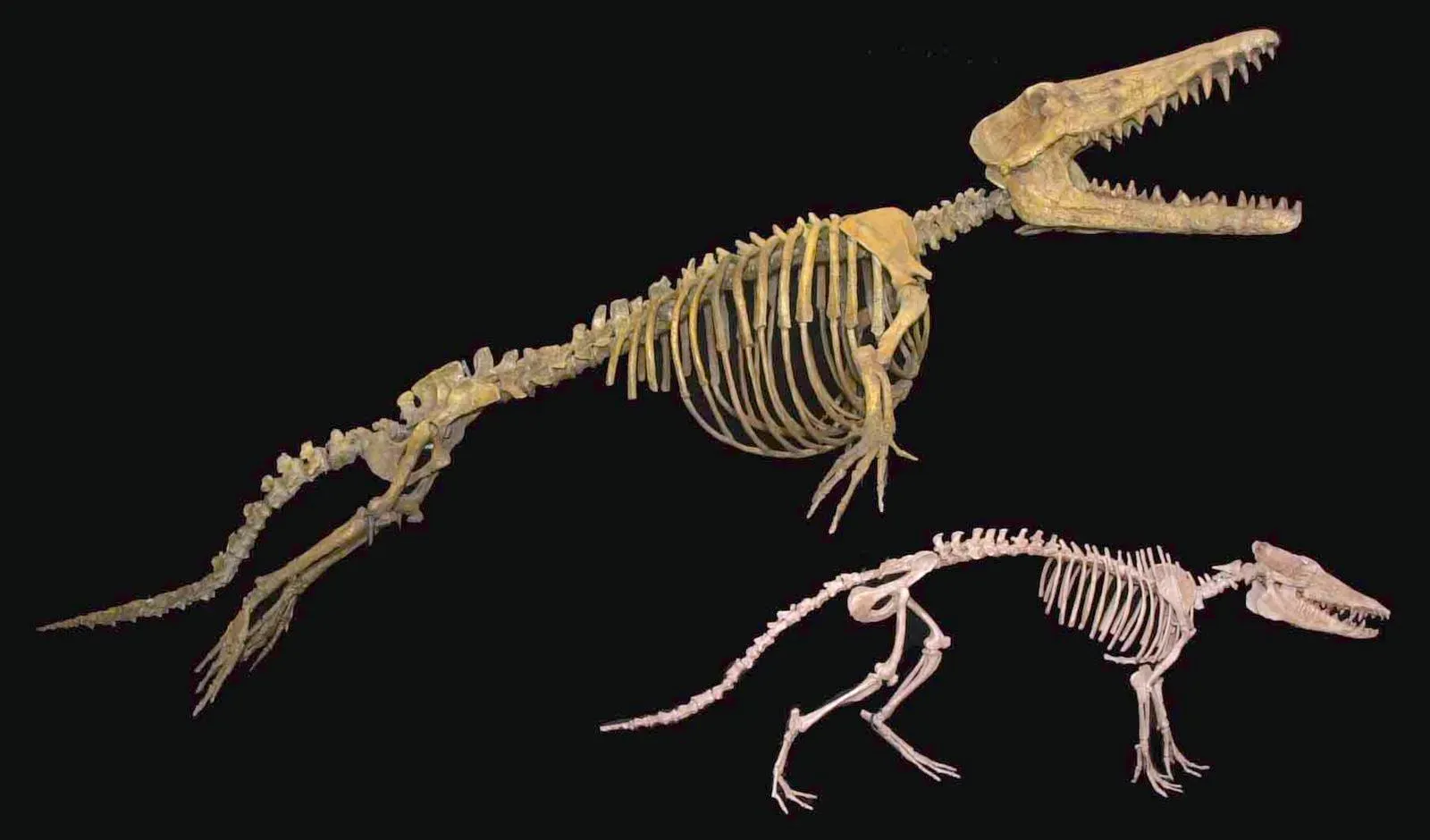
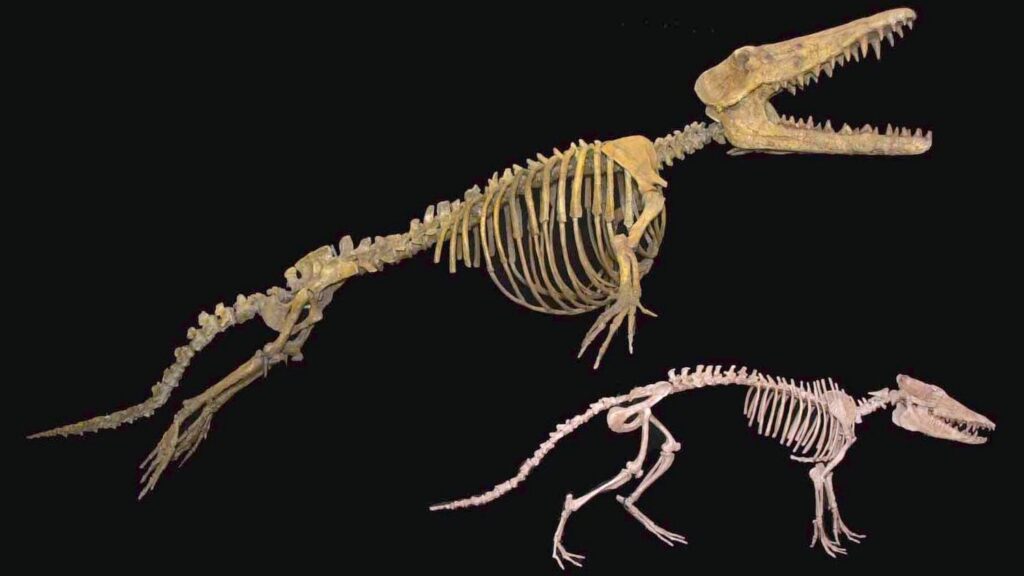
When you look at modern whales, it is easy to forget that they are mammals like you, descended from land-dwelling ancestors. Early whale fossils from the Eocene period change that instantly. In skeletons of animals such as Pakicetus, Ambulocetus, and later fully aquatic forms, you can trace a step-by-step transformation: nostrils shifting backward toward a blowhole position, limbs becoming paddles and flukes, and ear bones adapting for underwater hearing. At one stage, you even see whales with tiny hind legs that no longer reach the ground but still show up as ghostly reminders of their terrestrial past.
These fossils are especially powerful for you because they show evolution running in a direction you might not expect: back into the water, not out of it. Instead of a vague statement that “whales evolved from land mammals,” you get a rock-solid series of transitional forms that fill in anatomical and chronological gaps. As you follow these changes layer by layer, whales stop being just mysterious giants of the ocean and become a dramatic case study in how natural selection can radically reshape a body plan. Every time you see a whale breach or hear about their songs, you can picture a distant ancestor quietly walking along an ancient shoreline.
Conclusion: Reading Your Planet’s Memory in Stone
When you step back and look at these fossils together, you are not just seeing old bones; you are reading your planet’s long-term memory. Archaeopteryx, Lucy, Tiktaalik, the Burgess Shale animals, the KT boundary, feathered dinosaurs, early limbed vertebrates, and proto-whales each crack open a different chapter of that memory. They show you that evolution is not neat, polite, or predictable. It is experimental, sometimes brutal, and always more intricate than the simplified diagrams you may have seen in textbooks.
Most of all, these discoveries remind you that your own existence depends on countless fragile turning points: an asteroid impact here, a new limb there, feathers evolving first for warmth or display, and mammals getting a second chance after catastrophe. Each fossil is a frozen moment when the universe tried something new and, against ridiculous odds, it worked well enough to continue. The next time you walk through a museum or see a photo of a fossil online, you might ask yourself: which of today’s creatures will someday be that kind of turning point in someone else’s distant future?