Central Asia’s Paleogene terrains once hosted enigmatic small mammals known as mimotonids, creatures that paleontologists now link closely to the order Lagomorpha. These rare fossils, confined to Eocene and Oligocene deposits, offer crucial insights into the origins of rabbits, hares, and pikas. The World Lagomorph Society spotlighted this connection, noting mimotonids’ affinity with modern lagomorphs and their status as endemic elements in ancient mammal communities.
A Surprise Giant from Eocene China
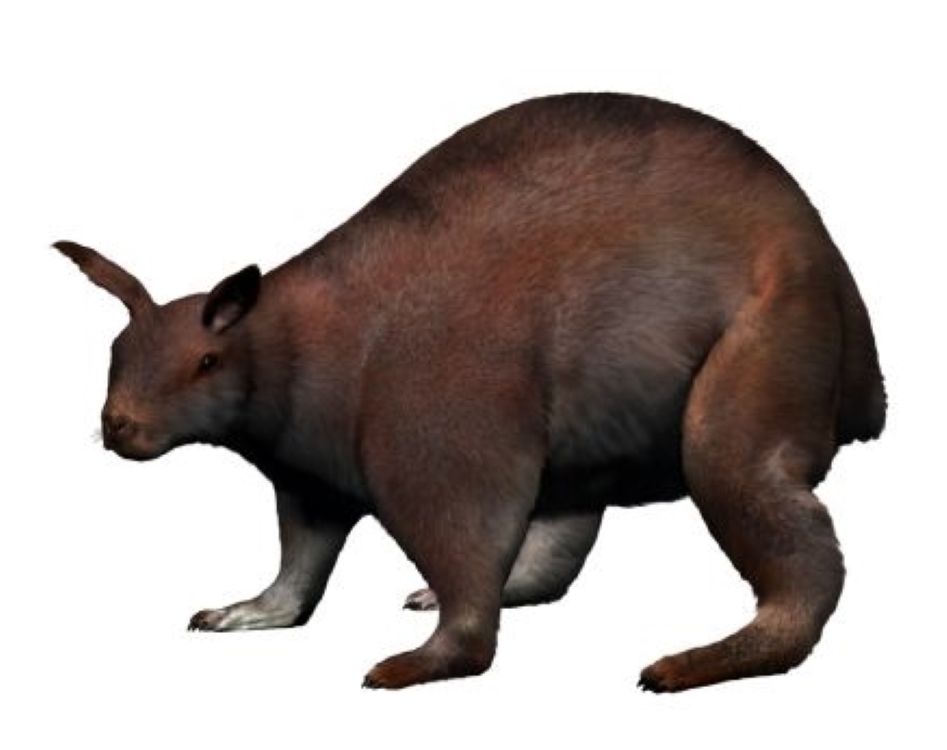
A Surprise Giant from Eocene China (Image Credits: Wikimedia)
Researchers uncovered Mimolagus aurorae in the Middle Eocene Irdin Manha Formation of Nei Mongol, China, marking one of the largest pre-Oligocene glires ever found. This specimen, comparable in size to modern hares like those in the genus Lepus, weighed around 4.5 kilograms – far exceeding typical early relatives. Its discovery extended the genus Mimolagus back by at least 10 million years, bridging a significant chronological gap in the fossil record.
The fossil exhibited cursorial adaptations, such as an elongated cuboid bone, suggesting a lifestyle suited to open terrains dominated by small perissodactyls. Dental features, including higher hypsodonty and a reduced hypocone on the third molar, echoed traits in stem lagomorphs. These characteristics highlighted mosaic evolution, where mimotonids developed parallel forms to later lagomorphs amid competitive pressures from coexisting glires like Gomphos.
Mimotonids’ Elusive Presence in the Paleogene
Mimotonids appeared as scarce components of Paleogene faunas, primarily in central Asia’s basins from the Paleocene through Eocene. Restricted to regions like China, Mongolia, and Kyrgyzstan, they formed a paraphyletic assemblage with small Paleocene forms evolving into larger Eocene ones. Their endemic nature limited their distribution, making each find a paleontological treasure.
Unlike abundant rodents, mimotonids rarely dotted assemblages, emphasizing their specialized niches. Body size trends showed gradual increases, yet remained constrained compared to later leporids. Enamel microstructure revealed shifts toward herbivory, with double-layered structures supporting tougher diets in Eocene environments.
- Rare occurrences in fossil sites across central Asia.
- Paraphyletic group with distinct Paleocene and Eocene lineages.
- Endemic to specific basins, avoiding widespread dispersal.
- Body masses from small ancestors to hare-sized giants.
- Dental adaptations for grinding vegetation under competitive duress.
Phylogenetic Puzzle: Closest Kin to Lagomorphs
Studies positioned mimotonids as basal duplicidentates, sharing key traits like dual incisor sets with lagomorphs. While not direct ancestors, they represented critical stem forms in the Duplicidentata clade, predating crown lagomorphs by millions of years. Gomphos ellae from Middle Eocene Mongolia further bolstered this link, displaying primitive features transitional to later lagomorph morphologies.
Phylogenies placed Mimolagus as more derived than Gomphos but basal to clades including Palaeolagus and extant lagomorphs. Shared ecomorphologies, such as transverse chewing and hypsodonty, arose convergently, driven by ecological shifts post-dinosaur extinction. Asia emerged as the cradle for these early glires, with records preceding other continents by over 10 million years.
| Feature | Mimotonids | Crown Lagomorphs |
|---|---|---|
| Incisors | Duplicidentate (double set) | Duplicidentate |
| Body Size | Up to 4.5 kg (Eocene giants) | Up to 5+ kg (e.g., Lepus) |
| Chewing Direction | Transverse (later forms) | Transverse |
| Distribution | Central Asia endemic | Global |
World Lagomorph Society’s Spotlight
The World Lagomorph Society, dedicated to advancing research on rabbits, hares, and pikas, emphasized mimotonids’ significance through its online resources. By highlighting key studies, the society connected fossil evidence to contemporary lagomorph biology. This update aligned with their broader mission, including conferences like the upcoming 8th World Lagomorph Conference in 2026.
Such efforts underscored how Paleogene fossils inform conservation and evolutionary models for living species. The society’s LagDocs repository compiles papers on lagomorph systematics, indirectly supporting mimotonid research by contextualizing ancient roots.
Key Takeaways
- Mimotonids were rare, Asia-endemic Paleogene mammals closest to lagomorphs.
- New finds like Mimolagus aurorae reveal size and adaptation parallels.
- They bridge early glires to modern duplicidentates, highlighting Asian origins.
Mimotonids remind us that the nimble lagomorphs of today trace back to obscure Paleogene pioneers, their fossils unlocking evolutionary narratives long buried in Asian sediments. As research progresses, these ancient kin continue to reshape our understanding of mammalian diversification. What role do you think such fossils play in conserving modern lagomorphs? Share your thoughts in the comments.