Few creatures in Earth’s long history have captured the imagination quite like the megalodon. It ruled the prehistoric seas with absolute dominance for nearly twenty million years, dwarfing everything around it, and yet almost everything you think you know about it is being rewritten right now by science.
What makes this ancient predator so compelling is that its story keeps shifting. New fossils, new analytical tools, and new research methods keep peeling back layers of assumption, revealing a creature far stranger and more fascinating than any Hollywood blockbuster could portray. The deeper researchers dig, the more questions surface alongside the answers.
A Giant Like No Other: What You Need to Know About Megalodon’s True Size
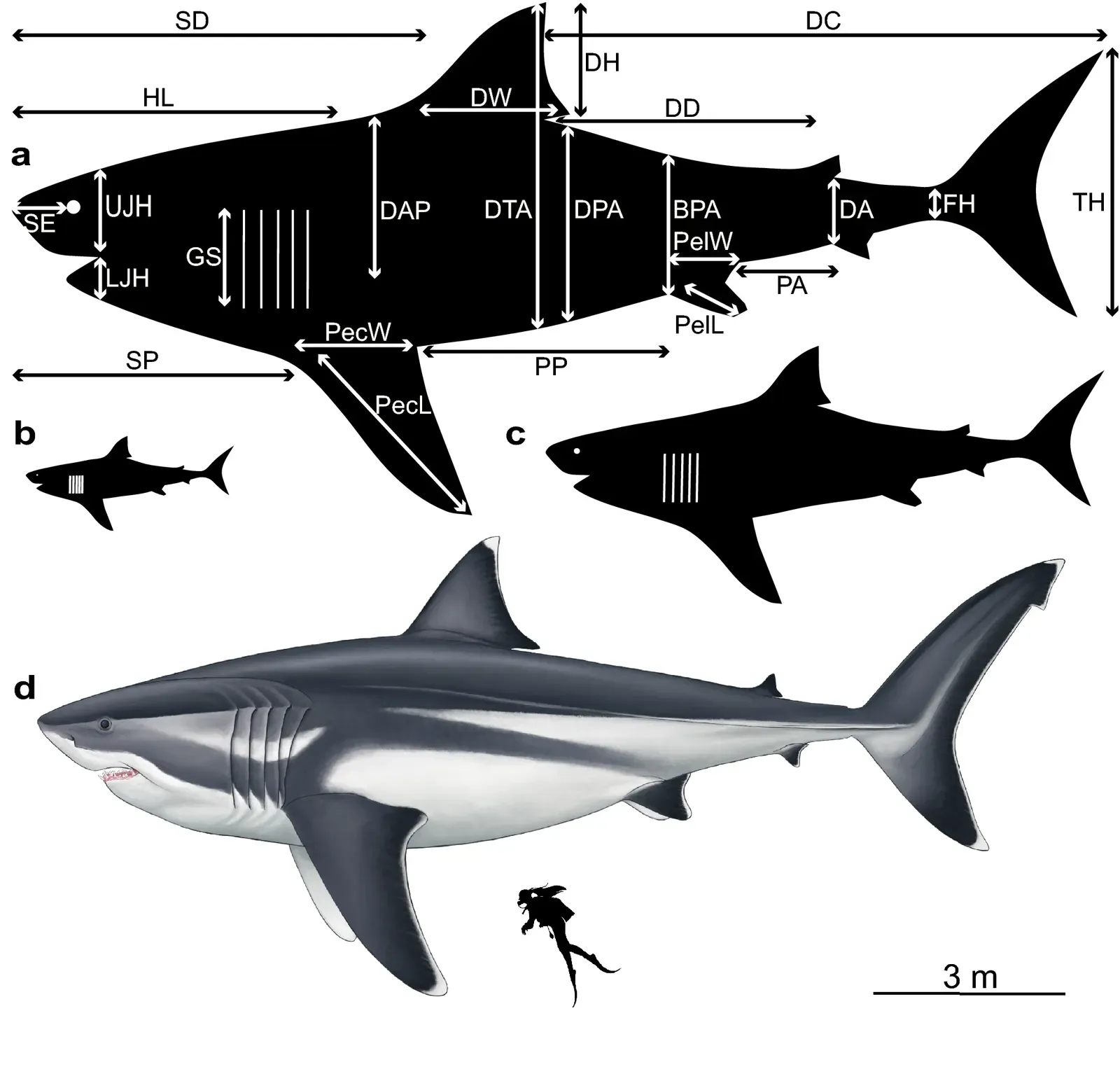
If you’re trying to picture how large a megalodon actually was, you’re in good company with scientists who are still working that out. The earliest megalodon fossils date to around 23 million years ago, and for nearly twenty million years this enormous shark dominated the oceans before going extinct just 3.6 million years ago. That’s a reign so long it makes most other apex predators look like brief experiments.
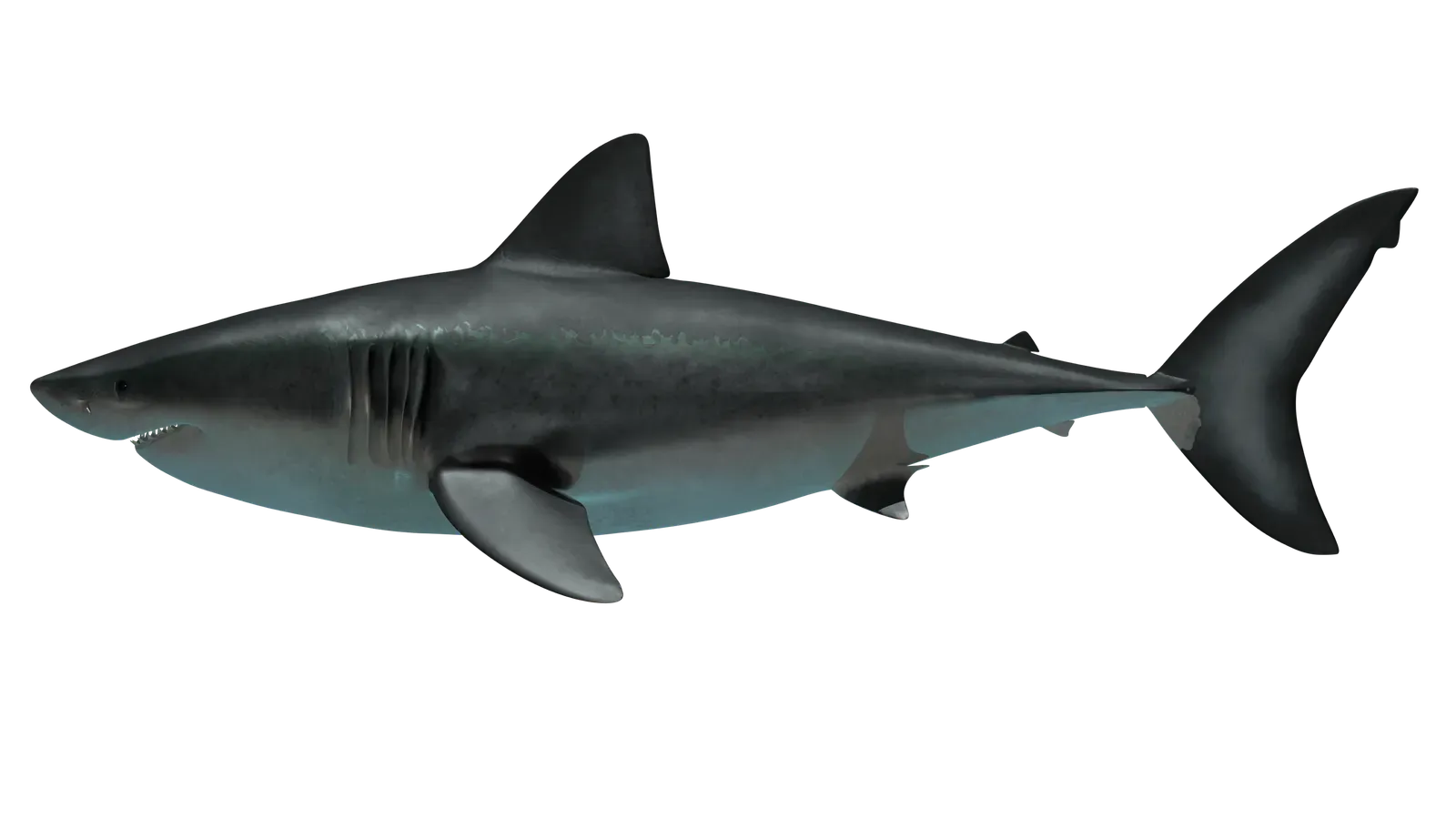
A 2025 study, written by 29 fossil shark experts, found that megalodon may have grown up to 24.3 metres long. To calculate that figure, scientists used a new method, studying nearly complete and partial megalodon vertebral columns found in Belgium and Denmark, then compared them against 170 species of living and extinct sharks to work out head and tail fin sizes. That’s a remarkably sophisticated approach for piecing together a creature that left almost no intact remains.
Based on comparisons of body part proportions, researchers determined that megalodon’s body form likely resembled the modern lemon shark, which has a more slender body than the great white shark. They also noticed that modern gigantic sharks, such as the whale shark and basking shark, as well as many gigantic aquatic vertebrates like whales, have slender bodies because large stocky forms are hydrodynamically inefficient for swimming. So the blocky, bull-nosed movie monster you’ve seen on screen almost certainly got it wrong.
Teeth, Bones, and Clues: How You Learn About an Animal With No Skeleton
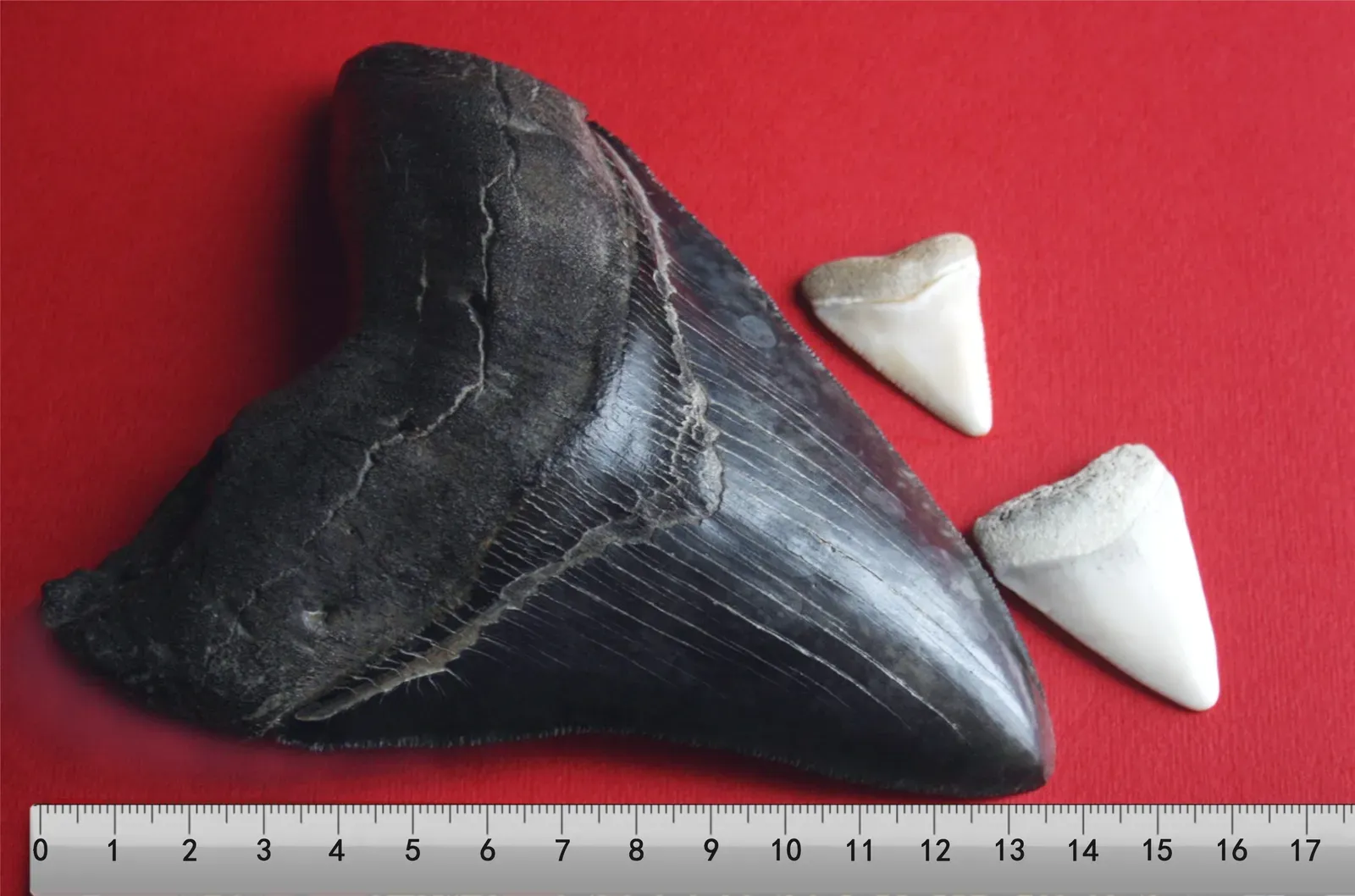
This file was derived from:
Megalodon tooth with great white sharks teeth.jpg:
BlueRuler 36cm.png:
Own work, CC BY-SA 3.0)
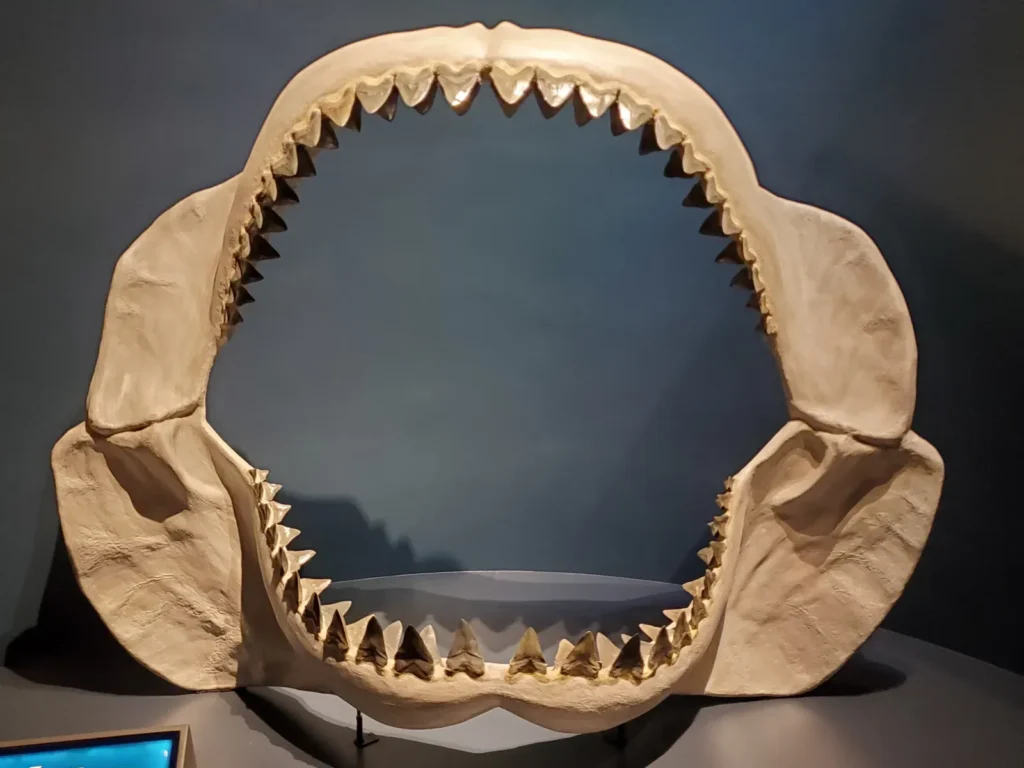
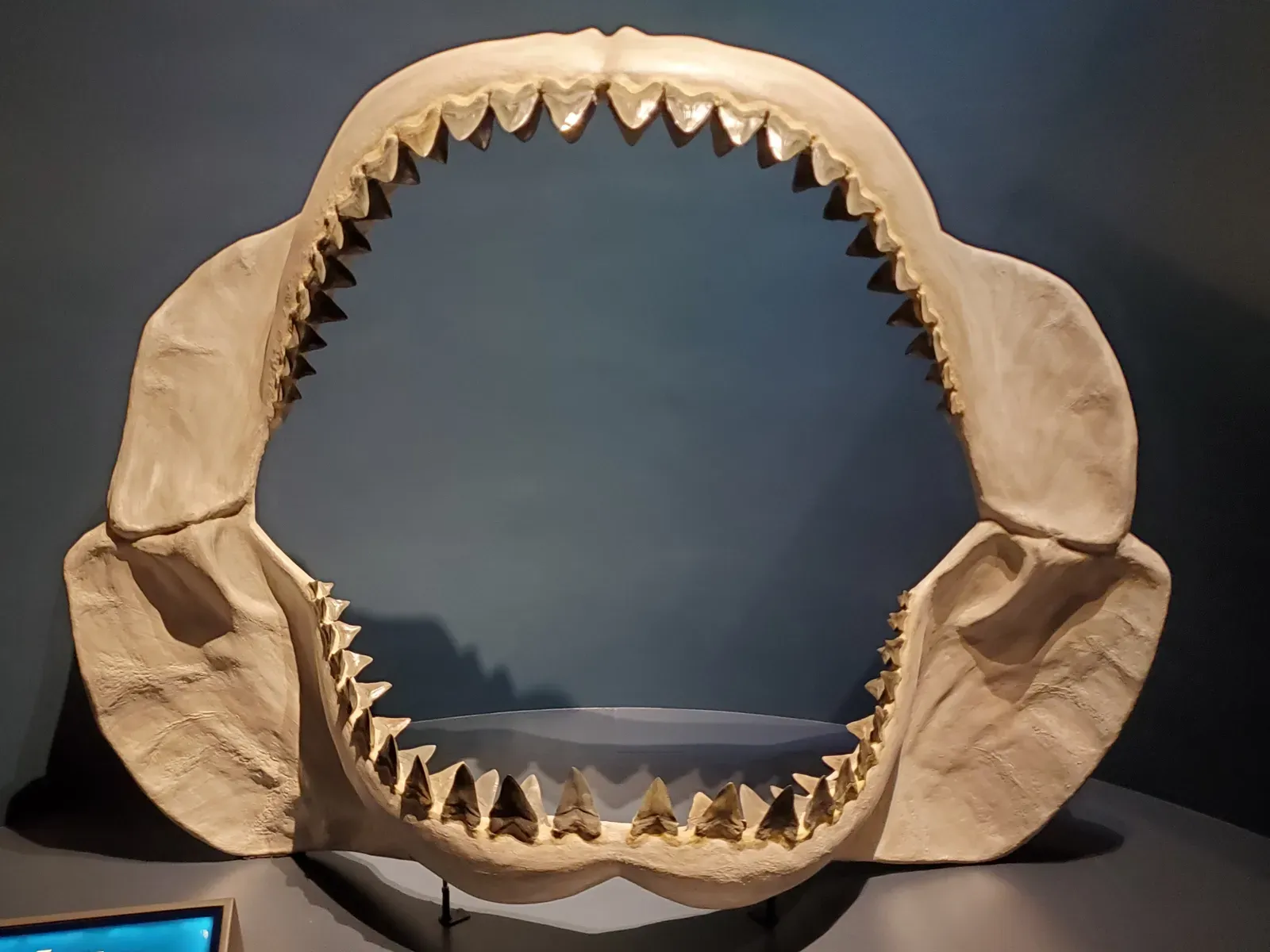
Here’s something that trips most people up: you’ll never find a megalodon skeleton, and that’s not because none existed. Like other elasmobranchs, megalodons had skeletons made of cartilage rather than bone. Cartilage is much lighter than bone, which allows sharks to stay afloat and swim long distances using less energy, but it is also very difficult for cartilage to fossilize, so most of what we know about megalodons comes from their teeth, vertebrae, and fossilized material that contains calcium.
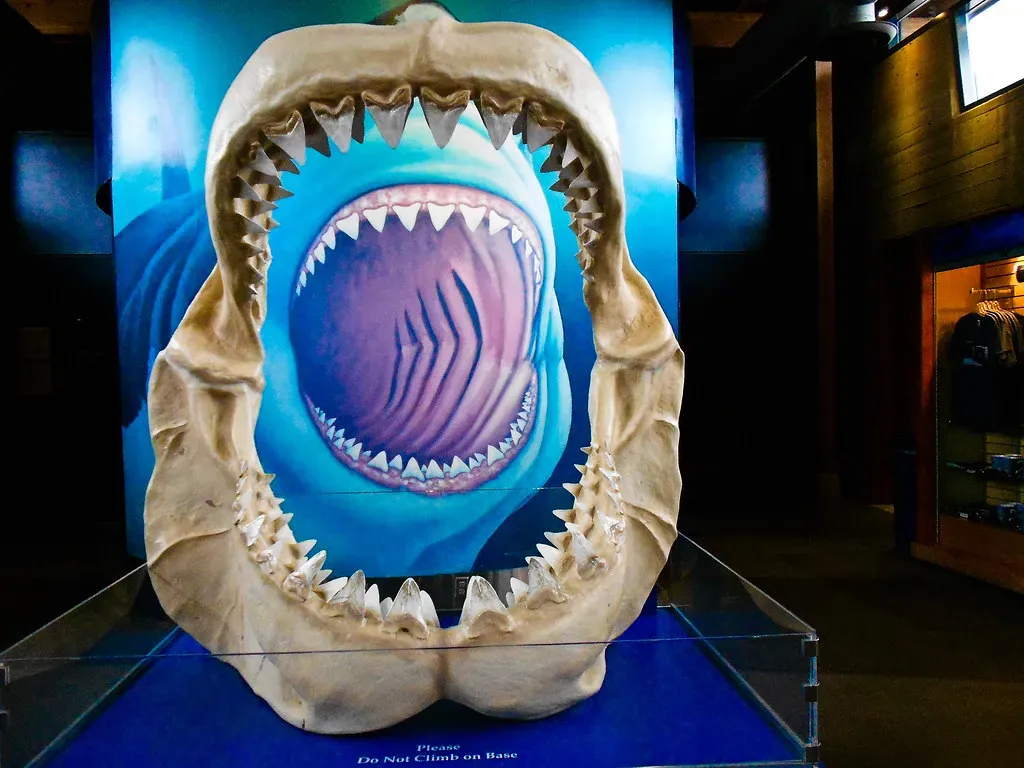
The largest megalodon tooth ever found is almost 18 centimetres long. By comparison, great white teeth are usually about five centimetres. Like all sharks, the megalodon rapidly replaced broken or worn teeth. It had four or five rows of teeth in its mouth which acted like a conveyor belt, replacing damaged or missing teeth within about 48 hours, and an adult megalodon probably went through several thousand teeth in its lifetime. This is one reason megalodon teeth are so common in the fossil record. Every time you find one of those massive serrated triangles on a beach or in a museum, you’re essentially holding a part of its permanent autobiography.
An Opportunistic Hunter: What Megalodon Actually Ate
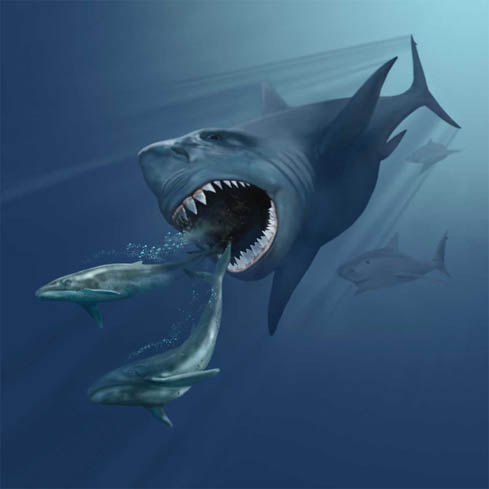
You might assume an animal that size had a narrow, refined diet of only the biggest prey. Turns out, that assumption has been seriously challenged by recent research. The prehistoric predator, which went extinct about 3.6 million years ago, was not hunting only large marine mammals such as whales as researchers widely thought. Instead, minerals in fossilized teeth reveal that megalodon might have been an opportunistic feeder to meet its remarkable 100,000-calorie-per-day requirement.
Direct fossil evidence indicates that megalodon preyed upon many cetacean species, such as dolphins, small whales, sperm whales, bowhead whales, and rorquals, and also targeted seals, sirenians, and sea turtles. The feeding ecology of megalodon appears to have varied with age and between sites, much like the modern great white shark. Adult megalodon populations off the coast of Peru may have targeted primarily smaller cetothere whales rather than large whales in the same size class as themselves, while juveniles likely had a diet that consisted more of fish. So even within the species, diet was flexible and location-dependent.
Rather than feasting exclusively on other predators at the top of the ancient food chain, the megalodon tended to be far less particular, snacking on species at all levels of the food web. Another interesting finding is that megalodon’s diet probably varied slightly between different populations, something observed in today’s great white sharks. In many ways, that dietary flexibility looks a lot more like a modern ecological generalist than the single-minded whale-eating monster of popular imagination.
Warm Blood and High Stakes: The Physiology That Set Megalodon Apart
One of the more surprising discoveries of recent years is that megalodon was not the cold-blooded killer its reputation implies. After analyzing isotopes in the tooth enamel of the ancient shark, scientists concluded the megalodon could maintain a body temperature that was about 13 degrees Fahrenheit warmer than the surrounding water. That temperature difference is greater than those determined for other sharks that lived alongside the megalodon, and is large enough to categorize it as warm-blooded.
Its warmer body allowed megalodon to move faster, tolerate colder water, and spread out around the world. Yet it was that very evolutionary advantage that might have contributed to its downfall. The paper, published in the Proceedings of the National Academy of Sciences, suggests that the amount of energy the megalodon used to stay warm contributed to its extinction. Strength and vulnerability, it turns out, can come from exactly the same place.
The Mystery of Extinction: Why the Ocean’s Greatest Predator Disappeared
When you consider that megalodon was the apex predator of the entire ocean for roughly twenty million years, its extinction feels almost impossible to explain. We know that megalodon had become extinct by the end of the Pliocene, 2.6 million years ago, when the planet entered a phase of global cooling. Precisely when the last megalodon died is not known, but new evidence from the USA suggests it was at least 3.6 million years ago.
Scientists think that up to roughly one third of all large marine animals became extinct as temperatures cooled and the number of organisms at the base of the food chain dropped sharply, creating a knock-on effect for predators at the top. As adult megalodon sharks were dependent on tropical waters, the drop in ocean temperatures likely resulted in a significant loss of habitat. It may also have caused megalodon’s prey to either go extinct or adapt to cooler waters and move to places the sharks could not follow.
The appearance of the white shark approximately five million years ago might have played a role in the extinction of megalodon around 3.5 million years ago. As more experienced predators, adult white sharks may have outcompeted young megalodons for food, contributing to the eventual decline of the species. So the creature that eventually replaced megalodon in the popular imagination may also have played a real part in ending its reign.
Still Alive? Separating Science From the Myth
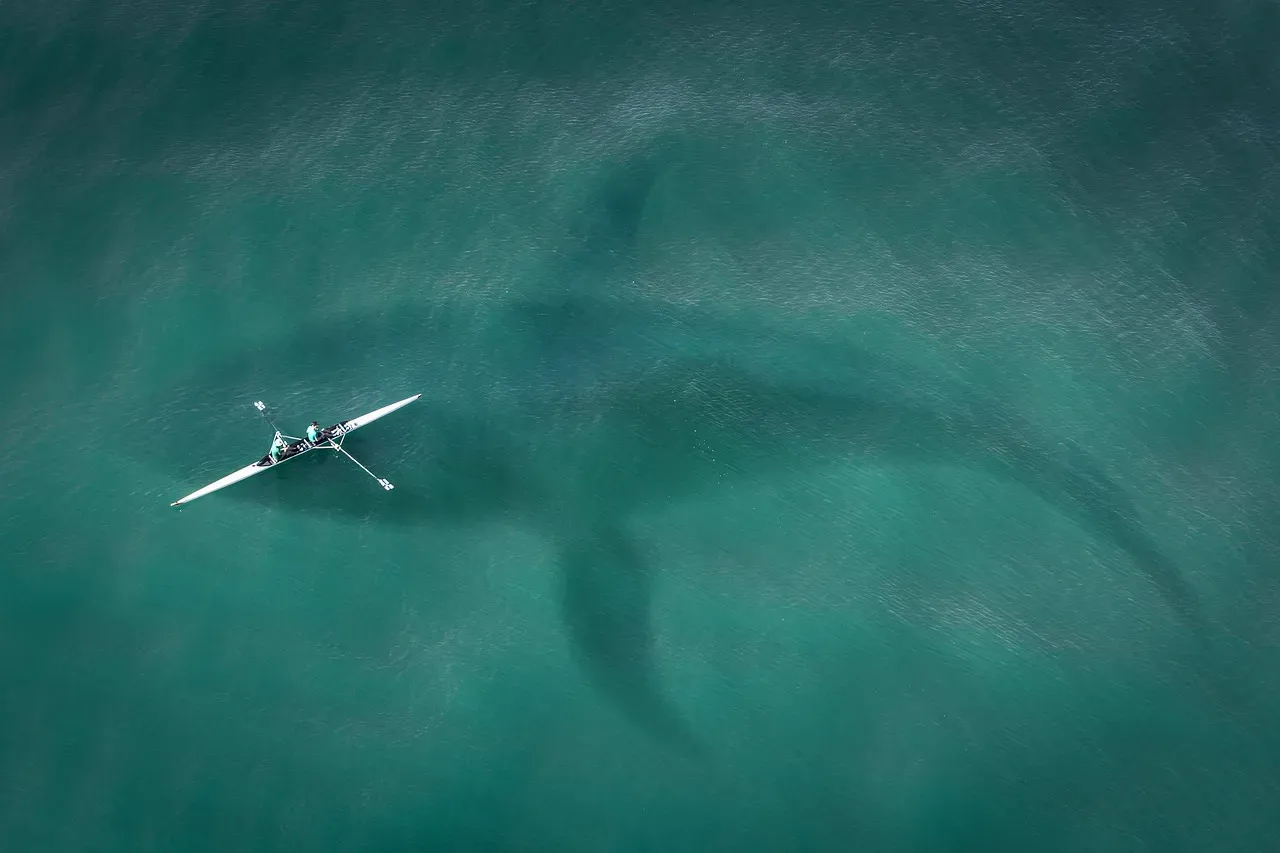
Every few years, a documentary or social media rumor resurfaces the idea that megalodon might still be lurking somewhere in the deep ocean. It’s an appealing thought, in a terrifying kind of way. One of the most enduring myths surrounding megalodon is the belief that it still lurks in the uncharted depths of the ocean. While it’s true that the ocean remains largely unexplored, there is no concrete evidence to suggest that megalodon still exists. The last known megalodon fossils date back millions of years, and there have been no credible sightings or scientific findings to support the idea of its survival into modern times.
If an animal as big as megalodon still lived in the oceans, we would know about it. The sharks would leave telltale bite marks on other large marine animals, and their huge teeth would continue littering ocean floors in their tens of thousands. Not to mention that as a warm-water species, it would not be able to survive in the cold waters of the deep, where it would have a better chance of going unnoticed. The ocean is vast, but not so vast that an 80-foot warm-blooded predator could hide indefinitely. The evidence simply does not support the myth, and science is clear on that point.
Conclusion
The megalodon is not just a prehistoric curiosity. It’s a case study in how a perfectly adapted predator can still run out of road. Every new discovery, from revised body proportions to warm-blooded physiology to opportunistic feeding habits, makes the creature more nuanced and more interesting than the one-dimensional ocean monster popular culture handed us.
What the megalodon ultimately teaches is that dominance is never permanent. Climate shifts, prey collapses, new competitors, the same forces that shape ecosystems today were already at work millions of years ago, indifferent to the size or power of the animals they displaced. In the story of the megalodon, there’s a quiet but compelling reminder that even the mightiest creatures exist only within the conditions that allow them to.