
When most people think about fearsome prehistoric creatures, their minds jump straight to T. rex or Velociraptor. It’s understandable. Dinosaurs have dominated popular culture for decades. What often gets overlooked, though, is just how much happened on this planet before a single dinosaur ever set foot on it. For hundreds of millions of years, Earth was ruled by an entirely different cast of killers, each one shaped by its own brutal era.
The forerunners of mammals ruled the Earth for roughly sixty million years, long before the origin of the first dinosaurs, diversifying as the top predators on land between about 315 and 251 million years ago. Their stories span oceans, ancient forests, and scorched Permian continents. You’re about to meet eight of the most dominant predators that ever lived, long before the age of dinosaurs even began.
1. Anomalocaris: The First Apex Predator of the Ancient Seas
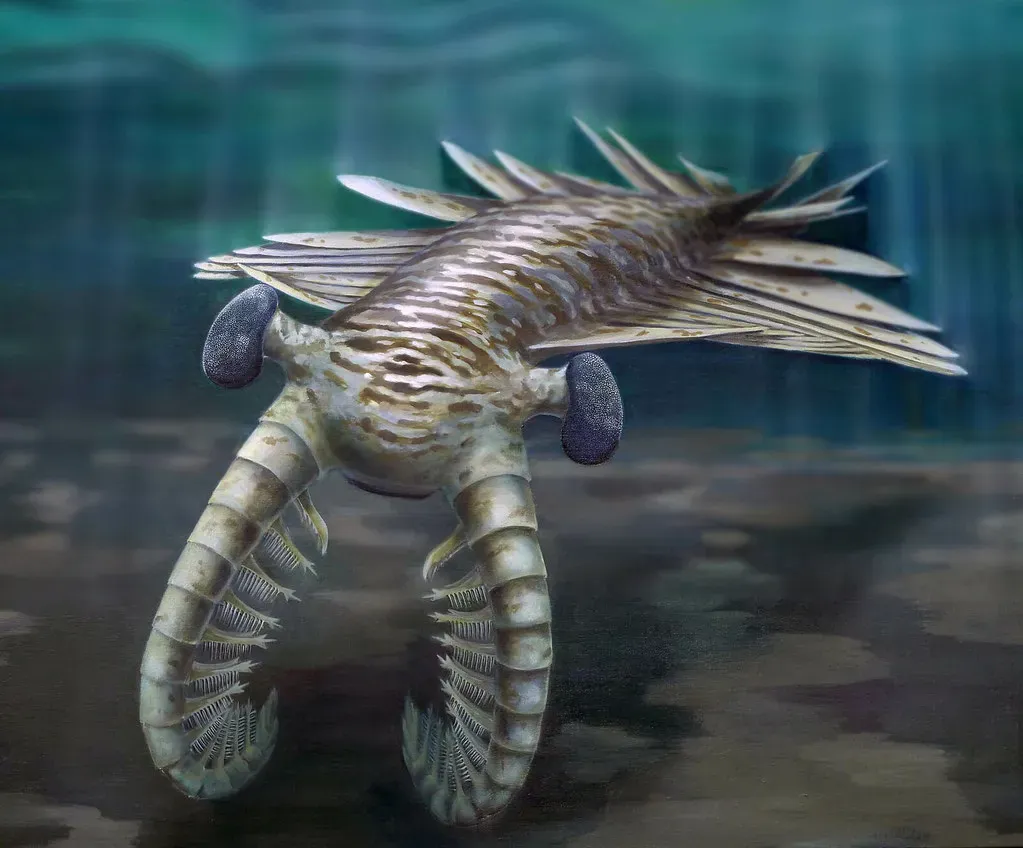
Anomalocaris was, in many ways, the great white shark of its day, cruising the shallow Cambrian seas in search of prey some 500 million years ago. At up to a metre in length, it was the largest hunter of its time, chasing after prey with undulating flaps on its sides and a large fan-shaped tail. In the strange, teeming world of the Cambrian explosion, nothing else came close to it in size or hunting ability.
Like other radiodonts, Anomalocaris had swimming flaps running along its body, large compound eyes densely packed with lenses, and a single pair of segmented frontal appendages used to grasp prey. Based on fossilized compound eyes found in the Emu Bay Shale, its stalked eyes were thirty times more powerful than those of trilobites, with one specimen having over 24,000 lenses in a single eye, rivaled only by the resolution of a modern dragonfly. Whether it was targeting hard-shelled trilobites or soft-bodied prey remains debated, but its dominance in the Cambrian food web is not.
2. Eurypterids: The Giant Sea Scorpions That Ruled for Over 200 Million Years
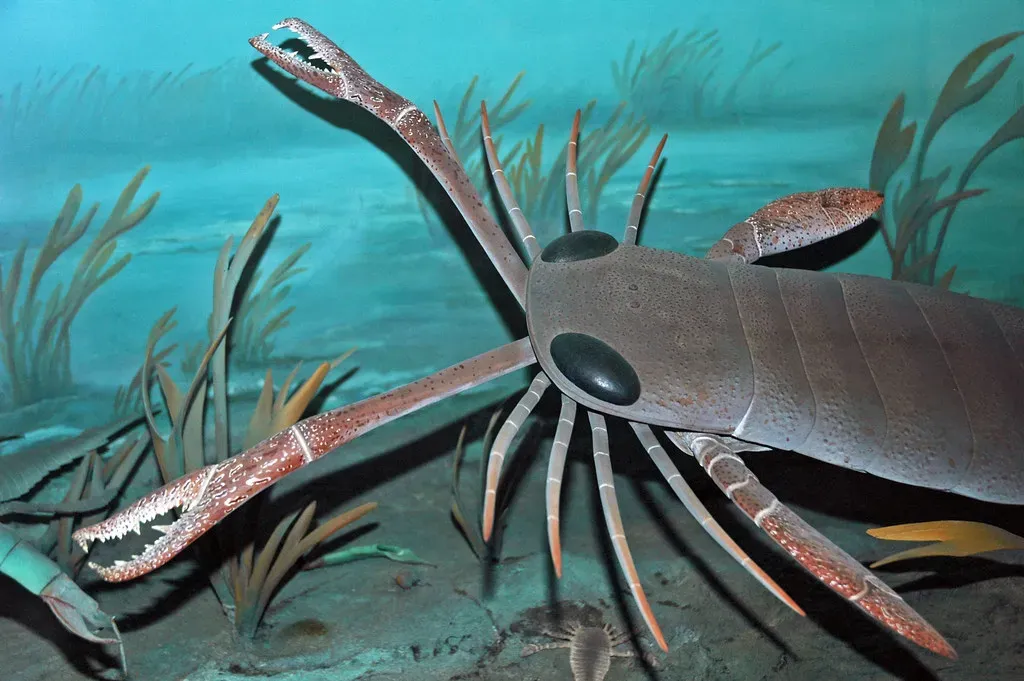
Eurypterids, commonly known as sea scorpions, are an extinct group of chelicerates related to horseshoe crabs, scorpions, spiders, mites, and ticks, and they thrived all over the world for more than 200 million years until their disappearance during a mass extinction at the end of the Permian. Some were the size of a human hand, while others grew bigger than a man and were among the largest arthropods on Earth. You’d be hard-pressed to find a more persistent dynasty of ocean predators anywhere in the fossil record.
The pterygotid eurypterids were the largest arthropods ever to exist, reaching total lengths of more than eight feet, with the largest found in New York State, Germany, and the Czech Republic, and with their unique formidable claws and binocular vision providing depth perception, they would attack and slice into prey such as primitive fish or the ancestors of squids. As jawed fish became more dominant in marine environments, many large eurypterids shifted into rivers and lagoons, where they continued to thrive, though by the late Paleozoic, climatic instability and ecological competition ultimately reduced their diversity until the end-Permian mass extinction wiped them out entirely.
3. Dunkleosteus: The Armored Crusher of the Devonian Seas
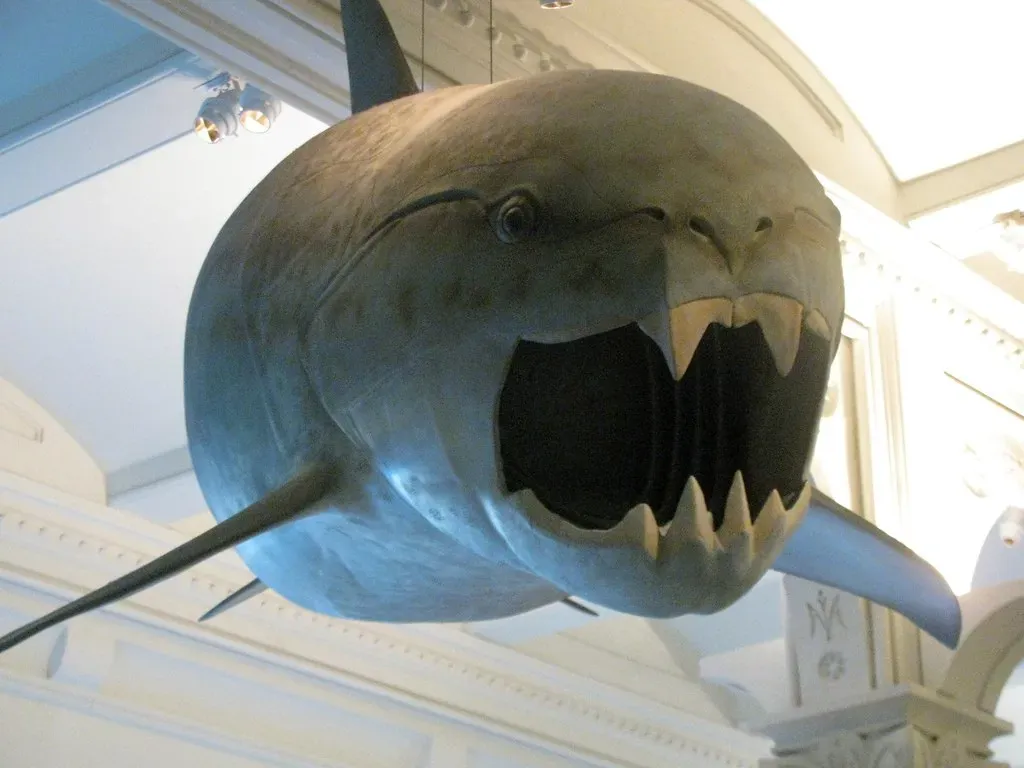
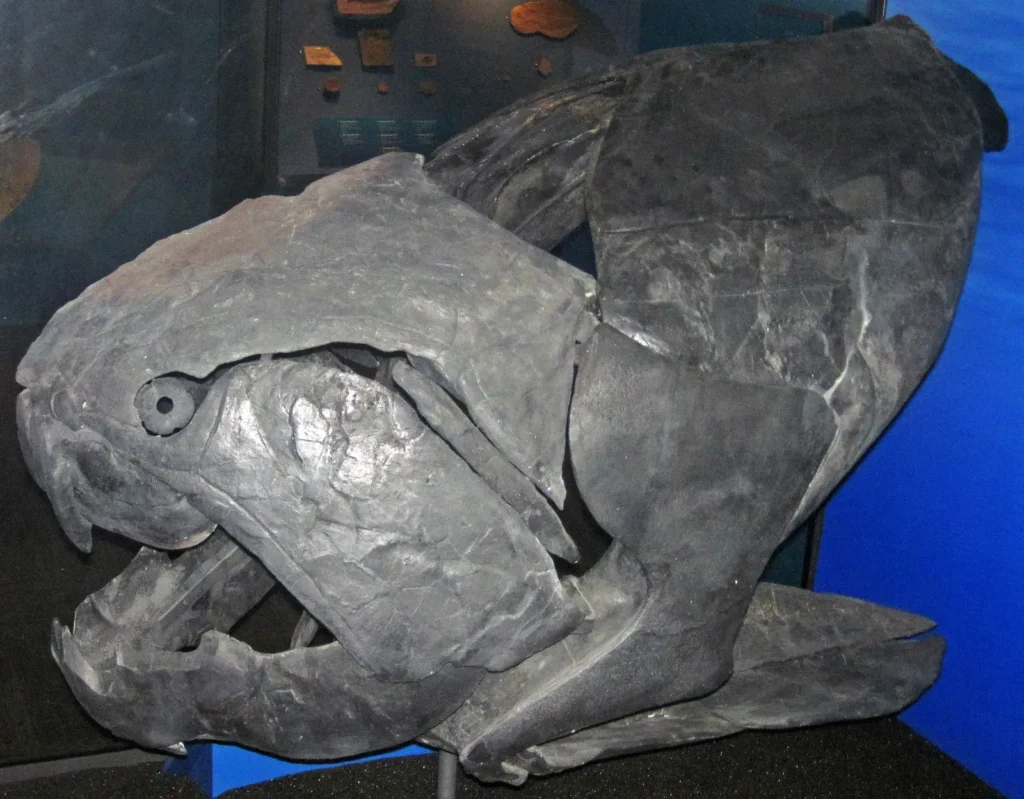
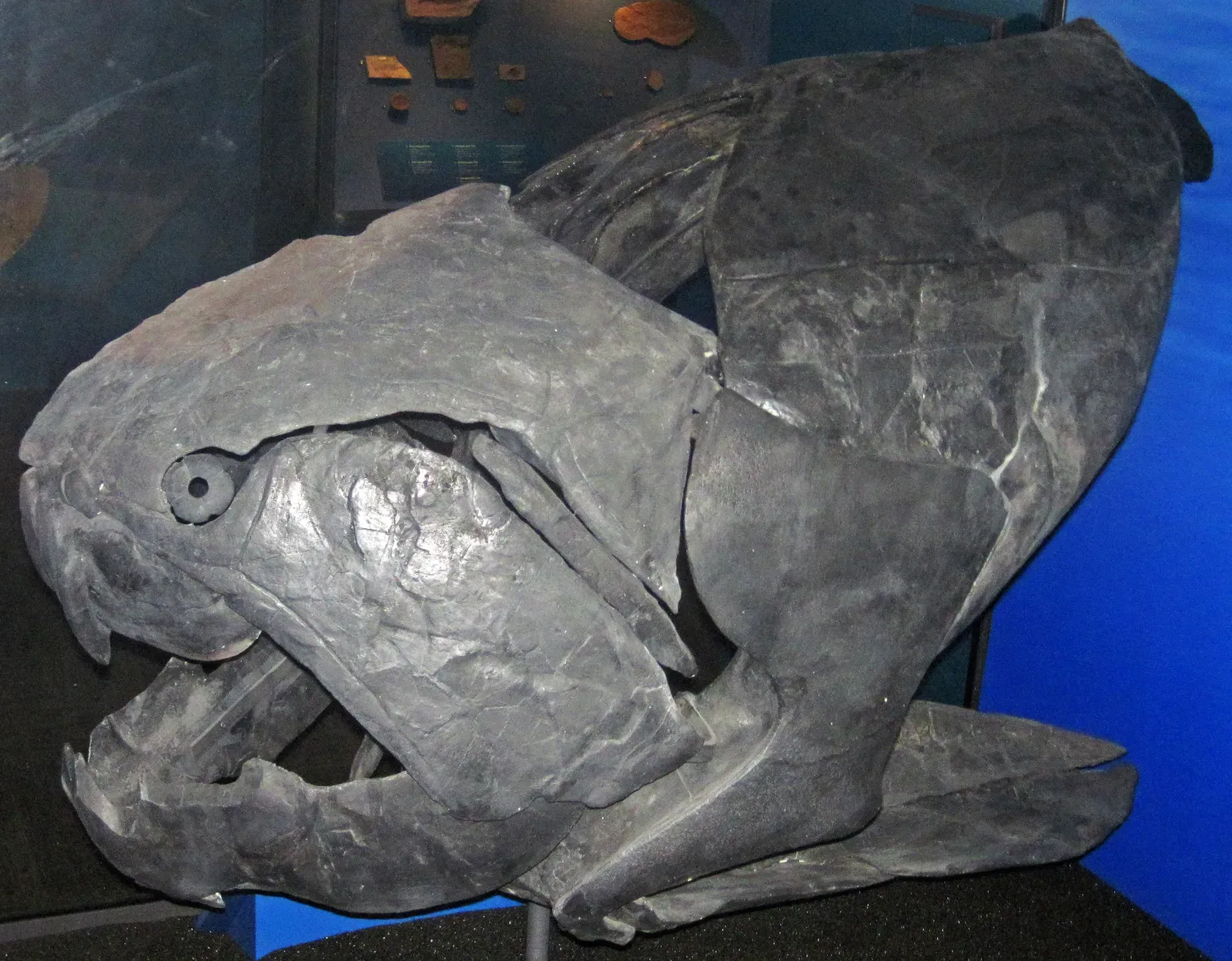
Dunkleosteus was one of the largest and most powerful predators of the Devonian seas, measuring up to about thirty-three feet long, with a heavily armored skull and razor-sharp jaw plates that could crush anything in its path. It lacked real teeth but had self-sharpening bony plates that functioned like blades, and its fast jaw movement allowed it to create a vacuum, sucking prey directly into its mouth. It’s the kind of anatomy that still impresses paleontologists today.
It’s hard to imagine that an animal affectionately known as “The Dunk” was once a fearsome predator, but for nearly thirty million years it ruled the northern hemisphere’s oceans. This armored fish had a bite force that would have rivaled some of the strongest biters alive today, and at the very tip of its bony fangs, estimates suggest Dunkleosteus may have been able to bite down at a force of 80,000 psi, enough to crush some of the strongest steel. Dunkleosteus dominated the Devonian oceans but eventually went extinct during the Hangenberg Event, a mass extinction that reshaped marine ecosystems.
4. Meganeura: The Sky-Ruling Giant Dragonfly of the Carboniferous
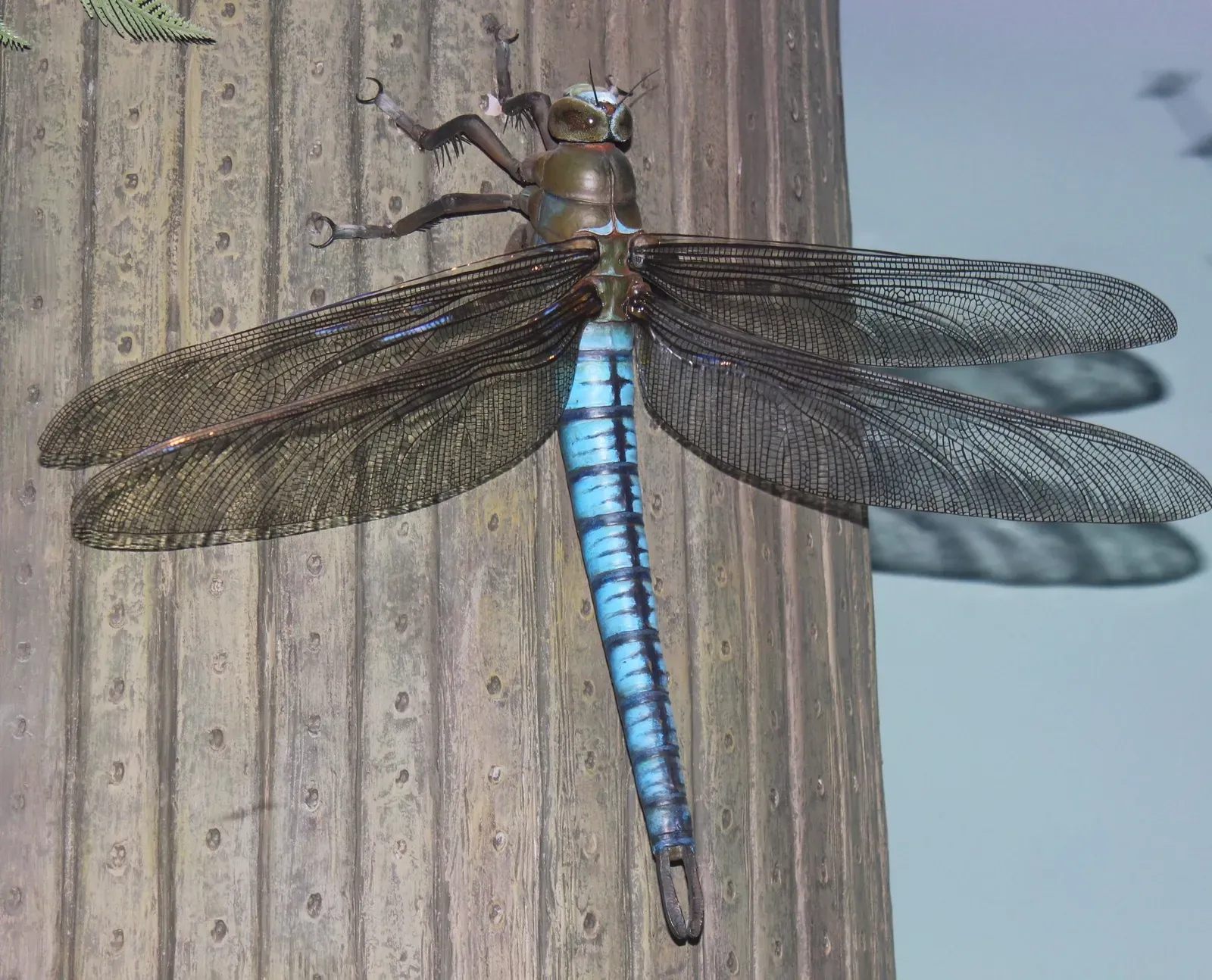
Living around 300 million years ago during the late Carboniferous period, these insects had wingspans reaching up to two and a half feet, about the size of a modern crow. The secret behind Meganeura’s giant size was Earth’s atmosphere, which contained much more oxygen than today, around thirty-five percent compared to our current twenty-one percent, and this oxygen-rich environment allowed insects to grow to extraordinary sizes since they breathe through their bodies rather than lungs. Nothing in the sky today comes remotely close to matching it.
Like many of today’s dragonfly species, Meganeura lived in open habitats close to ponds and slow-moving streams, and it was likely the apex predator in these clearings, using spines on its legs as a kind of flying trap to ensnare prey ranging from other flying insects to amphibians and even lizard-like vertebrates. Meganeura ruled the air until the Carboniferous period ended, and declining oxygen levels made it impossible for such large insects to survive. Its brief, remarkable reign is a reminder of how profoundly different ancient Earth’s atmosphere could be from our own.
5. Dimetrodon: The Sail-Backed Hunter That Predates Dinosaurs by Tens of Millions of Years
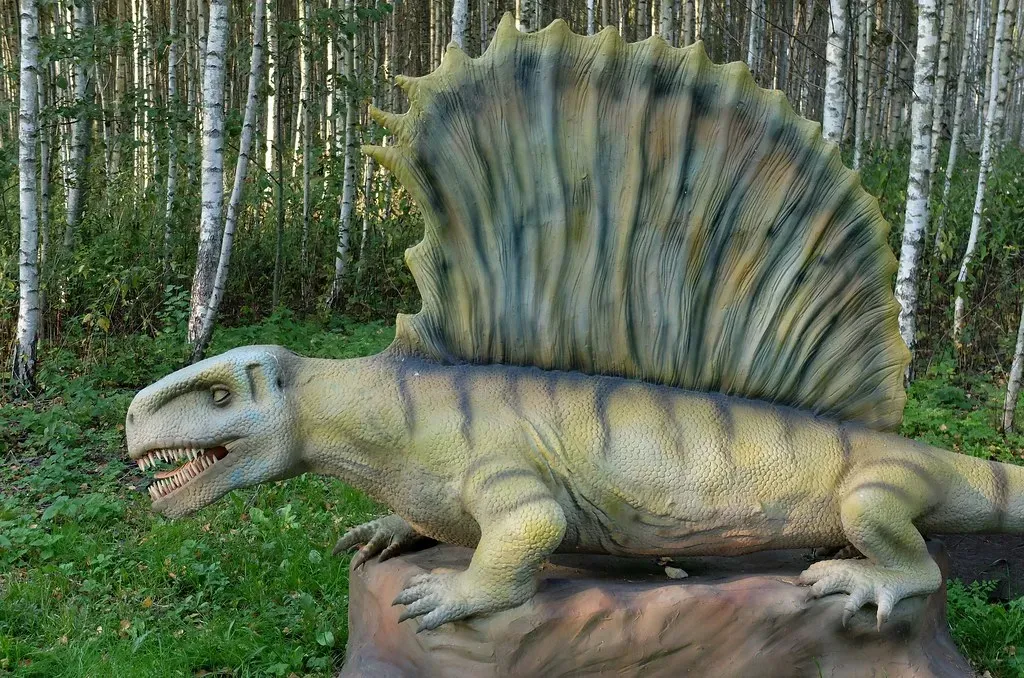
Although Dimetrodon has been made popularly familiar as a dinosaur, often as the first creature described in children’s books about dinosaurs, it is not a member of the dinosaur family at all. It actually lived in the Early Permian period and predates the dinosaurs by tens of millions of years, and in fact it was more closely related to mammals than to dinosaurs, birds, and surviving reptiles. That’s a fact that still surprises a lot of people.
Living between roughly 286 and 270 million years ago, Dimetrodon grew to over eleven feet in length and sported a dramatic sail on its back, a structure formed by elongated bony spines draped in skin, which likely helped regulate its body temperature in a fluctuating climate, while over time its jagged array of teeth grew ever sharper, transforming its jaws into a formidable set of weapons. Dimetrodon and other sphenacodontids were the oldest known fully terrestrial apex predators, and the first terrestrial vertebrates to have strong heterodonty, massive skulls, and well-developed recurved teeth with cutting edges.
6. Gorgonops: The First Saber-Toothed Predator to Walk the Earth
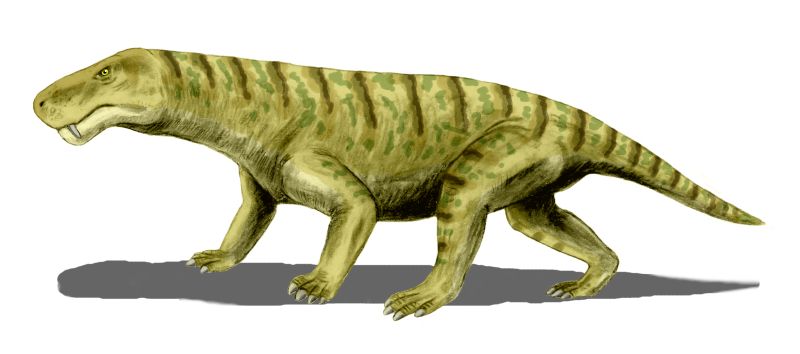
The Gorgonopsia were technically not reptiles, though they are often described that way, and they lived in the middle to late Permian period, from about 270 to 252 million years ago, standing as the apex predator of apex predators, with almost five-inch-long teeth and an eighteen-inch skull. Before dinosaurs emerged, Gorgonops was the top predator of the Late Permian period, and these carnivorous therapsids, distantly related to mammals, looked like a cross between a reptile and a big cat.
Gorgonopsians were the first group of predatory animals to develop saber teeth, long before true mammals and dinosaurs evolved, with Inostrancevia standing as the crown jewel of this group, a tiger-sized, saber-toothed gorgonopsian that lived on the supercontinent Pangea during the Permian period, approximately 252 million years ago. For hunting large prey, gorgonopsians possibly used a bite-and-retreat tactic, ambushing and taking a debilitating bite out of the target before following it at a safe distance until its injuries exhausted it. Gorgonops met its end during the Permian-Triassic mass extinction, the most severe extinction event in Earth’s history.
7. Eogyrinus: The Carboniferous River Monster
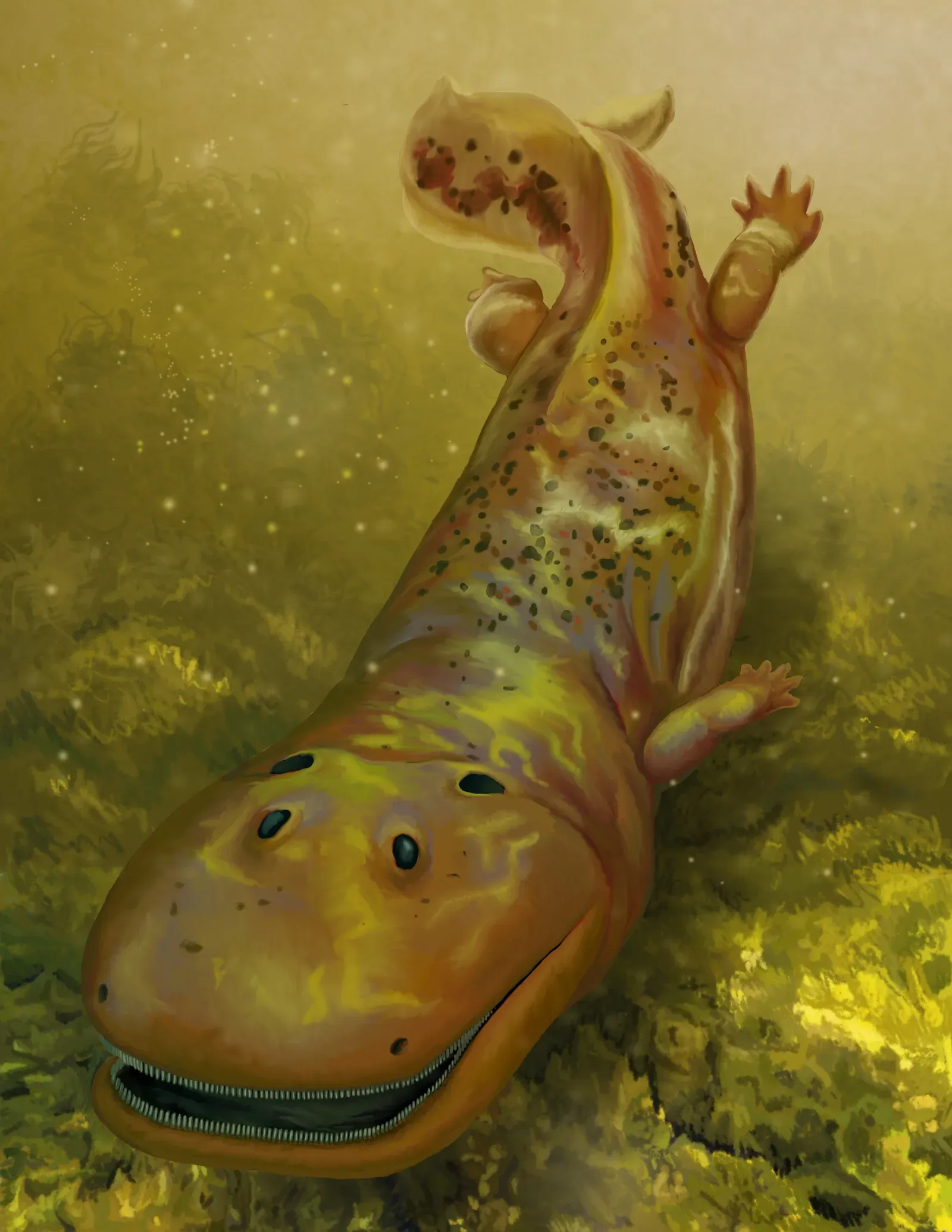
Before crocodiles ruled the waterways, there was Eogyrinus. This massive amphibian lived approximately 315 million years ago during the Carboniferous period and could grow up to fifteen feet long, about the size of a modern crocodile, with a long slender body, a flattened head, and rows of sharp teeth, giving it a very crocodile-like appearance despite not being a reptile at all. It lurked in the vast coal swamp waterways of ancient Europe, an ambush predator in every sense.
The Carboniferous period is famous for its vast swamp forests, and it is from these swamps that the term “Carboniferous,” meaning “carbon-bearing,” is derived. Eogyrinus thrived in exactly this kind of environment, a tangle of shallow wetlands where few animals were safe near the water’s edge. As an amphibian, it likely needed to return to water to reproduce, laying eggs in aquatic environments. It occupied the same ecological role as today’s large crocodilians, just three hundred million years before they arrived.
8. Helicoprion: The Buzz-Saw Shark of the Permian
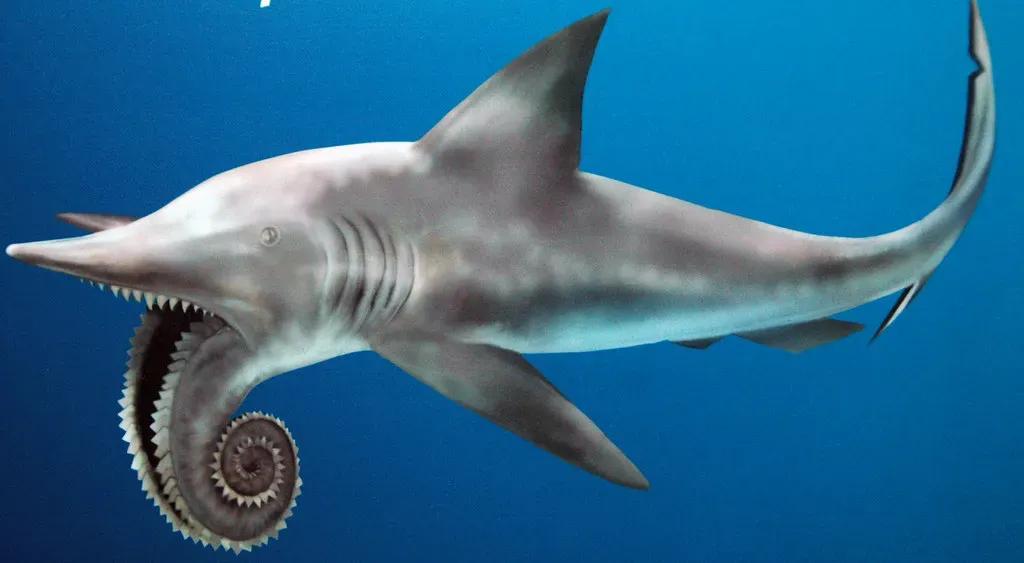
Helicoprion is the most famous Permian representative of the chondrichthyan clade Holocephali, known for its unusual spiral-shaped tooth whorl in the lower jaw. This bizarre arrangement of teeth spiraled inward like a circular saw blade, and for a long time paleontologists genuinely weren’t sure what part of the animal it even belonged to. The mystery of its anatomy made it one of the most puzzling creatures in the fossil record.
The Permian period, lasting from 299 to 251 million years ago, produced the first large plant-eating and meat-eating animals, and Helicoprion’s spiraling tooth whorl was a unique evolutionary experiment suited to slicing through soft-bodied prey in Permian seas. The period ended with the extinction of some ninety percent of all life, taking Helicoprion with it, along with an extraordinary array of creatures that had dominated the planet’s oceans for millions of years. Its fossilized tooth whorls remain among the most striking objects ever pulled from ancient rock.
Conclusion: A World Before Dinosaurs That Deserves Its Own Stage
The age of dinosaurs gets most of the spotlight, and it’s easy to see why. The creatures are enormous, dramatic, and deeply embedded in popular culture. Yet the hundreds of millions of years that came before produced predators just as extraordinary, shaped by forces just as violent, operating in ecosystems just as complex.
Millions of years before dinosaurs ruled the Earth, prehistoric animals shaped ecosystems with their unique adaptations and survival strategies, from massive predators like Dunkleosteus to bizarre creatures with spiraling teeth, demonstrating the vast diversity of life before the Mesozoic era. Each of the eight predators you just encountered was the product of its own long evolutionary story, not a rough draft for something better, but a fully realized apex hunter in its own right.
Perhaps the most striking thing about all of them is not how alien they seem, but how familiar the patterns are: speed, strength, ambush, and the relentless pressure of being either the predator or the prey. That story began long before the dinosaurs, and it continues today.