
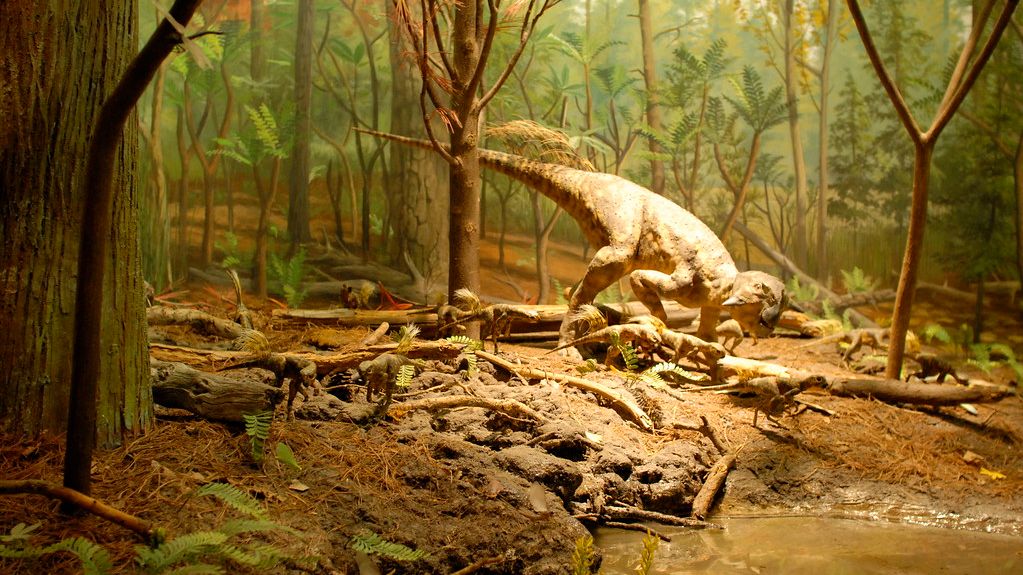
If you could time‑travel back to the age of dinosaurs, the most dangerous animals might be the ones you barely see at all. Long before chameleons, octopuses, and leaf‑mimicking insects, a whole cast of prehistoric creatures was already playing the hiding game, using color, pattern, and even body shape to vanish into their surroundings. You tend to picture dinosaurs and sea reptiles as big, obvious monsters, but a surprising number were more like shadows and ghosts than roaring movie beasts.
What makes this even wilder is that scientists are only recently learning what some of these animals actually looked like. Using microscopic pigments and astonishingly preserved skin, researchers have started to piece together how ancient camouflage really worked. When you zoom in, you see the same tricks that modern penguins, deer, sharks, and even desert lizards use today. As you read through these nine masters of disguise, you can almost imagine yourself missing them entirely as they slip past you in a Cretaceous forest or a dark Jurassic sea.
Psittacosaurus: The “Parrot Lizard” With Built‑In Countershading
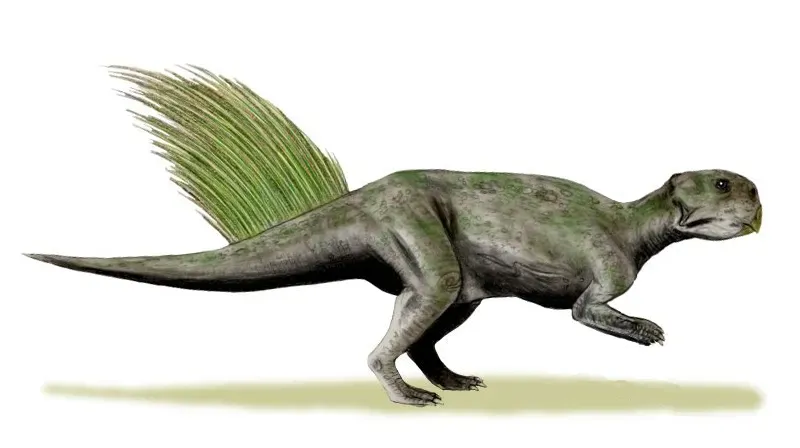
When you think about stealthy animals, you probably do not picture a small, beaked dinosaur that looks a bit like a scaly, long‑tailed guinea pig. Yet Psittacosaurus is one of the clearest prehistoric examples where you can actually trace its camouflage. From exceptionally preserved fossils, researchers have found evidence that this little plant‑eater wore darker colors on its back and lighter tones on its belly. That pattern, called countershading, is the same trick used by deer on land and many fish in the ocean, because it flattens out shadows and makes an animal’s body less three‑dimensional to predators’ eyes.
If you imagine yourself standing in a dappled Cretaceous forest, a countershaded Psittacosaurus would be frustratingly hard to pick out among patches of light and dark. Its darker back would blend into the shadowed leaf litter and undergrowth, while its paler underside would catch the light without standing out as a bright shape. You can think of it as nature’s version of a gradient paint job, smoothing away the visual clues your brain usually uses to spot a solid object. For a relatively small herbivore surrounded by hungry carnivores, that subtle optical trick could be the difference between being just another snack and quietly living long enough to pass on its genes.
Borealopelta: The Armored Tank That Still Needed to Hide
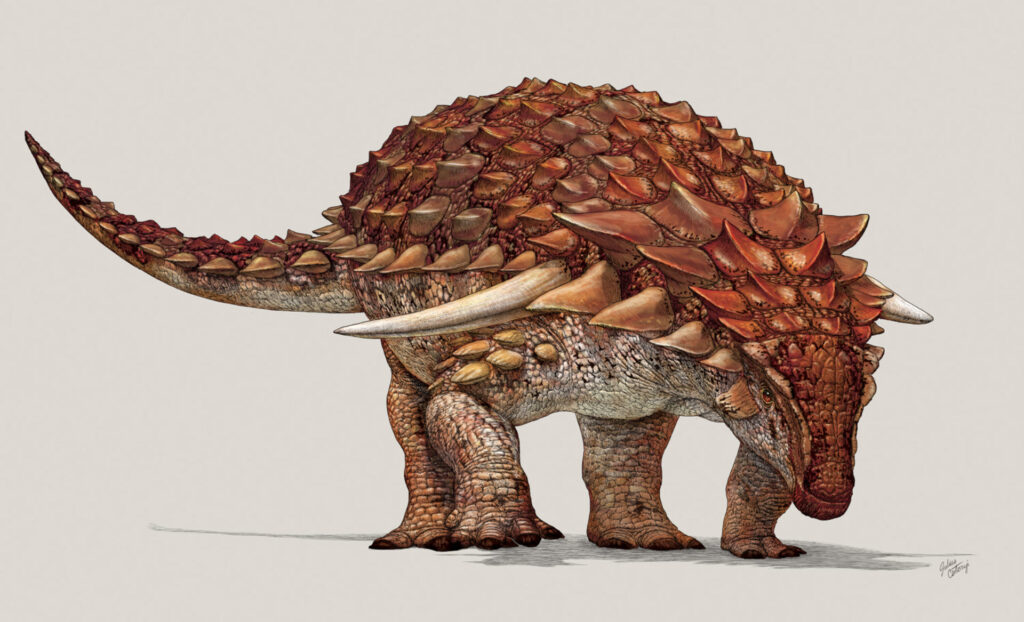
You might assume that if you are basically walking armor plating, camouflage is optional. Borealopelta, a heavily armored nodosaur from what is now Canada, tells you the opposite story. Even though this dinosaur carried rows of bony plates and spikes, studies of its skin impressions and preserved pigments suggest its back was still darker than its belly. That means this multi‑ton living tank also relied on countershading, just like a fragile gazelle or a modern antelope. When you see a creature that defended itself with both armor and camouflage, it quietly hints that the predators in its world were terrifyingly capable.
Picture this animal from a predator’s point of view: if you were a big meat‑eating dinosaur scanning a landscape of ferns and low shrubs, a flat, dark‑topped shape might just read as another shadow. The gentle transition to a lighter underside would distort the impression of bulk, making the animal look less like a solid, bite‑worthy body. In a way, Borealopelta feels like the prehistoric equivalent of an armored military vehicle painted in low‑contrast colors rather than bright metal. The message to you is simple: in nature, you never really stop worrying about being seen, no matter how many spikes you grow.
Sinosauropteryx: Stripes, a Mask, and the Art of Distraction
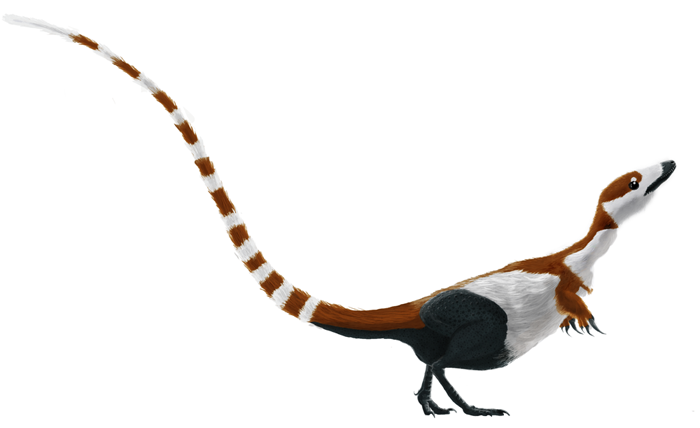
If you enjoy animals with a bit of flair, Sinosauropteryx is the one that pulls you in. This small, feathered dinosaur from China is famous for two things that matter for camouflage: a banded, ringed tail and a dark mask around the eyes. Fossilized pigment structures indicate that its tail likely carried alternating light and dark bands, while its face had a darker region that would have acted like a built‑in anti‑glare strip. You see the same idea today in mammals like raccoons or birds with bold eye markings, where the pattern helps break up the recognizable outline of a head and hides the bright, reflective eye.
Now imagine you are a small Cretaceous predator or a larger dinosaur eyeing Sinosauropteryx as potential prey. Instead of a clean silhouette, you get flickers of stripes and a face that is visually “busy,” especially in the clutter of plants and branches. The tail bands create a confusing moving pattern a lot like the striping on some modern ground birds, which can make it harder for you to track the animal’s exact position when it dashes for cover. Its eye mask would reduce glare from overhead sunlight, helping it see while also making its own eyes less obvious. To you as an observer, Sinosauropteryx shows how camouflage is not just about blending in but also about misdirecting attention and scrambling your ability to focus on one vital spot.
Ichthyosaurs: Deep‑Water Hunters Cloaked in Darkness
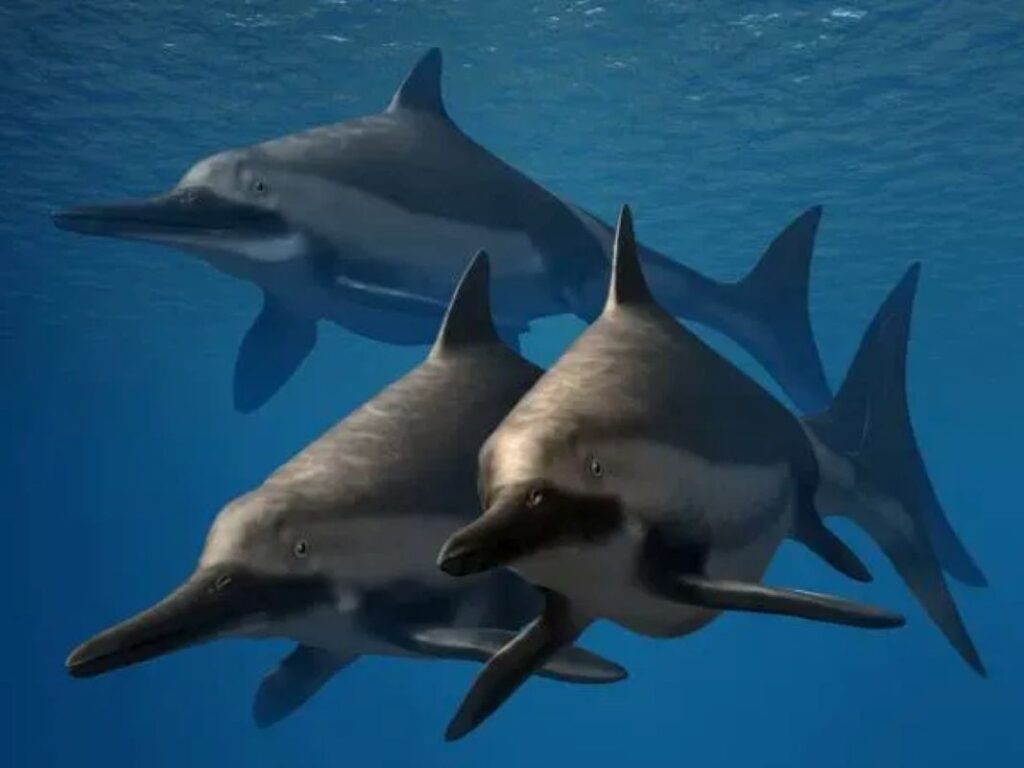
When you shift from land to sea, the rules of camouflage change, but the need to hide never goes away. Ichthyosaurs, those sleek, dolphin‑shaped marine reptiles, are a great example of how prehistoric animals adapted to a dim, open‑water world. Chemical studies of fossil skin suggest that some species were almost uniformly dark in color, with densely packed melanin pigments. Rather than a classic dark‑top, light‑bottom pattern, these animals may have been cloaked in deep, dark tones that turned them into silhouettes vanishing into the abyss below.
If you have ever dropped something into deep water and watched it disappear after a few meters, you already understand why a nearly all‑dark body can be a powerful disguise. In the low‑light zones where ichthyosaurs hunted, being dark from top to bottom could make you almost invisible against the blackness, especially to prey looking up or sideways. The dark pigments also would have helped with absorbing heat from the sun when the animal surfaced, much like modern leatherback turtles do. When you imagine an ichthyosaur launching itself out of the gloom toward a school of fish, that inky coloration feels less like style and more like a crucial piece of survival technology.
Mosasaurs: Giant Sea Lizards With Shadowy Skin
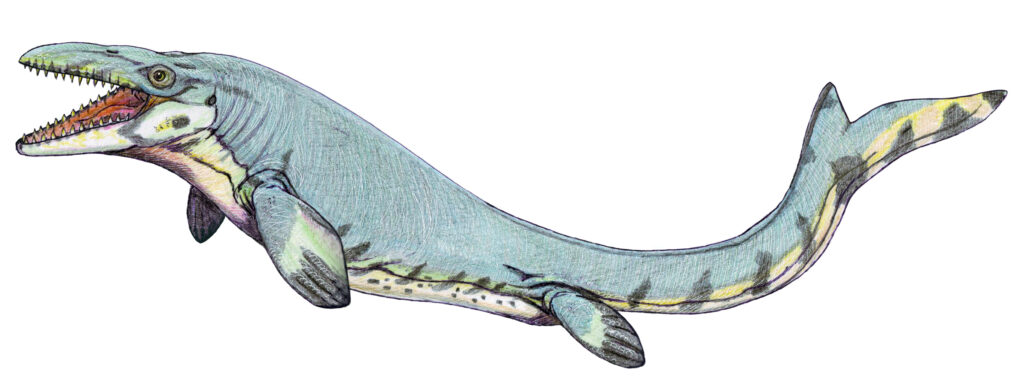
If you placed yourself in a Late Cretaceous ocean, mosasaurs would be on the short list of creatures you never want to surprise. These massive marine lizards ruled the seas near the end of the dinosaur era, and fossil evidence of their skin pigments points toward dark, melanin‑rich coloration. That does not mean they were jet black from nose to tail, but it does tell you they were not the pale, featureless beasts you sometimes see in older paintings. A dark back and possibly dark flanks would help them melt into the deeper water column when viewed from above or from the side.
Think about how modern sharks and some large predatory fish look when you see them underwater: the upper body is darker, the sides and belly are lighter, and the overall effect is that their outline softens into the water. Mosasaurs likely used a similar basic strategy, exploiting the way light fades with depth. If you were a fish or smaller marine reptile glancing upward, the dark, upper surfaces would fade into the gloom, while any lighter belly would merge with the brightness above. That two‑way camouflage works both as offense and defense: it lets a giant predator approach without broadcasting its presence and also keeps rivals or even bigger threats from spotting it too easily at a distance.
Plesiosaurs and Polycotylids: Streamlined Shapes That Erased Their Own Shadows
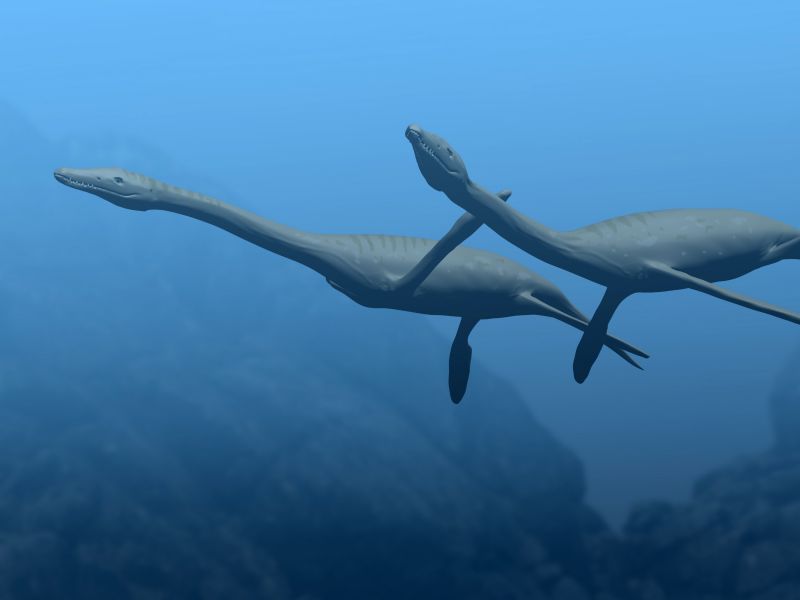
You tend to remember plesiosaurs for their odd body plan: big flippers, barrel chest, and in some cases extremely long necks. But when you look more closely at their fossils, especially well‑preserved forms like some polycotylid plesiosaurs, you see signs that their camouflage was not just about color – it was about shape. Soft tissue outlines suggest smooth, streamlined bodies where the torso and tail blended into a single teardrop form. In the water, that kind of contour naturally sheds strong shadows and sharp edges, making it harder for other animals to read depth and shape.
If you put yourself in the role of a prey animal watching from below, a plesiosaur gliding overhead might present as a slowly moving patch, neither clearly body nor clearly background. Any countershading or darker pigments along the top would exaggerate that flattening effect, turning the animal into a kind of moving smudge. You can compare it to the way modern leatherback turtles and some whales look from below: you are not sure where the body starts and ends, you just see a gentle gradient of tone. By combining body streamlining with color gradients, plesiosaurs turned their own silhouettes into hazy, low‑contrast shapes in a world where sharp outlines can mean instant death.
Short answer: Plesiosaurs were marine reptiles, not dinosaurs. They shared the Mesozoic world with dinosaurs, but they belong to a different evolutionary group. More importantly for you, their camouflage tricks show just how many independent lineages hit on similar visual solutions in the same ancient oceans.
Early Avialans: Feathered Fliers Hiding in Plain Sight
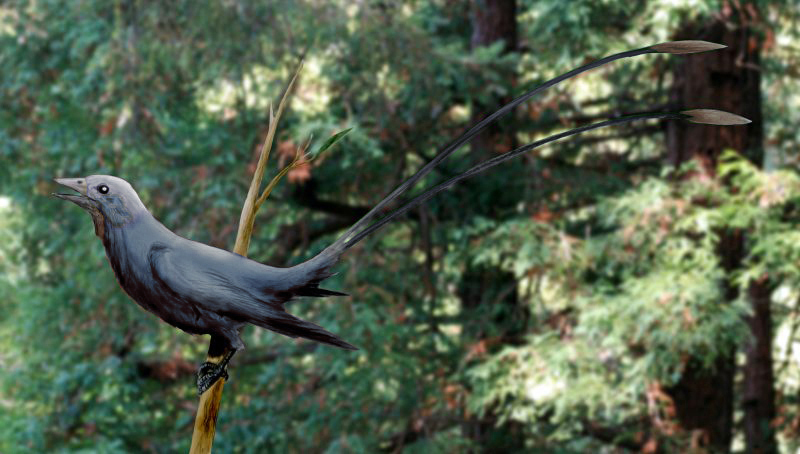
When you jump from reptiles to the earliest bird‑like dinosaurs, you start seeing camouflage that feels instantly familiar. Many early avialans – those feathered creatures perched between classic dinosaurs and modern birds – likely carried mottled, barred, or speckled plumage. Fossil feathers preserved with pigment‑bearing structures, combined with what you know about modern ground‑dwelling birds, suggest that at least some of these early fliers used brownish and reddish palettes broken up by spots and bands. In other words, they were probably not neon showpieces but more like quail and grouse slipping through undergrowth.
Picture yourself in a Jurassic or Early Cretaceous forest, sunlight breaking through in scattered beams. A small feathered creature perched on a branch, with streaked or speckled feathers, would merge into the background of bark, leaves, and shifting light. The same patterns that let a modern owl or nightjar become invisible on a branch would have worked just as well back then. For you, this is a good reminder that flight did not replace camouflage; it added another layer. When an early avialan crouched motionless with folded wings and muted colors, it could simply disappear, turning flight into the backup plan instead of the first line of defense.
Small Ornithischians: Forest Floor Specialists in Natural Camo
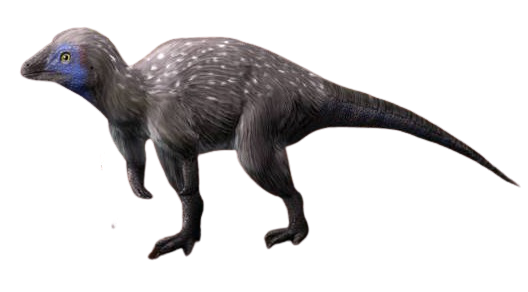
Not every master of camouflage has a famous name, and many small, plant‑eating dinosaurs in the ornithischian group almost certainly relied on blending in rather than fighting back. These animals, often about the size of large dogs or smaller, lived in dense vegetation where being spotted early meant being chased or trampled by something far larger. Even though direct color evidence is limited, you can lean heavily on what you know from modern ecosystems: small, ground‑dwelling herbivores today tend to be dappled, brownish, or grayish with patterns that echo leaf litter, tree bark, and undergrowth.
If you imagine yourself walking through a prehistoric forest, you would probably step within a few feet of some of these animals without realizing it. A mottled pattern along the flanks, a darker back, and stripes or spots along the legs would break their profiles into pieces. Think of how hard it can be to spot a hare or small deer frozen in tall grass even when you know it is there. For small ornithischians, that same strategy – freezing and trusting the camouflage – could be more effective than any horns or armor their larger relatives evolved. You rarely hear their names, but they were quietly playing the same hiding game that small mammals perfected later.
Early Mammals and Mammal‑Like Reptiles: Night‑Shift Camouflage
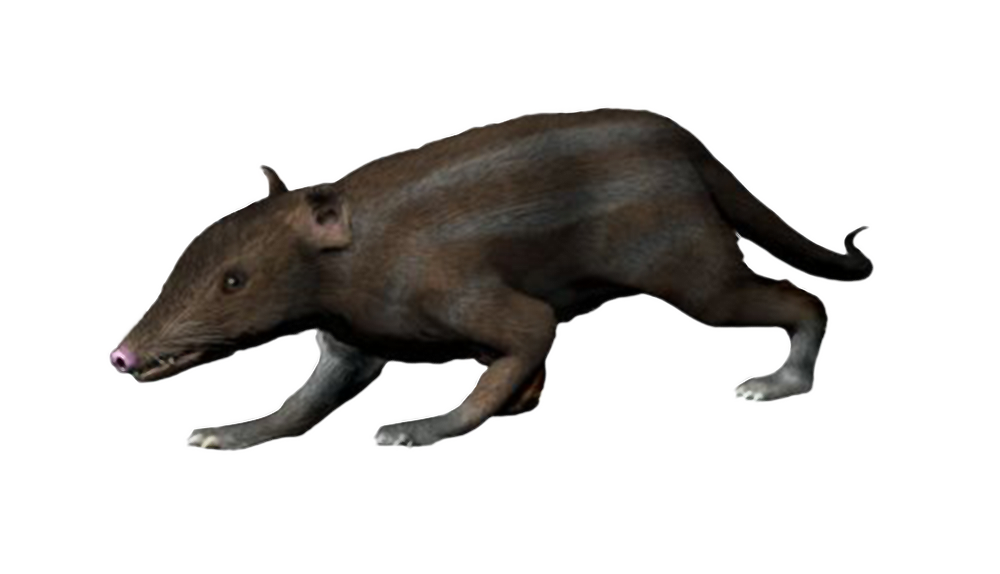
By the time large dinosaurs dominated the daytime, many early mammals and mammal‑like reptiles had shifted into the background – literally and figuratively. Fossil evidence from eye anatomy hints that a lot of these creatures were either nocturnal or crepuscular, active at dawn and dusk. In that low‑light world, you do not need vivid colors; you need fur that swallows light and patterns that erase shape. While you cannot see their exact coat patterns in fossils, it is reasonable to expect muted browns, grays, and perhaps subtle striping or banding, much like modern shrews, rodents, and small carnivores.
Imagine crouching down in a Late Triassic scrubland with only the fading glow of the sky. A small, warm‑blooded animal with dark, matte fur can slip between roots and rocks like a moving shadow. Any faint stripes or patches would fragment its outline when it pauses, just as the dappled coats of some wild cats and small predators do today. In my mind, this is where prehistoric camouflage hits closest to home for you: these little survivors feel immediately relatable. They were hiding from the same sort of dangers that still push small mammals to be secretive today, and their success laid the groundwork for the later explosion of mammal diversity after the dinosaurs fell.
Conclusion: Camouflage Was the Original Superpower
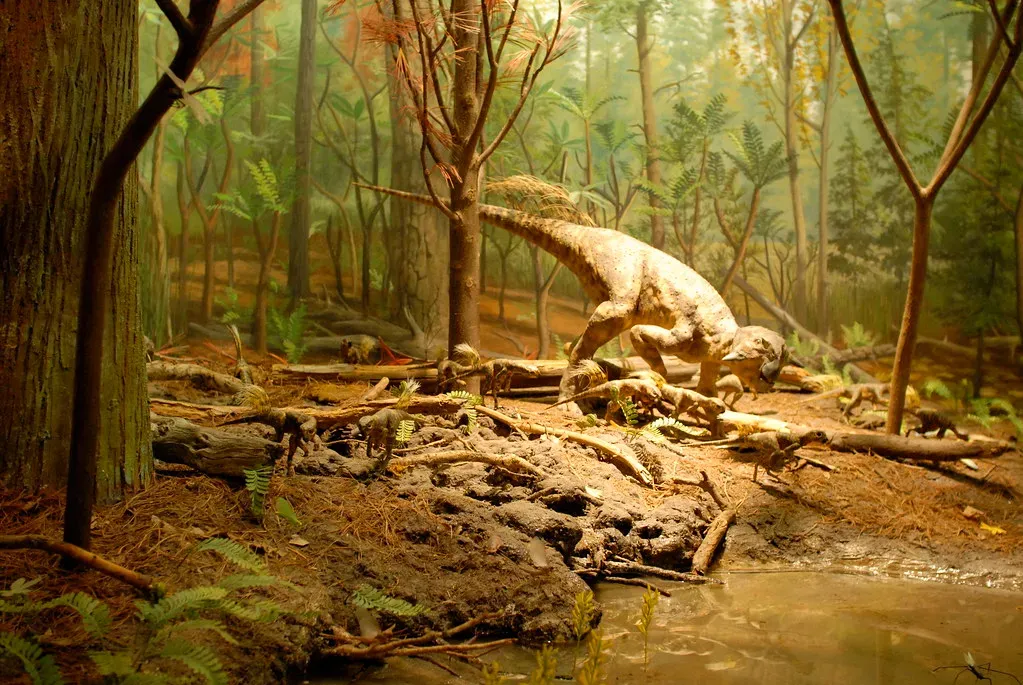
When you step back from these nine examples, a pattern jumps out at you: camouflage is not some rare, exotic trick reserved for a few showy animals. It is the quiet default of survival, running like a thread from armored dinosaurs and sleek sea reptiles all the way to today’s birds, fish, and mammals. Whether through countershading, dark pigments, disruptive stripes, or streamlined shapes that erase shadows, prehistoric creatures were constantly hacking the limits of other animals’ vision. You might even say that the age of reptiles was less a world of roaring monsters and more a world of expert illusionists.
The humbling part is that, even with all your modern science, you are still guessing around the edges, piecing together colors and patterns from rare fossils and modern analogies. There are almost certainly entire styles of prehistoric camouflage you have not even imagined yet. Next time you see a deer vanish into trees or a seabird disappear against the waves, you are watching a very old story playing out – one that started long before humans ever showed up to witness it. If you could walk those ancient landscapes yourself, how many of these hidden animals do you think you would actually notice before they slipped away?