Therapsids, the ancient synapsids that bridged the gap between reptiles and mammals, flourished across Permian and Triassic landscapes some 280 million years ago. These creatures, often called mammal-like reptiles, developed key mammalian traits like upright limbs and differentiated teeth long before true mammals appeared. A recent study published in Scientific Reports on March 11, 2026, employed advanced Bayesian and parsimony analyses to reassess their phylogeny, focusing exclusively on cranial features from 42 taxa. Researchers challenged established views by uncovering novel relationships among these pivotal groups.
Olson’s Gap Obscures Therapsid Dawn
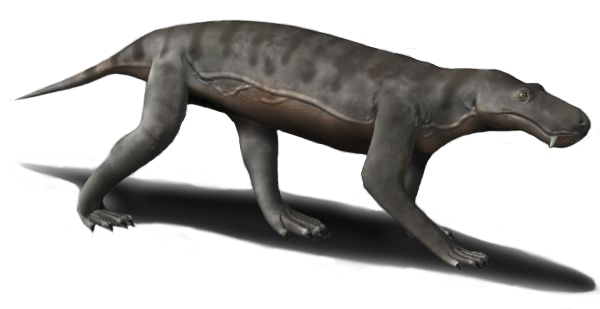
Olson’s Gap Obscures Therapsid Dawn (Image Credits: Upload.wikimedia.org)
The fossil record reveals therapsids as dominant herbivores and predators from the middle Permian onward, replacing earlier pelycosaurs. Yet, a preservation hiatus known as Olson’s Gap, spanning the early-to-middle Permian boundary, has long hindered clarity on their initial diversification. Six primary lineages – Biarmosuchia, Dinocephalia, Anomodontia, Gorgonopsia, Therocephalia, and Cynodontia – emerged abruptly, prompting questions about their origins.
This scarcity of early Permian fossils with unambiguous therapsid traits limited previous phylogenetic insights. Traditional cladograms often placed Biarmosuchia as the earliest branch, with the remaining groups in Eutherapsida and Neotherapsida encompassing Anomodontia and Theriodontia. Debates persisted over exact sister-group relationships, such as whether Anomodontia aligned closely with Gorgonopsia or Eutheriodontia.
Bayesian and Parsimony Tools Unlock New Phylogeny
Scientists Alienor Duhamel, Brenen Wynd, April Marie Wright, Atashni Moopen, Julien Benoit, and Bruce Rubidge compiled a dataset of 99 cranial characters scored from literature and specimens. They applied maximum parsimony via TNT software alongside Bayesian inference using MrBayes and RevBayes, incorporating relaxed molecular clocks and the Mk substitution model. Fossilized Birth-Death models further estimated divergence times.
Parsimony trees showed unresolved deep nodes but supported monophyly in groups like Biarmosuchia and Dinocephalia. Bayesian runs, varying clock models, consistently recovered key structures despite moderate posterior probabilities. Rogue taxa analysis identified instabilities, such as Raranimus, ensuring robust consensus trees.
Surprising Clades Emerge from the Data
The analyses recovered Neotherapsida as monophyletic, though weakly supported, with Anomodontia – known for tusked dicynodont herbivores – as the sister group to Theriodontia. Gorgonopsia, the saber-toothed predators, emerged as sister to Eutheriodontia within Theriodontia. Therocephalia appeared paraphyletic in several runs, with forms like Simorhinella nesting near Cynodontia, the direct mammal ancestors.
Biarmosuchia and Dinocephalia united in a novel clade, overturning prior separations. Biseridens shifted outside Anomodontia to a basal position in this clade, while Sinophoneus became a basal dinocephalian, questioning Anteosauria monophyly. Raranimus positioned basally, often sister to the Biarmosuchia-Dinocephalia group.
| Clade/Group | Traditional View | New Findings |
|---|---|---|
| Neotherapsida | Anomodontia + Theriodontia (debated composition) | Monophyletic; Anomodontia sister to Theriodontia |
| Biarmosuchia + Dinocephalia | Separate basal lineages | Form a clade |
| Biseridens | Within Anomodontia | Basal to Biarmosuchia-Dinocephalia |
Diversification Timed to Permian Turmoil
Fossilized Birth-Death modeling dated Therapsida origins to the early Permian, around 278-282 million years ago. Major clades radiated rapidly between 281 and 272 million years ago, coinciding with Olson’s Gap. Specific splits included Biarmosuchia-Dinocephalia at 272-269 Ma, Anomodontia at 273-267 Ma, and Theriodontia at 274-267 Ma.
- Therapsida crown: ~278-282 Ma (early Permian).
- Biarmosuchia + Dinocephalia: ~272-269 Ma.
- Anomodontia: ~273-267 Ma.
- Gorgonopsia: ~267-264 Ma.
- Eutheriodontia: ~274-266 Ma.
Extinction pulses marked the Gap and later at 222-225 Ma, aligning with global events that reshaped terrestrial ecosystems.
Mammal Roots Gain Clarity
These findings refine the path from Permian synapsids to mammals, highlighting rapid middle Permian evolution amid sparse fossils. Cynodontia, within Eutheriodontia, retained mammal-like features such as complex jaws and upright posture, surviving the Permian-Triassic extinction to spawn Mammaliaformes. The study underscores how probabilistic methods handle fossil uncertainties better than parsimony alone.
By focusing on crania, researchers avoided postcranial gaps in early fossils, paving the way for future integrations of postcrania and molecular data analogs.
Key Takeaways
- Therapsids originated early Permian but diversified explosively 281-272 Ma during a fossil gap.
- Anomodontia sisters to Theriodontia in Neotherapsida; Biarmosuchia clusters with Dinocephalia.
- Bayesian approaches reveal nuanced relationships, repositioning taxa like Biseridens and Sinophoneus.
This reevaluation not only clarifies therapsid branches but also illuminates the burst of mammalian innovation. What do you think about these shifts in ancient phylogeny? Tell us in the comments.