Late summer nights across North America fill with rhythmic rasps and pulses that blend into the dusk. These sounds, produced by crickets and katydids, once served merely as seasonal backdrop. Thomas J. Walker, however, heard them as intricate signals revealing species identities, mating behaviors, and ecological insights. The pioneering entomologist, who passed away on April 8, 2026, at age 94, dedicated his career to unlocking their secrets.
A Foundation in Rural Observation
A Foundation in Rural Observation (Image Credits: Pexels)
Born in 1931 on a farm in Dyersburg, Tennessee, during the Great Depression, Walker grew up immersed in the patterns of rural life. Long hours outdoors honed his attention to subtle environmental cues, including the insistent calls of insects. Farm work and Boy Scouts instilled discipline, but his passion for entomology emerged through formal education at the University of Tennessee and a doctorate from Ohio State University.
In 1957, he joined the University of Florida, where he advanced from assistant professor to professor emeritus over more than four decades. His focus centered on insect ecology, behavior, and systematics, particularly the acoustic world of crickets and katydids. Walker challenged the era’s reliance on preserved specimens, insisting that live observations – especially songs – provided essential data for accurate classification.
Songs as Keys to Species and Behavior
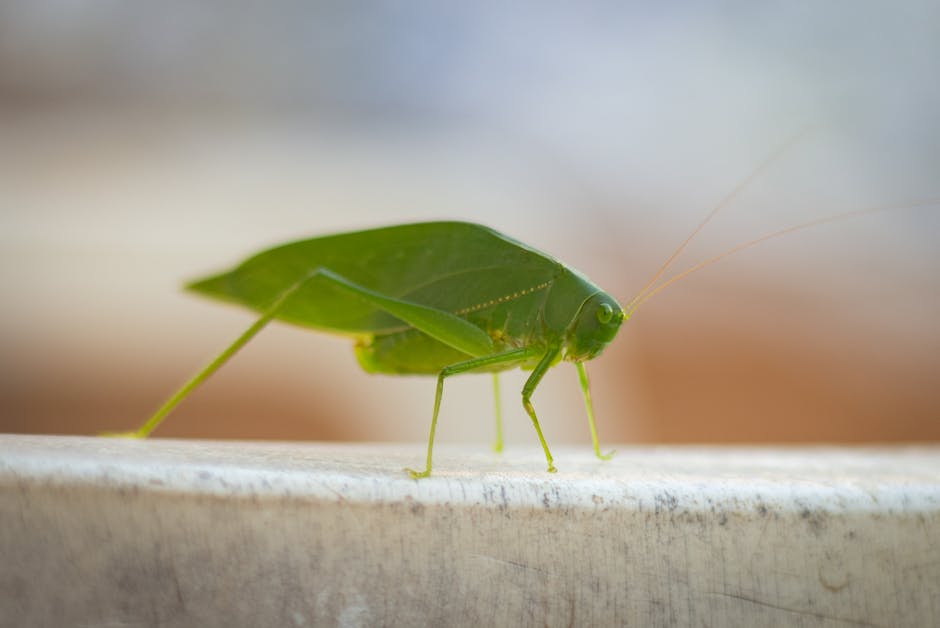
Walker treated insect calls not as mere noise but as vital communication tools. These songs distinguished species, facilitated mating, and mirrored habitat conditions. Through recordings, timing analyses, and high-speed synchronized filming, he demonstrated how a katydid’s simple wing mechanism – a file and scraper – produced complex variations in tempo and sequence far beyond what anatomy alone predicted.
His findings reshaped taxonomy by emphasizing auditory traits. One notable outcome was the naming of Walker’s tree cricket, Oecanthus walkeri, after him, discovered in Hidalgo County, Texas. Such work underscored that true understanding demanded listening as much as looking, influencing generations of researchers.
Pioneering Digital Resources for All
Long before open access became standard, Walker championed free dissemination of knowledge. He digitized the journal Florida Entomologist in the 1990s, making its archives available online. His crowning achievement, the Singing Insects of North America (SINA) website, launched around 2000, offered recordings, images, maps, and identification aids for crickets, katydids, and some cicadas across North America north of Mexico.
- Over 6,400 songs archived from the Florida State Collection of Arthropods.
- Species checklists with updates, such as revisions to the Aglaothorax genus in 2025.
- Tools for amateurs and professionals to identify insects by call.
- Links to specimens and distributions for ecological studies.
Walker founded SINA, evolving it from planned books and CDs into a dynamic online hub. He stepped down as editor in 2021, ensuring its transfer to the Orthopterists’ Society for ongoing maintenance.[4]
Conservation Embedded in Practice
Walker’s commitment extended to tangible conservation. In the early 1990s, amid campus development threats, he helped establish the Natural Area Teaching Laboratory (NATL) at the University of Florida. This preserved tract supports ecological research, trail systems, and public education, demonstrating conservation’s role in daily landscapes.
He oversaw NATL’s restoration and resisted repurposing efforts. Into retirement, Walker mentored students, contributed resources, and backed groups like the Alachua Conservation Trust. His efforts highlighted how acoustic studies aid monitoring declining populations, linking research to wildlife protection.
SINA’s identification tools further bolster conservation by enabling citizen scientists to track species distributions amid habitat loss.
Key Takeaways
- Walker revolutionized insect taxonomy by prioritizing songs over specimens alone.
- SINA remains a free, vital resource for identifying North American singing insects.
- His NATL initiative models integrating conservation with education.
Thomas J. Walker’s quiet persistence turned overlooked chirps into a symphony of scientific insight. His frameworks endure, inviting deeper appreciation of nature’s subtle voices. What insect sounds have captured your attention lately? Share in the comments.