Northern Egypt – An international team of paleontologists announced the discovery of a new ape species that promises to alter long-held views on primate evolution. Recovered from 17- to 18-million-year-old rocks in the Wadi Moghra region, the fossils represent the first definitive early ape known from North Africa. This find positions the creature near the base of the hominoid family tree, hinting that the ancestors of today’s great apes and humans may have thrived in northeastern Afro-Arabia rather than farther south or across Eurasia.
The First North African Ape Emerges from the Sands
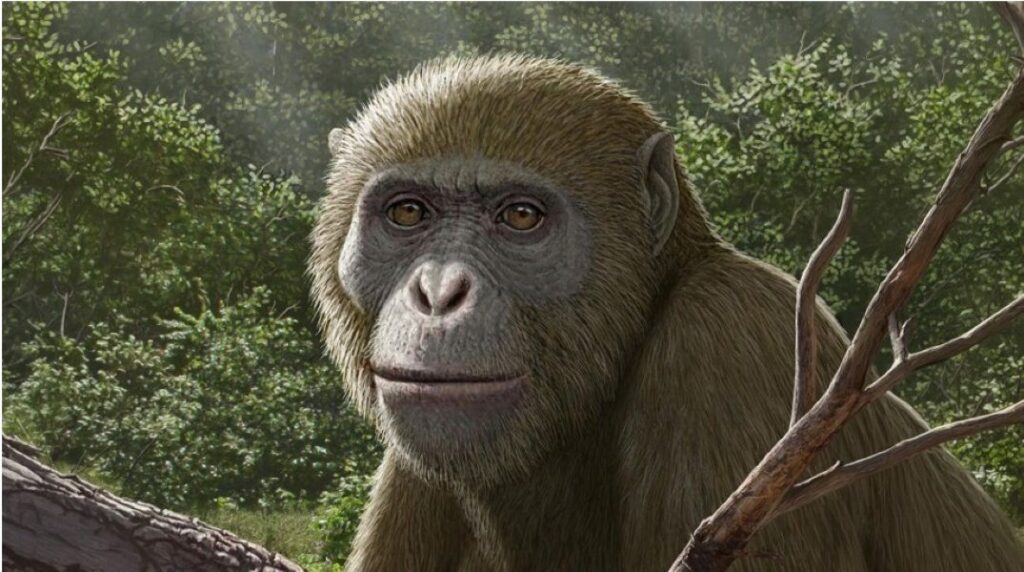
The First North African Ape Emerges from the Sands (Image Credits: Facebook)
Imagine sifting through desert sediments for years, only to uncover jaw fragments that rewrite evolutionary history. That scenario unfolded for researchers from Mansoura University in Egypt during fieldwork in 2023 and 2024. The fossils, dubbed Masripithecus moghraensis, came from the Moghra Formation in the Qattara Depression – a site long productive for Miocene mammals but never before for apes.
Hesham Sallam, senior author and director of the Mansoura University Vertebrate Paleontology Center, noted the team’s persistence. “We spent five years searching for this kind of fossil because, when we look closely at the early ape family tree, it becomes clear that something is missing – and North Africa holds that missing piece.” The discovery filled a glaring gap, as prior Early Miocene ape remains had surfaced mainly from East African sites.
Decoding the Jaw and Teeth
The holotype specimen preserves the front of the mandible, including roots of incisors and canines, plus crowns of premolars and molars. A paratype adds more dental details. Key traits include a tall, robust jawbone, oversized canines and third premolars, and low-crowned molars with heavy crenulation – wrinkled surfaces ideal for grinding.
These features set Masripithecus apart from East African peers. Shorouq Al-Ashqar, lead author, highlighted its dietary clues: a mainly fruit-based menu supplemented by tougher fare like nuts and seeds during seasonal shifts. Such versatility likely aided survival amid Early Miocene climate changes in northern Africa.
- Robust mandibular corpus for powerful chewing.
- Large, bulbous canines and premolars.
- Molars with rounded cusps, weak crests, and no typical fovea on the third molar.
- Textured enamel suited to varied, seasonal foods.
Positioning Masripithecus in Primate Phylogeny
Researchers combined morphological data with DNA from living apes in Bayesian tip-dating analyses. The results placed Masripithecus as the closest sampled relative to crown Hominoidea – the clade of all modern apes plus their last common ancestor. It outranked contemporaneous East African forms, suggesting divergence just before the split into great apes and lesser apes like gibbons.
Erik Seiffert, co-author from the University of Southern California, reflected on the shift. “For my entire career, I considered it probable that the common ancestor of all living apes lived in or around East Africa. But this new discovery… now strongly challenge that idea.” Alternative models confirmed its basal role, though exact ties varied slightly.
Redrawing the Map of Ape Origins
Previously, experts traced crown hominoid roots to East Africa or Eurasia around 14 to 16 million years ago. Masripithecus upends this by thriving 17 to 18 million years ago at Afro-Arabia’s edge with Eurasia. Tectonic shifts and falling sea levels then forged dispersal corridors.
The study, published in Science on March 26, 2026, sparks debate on biogeography. Northeastern regions emerge as cradles for ape diversification before Eurasian spread. Future digs may yield more evidence from this overlooked zone.
| Fossil Trait | Implication |
|---|---|
| Large premolars | Processed hard objects |
| Crenulated molars | Fruit and seeds |
| Robust jaw | Versatile diet |
Key Takeaways
- Masripithecus marks North Africa’s debut as an ape hotspot 17-18 million years ago.
- Phylogenetic analyses crown it sister to living apes’ lineage.
- Biogeographic shifts point to NE Afro-Arabia as hominoid origin ground zero.
This fossil not only bridges a phylogenetic void but also urges a northward gaze in primate origins research. As Seiffert put it, the evidence “suggests that northern Africa and the Middle East might have been more central to the origin of the living apes.” What do you think about this shift in ape evolution? Tell us in the comments.